Avances obras en Aeropuerto Amapá

Resultado de imagen para Aeroporto Amapá

AW | 2018 09 03 10:47 | AIRPORTS

Infraero Brasil estima conclusión obras para 4Q2019

Resultado de imagen para infraeroInfraero prevé entregar nuevo Aeropuerto de Macapá en 2019 tras 15 años en obras. En diciembre de este año debe entregarse la terminal de pasajeros. Después de numerosas paralizaciones, la empresa constructora asegura que el nuevo calendario está al día.

Las proyecciones par la conclusiones de obras a finales de 2019 es el nuevo plazo fijado por la Empresa Brasileña de Infraestructura Aeroportuaria (Infraero) para la realización del nuevo Aeropuerto Internacional de Macapá , que cumplirá 15 años en las obras. Después de varias interrupciones , la empresa garantiza que el servicio de planificación se está cumpliendo a tiempo.

El valor total de la estructura aeropuerto fue presupuestado en R$ 163 millones de reales. Las obras se están realizando en dos etapas. La primera es la construcción de la nueva terminal de pasajeros y estacionamiento de vehículos, cuya previsión para terminar es para diciembre de este año. La segunda etapa es la ampliación del patio de aeronaves, donde actualmente funciona la terminal de pasajeros. En ese espacio, los servicios deben comenzar en julio de 2019. «Sólo cuando la nueva terminal de pasajeros comienza a operar en diciembre, será posible demoler el antiguo y hacer la obra de ampliación del patio nuevo», informó la empresa.  AIRWAYS® AW-Icon TXT

Advances works at Amapá Airport

Infraero Brazil estimates completion works for 4Q2019

Infraero plans to deliver new Macapá Airport in 2019 after 15 years of work. In December of this year, the passenger terminal must be delivered. After numerous stoppages, the construction company ensures that the new calendar is up to date.

The projections for the conclusion of works at the end of 2019 is the new deadline set by the Brazilian Company of Airport Infrastructure (Infraero) for the realization of the new Macapá International Airport, which will be 15 years old in the works. After several interruptions, the company guarantees that the planning service is being fulfilled on time.

The total value of the airport structure was budgeted at R $ 163 million. The works are being carried out in two stages. The first is the construction of the new passenger terminal and parking of vehicles, whose forecast to finish is for December of this year. The second stage is the expansion of the aircraft yard, where the passenger terminal currently operates. In that space, services should begin in July 2019. «Only when the new passenger terminal begins operating in December, will it be possible to demolish the old one and do the work of expanding the new patio,» the company reported. A \ W


Ξ A I R G W A Y S Ξ
SOURCE:  Airgways.com
DBk: Infraero.gov.br / Oglobo.com / Aviacaoemercado.com.br
AW-POST: 201809031047AR

A\W   A I R G W A Y S ®

Nueva tecnología en Boeing 737-10 MAX

Resultado de imagen para Boeing 737-10 MAX

AW | 2018 09 03 09:40 | INDUSTRY

Boeing-Logo.svg.pngBoeing anuncia nueva tecnología para 737-10 MAX

En 2010, el fabricante europeo de aviones Airbus lanzó la familia Airbus A320NEO, que aprovechó la ya exitosa familia de fuselaje estrecho y mejoró el FK,4923,36,737-max-round-pin.jpgconsumo de combustible y la eficiencia operativa. El programa cosechó un gran número de pedidos, batiendo récords para un nuevo avión con una cartera de pedidos de más de 1.000 a mediados de 2011.

El 30 de agosto de 2011, al reconocer la necesidad de hacer retroceder a Airbus y sus neos, Boeing lanzó el programa para una nueva evolución del Boeing 737. Esto vino después de años de ida y vuelta en cuanto a cómo diseñar de manera más efectiva una nueva, más avión eficiente de fuselaje estrecho.

Salieron originalmente con tres variantes, el 737-7/8/9. Pero clientes como Korean Air y United Airlines querían algo más grande y más comparable al Airbus A321NEO, que se comercializaba no solo como una potencia de corto alcance. sino también una forma para que las aerolíneas aprovechen las rutas de transporte de medio a corto-largo operando distancias más lejanas con menos capacidad. Y a fines de 2016, finalmente se aprobó el Boeing 737-10 MAX.

Sin embargo, uno de los mayores obstáculos de Boeing para el MAX 10 es el tren de aterrizaje estándar 737. El engranaje es demasiado corto para manejar la longitud del MAX 10. En otras palabras, los pilotos rasparían la cola del fuselaje, que es 66 pulgadas más larga que la del MAX 9, en el despegue si realizaron la maniobra de despegue de rutina como con otros tipos.

Los ingenieros de Boeing se enfrentaron a una de dos opciones: cambiar la carcasa del tren de aterrizaje, que requeriría grandes rediseños del fuselaje en su conjunto para compensar el espacio perdido para la vivienda, o hacer que el tren de aterrizaje más grande encajara en el mismo espacio.

Eligieron el segundo, lo que requeriría mucha innovación y nueva tecnología. La compañía cree que la segunda opción fue la correcta y que valió la pena los recursos. «Siempre nos gusta ver cómo podemos abordar la demanda del mercado con la tecnología y las soluciones de ingeniería que serían necesarias», dijo Gary Hamatani, ingeniero jefe de proyectos del Programa 737 MAX de Boeing.

Para agregar nueve pulgadas a la longitud del engranaje mientras se mantiene la carcasa del mismo tamaño, el equipo realizó numerosos cambios en la estructura del aparato, agregando una palanca que extiende el tren de aterrizaje y otro aparato que tira de la pieza extendida hacia adentro cuando necesita ser cargado en la bahía del tren de aterrizaje después del despegue.

El rediseño es, por supuesto, solo una parte del diseño completo del MAX 10, a pesar de que el diseño es más del 95% similar al MAX 9. Hamatani, sin embargo, cree que todo el programa todavía está a tiempo para el primer entrega en 2020, según lo programado originalmente.

«Nuestros equipos de ingeniería han pasado muchos meses diseñando, probando y probando este nuevo mecanismo de engranajes apalancados. Es satisfactorio poder ver y tocar estas primeras partes que eventualmente ayudarán al primer MAX 10 en salir de la fábrica de Renton. Realmente desafiamos a nuestro equipo para que idease este innovador diseño de engranaje, y lo han eliminado del parque», expresó en un comunicado Gary Hamatani.  AIRWAYS® AW-Icon TXT

Resultado de imagen para Boeing 737-10 MAX

New technology for Boeing 737-10 MAX

Boeing announces new technology for 737-10 MAX

In 2010, the European aircraft manufacturer Airbus launched the Airbus A320NEO family, which took advantage of the already successful narrow-body family and improved fuel consumption and operational efficiency. The program garnered a large number of orders, breaking records for a new plane with an order book of more than 1,000 by mid-2011.

On August 30, 2011, recognizing the need to push back Airbus and its neos, Boeing launched the program for a new evolution of the Boeing 737. This came after years of roundtrip as to how to design more effectively A new, more efficient narrow-body airplane.

They came out originally with three variants, 737-7 / 8/9. But customers like Korean Air and United Airlines wanted something bigger and more comparable to the Airbus A321neo, which was marketed not only as a short-range power. but also a way for airlines to take advantage of medium to short-long transport routes operating farther distances with less capacity. And at the end of 2016, the Boeing 737-10 MAX was finally approved.

However, one of Boeing’s biggest obstacles to the MAX 10 is the standard 737 undercarriage. The gear is too short to handle the length of the MAX 10. In other words, the pilots would scrape the tail of the fuselage, which is 66 inches longer than the MAX 9, at takeoff if they performed the takeoff maneuver routinely as with other types.

Boeing engineers faced one of two options: to change the casing of the landing gear, which would require major redesigns of the fuselage as a whole to compensate for lost space for the home, or to make the larger landing gear fit into the same space.

They chose the second, which would require a lot of innovation and new technology. The company believes that the second option was the correct one and that it was worth the resources. «We always like to see how we can address market demand with the technology and engineering solutions that would be necessary», said Gary Hamatani, chief project engineer for Boeing’s 737 MAX Program.

To add nine inches to the length of the gear while maintaining the same size housing, the team made numerous changes to the structure of the apparatus, adding a lever that extends the landing gear and another device that pulls the extended part inward when It needs to be loaded into the landing gear bay after takeoff.

The redesign is, of course, only a part of the complete design of the MAX 10, even though the design is more than 95% similar to MAX 9. Hamatani, however, believes that the entire program is still in time for the first delivery in 2020, as originally scheduled.

«Our engineering teams have spent many months designing, testing and testing this new leveraged gear mechanism, it is satisfying to see and touch these first parts that will eventually help the first MAX 10 to leave the Renton factory. for him to devise this innovative gear design, and have it removed from the park», Gary Hamatani said in a statement. A \ W


Ξ A I R G W A Y S Ξ
SOURCE:  Airgways.com
DBk: Boeing.com
AW-POST: 201809030940AR

A\W   A I R G W A Y S ®


Incrementos tarifas equipajes en EEUU

Resultado de imagen para baggage US airlines

AW | 2018 09 02 11:55 | AIRLINES

United Airlines incrementa las tarifas de equipaje. Otras aerolíneas como JetBlue, Air Canada y WestJet han aumentado el valor del transporte en bodega

Imagen relacionadaUnited Airlines se ha convertido en la primera aerolínea de estadounidense en aumentar sus tarifas de equipaje en lo que se ha convertido en una semana cara para los viajeros aéreos de América del Norte.
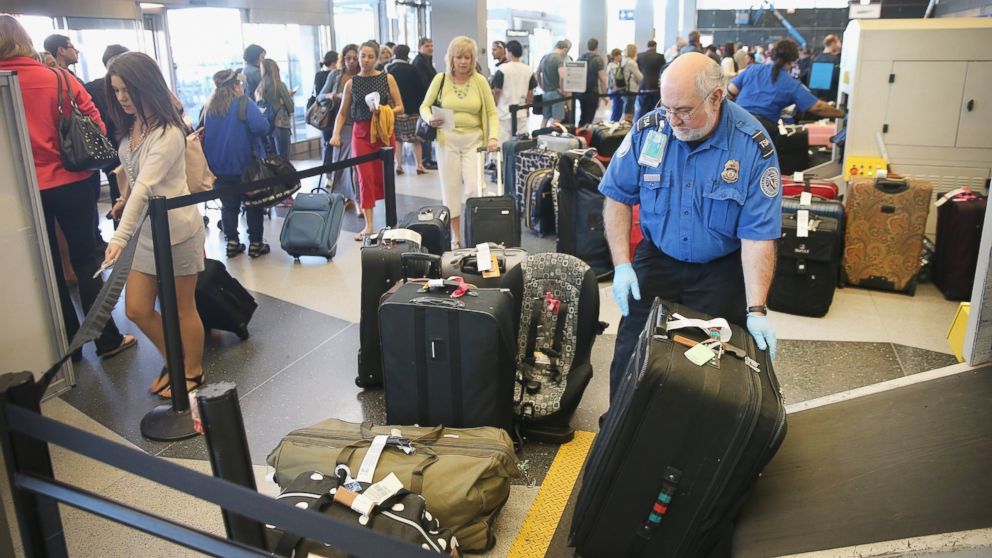
La semana comenzó con la noticia de que JetBlue estaba aumentando repentinamente las tarifas de equipaje en un 20% para la mayoría de los pasajeros en los vuelos reservados después del 27 de agosto. Unas horas más tarde, tanto Air Canada como WestJet, la segunda aerolínea más grande de Canadá, siguieron los pasos de JetBlue . Los tres transportistas terminaron por subir las tarifas de la primera facturada a $ 30 desde $ 25, mientras que las tarifas de la segunda maleta ascendieron a $ 40 desde $ 35. JetBlue, solo, elevó su tercera tarifa y luego facturó las tarifas de equipaje de $ 100 a $ 150, mientras que las bolsas de mayor tamaño y con sobrepeso vieron un aumento similar.

JetBlue, Air Canada y WestJet señalaron los crecientes costos operativos y la competencia más estricta como justificación para el aumento de las tarifas, diciendo que habían pasado varios años desde que las tarifas habían subido.

El viernes, Bloomberg informó que United Airlines silenciosamente hizo el mismo cambio, citando una justificación similar. «A medida que continuamos haciendo inversiones que mejoren los viajes en United, estamos haciendo ajustes en nuestras tarifas de equipaje documentado en mercados seleccionados, la mayoría de los cuales no han cambiado en los últimos ocho años», dijo un portavoz de la aerolínea a Bloomberg. Se enviaron declaraciones similares al personal de primera línea para compartir con los clientes curiosidad o quizás descontento con los cambios, de acuerdo con Brian Sumers de Skift .

Las tarifas de la primera tarifa registrada han subido de $ 25 a $ 30 en United, mientras que las tarifas de la segunda bolsa han subido de $ 35 a $ 40. Las tarifas de segunda bolsa para vuelos hacia y desde los mercados canadienses también se han movido hasta $ 50. Los cambios entraron en efecto de inmediato.

La medida de United fue una sorpresa para muy pocos analistas de la industria y expertos que han visto a la aerolínea esforzarse por demostrar que puede competir contra American y Delta este año. A principios de 2018, muchos expresaron sus dudas cuando la aerolínea amplió la capacidad de tres de sus centros, lo que posiblemente redujo la demanda, las tarifas y las ganancias. A mediados de julio, sin embargo, esa apuesta había dado sus frutos a medida que se llenaba la capacidad; Entre mediados de julio y septiembre, las acciones de la aerolínea aumentaron en más del 20%.

Agregar ingresos auxiliares adicionales a través de mayores tarifas por equipaje, por supuesto, continuará ayudando a United a aumentar sus ganancias y defenderse de American y Delta. En este punto del ciclo, sin embargo, es solo cuestión de tiempo hasta que los últimos dos transportistas heredados aumenten las tarifas y todas las principales aerolíneas (con la excepción de Southwest, que no cobra por el equipaje facturado) se encuentran en el mismo campo competitivo. AIRWAYS® AW-Icon TXT

Imagen relacionada

Increased luggage rates in the US

United Airlines increases baggage fees. Other airlines such as JetBlue, Air Canada and WestJet have increased the value of transport in the winery

United Airlines has become the first US airline to increase its baggage fees in what has become an expensive week for North American air travelers.

The week began with the news that JetBlue was suddenly increasing baggage fees by 20% for most passengers on flights booked after August 27. A few hours later, both Air Canada and WestJet, the second largest airline in Canada, followed in JetBlue’s footsteps. The three carriers ended up raising the first billed rates to $ 30 from $ 25, while the second suitcase rates amounted to $ 40 from $ 35. JetBlue, alone, raised its third rate and then billed the baggage fees from $ 100 to $ 150, while the larger and overweight bags saw a similar increase.

JetBlue, Air Canada and WestJet pointed to rising operating costs and tighter competition as justification for the rate increase, saying it had been several years since rates had gone up.

On Friday, Bloomberg reported that United Airlines quietly made the same change, citing a similar justification. «As we continue to make investments that improve travel at United, we are making adjustments to our checked baggage rates in selected markets, most of which have not changed in the last eight years,» an airline spokesman told Bloomberg. . Similar statements were sent to frontline staff to share with customers curiosity or perhaps dissatisfaction with the changes, according to Brian Sumers of Skift.

The first registered fare rates have gone from $ 25 to $ 30 at United, while the second bag fares have risen from $ 35 to $ 40. Second-bag fares for flights to and from Canadian markets are also They have moved up to $ 50. The changes came into effect immediately.

United’s move came as a surprise to very few industry analysts and experts who have seen the airline struggle to prove it can compete against American and Delta this year. At the beginning of 2018, many expressed their doubts when the airline expanded the capacity of three of its centers, which possibly reduced demand, rates and profits. By mid-July, however, that bet had paid off as capacity was filled; Between mid-July and September, the airline’s shares increased by more than 20%.

Adding additional ancillary revenue through higher baggage fees will, of course, continue to help United increase its profits and defend against American and Delta. At this point in the cycle, however, it is only a matter of time until the last two legacy carriers increase rates and all major airlines (with the exception of Southwest, which does not charge for checked baggage) are in the same field competitive. A \ W


Ξ A I R G W A Y S Ξ
SOURCE:  Airgways.com
DBk: Forbes.com / Abcnews.go.com / Travelandleasure.com
AW-POST: 201809021155AR

A\W   A I R G W A Y S ®

Accidente UTAir Boeing 737-800

Resultado de imagen para UTair air crash Boeing 737

AW | 2018 09 01 11:47 | AVIATION SAFETY / AIR INVESTIGATION

Accidente aéreo de aerolínea UTair Boeing 737-800 en Sochi, Federación Rusia

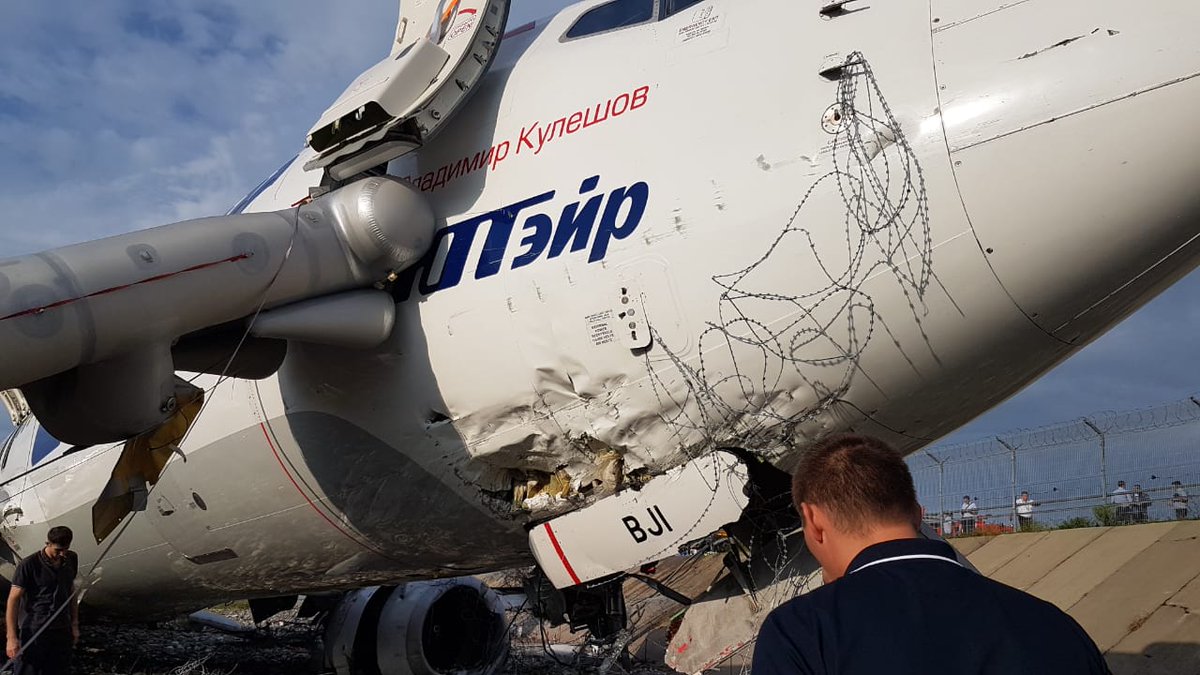
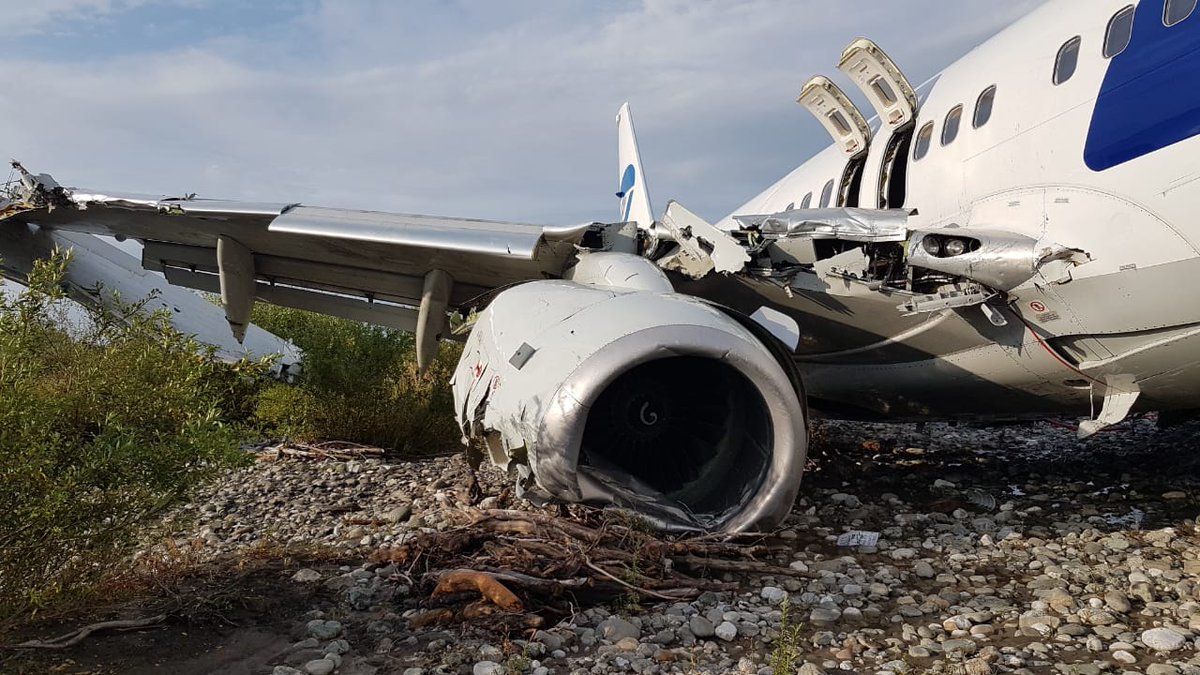
Resultado de imagen para UTair logoUn Boeing 737-800 de UTAir con registro VQ-BJI realizando el vuelo UT-579 con fecha del 31 Agosto 2018 en la ruta Moscú-Vnukovo a Sochi (Rusia) con 164 pasajeros y 6 tripulantes, aterrizó en la pista 06 de Sochi a las 02:57 L (23:57Z 31/08/2018), derrapando a final de pista, detuviéndose en el lecho de un río más allá de la pista de aterrizaje. El motor izquierdo CFM56 estalló en llamas. El avión fue evacuado, 18 ocupantes resultaron heridos, los otros permanecieron ilesos, un empleado del aeropuerto murió de un ataque al corazón. La aeronave recibió daños sustanciales irreparables.

La aeronave fue inicialmente vectorizada para un acercamiento a la pista 02 por aproximación, sin embargo, la asignación de la pista se cambió a la pista 06 debido al desarrollo del clima. La aeronave abortó la primera aproximación a la pista 06 de Sochi descendiendo a unos 2.300 pies debido a los vientos cambiantes (ahora informada de 200 grados en vez de 60 grados), posicionada para otro acercamiento a la pista 06 y voló desde aproximadamente 400 pies MSL nuevamente debido a cambios vientos, posicionado para la tercera y última aproximación a la pista 06 (vientos reportados a 2 m / s (4 nudos) desde 060 grados en la frecuencia de la torre), que terminó en la pista desbordada unos 30 minutos después del primer abordaje abortado y unos 11 minutos después la vuelta.

La aerolínea informó que la aeronave llevaba 164 pasajeros y 6 tripulantes. El avión se salió de la pista y se dejó caer en el lecho de un río, como resultado, el tren de aterrizaje y las alas colapsaron, el motor izquierdo se encendió. Los servicios de emergencia del aeropuerto de Sochi apagaron el fuego, los ocupantes fueron evacuados. Las autoridades están investigando el accidente.

El Ministerio de Salud de Rusia informó que 18 pasajeros resultaron heridos, 8 de los cuales fueron trasladados a un hospital. El Ministerio de Emergencia de Rusia informó que el avión pasó por el extremo de la pista hacia un río, el tren de aterrizaje y un ala fueron destruidos, el motor izquierdo se incendió y quemó el ala izquierda. La Fiscalía de Transportes del Sur informó que la aeronave invadió la pista, se quemaron las alas izquierda y derecha y varios pasajeros resultaron heridos. El Departamento de Investigaciones de la Fiscalía de Transportes del Sur ha abierto una investigación.

El Aeropuerto de Sochi informó que uno de sus trabajadores murió como resultado de un ataque al corazón mientras se realizaban trabajos de rescate y recuperación durante el accidente.

El Comité de Aviación Interestatal (MAK) informó que el avión VQ-BJI de UTAir rodó más allá del final de la pista después del aterrizaje y recibió daños sustanciales debido al despliegue y posterior incendio. No hubo muertes. El MAK ha establecido una comisión de investigación. AIRWAYS® AW-Icon TXT

Resultado de imagen para UTair air crash Boeing 737Imagen relacionadaVQ-BJI más allá del final de la pista (Foto: NTV)VQ-BJI en el río (Foto: Southern Transport Prosecution Office)


Accident UTAir Boeing 737-800

Airline accident of airline UTair Boeing 737-800 in Sochi, Federation Russia

A UTAir Boeing 737-800 with registration VQ-BJI making flight UT-579 dated August 31, 2018 on the Moscow-Vnukovo route to Sochi (Russia) with 164 passengers and 6 crew, landed on runway 06 in Sochi to 02:57 L (23: 57Z 08/31/2018), skidding at the end of the runway, stopping at the bottom of a river beyond the runway. The left engine CFM56 burst into flames. The plane was evacuated, 18 occupants were injured, the others remained unharmed, an airport employee died of a heart attack. The aircraft received substantial irreparable damage.

The aircraft was initially vectorized for an approach to runway 02 by approach, however, the track allocation was changed to runway 06 due to weather development. The aircraft aborted the first approach to runway 06 from Sochi descending to about 2,300 feet due to the changing winds (now reported 200 degrees instead of 60 degrees), positioned for another approach to runway 06 and flew from approximately 400 feet MSL again due to changes in winds, positioned for the third and final approach to runway 06 (winds reported at 2 m / s (4 knots) from 060 degrees on the frequency of the tower), which ended on the runway overflowing about 30 minutes later of the first aborted approach and about 11 minutes after the return.

The airline reported that the aircraft carried 164 passengers and 6 crew members. The plane left the runway and dropped into the bed of a river, as a result, the landing gear and wings collapsed, the left engine ignited. The emergency services of Sochi airport put out the fire, the occupants were evacuated. The authorities are investigating the accident.

The Russian Ministry of Health reported that 18 passengers were injured, 8 of whom were taken to a hospital. The Russian Emergency Ministry reported that the plane passed by the end of the runway to a river, the landing gear and a wing were destroyed, the left engine caught fire and burned the left wing. The Southern Transportation Prosecutor’s Office reported that the aircraft invaded the runway, the left and right wings were burned and several passengers were injured. The Investigations Department of the Southern Transportation Prosecutor’s Office has opened an investigation.

Sochi Airport reported that one of its workers died as a result of a heart attack while rescue and recovery work was carried out during the accident.

The Interstate Aviation Committee (MAK) reported that the UTAir VQ-BJI aircraft rolled past the runway end after landing and received substantial damage due to deployment and subsequent fire. There were no deaths. The MAK has established a commission of inquiry. A \ W


Ξ A I R G W A Y S Ξ
SOURCE:  Airgways.com
DBk: Avherald.com / Ntv.ru / Southern Transport Prosecution Office / Thenational.ae / Jacdec.de / Firenewsfeed.com
AW-POST: 201809011147AR

A\W   A I R G W A Y S ®

Reabre American Airlines CR Smith

Resultado de imagen para crsmithmuseum.org

AW | 2018 09 01 11:30 | AIRLINES HISTORY

El Museo Aeronáutico American Airlines CR Smith

El Museo American Airlines CR Smith reabre al público este fin de semana con motivo del Día del Trabajo en Estados Unidos, que se celebra el 3 Septiembre 2018, después de completar el rediseño de sus exposiciones permanentes. Para celebrarlo, el museo ofrecerá la entrada gratuita a los niños durante el sábado y domingo.

Imagen relacionadaEl Museo CR Smith conserva la historia de American Airlines y explica lo que se necesita para operar la aerolínea, según lo explican los miembros del equipo que trabajan allí. A través de sus actividades, el museo sirve a los empleados de American Airlines y la industria de la aviación, en el pasado y el presente, y a los miembros interesados ​​del público en general. El museo está comprometido con la educación, con un enfoque en el aprendizaje interactivo y práctico.

Este rediseño ha sido posible por las donaciones del American Airlines Group y las donaciones de Pacmin y Boeing. Más de 300 voluntarios de American Airlines han colaborado en el proceso de desarrollo del nuevo contenido y exposiciones, que está concebido para mostrar a los visitantes los diferentes puestos de los miembros de la aerolínea y cómo trabajan juntos en todas las operaciones a nivel global. Las nuevas exposiciones incluyen el Airline Command Center, que permite a los visitantes descubrir como es el trabajo de quien toma las decisiones en una aerolínea; una cabina del famoso McDonnell Douglas MD-80, que incluye una visita guiada por la cabina de pilotaje ofrecida por un capitán de la aerolínea; y una exposición de almacenamiento de equipaje, donde los visitantes podrán probar a cargar las maletas en el menor tiempo posible. El Museo CR Smith es una organización independiente sin lucro localizado en las instalaciones de American Airlines y cuyas funciones son preservar y dar a conocer la historia de la aerolínea y de la industria de la aviación en general, así como la educación de los visitantes sobre la ciencia aeronáutica, las operaciones aéreas y las diferentes carreras de aviación. AIRWAYS® AW-Icon TXT

Resultado de imagen para crsmithmuseum.org

American Airlines CR Smith Museum Reopens

The American Airlines RC Smith Aeronautical Museum

The American Airlines CR Smith Museum reopens to the public this weekend on the occasion of Labor Day in the United States, which is celebrated on September 3, 2018, after completing the redesign of its permanent exhibitions. To celebrate, the museum will offer free admission to children during Saturday and Sunday.

The CR Smith Museum preserves the history of American Airlines and explains what is needed to operate the airline, as explained by the team members who work there. Through its activities, the museum serves American Airlines employees and the aviation industry, in the past and present, and interested members of the general public. The museum is committed to education, with a focus on interactive and practical learning.

This redesign has been made possible by donations from the American Airlines Group and donations from Pacmin and Boeing. More than 300 American Airlines volunteers have collaborated in the development process of the new content and exhibitions, which is designed to show visitors the different positions of airline members and how they work together in all operations worldwide. The new exhibitions include the Airline Command Center, which allows visitors to discover what is the work of the decision maker in an airline; a cabin of the famous McDonnell Douglas MD-80, which includes a guided tour of the cockpit offered by a captain of the airline; and a baggage storage exhibition, where visitors can try to load their bags in the shortest possible time. The CR Smith Museum is an independent non-profit organization located at American Airlines facilities and whose functions are to preserve and publicize the history of the airline and the aviation industry in general, as well as the education of visitors on the aeronautical science, air operations and different aviation careers. A \ W


Ξ A I R G W A Y S Ξ
SOURCE:  Airgways.com
DBk: Crsmithmuseum.org / Mytexasvow.com / Artandseek.com
AW-POST: 201809011130AR

A\W   A I R G W A Y S ®