AW | 2018 10 24 01:00 | AIRLINES
Andes Líneas Aéreas se reestructura reduciendo su capacidad aérea

Andes Líneas Aéreas se reestructura achicando flota y suspendiendo rutas. La triste noticia que afecta a la única aerolínea de importancia de la Región Norte de Argentina se reestructura para evitar entrar en turbulencias económicas. Desde la aerolínea sostienen que las medidas son parte de una reestructuración de su plan de negocios en virtud de las modificaciones que se han registrado en el mercado aerocomercial argentino, el impacto económico y el incremento del dólar.
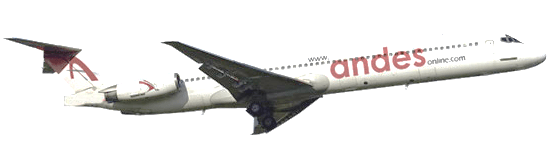
Con este panorama un tanto apretado, la aerolínea Andes se desprenderá de cuatro aviones Boeing 737-800 y dejará de volar a Tucumán, como parte de un plan de reducción de su estructura operativa. De esta manera, de los 10 aviones que tenía la empresa pasará a funcionar sólo con seis, todos de la flota McDonnell Douglas MD-83, una rama de la línea adquirida por parte de Boeing.
Impacto económico
El impacto del mayor costo del dólar que incide directamente en el costo del alquiler de las aeronaves, se agrega el costo dolarizado del valor del combustible. «Nos estamos readecuando a un mercado que ha sufrido variantes con la disparada del dólar y con la finalidad de seguir haciendo viable el funcionamiento de la empresa frente a las variables económicas que se están registrando», expresó Bernardo Racedo Aragón, Gerente Comercial de Andes Líneas Aéreas.
En el mundo de la «Revolución de los Aviones» la mayor competitividad y un escenario económico adverso está provocando una involución en la expansión aerocomercial. En estos días Aerolíneas Argentinas anunció que el déficit cero no se alcanzará en 2019; aunque los adelantos en conceptos de subsidios, ahora denominado Adelantos de Capitalización, serán necesarios para que el Grupo Aerolíneas continúe volando saludablemente. El mes de Octubre 2018 Aerolíneas Argentinas/Austral Líneas Aéreas necesitarán US$ 180 millones de dólares de inyección al capital de AR/AU. Mientras tanto, desde Latam Argentina Airlines, que está subvencionada por la multinacional soporta el déficit con entereza. El caso de Andes Líneas Aéreas, los problemas que la acucian lo autofinancian voluntariamente, por lo que los recursos no provienen de otro lado que de la misma empresa.
Reducción en Andes
El mayor impacto que afecta a la aerolínea salteña estriba en la baja demanda de los vuelos charters. El salto que pegó el dólar hizo que los viajes al exterior disminuyeran en un orden del 60-70% en general, por lo que Andes desprogramó para la temporada de verano 2018-2019. Con este panorama presente,la compañía devolverá cuatro aeronaves Boeing 737-800 a su leasor y suprimirá el destino Tucumán.
«Habíamos traído específicamente cuatro Boeing 737-800 para sostener esos vuelos charters, porque eran más económicos que los MD-83 y con mayor capacidad y por eso los programábamos de lunes a viernes para los vuelos de cabotaje y los fines de semana para los charters, con lo cual sustentábamos los costos del alquiler de los aviones”, indicó el Gerente Comercial.
La flota de nueve aviones se reducirá a cinco aviones lo que se traduce en un 40% menos de fuerza laboral, 40% menos de estructura. De los 400 vuelos que tenía la línea aérea, en la actualidad opera 100. «Habíamos traído específicamente cuatro Boeing 737-800 para sostener esos vuelos charters, porque eran más económicos que los MD-83 y con mayor capacidad y por eso los programábamos de lunes a viernes para los vuelos de cabotaje y los fines de semana para los charters, con lo cual sustentábamos los costos del alquiler de los aviones. Al disminuir considerablemente la cantidad de vuelos charters, esa ecuación se nos complicó sobremanera, por lo que decidimos afrontar lo que tenemos programado con los MD-83 que son nuestros y no tienen un costo extra por lo que en definitiva terminan siendo, hoy, más económicos. También dejamos de volar la ruta que hacía Buenos Aires-Tucumán-Salta porque fue una de las últimas que se abrieron y teníamos la necesidad de reducir frecuencias, pero mantendremos el resto y no descartamos la incorporación de otro MD-83», indicó el Gerente Comercial de Andes Líneas Aéreas.
Andes se encuentra en un proceso adecuandose al mercado argentino, en el momento de crecer loa compañía se expandió, avanzó y consolidó; en la actualidad la aerolínea de la Provincia de Salta da dos pasos atrás, pero aún así reconocen que están mejor que cuando iniciamos nuestro proceso de expansión.
«Esta revolución de los aviones que inició el Gobierno tendrá, hasta los próximos dos o tres años una gran expansión con muchos más pasajeros volando en Argentina, pero aún restan muchas variables que se pueden dar. Lo que sí es seguro es que Andes quiere estar ahí cuando eso suceda», concluyó Bernardo Racedo Aragón. De esta forma, con los cinco aviones McDonnell Douglas MD-83 que mantendrá operativos, Andes Líneas Aéreas continuará volando a Jujuy, Buenos Aires, Mendoza, Córdoba, Iguazú, Bariloche, Puerto Madryn y Comodoro Rivadavia. 

Andes reduces its aerial capacity
Andes Líneas Aéreas is restructured by reducing its air capacity
Andes Líneas Aéreas is restructuring by shrinking its fleet and suspending routes. The sad news that affects the only important airline in the Northern Region of Argentina is restructured to avoid entering economic turbulence. From the airline argue that the measures are part of a restructuring of its business plan under the changes that have been recorded in the Argentine commercial market, the economic impact and the increase of the dollar.
With this somewhat tight picture, the airline Andes will divest four Boeing 737-800 aircraft and stop flying to Tucumán, as part of a plan to reduce its operating structure. In this way, of the 10 planes that the company had, it will start operating with only six, all of the McDonnell Douglas fleet, a branch of the line acquired by Boeing.
Economic impact
The impact of the higher cost of the dollar that directly affects the cost of renting the aircraft is added to the dollarized cost of the fuel value. «We are adapting to a market that has undergone variations with the dollar firing and in order to continue making viable the operation of the company against the economic variables that are being recorded», said Bernardo Racedo Aragón, Commercial Manager of Andes Líneas Aéreas.
In the world of the «Aircraft Revolution» the greater competitiveness and an adverse economic scenario is causing an involution in the commercial air expansion. In these days Aerolíneas Argentinas announced that the zero deficit will not be reached in 2019; although the advances in concepts of subsidies, now called Capitalization Advances, will be necessary for the Aerolíneas Group to continue flying healthily. The month of October 2018 Aerolíneas Argentinas/Austral Líneas Aéreas will need US$ 180 million of injection to the capital of AR/AU. Meanwhile, from Latam Argentina Airlines, which is subsidized by the multinational, supports the deficit with integrity. The case of Andes Líneas Aéreas, the problems that accused it, voluntarily self-financed, so that resources do not come from elsewhere than from the same company.
Reduction in Andes
The greatest impact that affects the airline from Salta is the low demand of charter flights. The jump that struck the dollar caused that the trips to the outside diminished in an order of 60-70% in general, reason why Andes desprogramó for the season of summer 2018-2019. With this present scenario, the company will return four Boeing 737-800 aircraft to its leasor and will suppress the Tucumán destination.
«We had specifically brought four Boeing 737-800 to support those charter flights, because they were cheaper than the MD-83 and with greater capacity and that’s why we programmed them from Monday to Friday for cabotage flights and weekends for charter flights, with which we supported the costs of renting the planes», said the Commercial Manager.
The fleet of nine aircraft will be reduced to five aircraft, which translates into 40% less workforce, 40% less structure. Of the 400 flights that the airline had, it currently operates 100. «We had specifically brought four Boeing 737-800 to support those charter flights, because they were cheaper than the MD-83 and with greater capacity and that’s why we programmed them Monday through Friday for cabotage flights and weekends for charters, which supported the costs of renting the aircraft.When the number of charter flights decreased considerably, this equation became very complicated for us, so we decided to face what we have programmed with the MD-83 that are ours and do not have an extra cost for what ultimately end up being, today, more economical.We also stopped flying the route that made Buenos Aires-Tucumán-Salta because it was one of the The last ones were opened and we had the need to reduce frequencies, but we will keep the rest and we do not rule out the incorporation of another MD-83», said the Commercial Manager of Andes Líneas Aéreas.
Andes is in a process adapting to the Argentine market, at the time of growth the company expanded, advanced and consolidated; at present the airline of the Province of Salta takes two steps back, but still recognize that they are better than when we started our expansion process.
«This revolution of the planes that the Government started will have, until the next two or three years, a great expansion with many more passengers flying in Argentina, but there are still many variables that can be given. What is certain is that Andes wants to be there when that happens», concluded Bernardo Racedo Aragón. In this way, with the five McDonnell Douglas MD-83 aircraft that will remain operational, Andes Líneas Aéreas will continue flying to Jujuy, Buenos Aires, Mendoza, Córdoba, Iguazú, Bariloche, Puerto Madryn and Comodoro Rivadavia. A \ W
Ξ A I R G W A Y S Ξ
SOURCE: Airgways.com
DBk: Andesonline.com.ar / Airgways.com
AW-POST: 201810240100AR
A\W A I R G W A Y S ®
 airgways.com