
AW | 2017 06 18 12:42 | AIR SHOW
PARIS AIR SHOW LE BOURGET 2017 / DOMINGO, 18 2017
 Los nuevos «narrowbodies» dominan en París este año, ya que Airbus y Boeing se enfrentan a la debilidad de la demanda de sus aviones de gran tamaño
A medida que los fabricantes de aviones civiles se reúnen para el Paris Air Show 2017, están recibiendo señales de demanda mixta del mercado. A pesar de la caída masiva de la nueva actividad de pedidos tanto de Airbus como de Boeing desde el año pasado, los atrasos siguen siendo más que saludables y los niveles de producción se están expandiendo. IATA ha estado informando cifras de tráfico mejores de lo esperado para los primeros meses de 2017, lo que indica que los volúmenes siguen siendo resistentes por ahora. Pero otros advierten que los buenos tiempos pronto podrían haber terminado.
El crecimiento a corto plazo sigue siendo probable, al menos para los próximos 12 a 18 meses, dijo Adam Pilarski, vicepresidente senior de Avitas, en la reciente conferencia ISTAT Asia en Hong Kong. Pero él y otros expertos predijeron que el pico del ciclo está cerca. Pilarski cree que «los problemas a largo plazo están aumentando y la burbuja se está expandiendo». «Me estoy alejando de asumir que la burbuja comenzará lentamente a desinflarse, a una mayor probabilidad de que estalle», dice Laurent Delvart, director de aviación asiática de Credit Agricole, señaló que habrá una recesión. «No creo en la teoría de que esta vez será diferente», dijo.
La industria logró «resultados extremadamente buenos» el año pasado, dijo Delvart. Y aunque no es necesariamente el comienzo de un deslizamiento más amplio, los números generalmente han bajado en el primer trimestre de este año. Los precios de los combustibles «no han subido drásticamente», pero los rendimientos han sido más bajos debido a la capacidad extra que entra en el mercado.
Para Boeing, el Salón Aeronáutico de París 2017 es una oportunidad clave para mostrar el 737 MAX en un momento crítico para el programa. La compañía está inclinada a utilizar el evento para lanzar oficialmente el 737-10, su contador de largo debate contra el A321NEO y el cuarto derivado principal de la familia. También destacará el progreso en el 737-9, que entró en prueba de vuelo en abril, así como marcar el inicio de las entregas de MAX, que comenzó con la entrega del primer 737-8 a Malindo Air el 16 de mayo.
Después de haber disfrutado de una ruta de desarrollo relativamente sin obstáculos para el MAX, el drama tardío asociado con el descubrimiento a principios de mayo de una posible falla de forja en algunos de los motores CFM Leap-1B de la aeronave fue una interrupción no deseada. Aunque Boeing y CFM fueron capaces de re-shuffle motores para reanudar los vuelos de aceptación del cliente y entregar el primer avión de sólo 24 horas. Más tarde que su calendario revisado recientemente, el fabricante de la aeronave todavía está tratando con las ediciones posteriores. Estos incluyen una inevitable desaceleración de la pre-entrega 737-8 de producción y vuelos de los clientes, así como las pruebas de vuelo de la 737-9.
El primer 737-9, que acababa de completar las pruebas iniciales de aeronavegabilidad cuando se detuvo el vuelo a principios de mayo, estaba a punto de comenzar los controles de aleteo y no había reanudado las pruebas de vuelo el 17 de mayo. Afortunadamente Boeing dice que el programa 737-9, Del 737-8, estaba adelantado al calendario, proporcionando cierto margen. Sin embargo, Boeing sigue confiando en ponerse al día rápidamente y espera comenzar 737-8 entregas a noruego y suroeste en julio y septiembre, respectivamente.
El progreso en las ventas del 737-10 también será un punto de conversación. Aprobado por la junta directiva de Boeing a finales del año pasado para ofrecer a las aerolíneas, Boeing ha tenido por lo menos siete meses sólidos en los que acumular suficientes pedidos para un lanzamiento firme en el show. La compañía reveló más sobre su campaña 737-10 en marzo en la conferencia ISTAT Americas en San Diego.
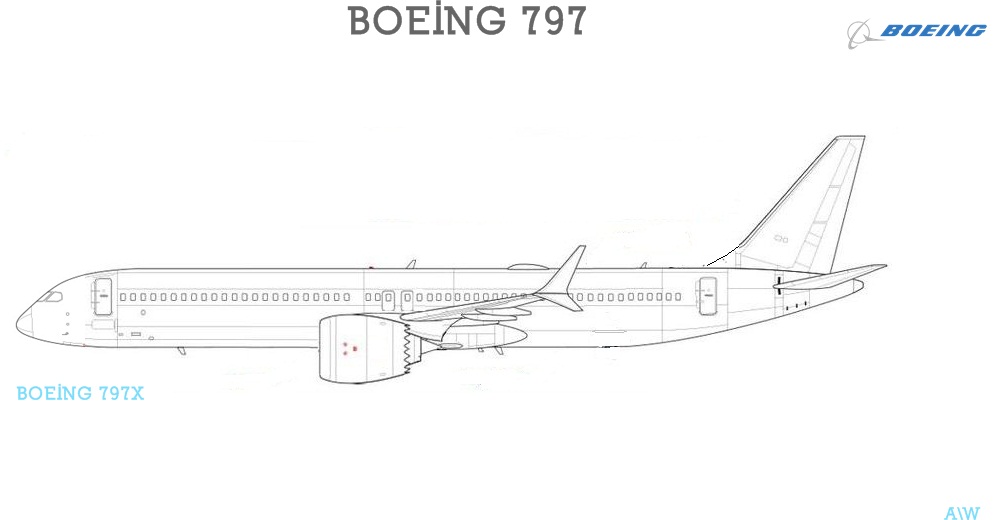
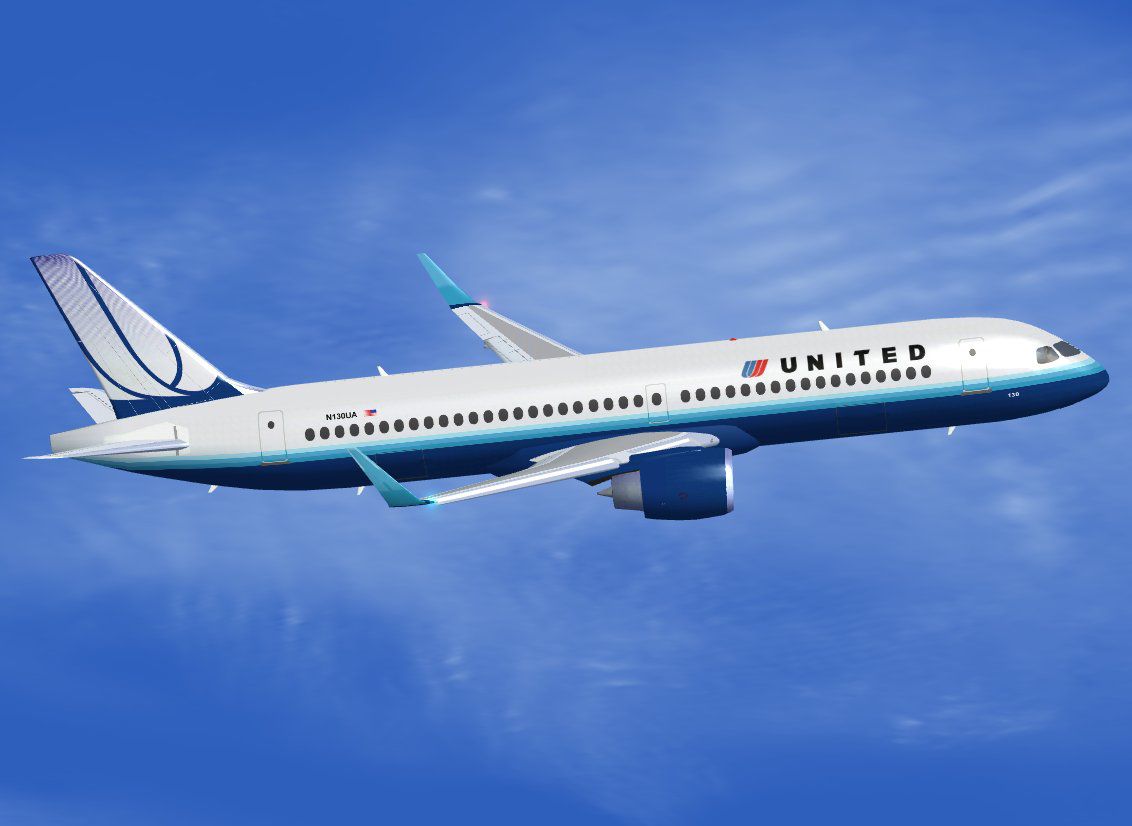
Airbus, mientras tanto, disfruta de una cuota de mercado cómoda frente al 737 MAX y tiene pocas apuro para hacer movimientos adicionales. Dicho esto, Airbus está estudiando opciones de un ala compuesta para aviones de cuerpo estrecho, un camino que la compañía ha evitado hasta ahora porque no estaba convencido de los beneficios. El 797 propuesto podría ser el catalizador para el cambio, sobre todo si la combinación de una estructura existente y adaptada con esa nueva ala y nuevos motores permitiría a Airbus evitar tener que invertir en un avión completamente nuevo para la categoría.
Para competir con la NMA, Airbus tendría que estirar aún más el A321NEO. El avión, en su disposición más alta densidad, puede actualmente acomodar alrededor de 240 pasajeros, pero esa versión no sería capaz de volar distancias transatlánticas. La A321LR, la versión de largo alcance de la familia, está actualmente prevista para un alcance máximo de 4.000 nm y Airbus ha estado buscando maneras de extender ese rango de unos pocos cientos de kilómetros. 
PHOTO’S SHOW

EMBRAER E195-E2 DESPLEGADO EN PARIS AIR SHOW 2017

AIRBUS A380-800
Paris Air Show Le Bourget 2017 begins
PARIS AIR SHOW LE BOURGET 2017 / SUNDAY, 18 2017
New narrowbodies dominate at Paris this year, as Airbus and Boeing face continue weakness in demand for their “Show”ier widebody jets
As civil aircraft manufacturers gather for this year’s Paris Air Show 2017, they are receiving mixed demand signals from the market. In spite of the massive drop in new order activity for both Airbus and Boeing since last year, backlogs are still more than healthy and production levels are expanding. IATA has been reporting better than expected traffic figures for the first few months of 2017, indicating that volumes remain resilient for now. But others warn the good times may soon be over.
Short-term growth is still likely, at least for the next 12 to 18 months, said Adam Pilarski, senior VP for Avitas, at the recent ISTAT Asia conference in Hong Kong. But he and other experts in predicted that the peak of the cycle is nigh. Pilarski believes that “long-term problems are mounting and the bubble is expanding.” “I’m moving away from assuming the bubble will start slowly deflating, to a higher probability of it bursting,” he says Laurent Delvart, head of Asian aviation for Credit Agricole, noted that a downturn will come. “I’m not a believer in [the theory] that this time will be different,” he said.
The industry achieved “extremely good results” last year, said Delvart. And while it is not necessarily the start of a broader slide, numbers have generally been down in the first quarter of this year. Fuel prices have “not gone up dramatically,” but yields have been lower due to extra capacity coming into the market.
For Boeing, the 2017 Paris air show is a key opportunity to showcase the 737 MAX at a critical time for the program. The company is tipped to use the event to officially launch the 737-10, its long-debated counter to the A321neo and the fourth major derivative of the family. It will also highlight progress on the 737-9, which entered flight test in April, as well as mark the start of MAX deliveries which began with the handover of the first 737-8 to Malindo Air on May 16.

A Boeing 737 Max moves on the tarmac in le Bourget near Paris prior to the opening of the International Paris Airshow, on Monday
Having enjoyed a relatively hurdle-free development path for the MAX, the late drama associated with the discovery in early May of a potential forging flaw in some of the aircraft’s CFM Leap-1B engines came as an unwelcome interruption. Although Boeing and CFM were able to re-shuffle engines to resume customer acceptance flights and deliver the first aircraft a mere 24 hrs. later than its lately revised schedule, the aircraft manufacturer is still dealing with the downstream issues. These include an inevitable slow down on pre-delivery 737-8 production and customer flights, as well as flight testing of the 737-9.
The first 737-9, which had just completed initial airworthiness testing when flying was stopped in early May, was about to begin flutter checks and had not resumed flight tests as of May 17. Fortunately Boeing says the 737-9 test program, like that of the 737-8, was ahead of schedule, providing some margin. Boeing remains confident of catching up quickly, however, and expects to begin 737-8 deliveries to Norwegian and Southwest in July and September, respectively.
Progress on sales of the 737-10 will also be a talking point. Approved by the Boeing board late last year for offer to airlines, Boeing has had at least seven solid months in which to accrue sufficient orders for a firm launch at the show. The company revealed more about its 737-10 campaign in March at the ISTAT Americas conference in San Diego.
Airbus, meanwhile, enjoys a comfortable market share vis-à-vis the 737 MAX and is in little hurry to make additional moves. That said, Airbus is studying options a composite wing for narrowbody aircraft, a path the company has so far avoided because it was not convinced of the benefits. The proposed 797 could be the catalyst for change, particularly if the combination of an existing, adapted airframe with that new wing and new engines would allow Airbus to avoid having to invest in an all-new aircraft for the category.
In order to compete with the NMA, Airbus would have to stretch the A321neo further. The aircraft, in its highest density lay-out, can currently accommodate around 240 passengers, but that version would not be capable of flying transatlantic distances. The A321LR, the long-range version of the family, is currently planned for a maximum range of 4,000 nm and Airbus has been looking for ways to extend that range by a few hundred miles. A \ W
Ξ A I R G W A Y S Ξ
SOURCE: Aviationweek.com
DBk: Saae.fr / Todayonline.com / AFP
AW-POST: 201706181242AR
A\W A I R G W A Y S ®




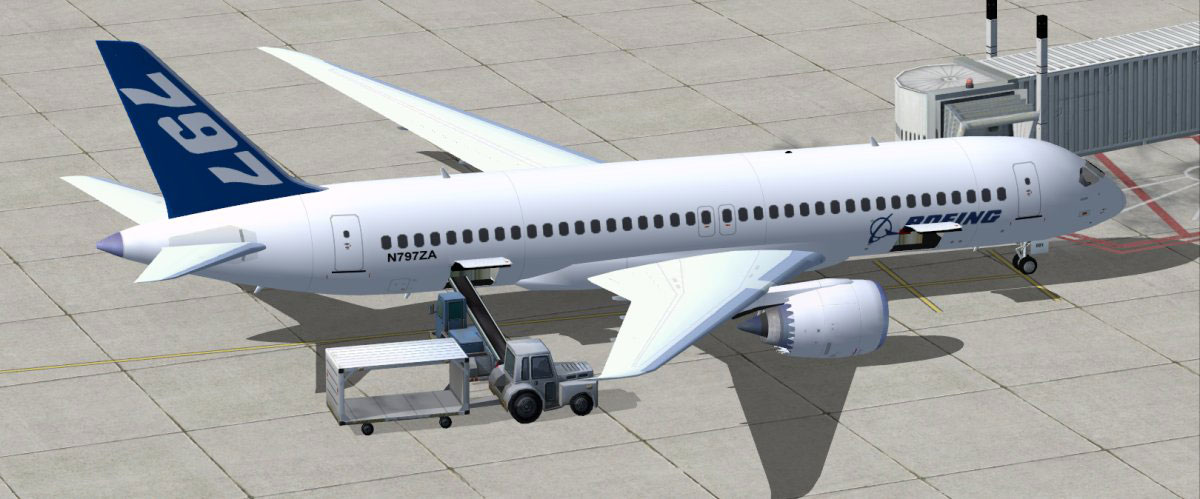
 The Boeing Co. podría develar en Paris Air Show 2017 el nuevo avión de alcance de rango medio


 airgways.com