AW | 2022 10 19 14:44 | AIR INVESTIGATION / AVIATION SAFETY
Vuelo UA-2274 United Airlines sufre explosión neumáticos
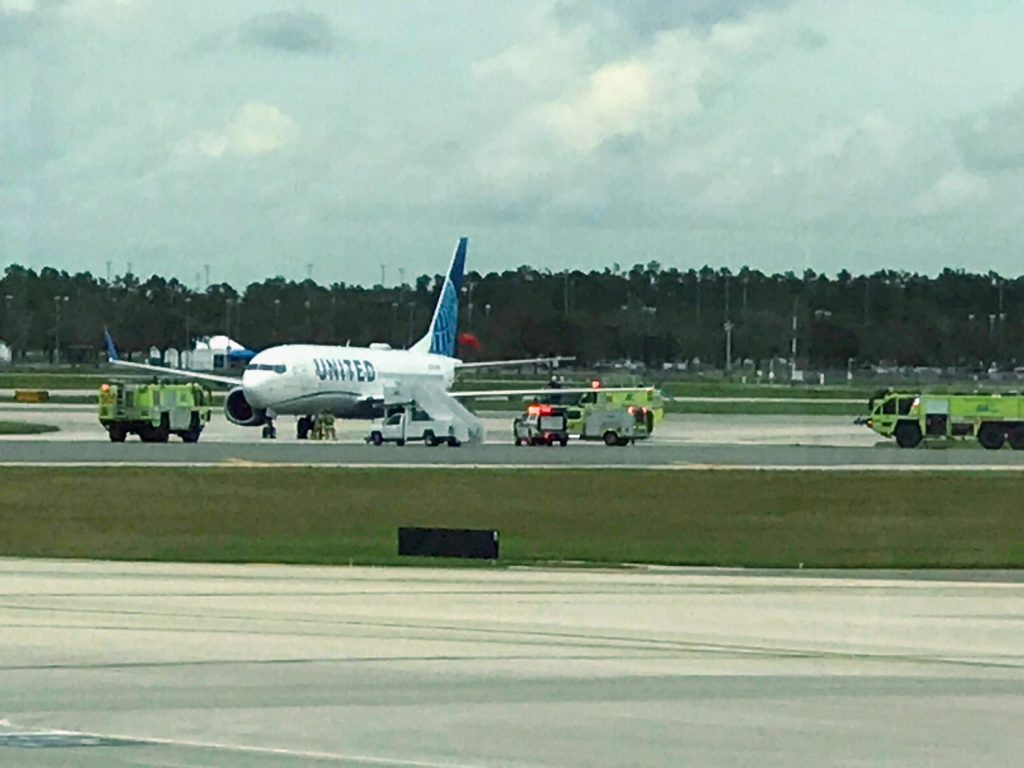
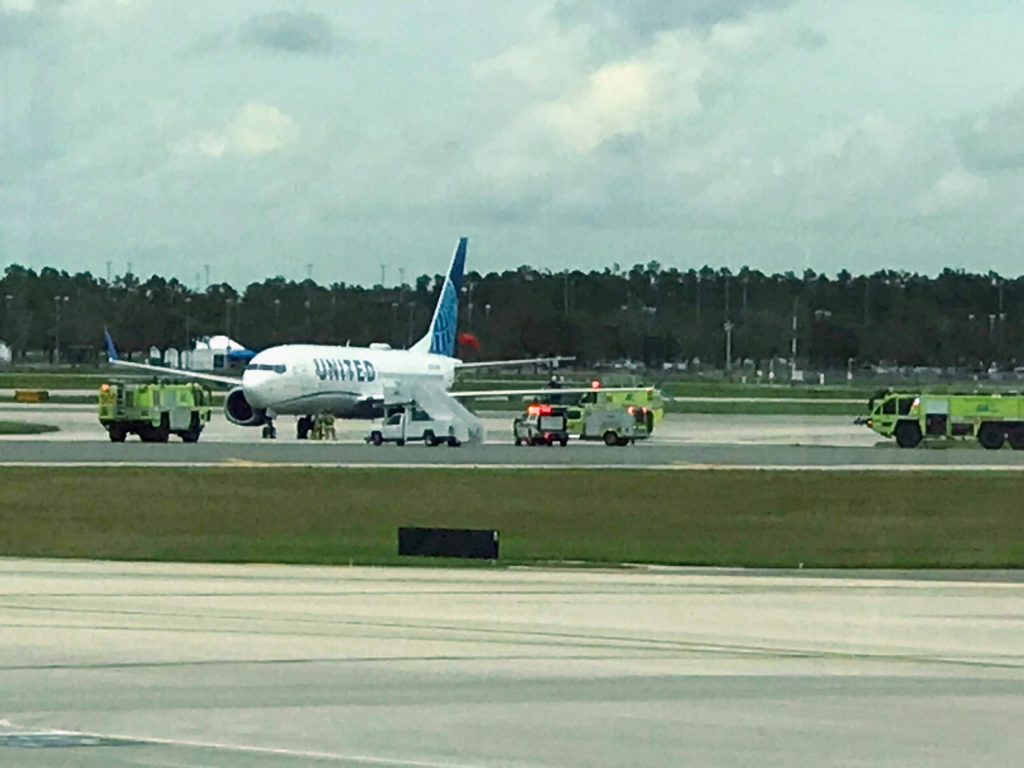
Un Boeing 737-8 MAX de United Airlines, registro N27253 que realizaba el vuelo UA-2274 desde Newark/EWR, New Jersey, a Fort Myers/RSW, Florida, Estados Unidos, a bordo con 154 pasajeros y 6 tripulantes, aterrizó en la Pista 24 de Fort Myers reventando dos neumáticos. El avión se detuvo en la pista y quedó inhabilitado. Los pasajeros desembarcaron en la pista por escaleras y fueron llevados a la terminal del aeropuerto.
El Aeropuerto Fort Myers/RSW tuvo que estar cerrado durante aproximadamente nueve horas hasta que el avión fue sacado de la pista. El avión continúa en tierra en Fort Myers para su peritaje. A raíz del incidente aéreo, miles de pasajeros quedaron varados en la terminal aérea durante todo el día, y muchos presumiblemente perdieron las conexiones. Otros pasajeros en ruta a Fort Myers se encontraron en Miami o Fort Lauderdale.
El Boeing 737-8 MAX se detuvo un poco más de la mitad de la pista de 12,000 pies, terminando en una Calle de Rodaje cerca de la Torre de Control de 168 pies de altura.
La Autoridad Portuaria del Condado de Lee no notificó al público sobre el problema del cierre de la pista ni en su página de Facebook ni en el sitio web de LCPA. No se hicieron anuncios en absoluto en el edificio de la terminal para notificar a los pasajeros que la pista estaba cerrada para que ningún vuelo pudiera despegar. Sin embargo, se hicieron muchos anuncios sobre asegurarse de que las mascotas estuvieran atadas o en un transportín en el edificio de la terminal.
Las llegadas estaban siendo desviadas a otros aeropuertos en el sur de Florida. La pista del Aeropuerto Internacional del Suroeste de Florida estuvo cerrada hasta las 07:00 p.m., según la Federal Aviation Administration (FAA).
Incident 737 MAX United Airlines
United Airlines Flight UA-2274 Suffers Tire Explosion
A United Airlines Boeing 737-8 MAX, registration N27253, on flight UA-2274 from Newark/EWR, New Jersey, to Fort Myers/RSW, Florida, United States, with 154 passengers and 6 crew members on board, landed at the Fort Myers runway 24 blowing out two tires. The aircraft stopped on the runway and was disabled. Passengers disembarked on the runway via stairs and were taken to the airport terminal.
Fort Myers/RSW Airport had to be closed for approximately nine hours before the plane was taken off the runway. The plane remains on the ground in Fort Myers for its expertise. In the aftermath of the plane crash, thousands of passengers were stranded at the air terminal throughout the day, with many presumably missing connections. Other passengers en route to Fort Myers were found in Miami or Fort Lauderdale.
The Boeing 737-8 MAX stopped just over halfway down the 12,000-foot runway, ending up on a Taxiway near the 168-foot-tall Control Tower.
The Lee County Port Authority did not notify the public of the runway closure issue on either its Facebook page or the LCPA website. No announcements were made at all in the terminal building to notify passengers that the runway was closed so no flights could take off. However, many announcements were made about making sure pets were on a leash or in a carrier in the terminal building.
Arrivals were being diverted to other airports in South Florida. The runway at Southwest Florida International Airport was closed until 07:00 p.m., according to the Federal Aviation Administration (FAA).
PUBLISHER: Airgways.com DBk: United.com / Faa.gov / Flylcpa.com / Fort-myers-airport.com / Airgways.com AW-POST: 202210191444AR OWNERSHIP: Airgways Inc. A\W A I R G W A Y S ®
Incorporación doce aviones para 4Q2022 Actualización a diecisiete 737-800 para 2023
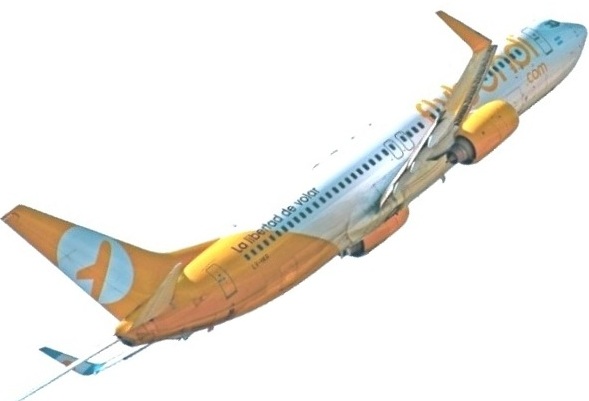
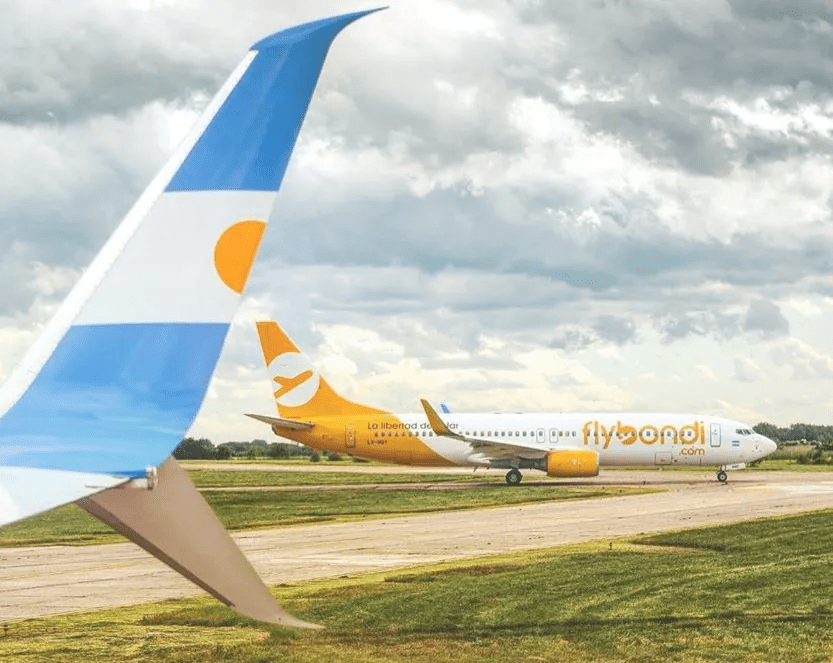
La low cost argentina Flybondi Líneas Aéreas ha anunciado un fuerte crecimiento de la compañía enfocada en la expansión en el país y en la región. En el 18º Foro ALTA AGM & Airline Leaders desarrollado en la Ciudad de Buenos Aires, Argentina, realizó nuevos anuncios sobre su Plan 2X de crecimiento e inversión. En el marco de la 18va. edición de ALTA AGM & Airline Leaders Forum, la principal conferencia de líderes de la industria de la aviación comercial en América Latina y el Caribe, organizada por la Asociación Latinoamericana y del Caribe de Transporte Aéreo (ALTA), Flybondi anunció la llegada de más aviones para 2022, planes de expansión de aeronaves y rutas.
Flybondi ha incorporado en Octubre 2022 el octavo avión Boeing 737-800 mientras que próximamente, arribarán dos nuevas aeronaves adicionales a su flota. Además, buscará finalizar el año con la llegada de dos unidades más para alcanzar una flota de doce (12) aviones. El incremento de capacidad permitirá aumentar y reforzar las frecuencias de las rutas tanto nacionales como internacionales, preparándose también para una fuerte temporada alta de verano meridional. En su proyección de continuar con el crecimiento de capacidad y oferta hacia nuevos destinos nacionales y regionales, la línea área anunció que lanzará al mercado de leasing una búsqueda de por lo menos cinco aviones Boeing 737-800 para incorporar a su flota el próximo año 2023.
Flybondi, según datos del Informe Mensual que realiza la Administración Nacional de Aviación Civil Argentina (ANAC), es la segunda aerolínea más grande de Argentina en capacidad y con un 18% de cuota de mercado doméstico, duplicando el market share de 2019. Además, es la compañía con mayor ocupación en sus vuelos (94%). Cabe destacar que la primera low cost ya transportó un 87% más de pasajeros respecto a septiembre de 2019, y se acerca a uno de los objetivos propuesto al anunciar el plan de crecimiento. “Nos encanta poder dar estas noticias en un escenario de recuperación y crecimiento. Son motivo de orgullo de los más de 1050 flybondiers que día a día trabajamos para democratizar los vuelos en Argentina y la región, convencidos de que hay un gran mercado por conquistar. Hoy pudimos confirmar que buscaremos tener doce aviones operativos en los próximos meses, y que nos lanzamos al mercado de leasing para buscar más flota para 2023, que traerán nuevas rutas domésticas y más países de la región conectados con Argentina”, expresó entusiasta Mauricio Sana, CEO de Flybondi.
Flybondi se posiciona como segunda aérea importancia en Argentina
“El mercado doméstico está en un 90% de recuperación. Basándonos en esos números, el próximo mes estaríamos completando los diez aviones y sumaríamos dos más para tener doce aviones volando en la Argentina. Además, lo que estamos proyectando, en base a lo que vemos y el compromiso con el mercado argentino, es sumar mínimo cinco aviones adicionales en 2023. Con esta flota podríamos estar hablando de que a final de 2023 estaríamos en todas las provincias argentinas y fortaleciendo las rutas regionales”, afirmó el CEO de la low cost argentina.
Flybondi comenzó a operar en Argentina en 2018 y transportó a más de 5.000.000 personas, de los cuales 20% son personas que vuelan en avión por primera vez en su vida. Tiene una flota de ocho (8) aviones Boeing 737-800 Next Generation con 189 asientos de única clase y vuela a diecisiete destinos domésticos que incluyen Buenos Aires, Bariloche, Comodoro Rivadavia, Córdoba, Corrientes, El Calafate, Iguazú, Jujuy, Mendoza, Neuquén, Posadas, Puerto Madryn, Salta, Santiago del Estero, Trelew, Tucumán y Ushuaia. Actualmente vuela a dos destinos internacionales en Brasil: Río de Janeiro y São Paulo, mientras que para Diciembre 2022 retorna sus vuelos hacia Florianópolis.
Aeropuerto El Palomar
El CEO de Flybondi, Mauricio Sana, dejó una contundente frase respecto a la vuelta del Aeropuerto El Palomar en 2023. En el marco de la edición número 18 de la ALTA AGM & Airline Leaders Forum, el CEO de Flybondi se refirió a la posibilidad de que vuelva a operar el Aeropuerto El Palomar/EPA el año que viene en caso de que la oposición se imponga en las elecciones presidenciales. «Continúa cerrado y no tenemos previsto volver allí en 2023. Nuestra operación no tiene color político, pero el problema es que este país adolece de una política aerocomercial. Trabajamos mucho para que las rutas que ofrecemos sean rentables», sentenció durante el evento que se desarrolló en el Hotel Hilton de Buenos Aires.
Algunos meses atrás, el desmantelamiento del Aeropuerto El Palomar volvió a estar en el ojo de la tormenta debido a una serie de fotos que trascendieron por parte de vecinos y políticos locales donde se ve a camiones de gran porte sacando elementos de Flybondi del lugar. Al respecto, el ex-Intendente de Morón, Ramiro Tagliaferro, sentenció que están «destruyendo los sueños de millones de argentinos que tenían por primera vez la oportunidad de volar. No tienen perdón» a través de sus redes sociales. Cabe recordar que el Jefe Comunal actual, Lucas Ghi, reiteró en muchas oportunidades su voluntad de reapertura.
Flybondi announces strong expansion
Incorporation of twelve aircraft for 4Q2022 Upgrade to seventeen 737-800s by 2023
The Argentine low cost Flybondi Líneas Aéreas has announced a strong growth of the company focused on expansion in the country and in the region. At the 18th ALTA AGM & Airline Leaders Forum held in the City of Buenos Aires, Argentina, it made new announcements about its 2X Plan for growth and investment. Within the framework of the 18th edition of ALTA AGM & Airline Leaders Forum, the main conference of leaders of the commercial aviation industry in Latin America and the Caribbean, organized by the Latin American and Caribbean Air Transport Association (ALTA), Flybondi announced the arrival of more aircraft by 2022, aircraft and route expansion plans.
Flybondi has incorporated the eighth Boeing 737-800 aircraft in October 2022, while two new additional aircraft will soon arrive in its fleet. In addition, it will seek to end the year with the arrival of two more units to reach a fleet of twelve (12) aircraft. The increase in capacity will make it possible to increase and reinforce the frequencies of both national and international routes, also preparing for a strong high season in the southern summer. In its projection to continue with the growth of capacity and supply to new national and regional destinations, the airline announced that it will launch a search for at least five Boeing 737-800 aircraft in the leasing market to incorporate into its fleet next year 2023.
Flybondi, according to data from the Monthly Report carried out by the Argentine National Civil Aviation Administration (ANAC), is the second largest airline in Argentina in terms of capacity and with an 18% share of the domestic market, doubling the market share of 2019. In addition, It is the company with the highest occupancy on its flights (94%). It should be noted that the first low cost already transported 87% more passengers compared to September 2019, and is approaching one of the objectives proposed when announcing the growth plan. “We love being able to give this news in a scenario of recovery and growth. They are a source of pride for the more than 1,050 flybondiers who work every day to democratize flights in Argentina and the region, convinced that there is a large market to conquer. Today we were able to confirm that we will seek to have twelve operational aircraft in the coming months, and that we are launching ourselves into the leasing market to seek more fleet by 2023, which will bring new domestic routes and more countries in the region connected to Argentina”, expressed enthusiastic Mauricio Sana, Flybond CEO.
“The domestic market is in a 90% recovery. Based on those numbers, next month we would be completing the ten planes and we would add two more to have twelve planes flying in Argentina. In addition, what we are projecting, based on what we see and the commitment to the Argentine market, is to add at least five additional aircraft in 2023. With this fleet, we could be talking about the fact that by the end of 2023 we would be in all the Argentine provinces and strengthening the regional routes”, affirmed the CEO of the Argentine low cost.
Flybondi began operating in Argentina in 2018 and transported more than 5,000,000 people, of which 20% are people who fly by plane for the first time in their lives. It has a fleet of 8 Boeing 737-800 Next Generation aircraft with 189 single class seats and flies to seventeen domestic destinations including Buenos Aires, Bariloche, Comodoro Rivadavia, Córdoba, Corrientes, El Calafate, Iguazú, Jujuy, Mendoza, Neuquén, Posadas, Puerto Madryn, Salta, Santiago del Estero, Trelew, Tucumán and Ushuaia. It currently flies to two international destinations in Brazil: Rio de Janeiro and São Paulo, while in December 2022 it will return to Florianópolis.
El Palomar Airport
The CEO of Flybondi, Mauricio Sana, left a strong statement regarding the return of El Palomar Airport in 2023. Within the framework of the 18th edition of the ALTA AGM & Airline Leaders Forum, the CEO of Flybondi referred to the possibility of that the El Palomar/EPA Airport resume operations next year in case the opposition prevails in the presidential elections. «It is still closed and we do not plan to return there in 2023. Our operation has no political color, but the problem is that this country suffers from an aviation policy. We work hard to make the routes we offer profitable», he said during the event that took place developed in the Hilton Hotel in Buenos Aires.
A few months ago, the dismantling of El Palomar Airport was once again in the eye of the storm due to a series of photos that emerged from neighbors and local politicians where large trucks are seen removing Flybondi elements from the site. In this regard, the former Mayor of Morón, Ramiro Tagliaferro, stated that they are «destroying the dreams of millions of Argentines who had the opportunity to fly for the first time. They have no forgiveness» through their social networks. It should be remembered that the current Communal Chief, Lucas Ghi, reiterated his willingness to reopen on many occasions.
PUBLISHER: Airgways.com DBk: Flybondi.com / Airgways.com AW-POST: 202210191405AR OWNERSHIP: Airgways Inc. A\W A I R G W A Y S ®
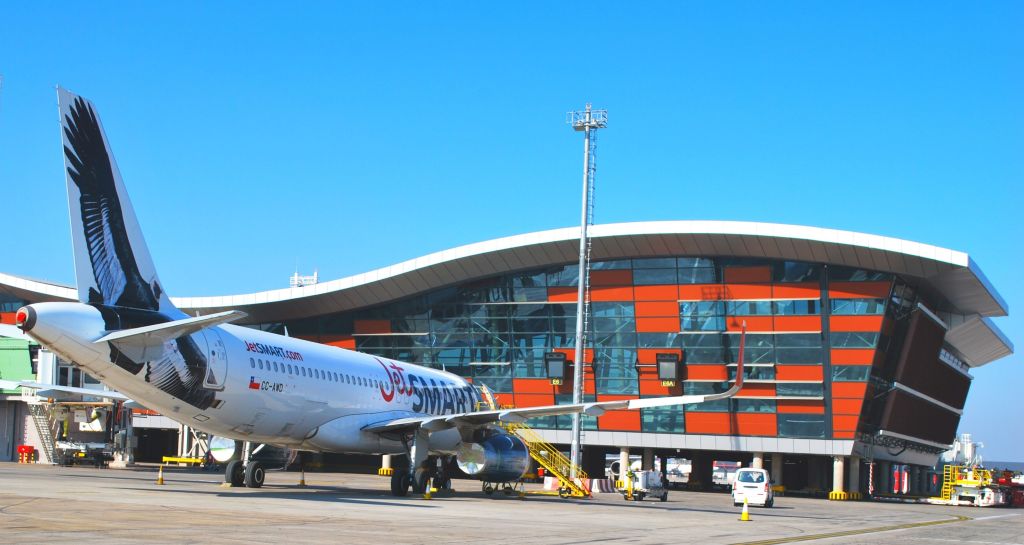
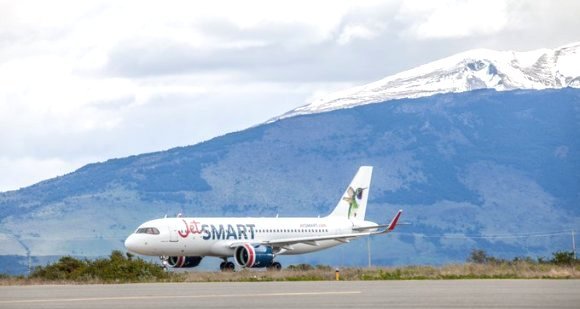
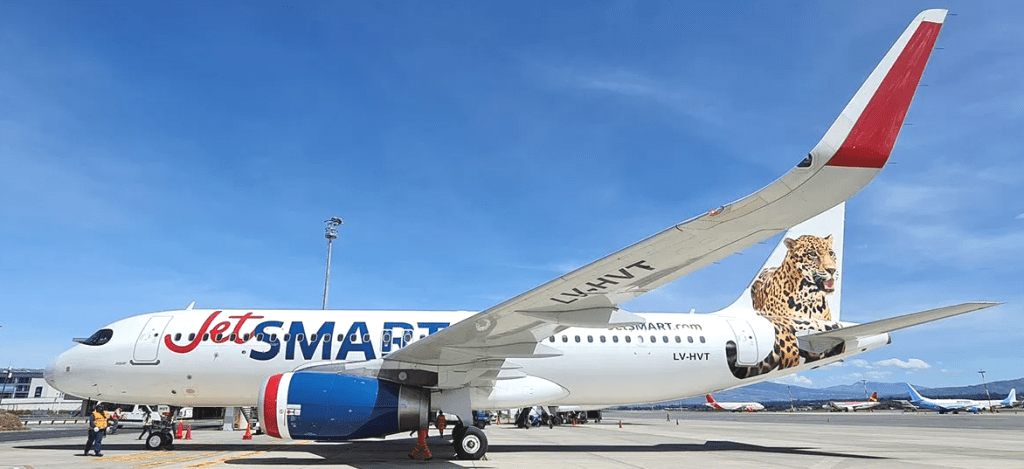
JetSMART Group proyecta crecimiento 60% a Diciembre 2022
JetSMART Airlines Group ha anunciado la expansión de sus servicios en Sudamérica, lo que permitirá en el corto plazo retomar el crecimiento apoyado por el rápido posicionamiento en Sudamérica con la expansión en Chile, Argentina y Perú. Tras el paso de la crisis sanitaria global, JetSMART se prepara para agregar más capacidad operativa. Tras el 18º Foro de Líderes de la Asociación Latinoamericana y del Caribe de Transporte Aéreo desarrollado en Buenos Aires, Argentina, el CCO Víctor Mejía expresó: “La pandemia puso en toda la industria el desafío más grande que hemos tenido que enfrentar. En el caso nuestro, tuvimos que retrasar el crecimiento por dos años y ahora vamos a incrementar la capacidad de la compañía en los próximos doce meses”.
El crecimiento proyectado alcanzaría el 60% entre Junio—Diciembre 2022 en toda la red del grupo en Sudamérica. JetSMART Airlines Group ha expresado que continúan con el proceso de incorporación de aeronaves para las diferentes filiales. Actualmente JetSMART Airlines Chile ha incorporado a su flota un Airbus A321NEO. Actualmente, el grupo JetSMART opera dieciocho aeronaves distribuidas en Chile, Argentina y Perú. El grupo inversor Indigo Partners Inc. continúa el proceso de inversiones en América del Sur. “Vamos a terminar la temporada alta con 24 aeronaves. En Argentina, tendremos ocho aviones, cuatro en el Perú y el resto va a estar en Chile para vuelos domésticos e internacionales. Los aviones están contratados, en producción y por llegar”, expresó Víctor Mejía.
JetSMART Chile JetSMART Airlines Chile espera finalizar con la incorporación de su décimo segundo avión, con el tercer A321NEO y el arribo de un A320NEO previstos para 4Q2022, lo que permitirá potenciar los vuelos hacia Brasil, Colombia y Uruguay.
JetSMART Argentina En Argentina, la llegada del octavo avión Airbus A320-200CEO reforzará la operación en las diecisiete rutas domésticas y cuatro internacionales que operan desde Buenos Aires/AEP y Buenos Aires//EZE hacia Asunción/ASU, Lima/LIM y Río de Janeiro/GIG, mientras se analiza incorporar más rutas regionales.
JetSMART Perú JetSMART Airlines Perú continúa con el desarrollo de las operaciones domésticas, y proyectando en una segunda etapa la expansión internacional. “La razón por la que abrimos una tercera operación doméstica [en Perú] es para prepararnos para ese crecimiento”, dijo Víctor Mejía.
Perspectivas JetSMART Group
El grupo JetSMART Airlines continúa sondeando un fuerte incremento de las operaciones en Sudamérica producto del restablecimiento de los vuelos post-pandemia. La Ultra-low cost ULCC perfila con fuertes inversiones en las diferentes unidades con nuevas aeronaves y destinos.
JetSMART projects to grow 60%
JetSMART projects growth of 60% by December 2022
JetSMART Airlines Group has announced the expansion of its services in South America, which will allow in the short term to resume growth supported by the rapid positioning in South America with the expansion in Chile, Argentina and Peru. Following the passage of the global health crisis, JetSMART is preparing to add more operational capacity. After the 18th Forum of Leaders of the Latin American and Caribbean Air Transport Association, held in Buenos Aires, Argentina, CCO Víctor Mejía expressed: “The pandemic put the biggest challenge we have had to face in the entire industry. In our case, we had to delay growth for two years and now we are going to increase the company’s capacity in the next twelve months”.
The projected growth would reach 60% between June-December 2022 throughout the group’s network in South America. JetSMART Airlines Group has expressed that they continue with the process of incorporating aircraft for the different subsidiaries. Currently JetSMART Airlines Chile has added an Airbus A321NEO to its fleet. Currently, the JetSMART group operates eighteen aircraft distributed in Chile, Argentina and Peru. The investment group Indigo Partners Inc. continues the investment process in South America. “We are going to finish the high season with 24 aircraft. In Argentina, we will have eight planes, four in Peru and the rest will be in Chile for domestic and international flights. The planes are contracted, in production and yet to arrive”, said Víctor Mejía.
JetSMART Chile JetSMART Airlines Chile hopes to finish with the incorporation of its twelfth aircraft, with the third A321NEO and the arrival of an A320NEO scheduled for 4Q2022, which will allow boosting flights to Brazil, Colombia and Uruguay.
JetSMART Argentina In Argentina, the arrival of the eighth Airbus A320-200CEO aircraft will strengthen operations on the seventeen domestic and four international routes that operate from Buenos Aires/AEP and Buenos Aires//EZE to Asunción/ASU, Lima/LIM and Rio de Janeiro/GIG, while incorporating more regional routes is being analyzed.
JetSMART Peru JetSMART Airlines Peru continues with the development of domestic operations and projecting international expansion in a second stage. “The reason we opened a third domestic operation [in Peru] is to prepare for that growth”, said Víctor Mejía.
JetSMART Group outlook
The JetSMART Airlines group continues to probe a strong increase in operations in South America as a result of the reestablishment of post-pandemic flights. The Ultra-low cost ULCC outlines with strong investments in the different units with new aircraft and destinations.
PUBLISHER: Airgways.com DBk: Jetsmart.com / Airgways.com AW-POST: 202210191355AR OWNERSHIP: Airgways Inc. A\W A I R G W A Y S ®
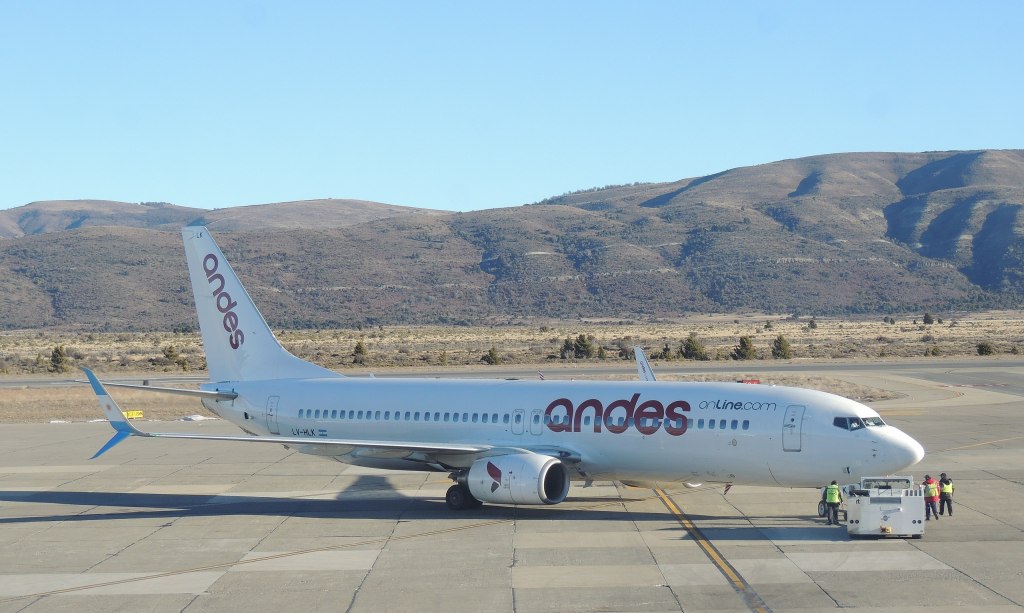
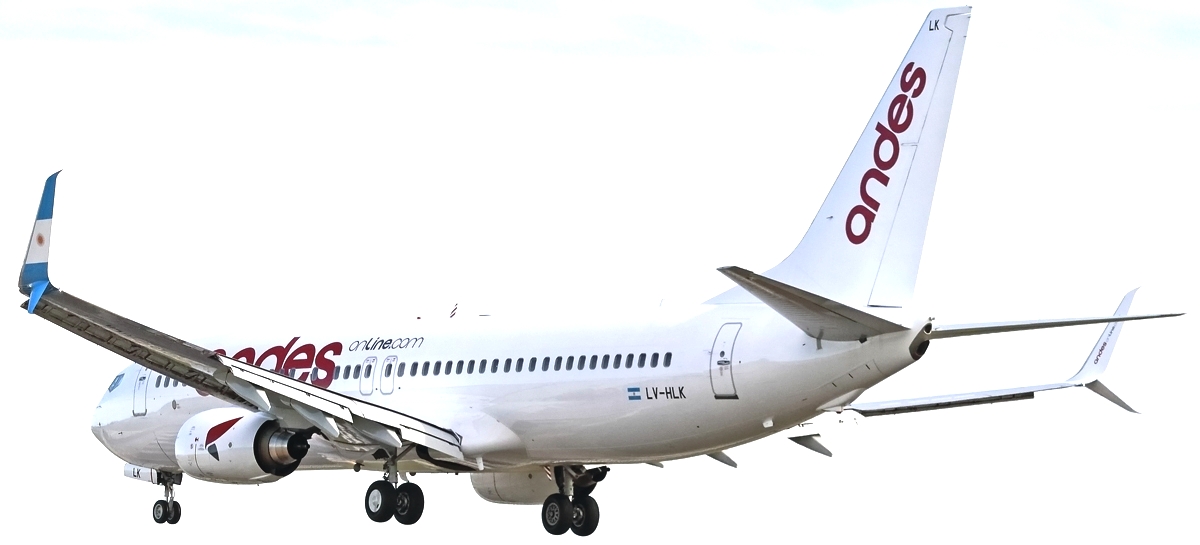
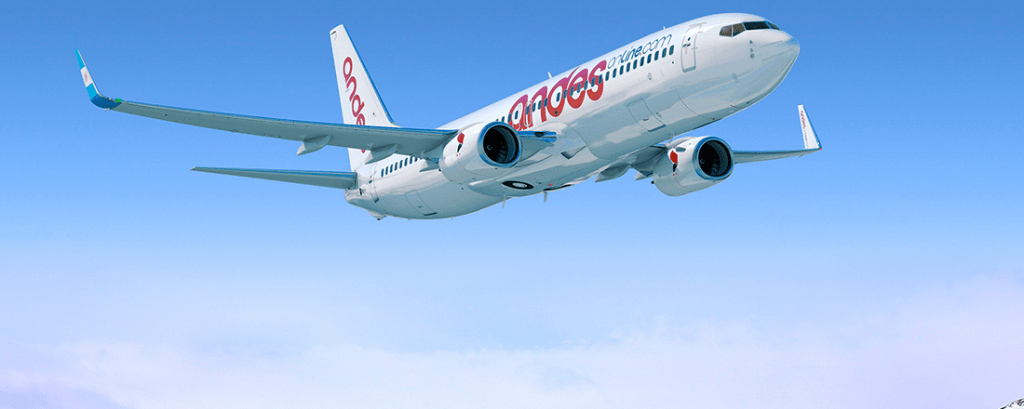
Desembarca Boeing 737-800 para Andes Líneas Aéreas
Un Boeing 737-800 ha arribado a Argentina para la aerolínea Andes Líneas Aéreas para reiniciar operaciones aerocomerciales. Tras el cese de operaciones en Febrero de 2019, semana antes del inicio de la pandemia, la línea aérea salteña retomaría las actividades aeronáuticas en el país después de de más de dos años en tierra.
Con nuevas inversiones por parte de nuevos accionistas agregados a la compañía, la aerolínea continuará con las habilitaciones y los certificados correspondientes para la homologación de la aeronave, incluyendo el Certificado CESA que habían caducado.
La nueva aeronave incorporada Boeing 737-800 Next Generation corresponde al Número de Serie SN37366, LN:3628, variante tipo 737-8GJ. Realizó su primer vuelo el 19/04/2011. Registro de Prueba N1796B. Está propulsado por dos motores CFMI CFM56-7B24. La aeronave posee una edad de 11,5 años. Código hexadecimal E0B197. El Boeing 737-800 se encuentra configurado para transportar a 189 pasajeros en Clase Economy (Y189).
La aeronave estuvo operativa para la compañía turca Pegasus Airlines. Fue devuelto al arrendador en 02/2021 como EI-GWS (ECAF). Ha sido entregado a Andes Líneas Aéreas el 01/10/2022. Posee matrícula nacional LV-KFW.
Andes Líneas Aéreas iniciaría en esta nueva etapa con el objetivo de ofrecer vuelos de temporada chárter a destinos turísticos nacionales e internacionales y vuelos de promoción estudiantil.
Arrival 737 Andes to Argentina
Boeing 737-800 disembarks for Andes Líneas Aéreas
A Boeing 737-800 has arrived in Argentina for the airline Andes Líneas Aéreas to restart commercial operations. After the cessation of operations in February 2019, the week before the start of the pandemic, the Salta airline would resume aeronautical activities in the country after more than two years on the ground.
With new investments by new shareholders added to the company, the airline will continue with the corresponding ratings and certificates for the homologation of the aircraft, including the CESA Certificate that had expired.
The new incorporated Boeing 737-800 Next Generation aircraft corresponds to Serial Number SN37366, LN:3628, variant type 737-8GJ. It made its first flight on 04/19/2011. Test Record N1796B. It is powered by two CFMI CFM56-7B24 engines. The aircraft has an age of 11.5 years. Hexadecimal code E0B197. The Boeing 737-800 is configured to transport 189 passengers in Economy Class (Y189).
The aircraft was operational for the Turkish company Pegasus Airlines. It was returned to the lessor on 02/2021 as EI-GWS (ECAF). It has been delivered to Andes Líneas Aéreas on 10/01/2022. It has national registration LV-KFW.
Andes Líneas Aéreas would start this new stage with the aim of offering seasonal charter flights to national and international tourist destinations and student promotional flights.
PUBLISHER: Airgways.com DBk: Andesonline.com / Airgways.com AW-POST: 202210191133AR OWNERSHIP: Airgways Inc. A\W A I R G W A Y S ®
Aerolínea dominicana incorpora cinco vuelos semanales
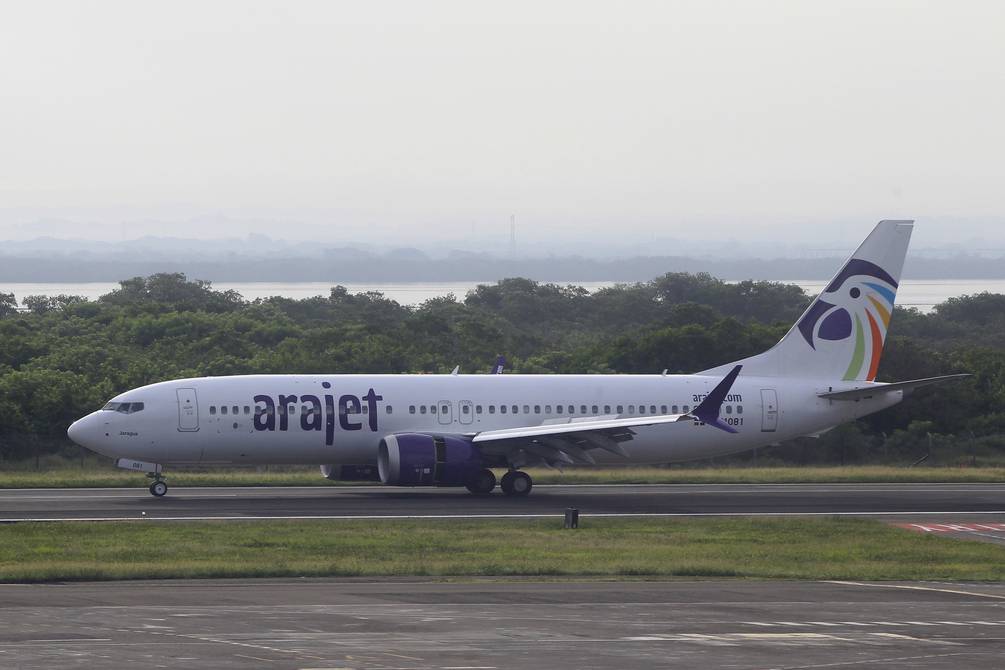
La nueva aerolínea de República Dominicana Arajet iniciará operaciones en Ecuador. El Ministerio de Turismo del Ecuador hizo el anuncio este Martes 18 de Octubre de 2022. En redes sociales, la Cartera de Estado indicó que la nueva aerolínea en Ecuador iniciará sus operaciones en los próximos días ofreciendo cinco frecuencias semanales (5Frq/S).
La Dirección de Aviación Civil de Ecuador indicó que Arajet “cumplió con las disposiciones reglamentarias que regulan la actividad aeronáutica y obtuvo el permiso de Operación para operar”.
El Consejo de Aviación Civil de Ecuador concedió el permiso de operación para que Arajet pueda comenzar a volar en Ecuador. La aerolínea de República Dominicana había anunciado semanas atrás su intención de operar en Guayaquil y Quito. El permiso de operación concedido por el Consejo de Aviación incluye hasta tres frecuencias en la ruta Santo Domingo—Quito—Santo Domingo. También hasta dos frecuencias en la ruta Santo Domingo—Guayaquil—Santo Domingo.
Arajet es una nueva línea centroamericana que comenzó a abrir operaciones en algunos países de América Latina. La aerolínea utilizará en su servicio aeronaves de última generación Boeing 737-8 MAX, bajo la modalidad de dry lease.
Arajet disembarks Ecuador
Dominican airline incorporates five weekly flights
The new Dominican Republic airline Arajet will start operations in Ecuador. The Ministry of Tourism of Ecuador made the announcement this Tuesday, October 18, 2022. In social networks, the State Portfolio indicated that the new airline in Ecuador will begin operations in the coming days, offering five weekly frequencies (5Frq/S).
The Directorate of Civil Aviation of Ecuador indicated that Arajet «complied with the regulatory provisions that regulate aeronautical activity and obtained the operating permit to operate».
The Civil Aviation Council of Ecuador granted the operating permit for Arajet to start flying in Ecuador. The Dominican Republic airline had announced weeks ago its intention to operate in Guayaquil and Quito. The operating permit granted by the Aviation Council includes up to three frequencies on the Santo Domingo-Quito-Santo Domingo route. Also up to two frequencies on the Santo Domingo-Guayaquil-Santo Domingo route.
Arajet is a new Central American line that began to open operations in some Latin American countries. The airline will use state-of-the-art Boeing 737-8 MAX aircraft in its service, under the dry lease modality.
PUBLISHER: Airgways.com DBk: Arajet.com / Aerocivil.gob.ec / Airgways.com AW-POST: 202210191100AR OWNERSHIP: Airgways Inc. A\W A I R G W A Y S ®
Aerolíneas Argentinas alcanza 91% tráfico pre-pandemia Desarrollo del 18º Foro ALTA 2022
El Secretario de Transporte de Argentina, Diego Giuliano, señaló el Lunes 17/10 que el sistema aerocomercial en Argentina ha transportado en los últimos doce meses más de 28,5 millones de pasajeros con Aerolíneas Argentinas alcanzando un desarrollo del 91% del tráfico de pasajeros a niveles pre-pandemia. «En los últimos doce meses hemos movilizado en nuestro sistema aéreo más de 28,5 millones de pasajeros y nuestra línea de bandera, en promedio, ya está transportando el 91% de lo que trasladaba antes de la pandemia. Ese crecimiento está fuertemente impulsado por el sector doméstico, con una recuperación del 97%, con el sector internacional creciendo más lentamente en un 63% y el regional con un 77%», expresó Diego Giuliano en el 18° Foro de la Asociación de Aerolíneas Latinoamericanas y el Caribe (ALTA) en Buenos Aires.
Además comentó acerca del aumento del tráfico de pasajeros doméstico en Argentina: «Estamos acompañando ese crecimiento de tráfico aéreo con obras de infraestructura, en los aeropuertos de Posadas, La Pampa, San Juan, Santa Fe, Mendoza, Jujuy, Ezeiza, Bariloche e Iguazú. En lo que resta del año se están ejecutando obras en quince terminales aéreas, con nueve pistas nuevas, diez calles de rodaje, dieciséis balizamientos para el mejoramiento de las operaciones, y son obras que no se limitan solamente a la ciudad o a la provincia de Buenos Aires, sino que son totalmente federales».
Destacó finalmente que «las políticas se aplican a todas las aerolíneas que operan en el país, las tradicionales y las denominadas low cost, que han estado creciendo en los últimos tiempos, tanto en pasajeros transportados, como en aviones que incorporan a sus flotas. A punto tal que en los últimos nueve meses han logrado un crecimiento de 167% con respecto al mismo período del año pasado».
El encuentro del Foro ALTA 2022 es considerado como el foro más importante de la industria aerocomercial de Latinoamérica y el Caribe, y cuenta con la participación de quinientos ejecutivos que discuten acerca de cómo abordar los desafíos actuales y cómo prepararse para el futuro del transporte aéreo. Se inició el domingo con paneles y contactos con la prensa de parte de algunos de los participantes, pero formalmente se inauguró el Martes 18/10 con la realización de la Asamblea Anual Regional. Diego Giuliano saludó la realización de este Foro en Buenos Aires, al que definió como «mucho más que un encuentro, es un lugar de diálogo, para discutir, opinar e intercambiar, sobre uno de los temas que ha atravesado toda nuestra actividad, que es la actividad aérea en este tiempo histórico en la región y en el mundo, y avanzar en acciones concretas para lograr una aviación más económica, más eficiente y más sostenible. La aparición de la COVID-19 en el invierno boreal de 2020, marcó un punto de inflexión que se tradujo en un gran impacto en todo medio de transporte, pero sobre todo en la industria aérea, lo que luego, sumado a la guerra en Europa que todavía padecemos, significó un enorme desafío».
El Ministro de Turismo, Matías Lammens, quien se refirió a los desafíos que enfrenta la actividad aérea en Argentina, luego de haber padecido las consecuencias de la Covid-19: «Cuando asumimos en 2019 teníamos la expectativa por el turismo en el país, pero la llegada de la pandemia trastocó todos los objetivos. No obstante, el Estado hizo el esfuerzo de sostener los sueldos del sector», remarcó el ministro. Resaltó la importancia de la implementación del programa «PreViaje en la recuperación del sector turístico, que en su primera edición contó con la participación de más de 6 millones de personas e involucró a 35 empresas, entre ellas las tres aerolíneas que operan nuestro cabotaje». Afirmó además que se llevan invertidos más de US$ 35 millones, y afirmó que «para el año próximo tenemos previsto invertir, con financiamiento del Banco Interamericano de Desarrollo (BID), US$ 33 millones para seguir potenciando la infraestructura de nuestros destinos».
La apertura de la Asamblea estuvo a cargo del Director Ejecutivo de Avianca, Adrián Neuhauser, elegido el Lunes 17/10 como nuevo Presidente del Comité Ejecutivo de ALTA, quien se refirió a la recuperación que está llevando adelante América Latina en el movimiento de pasajeros. Aunque advirtió que «recuperar el 100% del tráfico que teníamos en la prepandemia, no es suficiente. Necesitamos seguir creciendo. Hoy viajar no es un lujo, sino algo esencial y tenemos que estar preparados como industria para enfrentar este desafío», argumentó Adrián Neuhauser. Definió a América Latina «como una región pobre, con cuestiones económicas complejas en los diferentes países, lo que nos impone retos que no son menores». Además, se pronunció por avanzar en la búsqueda del Carbono Cero para el 2050, para lo cual sostuvo que la región necesita prepararse convenientemente para poder producir combustible sustentable.
Aerolíneas reaches 91% traffic
Aerolíneas Argentinas reaches 91% pre-pandemic traffic Development of the 18th ALTA Forum 2022
The Secretary of Transportation of Argentina, Diego Giuliano, pointed out on Monday 10/17 that the commercial air system in Argentina has transported more than 28.5 million passengers with Aerolíneas Argentinas in the last twelve months, reaching a development of 91% of passenger traffic to pre-pandemic levels. «In the last twelve months we have mobilized more than 28.5 million passengers in our air system and our flag carrier, on average, is already transporting 91% of what it was transporting before the pandemic. This growth is strongly driven by the domestic sector, with a recovery of 97%, with the international sector growing more slowly by 63% and the regional sector with 77%», said Diego Giuliano at the 18th Forum of the Association of Latin American and Caribbean Airlines (ALTA ) in Buenos Aires.
He also commented on the increase in domestic passenger traffic in Argentina: «We are accompanying this growth in air traffic with infrastructure works at the Posadas, La Pampa, San Juan, Santa Fe, Mendoza, Jujuy, Ezeiza, Bariloche and Iguazú airports. In the remainder of the year, works are being carried out in fifteen air terminals, with nine new runways, ten taxiways, sixteen beacons to improve operations, and these are works that are not limited only to the city or the province of Buenos Aires, but they are totally federal».
Finally, he stressed that «the policies apply to all airlines that operate in the country, the traditional ones and the so-called low cost ones, which have been growing in recent times, both in passengers transported, and in planes that incorporate their fleets. such a point that in the last nine months they have achieved a growth of 167% compared to the same period last year».
The meeting of the ALTA Forum 2022 is considered the most important forum of the aviation industry in Latin America and the Caribbean and has the participation of five hundred executives who discuss how to address current challenges and how to prepare for the future of air transport. It began on Sunday with panels and contacts with the press by some of the participants, but it was formally inaugurated on Tuesday 10/18 with the Regional Annual Assembly. Diego Giuliano welcomed the holding of this Forum in Buenos Aires, which he defined as «much more than a meeting, it is a place for dialogue, to discuss, give opinions and exchange, on one of the issues that has permeated all of our activity, which is air activity in this historic time in the region and in the world, and advance in concrete actions to achieve cheaper, more efficient and more sustainable aviation. The appearance of COVID-19 in the boreal winter of 2020 marked a point of inflection that translated into a great impact on all means of transport, but above all on the airline industry, which later, added to the war in Europe that we are still suffering, meant an enormous challenge».
The Minister of Tourism, Matías Lammens, who referred to the challenges facing air activity in Argentina, after having suffered the consequences of Covid-19: «When we took office in 2019, we had expectations for tourism in the country, but The arrival of the pandemic disrupted all the objectives. However, the State made the effort to sustain the sector’s salaries», the minister remarked. He highlighted the importance of the implementation of the «Pre-Trip» program in the recovery of the tourism sector, which in its first edition had the participation of more than 6 million people and involved 35 companies, including the three airlines that operate our cabotage. He also stated that more than US$35 million have been invested, and stated that «for next year we plan to invest, with financing from the Inter-American Development Bank (IDB), US$33 million to continue strengthening the infrastructure of our destinations».
The opening of the Assembly was in charge of the Executive Director of Avianca, Adrián Neuhauser, elected on Monday 10/17 as the new President of the ALTA Executive Committee, who referred to the recovery that Latin America is carrying out in the movement of passengers. Although he warned that «recovering 100% of the traffic that we had in the pre-pandemic is not enough. We need to continue growing. Today traveling is not a luxury, but something essential and we have to be prepared as an industry to face this challenge», argued Adrián Neuhauser. He defined Latin America «as a poor region, with complex economic issues in the different countries, which imposes challenges on us that are not minor». In addition, he spoke out for advancing in the search for Zero Carbon by 2050, for which he argued that the region needs to properly prepare itself to be able to produce sustainable fuel.
PUBLISHER: Airgways.com DBk: Aerolineas.com / Alta.aero / Airgways.com AW-POST: 202210181523AR OWNERSHIP: Airgways Inc. A\W A I R G W A Y S ®
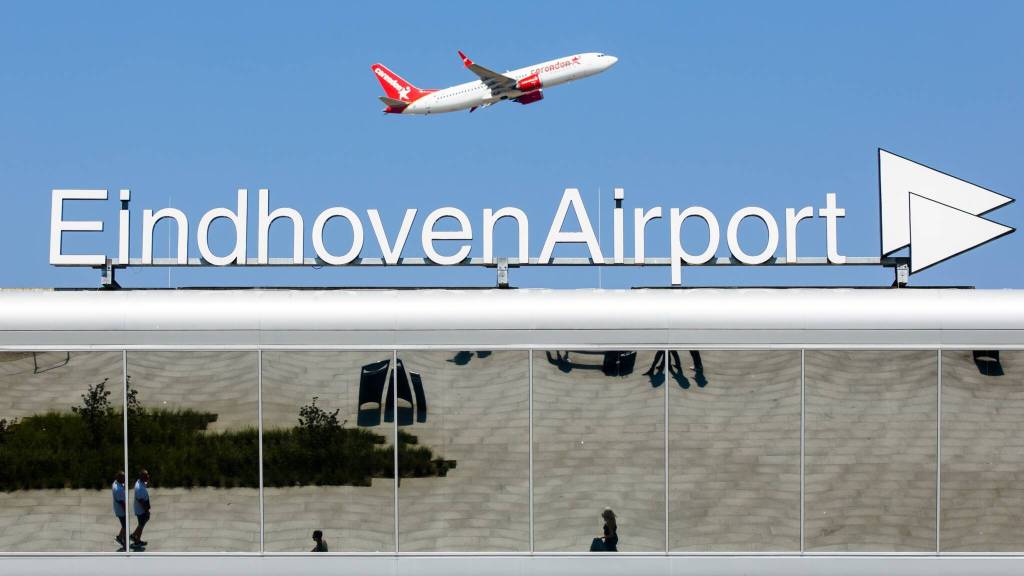
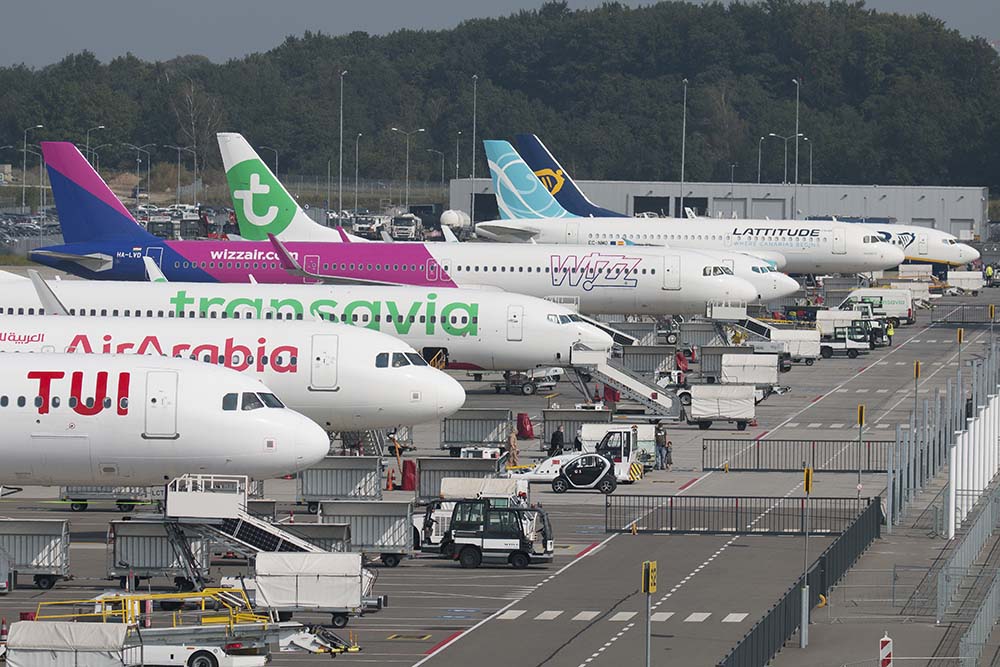
Los aeropuertos holandeses son particularmente llamativas las demoras en los vuelos, a saber de la fama e historial de los Países Bajos por su eficacia en la solución de problemas. Al caos que volvió a repetirse este Sábado 15/10 en Amsterdam/Schiphol/AMS, se suma el del Aeropuerto de Eindhoven/EIN, al sureste del país, mucho más pequeño, pero que también ha tenido colas que han provocado la pérdida de vuelos a los usuarios. Operan en el Aeropuerto Eindhoven fundamentalmente compañías aéreas de bajo coste entre ellas Ryanair y Wizz Air.
Las colas de pasajeros salieron del edificio por doscientos metros, obligando a los viajeros a estar mucho tiempo para acceder y perder así los vuelos. Decenas de personas han perdido los vuelos, incluso pese a que las aerolíneas, generalmente de bajo coste, retrasaron la partida.
El Sábado 15/10 hubo largas colas en Amsterdam/Schiphol/AMS, pero la razón aducida fue un súbito ataque de Covid en el personal. No consta si el virus también atacó al personal del Aeropuerto de Eindhoven. Paradójicamente, muchos de los viajeros afectados por las colas en Eindhoven eran pasajeros que hubieran volado desde Amsterdam y que, precisamente, huyeron a Eindhoven para evitar el colapso del aeropuerto de la capital, encontrándose con la misma situación.
Collapse at Eindhoven Airport
Eindhoven suffers airport collapse
Dutch airports are particularly notorious for flight delays, noting the Netherlands’ reputation and track record for its effective problem-solving. To the chaos that was repeated this Saturday 10/15 at Amsterdam/Schiphol/AMS, is added that of the Eindhoven Airport/EIN, in the southeast of the country, much smaller, but which has also had queues that have caused the loss of flights. to users. Basically low-cost airlines operate at Eindhoven Airport, including Ryanair and Wizz Air.
The queues of passengers left the building for two hundred meters, forcing travelers to stay a long time to access and thus miss flights. Dozens of people have missed flights, even as generally low-cost airlines delayed departure.
On Saturday 10/15 there were long queues at Amsterdam/Schiphol/AMS, but the reason given was a sudden Covid attack on the staff. It is not known whether the virus also attacked the staff at Eindhoven Airport. Paradoxically, many of the travelers affected by the queues in Eindhoven were passengers who had flown from Amsterdam and who, precisely, fled to Eindhoven to avoid the collapse of the capital’s airport, finding themselves in the same situation.
Instorten op Eindhoven Luchthaven
Eindhoven lijdt luchthaven instorting
Nederlandse luchthavens zijn vooral berucht vanwege de vertragingen van vluchten, gezien de reputatie en het trackrecord van Nederland voor het effectief oplossen van problemen. Aan de chaos die zich zaterdag 15/10 herhaalde op Amsterdam/Schiphol/AMS, komt die van de Eindhoven Luchthaven/EIN, in het zuidoosten van het land, veel kleiner, maar die ook wachtrijen heeft gehad die hebben geleid tot het verlies van vluchten naar gebruikers. Op Eindhoven Airport opereren in principe goedkope luchtvaartmaatschappijen, waaronder Ryanair en Wizz Air.
De rijen passagiers verlieten het gebouw tweehonderd meter lang, waardoor reizigers lang moesten blijven om toegang te krijgen en dus vluchten moesten missen. Tientallen mensen hebben vluchten gemist, ook al hebben goedkope luchtvaartmaatschappijen het vertrek vertraagd.
Op zaterdag 10/15 stonden er lange wachtrijen bij Amsterdam/Schiphol/AMS, maar de opgegeven reden was een plotselinge Covid-aanval op het personeel. Het is niet bekend of het virus ook het personeel op Eindhoven Airport teisterde. Paradoxaal genoeg waren veel van de reizigers die door de wachtrijen in Eindhoven werden getroffen, passagiers die uit Amsterdam waren gevlogen en die juist naar Eindhoven waren gevlucht om de ineenstorting van de luchthaven van de hoofdstad te voorkomen, en zich in dezelfde situatie bevonden.
PUBLISHER: Airgways.com DBk: Eindhovenairport.nl / Airgways.com AW-POST: 202210181458AR OWNERSHIP: Airgways Inc. A\W A I R G W A Y S ®
AW | 2022 10 18 14:43 | AIRLINES / INDUSTRY / GOVERNMENT
Boeing salpicada por disputa Airbus—Qatar Airways
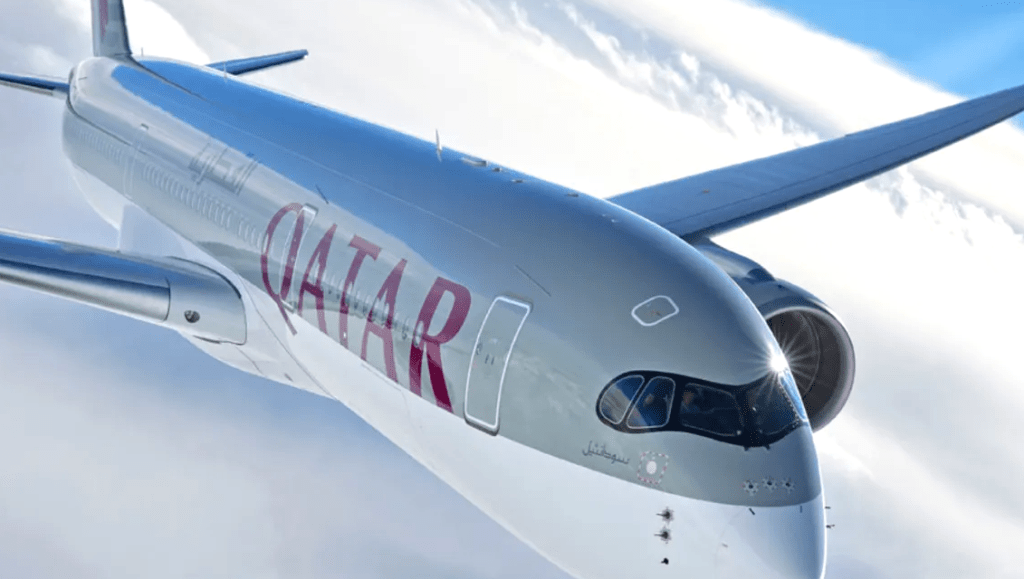
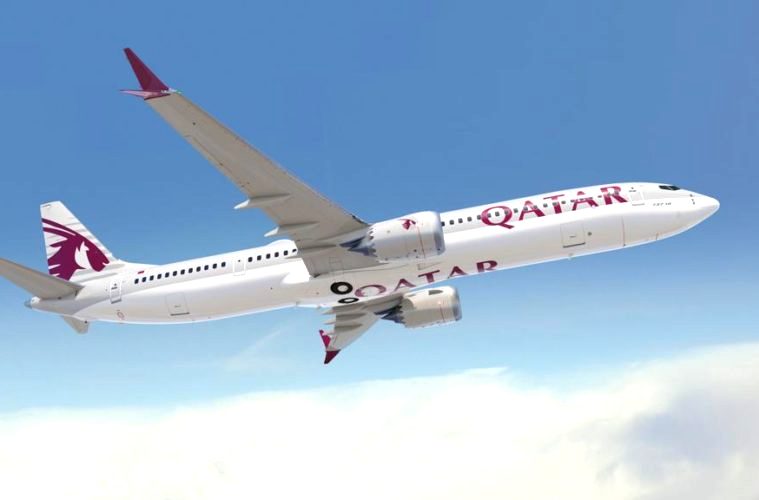
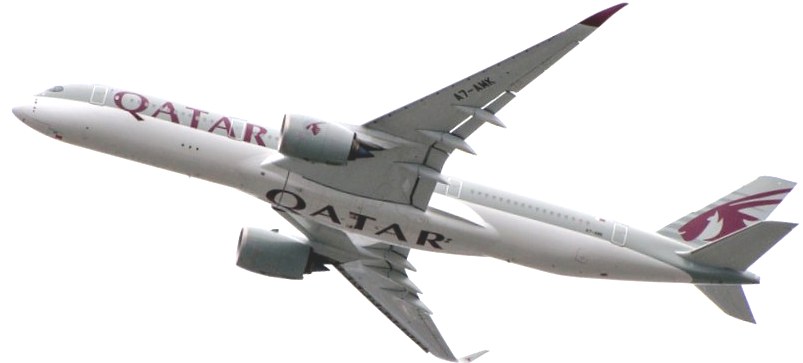
Los abogados de Airbus Group exigen ver los contratos de compra de los aviones Boeing 737 MAX que Qatar Airways dice haber tenido que comprar debido a una diferencia en el proceso de negociaciones entre las partes. Los jueces han aceptado la petición, de manera que ahora tenemos otro protagonista en la pelea por los intereses económicos, aunque no sea parte en el conflicto original.
La historia de la batalla judicial entre Airbus y Qatar Airways ha generado mucha prensa debido a una posible influencia en las negociaciones entre Airbus-Qatar Airways. Boeing no tiene parte en el conflicto, pero podría salir salpicada. El Viernes 14/10 en Londres, los abogados de Airbus exigieron ver los contratos de compra de los aviones 737 MAX que Qatar Airways dice haber tenido que comprar cuando Airbus le canceló la venta de los A321 que había adquirido la aerolínea del Golfo. En el ambiente aeronáutico, el anuncio de la compra de estos aviones se hizo con tanta velocidad en relación con la cancelación de la venta de los A321, que muchos no creen que haya sido real, sino sólo una simulación, lo cual provocaría un fuerte impacto también en la imagen de Boeing. Los jueces aceptaron la petición de Airbus, de manera que ahora tenemos otro protagonista que puede salir mal parado, aunque no sea parte en el conflicto.
El juicio está teniendo lugar ante la Corte de Londres y tiene incontables ramificaciones. Por un lado, el asunto de fondo es si Qatar Airways tiene o no derecho a parar los aviones A350 por un problema de «diseño» y pedir una compensación económica. Si los jueces aceptan la idea de Airbus, de que el avión presenta únicamente daños exteriores que no afectan a la seguridad, Qatar no tendría razón en su petición. Sin embargo, un poco más complicada es la decisión sobre una consecuencia de este conflicto: Airbus, además de cancelar todas las ventas del A350, también anuló un contrato de venta de cincuenta A321 (50), un avión altamente popular, con Qatar Airways, sin que la compañía aérea hubiera hecho mención alguna a este asunto en las demandas. Al producirse esta cancelación, Qatar Airways se apresuró en anunciar la compra de los Boeing 737 MAX.
Airbus-Qatar dispute sparks controversy
Boeing tainted by Airbus-Qatar Airways dispute
Lawyers for the Airbus Group are demanding to see the purchase contracts for the Boeing 737 MAX planes that Qatar Airways says it had to buy due to a difference in the negotiating process between the parties. The judges have accepted the request, so now we have another protagonist in the fight for economic interests, even if he is not a party to the original conflict.
The story of the court battle between Airbus and Qatar Airways has generated a lot of press due to a possible influence on the negotiations between Airbus-Qatar Airways. Boeing has no part in the conflict, but it could be affected. On Friday 10/14 in London, Airbus lawyers demanded to see the purchase contracts for the 737 MAX aircraft that Qatar Airways says it had to buy when Airbus canceled the sale of the A321 that the Gulf airline had acquired. In the aeronautical environment, the announcement of the purchase of these aircraft was made so quickly in relation to the cancellation of the sale of the A321, that many do not believe that it was real, but only a simulation, which would cause a strong impact also in the image of Boeing. The judges accepted Airbus’s request, so now we have another protagonist who could come out badly, even if he is not a party to the conflict.
The trial is taking place before the London Court and has countless ramifications. On the one hand, the underlying issue is whether or not Qatar Airways has the right to stop the A350 aircraft due to a «design» problem and ask for financial compensation. If the judges accept the idea of Airbus, that the plane presents only external damages that do not affect safety, Qatar would not be right in its request. A little more complicated, however, is the decision on a consequence of this conflict: Airbus, in addition to canceling all sales of the A350, also canceled a contract for the sale of fifty A321 (50), a highly popular aircraft, with Qatar Airways, without the airline having made any mention of this matter in the lawsuits. Upon this cancellation, Qatar Airways was quick to announce the purchase of the Boeing 737 MAX.
الخلاف بين إيرباص وقطر يثير الجدل
تلوثت بوينج بنزاع إيرباص والخطوط الجوية القطرية
يطالب محامو مجموعة إيرباص بالاطلاع على عقود شراء طائرات بوينج 737 ماكس التي تقول الخطوط الجوية القطرية إنها اضطرت لشرائها بسبب اختلاف في عملية التفاوض بين الطرفين. لقد قبل القضاة الطلب ، لذلك لدينا الآن بطل آخر في النضال من أجل المصالح الاقتصادية ، حتى لو لم يكن طرفًا في الصراع الأصلي.
أثارت قصة معركة المحكمة بين إيرباص والخطوط الجوية القطرية الكثير من الصحافة بسبب التأثير المحتمل على المفاوضات بين إيرباص والخطوط الجوية القطرية. ليس لبوينج دور في الصراع ، لكنها قد تتأثر. يوم الجمعة 10/14 في لندن ، طالب محامو شركة إيرباص بالاطلاع على عقود شراء طائرة 737 ماكس التي تقول الخطوط الجوية القطرية إنها اضطرت لشرائها عندما ألغت شركة إيرباص بيع الطائرة A321 التي حصلت عليها شركة طيران الخليج. في بيئة الطيران ، تم الإعلان عن شراء هذه الطائرات بسرعة كبيرة فيما يتعلق بإلغاء بيع A321 ، لدرجة أن الكثيرين لا يعتقدون أنها كانت حقيقية ، بل مجرد محاكاة ، والتي من شأنها إحداث تأثير قوي أيضا في صورة بوينج. قبل القضاة طلب شركة إيرباص ، لذلك لدينا الآن بطل آخر يمكن أن يخرج بشكل سيئ ، حتى لو لم يكن طرفًا في النزاع.
تجري المحاكمة أمام محكمة لندن ولها تداعيات لا حصر لها. من ناحية أخرى ، فإن القضية الأساسية هي ما إذا كان من حق الخطوط الجوية القطرية إيقاف طائرة A350 بسبب مشكلة «في التصميم» والمطالبة بتعويض مالي. إذا قبل القضاة فكرة إيرباص ، أن الطائرة لا تسبب سوى أضرار خارجية لا تؤثر على السلامة ، فإن قطر لن تكون على حق في طلبها. لكن الأمر الأكثر تعقيدًا هو القرار بشأن نتيجة هذا الصراع: فقد ألغت شركة إيرباص ، بالإضافة إلى إلغاء جميع مبيعات A350 ، أيضًا عقدًا لبيع خمسين طائرة من طراز A321 (50) ، وهي طائرة تحظى بشعبية كبيرة ، مع قطر الخطوط الجوية ، دون أن تذكر شركة الطيران هذا الأمر في الدعاوى القضائية. بعد هذا الإلغاء ، سارعت الخطوط الجوية القطرية بالإعلان عن شراء طائرة بوينج 737 ماكس.
PUBLISHER: Airgways.com DBk: Theroyalcourtsofjustice.gov / Airbus.com / Qatarairways.com / Airgways.com AW-POST: 202210181443AR OWNERSHIP: Airgways Inc. A\W A I R G W A Y S ®
Vuelo Damohj Airlines/Global Air es archivado en España
La Justicia española ha anunciado que no investigará el caso del accidente aéreo del Vuelo DMJ-972 del Boeing 737-200 estrellado en Cuba en el año 2018 en el que fallecieron 113 personas. Juez y Fiscalía han rechazado la querella presentada por Mailén Díaz Almaguer, única superviviente, quien acusó a Damohj Airlines/Global Air y a su Director General, Manuel R. C, de nacionalidad española, de homicidio por imprudencia grave. La querella aseguró que la tripulación “no contaba con la formación adecuada para responder de forma eficiente y que el avión no se encontraba en estado de ser operado con seguridad”. De esta manera se puso en riesgo la vida de más de una centena de personas “pese a conocer el peligro que suponía ejecutar el vuelo en dichas condiciones”.
No obstante, el magistrado Santiago Pedraz considera que las denuncias señaladas no pueden constituir delito alguno. Alega que supone una gran dificultad imputar cualquier delito a la compañía “cuatro años después del hecho y lejos del lugar del mismo y sin contacto con las autoridades tanto del lugar del accidente como del país donde radicaba la sociedad”.
Respecto a las acusaciones contra el Director General de la compañía, el Juez Santiago Pedraz explica que “no se puede, sin más, atribuírsele penalmente una responsabilidad de tal grado en el accidente”. A su juicio, se ha hecho referencia a su nacionalidad española para “incoar un procedimiento sin el fundamento real adecuado para ello”. Finalmente, el Juez ha recalcado que “la investigación de un accidente no va dirigida a hallar un culpable, si no la prevención de futuros accidentes. Para ello, sería necesario un costoso informe pericial, que no es posible llevarlo a cabo aquí ni ahora”.
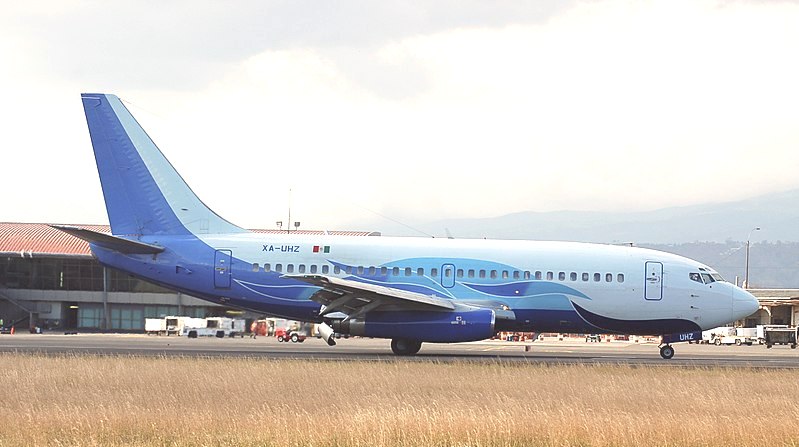
El Vuelo DMJ-972 de Cubana de Aviación fue un vuelo doméstico regular operado por la aerolínea chárter mexicana Global Air en nombre de Cubana de Aviación, desde el Aeropuerto Internacional José Martí, La Habana, Cuba, al Aeropuerto Frank País en Holguín, Cuba. El 18 de Mayo de 2018, el Boeing 737-201ADV de 39 años de antigüedad que operaba la ruta se estrelló poco después del despegue, cerca de Santiago de las Vegas, a 19 kilómetros/12 millas/10 nmi del centro de la ciudad de La Habana. De los que estaban a bordo, 112 murieron y un pasajero sobrevivió con heridas críticas. Inicialmente hubo cuatro sobrevivientes, pero tres de ellos murieron más tarde en un hospital local. La mayoría de los pasajeros a bordo eran ciudadanos cubanos, aunque la tripulación era enteramente mexicana.
Spain archives Flight DMJ-972
Damohj Airlines/Global Air flight is archived in Spain
The Spanish Justice has announced that it will not investigate the case of the plane crash of Flight DMJ-972 of the Boeing 737-200 crashed in Cuba in 2018 in which 113 people died. The Judge and the Prosecutor’s Office have rejected the complaint filed by Mailén Díaz Almaguer, the only survivor, who accused Damohj Airlines/Global Air and its General Director, Manuel RC, of Spanish nationality, of homicide due to gross negligence. The complaint stated that the crew «did not have adequate training to respond efficiently and that the plane was not in a state to be operated safely». In this way, the lives of more than a hundred people were put at risk «despite knowing the danger of executing the flight in these conditions».
However, Judge Santiago Pedraz considers that the complaints indicated cannot constitute any crime. He alleges that it is very difficult to attribute any crime to the company «four years after the fact and far from the place of the accident and without contact with the authorities of both the place of the accident and the country where the company was based».
Regarding the accusations against the General Director of the company, Judge Santiago Pedraz explains that «one cannot, without further ado, criminally attribute such a degree of responsibility in the accident». In his opinion, he has made reference to his Spanish nationality to «initiate a procedure without the adequate real basis for it». Finally, the Judge has stressed that “the investigation of an accident is not aimed at finding a culprit, but rather the prevention of future accidents. For this, an expensive expert report would be necessary, which is not possible to carry out here or now”.
Cubana de Aviación Flight DMJ-972 was a scheduled domestic flight operated by the Mexican charter airline Global Air on behalf of Cubana de Aviación, from José Martí International Airport, Havana, Cuba, to Frank País Airport in Holguín, Cuba. On May 18, 2018, the 39-year-old Boeing 737-201ADV operating the route crashed shortly after takeoff near Santiago de las Vegas, 12 miles/10 nmi from downtown Las Vegas. Havana. Of those on board, 112 died and one passenger survived with critical injuries. There were initially four survivors, but three of them later died at a local hospital. Most of the passengers on board were Cuban citizens, although the crew was entirely Mexican.
PUBLISHER: Airgways.com DBk: Mjusticia.gob.es / Airgways.com AW-POST: 202210181411AR OWNERSHIP: Airgways Inc. A\W A I R G W A Y S ®
Inauguran puente aéreo São Paulo—Buenos Aires en 11/2022
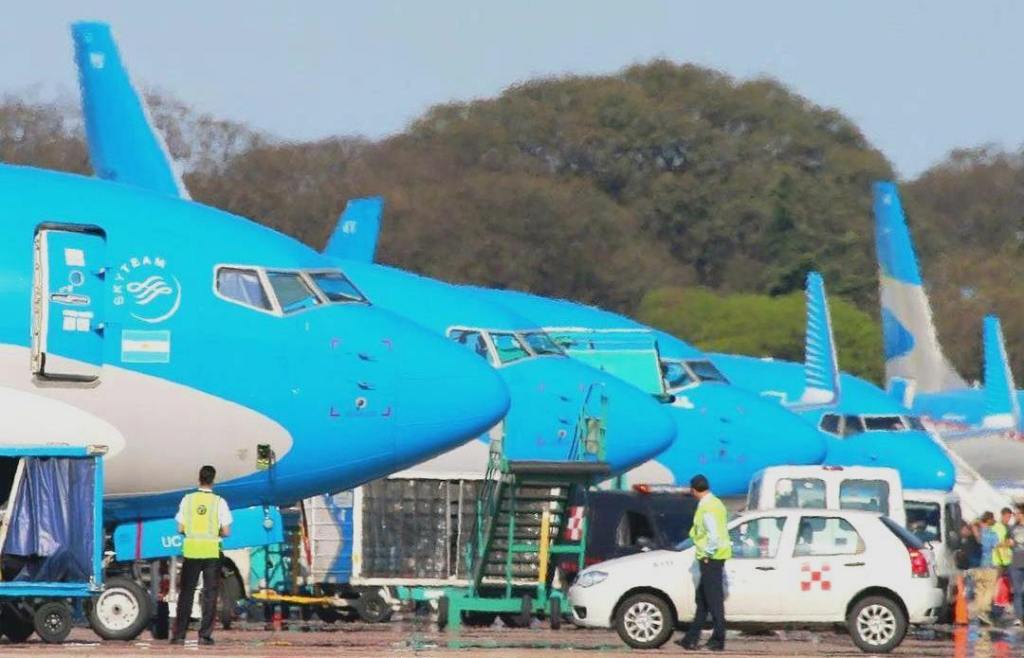
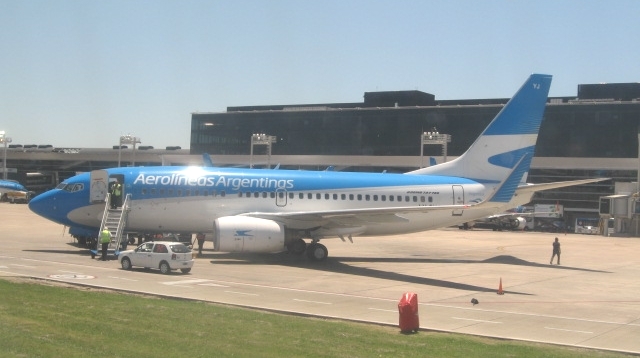
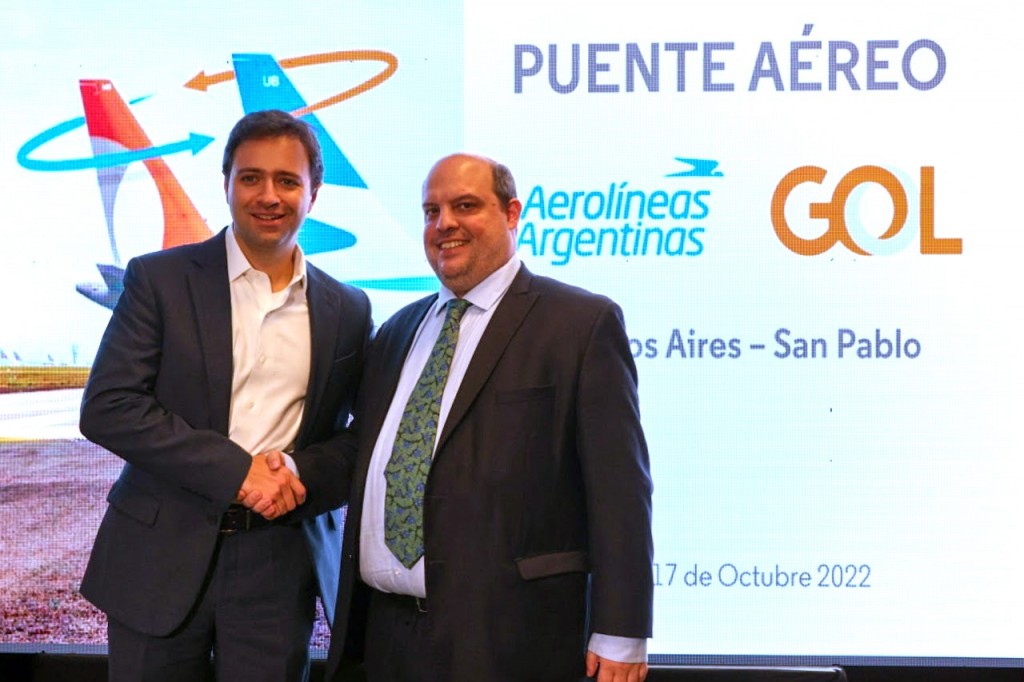
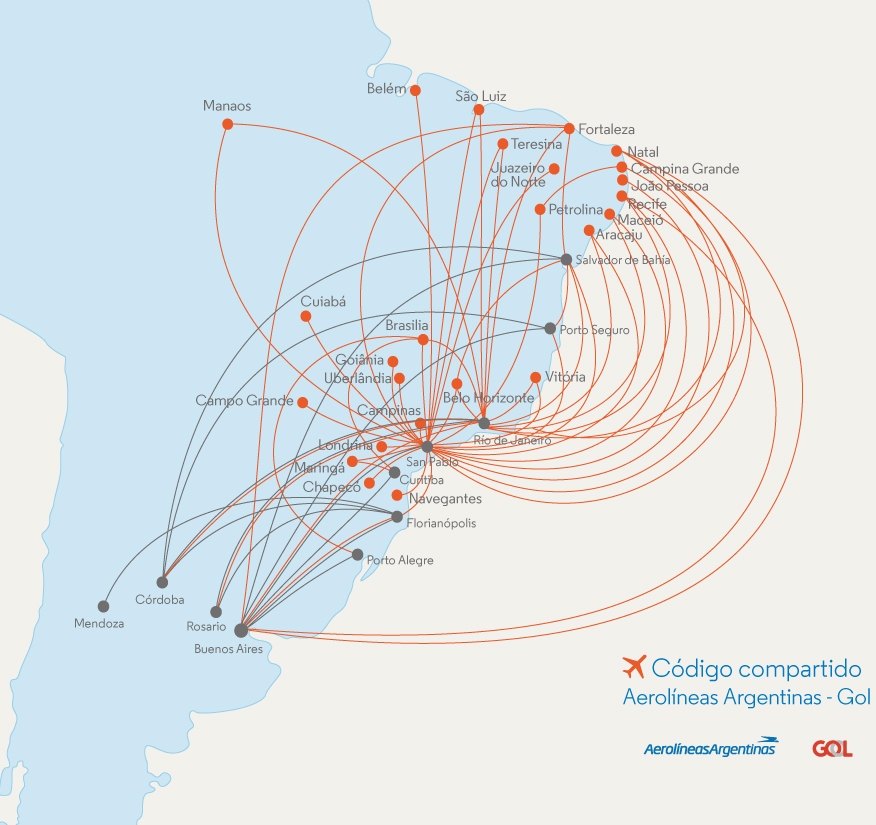
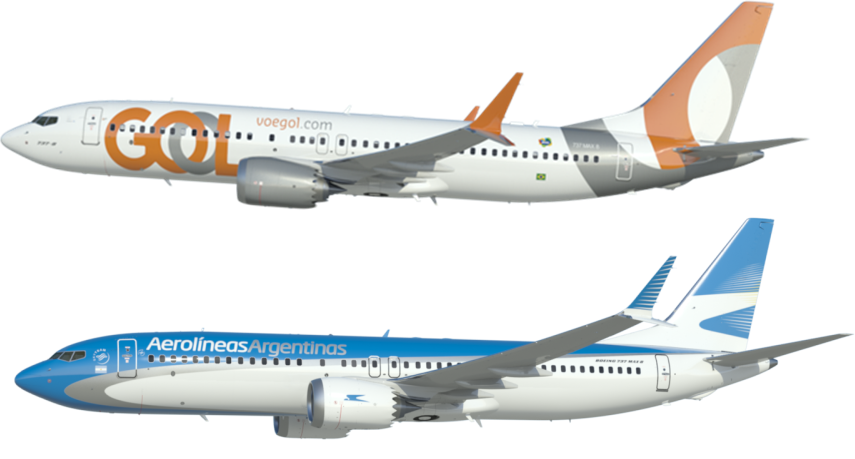
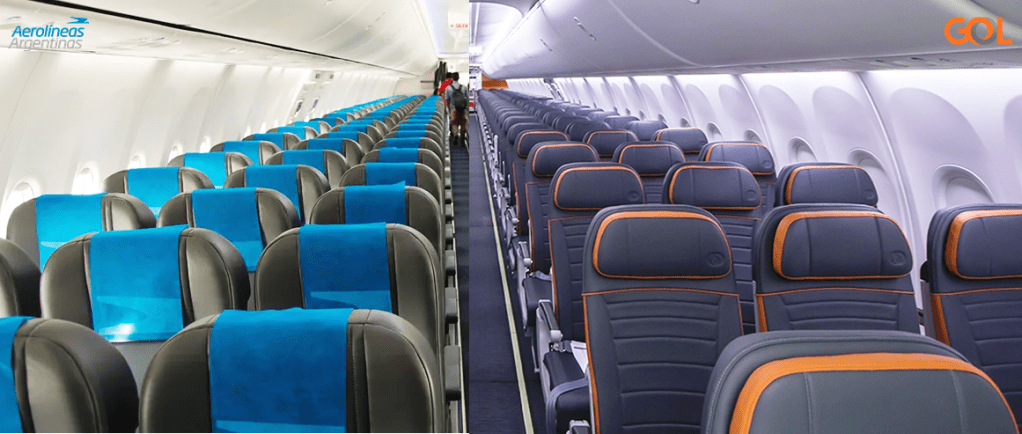
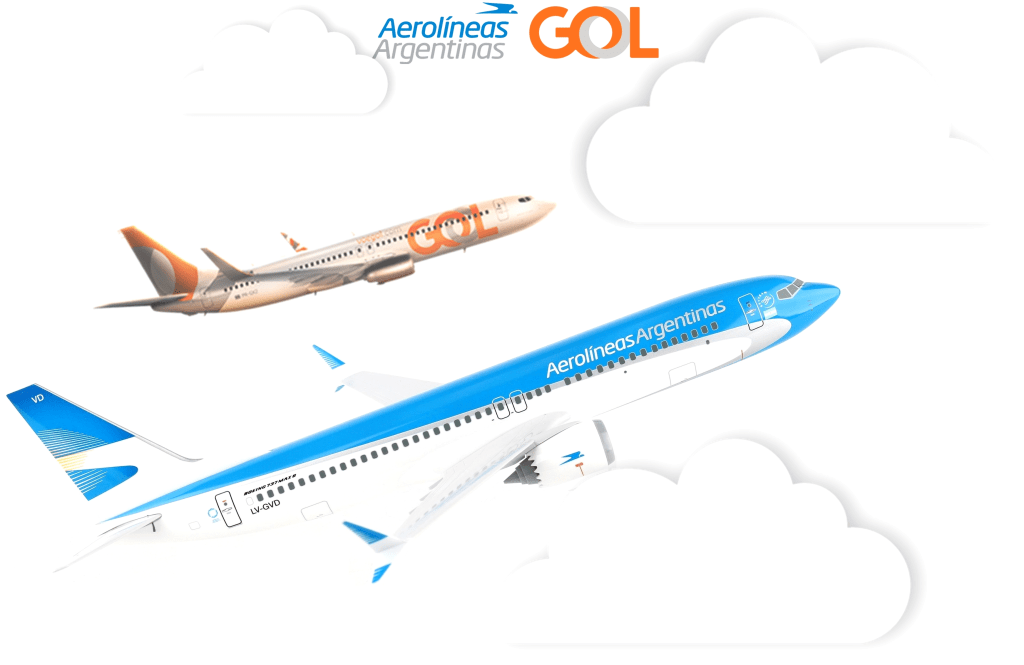
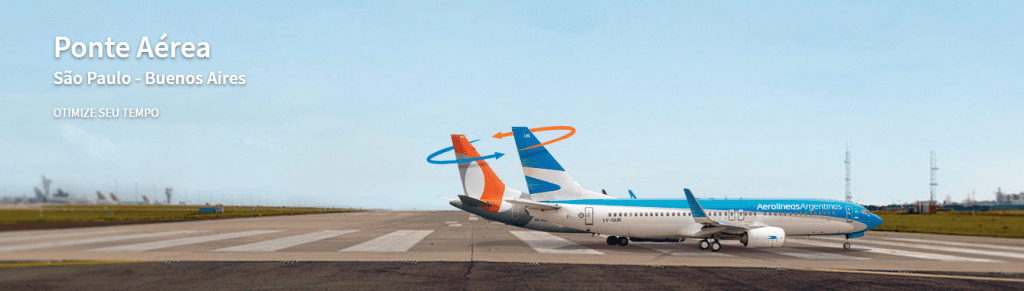
Las aerolíneas asociadas miembros de SkyTeam, Aerolíneas Argentinas y GOL Linhas Aéreas han anunciado la puesta en marcha del puente aéreo São Paulo/GRU—Buenos Aires/AEP que ofrecerán check-in dedicado y flexibilidad para cambios de vuelo el mismo día en vuelos entre los aeropuertos de Guarulhos/GRU y Jorge Newbery/AEP. El inicio del puente aéreo entre ambas ciudades del Mercosur comenzará a partir del 1 de Noviembre de 2022, con una operación conjunta en vuelos que permitirá flexibilizar el tráfico entre ambos destinos. Anunciado en Junio 2022, la fecha de inicio del nuevo servicio fue revelada el Lunes 17/10 en Buenos Aires, durante el ALTA Leaders Forum, un evento con las principales aerolíneas de América Latina.
El Puente Aéreo regional permitirá ofrecer un servicio conjunto que incluye un mostrador de facturación dedicado en ambos aeropuertos y la flexibilidad para que los pasajeros de ambas aerolíneas cambien sus vuelos en el mismo día de viaje. GOL Linhas Aéreas y Aerolíneas Argentinas tienen un acuerdo de código compartido desde 2014, además de ser ambos operadores de aviones Boeing 737 MAX en Sudamérica.
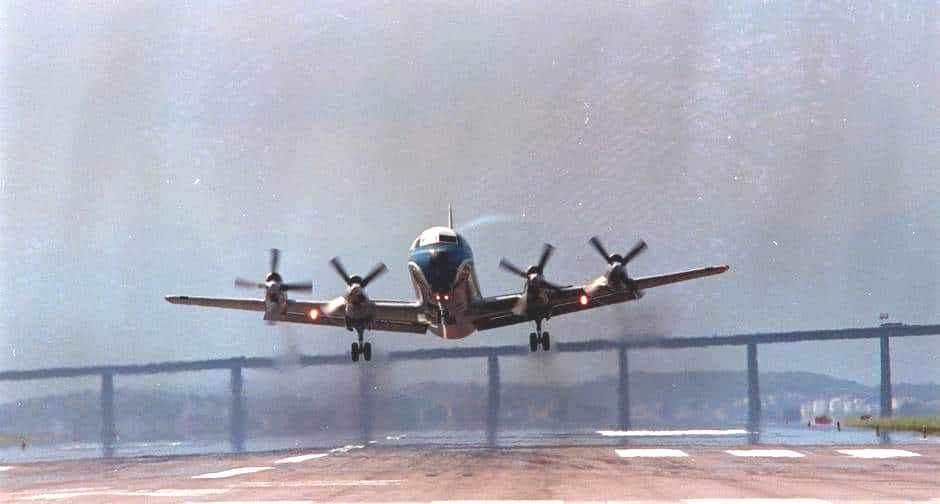
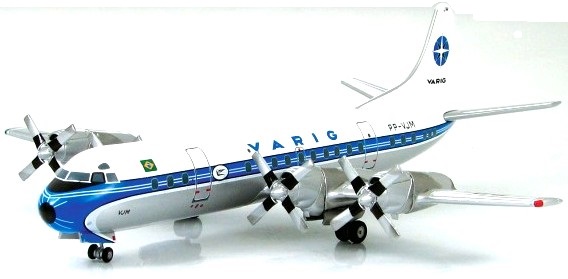
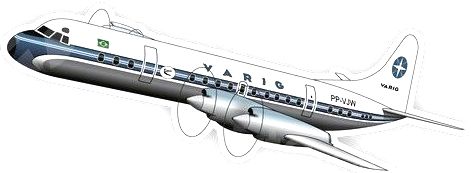
El formato «Puente Aéreo» es una histórica modalidad de servicio conjunto que han implementado los transportistas VARIG, VASP, Transbrasil y Cruzeiro do Sul en diferentes épocas entre los aeropuertos Santos Dumont/SDU y Congonhas/CGH, en el renombrado «Ponte Aéreo Río—São Paulo». Esta modalidad innovadora permitía a los pasajeros volar en cualquier vuelo o avión de las cuatro aerolíneas, aunque durante muchos años el único avión disponible fue el turbohélice Lockheed Electra II.
La modalidad de Puente Aéreo implementada por Aerolíneas-GOL permitiría ofrecer una ventaja para los pasajeros permitiendo un acceso rápido a la Ciudad de Buenos Aires, al turismo y al área corporativa, en comparación con el Aeropuerto de Ezeiza, que, además de estar distante, no tiene conexión ferroviaria con la ciudad. El puente aéreo entre ambas urbes permitirá a los pasajeros cambiar o adelantar su reserva en el día y hasta tres horas antes de la partida del vuelo, sin costos adicionales para quienes cuenten con una tarifa Premium, Flex o Plus en Aerolíneas Argentinas. Según la aerolínea brasileña GOL, la opción sin cambio involucra a los clientes que compran tarifas Plus, MAX y Premium o que tienen tarjetas Silver, Gold y Diamond Smiles. Además, en ambos aeropuertos habrá mostradores exclusivos que le permitirán al pasajero ahorrar tiempo y contarán con embarque prioritario si así lo desean. También, los pasajeros Aerolíneas Plus Platino y Diamante, y los pasajeros Smiles Oro y Diamante podrán añadir una pieza extra de equipaje en bodega. Quienes hayan adquirido una tarifa sin franquicia de equipaje podrán utilizar este beneficio para contar con una pieza en bodega sin cargo alguno. Los viajes entre ambas aerolíneas permitirá sumar y redimir millas entre los programas de fidelización tanto de Aerolíneas Argentinas como de GOL Linhas Aéreas.
«GOL y Aerolíneas Argentinas ya benefician a los viajeros brasileños y argentinos con una amplia conexión tanto en Guarulhos como en Buenos Aires en una asociación de código compartido muy exitosa. Con el inicio de nuestro transporte aéreo, ofreceremos los vuelos más convenientes de la región, lo que aumenta las posibilidades de comodidad para nuestros clientes», dijo Celso Ferrer, CEO de GOL.
«Estamos vinculados con GOL en una relación de varios años a través de un acuerdo de código compartido que permite a los viajeros conectarse desde múltiples destinos en ambos países. El lanzamiento de este puente aéreo refuerza esta relación y beneficia a nuestros pasajeros, que ahora pueden viajar en una dirección u otra con una oferta amplia y robusta. Es otro paso que resalta la importancia del mercado brasileño para nosotros», dijo Pablo Ceriani, CEO de Aerolíneas Argentinas.
Aerolíneas/GOL will inaugurate Air Bridge
São Paulo-Buenos Aires air bridge inaugurated on 11/2022
SkyTeam member airlines Aerolíneas Argentinas and GOL Linhas Aéreas have announced the start-up of the São Paulo/GRU—Buenos Aires/AEP airlift that will offer dedicated check-in and flexibility for same-day flight changes on flights between the Guarulhos/GRU and Jorge Newbery/AEP airports. The start of the air bridge between both Mercosur cities will begin on November 1, 2022, with a joint flight operation that will make traffic between both destinations more flexible. Announced in June 2022, the start date of the new service was revealed on Monday 10/17 in Buenos Aires, during the ALTA Leaders Forum, an event with the main airlines in Latin America.
The regional Air Bridge will allow for a joint service that includes a dedicated check-in counter at both airports and the flexibility for passengers of both airlines to change their flights on the same day of travel. GOL Linhas Aéreas and Aerolíneas Argentinas have had a codeshare agreement since 2014, in addition to being both operators of Boeing 737 MAX aircraft in South America.
The «Puente Aéreo» format is a historic joint service modality that has been implemented by the carriers VARIG, VASP, Transbrasil and Cruzeiro do Sul at different times between the Santos Dumont/SDU and Congonhas/CGH airports, in the renowned «Ponte Aéreo Río—São Paulo». This innovative modality allowed passengers to fly on any flight or aircraft of the four airlines, although for many years the only aircraft available was the Lockheed Electra II turboprop.
The Air Shuttle modality implemented by Aerolíneas-GOL would offer an advantage for passengers allowing quick access to the City of Buenos Aires, tourism and the corporate area, compared to Ezeiza Airport, which, in addition to being distant, It has no rail connection to the city. The air bridge between the two cities will allow passengers to change or advance their reservation on the day and up to three hours before the departure of the flight, without additional costs for those who have a Premium, Flex or Plus fare in Aerolíneas Argentinas. According to the Brazilian airline GOL, the option without change involves customers who buy Plus, MAX and Premium fares or who have Silver, Gold and Diamond Smiles cards. In addition, at both airports there will be exclusive counters that will allow passengers to save time and they will have priority boarding if they wish. Also, Aerolíneas Plus Platinum and Diamond passengers, and Smiles Gold and Diamond passengers may add an extra piece of luggage in the hold. Those who have purchased a fare without baggage allowance may use this benefit to have a piece in the hold free of charge. Travel between both airlines will allow you to add and redeem miles between the loyalty programs of both Aerolíneas Argentinas and GOL Linhas Aéreas.
AEROLÍNEAS ARGENTINAS AND GOL LINHAS AÉREAS HAVE BOEING 737 MAX ALLIANCE IN THEIR FLEET
«GOL and Aerolíneas Argentinas already benefit Brazilian and Argentine travelers with a wide connection in both Guarulhos and Buenos Aires in a very successful codeshare partnership. With the start of our air transportation, we will offer the most convenient flights in the region, which increases the possibilities of comfort for our customers», said Celso Ferrer, CEO of GOL.
«We are linked with GOL in a multi-year relationship through a codeshare agreement that allows travelers to connect from multiple destinations in both countries. The launch of this air bridge reinforces this relationship and benefits our passengers, who can now travel in one direction or another with a broad and robust offer. It is another step that highlights the importance of the Brazilian market for us», said Pablo Ceriani, CEO of Aerolíneas Argentinas.
Aerolíneas/GOL inaugurarão Ponte Aérea
Ponte aérea São Paulo-Buenos Aires inaugurada em 11/2022
As companhias aéreas associadas da SkyTeam Aerolíneas Argentinas e GOL Linhas Aéreas anunciaram o start-up da ponte aérea São Paulo/GRU—Buenos Aires/AEP que oferecerá check-in dedicado e flexibilidade para mudanças de vôo no mesmo dia em vôos entre Guarulhos/GRU e Aeroportos Jorge Newbery/AEP. O início da ponte aérea entre as duas cidades do Mercosul terá início em 1 de Novembro de 2022, com uma operação conjunta de vôos que flexibilizará o tráfego entre os dois destinos. Anunciado em Junho de 2022, a data de início do novo serviço foi revelada na Segunda-feira, 17/10, em Buenos Aires, durante o ALTA Leaders Forum, evento com as principais companhias aéreas da América Latina.
A Ponte Aérea regional permitirá um serviço conjunto que inclui um balcão de check-in dedicado em ambos os aeroportos e a flexibilidade para que os passageiros de ambas as companhias aéreas alterem seus voos no mesmo dia da viagem. A GOL Linhas Aéreas e a Aerolineas Argentinas mantêm um acordo de codeshare desde 2014, além de serem ambas operadoras de aeronaves Boeing 737 MAX na América do Sul.
O formato «Puente Aéreo» é uma modalidade histórica de serviço conjunto que vem sendo implementada pelas transportadoras VARIG, VASP, Transbrasil e Cruzeiro do Sul em diferentes momentos entre os aeroportos Santos Dumont/SDU e Congonhas/CGH, na renomada «Ponte Aéreo Río—São Paulo”. Essa modalidade inovadora permitia aos passageiros voar em qualquer vôo ou aeronave das quatro companhias aéreas, embora por muitos anos a única aeronave disponível fosse o turboélice Lockheed Electra II.
A modalidade Air Shuttle implementada pela Aerolíneas-GOL ofereceria uma vantagem para os passageiros ao permitir acesso rápido à Cidade de Buenos Aires, turismo e área corporativa, em relação ao Aeroporto de Ezeiza, que, além de distante, não possui conexão ferroviária com a cidade. A ponte aérea entre as duas cidades permitirá que os passageiros alterem ou antecipem sua reserva no dia e até três horas antes da partida do voo, sem custos adicionais para quem possui tarifa Premium, Flex ou Plus em Aerolíneas Argentinas. De acordo com a companhia aérea brasileira GOL, a opção sem alteração envolve clientes que compram as tarifas Plus, MAX e Premium ou que possuem cartões Silver, Gold e Diamond Smiles. Além disso, em ambos os aeroportos haverá balcões exclusivos que permitirão aos passageiros economizar tempo e terão embarque prioritário se assim o desejarem. Além disso, os passageiros Aerolíneas Plus Platinum e Diamond e os passageiros Smiles Gold e Diamond podem adicionar uma bagagem extra no porão. Quem comprou uma tarifa sem franquia de bagagem pode utilizar este benefício para ter uma peça no porão gratuitamente. As viagens entre as duas companhias aéreas permitirão adicionar e resgatar milhas entre os programas de fidelidade da Aerolíneas Argentinas e da GOL Linhas Aéreas.
«GOL e Aerolíneas Argentinas já beneficiam viajantes brasileiros e argentinos com ampla conexão tanto em Guarulhos quanto em Buenos Aires em uma parceria de codeshare de muito sucesso. Com o início do nosso transporte aéreo, vamos oferecer os vôos mais convenientes da região, o que aumenta a possibilidades de conforto para nossos clientes», disse Celso Ferrer, CEO da GOL.
«Estamos vinculados à GOL em um relacionamento de vários anos por meio de um acordo de codeshare que permite aos viajantes se conectarem de vários destinos nos dois países. O lançamento desta ponte aérea reforça esse relacionamento e beneficia nossos passageiros, que agora podem viajar em uma direção ou outro com uma oferta ampla e robusta. É mais um passo que destaca a importância do mercado brasileiro para nós», disse Pablo Ceriani, CEO da Aerolíneas Argentinas.
Historia «da Ponte Aérea»
El Puente Aéreo, más conocido como Puente Aéreo Río-São Paulo, fue originalmente un acuerdo firmado el 5 de julio de 1959 por las compañías VARIG Airlines, Cruzeiro do Sul y VASP Brazilian Airlines que ofrecían varias frecuencias diarias entre los aeropuertos Santos Dumont/SDU en Río de Janeiro y Congonhas/CGH en São Paulo.
Actualmente el término Puente Aéreo se refiere al tramo, que es operado por LATAM Airlines, GOL Linhas Aéreas y Azul Linhas Aéreas, con más de ciento veinte vuelos diarios saliendo de las dos ciudades, en promedio cada 15 minutos, entre las 06:10 am y alrededor de las 09:30 pm, pero sin acuerdo entre las compañías.
Originalmente, estos vuelos no eran regulares y a menudo salían casi juntos, con abarrotamiento o vacío. A partir de este tema, las principales aerolíneas del país en ese momento, VARIG, VASP y Cruzeiro, firmaron un acuerdo y comenzaron a volar entre Río y São Paulo con vuelos alternos cada 60 minutos, con libre movimiento de pasajeros entre las aerolíneas. Con un boleto, se envió el primer avión disponible, independientemente de la compañía a la que perteneciera.
En las décadas de 1970 y 1980, las restricciones sobre el tamaño de los aviones en los dos aeropuertos centrales de Río y São Paulo hicieron que el Lockheed Electra de VARIG fuera el único avión autorizado a volar en el tramo. La primera pérdida de este pacto ocurrió en la década de 1990, cuando TAM, que no formaba parte del acuerdo, entró en la ruta al obtener la autorización para el uso del Fokker 100, un avión a reacción más moderno, cómodo y rápido. VASP, sin interés, abandonó la asociación, seguido por los otros dos.
Entre 1975 y 1991, el servicio fue operado exclusivamente por los turbohélice Lockheed L-188 Electra pertenecientes a VARIG, que se destacaron por las altas tasas de seguridad y disponibilidad presentadas durante todos estos años. El último vuelo del legendario avión en la ruta en Enero de 1992 fue objeto de cobertura noticiosa por parte de los principales medios de comunicación.
El 10 de Febrero de 2007, GOL, el mayor usuario de Boeing 737 en América Latina, insertó el Boeing 737-800 Short Field Performance (SFP), una configuración realizada a petición de la propia compañía aérea para su uso en el Puente Aéreo, permitiendo emplearlo en el Aeropuerto Santos Dumont/SDU con una pista corta, de 1.323 metros de largo. Estos aviones tienen frenos de carbono en lugar de acero, que son más ligeros y generan un mayor frenado.
Actualmente, el término «Puente Aéreo» se utiliza simplemente para designar la Ruta Río—São Paulo, siendo esta la novena más transitada del mundo por número de pasajeros, con cerca de 7 millones de pasajeros anuales.
History «da Ponte Aérea»
The Air Bridge, better known as the Rio-São Paulo Air Bridge, was originally an agreement signed on July 5, 1959 by the companies VARIG Airlines, Cruzeiro do Sul and VASP Brazilian Airlines that offered several daily frequencies between the Santos Dumont/SDU airports in Rio de Janeiro and Congonhas/CGH in São Paulo.
Currently the term Puente Aéreo refers to the section, which is operated by LATAM Airlines, GOL Linhas Aéreas and Azul Linhas Aéreas, with more than one hundred and twenty daily flights departing from the two cities, on average every 15 minutes, between 06:10 am and around 09:30 pm, but without agreement between the companies.
Originally, these flights were not regular and often departed almost together, overcrowded or empty. Based on this issue, the main airlines in the country at that time, VARIG, VASP and Cruzeiro, signed an agreement and began to fly between Rio and São Paulo with alternate flights every 60 minutes, with free movement of passengers between the airlines. With a ticket, the first available plane was sent, regardless of the company to which it belonged.
In the 1970s and 1980s, restrictions on the size of aircraft at the two hub airports in Rio and São Paulo meant that VARIG’s Lockheed Electra was the only aircraft allowed to fly on the segment. The first loss of this pact occurred in the 1990s, when TAM, which was not part of the agreement, entered the route by obtaining authorization for the use of the Fokker 100, a more modern, comfortable and faster jet aircraft. VASP, uninterested, left the association, followed by the other two.
Between 1975 and 1991, the service was operated exclusively by the Lockheed L-188 Electra turboprop belonging to VARIG, which stood out for the high safety and availability rates presented during all these years. The legendary plane’s last flight on the route in January 1992 was the subject of news coverage by the major media outlets.
On February 10, 2007, GOL, the largest user of Boeing 737 in Latin America, inserted the Boeing 737-800 Short Field Performance (SFP), a configuration made at the request of the airline itself for use in the Air Bridge, allowing it to be used at the Santos Dumont/SDU Airport with a short runway, 1,323 meters long. These planes have carbon brakes instead of steel, which are lighter and generate more braking.
Currently, the term «Air Bridge» is used simply to designate the Rio—São Paulo Route, which is the ninth busiest in the world by number of passengers, with nearly 7 million passengers per year.
História «da Ponte Aérea»
A Ponte Aérea, mais conhecida como Ponte Aérea Rio-São Paulo, foi originalmente um acordo assinado em 5 de Julho de 1959 pelas empresas VARIG Linhas Aéreas, Cruzeiro do Sul e VASP Linhas Aéreas Brasileiras que ofereciam diversas frequências diárias entre os aeroportos Santos Dumont/SDU no Rio de Janeiro e Congonhas/CGH em São Paulo.
Atualmente o termo Puente Aéreo refere-se ao trecho, que é operado pela LATAM Airlines, GOL Linhas Aéreas e Azul Linhas Aéreas, com mais de cento e vinte vôos diários partindo das duas cidades, em média a cada 15 minutos, entre 06:10 e por volta das 21h30, mas sem acordo entre as empresas.
Originalmente, esses vôos não eram regulares e muitas vezes partiam quase juntos, superlotados ou vazios. Com base nessa questão, as principais companhias aéreas do país na época, VARIG, VASP e Cruzeiro, firmaram um acordo e passaram a voar entre Rio e São Paulo com vôos alternados a cada 60 minutos, com livre circulação de passageiros entre as companhias aéreas. Com uma passagem, era enviado o primeiro avião disponível, independentemente da empresa a que pertencia.
Nas décadas de 1970 e 1980, as restrições de tamanho de aeronaves nos dois aeroportos centrais do Rio e de São Paulo fizeram com que o Lockheed Electra da VARIG fosse a única aeronave autorizada a voar no segmento. A primeira perda desse pacto ocorreu na década de 1990, quando a TAM, que não fazia parte do acordo, entrou na rota ao obter autorização para o uso do Fokker 100, avião a jato mais moderno, confortável e mais rápido. A VASP, desinteressada, deixou a associação, seguida pelas outras duas.
Entre 1975 e 1991, o serviço foi operado exclusivamente pela Turboélice Lockheed L-188 Electra pertencente à VARIG, que se destacou pelos altos índices de segurança e disponibilidade apresentados durante todos esses anos. O último vôo do lendário avião na rota, em Janeiro de 1992, foi objeto de cobertura jornalística dos principais meios de comunicação.
Em 10 de Fevereiro de 2007, a GOL, maior usuária do Boeing 737 na América Latina, inseriu o Boeing 737-800 Short Field Performance (SFP), configuração feita a pedido da própria companhia aérea para uso na Ponte Aérea, permitindo para ser utilizado no Aeroporto Santos Dumont/SDU com pista curta, 1.323 metros de extensão. Esses aviões têm freios de carbono em vez de aço, que são mais leves e geram mais frenagem.
Atualmente, o termo «Ponte Aérea» é usado simplesmente para designar a Rota Rio—São Paulo, que é a nona mais movimentada do mundo em número de passageiros, com cerca de 7 milhões de passageiros por ano.
PUBLISHER: Airgways.com DBk: Aerolineas.com / Voegol.com.br / Wikipedia.org / Airgways.com AW-POST: 202210181237AR OWNERSHIP: Airgways Inc. A\W A I R G W A Y S ®










 Flybondi se posiciona como segunda aérea importancia en Argentina























 airgways.com