Selección proveedores CR929 ruso-chino

Imagen relacionada

AW | 2017 12 23 18:11 | INDUSTRY

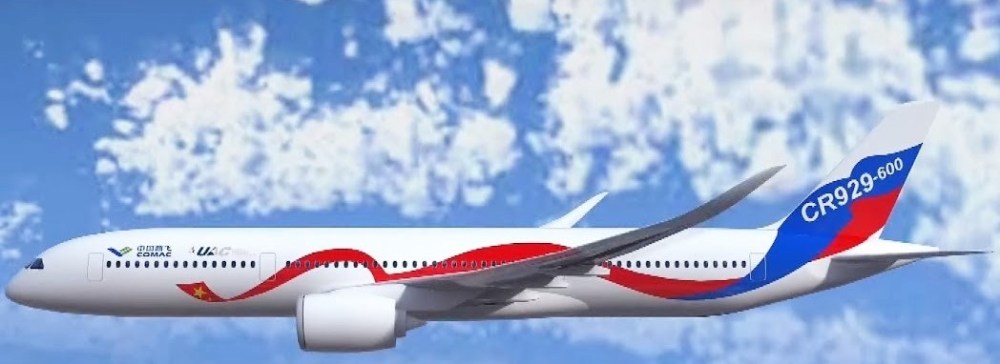
d16e518b1ae9f07e262642b03d760369Comienza la etapa de selección de proveedores para el nuevo avión CR929 ruso-chino

Los desarrolladores de un avión conjunto de largo alcance entre Rusia y China esperan seleccionar proveedores durante el próximo año 2018, luego de que el proyecto pasara por un punto de control técnico.

La United Aircraft de Rusia dice que la junta del proyecto ha aprobado la autorización de la etapa de desarrollo ‘Gate 2’ para el CR929. El comité directivo del programa debata la transición a la siguiente fase. La junta también acordó una estructura organizativa y un presupuesto, así como una serie de cuestiones sobre documentación reglamentaria. El diseño preliminar y la selección de equipos y sistemas se llevarán a cabo el próximo año, confirmando los principales socios con los que Comac, socio de United Aircraft y CR929, trabajará durante el desarrollo del Twinjet.

«Esta decisión permitirá el lanzamiento de la actividad operativa completa de la empresa conjunta en el futuro cercano», dice United Aircraft. Tres variantes del jet formarán la familia CR929. La aeronave base será la CR929-600, complementada por una menor -500 y una mayor -700. AIRWAYS® AW-Icon TXT

maxresdefault.jpg

Selection providers for CR929 russian-chinese

The supplier selection stage for the new Russian-Chinese CR929 aircraft begins

The developers of a long-range joint aircraft between Russia and China expect to select suppliers during the next year 2018, after the project went through a technical control point.

The United Aircraft of Russia says that the project board has approved the authorization of the ‘Gate 2’ development stage for the CR929. The program’s steering committee will discuss the transition to the next phase. The board also agreed on an organizational structure and a budget, as well as a series of questions on regulatory documentation. The preliminary design and selection of equipment and systems will be carried out next year, confirming the main partners with which Comac, partner of United Aircraft and CR929, will work during the development of the Twinjet.

«This decision will allow the launch of full operational activity of the joint venture in the near future», says United Aircraft. Three variants of the jet will form the CR929 family. The base aircraft will be CR929-600, complemented by a smaller -500 and a larger -700. A\W


Ξ A I R G W A Y S Ξ
SOURCE:  Airgways.com
DBk: Uacrussia.ru
AW-POST: 201712231811AR

A\W   A I R G W A Y S ®

Viva Air Panamá compra 50 A320

29513607701_4ce4012a2a_o.jpg

AW | 2017 12 23 18:01 | AIRLINES

Viva Air, con sede en Panamá, anunció la orden de compra de los 50 Airbus 320

Viva Air es un grupo con sede en Panamá, creado por Irelandia Aviation, desarrollador líder de aerolíneas de bajo costo del mundo, liderada por Declan Ryan y su equipo, uno de los fundadores de Ryanair.

Viva Air, una aerolínea de bajo costo de Latinoamérica, recientemente firmó un acuerdo de compra con Airbus para adquirir 50 aviones de la familia A320CEO/NEO, aunque no precisó el monto de la inversión en su declaración. Viva Air lanzó recientemente Viva Air Perú, la aerolínea hermana de VivaColombia con sede en Lima. Viva Air Perú actualmente opera tres aviones A320.

Según los informes, se firmó un MOU en Le Bourget Paris Airshow celebrado en junio por Viva Air con Airbus para la compra de 35 aviones A320NEO y 15 A320CEO de bajo costo. VivaColombia, con sede en Medellín, ha sido un operador totalmente de Airbus desde entonces, y actualmente opera 11 A320. El mismo será operado por la aerolínea del grupo: VivaColombia y Viva Air Perú. AIRWAYS® AW-Icon TXT

Resultado de imagen para Viva Air Ireland

Viva Air Panama buys 50 A320

Viva Air, based in Panama, announced the purchase order for the 50 Airbus 320

Viva Air is a group based in Panama, created by Irelandia Aviation, leading developer of low cost airlines in the world, led by Declan Ryan and his team, one of the founders of Ryanair.

Viva Air, a low-cost airline in Latin America, recently signed a purchase agreement with Airbus to acquire 50 aircraft from the A320CEO/NEO family, although it did not specify the amount of the investment in its declaration. Viva Air recently launched Viva Air Peru, the sister airline of VivaColombia based in Lima. Viva Air Peru currently operates three A320 aircraft.

According to reports, an MOU was signed at Le Bourget Paris Airshow in June by Viva Air with Airbus for the purchase of 35 A320NEO and 15 A320CEO low-cost aircraft. VivaColombia, headquartered in Medellín, has been a fully Airbus operator since then, and currently operates 11 A320. The same will be operated by the group’s airline: VivaColombia and Viva Air Peru. A \ W


Ξ A I R G W A Y S Ξ
SOURCE:  Airgways.com
DBk: Airbus.com / Vivaair.com / Spotter-Aviation Pibracais
AW-POST: 201712231801AR

A\W   A I R G W A Y S ®

Andes realizó 1er. vuelo a Punta del Este

AW | 2017 12 23 17:41 | AIRLINES ROUTES

Andes_Lineas_Aereas.pngAndes Líneas Aéreas realizón el primer vuelo regional a Punta del Este

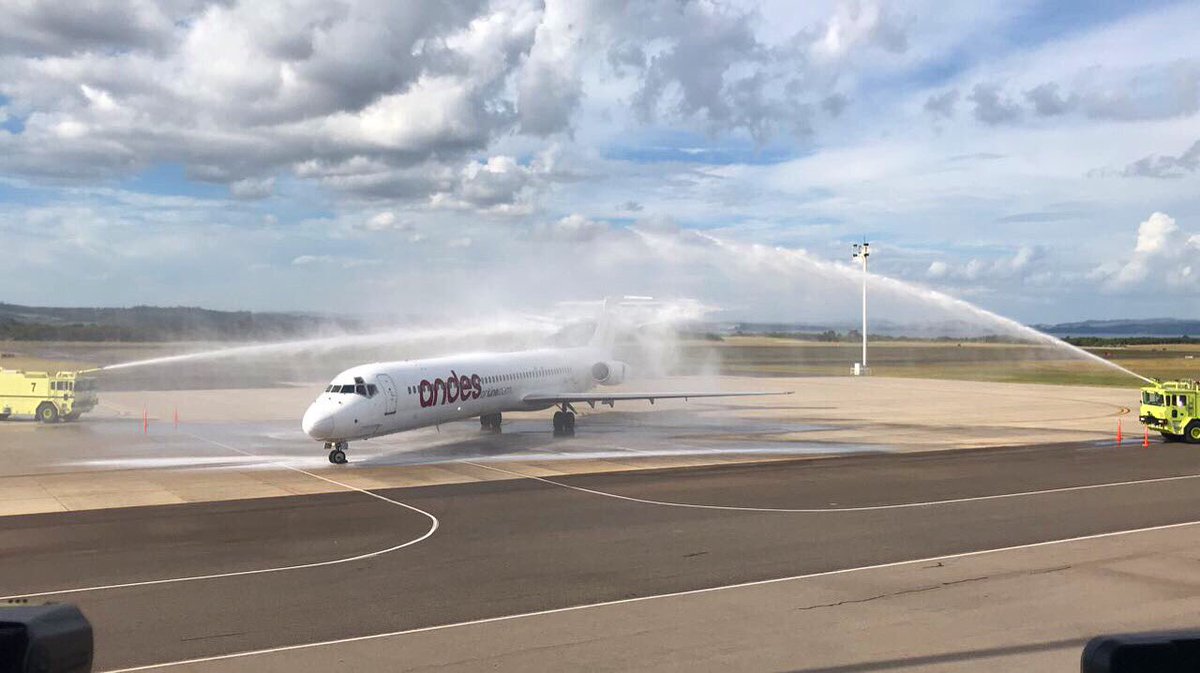
Andes Líneas Aéreas inició sus operaciones regulares regionales con el vuelo que unirá diariamente el Aeroparque Jorge Newbery con la ciudad de Punta del Este, en Uruguay.

El vuelo partió poco después de las 15 y tiene previsto arribar al aeropuerto de Laguna del Sauce alrededor de las 16; para luego emprender el regreso a las 17.30 y llegar al Aeroparque Metropolitano a las 18.20.

“Estamos cumpliendo con lo que propusimos en la audiencia pública de hace 12 meses. Hemos ido avanzando sobre cada uno de los objetivos y llegamos a este fin del 2017 con prácticamente todos los presupuestos concretados”, dijo Bernardo Racedo Aragón, gerente comercial de la firma de capitales argentinos. El directivo sostuvo que “llegar a Punta del Este no es solamente aprovechar un destino veraniego con gran demanda, es también nuestro primer paso regional en vuelos regulares fuera del país. Hasta ahora solamente habíamos volado al extranjero con los servicios charter. Estamos planificando para 2018 otros destinos regionales como Santiago de Chile, Montevideo y Asunción”. Según reveló el gerente comercial, “durante diciembre, además de sumar la ruta hacia Punta del Este, incorporaremos como destino a Mar del Plata, un clásico de las vacaciones de todos los argentinos”, agregó Racedo Aragón.

Andes Líneas Aéreas inició así sus operaciones regulares internacionales con un servicio diario entre el Aeroparque Jorge Newbery y Punta del Este, incrementando en un 20% la oferta de asientos hacia ese destino en el comienzo de la temporada de verano.

Este año se espera que al menos cuatro millones de personas veraneen en la ciudad uruguaya, de los cuales estiman que 2,5 millones serán argentinos, según estimaciones de las autoridades de Turismo del vecino país.

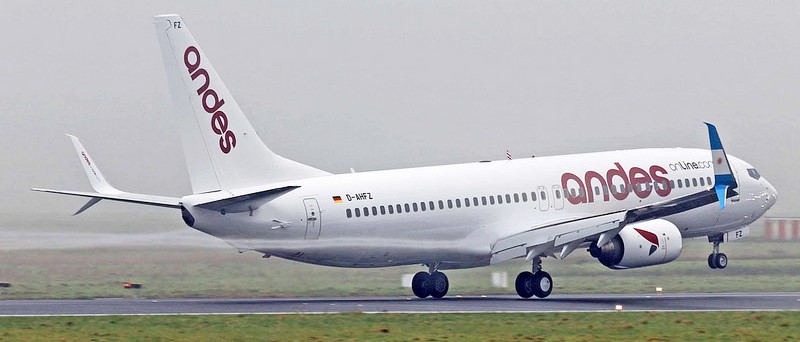
Recientemente la empresa Andes Líneas Aéreas, incorporó un Boeing 737, el octavo avión de su flota. Se trata de un nuevo Boeing 737 800 (LV-HKZ), que se incorpora a la flota siendo el primer Boeing Next Generation con tecnología Split Scimitar Winglet en Argentina. Es un desarrollo de punteras alar para maximizar la eficiencia de combustible. La aerolínea cuenta con aeronaves McDonnell Douglas MD–83 (5) y Boeing 737 800 (3).

39177943401_3217e4b205_c.jpg

TERCER BOEING 737-800 CON SPLIT SCIMITAR WINGLET

La incorporación del flamante avión permitirá, consolidar el plan de la empresa de llegar a más destinos, con mejores servicios y con un esquema de tarifas inteligentes que potencia la competencia en el mercado nacional y permite el acceso de muchos argentinos que antes no podían volar.

Para Bernardo Racedo Aragón, gerente comercial de la compañía, este hito de Andes, no es otra cosa que la ejecución de una planificación anunciada en la audiencia pública llevada a cabo en diciembre de 2016 por la autoridad de aplicación. AIRWAYS® AW-Icon TXT

Andes made its first flight to Punta del Este

Andes Líneas Aéreas made the first regional flight to Punta del Este

Andes Líneas Aéreas began its regular regional operations with the flight that will link the Aeroparque Jorge Newbery airport with the city of Punta del Este, in Uruguay.

The flight departed shortly after 15 and is scheduled to arrive at the Laguna del Sauce airport around 16; to then start the return at 17.30 hs and arrive at the Metropolitan Airport at 18.20 hs.

«We are complying with what we proposed at the public hearing 12 months ago. We have been advancing on each of the objectives and we reached this end of 2017 with virtually all budgets», said Bernardo Racedo Aragón, commercial manager of the Argentine capital firm. The executive said that «getting to Punta del Este is not only to take advantage of a summer destination with great demand, it is also our first regional step in regular flights out of the country. So far we have only flown abroad with charter services. We are planning for 2018 other regional destinations such as Santiago de Chile, Montevideo and Asunción». According to the commercial manager, «during December, in addition to adding the route to Punta del Este, we will incorporate as a destination to Mar del Plata, a classic of the holidays of all Argentines», added Racedo Aragón.

Andes Líneas Aéreas thus began its regular international operations with a daily service between Aeroparque Jorge Newbery and Punta del Este, increasing the offer of seats to that destination by 20% at the beginning of the summer season.

This year it is expected that at least four million people will spend the summer in the Uruguayan city, of which they estimate that 2.5 million will be Argentines, according to estimates from the tourism authorities of the neighboring country.

Recently the company Andes Líneas Aéreas, incorporated a Boeing 737, the eighth aircraft in its fleet. It is a new Boeing 737 800 (LV-HKZ), which joins the fleet being the first Boeing Next Generation with Split Scimitar Winglet technology in Argentina. It is a development of wing tips to maximize fuel efficiency. The airline has McDonnell Douglas MD-83 (5) and Boeing 737 800 (3) aircraft.

The incorporation of the new airplane will allow consolidating the company’s plan to reach more destinations, with better services and with a smart fare scheme that enhances the competition in the national market and allows the access of many Argentines who previously could not fly.

For Bernardo Racedo Aragón, commercial manager of the company, this milestone of Andes is nothing more than the execution of a plan announced at the public hearing held in December 2016 by the enforcement authority. A \ W


Ξ A I R G W A Y S Ξ
SOURCE:  Airgways.com
DBk: Andesonline.com
AW-POST: 201712231741AR

A\W   A I R G W A Y S ®

TAM Bolivia podría cerrar operaciones

Resultado de imagen para TAM Bolivia Avro 70

AW | 2017 12 23 17:23 | AIRLINES

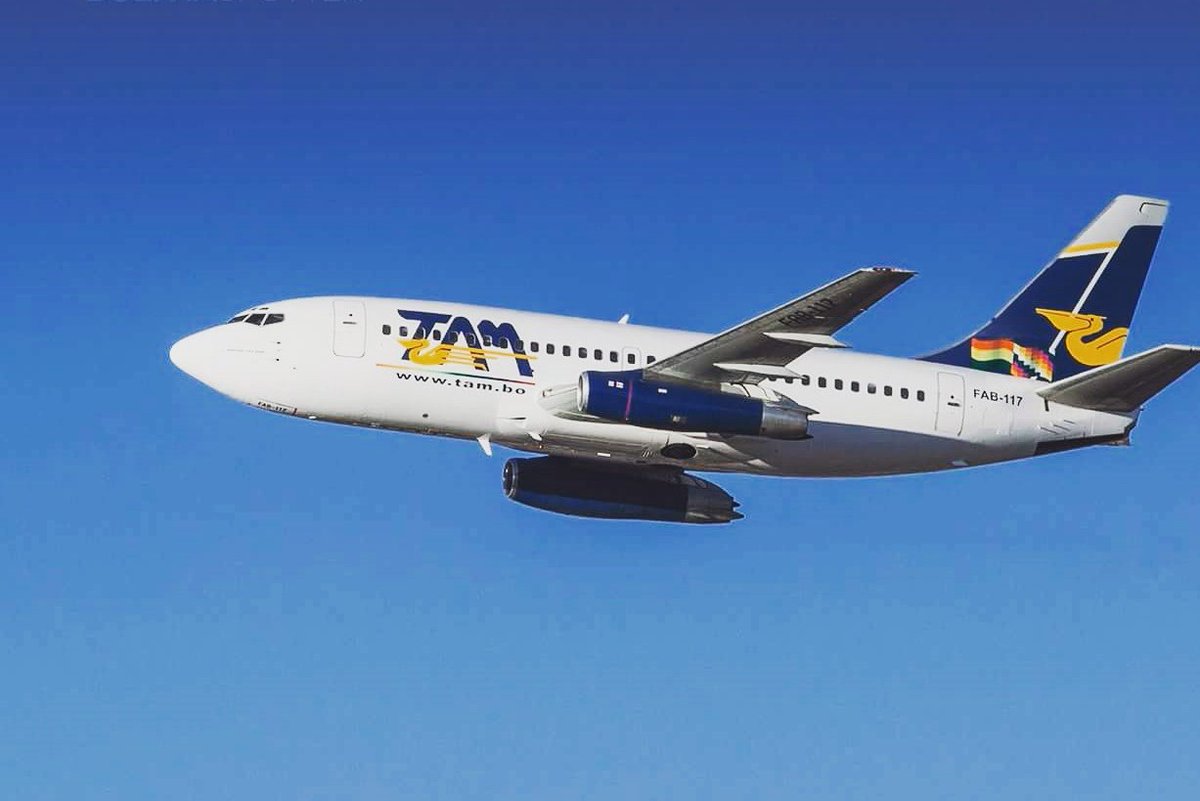
Resultado de imagen para TAM BoliviaTras 72 años de servicio Transportes Aéreos Militares de Bolivia podría cesar sus operaciones

La Empresa Pública Comercial de Transportes Aéreos Militares, (EPTAM) concluirá sus opercaiones comerciales. El presidente de la comisión de Planificación, Política Económica y Finanzas, Javier Zavaleta, expresó su preocupación por la incapacidad de Transporte Aéreo Militar de gestionar una certificación de operaciones comerciales ante la Dirección General de Aeronáutica Civil (DGAC). El parlamentario oficialista, manifestó sus temores ante las acciones de regulación de la aeronáutica civil en Bolivia, y concretamente refirió a las fallas que ha registrado la empresa BoA, durante la gestión.

“Lo que me preocupa en realidad es toda la aeronáutica en general, las fallas de BoA, en los últimos meses, sumado a la incapacidad del TAM de lograr sus licencias. Nos muestra poca planificación y regulación de la DGAC”, sostuvo el legislador.

“Hay algo que está marchando mal en la aeronáutica civil boliviana”, advirtió el diputado, sin precisar qué aspectos están fallando y anunció que en la Asamblea Legislativa existen muchas peticiones de informe que en la gestión 2018 se dará prioridad.

Se refirió al tema a propósito del anunció de Transporte Aéreo Militar, para suspender operaciones el 31 de diciembre en el entendido de que no pudo lograr la certificación de la Dirección General de Aeronáutica Civil (DGAC), para que opere como aerolínea en el ámbito civil comercial.

Según un comunicado, la empresa militar especificó que el Decreto Supremo Nº 3074, aprobado el primero de febrero de 2017, le dio 150 días para que cumpla con los requisitos y se adecue a la regulación civil. La aerolínea inició este proceso en 2015, cuando el 21 de enero de ese año tramitó la pre solicitud a la Dirección de Aeronáutica Civil para comenzar los trámites para acceder al Certificado de Operación Aérea (COA), según dijo entonces un matutino cruceño. Vencido ese plazo, el Ministro de Defensa, Reymi Ferreira, convocó a la prensa para informar acerca del tercer plazo concedido de seis meses adicionales a las autoridades del TAM para que concluyan la certificación ante la DGAC, mismo que debió concluir el 31 de Diciembre de 2017.

El Gerente del TAM, Julio César Villarroel anunció, inversiones del orden de B$ 28 millones para la adquisición de dos aeronaves y se fijó este año para concluir las operaciones de alquiler de los aparatos.

Estos recursos fueron presupuestados en el ejercicio fiscal de 2017, y contemplaba una asignación de B$ 16 millones (U$D 2.7 millones) para el alquiler de dos naves, cuyo trámite de acreditación ante la Dirección General de Aeronáutica Civil (DGAC) concluirá en diciembre próximo, informó en la rendición de cuentas parcial el 24 de mayo pasado. Inclusive dijo, es probable que se contrate una tercera nave. “Luego de la respectiva acreditación, la nueva empresa podrá operar en la siguiente gestión, como aerolínea comercial en Bolivia”, señaló entonces Villarroel.

El Presupuesto General del Estado 2017 asignó este año al TAM Bs 370 millones, según el informe de rendición de cuentas de mayo. Este dato fue comentado por el ministro Ferreira cuando anunció el último plazo a mediados del año. Villarroel se comprometió ante los medios a subir la presentación al portal web de la compañía, pero lamentablemente incumplió ese compromiso. Al cumplirse la segunda rendición final de cuentas donde informó la suspensión de operaciones, supuestamente en razón al congelamiento de cuentas, tampoco ha transparentado su informe en el portal del TAM.

El alquiler de las aeronaves estaba en curso a mediados de año. Uno de los aparato llegó a Cochabamba en julio. En esa ocasión las autoridades de la aerolínea dieron por hecha la certificación de las naves. El aparato que llegó a Cochabamba es una aeronave de fabricación inglesa, BAe Avro RJ70. Las dos aeronaves serían las primeras en incorporarse a la nueva empresa estatal que debió concluir sus trámites el 31 de diciembre para comenzar a operar como empresa comercial desde el 1 de enero de 2018.  AIRWAYS® AW-Icon TXT

TAM Bolivia could close operations

After 72 years of service Bolivian Military Air Transport will close

The Commercial Public Company of Military Air Transport (EPTAM) will conclude its commercial operations. The chairman of the Planning, Economic Policy and Finance Committee, Javier Zavaleta, expressed his concern about the inability of the Military Air Transport to manage a certification of commercial operations before the Directorate General of Civil Aeronautics (DGAC). The parliamentary official, expressed his fears about the actions of regulation of civil aeronautics in Bolivia, and specifically referred to the failures that has registered the BoA company, during the management.

«What really worries me is all the aeronautics in general, the failures of BoA, in recent months, added to the inability of TAM to achieve their licenses. It shows little planning and regulation of the DGAC», said the legislator.

«There is something that is going badly in the Bolivian civil aeronautics», warned the deputy, without specifying what aspects are failing and announced that in the Legislative Assembly there are many requests for report that in the 2018 administration will be given priority.

He referred to the issue of the announcement of Military Air Transport, to suspend operations on December 31 on the understanding that he could not achieve the certification of the Directorate General of Civil Aeronautics (DGAC), to operate as an airline in the civil field commercial.

According to a statement, the military company specified that Supreme Decree No. 3074, approved on February 1, 2017, gave 150 days to comply with the requirements and be adapted to civil regulation. The airline started this process in 2015, when on January 21 of that year it processed the pre-application to the Directorate of Civil Aeronautics to begin the procedures to access the Air Operation Certificate (COA), as it was said by a morning Cruceño. After that period, the Minister of Defense, Reymi Ferreira, called the press to inform about the third term granted of six additional months to the TAM authorities to complete the certification before the DGAC, which should have concluded on December 31st. 2017

The Manager of the TAM, Julio César Villarroel announced, investments in the order of B$ 28 million for the acquisition of two aircraft and was set this year to complete the rental operations of the devices.

These resources were budgeted in the fiscal year of 2017, and contemplated an allocation of B$ 16 million (US$ 2.7 million) for the rental of two ships, whose accreditation process before the General Directorate of Civil Aeronautics (DGAC) will conclude in next December, reported on the partial surrender of accounts on May 24 last. Even said, it is likely that a third ship will be hired. «After the respective accreditation, the new company may operate in the following management, as a commercial airline in Bolivia», said Villarroel then.

The General State Budget for 2017 assigned this year to the TAM B$ 370 million, according to the May accountability report. This information was commented by Minister Ferreira when he announced the last deadline in the middle of the year. Villarroel committed himself before the media to upload the presentation to the company’s web portal, but unfortunately he failed to fulfill that commitment. At the end of the second final account submission where he reported the suspension of operations, supposedly due to the freezing of accounts, he has not disclosed his report on the TAM portal.

Aircraft rental was in progress mid-year. One of the aircraft arrived in Cochabamba in July. On that occasion the authorities of the airline assumed certification of the ships. The aircraft that arrived in Cochabamba is an English-made aircraft, BAe Avro RJ70. The two aircraft would be the first to join the new state-owned company that had to complete its procedures on December 31 to begin operating as a commercial company from January 1, 2018. A \ W


Ξ A I R G W A Y S Ξ
SOURCE:  Airgways.com
DBk: Tam.bo / Wikimedia.org
AW-POST: 201712231723AR

A\W   A I R G W A Y S ®

Korean Air Lines recibe primer CS300

AW-7009933000.jpg

AW | 2017 12 23 17:01 | AIRLINES

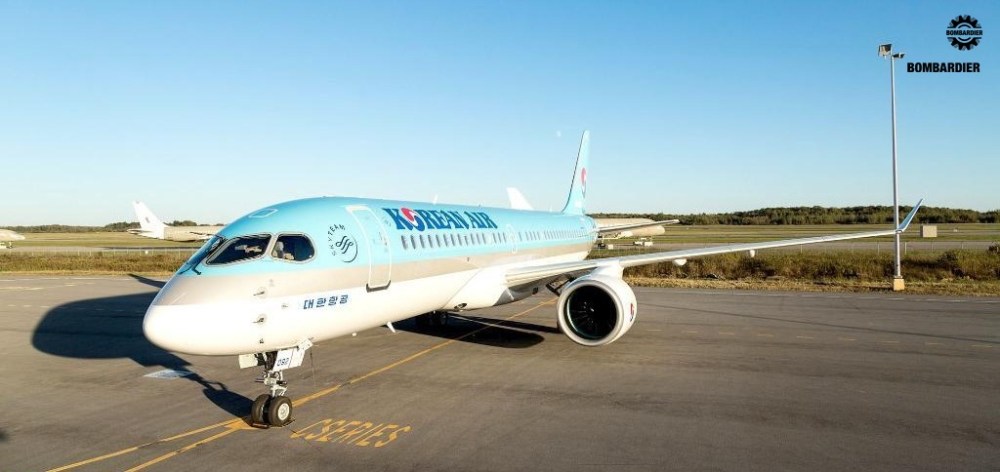
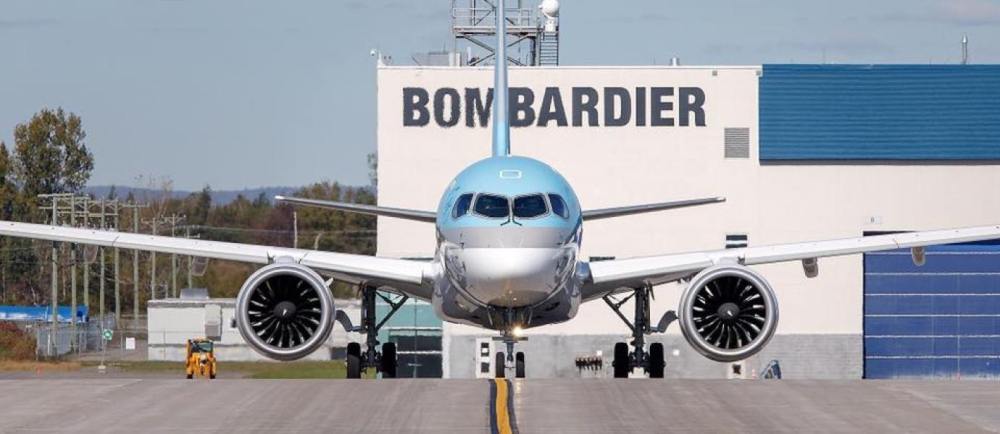
Bombardier_logo[1]Bombardier Commercial Aircraft entregó recientemente su primer avión CS300 a la aerolínea Korean Air Lines

Korean Air Lines ha tomado entrega en Mirabel, Quebec, Canadá del primer Bombardier CS300 convirtiéndose en el primer cliente asiático de Bombardier. La aerolínea ha ordenado 10 unidades del nuevo avión regional canadiense de Bombardier Inc.

Bombardier_Aerospace-200x (2)«Es un hito bastante importante para el programa de la CSeries porque es nuestro gran avance en el mercado asiático de rápido crecimiento, y nos sentimos honrados de tener a Korean Air Lines como embajador de nuestra marca en la región. Esperamos que en los próximos 20 años, los operadores asiáticos recibirán 2.870 pequeños aviones de pasillo único. Estamos encantados de que Korean Air sea el primero en la región en mostrar el desempeño y las capacidades sobresalientes del avión CS300», dijo Fred Cromer, presidente de Bombardier Commercial. Aeronave.

«Hemos sido testigos del impresionante primer año de funcionamiento de la Serie C, y nos complace recibir nuestro primer avión Bombardier CS300. Cuando seleccionamos la aeronave en 2011, sabíamos que sería una gran adición a nuestra flota. Hoy en día, es la aeronave más eficiente de su clase, y la comodidad de los pasajeros es sobresaliente. La aeronave CS300 nos permitirá reforzar nuestra capacidad regional. Las operaciones de pasillo único, a la vez que proporcionan un alto nivel de rentabilidad y satisfacción del cliente, son factores clave de nuestra decisión de adquirir el Bombardier CS300, y esperamos integrarlo a nuestra flota», dijo Soo-Keun Lee, CTO de Korean Air Lines.

«Estamos encantados de que Korean Air reciba su primer avión CS300. Pratt & Whitney ha compartido una relación de larga data con KAL desde finales de la década de 1940 y esperamos poder impulsar su flota de nueva generación», dijo Rick Deurloo, vicepresidente senior de ventas, marketing y atención al cliente de Pratt & Whitney.

Con eso, Korean Air se convirtió en la tercera aerolínea global en recibir la entrega del jet, el más grande de los dos modelos de la «Serie C» del fabricante de aviones canadiense Bombardier. AirBaltic de Suiza y Letonia son los otros dos operadores que ya pilotean el CS300.

Korean Air, el cliente de lanzamiento asiático para el modelo, ha configurado sus CS300 con 127 asientos en un diseño de 2 por 3. De ellos, 25 serán asientos Premium Space extra Economy, que debutarán en la flota de Korean Air en el CS 300s. Korean Air dice que los clientes sentados en los nuevos asientos de Economy Premium «podrán disfrutar de un campo más ancho (4 pulgadas más ancho) y un ancho de asiento más ancho de 19 pulgadas».

Korean dice que usará sus nuevos CS300 en «rutas regionales de baja densidad», una acción que según la aerolínea liberará su avión de pasillo único más grande para rutas de mayor tráfico.

Para Bombardier, la entrega es la última señal de progreso en su problemática línea C Series. Las ventas de han sido lentas tanto para el CS300 como para el modelo CS100 más pequeño.

Bombardier recibió un disparo en el brazo por su CS100 en 2016, cuando Delta hizo un pedido en firme de 75 de los aviones. Pero eso llevó a Boeing a presentar una demanda comercial alegando que Bombardier estaba volcando los aviones en el mercado de los EEUU por debajo del costo.

Desde entonces, se ha producido una disputa comercial, con los EE. UU. Amenazando tentativamente con un arancel de casi 300% en los aviones CSeries. La disputa se ha intensificado recientemente, con Canadá rechazando un pedido de aviones de combate Boeing y Bombardier anunciando que había vendido una participación mayoritaria en su línea CSeries al archirival de Boeing, Airbus. Como parte de este último, Airbus ensamblaría jets CSeries con destino a las líneas aéreas de EEUU en su nueva fábrica en Alabama.

El Bombardier CS300 entregado el viernes 22 de Diciembre es el primero de los 10 pedidos por Korean Air. Se espera que el segundo avión regional del pedido se entregue a Korean Air Lines antes de fin deDiciembre 2017. AIRWAYS® AW-Icon TXT

636496240686637635-Bombardier---Korean-Air---002---20171002---3446 (1)

Korean Air Lines receives first CS300

AW-7000300Bombardier Commercial Aircraft recently delivered its first CS300 aircraft to the airline Korean Air Lines

Korean Air Lines has taken delivery of the first Bombardier CS300 in Mirabel, Quebec, Canada, becoming the first Asian customer of Bombardier. The airline has ordered 10 units of the new Canadian regional aircraft from Bombardier Inc.BCA-C-Series-LP-960X525-en

«This is a very important milestone for the CSeries program because it is our breakthrough in the rapidly growing Asian market, and we are honored to have Korean Air Lines as our brand ambassador in the region. For years, Asian operators will receive 2,870 small single-aisle aircraft, and we are delighted that Korean Air is the first in the region to showcase the outstanding performance and capabilities of the CS300», said Fred Cromer, president of Bombardier Commercial. Aircraft.

«We have witnessed the impressive first year of operation of the C Series, and we are pleased to receive our first Bombardier CS300 aircraft.When we selected the aircraft in 2011, we knew it would be a great addition to our fleet.Today, it is the most Efficient in its class, and passenger comfort is outstanding.The CS300 aircraft will allow us to strengthen our regional capacity.The single aisle operations, while providing a high level of profitability and customer satisfaction, are key factors of our decision to acquire the Bombardier CS300, and we hope to integrate it into our fleet», said Soo-Keun Lee, CTO of Korean Air Lines.

«We are delighted that Korean Air will receive its first CS300 aircraft. Pratt & Whitney has shared a long-standing relationship with KAL since the late 1940s and we look forward to boosting its next-generation fleet», said Rick Deurloo, senior vice president of sales, marketing and customer service of Pratt & Whitney.

AW-700083300

BOMBARDIER CS300 FOR KOREAN AIR LINES

With that, Korean Air became the third global airline to receive jet delivery, the largest of the two «C Series» models of Canadian aircraft manufacturer Bombardier. AirBaltic from Switzerland and Latvia are the other two operators that already pilot the CS300.

Korean Air, the Asian launch customer for the model, has configured its CS300 with 127 seats in a 2 by 3 design. Of these, 25 will be Premium Space extra Economy seats, which will debut in the Korean Air fleet in the CS 300s . Korean Air says customers sitting in the new Economy Premium seats «can enjoy a wider field (4 inches wider) and a wider seat width of 19 inches».

Korean says it will use its new CS300s on «low density regional routes,» an action the airline says will free its largest single-aisle plane for high-traffic routes.

For Bombardier, delivery is the latest sign of progress in its problematic CSeries line. Sales have been slow for both the CS300 and the smaller CS100 model.

Bombardier was shot in the arm for his CS100 in 2016, when Delta placed a firm order for 75 of the planes. But that led Boeing to file a commercial suit alleging that Bombardier was dumping the aircraft in the US market. UU Below the cost.

13-april-bombardier-cseries-360Since then, there has been a commercial dispute, with the USA. UU Threatening tentatively with a tariff of almost 300% on CSeries aircraft. The dispute has intensified recently, with Canada rejecting an order for Boeing and Bombardier fighter jets announcing that it had sold a majority stake in its CSeries line to Boeing’s arch-rival, Airbus. As part of the latter, Airbus would join CSeries jets bound for US airlines at its new factory in Alabama.

The Bombardier CS300 delivered on Friday, December 22 is the first of 10 orders by Korean Air. It is expected that the second regional aircraft of the order will be delivered to Korean Air Lines before the end of December 2017. A \ W


Ξ A I R G W A Y S Ξ
SOURCE:  Airgways.com
DBk: Bombardier.com / Koreanair.com / Ksdk.com
AW-POST: 201712231701AR

A\W   A I R G W A Y S ®

Azafata, 60 años volando su pasión

AW | 2017 12 23 16:24 | AIRLINES / BIOGRAPHY

AW-Bette_Nash_the_80_year_old_flight_attendantUna azafata de 81 años continúa volando en American Airlines

Bette Nash lleva 60 años volando y aún hoy se desempeña como asistente de vuelo en Estados Unidos. Le hicieron un nota en la televisión y ahora todos los pasajeros se quieren sacar una foto con ella.

El vuelo AA2160 de American Airlines proveniente de Boston acaba de aterrizar en Washington DC, y Bette Nash, de 81 años, ayuda a los pasajeros a desembarcar. En la cabina del Airbus, la saludan, le toman fotos, le agradecen.

Después de seis décadas surcando los cielos como azafata, Bette Nash mantiene un estilo impecable, una energía increíble y una sonrisa constante. Perdió solo una cosa: el anonimato. Es muy profesional. Tiene ese toque de la vieja escuela, que recuerda los buenos viejos tiempos.

En Estados Unidos, los pilotos deben retirarse a los 65 años, pero no los auxiliares de vuelo comerciales, de los cuales Nash es presumiblemente la decana mundial.

Al verla trotando de arriba a abajo por los pasillos de la terminal aérea, arrastrando su maleta, es difícil no dejarse llevar por las palabras de admiración que se escuchan sobre ella.

«Me levanto a las 02H10 de la mañana. Tengo dos despertadores y, cuando suenan, ¡no me quedo en la cama!», asegura. En su casa en Virginia, muy cerca de la capital estadounidense, prepara comida para su único hijo, discapacitado, que la estará esperando a su regreso a tierra firme.

Toda arreglada y tras desayunar «un par de huevos», llega antes del amanecer al Aeropuerto Nacional Ronald Reagan. Su vuelo favorito es el «Washington-Boston-Washington», que puede elegir debido a su notable antigüedad.

Un legado de pasión

Tenía 21 años, bajo la presidencia de Dwight Eisenhower, cuando la hoy desaparecida aerolínea Eastern Air Lines la reclutó como «azafata», un término que en inglés se ha vuelto obsoleto ante el de «asistente de vuelo».

BETTE NASH VOLANDO PARA EASTERN AIR LINES

Cuando comenzó a volar, el transporte aéreo era una prerrogativa de la élite. «Había muchos empresarios y las mujeres entraban con sus abrigos de piel, sus joyas, sus sombreros; no veíamos las chanclas y las zapatillas deportivas de hoy», cuenta. Sus propios uniformes variaron a través de los años: fueron conservadores, elegantes e incluso «salvajes».

«A principios de 1960, cuando John F. Kennedy asumió el poder, todo se liberó, llevábamos uniformes completamente locos, que incluso tenían mini-shorts y botas», recuerda. En esos tiempos, las bandejas de comida en cadena no existían. Las azafatas cocinaban tanto langosta como pato a la naranja y cortaban el asado. En primera clase, los clientes tenían derecho a platería y vajilla de porcelana. «Pasábamos con cinco carritos: primero las bebidas, luego los aperitivos, luego el plato principal, luego el carro de postre y finalmente los licores digestivos»«Los vuelos turísticos eran solo para los turistas, vendíamos los sándwiches a 50 centavos de dólar y el vaso de leche a 15 centavos, y no ofrecíamos ninguna bebida fresca, solo había café, té, chocolate caliente y caldo».

Según pasan los años

Huelgas, fusiones, adquisiciones, Bette Nash ha experimentado todos los altibajos del sector aéreo en Estados Unidos. Incluso trabajó para Trump Shuttle, una compañía que fue brevemente propiedad del actual presidente Donald Trump.

La azafata de American Airlines Bette Nash, de 81 años, saluda a los pasajeros al llegar al aeropuerto Ronald Reagan Washington en Arlington, Virginia, el 19 de diciembre de 2017 (AFP – Eric BARADAT )

La azafata de American Airlines Bette Nash, de 81 años, en el aeropuerto Ronald Reagan Washington en Arlington, Virginia, el 19 de diciembre de 2017 (AFP – Eric BARADAT )

No olvida una vez cuando, llegando a Washington, su avión quedó en medio de turbulencias tan violentas que se desprendió parte de un inodoro y parecía como si un ala golpeara el piso. «Fue simplemente terrible», dijo Nash, recordando los rayos que se sucedían sin parar. «Creo que incluso volamos sobre la Casa Blanca esa noche, lo cual era completamente ilegal». El avión tuvo que regresar a Nueva York. Hace diez años, al cumplir 50 años de carrera, la aeronave en que viajaba Bette Nash fue recibida en la pista con chorros de agua del cuerpo de bomberos, un honor normalmente reservado para pilotos veteranos o para el bautizo de un nuevo avión comercial. ¿Quién imaginaba entonces que ella todavía estaría aquí hoy? «No voy a trabajar hasta que tenga 90 años», afirma, antes de agregar sobre su jubilación: «¡No quiero pensar en eso!» Bette Nash cumplirá 82 años el 31 de diciembre de 2017. AIRWAYS® AW-Icon TXT

Stewardess, 60 years flying his passion

An 81-year-old stewardess continues to fly in American Airlines

Bette Nash has been flying for 60 years and still serves as a flight attendant in the United States. They made a note on television and now all the passengers want to take a picture with her.

American Airlines flight AA2160 from Boston has just landed in Washington DC, and Bette Nash, 81, helps passengers disembark. In the cabin of the Airbus, they greet her, they take photos, they thank her.

After six decades in the skies as stewardess, Bette Nash maintains impeccable style, incredible energy and a constant smile. Lost only one thing: anonymity. It is very professional. It has that touch of the old school, which reminds us of the good old days.

In the United States, pilots must retire at age 65, but not commercial flight attendants, of whom Nash is presumably the world’s dean.

La azafata de American Airlines Bette Nash, de 81 años, en una entrevista con la AFP tras desembarcar de un vuelo en Arlington, Virginia, el 19 de diciembre de 2017 (AFP – Eric BARADAT )

American Airlines stewardess Bette Nash, 81, greets passengers as they arrive at the Ronald Reagan Washington airport in Arlington, Virginia, on December 19, 2017 (AFP – Eric BARADAT)

Seeing her trotting up and down the halls of the air terminal, dragging her suitcase, it’s hard not to get carried away by the words of admiration that are heard about her.

«I get up at 02h10 in the morning, I have two alarm clocks and when they sound, I do not stay in bed!» He says. At her home in Virginia, very close to the US capital, she prepares food for her only child, disabled, who will be waiting for her on her return to the mainland.

All arranged and after breakfast «a couple of eggs» arrives before dawn at the Ronald Reagan National Airport. Your favorite flight is the «Washington-Boston-Washington», which you can choose because of its remarkable antiquity.

This undated photo, from a personal album by Bette Nash, shows her in an old stewardess costume, in Washington DC (Bette Nash / AFP – HO)

A legacy of passion

She was 21 years old, under the presidency of Dwight Eisenhower, when the now defunct airline Eastern Air Lines recruited her as «stewardess», a term that in English has become obsolete before that of «flight attendant».

Esta foto sin fecha, de un album personal de Bette Nash, la muestra en un antiguo traje de azafata, en Washington DC (Bette Nash/AFP – HO)

This undated photo, from a personal album by Bette Nash, shows her in an old stewardess costume, in Washington DC (Bette Nash / AFP – HO)

When it began to fly, air transport was a prerogative of the elite. «There were many entrepreneurs and women came with their fur coats, their jewelry, their hats, we did not see the flip flops and sneakers today», he says. Their own uniforms varied over the years: they were conservative, elegant and even «wild».

«In the early 1960s, when John F. Kennedy came to power, everything was freed, we were wearing completely crazy uniforms, which even had mini-shorts and boots», he recalls. In those times, chain meal trays did not exist. The hostesses cooked both lobster and orange duck and cut the roast. In first class, customers had the right to porcelain china and crockery. «We had five carts: first the drinks, then the appetizers, then the main course, then the dessert cart and finally the digestive liquors»«The tourist flights were only for tourists, we sold the sandwiches for 50 cents and the glass of milk for 15 cents, and we did not offer any fresh drinks, there was only coffee, tea, hot chocolate and broth».

As the times go by

Strikes, mergers, acquisitions, Bette Nash has experienced all the ups and downs of the airline industry in the United States. He even worked for Trump Shuttle, a company that was briefly owned by current President Donald Trump.

Do not forget once when, arriving in Washington, his plane was in turbulence so violent that part of a toilet came off and it seemed as if a wing hit the floor. «It was just terrible», Nash said, remembering the beams that were happening without stopping. «I think we even flew over the White House that night, which was completely illegal». The plane had to return to New York. Ten years ago, when he turned 50 years old, Bette Nash’s aircraft was received on the runway with jets of water from the fire department, an honor normally reserved for veteran pilots or for the christening of a new commercial aircraft. Who imagined then that she would still be here today? «I’m not going to work until I’m 90 years old», he says, before adding about his retirement: «I do not want to think about that!» Bette Nash will turn 82 on December 31, 2017. A \ W


Ξ A I R G W A Y S Ξ
SOURCE:  Airgways.com
DBk: post-gazette.com  / Infobae.com
AW-POST: 201712231624AR

A\W   A I R G W A Y S ®

Error de emergencia avión de Aerolíneas

AW-70083712.png

AW | 2017 12 23 15:30 | AVIATION SAFETY

Un avión aterrizó de emergencia en el Aeropuerto de Ezeiza en medio de confusión

Un avión Boeing 737-800 de Aerolíneas Argentinas que despegó desde Aeroparque Jorge Newbery tuvo que aterrizar de emergencia en el Aeropuerto Ezeiza, en medio de un confuso episodio que despertó las alertas de seguridad de la terminal. Los operarios de la torre de control habían entendido, en una primera instancia, que era por un intento de secuestro. Pero después de varios minutos, la empresa confirmó que había tenido un problema técnico.

Las autoridades de Control Ezeiza accedieron a un segundo contacto con los pilotos del avión y pudieron entender que el problema fue un error en el tipeo de los códigos de alertas. El problema radicaba en la interpretación de la sigla en inglés por parte de la torre de control. Este tipo de lenguaje aeronáutico se basa en abreviar las diferentes situaciones que ocurren durante el vuelo.

Los pilotos habían reportado que un objeto había golpeado la cola de la aeronave y querían chequear qué tipo de daños había provocado. La aerolínea informó que la aeronave Boeing 737-800 despegó ese mismo día rumbo a Santa Cruz de la Sierra (Bolivia), ya que no había fallas significativas que pongan en riesgo la seguridad de los pasajeros. AIRWAYS® AW-Icon TXT

Emergency error Aerolíneas plane

A plane landed emergency at Ezeiza Airport amid confusion

An Aerolíneas Argentinas Boeing 737-800 plane that took off from Aeroparque Jorge Newbery had to land at the Ezeiza Airport, in the middle of a confusing episode that awoke the security alerts of the terminal. The operators of the control tower had understood, in a first instance, that it was for an attempted kidnapping. But after several minutes, the company confirmed that it had had a technical problem.

The Ezeiza Control authorities agreed to a second contact with the pilots of the plane and could understand that the problem was an error in the typing of the alert codes. The problem lay in the interpretation of the acronym in English by the control tower. This type of aeronautical language is based on abbreviating the different situations that occur during the flight.

The pilots had reported that an object had hit the tail of the aircraft and wanted to check what type of damage it had caused. The airline reported that the Boeing 737-800 aircraft took off that same day for Santa Cruz de la Sierra (Bolivia), as there were no significant faults that put passengers’ safety at risk. A \ W


Ξ A I R G W A Y S Ξ
SOURCE:  Airgways.com
DBk: Airgways.com
AW-POST: 201712231530AR

A\W   A I R G W A Y S ®

SSJ100 primer vuelo con Saberlets

P38A0434-1-копия.jpg

AW | 2017 12 22 20:40 | INDUSTRY

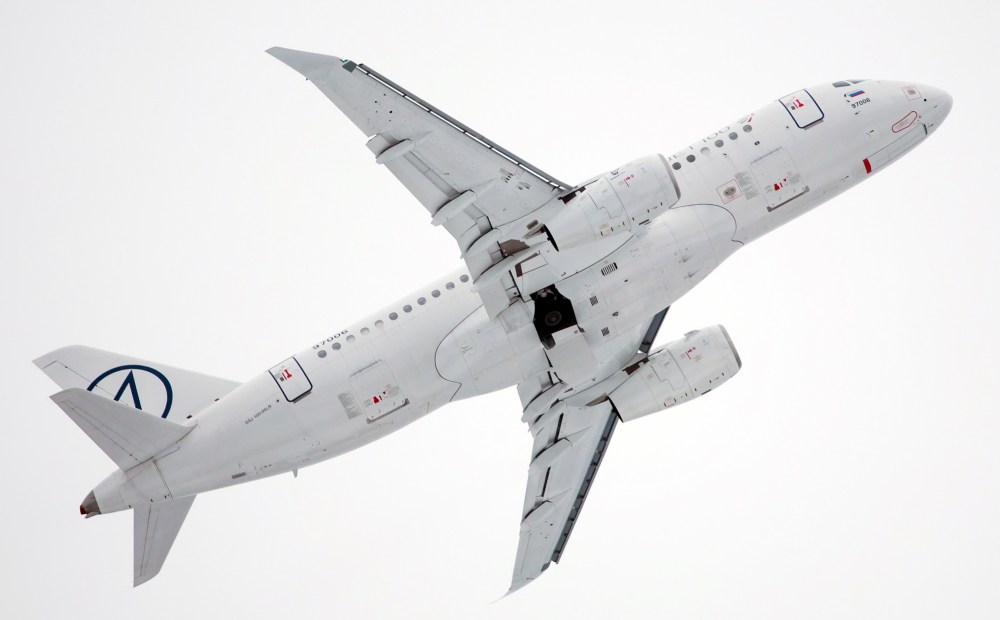
suhoy_logoEl 21 de diciembre de 2017, Sukhoi Superjet 100 realizó su primer vuelo con instalación de saberletsResultado de imagen para Sukhoi SSJ-100 png

El fabricante Voronezh es el responsable de los kits de saberlets, los materiales utilizados están certificados en Rusia y en el extranjero.La configuración tipo sable de los winglets en el Sukhoi Superjet 100 (SSJ-100) resultó ser el resultado de una serie de actividades de investigación, ingeniería y experimentales llevadas a cabo por la Sukhoi Civil Aircraft Company con la asistencia del Instituto Aerohidrodinámico Central (TsAGI).

La geometría de los consejos se determinó con la implementación de los métodos innovadores de optimización 3D basados ​​en cálculos numéricos llamados Dinámica de fluidos computacional (CFD): el conocimiento único de TsAGI utilizado en la industria de la aviación rusa, en particular para el programa Sukhoi Superjet 100.

ttxlNB4TiPc.jpg

WINGLETS «SABERLETS» DEL SUKHOI SUPER JET SSJ-100

Los resultados de la investigación y los experimentos demostraron que la instalación de las puntas con forma de sable permite mejorar simultáneamente el rendimiento de despegue y aterrizaje y disminuir el consumo de combustible en no menos del 3%. La mejora esperada de las características de despegue y aterrizaje será obvia para los transportistas que operan la aeronave en las pistas regionales y en condiciones de clima cálido, así como en los aeródromos de montaña (Hot & High).

El presidente de la Compañía de Aeronaves Civiles de Sukhoi, Alexander Rubtsov, expresó: «Sukhoi Civil Aircraft Company está implementando el programa de mejora Sukhoi Superjet 100 con el objetivo de la expansión del mercado y el aumento del número de clientes, el crecimiento actual del nivel de satisfacción de los operadores y el mantenimiento del alto nivel competitivo del producto. La instalación de puntas de ala como parte del programa de mejora proporcionará a los operadores un recorte de costes de hasta $ 70 000 por año por un SSJ100».

El final de un programa a gran escala de pruebas terrestres y de vuelo dará como resultado la certificación de la SSJ100 con las puntas horizontales los sabelets y se ofrecerán como una opción para los Clientes. La instalación de las puntas es posible no solo para las nuevas aeronaves, sino también para las aeronaves ya entregadas.  AIRWAYS® AW-Icon TXT

DRlzXDfW4AAyNAw.jpg

SSJ100 first flight with Saberlets

logo_sukhoiOn December 21, 2017, Sukhoi Superjet 100 made its first flight with saberlets installation

The manufacturer Voronezh is responsible for the kits of saberlets, the materials used are certified in Russia and abroad. The sable configuration of the winglets in the Sukhoi Superjet 100 (SSJ-100) turned out to be the result of a series of activities of research, engineering and experimental work carried out by the Sukhoi Civil Aircraft Company with the assistance of the Central Aerohydrodynamic Institute (TsAGI).

The geometry of the councils was determined with the implementation of innovative 3D optimization methods based on numerical calculations called Computational Fluid Dynamics (CFD): the unique knowledge of TsAGI used in the Russian aviation industry, in particular for the Sukhoi Superjet 100 program.

The results of the research and the experiments showed that the installation of the saber-shaped tips allows to simultaneously improve the take-off and landing performance and reduce fuel consumption by no less than 3%. The expected improvement in take-off and landing characteristics will be obvious for carriers operating the aircraft on regional runways and in warm weather conditions, as well as at mountain aerodromes (Hot & High).

The president of the Sukhoi Civil Aircraft Company, Alexander Rubtsov, said: «Sukhoi Civil Aircraft Company is implementing the Sukhoi Superjet 100 improvement program with the aim of expanding the market and increasing the number of customers, the current growth of the level of operator satisfaction and maintaining the high competitive level of the product.The installation of wing tips as part of the improvement program will provide operators with a cost cut of up to $ 70,000 per year for an SSJ100. «

The end of a large-scale program of ground and flight tests will result in the certification of the SSJ100 with the horizontal tips the sabelets and will be offered as an option for the clients. The installation of the tips is possible not only for new aircraft, but also for aircraft already delivered. A \ W


Ξ A I R G W A Y S Ξ
SOURCE:  Airgways.com
DBk: Sukhoi.org / Scac.ru
AW-POST: 201712222040AR

A\W   A I R G W A Y S ®

Boeing ambiciona compra de Embraer

AW-7000190737

AW | 2017 12 22 18:50 | INDUSTRY

Boeing-Logo.svg.pngThe Boeing Company está discutiendo una potencial adquisición multimillonaria del fabricante de aviones regionales Embraer S.A. de Brasil

1280px-Embraer_logo.svgUn acuerdo no es seguro ya que el gobierno brasileño tendría que aprobar la venta de una empresa considerada la joya de la corona del sector manufacturero del país.

La compañía estadounidense The Boeing Company tendría intenciones de controlar al fabricante aeroespacial Embraer S.A. La operación de compra o fusión sería una de las más importantes después de la fusión con McDonnell Douglas hace 20 años atrás.

El mercado de la industria aeronáutica parece ir cercando horizontes. Esta movida pudiera suponer una reacción por parte de Boeing a un sorpresivo acuerdo entre Airbus y Bombardier.

En líneas de diálogo en la relación Boeing-Embraer expresaron que existe un largo camino por recorrer. Está sujeto a todo tipo de aprobaciones regulatorias y gubernamentales entre ambos países.

La postura brasileña

Citando a un alto funcionario del gobierno brasileño, Reuters informó el jueves que la administración del presidente Michel Temer respaldaría una asociación en aviación comercial entre Boeing y Embraer, pero que bloquearía cualquier intento de adquisición total.

SEDE DE LA EMBRAER EN SAO JOSÉ DOS CAMPOS, SAO PAULO

El Presidente de Brasil Michel Temer en una reunión el jueves con su Ministro de Defensa y oficiales militares dijo que, bajo su gobierno, Embraer nunca será vendida. El Gobierno brasileño tiene poder de veto desde que privatizó la compañía hace dos décadas, por lo que cualquier acuerdo entre las dos grupos aeronáuticos requerirá la aprobación del Ejecutivo.

Aunque Boeing ha tenido una relación estrecha con Embraer durante años, su movimiento ahora es ampliamente visto como un obstáculo a la adquisición propuesta por Airbus de una participación mayoritaria en el nuevo jet regional CSeries diseñado y construido por Bombardier de Canadá. Las conversaciones dijo que comenzaron a principios de este año, mucho antes del anuncio de Airbus en octubre, y advirtió que el interés de Boeing en Embraer no debería verse como reactivo para Airbus. La aparente seriedad de las conversaciones en este momento sugiere que la movida de Airbus ha agregado ímpetu a la propuesta de Boeing.

Embraer, con sede en São José dos Campos (SP), compite exitosamente contra Bombardier y se ha establecido como el principal fabricante mundial de jets regionales, aviones de menor y menor alcance que los construidos por Airbus y Boeing, utilizados en muchos vuelos domésticos en rutas menos densas.

El jueves por la mañana, después de que The Wall Street Journal dio la noticia de las conversaciones de adquisición, las acciones de Embraer se dispararon más del 30%, y luego retrocedieron. Las acciones cerraron un 22% en el día, lo que le dio a la compañía un valor de mercado de U$D 4.5 mil millones.

Si Boeing puede persuadir al gobierno de Brasil para que considere una venta, lo que seguramente requeriría garantías firmes para preservar empleos en Brasil y mantener la marca, probablemente tendría que pagar una prima considerable por encima de ese valor de mercado para asegurar un acuerdo. En muchos sentidos, las dos compañías encajarían perfectamente, con productos complementarios en lugar de superpuestos.

En 2012, los dos anunciaron un acuerdo de cooperación amplio y formal, que se extiende a múltiples proyectos, incluido el avión de carga militar KC-390 de Embraer.

Escenario de fusión

Una adquisición de toda la compañía incluiría los extensos aviones militares y negocios corporativos de Embraer, así como su unidad de aviación comercial. Sin embargo, Boeing debe prestar especial atención a la nueva línea de E2 de Embraer, una renovación sustancial de la familia de E-jet que se introdujo para contrarrestar la familia de jets CSeries de Bombardier, un diseño completamente nuevo. Los E2 cuentan con los últimos motores turbohélice con engranaje Pratt & Whitney, así como un nuevo ala y tren de aterrizaje El modelo inicial, el E190-E2 con capacidad para 106 pasajeros en una configuración de clase única, actualmente está completando la prueba de vuelo y la certificación. Widerøe Airlines de Noruega recibirá el primer E190-E2 en abril.

El acuerdo que Airbus anunció en octubre para adquirir una participación mayoritaria en el programa Bombardier CSeries potencialmente asegura el extremo más pequeño del mercado de aviones de pasillo único para el fabricante de aviones europeo, con el jet CS100 de 110 asientos y el jet CS300 de 130 asientos llenando el espacio de mercado debajo de sus propios jets A320 de 150 asientos.

Al comprar los jets E2, Boeing crearía una alineación similar, con el E190-E2 y el E195-E2 de 132 asientos que complementan sus nuevos jets 737 MAX de pasillo único.

Sin embargo, el movimiento podría matar al MAX más pequeño, el Boeing 737-7 MAX de 138 asientos, al igual que al hacer que su CSeries se mueva, Airbus abandonó efectivamente su A319NEO. Tanto el MAX 7 como el A319NEO son vendedores deficientes.

La postura Boeing

El hecho de que Boeing esté involucrado en una discusión seria con Embraer sobre una posible adquisición contradice el argumento del fabricante de aviones de EEUU. Ante la Comisión Federal de Comercio Internacional (ITC) en el caso destinado a bloquear las ventas de CSeries a Delta y otras aerolíneas de los EE. UU.

Bombardier, enfrentando un colapso financiero este año, le ofreció a Boeing este verano la oportunidad de tomar una participación en la CSeries. Boeing se alejó y, en cambio, optó por continuar su litigio para bloquear el CSeries. Cuando Airbus intervino, la postura pública de Boeing fue desdeñosa.

En el caso de ITC, los abogados de Boeing argumentaron que el trato de Airbus con Bombardier es una estratagema dudosa para evitar las tarifas, que quizás nunca se finalice, y es poco probable que Airbus fabrique CSeries en Mobile, Alabama, ya que el fabricante de aviones europeo prometido.

Sin embargo, la movida secreta de Boeing en Embraer indica que Boeing ve el movimiento de Airbus como una amenaza seria, una que potencialmente podría dejar a su rival con una amplia gama de ofertas en el mercado de aviones de pasillo único que podrían resultar inatacables. Si su movimiento en Embraer tiene éxito, Boeing debería tener un contador igualmente audaz y efectivo. Si no se logra, el mundo de la aviación verá más claramente a Airbus con una ventaja competitiva.  AIRWAYS® AW-Icon TXT

Boeing ambitions purchase of Embraer

us$bngThe Boeing Company is discussing a multi-million dollar potential acquisition of regional aircraft manufacturer Embraer S.A. from Brazil

embraer logo (1)

An agreement is not safe because the Brazilian government would have to approve the sale of a company considered the jewel in the crown of the country’s manufacturing sector.

The American company The Boeing Company would have intentions of controlling the aerospace manufacturer Embraer S.A. The purchase or merger operation would be one of the most important after the merger with McDonnell Douglas 20 years ago.

The aeronautical industry market seems to be closing horizons. This move could mean a reaction on the part of Boeing to a surprise agreement between Airbus and Bombardier.

In lines of dialogue in the Boeing-Embraer relationship they expressed that there is a long way to go. It is subject to all kinds of regulatory and governmental approvals between both countries.

The Brazilian posture

e190 (2).pngQuoting a senior Brazilian government official, Reuters reported Thursday that President Michel Temer’s administration would back a commercial aviation partnership between Boeing and Embraer, but that it would block any attempt at full acquisition.

Brazilian President Michel Temer at a meeting on Thursday with his Defense Minister and military officials said that, under his rule, Embraer will never be sold. The Brazilian government has veto power since it privatized the company two decades ago, so any agreement between the two aeronautical groups will require the approval of the Executive.

Although Boeing has had a close relationship with Embraer for years, its movement is now widely seen as an obstacle to the acquisition proposed by Airbus of a majority stake in the new CSeries regional jet designed and built by Bombardier of Canada. The talks said they began earlier this year, long before Airbus announced in October, and warned that Boeing’s interest in Embraer should not be seen as reactive to Airbus. The apparent seriousness of the talks at this time suggests that the move of Airbus has added impetus to the Boeing proposal.

Embraer, based in São José dos Campos (SP), successfully competes against Bombardier and has established itself as the world’s leading manufacturer of regional jets, smaller and smaller aircraft than those built by Airbus and Boeing, used in many domestic flights in less dense routes.

On Thursday morning, after The Wall Street Journal broke the news of the acquisition talks, Embraer’s stock shot up more than 30%, and then retreated. Shares closed 22% on the day, which gave the company a market value of US $ 4.5 billion.

If Boeing can persuade the Brazilian government to consider a sale, which would surely require firm guarantees to preserve jobs in Brazil and maintain the brand, it would probably have to pay a considerable premium above that market value to secure an agreement. In many ways, the two companies would fit perfectly, with complementary products instead of superimposed ones.

In 2012, the two announced a comprehensive and formal cooperation agreement, which extends to multiple projects, including the Embraer military cargo plane KC-390.

Merge scenario

An acquisition of the entire company would include Embraer’s extensive military aircraft and corporate business, as well as its commercial aviation unit. However, Boeing must pay special attention to Embraer’s new E2 line, a substantial renewal of the E-jet family that was introduced to counter the Bombardier CSeries jet family, a completely new design. The E2 features the latest turboprop engines with Pratt & Whitney gear, as well as a new wing and landing gear. The initial model, the E190-E2 with capacity for 106 passengers in a single-class configuration, is currently completing the flight test. and the certification. Widerøe Airlines from Norway will receive the first E190-E2 in April.

THE EMBRAER E-190/195-E2 ARE THE AIRCRAFT BADGE OF THE EMBRAER S.A.

The agreement that Airbus announced in October to acquire a majority stake in the Bombardier CSeries program potentially secures the smaller end of the single aisle aircraft market for the European aircraft manufacturer, with the CS100 jet of 110 seats and the CS300 jet of 130 seats filling the market space below their own 150 seat A320 jets.

When buying the E2 jets, Boeing would create a similar alignment, with the E190-E2 and the E195-E2 of 132 seats that complement their new 737 MAX single-aisle jets.

However, the move could kill the smaller MAX, the 138-seat Boeing 737-7 MAX, just as by making its CSeries move, Airbus effectively abandoned its A319NEO. Both the MAX 7 and the A319NEO are poor sellers.

The Boeing posture

Resultado de imagen para Boeing 737 pngThe fact that Boeing is involved in a serious discussion with Embraer about a possible acquisition contradicts the argument of the US aircraft manufacturer. UU Before the Federal Commission of International Trade (ITC) in the case destined to block the sales of CSeries to Delta and other US airlines. UU

Bombardier, facing a financial collapse this year, offered Boeing this summer the opportunity to take a stake in the CSeries. Boeing moved away and, instead, chose to continue his litigation to block the CSeries. When Airbus intervened, Boeing’s public stance was disdainful.

In the case of ITC, Boeing’s lawyers argued that Airbus’ dealings with Bombardier are a dubious ploy to avoid tariffs, which may never be finalized, and it is unlikely that Airbus will manufacture CSeries in Mobile, Alabama, since the manufacturer of promised European aircraft.

However, Boeing’s secret move at Embraer indicates that Boeing sees the move of Airbus as a serious threat, one that could potentially leave its rival with a wide range of offers in the single-aisle market that could be unassailable. If his movement at Embraer is successful, Boeing should have an equally bold and effective accountant. If this is not achieved, the aviation world will see Airbus more clearly with a competitive advantage. A\W


AW-Airgways.com-Jet

AW-Airgways Icon-webΞ A I R G W A Y S Ξ
SOURCE:  Airgways.com
DBk: Boeing.com / Embraer.com / Airgways.com / Panoramio.com / Reutersmedia.net
AW-POST: 201712221850AR

A\W   A I R G W A Y S ®

Las Big-3 y el proteccionismo recurrente

AW | 2017 12 22 17:35 | AIRLINES MARKET

Las aerolíneas líderes estadounidenses fuerzan por desalentar la competencia

Las tres grandes aerolíneas de Estados Unidos conocidas como las Big-3’s, American Airlines, Delta Air Lines y United Airlines están desalentando la competencia al querer permitir que el Estado brinde más proteccionismo al mercado estadounidense.

Es la competitividad una herramienta eficaz para establecer un mercado claro y ventajoso para los consumidores, pues impulsa la innovación y el espíritu empresarial, y en el proceso ofrece un gran valor para los consumidores que proviene de nuevos y mejores productos, menores costos operativos, entre otras ventajas. La competencia es lo que ha hecho grande a los Estados Unidos. Desafortunadamente, ahora hay algunas empresas estadounidenses que están dando la espalda a la fuerza que fomentó su nacimiento, crecimiento y dominio global.

Cielos Abiertos vs Proteccionismo

Las grandes líneas aéreas de Estados Unidos como American Airlines, Delta Air Lines, United Airlines y otras que han quedado atrás como Northwest Airlines (NWA), Trans World Airlines (TWA), US Airways, Eastern Air Lines, Pan Am Airways, entre otras han construido algunas de las redes de servicios más extensas y permitieron dominar el mercado de EEUU y en algunas rutas internacionales como resultado directo del liderazgo de los Estados Unidos en los acuerdos de cielos abiertos. Estos acuerdos, que Estados Unidos comenzó a negociar a principios de la década de 1990, abrieron la puerta a una mayor competencia global en la industria de la aviación y prepararon el escenario para que los transportistas estadounidenses aumentaran significativamente su expansión en el mundo. Las aerolíneas Big-3’s y sus socias de la alianza ostentan más del 80% del mercado transatlántico Americano-Europeo. Las mayores aerolíneas de EEUU se encontraban entre las principales defensoras del «Open Skies» y de un mercado competitivo global.

El mismo mercado competitivo de cielos abiertos con Estados Unidos ha hecho que se abriesen la puerta al éxito de las mayores compañías americanas, pero también abrieron la puerta a las ágiles aerolíneas del Golfo Pérsico. La nueva competencia de Medio Oriente ha estado eclipsando a las compañías de EEUU.

El nuevo escenario de las líneas aéreas estadounidenses están librando una batalla comercial, como sucede a menudo cuando las empresas se convierten en oligopolios atrincherados, éstas están luchando para limitar la competencia. En lugar de competir en un escenario de libre mercado, están presionando al gobierno para que les brinde un manto de protección del mecado de Medio Oriente, donde se acusa a las aerolíneas árabes de subvenciones estatales deshonestas y competencia desleal. En otras palabras están reclamando que la administración de Donald Trump renegocie los acuerdos de cielos abiertos de EEUU con los Estados del Golfo.

Existen varios escenarios en el proteccionismo heredado de las aerolíneas. En primer lugar las Big-3’s no han especificado ninguna violación de los acuerdos existentes de Open Skies. De hecho, los tratados bilaterales mencionan la palabra «subsidio» solo una vez, con respecto a «pasajes aéreos artificialmente bajos», que las Big-3’s no han alegado. En segundo lugar, las Big-3’s no tienen problemas con las inversiones de gobiernos extranjeros en embolsos profundos cuando los propios operadores nacionales son los beneficiarios de dicha influencia del gobierno. En conjunto, American, Delta y United tienen sociedades de código compartido con 28 aerolíneas estatales y con inversión estatal, muchas de las cuales reciben subsidios gubernamentales, incluidas Air China, Aeroflot y South African Airways. Además, Delta Airlines no se opuso a los generosos subsidios del gobierno cuando ordenó 75 aviones Bombardier CS100 del fabricante de aviones con sede en Canadá con un descuento tan grande que el precio de Delta es un 50% inferior al costo real de producción. En tercer lugar, los Big 3 no tienen pruebas para respaldar las afirmaciones de que estos subsidios «injustos» les están causando algún daño económico. Están experimentando ganancias récord y el crecimiento del empleo en la industria es robusto. Los tres operadores heredados colectivamente ganaron más de $ 5 mil millones en los últimos dos trimestres más recientes, que son casi $ 30 millones en ganancias todos los días . Además, los datos del gobierno muestran que los empleos en la industria aérea estadounidense superaron los 700,000 en octubre por primera vez desde septiembre de 2001. Durante el año pasado, los empleos a tiempo completo en la industria aérea crecieron casi un 3 por ciento en comparación con el crecimiento laboral de menos del 2 por ciento. trabajadores a tiempo completo en general. Esta no es una imagen de una industria sdeficiente.

Efectos del proteccionismo

El escenario más oneroso de las Big-3’s podría presentarse al utililzar la política como un instrumento para evitar la competencia. Esta acción tendría un impacto negativo en la economía de los EEUU, la industria de los viajes y el turismo en general.

Un estudio de la Asociación de Viajes de EEUU ha descubierto que si los EEUU hubieran congelado los vuelos de las aerolíneas del Golfo según lo solicitado por las Big-3’s, se habrían perdido más de 7.000 empleos en los Estados Unidos en 2015 y 2016. Estas pérdidas de empleos serán triviales en comparación con lo que podría suceder si la administración Trump responde a las exigencias de Big-3’s.

Los acuerdos de reapertura de las negociaciones sobre el mercado de cielos abiertos con Emiratos Árabes Unidos y Qatar podrían conducir a un menor acceso para las aerolíneas estadounidenses no solo en esos mercados sino también con otros socios donde reclamen un trato más justo y equitativo con los transportistas estadounidenses.

El objetivo principal de los acuerdos de cielos abiertos es sacar a los gobiernos del escenario de los cielos y dejar que el mercado y la competencia elijan lo más saludable para el consumidor. Los acuerdos de cielos abiertos son un mercado de aviación internacional competitivo y amigable. Durante décadas, American Airlines, Delta Air Lines y United Airlines han sido ganadores exitosos y rentables en un mercado global competitivo. Las Big-3’s necesitarán seguir ganando dinero, pero para eso deberían dejar de recurrir al gobierno para buscar innecesariamente proteccionismo y mostrar signos de verdadera competitividad, volando con reglas claras. AIRWAYS® AW-Icon TXT

Big-3 and recurrent protectionism

Leading US airlines force by discouraging competition

Resultado de imagen para Big 3 airlines USThe three major US airlines known as the Big-3’s, American Airlines, Delta Air Lines and United Airlines are discouraging competition by wanting to allow the state to provide more protection to the US market.

Competitiveness is an effective tool to establish a clear and advantageous market for consumers, as it promotes innovation and entrepreneurship, and in the process offers great value to consumers that comes from new and better products, lower operating costs, between other advantages Competition is what has made the United States great. Unfortunately, now there are some American companies that are turning their backs on the force that fostered their birth, growth and global dominance.

Open Skies vs. Protectionism

The major airlines of the United States such as American Airlines, Delta Air Lines, United Airlines and others that have been left behind such as Northwest Airlines (NWA), Trans World Airlines (TWA), US Airways, Eastern Air Lines, Pan Am Airways, among others they have built some of the most extensive service networks and allowed them to dominate the US market and some international routes as a direct result of the United States’ leadership in open skies agreements. These agreements, which the United States began to negotiate in the early 1990s, opened the door to greater global competition in the aviation industry and set the stage for US carriers to significantly increase their expansion in the world. Big-3’s airlines and their alliance partners hold more than 80% of the American-European transatlantic market. The largest US airlines were among the main defenders of the «Open Skies» and a global competitive market.

The same competitive open skies market with the United States has opened the door to the success of the largest American companies, but they also opened the door to agile Gulf Arabian airlines. The new Middle East competition has been eclipsing US companies.

The new scenario of US airlines are waging a commercial battle, as often happens when companies become entrenched oligopolies, they are struggling to limit competition. Instead of competing in a free market scenario, they are pressuring the government to provide them with a blanket of protection from the Middle East market, where Arab airlines are accused of dishonest state subsidies and unfair competition. In other words, they are demanding that the Donald Trump administration renegotiate US open skies agreements with the Gulf States.

There are several scenarios in the protectionism inherited from the airlines. First of all, the Big-3’s have not specified any violation of existing Open Skies agreements. In fact, bilateral treaties mention the word «subsidy» only once, with respect to «artificially low air tickets», which the Big 3 have not claimed. Second, the Big-3’s have no problems with the investments of foreign governments in deep pockets when the national operators themselves are the beneficiaries of such government influence. Together, American, Delta and United have code-share partnerships with 28 state-owned and state-owned airlines, many of which receive government subsidies, including Air China, Aeroflot and South African Airways. In addition, Delta Airlines did not oppose the generous government subsidies when it ordered 75 Bombardier CS100 aircraft from the Canadian-based aircraft manufacturer at such a large discount that Delta’s price is 50% lower than the actual cost of production. Third, the Big 3 have no evidence to support claims that these «unfair» subsidies are causing them some economic damage. They are experiencing record profits and the growth of employment in the industry is robust. The three legacy operators collectively earned more than $ 5 billion in the last two most recent quarters, which are almost $ 30 million in profits every day. In addition, government data shows that jobs in the US airline industry exceeded 700,000 in October for the first time since September 2001. Over the past year, full-time jobs in the airline industry grew by almost 3 percent compared with labor growth of less than 2 percent. full-time workers in general. This is not an image of a deficient industry.

Effects of protectionism

The most onerous scenario of the Big-3’s could be presented when using politics as an instrument to avoid competition. This action would have a negative impact on the US economy, the travel industry and tourism in general.

A study by the US Travel Association has found that if the US had frozen Gulf airlines’ flights as requested by the Big-3’s, more than 7,000 jobs would have been lost in the United States in 2015 and 2016. Job losses will be trivial compared to what could happen if the Trump administration responds to Big-3’s demands.

The agreements to reopen negotiations on the open skies market with the United Arab Emirates and Qatar could lead to less access for US airlines not only in those markets but also with other partners where they claim fairer and more equitable treatment with carriers. Americans

The main objective of open skies agreements is to take governments out of the skies and let the market and the competition choose the healthiest for the consumer. Open skies agreements are a competitive and friendly international aviation market. For decades, American Airlines, Delta Air Lines and United Airlines have been successful and profitable winners in a competitive global market. The Big-3’s will need to keep making money, but for that they should stop using the government to unnecessarily seek protectionism and show signs of true competitiveness, flying with clear rules. A \ W


Ξ A I R G W A Y S Ξ
SOURCE:  Airgways.com
DBk: Cnbc.com / Npr.org
AW-POST: 201712221735AR

A\W   A I R G W A Y S ®