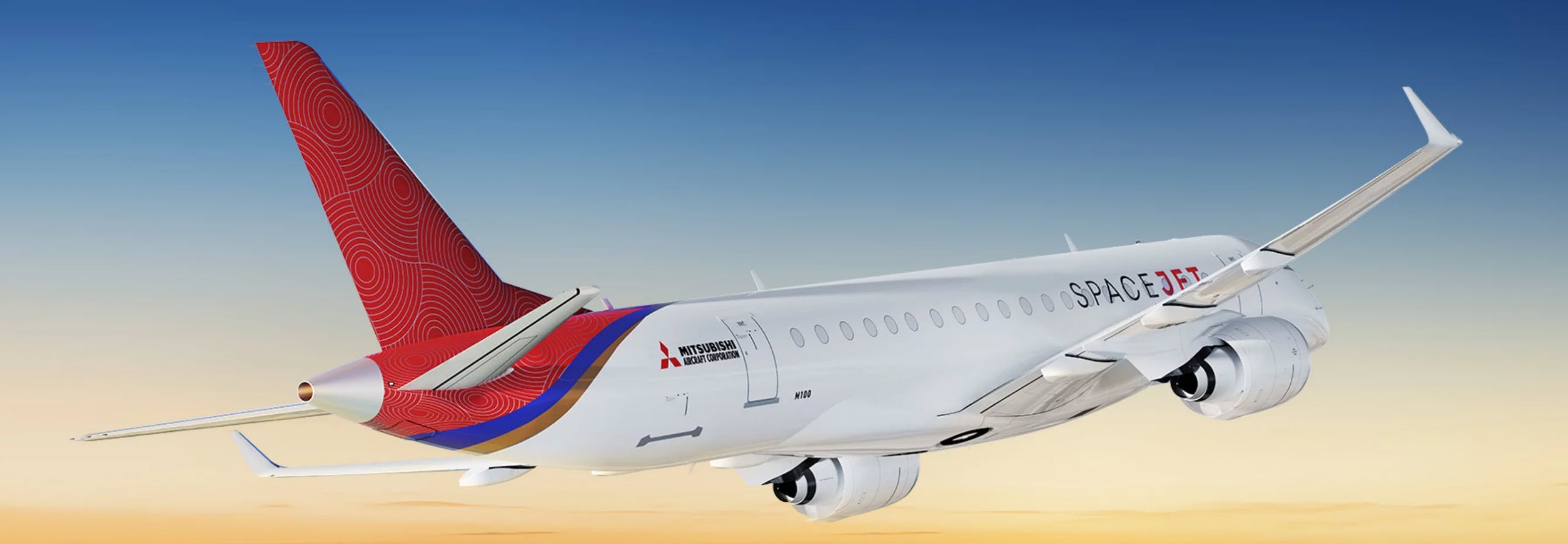
 Mitsubishi Aircraft se lanza al segmento de aeronaves regionales
Mitsubishi Aircraft Corporation compartió la atención en la última feria aeronáutica de Paris Air Show 2019 con su renombrado «SpaceJet» de última generación. El SpaceJet MA100 es el nuevo avión regional de pasajeros diseñado para competir cara a cara con el Embraer E-175 de Brasil para rutas entre aeropuertos más grandes y ciudades más pequeñas.
SpaceJet de Mitsubishi es el primer avión de pasajeros construido en Japón desde la década de 1960. Después de su debut en París Air Show 2019, comenzó vuelos de certificación en la antigua Base de la Fuerza Aérea Larson cerca de Moses Lake, Estados unidos. La cartera de pedidos del nuevo SpaceJet tiene más de 400 órdenes. Mitsubishi afirma que está «mejorando la experiencia para los pasajeros al reinventar el negocio de los viajes aéreos regionales» con SpaceJet, poniéndose a la altura de la demanda en la industria de la aviación regional competitiva.
De acuerdo con el grupo de la industria Japan Aircraft Development Corp., lo que está en juego, particularmente en el mercado de aviones con menos de 100 asientos, es la cuota de facturación de unos US$ 135 mil millones en ventas durante los próximos 20 años.
El negocio de Horizon está creciendo rápidamente. En Julio 2019, Alaska Air Group, matriz de Horizon, informó que su tráfico regional aumentó 14.6% con un aumento de capacidad de 12.9% en comparación con Julio 2018. La comodidad y la conveniencia son importantes para los viajeros regionales. Esa es una razón clave por la cual la aerolínea Horizon de Alaska está cambiando sus turbopropulsores Bombardier Q400 con E-175. Si bien ambos aviones están diseñados para transportar 76 pasajeros, el Embraer es más espacioso, más cómodo y tiene un almacenamiento adicional. Las aeronaves regionales o de conexión tradicionalmente tienen asientos estrechos y estrechos apretados entre sí. Tienen poco espacio para las piernas y espacio de almacenamiento limitado. La mayoría de los transportistas recogen el equipaje de mano en la pista y lo guardan en el compartimento de equipaje. Los pasajeros desembarcados esperan en la aeronave mientras los equipos de tierra recuperan su equipaje. El proceso aumenta el tiempo de viaje y las molestias.
El acuerdo de Airbus con Bombardier y el Joint Venture de Boeing con Embraer indican que los grandes fabricantes de aviones tienen la intención de negar un punto de apoyo en el lucrativo mercado de cuerpos estrechos a los recién llegados ambiciosos, como Commercial Aircraft Corp. de China (COMAC). Durante años, Boeing y Airbus se centraron en aviones de pasajeros más grandes y rentables y se alejaron de los aviones más pequeños, que tienen costos de desarrollo similares pero se venden a precios más bajos.
Un antiguo proveedor de componentes de aeronaves para Boeing, Mitsubishi Heavy, el padre de Mitsubishi Regional Jet (MRJ), planea salir de la sombra de su cliente Boeing. Desarrolló y fabricó componentes principales de fuselaje, incluidos paneles de fuselaje para el Boeing 777 y cajas de ala de material compuesto para el 787.
Mitsubishi gastó al menos US$ 2 mil millones durante más de una década desarrollando SpaceJet. El fabricante nipón espera que el mercado de la aviación en Asia crezca con demanda para este tipo de aviones jet regionales.
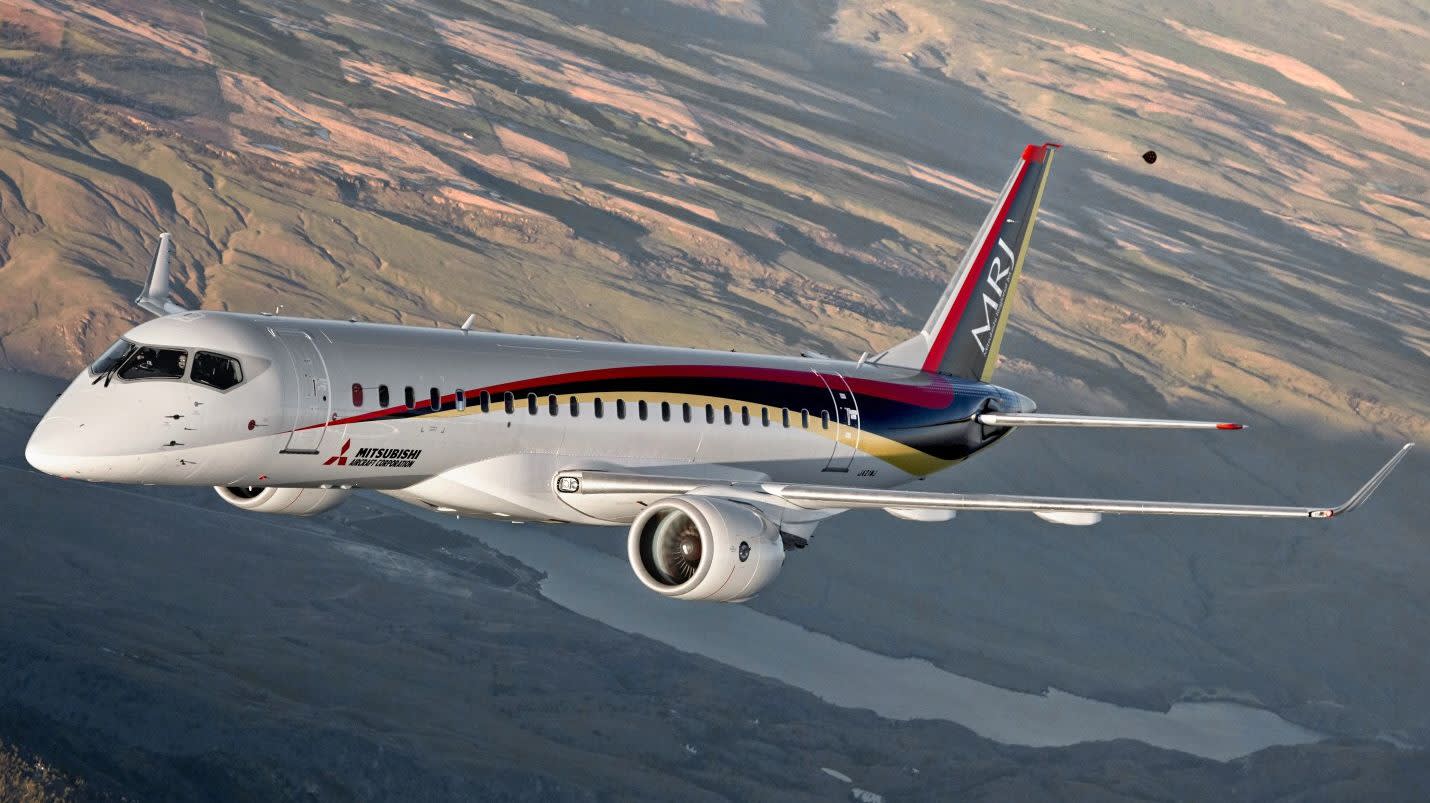 Mitsubishi trusting SpaceJet market
Mitsubishi Aircraft launches the regional aircraft segment
Mitsubishi Aircraft Corporation a shared the attention at the latest Paris Air Show 2019 air show with its renowned «next-generation SpaceJet». The SpaceJet MA100 is the new regional passenger plane designed to compete for face-to-face with the Embraer E-175 in Brazil for routes between larger airports and smaller cities.
Mitsubishi SpaceJet is the first passenger aircraft built in Japan since the 1960s. After its debut at Paris Air Show 2019, it began certification flights at the former Larson Air Force Base near Moses Lake, United States. The order book of the new SpaceJet has more than 400 orders. Mitsubishi says it is «improving the experience for passengers by reinventing the regional air travel business» with SpaceJet, catching up with demand in the competitive regional aviation industry.
According to the Japan Aircraft Development Corp. industry group, what is at stake, particularly in the aircraft market with less than 100 seats, is the turnover of some US $ 135 billion in sales over the next 20 years.
Horizon’s business is growing rapidly. In July 2019, Alaska Air Group, Horizon’s parent company, reported that its regional traffic increased 14.6% with a capacity increase of 12.9% compared to July 2018. Comfort and convenience are important for regional travelers. That is a key reason why the Alaska Horizon airline is changing its Bombardier Q400 turboprops with E-175. While both planes are designed to carry 76 passengers, the Embraer is more spacious, more comfortable and has additional storage. Regional or connecting aircraft traditionally have narrow and narrow seats tight to each other. They have little legroom and limited storage space. Most carriers pick up hand luggage on the track and store it in the luggage compartment. The disembarked passengers wait in the aircraft while the ground teams recover their luggage. The process increases travel time and inconvenience.
Airbus’s agreement with Bombardier and Boeing’s Joint Venture with Embraer indicate that large aircraft manufacturers intend to deny a foothold in the lucrative narrow-body market to ambitious newcomers, such as Commercial Aircraft Corp. of China (COMAC). “For years, Boeing and Airbus focused on bigger and more profitable passenger planes and moved away from smaller planes, which have similar development costs but are sold at lower prices.
A former supplier of aircraft components for Boeing, Mitsubishi Heavy, the father of Mitsubishi Regional Jet (MRJ), plans to step out of the shadow of its Boeing client. He developed and manufactured major fuselage components, including fuselage panels for the Boeing 777 and composite material wing boxes for the 787.
Mitsubishi spent at least US$ 2 billion for more than a decade developing SpaceJet. The Japanese manufacturer expects the aviation market in Asia to grow with demand for this type of regional jet aircraft. A \ W
 三菱信託宇宙船市場
三菱航空機が地域航空機セグメントを発売

三菱航空機株式会社、有名な「次世代SpaceJet」で最新のパリ航空ショー2019航空ショーで注目を集めました。 SpaceJet MA100は、ブラジルのEmbraer E-175と対面して大空港と小都市間のルートを競うように設計された新しい地域旅客機です。
三菱スペースジェットは、1960年代以来日本で最初に製造された旅客機であり、パリ航空ショー2019でのデビュー後、米国モーゼスレイク近くの旧ラーソン空軍基地で認証飛行を開始しました。新しいSpaceJetの注文書には、400以上の注文があります。 三菱は、SpaceJetで「地域の空の旅のビジネスを再発明することで乗客の体験を改善し」、競争の激しい地域の航空業界の需要に追いついていると言います。
Japan Aircraft Development Corp.業界グループによると、特に100席未満の航空機市場で問題となっているのは、今後20年間で約1,350億米ドルの売上高年
Horizonのビジネスは急速に成長しています。 Horizonの親会社であるアラスカ航空グループは、2019年7月に、地域の交通量が14.6%増加し、キャパシティが2018年7月に比べて12.9%増加したことを報告しました。快適さと利便性は地域の旅行者にとって重要です。これが、アラスカホライズン航空会社がE-175でボンバルディアQ400ターボプロップを変更している主な理由です。どちらの飛行機も76人の乗客を乗せるように設計されていますが、エンブラエルはより広く、より快適で、追加の収納スペースがあります。地域の航空機または接続する航空機は、従来、狭い座席を互いに密着させています。足元が狭く、保管スペースが限られています。ほとんどの運送業者は、トラックで手荷物を受け取り、荷物室に保管します。降車した乗客は機内で待機し、地上チームは荷物を回収します。このプロセスにより、移動時間が長くなり不便になります。
エアバスとボンバルディア、およびボーイングとエンブラエルとのジョイントベンチャーの合意は、大手航空機メーカーが、中国の民間航空機などの意欲的な新人への有利なナローボディ市場での足場を否定しようとしていることを示しています。 (COMAC)。 「ボーイングとエアバスは長年にわたり、より大きくて収益性の高い旅客機に焦点を当て、同様の開発コストを持っているが低価格で販売されている小型機から遠ざかりました。
ボーイングの航空機部品の元サプライヤーである三菱リージョナルジェット(MRJ)の父である三菱重機は、ボーイング社の顧客の影から抜け出すことを計画しています。彼は、ボーイング777用の胴体パネルや787用の複合材料の翼ボックスなど、主要な胴体コンポーネントを開発および製造しました。
三菱は、SpaceJetの開発に10年以上にわたり少なくとも20億米ドルを費やしました。日本のメーカーは、アジアの航空市場がこのタイプの地域ジェット機の需要に伴って成長すると予想しています。A \ W
Ξ A I R G W A Y S Ξ
SOURCE: Airgways.com
DBk: Mitsubishiaircraft.com / Thefllymrj.com / Airgways.com
AW-POST: 201909162126AR
A\W A I R G W A Y S ®
 airgways.com