Aeropuerto Internacional de Santiago inaugurará nueva terminal
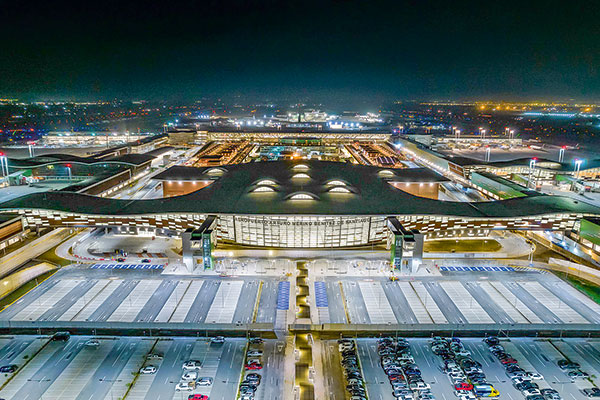
El Aeropuerto Internacional Santiago de Chile/SCL ha anunciado la próxima inauguración de la nueva Terminal 2 (T2) para Febrero 2022. La nueva Terminal duplicará la capacidad del aeropuerto de 15 a 30 millones de pasajeros por año. El Aeropuerto Internacional Arturo Merino Benítez de Chile en Santiago abrirá sus nuevas instalaciones internacionales de la T2 ha ha tenido una inversión de US$ 990 millones del Ministerio de Obras Públicas de Chile (MOP). El aeropuerto convirtió el área original en una terminal doméstica renovada con un nuevo muelle de 17.300 metros cuadrados para capacidad adicional, y creó un nuevo edificio de 214.000 metros cuadrados dedicado a vuelos internacionales y regionales. Todas las áreas de las terminales están equipadas con tecnología de punta para minimizar los tiempos de espera para el procesamiento de pasajeros y equipaje.
El nuevo T2 cuenta con un importante procesador central que sirve como punto focal para las personas que se acercan al aeropuerto, y alberga cuatro nuevos muelles, conectados al procesador central para las llegadas a través de corredores intersticiales. Un gran programa de concesiones minoristas, de alimentos y bebidas, salas VIP y un innovador programa de publicidad elevan la experiencia del pasajero a una de las mejores de la región. El proyecto también aumentó el número de puertas de 18 a 67, al tiempo que agregó dos edificios de estacionamiento de 4 niveles y dos estacionamientos de superficie. Diseñado por la firma estadounidense de ingeniería y arquitectura Stantec, y creado en asociación con los arquitectos locales Amunategui Barreau Arquitectos, el nuevo complejo de terminales se puede ampliar aún más para atender a 38 millones de pasajeros anualmente a medida que aumenta la demanda.
Cecilia Einarson, Líder de Sector de Terminales Aeroportuarias en Stantec, dijo: «A medida que Santiago expande este concurrido centro aeroportuario, nos sentimos honrados de ayudar a transformar la experiencia de los viajeros a medida que pasan o se quedan en Chile. Junto con nuestros socios de Amunategui Barreau Arquitectos, creamos un lugar que abraza la belleza y el esplendor de Chile mientras da la bienvenida a los visitantes y residentes del país».
Santiago/SCL inaugurates Terminal 2
Santiago International Airport will inaugurate a new terminal
Santiago de Chile International Airport/SCL has announced the upcoming inauguration of the new Terminal 2 (T2) for February 2022. The new Terminal will double the capacity of the airport from 15 to 30 million passengers per year. Chile’s Arturo Merino Benítez International Airport in Santiago will open its new T2 international facilities and has received an investment of US$ 990 million from the Chilean Ministry of Public Works (MOP). The airport converted the original area into a renovated domestic terminal with a new 17,300-square-meter pier for additional capacity, and created a new 214,000-square-meter building dedicated to international and regional flights. All terminal areas are equipped with state-of-the-art technology to minimize waiting times for passenger and baggage processing.
The new T2 features a major central processor that serves as a focal point for people approaching the airport, and houses four new piers, connected to the central processor for arrivals through interstitial corridors. An extensive program of retail, food and beverage concessions, VIP lounges and an innovative advertising program elevate the passenger experience to one of the best in the region. The project also increased the number of gates from 18 to 67, while adding two 4-level parking buildings and two surface parking garages. Designed by American engineering and architecture firm Stantec, and created in partnership with local architects Amunategui Barreau Arquitectos, the new terminal complex can be further expanded to serve 38 million passengers annually as demand increases.
Cecilia Einarson, Airport Terminals Sector Leader at Stantec, said: «As Santiago expands this busy airport hub, we are honored to help transform the experience of travelers as they pass through or stay in Chile. Together with our partners at Amunategui Barreau Arquitectos, we created a place that embraces the beauty and splendor of Chile while welcoming visitors and residents of the country».
PUBLISHER: Airgways.com DBk: Nuevopudahuel.cl / Airgways.com AW-POST: 202201271258AR OWNERSHIP: Airgways Inc. A\W A I R G W A Y S ®
Proyecciones detrás de la fusión Korean Air-Asiana Aerolíneas en región proyectarían expansión rutas
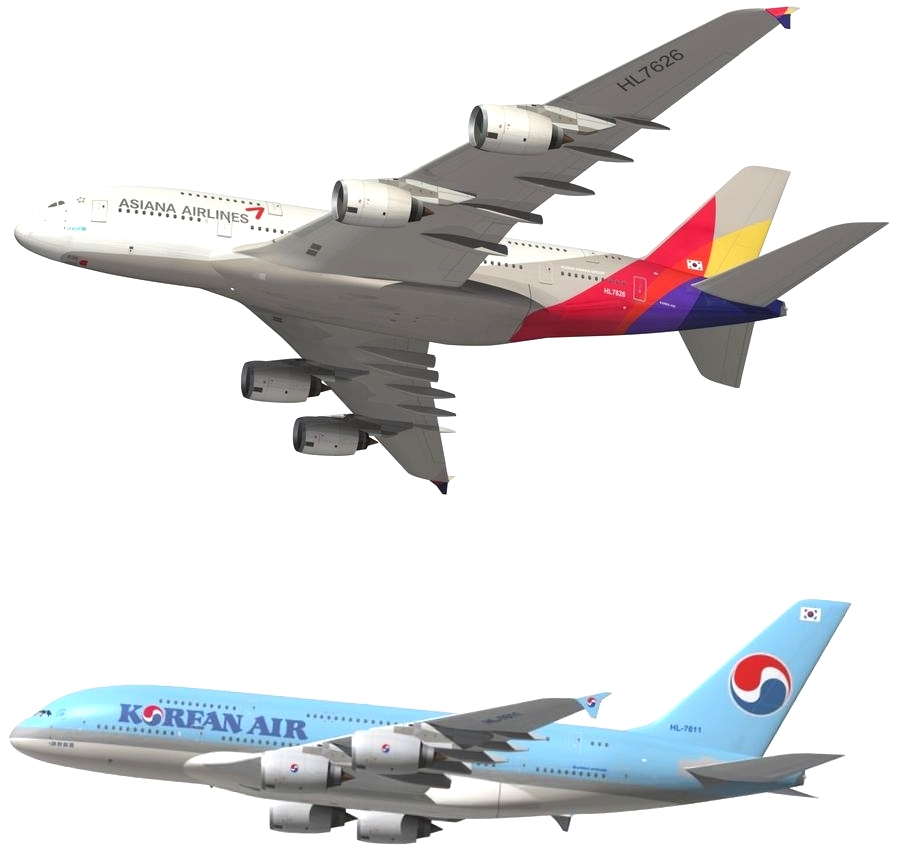
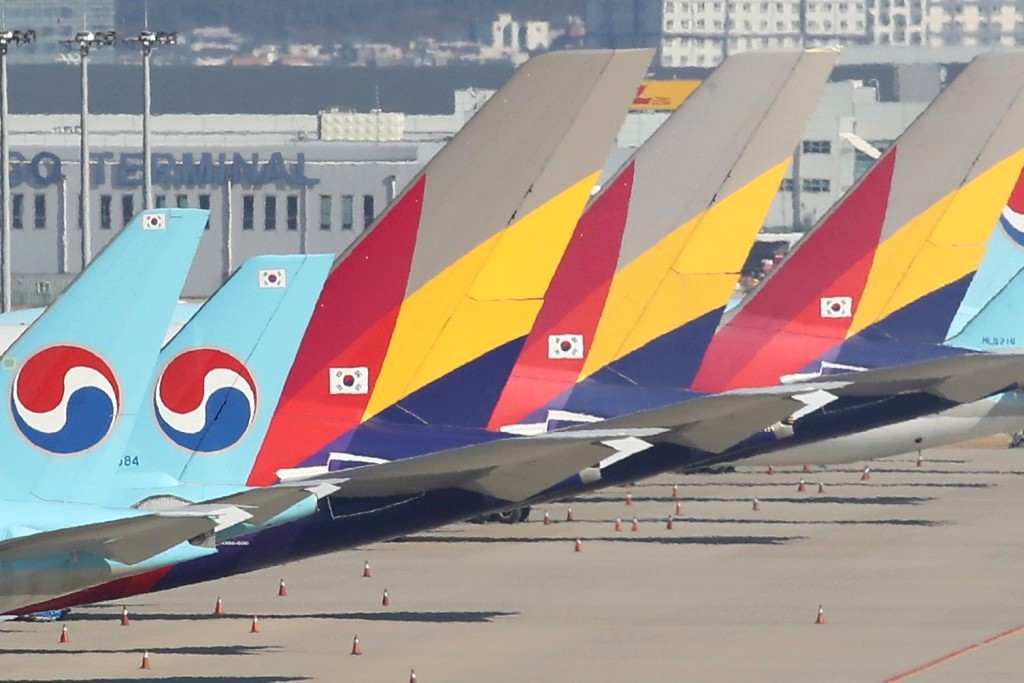
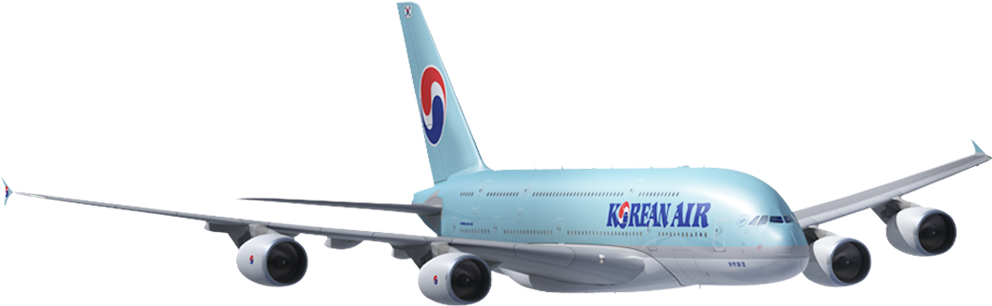
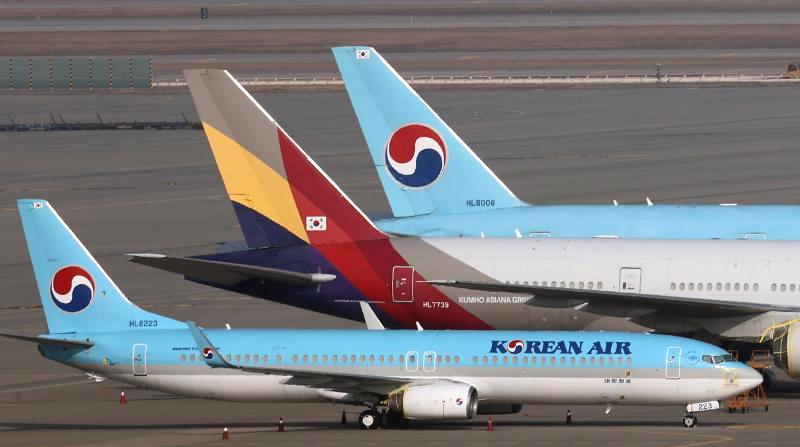
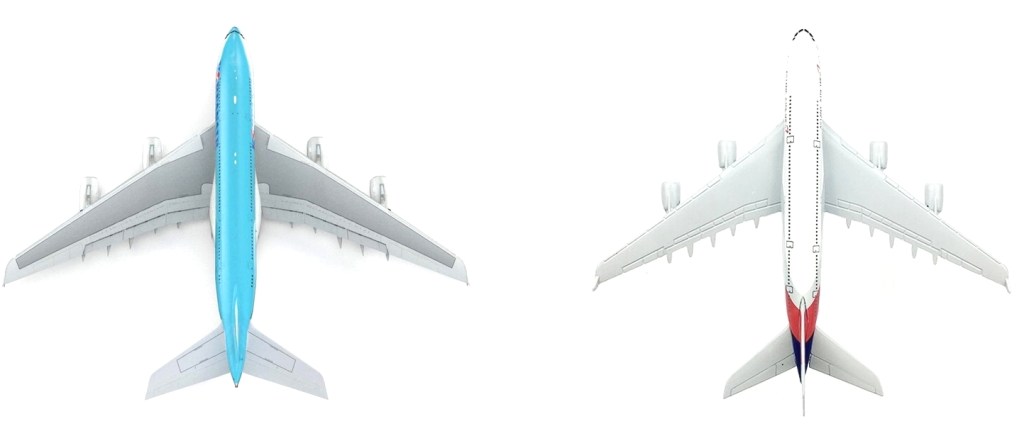
Las aerolíneas de bajo costo podrían beneficiarse de la fusión de Korean Air-Asiana, mientras que los reguladores están exigiendo a la mega-transportista la eliminación de algunas rutas de larga distancia para evitar la monopolización producto de la mega-alianza. Korean Air Lines anunció en Noviembre de 2020 que compraría el 63,88 por ciento de Asiana Airlines y eventualmente se fusionaría con ella, creando una de las diez principales aerolíneas mundiales en términos de rutas. La Comisión de Comercio Justo (FTC) dio en Diciembre 2021 una aprobación tentativa a la fusión, pero solo con la condición de que deje sin efectos algunas rutas para evitar el monopolio en la región; mientras se espera que la decisión formal se determine en algún momento de Febrero 2022. La fecha límite para el acuerdo de sinergia es 2024, cuando se espera que se complete la fusión.
Profundizando mercado
Los derechos de ruta son otorgados por los países respectivos que asignan esas rutas a transportistas específicos. Los reguladores descubrieron que las entidades que se fusionan monopolizan una serie de rutas de larga distancia, incluidos los vuelos que conectan Incheon y Los Ángeles, Nueva York, Barcelona, Seattle y Sydney, y algunos de esos derechos de tráfico podrían redistribuirse a otras aerolíneas. Un caso ejemplar ha sido las rutas en el mercado Mongolia-Corea del Sur. Los derechos de tráfico se han redistribuido en el pasado para las rutas mongolas. Korean Air Lines fue la única aerolínea Coreana que volaba Incheon—Ulán Bator, pero algunos espacios se asignaron a Asiana Airlines en 2019 después de que la FTC dictaminó que era un monopolio.
En la actualidad, aunque se presenta la oportunidad, existe un acalorado debate sobre si es la mejor decisión para las aerolíneas de bajo costo comenzar vuelos de larga distancia debido a los altos costos y baja rentabilidad en la post-pandemia. Tras la posible aprobación de la fusión Korean-Asiana, las aerolíneas se preparan con arrendamientos de aviones de mayor porte. Los vuelos internacionales de larga distancia han sido los mayores generadores de ingresos para las aerolíneas de la región. En 2019, antes de la pandemia, Korean Air Lines registró el 29 por ciento de sus ingresos por pasajeros de las rutas estadounidenses y el 19 por ciento de las rutas europeas. En términos de carga, las cifras fueron de 42 por ciento y 23 por ciento.
Las aerolíneas de bajo costo solo vuelan a destinos nacionales y algunos países cercanos como Japón, China o Singapur, y obtener derechos de tráfico a destinos lejanos podría ofrecer oportunidades de expansión. Actualmente, poseen aviones con capacidades de vuelo de corta a media distancia, se encuentran luchando por incorporar aviones más grandes para vuelos de larga distancia.
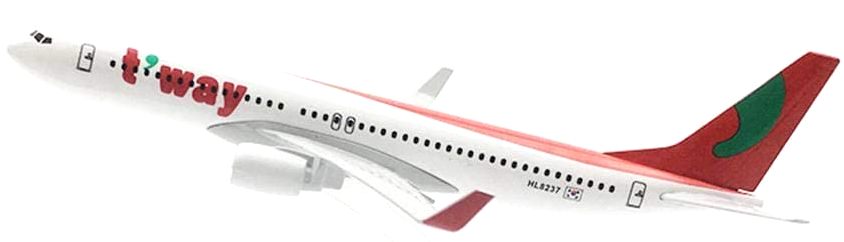
T’way Air posee una flota exclusiva de aeronaves narrowbodies Boeing 737-800 que se utilizan con mayor frecuencia para vuelos de corta a media distancia, La compañía agregará un Airbus A330-300 a su flota en febrero para volar a Sydney, Croacia y Honolulu (Hawaii/EE.UU.). El Airbus es un avión de 350 plazas y tiene un alcance de vuelo de 10.186 kilómetros (6.330 millas), por lo que puede volar a Europa y al continente estadounidense. Dos aviones Airbus A330 adicionales serán arrendados en la primera mitad 2022 y se agregarán a su flota en el futuro. «Decidir arrendar un avión y realmente recibirlo puede llevar menos de un año si se hace lo suficientemente rápido. Podemos terminar de prepararnos para volar rutas de larga distancia antes de que ocurra la fusión de las grandes aerolíneas, y no debería haber ninguna preocupación de que las aerolíneas no puedan utilizar los derechos de tráfico redistribuidos», dijo un portavoz de T’way Air.
Air Premia, una aerolínea de bajo costo que comenzó a operar en 2017, arrendará dos Boeing 787-9 Dreamliner este año 2022. El avión tiene un alcance de vuelo de 15.000 kilómetros, lo que le da un alcance global. La aerolínea actualmente opera un Dreamliner, y tiene planes ambiciosos para usar el avión para comenzar a servir a Los Ángeles en Mayo 2022.
Las aerolíneas asiáticas deberán equilibrar el arrendamiento de aeronaves de mayor porte con los costos que tienen que pagar mientras luchan financieramente durante la crisis sanitaria mundial. «Incluso si los LCC (Low Cost Carrier) agregan uno o dos aviones de gran tamaño a su flota, no tienen aviones sustitutos en casos de mal funcionamiento o cuando el avión necesita mantenimiento. Podrían agregar agresivamente más aviones e intentar volar rutas estadounidenses como LCC, pero operar uno o dos vuelos adicionales no crea economías de escala ni altas ganancias. La industria de la aviación está luchando en general, y podría ser peligroso para las aerolíneas invertir en áreas de incertidumbre en un momento en que deberían centrarse en mantener el negocio y tratar de sobrevivir», dijo Lee Yun-cheol, Profesor de Negocios en la Universidad Aeroespacial de Corea.
La pérdida neta de T’way Air en el último tercer trimestre fue de ₩ 45.200 millones de Wones desde una pérdida del año anterior de ₩ 32.300 millones de Wones. Jeju Air, la aerolínea de bajo costo más grande de Corea, devolvió seis aviones alquilados al arrendador el año pasado 2021 en un esfuerzo por mantener la deuda bajo control. «Excluyendo a algunas aerolíneas que tienen planes de introducir A330 de largo alcance, las compañías locales que tienen flotas centradas en Boeing 737 tendrán dificultades para tratar de volar rutas con destino a Europa. Teniendo en cuenta que algunas aerolíneas ni siquiera pueden volar completamente las rutas para las que actualmente tienen derechos de tráfico, hay pocas posibilidades de que las aerolíneas rivales a las que se les otorgan derechos de tráfico adicionales puedan operar inmediatamente rutas recién distribuidas», dijo Kang Seong-jin, Analista de KB Securities.
El catering es un obstáculo para las aerolíneas más pequeñas, teniendo en cuenta que sus vuelos nacionales habituales y los vuelos de corta distancia no requieren que sirvan comidas. Capacitar a los asistentes de vuelo sobre las medidas de seguridad para aviones más grandes es otra barrera de entrada. T’way Air dice que se ha estado preparando entrenando a su tripulación de vuelo y cabina desde Junio 2021 para acostumbrarse al nuevo A330. Los trabajadores de mantenimiento fueron capacitados por Airbus en Francia desde Noviembre hasta Diciembre 2021, y la aerolínea ha construido un centro de simuladores A330 en el Aeropuerto Internacional de Gimpo.
Perspectivas aéreas
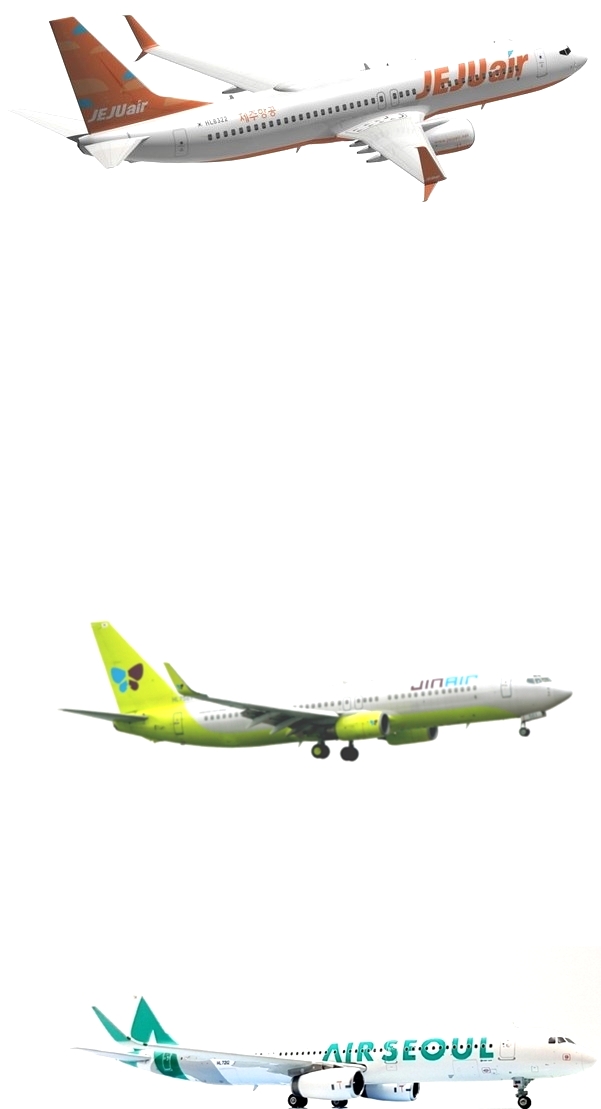
Cuando la FTC evaluó el acuerdo entre Korean Air Lines y Asiana Airlines para evitar un monopolio aéreo, también tuvo en cuenta a sus aerolíneas subsidiarias. Air Seoul, una subsidiaria de propiedad total de Asiana Airlines, y Air Busan, 44.17 por ciento propiedad de la aerolínea, también se contaron en la participación de mercado de Asiana. Jin Air, propiedad en un 54,91 por ciento de Hanjin KAL, que posee el 27,7 por ciento de Korean Air Lines, también se tuvo en cuenta en la ecuación. Aunque las tres subsidiarias no tienen prohibido recibir derechos de tráfico, no es probable que sean las primeras opciones. «La FTC combinó los dos operadores de servicio completo y los tres LCC para determinar si podría haber un monopolio. Hay pocas posibilidades de que aerolíneas como Jin Air se beneficien de la fusión y la redistribución de los derechos de tráfico», dijo Min-sik, Analista de eBest Investment & Securities.
Jeju Air está adoptando un enfoque conservador. La compañía es una de las pocas aerolíneas que declaró que se centrará en rutas de corta a media distancia. El CEO Yi-Bae Kim anunció el 24 de Enero de 2022 que se agregarán un total de 50 Boeing 737-8 MAX para fines de 2027 para vuelos de pasajeros. El avión es considerado un avión de tamaño medio con alrededor de 200 asientos, óptimo para vuelos a Singapur o Malasia debido a un alcance de vuelo de 6.500 kilómetros. La aerolínea actualmente vuela 41 Boeing 737-800, solo puede volar a destinos nacionales y a países de la región. El CEO declaró que la compañía «se centrará en mejorar la competitividad y tomar la delantera en las rutas de corta a media distancia». Incluso si los derechos de tráfico se redistribuyen a la aerolínea, solo poseer aviones de alcance medio hará que sea prácticamente imposible para ella volar rutas de larga distancia recién distribuidas. Con algunas aerolíneas de bajo costo incapaces de volar grandes rutas de larga distancia y la entidad fusionada obligada a reducir el número de vuelos, las compañías aéreas extranjeras podrían ser las únicas ganadoras para operaciones de larga distancia.
«Los aviones jumbo son necesarios para los vuelos con destino a París o Los Ángeles, y los LCC no pueden volar tales rutas cuando no tienen los aviones adecuados, incluso si se redistribuyen los derechos de tráfico. Si los LCC no pueden lograr operar esas rutas, entonces la FTC básicamente no hizo nada más que poner un bozal a las aerolíneas fusionadas en beneficio de las aerolíneas extranjeras», dijo el Profesor Lee Yun-cheol.
Asian airlines outlook
Projections behind the Korean Air-Asiana merger Airlines in the region plan to expand routes
Low-cost airlines could benefit from the Korean Air-Asiana merger, while regulators are requiring the megacarrier to eliminate some long-haul routes to avoid monopolization by the mega-alliance. Korean Air Lines announced in November 2020 that it would buy 63.88 percent of Asiana Airlines and eventually merge with it, creating one of the world’s top ten airlines in terms of routes. The Fair Trade Commission (FTC) gave a tentative approval to the merger in December 2021, but only on the condition that it nullify some routes to avoid monopoly in the region; while the formal decision is expected to be determined sometime in February 2022. The deadline for the synergy agreement is 2024, when the merger is expected to be completed.
Deepening market
Route rights are granted by the respective countries that allocate those routes to specific carriers. Regulators found that the merging entities monopolize a number of long-haul routes, including flights connecting Incheon and Los Angeles, New York, Barcelona, Seattle and Sydney, and some of those traffic rights could be redistributed to other airlines. An exemplary case has been the routes in the Mongolia-South Korea market. Traffic rights have been redistributed in the past for Mongolian routes. Korean Air Lines was the only Korean airline flying Incheon—Ulaanbaatar, but some slots were allocated to Asiana Airlines in 2019 after the FTC ruled it a monopoly.
Currently, although the opportunity presents itself, there is a heated debate about whether it is the best decision for low-cost airlines to start long-haul flights due to high costs and low profitability in the post-pandemic.
Today, following the possible approval of the Korean-Asian merger, airlines are gearing up with larger aircraft leases. Long-haul international flights have been the largest revenue generators for airlines in the region. In 2019, before the pandemic, Korean Air Lines recorded 29 percent of its passenger revenue from US routes and 19 percent from European routes. In terms of cargo, the figures were 42 percent and 23 percent. Low-cost carriers only fly to domestic destinations and a few nearby countries like Japan, China or Singapore, and gaining traffic rights to far-flung destinations could offer expansion opportunities. Currently, they have aircraft with short to medium distance flight capabilities, they are struggling to incorporate larger aircraft for long distance flights.
T’way Air owns a dedicated fleet of Boeing 737-800 narrowbodies that are most frequently used for short to medium haul flights. The company will add an Airbus A330-300 to its fleet in February to fly to Sydney, Croatia and Honolulu (Hawaii/USA). The Airbus is a 350-seater aircraft and has a flight range of 10,186 kilometers (6,330 miles), so it can fly to Europe and the US mainland. Two additional Airbus A330 aircraft will be leased in the first half of 2022 and will be added to its fleet in the future. «Deciding to lease a plane and actually take delivery of it can take less than a year if done quickly enough. We can finish preparing to fly long-haul routes before the merger of the big airlines happens, and there should be no concern that airlines cannot use the redistributed traffic rights», a T’way Air spokesman said.
Air Premia, a low-cost airline that began operations in 2017, will lease two Boeing 787-9 Dreamliners this year 2022. The aircraft has a flight range of 15,000 kilometers, giving it a global reach. The airline currently operates one Dreamliner, and has ambitious plans to use the aircraft to begin serving Los Angeles in May 2022.
Asian airlines will have to balance leasing larger aircraft with the costs they have to pay as they struggle financially during the global health crisis. «Even if the LCCs (Low Cost Carriers) add one or two large aircraft to their fleet, they don’t have replacement aircraft in cases of malfunction or when the aircraft needs maintenance. They could aggressively add more aircraft and try to fly US routes as LCCs., but operating one or two additional flights does not create economies of scale or high profits The aviation industry is struggling in general, and it could be dangerous for airlines to invest in areas of uncertainty at a time when they should be focused on maintaining business and try to survive», said Lee Yun-cheol, Professor of Business at Korea Aerospace University.
T’way Air’s net loss in the latest third quarter was ₩ 45.2 billion Won from a previous year loss of ₩ 32.3 billion Won. Jeju Air, Korea’s largest low-cost carrier, returned six leased planes to the lessor last year in 2021 in an effort to keep debt under control. «Excluding some airlines that have plans to introduce long-haul A330s, local carriers that have fleets centered around Boeing 737s will have a hard time trying to fly Europe-bound routes. Considering some airlines can’t even fully fly the routes for those that currently have traffic rights, there is little chance that rival airlines given additional traffic rights will be able to immediately operate newly allocated routes», said Kang Seong-jin, Analyst at KB Securities.
Catering is a hurdle for smaller airlines, considering their regular domestic and short-haul flights don’t require them to serve meals. Training flight attendants on safety measures for larger planes is another barrier to entry. T’way Air says it has been preparing by training its flight and cabin crew since June 2021 to get used to the new A330. Maintenance workers were trained by Airbus in France from November to December 2021, and the airline has built an A330 simulator center at Gimpo International Airport.
Aerial perspectives
When the FTC evaluated the agreement between Korean Air Lines and Asiana Airlines to avoid an airline monopoly, it also took into account their subsidiary airlines. Air Seoul, a wholly owned subsidiary of Asiana Airlines, and Air Busan, 44.17 percent owned by the airline, were also counted in Asiana’s market share. Jin Air, 54.91 percent owned by Hanjin KAL, which owns 27.7 percent of Korean Air Lines, was also factored into the equation. Although the three subsidiaries are not prohibited from receiving traffic rights, they are not likely to be first choices. «The FTC combined the two full-service carriers and the three LCCs to determine if there could be a monopoly. There is little chance that airlines like Jin Air will benefit from the merger and redistribution of traffic rights», Min-sik said, Analyst at eBest Investment & Securities.
Jeju Air is taking a conservative approach. The company is one of the few airlines that has declared that it will focus on short- to medium-haul routes. CEO Yi-Bae Kim announced on January 24, 2022 that a total of 50 Boeing 737-8 MAX will be added by the end of 2027 for passenger flights. The aircraft is considered a mid-size aircraft with around 200 seats, optimal for flights to Singapore or Malaysia due to a flight range of 6,500 kilometers. The airline currently flies 41 Boeing 737-800, it can only fly to domestic destinations and to countries in the region. The CEO stated that the company «will focus on improving competitiveness and taking the lead on short to medium-haul routes». Even if the traffic rights are redistributed to the airline, just owning medium-range aircraft will make it virtually impossible for it to fly newly allocated long-haul routes. With some low-cost airlines unable to fly large long-haul routes and the merged entity forced to reduce the number of flights, foreign carriers could be the only winners for long-haul operations.
«Jumbo jets are necessary for flights to Paris or Los Angeles, and LCCs can’t fly such routes when they don’t have the right planes, even if traffic rights are redistributed. If LCCs can’t manage to operate those routes, so the FTC basically did nothing but muzzle the merged airlines for the benefit of foreign airlines», said Professor Lee Yun-cheol.
아시아항공 전망
대한항공-아시아나 합병에 대한 전망 지역 항공사들은 노선 확장 계획
저비용 항공사는 대한항공-아시아나 합병의 혜택을 볼 수 있으며 규제 당국은 메가 항공사에 메가 얼라이언스의 독점을 피하기 위해 일부 장거리 노선을 제거하도록 요구하고 있습니다. 대한항공은 2020년 11월 아시아나항공 지분 63.88%를 인수하고 합병을 통해 세계노선 10위권에 진입한다고 밝혔다. 공정거래위원회(FTC)는 2021년 12월 합병을 잠정 승인했지만 지역 독점을 피하기 위해 일부 노선을 무효화한다는 조건으로 합병을 승인했다. 한편, 정식 결정은 2022년 2월 중 결정될 예정이다. 시너지 계약의 기한은 합병이 완료될 것으로 예상되는 2024년이다.
심화되는 시장
경로 권한은 해당 경로를 특정 운송업체에 할당하는 각 국가에서 부여합니다. 규제 당국은 합병 기업이 인천과 로스앤젤레스, 뉴욕, 바르셀로나, 시애틀과 시드니를 연결하는 항공편을 포함해 다수의 장거리 노선을 독점하고 있으며, 이러한 교통권 중 일부는 다른 항공사에 재분배될 수 있다는 사실을 발견했습니다. 대표적인 사례가 한국-몽골 시장의 노선이다. 과거에는 몽골 노선에 대한 교통권이 재분배되었습니다. 대한항공은 인천-울란바토르 노선을 운항하는 유일한 한국 항공사였으나 공정위가 독점 결정한 2019년 아시아나항공에 일부 좌석이 배정됐다.
현재 기회가 도래하고 있지만 포스트 팬데믹(post-pandemic)에 따른 고비용과 낮은 수익성 때문에 저비용 항공사가 장거리 비행을 시작하는 것이 최선의 결정인지에 대한 논란이 뜨겁다.
오늘날, 한-아시아 합병의 가능성이 있는 승인에 따라 항공사들은 더 큰 항공기 임대를 준비하고 있습니다. 장거리 국제선 항공편은 이 지역 항공사의 가장 큰 수익 창출원이었습니다. 팬데믹 이전인 2019년 대한항공은 승객 수익의 29%를 미주 노선에서, 19%를 유럽 노선에서 기록했습니다. 화물은 42%, 23%였다. 저비용 항공사는 국내 목적지와 일본, 중국 또는 싱가포르와 같은 일부 인근 국가로만 비행하며 멀리 떨어진 목적지에 대한 운송 권한을 획득하면 확장 기회를 제공할 수 있습니다. 현재 그들은 단거리에서 중거리 비행 능력을 갖춘 항공기를 보유하고 있으며 장거리 비행을 위해 더 큰 항공기를 통합하는 데 어려움을 겪고 있습니다.
티웨이항공은 단거리~중거리 비행에 가장 많이 사용되는 보잉 737-800 내로우바디 전용기를 보유하고 있으며, 오는 2월 에어버스 A330-300을 추가해 크로아티아 시드니, 호놀룰루(하와이/미국). 에어버스는 350인승 항공기로 비행거리가 10,186km (6,330마일) 로 유럽과 미국 본토를 비행할 수 있다. 2대의 Airbus A330 항공기가 2022년 상반기에 임대될 예정이며 향후 항공기에 추가될 예정입니다. «비행기를 임대하고 실제로 인도받기로 결정했다면 1년도 채 걸리지 않을 것입니다. 대형 항공사의 합병이 일어나기 전에 장거리 노선 준비를 마칠 수 있고 항공사가 재분배된 교통권을 사용할 수 없다”고 티웨이항공 관계자는 말했다.
2017년부터 운항을 시작한 저가항공사 에어프레미아는 2022년 올해 보잉 787-9 드림라이너 2대를 임대할 예정이다. 이 항공기는 비행 범위가 15,000km로 전 세계에 도달할 수 있다. 이 항공사는 현재 하나의 드림라이너를 운영하고 있으며 2022년 5월부터 로스앤젤레스 노선을 시작하기 위해 이 항공기를 사용할 야심찬 계획을 가지고 있습니다.
아시아 항공사는 글로벌 보건 위기 동안 재정적으로 어려움을 겪으면서 지불해야 하는 비용과 대형 항공기 임대의 균형을 맞춰야 합니다. «LCC(Low Cost Carriers)가 대형 항공기를 1~2대 추가하더라도 오작동이나 정비가 필요한 경우 교체할 항공기가 없다. 공격적으로 항공기를 더 추가해 미주 노선을 노릴 수 있다. LCC로서.» 하지만 1~2편의 추가 운항은 규모의 경제나 고수익을 창출하지 못한다. 항공업계는 전반적으로 어려움을 겪고 있으며, 항공사가 집중해야 할 시기에 불확실한 분야에 투자하는 것은 위험할 수 있다. 이윤철 한국항공대학교 경영학과 교수는» 기업을 유지하면서 살아남기 위해 노력한다»고 말했다.
티웨이항공의 최근 3분기 순손실은 452억원으로 전년동기 323억원에서 400억원 감소했다. 국내 최대 저비용항공사인 제주항공은 부채 관리를 위해 지난해 리스 항공기 6대를 임대인에게 2021년 반납했다. “장거리 A330을 도입할 예정인 일부 항공사를 제외하고 보잉 737을 중심으로 한 현지 항공사들은 유럽 노선 운항에 어려움을 겪을 것이다. 강성진 KB증권 애널리스트는» 현재 운수권이 있는 상황에서 추가 운수권을 부여받은 경쟁 항공사가 새로 할당된 노선을 즉시 운항할 가능성은 거의 없다»고 말했다.
정규 국내선 및 단거리 항공편이 식사를 제공할 필요가 없다는 점을 고려하면 케이터링은 소규모 항공사에게 장애물입니다. 더 큰 비행기에 대한 안전 조치에 대한 승무원 교육은 또 다른 진입 장벽입니다. 티웨이항공은 신형 A330에 적응하기 위해 2021년 6월부터 승무원과 승무원을 교육해 준비하고 있다고 밝혔다. 2021년 11월부터 12월까지 프랑스 에어버스에서 정비사 교육을 받았고, 김포공항에 A330 시뮬레이터 센터를 건립했다.
공중 관점
공정위는 대한항공과 아시아나항공이 항공사 독점을 피하기 위한 협정을 평가할 때 자회사 항공사도 고려했다. 아시아나항공의 100% 자회사인 에어서울과 에어부산(44.17% 지분)도 아시아나 시장 점유율에 포함됐다. 대한항공 지분 27.7%를 보유한 한진칼이 지분 54.91%를 보유한 진에어도 고려했다. 3사 모두 교통권 수취가 금지된 것은 아니지만 우선적으로 선택할 가능성은 낮다. 민식은 «공정위는 2개 항공사와 3개 LCC를 결합해 독점 여부를 판단했다. 진에어와 같은 항공사가 합병과 운송권 재분배의 혜택을 받을 가능성은 거의 없다»고 말했다 eBest Investment & Securities 의 애널리스트.
제주항공은 보수적으로 접근하고 있다. 이 회사는 단거리에서 중거리 노선에 집중하겠다고 선언한 몇 안 되는 항공사 중 하나입니다. 김이배 대표는 2027년 말까지 총 50대의 보잉 737-8 MAX 여객기를 추가 투입할 예정이라고 24일 밝혔다. 약 200석 규모의 중형 항공기로, 비행거리가 6,500km로 싱가폴이나 말레이시아 취항에 최적이다. 이 항공사는 현재 보잉 737-800 41대를 운항하고 있으며 국내 목적지 및 지역 내 국가로만 비행할 수 있습니다. 이 대표는 «경쟁력 강화에 주력하고 단·중거리 노선에 앞장서겠다»고 말했다. 항공사에 교통권을 재분배하더라도 중거리 항공기만 보유하면 새로 배정된 장거리 노선을 운항하는 것은 사실상 불가능하다. 일부 저가 항공사는 대규모 장거리 노선을 운항할 수 없고 합병된 기업은 항공편 수를 줄여야 하는 상황에서 외국 항공사가 장거리 운항의 유일한 승자가 될 수 있습니다.
«파리나 로스엔젤레스로 가는 비행에는 점보 제트기가 필요하고, LCC는 교통권이 재분배되어도 적절한 비행기가 없으면 그런 노선을 운항할 수 없습니다. LCC가 그 노선을 운영할 수 없다면, 그래서 이윤철 교수는공정위는 기본적으로 외국 항공사의 이익을 위해 합병된 항공사에 총을 쏘는 것 외에는 아무 것도 하지 않았다»고 말했다.
PUBLISHER: Airgways.com DBk: Ftc.gov / Koreanair.com / Flyasiana.com / Koreajoongangdaily.joins.com / Airgways.com AW-POST: 202201271222AR OWNERSHIP: Airgways Inc. A\W A I R G W A Y S ®
Confirman 27/01 Plan de reestructura de Aeroméxico
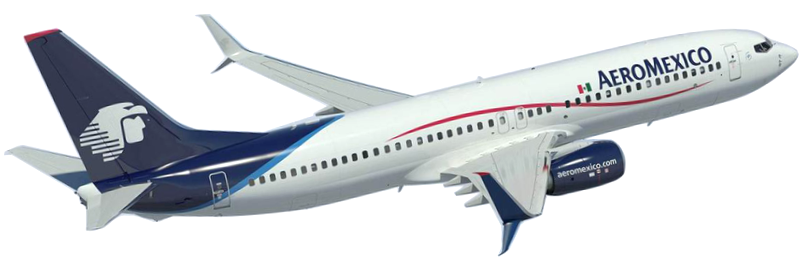
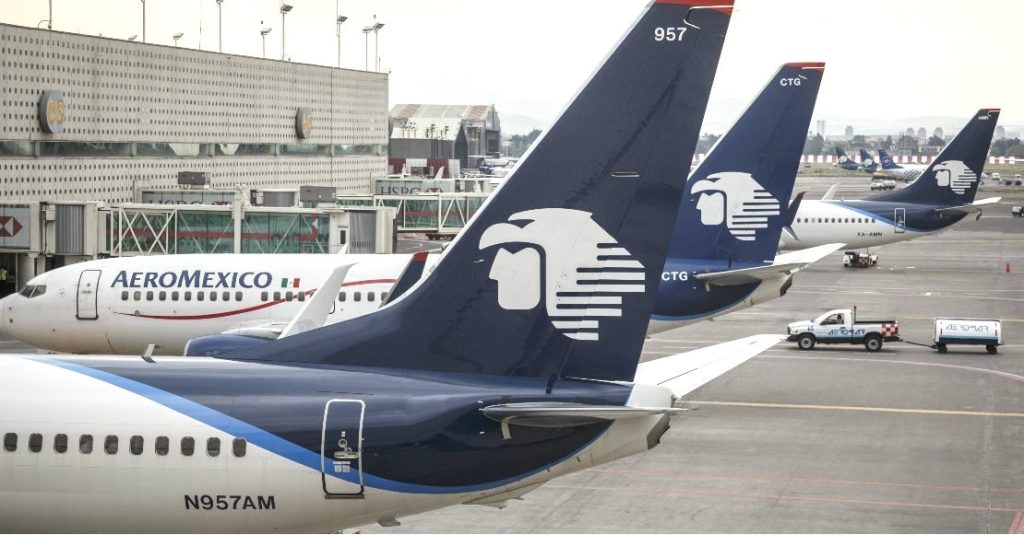
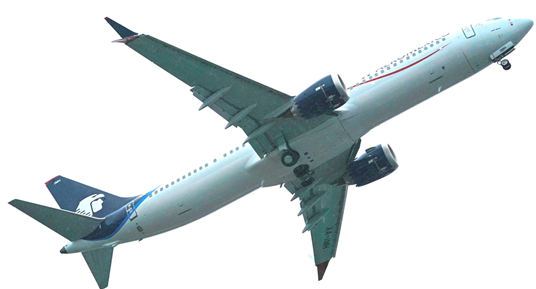
La aerolínea Aeroméxico ha confirmado el Plan de Reestructuración que permitirá la generación de caja y recuperación de tráfico y rentabilidad, lo que para los analistas del sector de la aviación no será una tarea fácil de sobrevolar. El Plan será aprobado este Jueves 27/01 por la Corte de Quiebras del Distrito Sur de Nueva York informó que la reestructuración de Grupo Aeroméxico, incluidas las enmiendas y/o modificaciones presentadas, cumple con todas las disposiciones aplicables del Código de Quiebras de los Estados Unidos, la empresa aérea solicitó a la Juez del proceso que efectivice en la Audiencia de este 27/01 la aprobación del plan para la aerolínea mexicana. De esta manera, los deudores y deudores reorganizados, están autorizados a realizar las acciones necesarias para efectuar el Plan de Aeroméxico, incluyendo la implementación de las Operaciones de Reestructuración y la emisión y registro, según corresponda, de cualquier título de capital o de deuda en relación con el Plan, de acuerdo con lo plasmado en el Docket Número 2574. “Los Deudores están autorizados a consumar el Plan en cualquier momento después de la entrada de esta Orden de Confirmación, sujeto al cumplimiento o renuncia de las condiciones previas a la vigencia establecidas en el Artículo IX del Plan”, establece el documento de la Corte de Quiebras. Asimismo, se autoriza a los deudores y los deudores reorganizados, según corresponda, a “celebrar y ejecutar el Nuevo Contrato de Emisión de Bonos de Primer Gravamen, el Acuerdo de Derechos de Registro, los Documentos de la Oferta Pública de Adquisición y cualquier otro documento que pueda ser necesario para efectuar, si corresponde, las Transacciones de Reestructuración, el Financiamiento de Capital, el Financiamiento de Deuda, o la emisión y distribución de Nuevas Acciones de conformidad con el Plan”.
La semana pasada, las ocho clases de acreedores facultadas para votar el Plan de Reestructura de Grupo Aeroméxico votaron a para aceptar el Plan. Lo que sigue para Aeroméxico es la ejecución de dicho Plan, con la generación de caja y recuperación de tráfico y rentabilidad, una tarea que no es fácil, de acuerdo con Eliseo Llamazares, miembro del Grupo Global de Aviación y Turismo en KPMG y responsable de Aviación y Turismo para Latinoamérica. Para lograr esto, la aerolínea plantea atrincherarse en el Aeropuerto Internacional de la Ciudad de México como estrategia para “tomar ventaja de la recuperación de la demanda internacional y corporativa, ofreciendo un calendario de vuelos más robusto y optimizado desde el aeropuerto más concurrido del país” y crecer sosteniblemente a futuro, de acuerdo con lo señalado por la empresa a finales del año pasado.
La reestructura incluye un financiamiento de salida de US$ 1,482.5 millones de Dólares con el objetivo de “satisfacer las necesidades urgentes de liquidez de los Deudores, en un momento de incertidumbre en los mercados de capitales en lo que respecta a las aerolíneas”, de acuerdo con lo contenido en el documento. Estos recursos servirán para que los deudores cumplan con sus responsabilidades bajo el Plan, como pagar sus obligaciones bajo el Contrato de Crédito DIP y financiar un pago de 450 millones a acreedores no garantizados, entre otras cosas. Asimismo, el financiamiento capitalizará el negocio de Aeroméxico para enfrentar la “incertidumbre económica de la pandemia Covid-19”.
Aeroméxico Restructuring Plan
Confirmed 01/27 Aeroméxico Restructuring Plan
The airline Aeroméxico has confirmed the Restructuring Plan that will allow the generation of cash and recovery of traffic and profitability, which for analysts in the aviation sector will not be an easy task to fly over. The Plan will be approved this Thursday 01/27 by the Bankruptcy Court of the Southern District of New York. It informed that the restructuring of Grupo Aeroméxico, including the amendments and/or modifications presented, complies with all the applicable provisions of the United States Bankruptcy Code. United States, the airline requested the Judge of the process to make effective in the Hearing of this 01/27 the approval of the plan for the Mexican airline. In this way, the debtors and reorganized debtors are authorized to carry out the necessary actions to carry out the Aeroméxico Plan, including the implementation of the Restructuring Operations and the issuance and registration, as appropriate, of any capital or debt title in in relation to the Plan, in accordance with what is reflected in Docket Number 2574. “The Debtors are authorized to consummate the Plan at any time after the entry of this Confirmation Order, subject to the fulfillment or waiver of the conditions prior to the validity established in Article IX of the Plan”, establishes the document of the Bankruptcy Court. Likewise, debtors and reorganized debtors, as appropriate, are authorized to “enter into and execute the New First Lien Bond Issuance Agreement, the Registration Rights Agreement, the Documents of the Public Acquisition Offer and any other document that may be necessary to carry out, if applicable, the Restructuring Transactions, the Equity Financing, the Debt Financing, or the issuance and distribution of New Shares in accordance with the Plan”.
Last week, the eight classes of creditors empowered to vote on the Grupo Aeroméxico Restructuring Plan voted to accept the Plan. What follows for Aeroméxico is the execution of said Plan, with the generation of cash and recovery of traffic and profitability, a task that is not easy, according to Eliseo Llamazares, member of the Global Aviation and Tourism Group at KPMG and responsible for Aviation and Tourism for Latin America. To achieve this, the airline plans to entrench itself in the Mexico City International Airport as a strategy to «take advantage of the recovery in international and corporate demand, offering a more robust and optimized flight schedule from the busiest airport in the country», and grow sustainably in the future, in accordance with what was indicated by the company at the end of last year.
The restructuring includes an outflow financing of US$ 1,482.5 million dollars with the objective of «satisfying the urgent liquidity needs of the Debtors, at a time of uncertainty in the capital markets regarding airlines», according to with the content of the document. These resources will be used by debtors to meet their responsibilities under the Plan, such as paying their obligations under the DIP Credit Agreement and financing a payment of 450 million to unsecured creditors, among other things. Likewise, the financing will capitalize Aeroméxico’s business to face the «economic uncertainty of the Covid-19 pandemic».
PUBLISHER: Airgways.com DBk: Aeromexico.com / Nysd.uscourts.gov / Getttyimages.com / Airgways.com AW-POST: 202201271018AR OWNERSHIP: Airgways Inc. A\W A I R G W A Y S ®
Supertransportadores Beluga atenderán demanda mundial carga
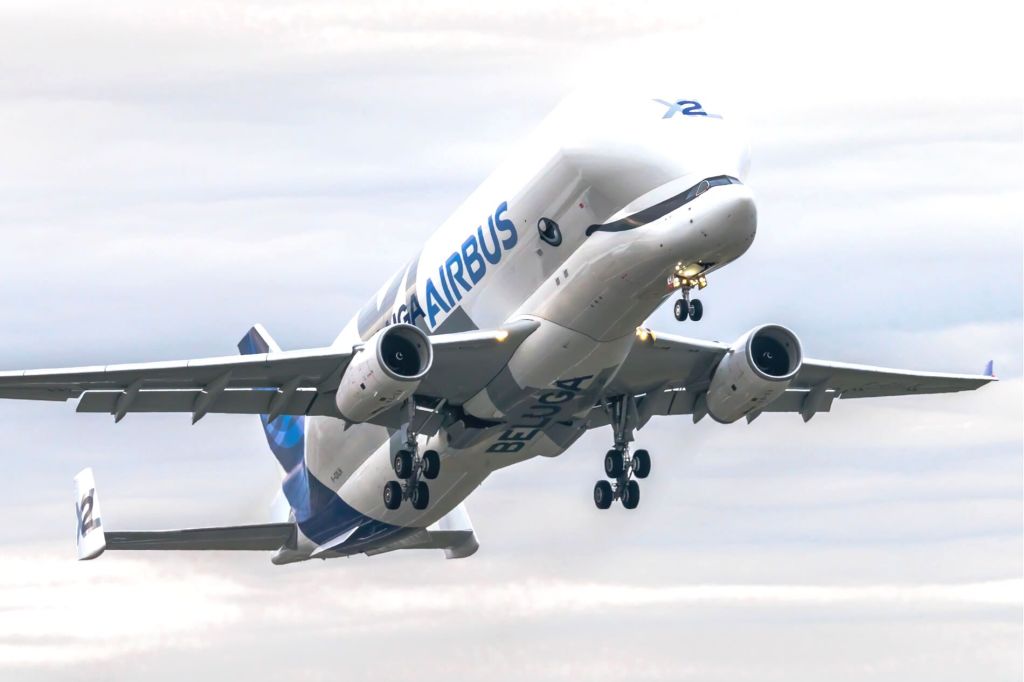
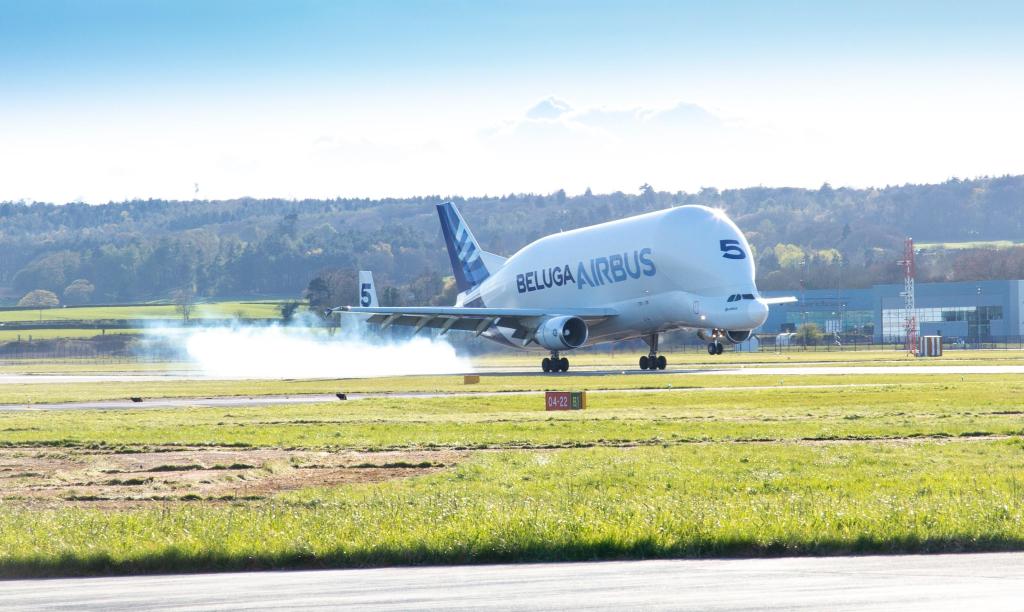
Airbus Group ha lanzado un nuevo servicio de carga aérea utilizando su exclusiva flota BelugaST para ofrecer a las empresas de transporte y otros clientes potenciales una solución a sus necesidades de transporte de carga de gran tamaño. El nuevo servicio, Airbus Beluga Transport, proporcionará a los clientes con contrato comercial en una variedad de sectores, incluidos los sectores espacial, energético, militar, aeronáutico, marítimo y humanitario, con una solución a sus necesidades de transporte de grandes cargas. La primera misión tuvo lugar a fines de 2021 con una entrega desde el sitio de fabricación de Airbus Helicopters en Marignane, Francia, a Kobe en Japón para un cliente no revelado. Beluga #3 se detuvo para repostar en Varsovia (Polonia), Novosibirsk (Rusia) y Seúl (Corea).
Phillippe Sabo, Director de ATI y Transporte Aéreo de Gran Tamaño en Airbus, dijo: “La sección transversal más amplia del Beluga abrirá nuevos mercados y nuevas posibilidades logísticas para los clientes. En el caso de cargar helicópteros -no tener que desmontarlos antes- realmente es un plus. Del mismo modo, los motores de aviones comerciales más grandes se pueden acomodar en una configuración completa”.
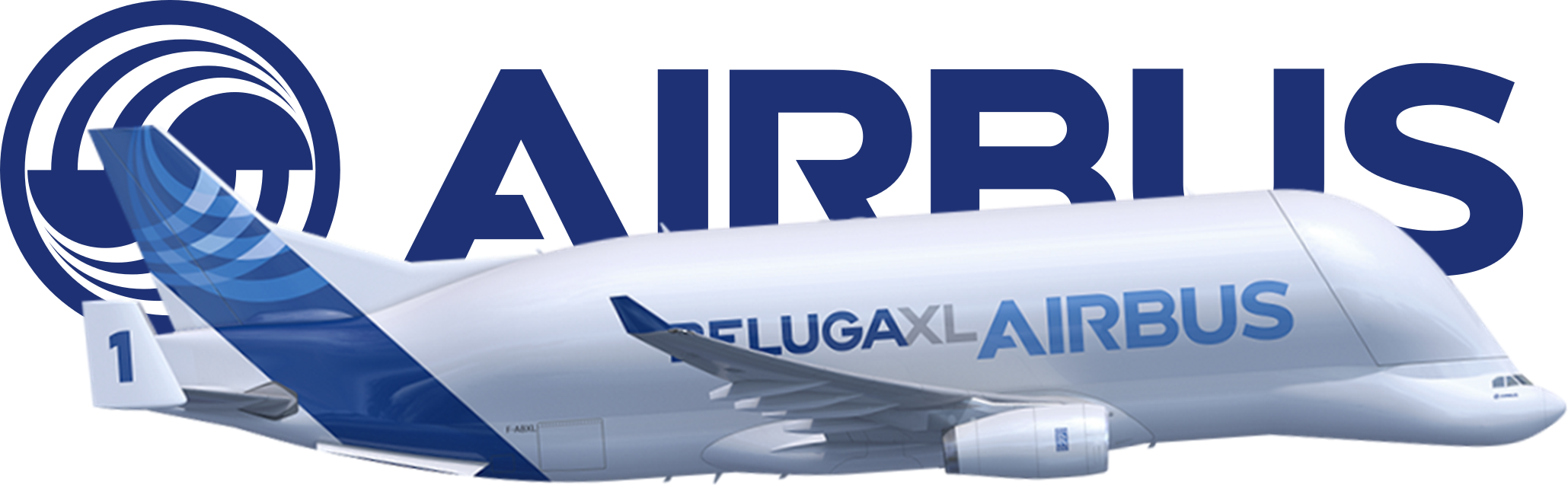
Basada en el diseño del A300-600, la flota BelugaST de cinco miembros, que hasta ahora ha sido la columna vertebral del transporte entre sitios de Airbus de grandes secciones de aviones, está siendo reemplazada por seis BelugaXL de nueva generación para respaldar la aceleración de Airbus. de su producción de aviones de pasajeros. El nuevo servicio de transporte de Airbus Beluga puede atender una multitud de posibles aplicaciones de mercado, ya que los aviones poseen la sección transversal interior más grande del mundo de cualquier avión de transporte, acomodando carga de gran tamaño de hasta 7,1 m de ancho y 6,7 m de alto.
En un futuro próximo, una vez que Airbus haya puesto en servicio los seis nuevos BelugaXL, la flota BelugaST totalmente liberada se entregará a una aerolínea subsidiaria de nueva creación con su propio Certificado de Operador Aéreo (AOC) y personal. Philippe Sabo agregó: “La nueva aerolínea será flexible y ágil para abordar las necesidades de los mercados mundiales externos”.
Para maximizar la capacidad de respuesta de BelugaST para su base de clientes internacionales objetivo, se están desarrollando nuevas técnicas y equipos de carga para la operación. Estas soluciones incluyen un cargador de carga a bordo (OBCL) automatizado para misiones en las que no se dispone de una plataforma de carga/descarga en el aeropuerto de origen o de destino.
Airbus launches BelugaST service
Beluga supertransporters will meet global cargo demand
Airbus Group has launched a new air cargo service using its unique BelugaST fleet to offer carriers and other potential customers a solution to their oversized cargo transportation needs. The new service, Airbus Beluga Transport, will provide commercial contract customers in a variety of sectors, including space, energy, military, aeronautics, maritime and humanitarian, with a solution to their large cargo transport needs. The first mission took place in late 2021 with a delivery from the Airbus Helicopters manufacturing site in Marignane, France, to Kobe in Japan for an undisclosed customer. Beluga #3 stopped to refuel in Warsaw (Poland), Novosibirsk (Russia) and Seoul (Korea).
Phillippe Sabo, Director of ATI and Large Air Transport at Airbus, said: “The Beluga’s wider cross-section will open up new markets and new logistics possibilities for customers. In the case of loading helicopters – not having to disassemble them beforehand – it really is a plus. Similarly, larger commercial aircraft engines can be accommodated in a full configuration.”
Based on the A300-600 design, the five-member BelugaST fleet, which has so far been the backbone of Airbus’ inter-site transport of large aircraft sections, is being replaced by six new-generation BelugaXLs to support the acceleration of Airbus. of its production of passenger aircraft. The new Airbus Beluga shuttle can serve a multitude of potential market applications, as the aircraft have the world’s largest interior cross-section of any shuttle aircraft, accommodating oversized cargo up to 7.1m wide. and 6.7m high.
In the near future, once all six new BelugaXLs have been commissioned by Airbus, the fully released BelugaST fleet will be handed over to a newly created subsidiary airline with its own Air Operator Certificate (AOC) and staff. Philippe Sabo added: «The new airline will be flexible and agile in addressing the needs of external world markets».
To maximize BelugaST’s responsiveness to its target international customer base, new loading techniques and equipment are being developed for the operation. These solutions include an automated on-board cargo loader (OBCL) for missions where a loading/unloading platform is not available at the origin or destination airport.
PUBLISHER: Airgways.com DBk: Airbus.com / Airgways.com AW-POST: 202201261526AR OWNERSHIP: Airgways Inc. A\W A I R G W A Y S ®
Aeropuerto Ushuaia recibe actualización Sistema Aterrizaje
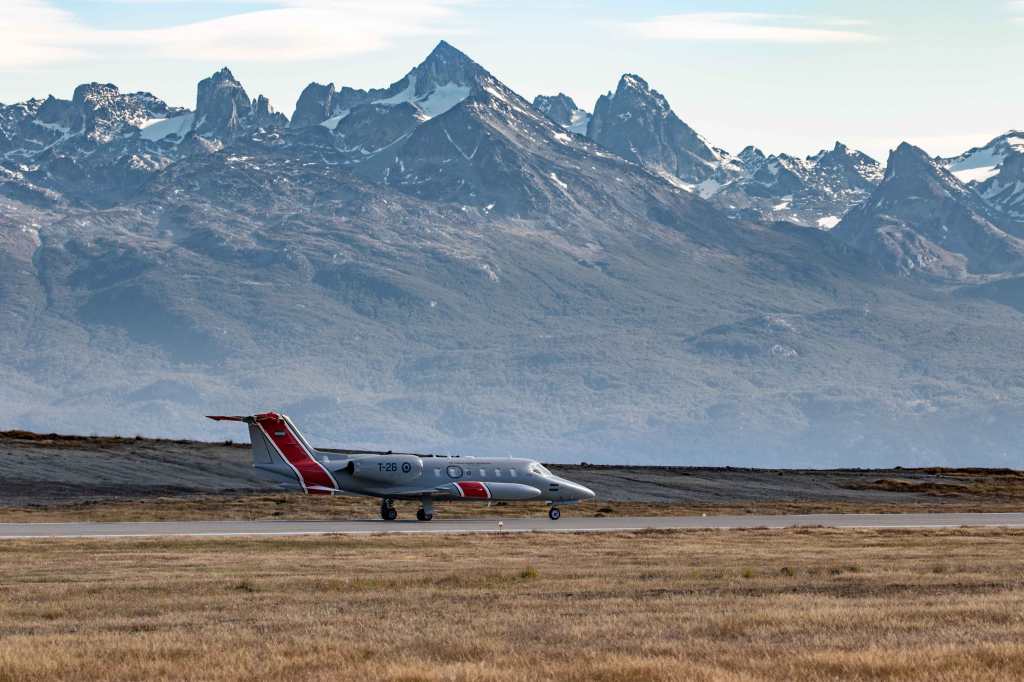
En el Aeropuerto Internacional Ushuaia/Malvinas Argentinas/USH, localizado en la Provincia de Tierra del Fuego, la Empresa Argentina de Navegación Aérea, EANA S.E., perteneciente al Ministerio de Transporte de la Nación, instaló un nuevo Sistema de Aterrizaje por Instrumentos para las aproximaciones a su cabecera de pista 25. El titular de la cartera de Transporte, Alexis Guerrera, expresó: “Con nuestro Plan de Modernización del Transporte estamos invirtiendo en tecnología de manera federal para hacer que volar sea más eficiente, porque con estos sistemas de aterrizaje vamos a evitar cancelaciones por condiciones desfavorables en Ushuaia y a mejorar la conectividad de Tierra del Fuego, como ya hicimos en otras 6 provincias y vamos a continuar en Río Negro y Chubut”.
La modernización del ILS representa un avance tecnológico que aportará confiabilidad y mayor disponibilidad para las aproximaciones de las aeronaves al aeropuerto fueguino, aún en condiciones meteorológicas desfavorables. El flamante ILS reemplazó al anterior que contaba con una antigüedad de 24 años y, además, con una menor capacidad de prestación que el nuevo, el cual puede hacerlo en la Categoría II. Esto representará un beneficio directo para la operatividad del aeropuerto, que podrá continuar recibiendo vuelos aun con muy baja visibilidad en la superficie.
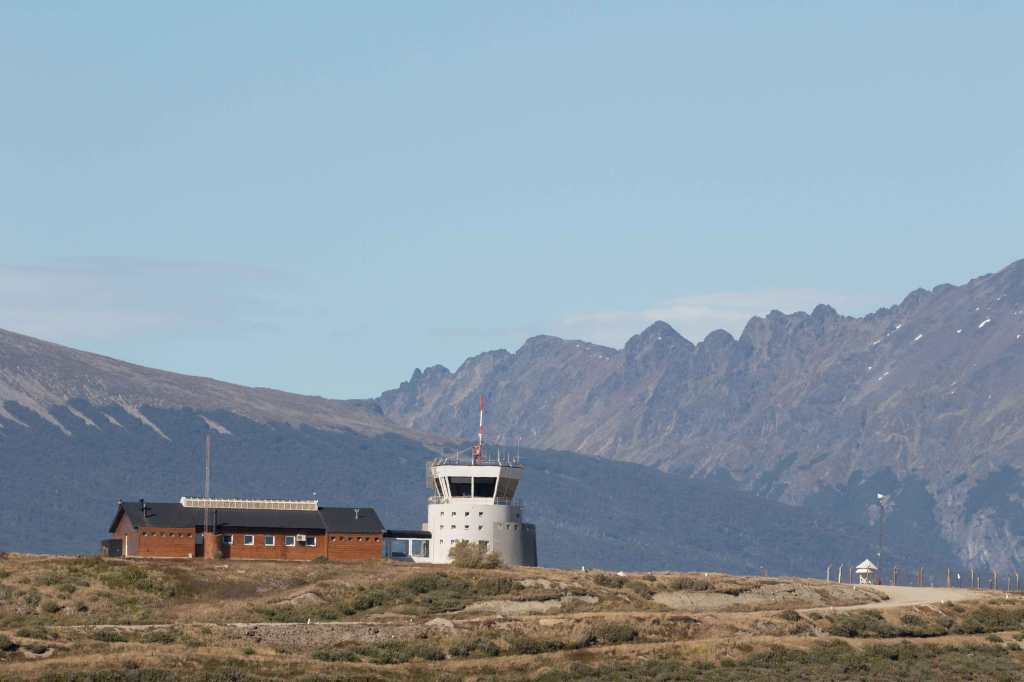
La instalación del nuevo ILS incluyó el cambio de todas las antenas, la construcción de nuevas bases de hormigón y la sustitución de las casetas protectoras para los equipos. Además, se colocó un sistema de comunicaciones robusto y duplicado (por fibra óptica y antenas de radioenlace) entre los equipos y la torre de control, que permite tanto al personal de control de tránsito aéreo como al de servicio técnico, tener un seguimiento continuo del funcionamiento del sistema. Gabriela Logatto, Presidenta y Gerenta General de EANA S.E., aseguró “Desde EANA continuamos robusteciendo nuestra infraestructura tecnológica de navegación aérea con la incorporación de un nuevo ILS para el Aeropuerto de Ushuaia”.
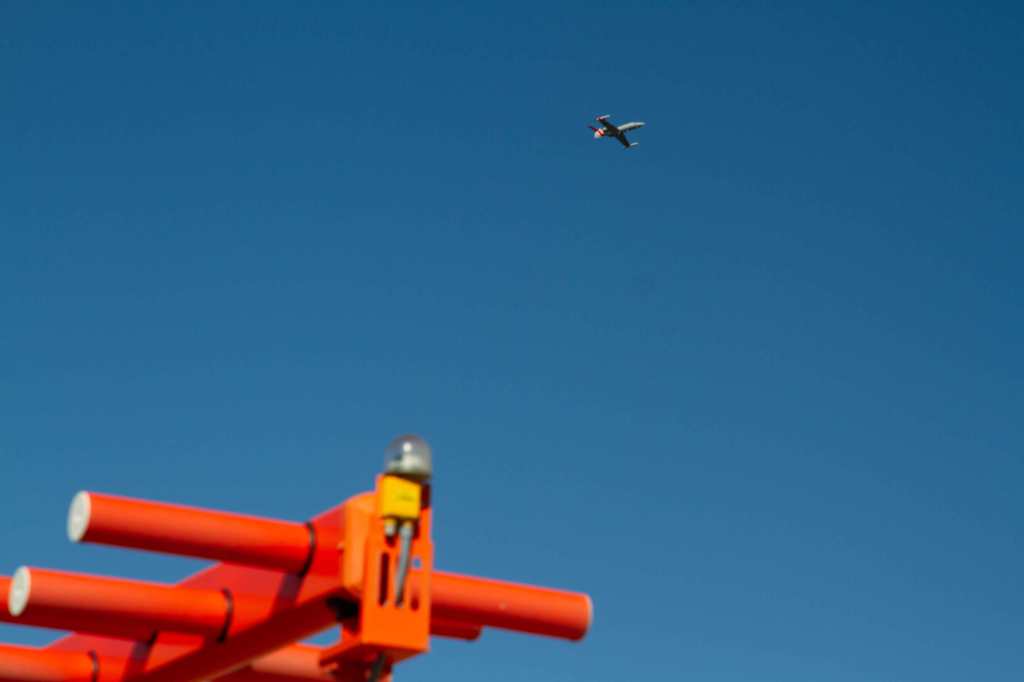
Una vez finalizada la instalación y comprobado el funcionamiento inicial de los transmisores y las antenas del nuevo ILS, aviones dotados de equipos especiales de medición realizaron una serie de aproximaciones a la pista para establecer fehacientemente la estabilidad, precisión y calidad de las señales radioeléctricas. Con los datos aportados por estas mediciones, se llevaron a cabo los ajustes que permitieron asegurar la confiabilidad de las señales y dejar los equipos finalmente en servicio. Esta innovación tecnológica, enmarcada en el Plan de Modernización del Transporte Aéreo que lleva adelante el Ministerio de Transporte de la Nación, ya completó la renovación integral también de los sistemas ILS en los aeropuertos de Córdoba, Buenos Aires, Posadas, Resistencia, Corrientes y Santa Rosa. En los próximos meses se seguirá con el reemplazo de estas radioayudas en los aeropuertos de Bariloche y Esquel, lo que representa un avance tecnológico, con el cual se busca previsibilidad en la operación, asegurando índices de disponibilidad y confiabilidad mayores a los actuales, además de garantizar la continuidad del servicio. El Sistema ILS consiste en un conjunto de transmisores terrestres que emiten señales que guían a las aeronaves en su descenso hacia la pista de aterrizaje, siendo de gran utilidad por su precisión y seguridad, sobre todo en escenarios de visibilidad reducida. El nuevo ILS de Ushuaia también incorpora un transmisor de señales DME, lo cual aporta mayor seguridad, ya que gracias a él las tripulaciones en vuelo pueden conocer con exactitud su distancia al aeropuerto.
EANA installs ILS Ushuaia
Ushuaia Airport receives Landing System update
At the Ushuaia/Malvinas Argentinas International Airport/USH, located in the Province of Tierra del Fuego, the Argentine Air Navigation Company, EANA SE, belonging to the National Ministry of Transport, installed a new Instrument Landing System for approaches to its head of runway 25. The head of the Transportation portfolio, Alexis Guerrera, said: “With our Transportation Modernization Plan we are investing in technology federally to make flying more efficient, because with these landing systems we are going to avoid cancellations due to unfavorable conditions in Ushuaia and to improve connectivity in Tierra del Fuego, as we have already done in 6 other provinces and we are going to continue in Río Negro and Chubut”.
The modernization of the ILS represents a technological advance that will provide reliability and greater availability for aircraft approaches to the Fuegian airport, even in unfavorable weather conditions. The brand new ILS replaced the previous one, which was 24 years old and, furthermore, with a lower capacity to provide services than the new one, which can do so in Category II. This will represent a direct benefit for the airport’s operations, which will be able to continue receiving flights even with very low visibility on the surface.
The installation of the new ILS included the replacement of all the antennas, the construction of new concrete bases and the replacement of the protective shelters for the equipment. In addition, a robust and duplicate communications system (by fiber optics and radio link antennas) was placed between the equipment and the control tower, which allows both air traffic control personnel and technical service personnel to have continuous monitoring of the system operation. Gabriela Logatto, President and General Manager of EANA S.E., assured «At EANA we continue to strengthen our air navigation technological infrastructure with the incorporation of a new ILS for Ushuaia Airport».
Once the installation was completed and the initial operation of the new ILS transmitters and antennas had been verified, planes equipped with special measuring equipment carried out a series of approaches to the runway to reliably establish the stability, precision and quality of the radio signals. With the data provided by these measurements, adjustments were made to ensure the reliability of the signals and finally leave the equipment in service. This technological innovation, framed in the Air Transport Modernization Plan carried out by the National Ministry of Transport, has already completed the comprehensive renovation of the ILS systems at the airports of Córdoba, Buenos Aires, Posadas, Resistencia, Corrientes and Santa Pink. In the coming months, the replacement of these navaids will continue at the Bariloche and Esquel airports, which represents a technological advance, with which predictability is sought in the operation, ensuring availability and reliability rates greater than the current ones, in addition to ensure continuity of service. The ILS System consists of a set of ground transmitters that emit signals that guide aircraft in their descent towards the runway, being very useful for its precision and safety, especially in low visibility scenarios. The new Ushuaia ILS also incorporates a DME signal transmitter, which provides greater safety, since thanks to it the flight crews can know their exact distance from the airport.
PUBLISHER: Airgways.com DBk: Eana.com.ar / Airgways.com AW-POST: 202201261513AR OWNERSHIP: Airgways Inc. A\W A I R G W A Y S ®
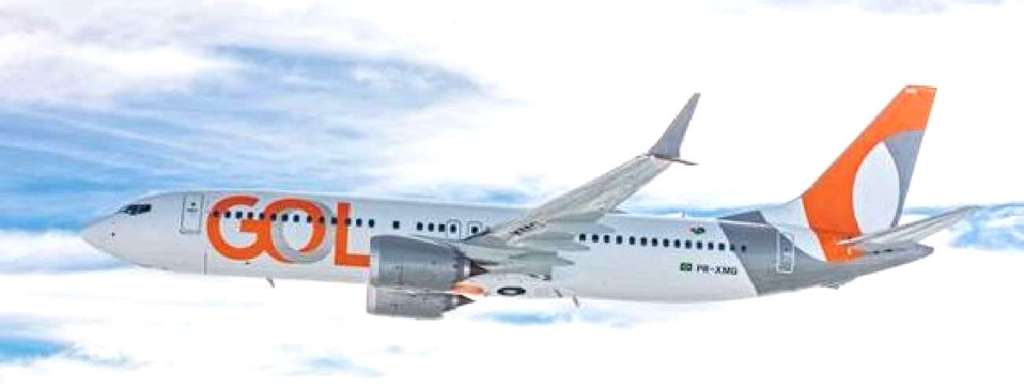
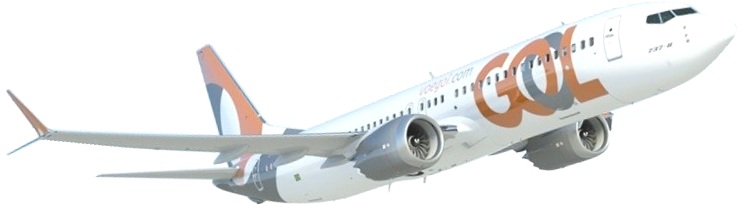
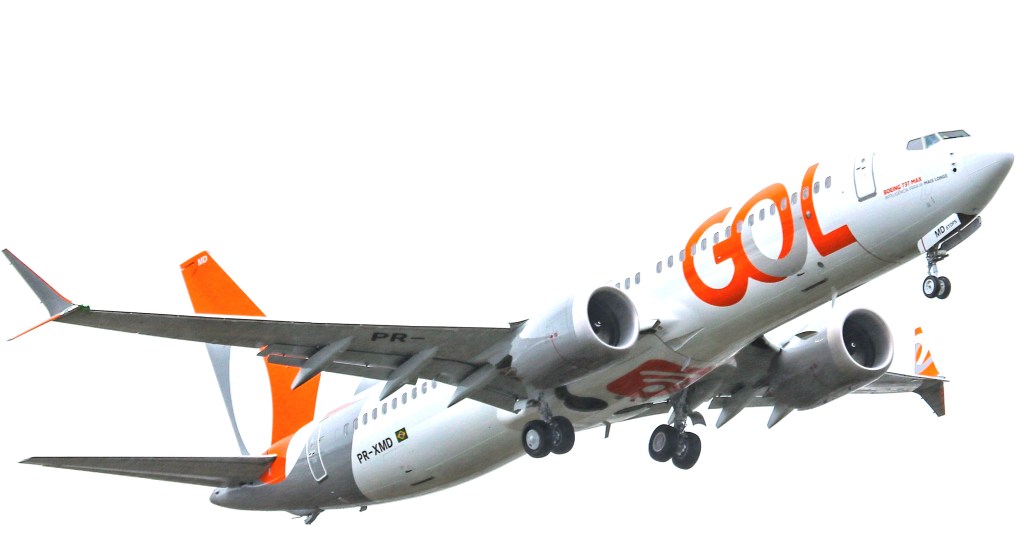
GOL Linhas Aéreas ha alcanzado una cuerdo para la financiación de doce aviones Boeing 737-8 MAX valorados en US$ 600 millones de Dólares. La aerolínea nacional brasileña está modernizando su flota de Boeing 737 Next Generation hacia Boeing 737 MAX. La compañía espera entregas totales por 102 unidades 737 MAX. A partir de Enero 2022 empezará a recibir hasta doce nuevos aviones de cuarta generación de la línea 737.
GOL Linhas Aéreas ha comunicado que la transacción con Castlelake LP comprende diez arrendamientos financieros y dos ventas-arrendamientos. Celso Ferrer, COO de GOL, ha dicho, “Acelerar la transformación de nuestra flota al 737 MAX nos posiciona de manera más competitiva para el crecimiento a través de una mayor flexibilidad en la gestión de nuestra capacidad y permite la expansión de las rutas y destinos, lo que asegurará que seamos altamente eficientes para satisfacer las fluctuaciones de la demanda de viajes”. GOL tiene previsto devolver dieciocho aviones 737 NG (18) este año 2022, y un total de 34 para finales del año 2025. Según la propia aerolínea, esto le ayudará a reducir los costes unitarios al poseer una flota más moderna.
GOL financing 12 Boeing 737 MAX
GOL acquires financing twelve Boeing 737 MAX
GOL Linhas Aéreas has reached an agreement to finance twelve Boeing 737-8 MAX aircraft valued at US$600 million. The Brazilian national airline is modernizing its fleet of Boeing 737 Next Generation to Boeing 737 MAX. The company expects total deliveries of 102 737 MAX units. As of January 2022, it will begin to receive up to twelve new fourth-generation aircraft from the 737 line.
GOL Linhas Aéreas has communicated that the transaction with Castlelake LP comprises ten financial leases and two sales-leases. Celso Ferrer, COO of GOL, said, “Accelerating the transformation of our fleet to the 737 MAX positions us more competitively for growth through greater flexibility in managing our capacity and enables the expansion of routes and destinations, which will ensure that we are highly efficient in meeting fluctuations in travel demand”. GOL plans to return eighteen 737 NG aircraft (18) this year 2022, and a total of 34 by the end of 2025. According to the airline itself, this will help reduce unit costs by having a more modern fleet.
GOL financia 12 Boeing 737 MAX
GOL adquire financiamento de doze Boeing 737 MAX
A GOL Linhas Aéreas chegou a um acordo para financiar doze aeronaves Boeing 737-8 MAX avaliadas em US$ 600 milhões. A companhia aérea nacional brasileira está modernizando sua frota de Boeing 737 Next Generation para Boeing 737 MAX. A empresa espera entregas totais de 102 unidades 737 MAX. A partir de Janeiro de 2022, passará a receber até doze novas aeronaves de quarta geração da linha 737.
A GOL Linhas Aéreas comunicou que a transação com a Castlelake LP compreende dez arrendamentos financeiros e dois arrendamentos mercantis. Celso Ferrer, COO da GOL, disse: “Acelerar a transformação de nossa frota para o 737 MAX nos posiciona mais competitivamente para o crescimento por meio de maior flexibilidade na gestão de nossa capacidade e possibilita a expansão de rotas e destinos. eficiente em atender às flutuações na demanda de viagens”. A GOL planeja devolver dezoito aeronaves 737 NG (18) neste ano de 2022, e um total de 34 até o final de 2025. Segundo a própria companhia aérea, isso ajudará a reduzir os custos unitários por ter uma frota mais moderna.
PUBLISHER: Airgways.com DBk: Voegol.com.br / Airgways.com AW-POST: 202201250825AR OWNERSHIP: Airgways Inc. A\W A I R G W A Y S ®
American amplía conexión desde Texas a México y Jamaica
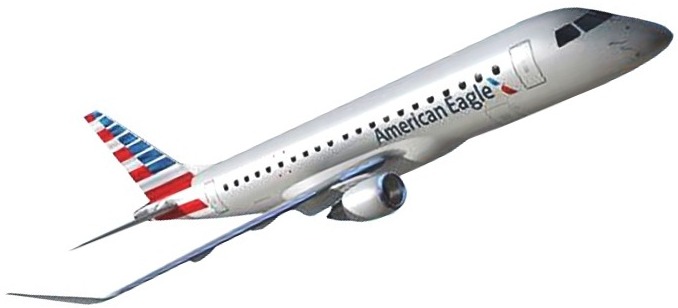
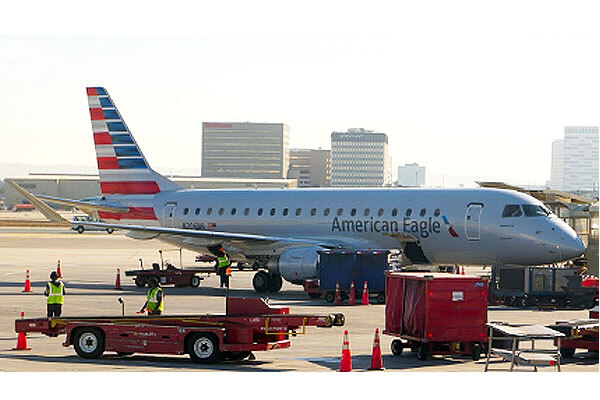
American Airlines ha anunciado la ampliación de su conexión entre Austin, Texas hacia México y Jamaica, incorporando treinta y dos destinos desde la capital texana debido al auge en los negocios. Las rutas incorporadas serán Austin—Cozumel y Austin—Montego Bay a partir del 11 de Junio de 2022 con una frecuencia semanal en ambas rutas (1Frq/S). Las rutas serán operadas por American Eagle vía Envoy Air, con aeronaves Embraer 175 que pueden transportar 76 pasajeros, en Primera Clase (12) y en Clase Económica (66).
“Estamos orgullosos de fortalecer nuestro compromiso con Austin al brindar a los clientes locales másopciones para volar sin escalas a destinos populares. Ya sea a las playas de Cozumel y Montego Bay, o a las docenas de otros destinos que ofrecemos desde Austin, esperamos conectar aún más a los tejanos centrales con nuestra red global”, dijo Brian Znotins, Vicepresidente de Planificación de redes de American Airlines.
American expands network from Austin
American expands connection from Texas to Mexico and Jamaica
American Airlines has announced the expansion of its connection between Austin, Texas to Mexico and Jamaica, incorporating thirty-two destinations from the Texas capital due to the boom in business. The incorporated routes will be Austin—Cozumel and Austin—Montego Bay as of June 11, 2022 with a weekly frequency on both routes (1Frq/S). The routes will be operated by American Eagle via Envoy Air, with Embraer 175 aircraft that can carry 76 passengers, in First Class (12) and in Economy Class (66).
“We are proud to strengthen our commitment to Austin by giving local customers more options to fly nonstop to popular destinations. Whether it’s to the beaches of Cozumel and Montego Bay, or the dozens of other destinations we offer from Austin, we look forward to connecting even more Central Texans with our global network”, said Brian Znotins, Vice President of Network Planning for American Airlines.
PUBLISHER: Airgways.com DBk: Aa.com / Airgways.com AW-POST: 202201250750AR OWNERSHIP: Airgways Inc. A\W A I R G W A Y S ®
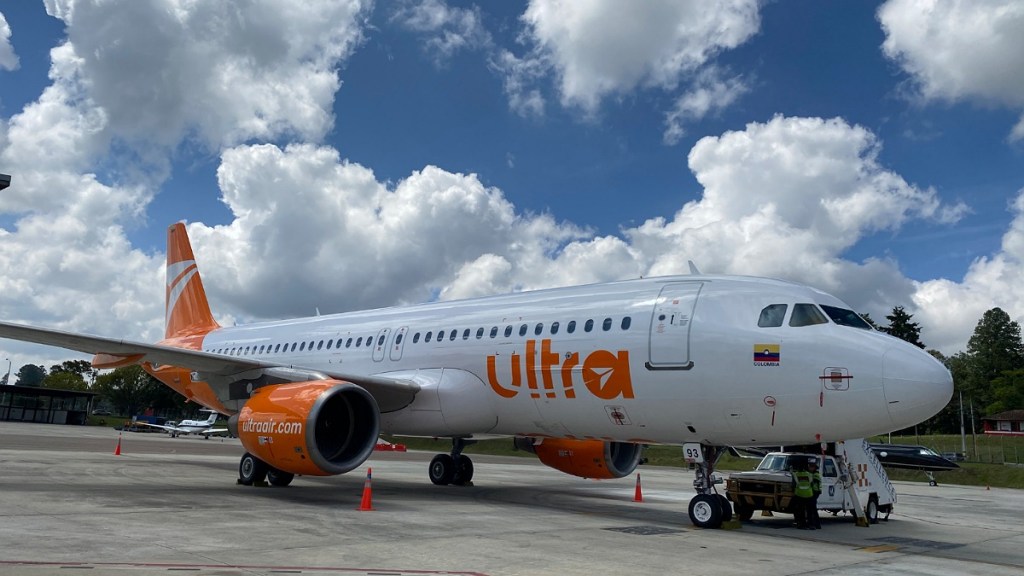
La nueva aerolínea de bajo costo de Colombia, Ultra Air, ha anunciado el comienzo de operaciones aerocomerciales en Febrero 2022. La demora en la puesta a punto ha permitido superar los inconvenientes técnicos que no le permitieron iniciar operaciones en Diciembre 2021, según el Director de la Aeronáutica Civil, Jair Orlando Fajardo. “Teníamos pensado que podría arrancar en Diciembre, pero hubo unos temas con unos equipos. Se logró superar con la ayuda de la Aerocivil y del personal técnico y en tierra”, dijo Jair Fajardo.
Ultra Air ha finalizado la fase tres del proceso de certificación ante la Aeronáutica Civil e inicia la fase cuatro. Para el Vicepresidente de Operaciones de Ultra Air, Juan Fernando Arango, el cierre de la tercera fase dejó un balance positivo para la compañía aérea. “Nos permitió ajustar nuestras procesos y procedimientos para estar alineados con los requerimientos establecidos en el RAC, que es importante mencionar, incluyen los nuevos requisitos establecidos en el RAC 121, al ser Ultra la primera aerolínea colombiana que se está certificando bajo esta regulación”.
Perspectivas Ultra Air
La nueva aerolínea operará una flota de cinco aviones Airbus A320-200CEO. La nueva low cost permitirá ofrecer tarifas 20% por debajo de la media nacional. “Los viajeros ya están acostumbrados a entender cómo puede salirles más económico viajar. Los aviones vuelan, pero el peso gasta combustible y si una persona quiere llevar varias maletas, pues tiene que pagar por eso. En cambio, una persona que quiere viajar ligero, que le salga ligero el pasaje”, dijo William Shaw, fundador y CEO de Ultra Air. Ultra Air iniciará rutas con vuelos domésticos a veintinueve destinos nacionales, mientras que en el mediano plazo proyecta realizar vuelos internacionales a quince. La perspectiva de la compañía aérea es incorporar cuarenta nuevos aviones en un lapso de cinco años alcanzando su red de vuelos hacia Perú, México y Estados Unidos. “El mercado doméstico se ha recuperado y por eso solo vamos a volar domésticamente el primer año. Tenemos autorizadas 29 rutas domésticas y 15 internacionales, pero por lo pronto solo doméstico. Todavía hay mucha incertidumbre en el mercado sobre lo que se necesita para viajar internacionalmente […]”, expresó el CEO William Shaw.
Ultra Air will start ops 02/2022
Set-up of the Colombian startup
The new low-cost airline in Colombia, Ultra Air, has announced the start of commercial operations in February 2022. The delay in the set-up has made it possible to overcome the technical problems that did not allow it to start operations in December 2021, according to the Director of the Civil Aeronautics, Jair Orlando Fajardo; “We had thought that it could start in December, but there were some issues with some teams. It was overcome with the help of Aerocivil and the technical and ground personnel”, said Jair Fajardo.
Ultra Air has completed phase three of the certification process before the Civil Aeronautics and begins phase four. For the Vice President of Operations of Ultra Air, Juan Fernando Arango, the closing of the third phase left a positive balance for the airline. «It allowed us to adjust our processes and procedures to be aligned with the requirements established in the RAC, which it is important to mention, include the new requirements established in RAC 121, as Ultra is the first Colombian airline to be certified under this regulation».
Ultra Air Perspectives
The new airline will operate a fleet of five Airbus A320-200CEO aircraft. The new low cost will allow to offer rates 20% below the national average. “Travellers are already used to understanding how they can get cheaper to travel. Planes fly, but the weight uses fuel and if a person wants to carry several suitcases, then he has to pay for it. On the other hand, a person who wants to travel light, who wants to travel light», said William Shaw, founder and CEO of Ultra Air. Ultra Air will start routes with domestic flights to twenty-nine national destinations, while in the medium term it plans to carry out international flights to fifteen. The perspective of the airline company is to incorporate forty new aircraft in a period of five years, reaching its network of flights to Peru, Mexico and the United States. “The domestic market has recovered and that is why we are only going to fly domestically the first year. We have authorized 29 domestic and 15 international routes, but for now only domestic. There is still a lot of uncertainty in the market about what it takes to travel internationally […]”, said CEO William Shaw.
PUBLISHER: Airgways.com DBk: Ultraair.com / Airgways.com AW-POST: 202201250741AR OWNERSHIP: Airgways Inc. A\W A I R G W A Y S ®
British-Iberia realizan alianza con American Airlines y Finnair
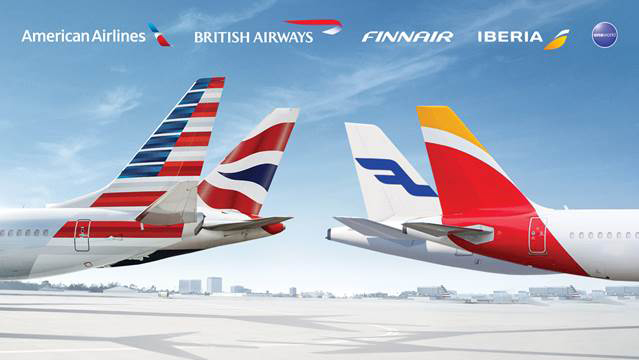
Iberia, British Airways y American Airlines y Finnair anunciaron a partir del 1 de Febrero de 2022 las actualizaciones realizadas en la plataforma de servicios de la Atlantic Joint Business para productos de tarifas netas que incluyen también a American Airlines y Finnair. Atlantic Joint Business es una empresa conjunta que comenzó en 2010, entre American Airlines, British Airways e Iberia, con la incorporación de Finnair en 2013, Level Airlines en 2017 y Aer Lingus en 2021.
Con este cambio persiguen ofrecer “un proceso más simplificado para administrar los datos de distribución entre los socios de Atlantic Joint Business en los puntos de venta del Reino Unido, España y el resto de Europa”, detallan en un comunicado a las agencias. En el mismo explican que hasta ahora, sus clientes seguían procesos separados para administrar sus datos de distribución: las actualizaciones de British Airways e Iberia se gestionan a través de la plataforma online de autoservicio SalesHub de IAG, mientras que las de American Airlines y Finnair se habían vía los equipos de soporte de ventas de dichas compañías.
Self-service alliances between airlines
British-Iberia make alliance with American Airlines and Finnair
Iberia, British Airways and American Airlines and Finnair announced as of February 1, 2022 the updates made to the Atlantic Joint Business service platform for net fare products that also include American Airlines and Finnair. Atlantic Joint Business is a joint venture that started in 2010, between American Airlines, British Airways and Iberia, with the addition of Finnair in 2013, Level Airlines in 2017 and Aer Lingus in 2021.
With this change they seek to offer «a more simplified process to manage distribution data between Atlantic Joint Business partners at points of sale in the United Kingdom, Spain and the rest of Europe», they detail in a statement to the agencies. In it they explain that until now, their customers followed separate processes to manage their distribution data: updates for British Airways and Iberia are managed through IAG’s SalesHub online self-service platform, while those for American Airlines and Finnair are via the sales support teams of those companies.
PUBLISHER: Airgways.com DBk: Aa.com / Britishairways.com / Iberia.com / Finnair.com / Airgways.com AW-POST: 202201250733AR OWNERSHIP: Airgways Inc. A\W A I R G W A Y S ®
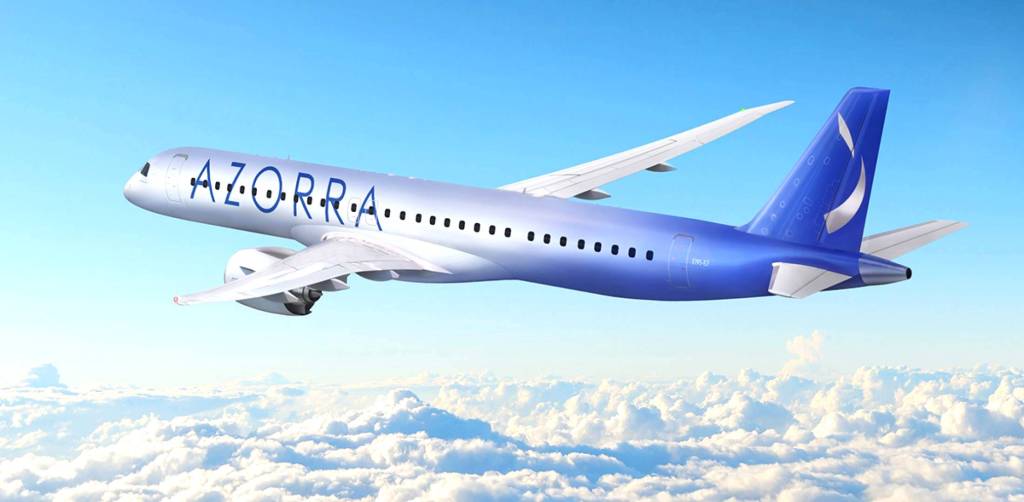
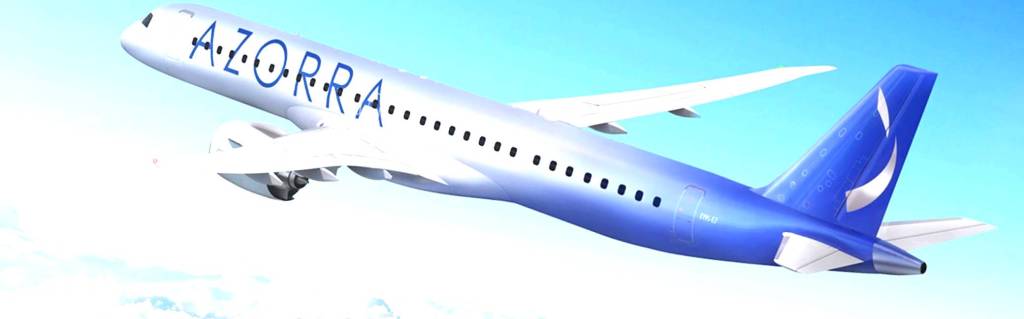
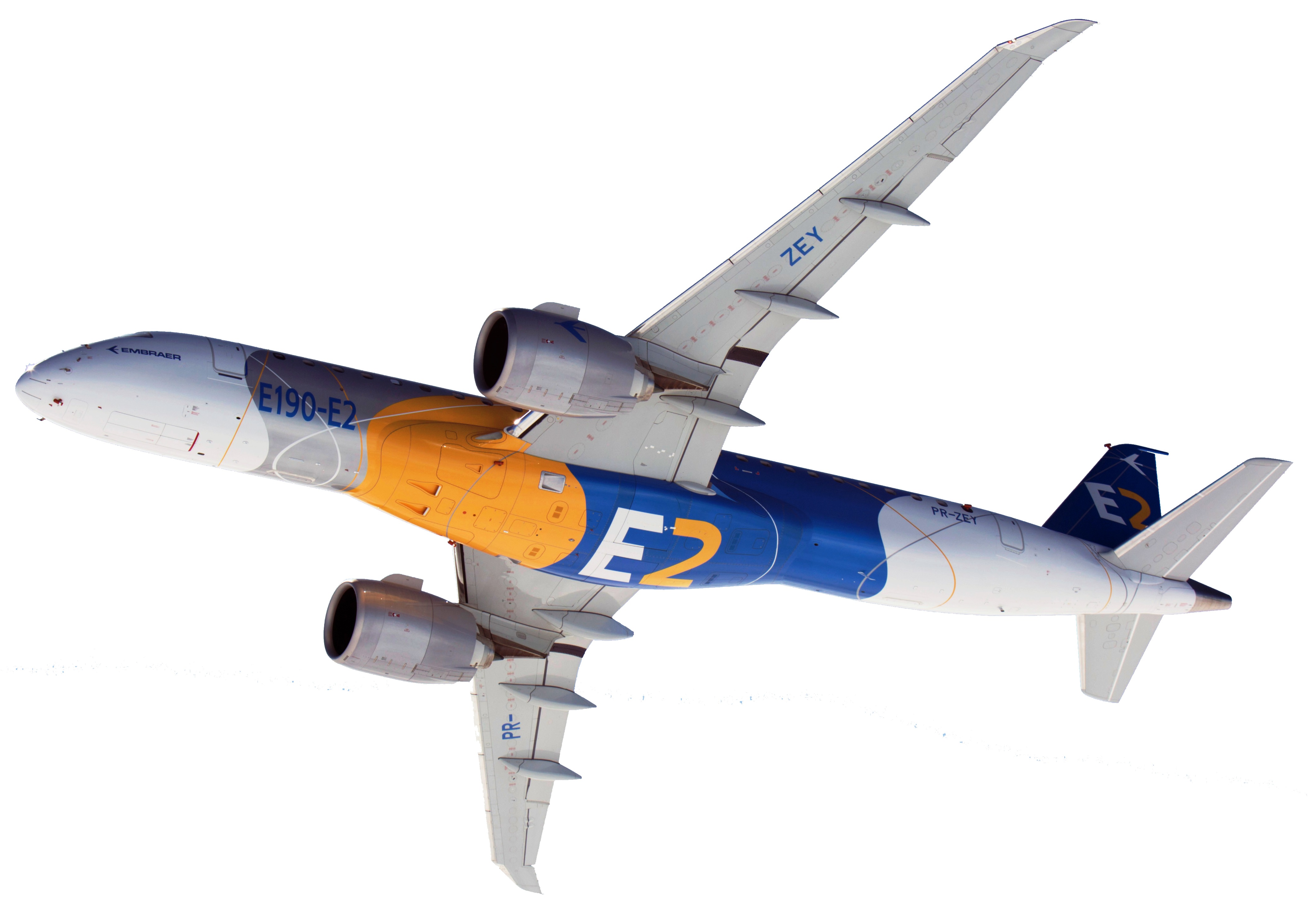
El gigante aeronáutico brasileño Embraer, el tercer mayor fabricante de aviones del mundo, informó este Lunes 24/01 que ha formalizado el acuerdo para la venta de hasta cincuenta aeronaves de la familia E2 para la aerolínea estadounidense Azorra Aviation. El contrato prevé la adquisición de veinte nuevos aviones modelos E190-E2 y E195-E2, así como el derecho a compra de otras treinta unidades, con entregas previstas a partir de 2023, según explicó Embraer en un comunicado remitido a la Bolsa de Valores de Sao Paulo.
El precio de lista de la orden se encuentra valorado en US$ 3.900 millones de Dólares. “Con esta encomienda de 20 aeronaves E2, Azorra refuerza aún más el valor excepcional que la próxima generación de la familia E2 trae para el mercado como la aeronave más silenciosa y eficiente del segmento”, afirmó el Presidente de Embraer Aviación Comercial, Arjan Meijer. Para John Evans, el Primer Ejecutivo de Azorra Aviation, empresa especializada en el leasing de aeronaves con sede en Florida, Estados Unidos, el acuerdo fortalece la creencia de la compañía en el E2, una familia de aeronaves modernas con desempeño económico y ambiental superior que le permitirá una excelente oportunidad para establecer una posición de liderazgo en el sector.
Las características técnicas de la Familia E-Jets permiten desarrollar la entrega de la más moderna tecnología en el actualidad. El E195-E2 posee 41,5 metros de largo y capacidad para hasta 146 personas, siendo es el mayor avión para pasajeros producido por el fabricante brasileño, líder mundial en el segmento de aviones regionales. Asimismo, está considerado como el más eficiente de los aparatos producidos por la empresa brasileña, ya que su avanzada tecnología le permiten reducir los costos operacionales en un 25% por el menor consumo de combustible.
Embraer-Azorra sign agreement 50 E-jet
Embraer will deliver 50 E2 aircraft to Azorra Aviation
The Brazilian aeronautical giant Embraer, the third largest aircraft manufacturer in the world, informed this Monday 01/24 that it has formalized the agreement for the sale of up to fifty aircraft of the E2 family for the American airline Azorra Aviation. The contract provides for the acquisition of twenty new aircraft models E190-E2 and E195-E2, as well as the right to purchase another thirty units, with deliveries expected from 2023, as explained by Embraer in a statement sent to the Stock Exchange of São Paulo.
The list price of the order is valued at US$3.9 billion. «With this order of 20 E2 aircraft, Azorra further reinforces the exceptional value that the next generation of the E2 family brings to the market as the quietest and most efficient aircraft in the segment», said the President of Embraer Commercial Aviation, Arjan Meijer. For John Evans, the CEO of Azorra Aviation, a company specialized in aircraft leasing based in Florida, United States, the agreement strengthens the company’s belief in the E2, a family of modern aircraft with superior economic and environmental performance that It will allow you an excellent opportunity to establish a leading position in the sector.
The technical characteristics of the E-Jets Family allow to develop the delivery of the most modern technology today. The E195-E2 is 41.5 meters long and has a capacity for up to 146 people, making it the largest passenger plane produced by the Brazilian manufacturer, a world leader in the regional aircraft segment. Likewise, it is considered the most efficient of the devices produced by the Brazilian company, since its advanced technology allows it to reduce operating costs by 25% due to lower fuel consumption.
Embraer-Azorra assina acordo 50 E-jet
Embraer entregará 50 aeronaves E2 à Azorra Aviation
A gigante aeronáutica brasileira Embraer, terceira maior fabricante de aeronaves do mundo, informou nesta segunda-feira 24/01 que formalizou o acordo para a venda de até cinquenta aeronaves da família E2 para a companhia aérea americana Azorra Aviation. O contrato prevê a aquisição de vinte novos modelos de aeronaves E190-E2 e E195-E2, bem como o direito de compra de mais trinta unidades, com entregas previstas a partir de 2023, conforme explica a Embraer em comunicado enviado à Bolsa de Valores de São Paulo.
O preço de tabela do pedido está avaliado em US$ 3,9 bilhões. “Com esta encomenda de 20 aeronaves E2, a Azorra reforça ainda mais o valor excepcional que a próxima geração da família E2 traz ao mercado como a aeronave mais silenciosa e eficiente do segmento”, disse o presidente da Embraer Aviação Comercial, Arjan Meijer. Para John Evans, CEO da Azorra Aviation, empresa especializada em leasing de aeronaves com sede na Flórida, nos Estados Unidos, o acordo reforça a crença da empresa no E2, uma família de aeronaves modernas com desempenho econômico e ambiental superior que lhe permitirá uma excelente oportunidade para estabelecer uma posição de liderança no setor.
As características técnicas da Família de E-Jets permitem desenvolver a entrega da tecnologia mais moderna da atualidade. O E195-E2 tem 41,5 metros de comprimento e capacidade para até 146 pessoas, tornando-se o maior avião de passageiros produzido pela fabricante brasileira, líder mundial no segmento de aeronaves regionais. Da mesma forma, é considerado o mais eficiente dos aparelhos produzidos pela empresa brasileira, pois sua tecnologia avançada permite reduzir os custos operacionais em 25% devido ao menor consumo de combustível.
PUBLISHER: Airgways.com DBk: Embraer.com / Azorra.com / Airgways.com AW-POST: 202201250025AR OWNERSHIP: Airgways Inc. A\W A I R G W A Y S ®

















 airgways.com