AW | 2016 05 21 15:52| SAFETY / SECURITY
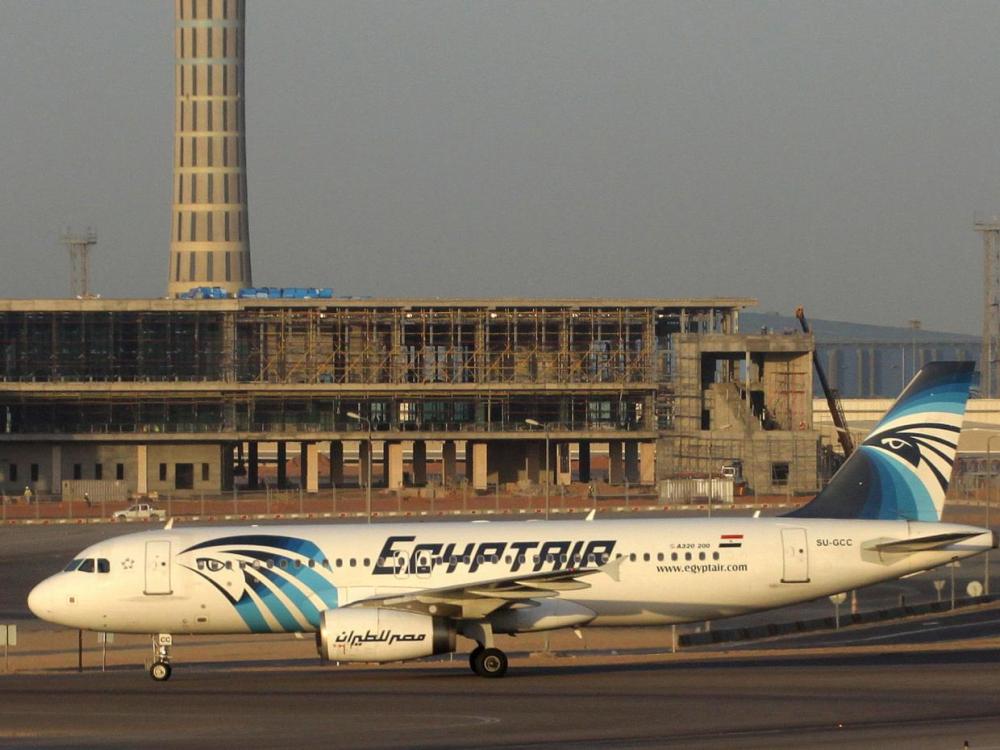
EGYPTAIR MS804
Acabo de hablar con un hombre que ha sido un piloto de 46 años, voló el Airbus A320 durante seis años y ha pasado los últimos 11 años la investigación de los incendios en los aviones.
El capitán John Cox, miembro de la Royal Aeronautical Society con sede en Londres, me dijo que los hechos conocidos acerca de lo que ocurrió en el vuelo MS804 falta EgyptAir eran confusas.
Si los tiempos que tenemos son la derecha (que aún no se han confirmado oficialmente), había tres minutos de advertencias de humo y calor, seguido de cuatro minutos de vuelo a motor sin advertencias, seguido de una caída de dos minutos.

«Durante un incendio, que es un período muy corto de tiempo. Para un evento explosivo, como una bomba, que es un período muy largo de tiempo», dice.
«Se me tiene y muchos otros expertos rascándose la cabeza. Hay una respuesta, pero aún no está claro.»
El capitán Cox tiene algunas estadísticas alarmantes. Cada año, hay alrededor de 900-1,200 incidentes relacionadas con el humo de los aviones en los EE.UU.. Si duplica ese número, obtendrá una figura mundial bruto. La gran mayoría termina perfectamente segura, pero los incendios han derribado aviones.
Problemática historia reciente de EgyptAir
«Es sorprendentemente regular, y junto con aviones no tripulados, que es la única parte de la aviación que está cada vez más peligroso», dice el capitán Cox.
Se pone el ascenso a dos cosas: un aumento en el número de vuelos, y un enorme aumento en las personas que toman las baterías de litio a bordo.
Una estimación dice que un avión que lleva 100 personas podría tener 500 baterías de litio en la cabina, en cámaras, ordenadores portátiles, Tablet PC, teléfonos, lectores electrónicos, etc.
 Movimientos posiblemente finales de vuelo MS804
Dice baterías trituradas son cada vez más problemático. «Tal vez alguien se queda dormido. Su tablet PC o el teléfono se desliza por el lado de la silla. Se mueven el asiento y accidentalmente se aplaste la batería.»
Potencialmente, esto podría provocar un incendio.
Para que quede claro, si usted compra baterías de litio de una empresa respetable, que se prueban a fondo y segura, con una tasa de fracaso en 10m. Pero el capitán Cox dice que podría haber tomado las baterías 3.5 billones en los aviones durante todo un año.
Sólo se necesita una a ir mal, y paquete de un infierno de un golpe, como informé en 2014.
Y luego están las pilas «mercado gris» y cargadores algunas personas compran en el barato. Es muy posible que no han sido probados de seguridad en absoluto.
aviones modernos tienen detectores de humo, pero las únicas extintores automáticos están en la bodega de carga. De lo contrario, hay que bajar a miembros de la tripulación utilizando un extintor de mano. Hay uno en la papelera de cada inodoro, por ejemplo.
Un papel co-escrita por el capitán Cox reciente dice que la experiencia demuestra que muchos de los incendios comienzan en lugares de difícil acceso «» – lugares que la tripulación puede no ser capaz de alcanzar.
También hizo el punto de que el regulador de Estados Unidos, la FAA, dijo recientemente que nunca se puede erradicar todas las fuentes de ignición en un avión.
El capitán Cox utiliza para volar el A320 y dice que es un avión maravilloso. Nunca ha oído hablar de un gran incendio en la parte delantera derecha del plano. Y ha estado volando en diversas formas, desde finales de 1980.
Muchas líneas aéreas también ahora entrenar a su personal en la forma de hacer frente a un incendio de la batería de litio.
Quiero hacer hincapié en esto de nuevo, no sabemos lo que hizo que el avión de Egyptair que bajara. Podría ser un accidente. Podría ser más siniestro. Pero los incendios en los aviones son un problema y el capitán Cox hace un llamamiento a la industria para hacer más para hacer frente a ella. 

EgyptAir MS804: Fires are a growing problem for airlines
I’ve just spoken to a man who has been a pilot for 46 years, flew the Airbus A320 for six years and has spent the past 11 years investigating fires on planes.
Capt John Cox, a Fellow at the London-based Royal Aeronautical Society, told me the known facts about what happened on the missing EgyptAir flight MS804 were confusing.
If the timings we have are right (they are still not officially confirmed), there were three minutes of smoke and heat warnings, followed by four minutes of powered flight without warnings, followed by a two minute fall.
«For a fire, that’s a very short period of time. For an explosive event, like a bomb, that’s a very long period of time,» he says.
«It’s got me and many other experts scratching their heads. There is an answer, but it’s not clear yet.»
Capt Cox has some sobering statistics. Every year, there are about 900-1,200 smoke-related incidents on aircraft in the US. If you double that number, you’ll get a rough, global figure. The vast majority end perfectly safely, but fires have brought down planes.
«It’s shockingly regular, and along with drones, it’s the only part of aviation that’s getting more dangerous,» Capt Cox says.
He puts the rise down to two things: an increase in the number of flights, and a huge rise in people taking lithium batteries on board.
One estimate says that an airliner carrying 100 people could have 500 lithium batteries in the cabin, in cameras, laptops, tablet computers, phones, e-readers, etc.
He says crushed batteries are increasingly problematic. «Maybe someone falls asleep. Their tablet computer or phone slips down the side of the chair. They move the seat and accidentally crush the battery.»
Potentially, that could start a fire.
To be clear, if you buy lithium batteries from a respectable company, they are thoroughly tested and safe, with a one in 10m failure rate. But Capt Cox says there could be 3.5bn batteries taken on aircraft throughout a year.
It only takes one to go wrong, and they pack a hell of a punch, as I reported in 2014.
And then there are the «grey market» batteries and chargers some people buy on the cheap. They may well not have been safety tested at all.
Modern aircraft have smoke detectors, but the only automatic extinguishers are in the cargo bay. Otherwise, it’s down to crew members using a hand-held fire extinguisher. There’s one in the bin of each toilet, for example.
A recent paper co-written by Capt Cox says experience shows that many fires start in «inaccessible locations» – places that crew may not be able to reach.
He also made the point that the US regulator, the FAA, recently said you can never eradicate all sources of ignition on an aircraft.
Capt Cox used to fly the A320 and says it’s a wonderful aircraft. He’s never heard of a major fire in the front right part of the plane. And it has been flying in various forms since the late 1980s.
Many airlines also now train their staff in how to cope with a lithium battery fire.
I want to stress this again, we do not know what caused the Egyptair airliner to come down. It could be an accident. It could be more sinister. But fires on aircraft are an issue and Capt Cox is calling on the industry to do more to tackle it. ᴀᴡ
 airgways.com