AW | 2016 08 17 10:27 | AIR TRAFFIC
Las aerolíneas para Europa (A4E) es la asociación de aerolíneas más grande de Europa, con sede en Bruselas.Lanzada en enero de 2016, la asociación se compone de Air France KLM, easyJet, Finnair, International Airlines Group (IAG), Jet2.com, Grupo Lufthansa, Noruega, Ryanair y Volotea.
 Para ver historias anteriores sobre la Asociación y su publicidad en relación con los trastornos causados por Control de Tráfico Aéreo (ATC) huelgas, consulte las aerolíneas para Europa .
Viajeros de negocios habló con el director general de la asociación en sus objetivos para compañías aéreas para Europa y si es realista esperar que los impuestos que deben reducirse en los aeropuertos de Europa.

¿Cuál es el objetivo de las aerolíneas para Europa?
El objetivo es llegar a ser la voz única de las compañías aéreas en Bruselas. [Queremos …] para ser innovadores en la forma en que vestíbulo y comunicamos. Tenemos que ser proactivos, y para decir lo que pensamos. Las otras asociaciones de compañías aéreas se habían dormido, pero queríamos ser muy vocal y si es necesario ser perjudicial. En Londres que sería normal del negocio, pero en Bruselas que sería de alrededor de despertar a la gente y explicar que las aerolíneas para Europa (A4E) comienza a partir de la lógica de negocio en lugar de una lógica de Bruselas.
Somos una empresa pequeña organización, y tenemos recursos limitados así que tenemos que enfocar que es una buena cosa, creo. También permite a las aerolíneas miembros a concentrarse en lo que están de acuerdo en lugar de lo que no están de acuerdo en.
Estamos a punto de la línea de fondo y lo que podemos hacer mejor para los pasajeros en lo que el costo hacia abajo y la alimentación que a través de al cliente en forma de tarifas más bajas.
Sufrimos el mismo dolor que los pasajeros. Así que ir a un aeropuerto y entrar en un centro comercial. Incluso en IKEA ofrecen una vía rápida para el restaurante.
Estamos mirando más allá de Bruselas, sin embargo. Entendemos que la Comisión Europea ha limitado las competencias cuando se trata de cuestiones fiscales y los impuestos – que sólo pueden dar recomendaciones, pero no son vinculantes, por lo que vamos local y trabajamos con asociaciones nacionales en el Reino Unido y Alemania. Sobre las tasas aeroportuarias no es la directiva tasas aeroportuarias que no funciona porque no se aplica correctamente.
¿Sobre qué ejercen presión?
Las tasas de aeropuerto es uno y eso es importante para los pasajeros debido a que los cargos se añaden al precio del billete. Los aeropuertos no están necesariamente de acuerdo con eso, sino que están ejerciendo presión sobre los aeropuertos y la Comisión Europea a revisar eso.
La segunda cosa es impuestos de pasajeros y de combustible que no aportan ningún valor a los viajes en avión, directa o indirectamente.
En tercer lugar el impacto negativo del ATC golpea. Nos fijamos en el impacto macroeconómico [Control de Tráfico Aéreo golpea a costar hasta 9,5 mil millones € el PIB de la Unión asociada a 131.000 puestos de trabajo durante los últimos seis años, según PWC en la investigación encargada por A4E].
Estamos contando los minutos y las horas, así que hay un impacto para los pasajeros, pero estamos mirando las posibilidades legales para obligar a ciertos estados miembros para obligarlos a acatar las normas.
[Investigación A4E ha encontrado que desde 2010, los cielos de Europa se han interrumpido 213 días debido a las huelgas de los controladores de tráfico aéreo (ATC) obligando a las aerolíneas miembros de A4E para cancelar 30.000 vuelos en todo el continente, con más de 2 millones de pasajeros que tiene vuelos cancelados, mientras que otros retrasos experimentados de más de 6 millones de minutos que afectan directamente a sus planes de viaje.]
No estamos en contra del derecho de huelga, y claramente algunas de estas cuestiones tienen que ser tratado a nivel local. Pero con nuestra campaña contra el ATC golpea esperamos poner un poco de presión sobre otras partes interesadas para que todos podamos trabajar juntos con los pilotos y la tripulación de mirar esto.
Entonces, ¿cuál sería un éxito para usted sobre las tasas aeroportuarias? ¿Deshacerse de ellos, bajarlos?
Entendemos que los aeropuertos tienen que cobrar por un servicio y eso es un hecho de la vida. Lo que nos gustaría que los reguladores para mirar con más cuidado que no es tan tales los cargos, pero la forma en que se calculan las que no se hace de una manera transparente. La forma en que las compañías aéreas son consultados a veces es una broma en algunos de los países. Queremos ser consultados en el proceso de cálculo y si pudiéramos arrojar algo de luz y mejorar la transparencia y el proceso de consulta a través de los aeropuertos que sería un gran paso adelante.
Se podría argumentar que algunos aeropuertos de Europa demuestran un comportamiento contrario a la competencia, y en algunos países existe un posible abuso de posición dominante.
La comisión será a partir de un procedimiento de consulta sobre la directiva de las tasas aeroportuarias, si tiene que ser revisado en septiembre, y que va a estar sentado con ellos para ver qué va a pasar allí.
Así que ¿desea una mayor transparencia?
Para empezar. Esa es la primera condición pero es todo el marco de la forma en que se calculan, tenemos que estar involucrados. Y si no podemos tener una negociación comercial, porque están en una posición dominante, y hay un buen número de los que hay en Europa, entonces tenemos que ver si hay abuso de posición dominante.
¿Qué gravámenes hacen los gobiernos sobre las tasas de pasajeros sobre impuestos APD?
La Comisión tiene poderes limitados. Pero es el benchmarking de los impuestos en Europa, no sólo afecta los pasajes aéreos, por lo que estamos empujando hacer los pasajes aéreos un foco seguro para ellos. Para la APD tenemos que trabajar a nivel local, así que es una mezcla de cosas. Hemos enumerado el número de buenos ejemplos -los Países Bajos, donde tuvieron que pagar el impuesto de pasajeros, y cuando se levantaron, el número de pasajeros subieron. Así que muestran claramente el impacto negativo sobre la movilidad del tráfico de pasajeros cuando se introducen impuestos. Por lo tanto hablar de empleo y el crecimiento, el impacto de los impuestos para un gobierno es a corto plazo. Irlanda pone un impuesto porque necesitaban el dinero, pero luego rápidamente se levantó porque en el largo plazo se dan cuenta de que es malo para la economía.
Y ¿qué pasa con las huelgas ATC?
Bien; la cuestión de si es necesario que existan nuevas regulaciones, o si las existentes no se están aplicando. Hemos tenido un poco de investigación realizando eso y que es un poco de ambos. En algunos países como Francia, las reglas están ahí, pero no se hace para cumplir adecuadamente debido a la presión de los sindicatos locales.
Entonces, ¿qué cree que puede hacer presión en Bruselas y en otros lugares?
Tenemos que mostrar cómo el impacto de las huelgas ATC puede ser minimizado. Algunos países tienen un período de tiempo mínimo entre el anuncio de una huelga y que tienen lugar. También esperamos que si hay una huelga de algunos países asumirán el control del tráfico desde el país vecino para minimizar el efecto. Para que esto suceda, un país puede dar permiso para hacerlo y la otra a continuación, puede aceptarlo, pero no se les permite por la presión de los sindicatos. Sin embargo, a caja de herramientas está ahí.
¿Qué papel puede jugar a los pasajeros?
Así que tienen la experiencia física, por ejemplo, de volar a España y teniendo ocho horas o los vuelos están cancelados. Los consumidores son una voz muy importante. Si usted lo experimenta, debe informar a sus estados miembros. Las primeras quejas llegan a las compañías aéreas en esas circunstancias, pero no podemos cambiar estas huelgas solo – necesitamos trabajar con todas las partes interesadas, y son uno de ellos.
Sin embargo, ¿no se hace nada al respecto cuando uno de sus miembros ataca a una aerolínea?
No, pero un pasajero tiene la opción de volar con otra persona o usar el tren. No estamos tratando de detener los ataques, estamos tratando de minimizar su efecto y trabajar sobre aquellas cuestiones que todos los miembros están de acuerdo.
Si una empresa decide ir a la huelga, entonces es su decisión y le toca a la empresa y el sindicato para encontrar una solución, que podría ser más fácil, ya que sólo hay dos partes involucradas en lugar del ATC en los que hay muchas partes implicadas.
¿Qué efecto tendrá Brexit sobre todo esto?
Bueno, depende de si Brexit significa realmente salir o algo intermedio. En lo que se refiere a la normativa europea de cielos, los países que adopten la legislación por lo que desde un punto de vista el efecto no será grande, aunque si el Reino Unido adopta es obvio que no puede influir en él. Por lo tanto, desde una perspectiva de regulación y derechos de regulación y de pasajeros, técnicamente no creo que las cosas van a cambiar. La experiencia del cliente puede cambiar si el Reino Unido estuviera realmente fuera de los controles fronterizos serían más duras, por lo que los viajes serán menos suave de lo que es hoy en día. 
Airline Association hopes to reduce “unreasonable” airline taxes
 Airlines for Europe (A4E) is Europe’s largest airline association, based in Brussels. Launched in January 2016, the association consists of Air France KLM, easyJet, Finnair, International Airlines Group (IAG), Jet2.com, Lufthansa Group, Norwegian, Ryanair and Volotea.
To see previous stories on the Association and its publicity concerning the disruption caused by Air Traffic Control (ATC) strikes, see Airlines for Europe.
Business Traveller spoke with the Managing Director of the association on his aims for Airlines For Europe and whether it is realistic to expect taxes to be reduced at Europe’s airports.
What is the aim of Airlines for Europe?
The aim is to become the single voice of the airlines in Brussels. [We want…] to be innovative in the way we lobby and communicate. We need to be proactive, and to say what we think. The other airline associations had been dozing off, but we wanted to be very vocal and if necessary be disruptive. In London that would be normal business, but in Brussels that would be about waking people up and explain that Airlines for Europe (A4E) starts from the business rationale rather than a Brussels rationale.
We are small organisation, and we have limited resources so we have to focus which is a good thing, I think. It also allows the member airlines to concentrate on what they agree on rather than what they disagree on.
We’re about the bottom line and what can we do better for passengers in bringing the cost down and feeding that through to the customer in the form of lower fares.
We suffer the same pain as the passengers. So you go to an airport and you enter a shopping mall. Even at IKEA they offer a fast track to the restaurant.
We are looking beyond Brussels, though. We understand that the European Commission has limited competences when it comes to fiscal issues and taxes – they can only give recommendations, but they are not binding, so we go local and we work with national associations in the UK and Germany. On airport charges there is the airport charges directive which doesn’t work because it’s not properly implemented.
So what are you lobbying about?
Airport charges is one and that’s important for passengers because the charges get added to the ticket price. The airports wouldn’t necessarily agree with that, but we are putting pressure on the airports and the European Commission to review that.
The second thing is passenger and fuel taxes that don’t add any value to airline travel, directly or indirectly.
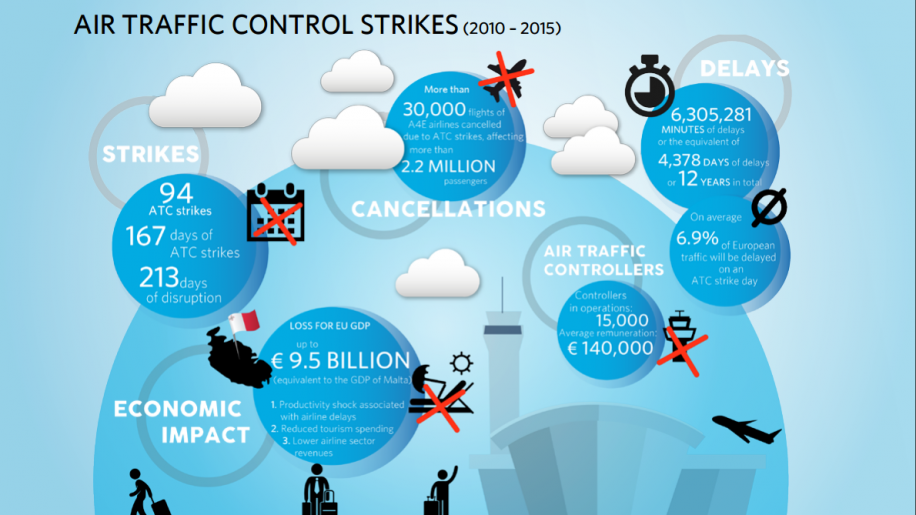
Thirdly the negative impact of ATC strikes. We look at the macro-economic impact [Air Traffic Control strikes cost up to €9.5 billion Union’s GDP associated with 131,000 jobs over the last six years according to PWC in research commissioned by A4E].
We are counting the minutes and hours, so there’s an impact for passengers, but we are looking at legal possibilities to force certain member states to force them to abide by the rules.
[A4E research has found that since 2010, Europe’s skies have been disrupted 213 days due to strikes from air traffic controllers (ATC) forcing A4E member airlines to cancel 30,000 flights across the continent, with more than 2 million passengers having flights cancelled, while others experienced delays of more than 6 million minutes directly affecting their travel plans.]
We are not against the right of strike, and clearly some of these issues have to be dealt with locally. But with our campaign against ATC strikes we hope to put some pressure on other stakeholders so we can all work together with pilots and crew to look at this.
So what would be a success for you on airport charges? Get rid of them, lower them?
We understand that airports need to charge for a service and that’s a fact of life. What we would like the regulators to look at more carefully is not so such the charges but the way they are being calculated which is not done in a transparent way. The way that airlines are consulted is sometimes a joke in some of the countries. We are brought in too late, we want to be consulted on the calculation process and if we could shed some light and improve the transparency and consultative process across airports that would be a big step ahead.
You could argue that some airports in Europe demonstrate anti-competitive behaviour, and in some countries there is a potential abuse of dominant positions.
The commission will be starting a consultation procedure on the airport charges directive, whether it needs to be reviewed in September, and we will be sitting with them to see what will happen there.
So you’d like more transparency?
To start with. That’s the first condition but it’s the whole framework of how they are being calculated, we need to be involved. And if we can’t have a commercial negotiation because they are in a dominant position, and there’s a quite a few of those out there in Europe, then we have to see if there is abuse of dominant position.
What about government charges on passengers though the APD taxes?
The Commission has limited powers. But it is benchmarking the taxes in Europe, not only airline taxes, so we are pushing it to make sure airline taxes are a focus for them. For APD we need to work locally so it’s a mix of things. We’ve listed the number of good examples -the Netherlands where they had to pay passenger tax, and when they lifted it, the passenger numbers went up. So clearly show the negative impact on the mobility of passenger traffic when taxes are introduced. So talk about jobs and growth. The impact of taxes for a government is s short term one. Ireland puts a tax on because they needed the money, but then they quickly lift it because in the long term they realise it’s bad for the economy. And then lobby together with the individual associations for local governments.
And what about the ATC strikes?
Well it;s a question of whether there need to be new regulations, or are the existing ones not being enforced. We have had some research done on that and it’s a bit of both. In some countries like France the rules are there but not properly enforced because of the pressure from local unions.
So what do you think you can do by lobbying in Brussels and elsewhere?
We have to show how the impact of ATC strikes can be minimised. Some countries have a minimum time period between announcing a strike and it taking place. We also hope that if there is a strike some countries will take over the traffic from the neighbouring country to minimise the effect. For that to happen, one country can give permission to do it and the other can then accept it, but they are not allowed to because of pressure from the unions. The toolbox is there, though.
What part can passengers play?
Well they have the physical experience, for instance of flying to Spain and it taking eight hours or the flights being cancelled. Consumers are a very important voice. If you experience it, you should tell your members states. The first complaints come to the airlines in those circumstances, but we can’t change these strikes alone – we need to work with all of the stakeholders, and they are one of them.
But you don’t do anything about when one of your member airline strikes?
No, but a passenger has the option of flying with someone else or use the train. We are not trying to stop strikes, we are trying to minimise their effect and work on those matters that all the members agree on.
If a company decides to go on strike, then it’s their decision and it’s up to the company and the union to find a solution, which might be easier since there are only two parties involved instead of the ATC where there are many parties involved.
What effect will Brexit have on all of this?
Well it depends whether Brexit means really leaving or something in-between. As far as the European Skies regulations are concerned, countries adopt the legislation so from one point of view the effect won’t be big, although if the UK adopts it obviously it can’t influence it. So from a regulation perspective and technical regulation and passenger rights I don’t think things will change. The customer experience may change if the UK is really out – border controls will be tougher, so travel will be less smooth than it is today. A\W
 airgways.com