AW | 2016 08 18 11:27 | INDUSTRY
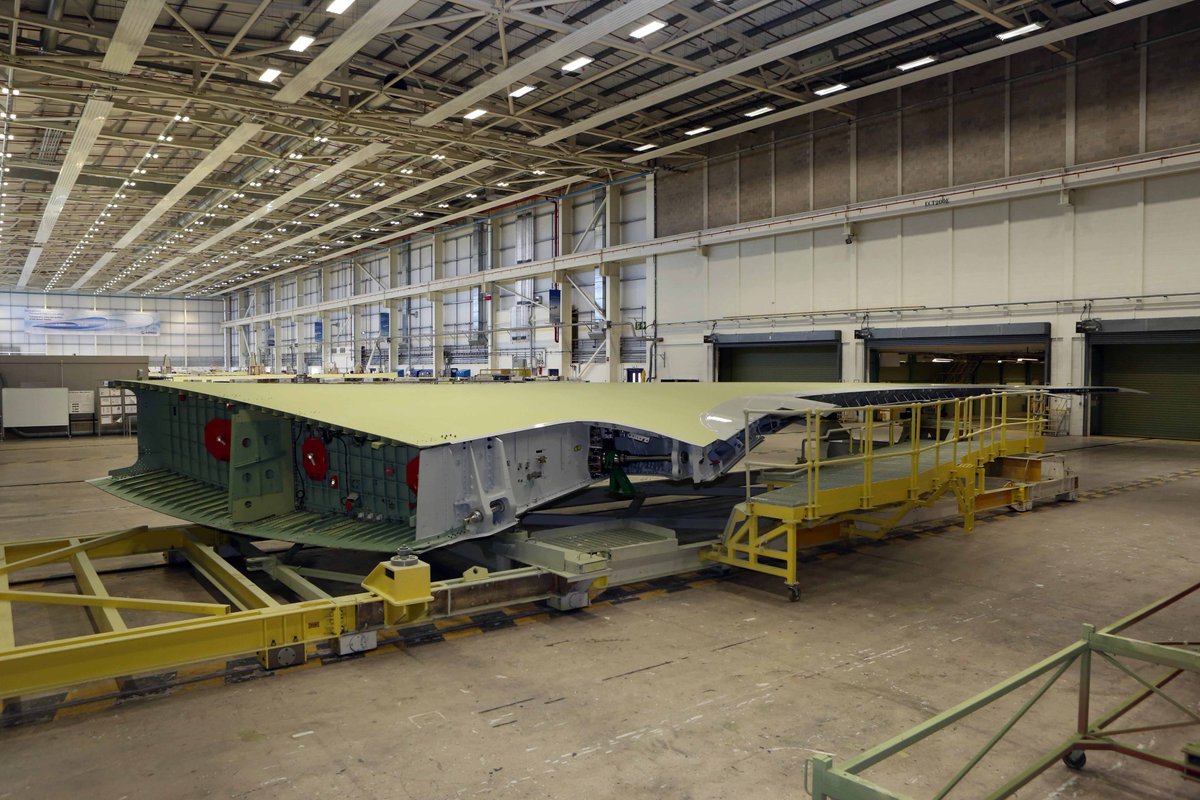
La primer ala para un Airbus A330neo comenzó anoche su viaje desde la factoría de Broughton de Airbus hasta la de Toulouse.
La factoría de Airbus en Broughton (Reino Unido) completó sus trabajos sobre la primera ala de un Airbus A330neo y fue cargada en uno de los Beluga de la compañía y trasladada a Toulouse.

El ala del A330neo es un nuevo diseño derivado del usado en las alas del A350, incluyendo unos nuevos winglets que añaden 3,7 metros de envergadura en total y cuyo extremo está a un metro sobre el plano del ala, comparado a los 1,6 metros de los winglets del A330. Además otras”modificaciones” del diseño para optimizarlo incluyen un nuevo slat número 1 (el que está entre el fuselaje y los motores), una nueva carena ala fuselaje superior y una torsión del ala también cambiada respecto al A330.
Del 14 por ciento menos que el A330neo consumirá por asiento comparado al A330 actual, un 4 por ciento se debe a la nueva ala y el otro 10 por ciento a los motores Rolls-Royce Trent 7000 mejorados.
La factoría de Airbus de Broughton cuenta con más de 6.000 empleados y fabrica más de 1.000 alas para todos los aviones de Airbus al año además de efectuar trabajos de ingeniería y apoyo postventa. 

Airbus A330neo, list the first wing
The first wing for Airbus A330neo last night began its journey from the Airbus factory in Broughton to Toulouse.
The Airbus factory in Broughton (UK) completed its work on the first wing of an Airbus A330neo and was charged in one of the Beluga of the company and moved to Toulouse.

The wing of the A330neo is a new design derived from that used in the wings of the A350, including a new winglets that add 3.7 meters wide in total and whose end is one meter above the plane of the wing, compared to 1.6 meters from the A330 winglets. In addition, other «modifications» to optimize design include a new slat No. 1 (which is between the fuselage and engines), a new wing fuselage fairing top and a twist of the wing also changed regarding the A330.
14 percent less than the A330neo consume per seat compared to the current A330, 4 percent to the new wing and the other 10 percent is due to the Rolls-Royce Trent 7000 engines improved.
The Airbus factory in Broughton has more than 6,000 employees and produces more than 1,000 wings for all Airbus aircraft per year in addition to performing engineering and after-sales support. A\W
 airgways.com