ABAV COLLAB BRASIL 2020

AW | 2020 08 28 11:56 | FAIR / CONGRESS / TOURISM

Abav Collab 2020 desarrolla eventos virtuales y presenciales

Abav Collab es el evento que Abav celebrará en lugar de su tradicional Abav Expo. La expectativa es reunir a más de 30 mil profesionales del turismo de todo Brasil entre el 27 de Septiembre y el 2 de Octubre 2020. El evento será híbrido con acciones presenciales y online y los participantes podrán visitar, de forma virtual, las estanterías de las empresas expositoras. Al interactuar en los estantes, el agente de viajes podrá descargar materiales en PDF, celebrar reuniones y ver videos y en vivo. Los visitantes también podrán participar en conferencias y paneles, además de networking.

ABAV Expo Internacional de Turismo es una feria de Brasil consolidada como uno de los más grandes e importantes eventos de negocios del calendario brasileño. Al reunir a toda la cadena turística, desempeña un papel importante como agente transformador del sector, acercando a las personas y proponiendo al mercado nacional una mirada contemporánea y nueva hacia la industria global de viajes y turismo.

ABAV COLLAB

SEPTEMBER 27 AND OCTOBER 2, 2020

Un evento realizado en un entorno inspirador que valora y estimula el crecimiento de cada segmento, empoderando al profesional con nuevas ideas, contactos, tecnologías, herramientas y oportunidades de negocios, anticipando tendencias y transformaciones del mercado, que se muestran cada vez más rápidas e impactantes.

El evento es realizado y organizado por la Asociación Brasileña de Agencias de Viajes (ABAV), entidad presente en 26 estados y en el Distrito Federal y está formada por 2,2 mil agencias de viajes, operadoras y consolidadoras que juntas abarcan el 80% de las vendas del mercado brasileño. Por sexto año consecutivo, ABAV cuenta con la valiosa alianza con la Asociación Brasileña de las Operadoras de Turismo (Braztoa) en la realización de su tradicional Encuentro Comercial en el ámbito de ABAV Expo, que tiene en la fuerza de esta representación su gran distintivo.

Idealizada para identificar y solucionar las diferentes demandas de la cadena productiva del turismo, en especial la de los agentes de viajes, que son el principal canal de distribución de viajes en Brasil, ABAV Expo contribuye de forma ética a una manera de pensar diferente y, con esta visión como un momento definitivo para que el turismo se fortalezca y se conecte con los nuevos desafíos mundiales.

Abav Collab es el concepto de congreso virtual que une a organizaciones y personas en torno a un objetivo común. Una fusión de acciones e ideas diseñadas para garantizar dinámicas y contenidos completos y potentes que marcarán la diferencia en la práctica de los profesionales involucrados. ABAV Collab convocará el próximo entre el 27 de Septiembre y el 2 de Octubre de 2020, como una cadena de reuniones virtuales para satisfacer las demandas del mercado turístico en una sola iniciativa.

ABAV COLLAB BRAZIL 2020

Abav Collab 2020 develops virtual and face-to-face events

Abav Collab is the event that Abav will hold in place of its traditional Abav Expo. The expectation is to bring together more than 30 thousand tourism professionals from all over Brazil between September 27 and October 2, 2020. The event will be a hybrid with face-to-face and online actions and participants will be able to visit, virtually, the shelves of the exhibiting companies. By interacting on the shelves, the travel agent will be able to download PDF materials, hold meetings, and watch videos and live. Visitors will also be able to participate in conferences and panels, as well as networking.

ABAV International Tourism Expo is a fair in Brazil consolidated as one of the largest and most important business events on the Brazilian calendar. By bringing together the entire tourist chain, it plays an important role as a transforming agent in the sector, bringing people closer together and proposing to the national market a contemporary and new look at the global travel and tourism industry.

An event held in an inspiring environment that values ​​and stimulates the growth of each segment, empowering the professional with new ideas, contacts, technologies, tools and business opportunities, anticipating trends and market transformations, which are increasingly rapid and impactful.

The event is held and organized by the Brazilian Association of Travel Agencies (ABAV), an entity present in 26 states and in the Federal District and is made up of 2,2 thousand travel agencies, operators and consolidators that together cover 80% of the sales of the Brazilian market. For the sixth consecutive year, ABAV has a valuable alliance with the Brazilian Association of Tourism Operators (Braztoa) in the realization of its traditional Commercial Meeting in the field of ABAV Expo, which has in the strength of this representation its great distinctive.

Idealized to identify and solve the different demands of the tourism production chain, especially that of travel agents, who are the main travel distribution channel in Brazil, ABAV Expo contributes ethically to a different way of thinking and, with this vision as a definitive moment for tourism to strengthen and connect with new global challenges.

Abav Collab is the concept of a virtual conference that unites organizations and people around a common goal. A fusion of actions and ideas designed to guarantee complete and powerful dynamics and content that will make a difference in the practice of the professionals involved. ABAV Collab will convene the next one between September 27 and October 2, 2020, as a chain of virtual meetings to meet the demands of the tourism market in a single initiative.

ABAV COLLAB BRASIL 2020

Abav Collab 2020 desenvolve eventos virtuais e presenciais

Abav Collab é o evento que a Abav realizará no lugar de sua tradicional Abav Expo. A expectativa é reunir mais de 30 mil profissionais do turismo de todo o Brasil entre os dias 27 de Setembro e 2 de Outubro de 2020. O evento será um híbrido com ações presenciais e online e os participantes poderão visitar, virtualmente, as prateleiras do empresas expositoras. Ao interagir nas prateleiras, o agente de viagens poderá baixar materiais em PDF, realizar reuniões, assistir a vídeos e ao vivo. Os visitantes também poderão participar de conferências e painéis, além de fazer networking.

ABAV International Tourism Expo é uma feira no Brasil que se consolida como um dos maiores e mais importantes eventos de negócios do calendário brasileiro. Ao reunir toda a cadeia turística, desempenha um importante papel como agente transformador do setor, aproximando as pessoas e propondo ao mercado nacional um olhar contemporâneo e inovador para a indústria global de viagens e turismo.

MARCAS NACIONAIS E INTERNACIONAIS CONFIRMAM PARTICIPAÇÃO NO ABAV COLLAB -  Guia do Turismo Brasil

Um evento realizado em um ambiente inspirador que valoriza e estimula o crescimento de cada segmento, capacitando o profissional com novas ideias, contatos, tecnologias, ferramentas e oportunidades de negócios, antecipando tendências e transformações de mercado, cada vez mais rápidas e impactantes.

O evento é realizado e organizado pela Associação Brasileira de Agências de Viagens (ABAV), entidade presente em 26 estados e no Distrito Federal e é formada por 2,2 mil agências de viagens, operadoras e consolidadoras que juntas cobrem 80% da as vendas do mercado brasileiro. Pelo sexto ano consecutivo, a ABAV mantém uma valiosa aliança com a Associação Brasileira dos Operadores de Turismo (Braztoa) na realização de seu tradicional Encontro Comercial no âmbito da ABAV Expo, que tem na força desta representação seu grande diferencial.

Idealizada para identificar e solucionar as diferentes demandas da cadeia produtiva do turismo, principalmente das agências de viagens, que são o principal canal de distribuição de viagens do Brasil, a ABAV Expo contribui de forma ética para um pensamento diferenciado e, com esta visão como um momento definitivo para o turismo se fortalecer e se conectar com os novos desafios globais.

Abav Collab é o conceito de uma conferência virtual que une organizações e pessoas em torno de um objetivo comum. Uma fusão de ações e ideias que visam garantir dinâmicas e conteúdos completos e potentes que farão a diferença na prática dos profissionais envolvidos. A ABAV Collab realizará o próximo entre os dias 27 de Setembro e 2 de Outubro de 2020, como uma rede de encontros virtuais para atender às demandas do mercado turístico em uma única iniciativa.

Ξ A I R G W A Y S Ξ
PUBLISHER: Airgways.com
DBk: Abavcollab.com.br / Airgways.com
AW-POST: 202008281156AR

A\W   A I R G W A Y S ®

United eliminaría 2.850 empleos

AW | 2020 08 28 10:50 | AIRLINES

United Airlines eliminaría 2.850 puestos de trabajo de pilotos

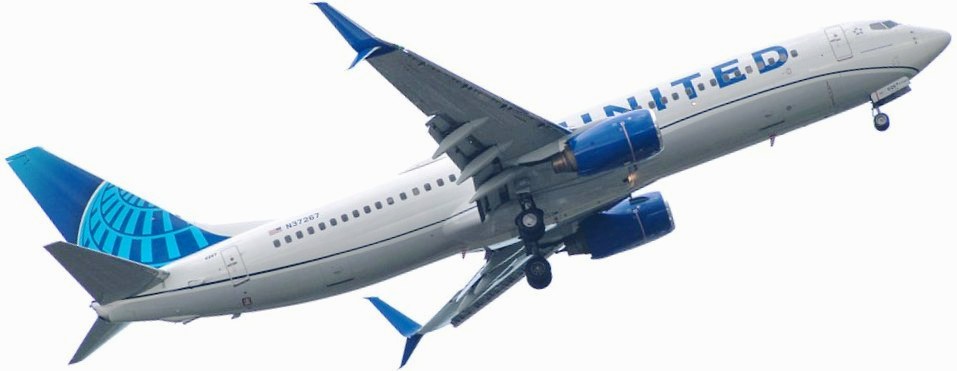
United Airlines ha comunicado el Jueves 27/08 que necesitará recortar 2.850 puestos de trabajo de pilotos entre el 1 Octubre y el 30 de Noviembre 2020 si el Gobierno no extiende un paquete de ayuda a las aerolíneas a cubrir la nómina de los empleados durante otros seis meses mientras capean la pandemia del Coronavirus. Los recortes de empleo, publicados en un memorando a los empleados y compartido con los medios, son significativamente más altos que los anunciados a principios de esta semana por sus rivales Delta Air Lines y American Airlines. “Es importante tener en cuenta que nuestras cifras se basan en la demanda de viajes actual para el resto del año y nuestro programa de vuelo anticipado, que sigue siendo fluido con el resurgimiento de COVID-19 en regiones de los Estados Unidos”, dijo United Airlines en el memorándum.

La aerolínea United Airlines está más expuesto que sus pares a los viajes internacionales, que se espera que tarde más en recuperarse de la pandemia. Las aerolíneas recibieron US$ 25 mil millones en fondos de estímulo del Gobierno de Estados Unidos en Marzo destinados a cubrir las nóminas y proteger los empleos hasta Septiembre 2020. A medida que el dinero se agota sin una recuperación de viajes a la vista, las aerolíneas y los sindicatos han presionado a Washington por otros US$ 25 mil millones, pero las conversaciones se han estancado mientras el Congreso ha luchado por llegar a un acuerdo sobre un paquete de asistencia para el Coronavirus más amplio. Según los términos del primer paquete, no pueden realizar recortes laborales involuntarios hasta el 1 Octubre 2020.

United would cut 2,850 jobs

United Airlines would cut 2,850 pilot jobs

United Airlines announced on Thursday, 08/27 that it will need to cut 2,850 pilot jobs between October 1 and November 30, 2020 if the Government does not extend a package to help airlines cover the payroll of employees for another six months as they weather the Coronavirus pandemic. The job cuts, published in a memo to employees and shared with the media, are significantly higher than those announced earlier this week by rivals Delta Air Lines and American Airlines. «It is important to note that our figures are based on current travel demand for the remainder of the year and our anticipated flight schedule, which remains fluid with the resurgence of COVID-19 in regions of the United States», said United Airlines in the memorandum.

United Airlines is more exposed than its peers to international travel, which is expected to take longer to recover from the pandemic. Airlines received US$ 25 billion in stimulus funding from the US government in March to cover payroll and protect jobs through September 2020. As money runs out with no travel recovery in sight, airlines and unions have lobbied Washington for another US$ 25 billion, but talks have stalled as Congress has struggled to agree on a broader Coronavirus assistance package. Under the terms of the first package, they cannot make involuntary job cuts until October 1, 2020.

Ξ A I R G W A Y S Ξ
PUBLISHER: Airgways.com
DBk: United.com / Airgways.com
AW-POST: 202008281050AR

A\W   A I R G W A Y S ®

American-GOL expanden codeshare

AW | 2020 08 28 10:08 | AIRLINES ALLIANCE

American y Gol ampliarán acuerdo código compartido

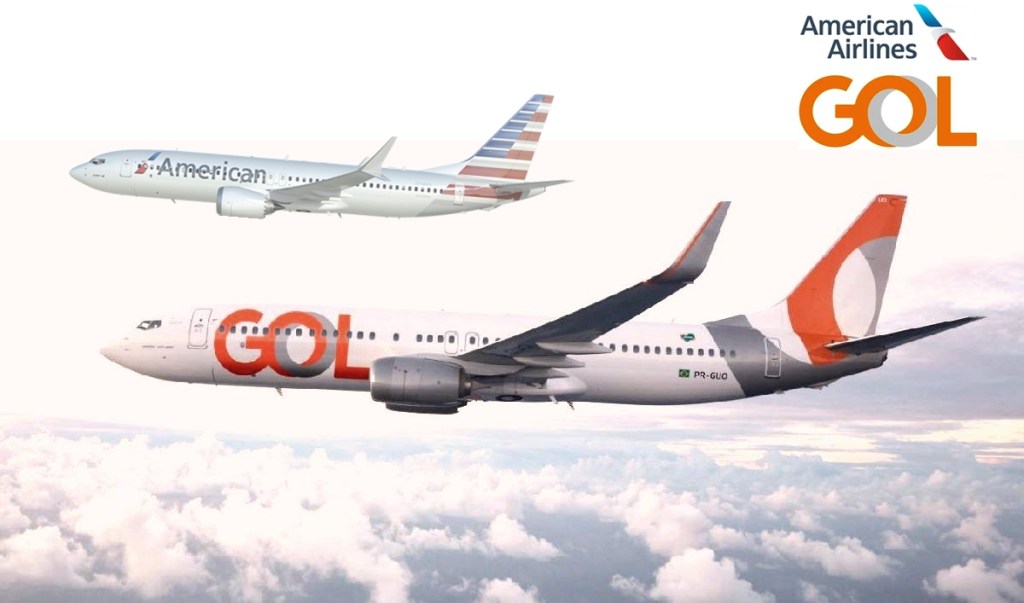
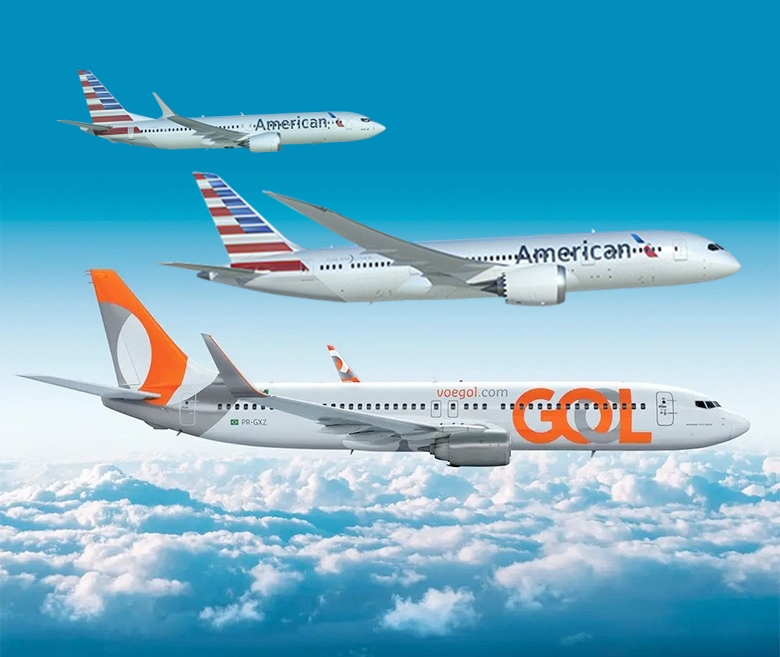
Gol Linhas Aéreas y American Airlines planean ampliar gradualmente el acuerdo de código compartido establecido inicialmente en febrero 2020, en rutas que involucren operaciones nacionales e internacionales de la compañía estadounidense.

Inicialmente el acuerdo de código compartido celebrado el 4 Febrero 2020 entre American Airlines y GOL Linhas Aéreas, que brinda a los clientes acceso a 20 nuevos destinos en América del Sur. American también aumentó el servicio desde Miami (MIA) a Río de Janeiro (GIG), agregando un segundo vuelo diario este invierno. La aerolínea brinda más oportunidades para traer clientes a América Latina a través de MIA al agregar 12 vuelos desde seis ciudades de Estados Unidos.

El nuevo acuerdo American-Gol esperan incrementar una serie de vuelos desde Dallas/Ft. Worth, Miami, Nueva York y Orlando obteniendo el código de vuelo G3 de Gol entre el 24 Octubre y el 27 Marzo de 2021entre los siguientes servicios: Dallas/Ft. Worth hacia Austin/Boston/Charlotte/Chicago O’Hare/Denver/Detroit/Honolulu/ Houston/Las Vegas/Miami/Newark/Nueva Orleans/Nueva York LaGuardia/Orlando/Filadelfia/ Phoenix/ Portland/ Raleigh-Durham /San Luis/Salt Lake City/San Diego/San Francisco/São Paulo/Seattle/ Tampa/Vail-Eagle (Colorado)/Washington Dulles/Ft. Valor /Washington Reagan. Desde Miami hacia Denver/Manaus/Río de Janeiro Galeão/St. Louis/San Diego/Seattle. Desde Nueva York-JFK hacia Austin/Charlotte/Chicago O’Hare/Phoenix/San Diego/Washington Reagan y desde Orlando hacia Phoenix.

La imagen tiene un atributo ALT vacío; su nombre de archivo es aw-american-gol_001.jpg

American-GOL expand codeshare

American and Gol to extend codeshare agreement

Gol Linhas Aéreas and American Airlines plan to gradually expand the codeshare agreement initially established in February 2020, on routes that involve national and international operations of the American company.

Initially the codeshare agreement signed on February 4, 2020 between American Airlines and GOL Linhas Aéreas, which provides customers with access to 20 new destinations in South America. American also increased service from Miami (MIA) to Rio de Janeiro (GIG), adding a second daily flight this winter. The airline provides more opportunities to bring customers to Latin America through MIA by adding 12 flights from six cities in the United States.

The new American-Gol agreement expects to increase a series of flights from Dallas / Ft. Worth, Miami, New York and Orlando by obtaining the Gol flight code G3 between October 24 and March 27, 2021 between the following services: Dallas / Ft. Worth to Austin / Boston / Charlotte / Chicago O’Hare / Denver / Detroit / Honolulu / Houston / Las Vegas / Miami / Newark / New Orleans / New York LaGuardia / Orlando / Philadelphia / Phoenix / Portland / Raleigh-Durham / St. Louis / Salt Lake City / San Diego / San Francisco / São Paulo / Seattle / Tampa / Vail-Eagle (Colorado) / Washington Dulles / Ft. Valor / Washington Reagan. From Miami to Denver / Manaus / Rio de Janeiro Galeão / St. Louis / San Diego / Seattle. From New York-JFK to Austin / Charlotte / Chicago O’Hare / Phoenix / San Diego / Washington Reagan and from Orlando to Phoenix.

American-GOL expandir codeshare

American e Gol estendem acordo de codeshare

A Gol Linhas Aéreas e a American Airlines planejam ampliar gradativamente o acordo de codeshare estabelecido inicialmente em fevereiro de 2020, em rotas que envolvam operações nacionais e internacionais da companhia americana.

Inicialmente o acordo de codeshare firmado em 4 de fevereiro de 2020 entre a American Airlines e a GOL Linhas Aéreas, que proporciona aos clientes acesso a 20 novos destinos na América do Sul. A American também aumentou o serviço de Miami (MIA) para o Rio de Janeiro (GIG), acrescentando um segundo voo diário neste inverno. A companhia aérea oferece mais oportunidades de trazer clientes para a América Latina por meio do MIA, adicionando 12 voos de seis cidades nos Estados Unidos.

O novo acordo American-Gol espera aumentar uma série de voos de Dallas / Ft. Worth, Miami, New York e Orlando através da obtenção do código de vôo Gol G3 entre 24 de outubro e 27 de março de 2021 entre os seguintes serviços: Dallas / Ft. Worth to Austin / Boston / Charlotte / Chicago O’Hare / Denver / Detroit / Honolulu / Houston / Las Vegas / Miami / Newark / New Orleans / New York LaGuardia / Orlando / Philadelphia / Phoenix / Portland / Raleigh-Durham / St. Louis / Salt Lake City / San Diego / São Francisco / São Paulo / Seattle / Tampa / Vail-Eagle (Colorado) / Washington Dulles / Ft. Valor / Washington Reagan. De Miami a Denver / Manaus / Rio de Janeiro Galeão / St. Louis / San Diego / Seattle. De New York-JFK a Austin / Charlotte / Chicago O’Hare / Phoenix / San Diego / Washington Reagan e de Orlando a Phoenix.

Ξ A I R G W A Y S Ξ
PUBLISHER: Airgways.com
DBk: Aa.com / Voegol.com.br / Airgways.com
AW-POST: 202008281008AR

A\W   A I R G W A Y S ®

Texel Air 1er 737-700 FlexCombi

Texel Air welcomes the world's first B737-700 FlexCombi from Pemco

AW | 2020 08 28 09:22 | AIRLINES / INDUSTRY / MRO

Aerolínea TexelAir toma entrega primer 737-700 FleCombi

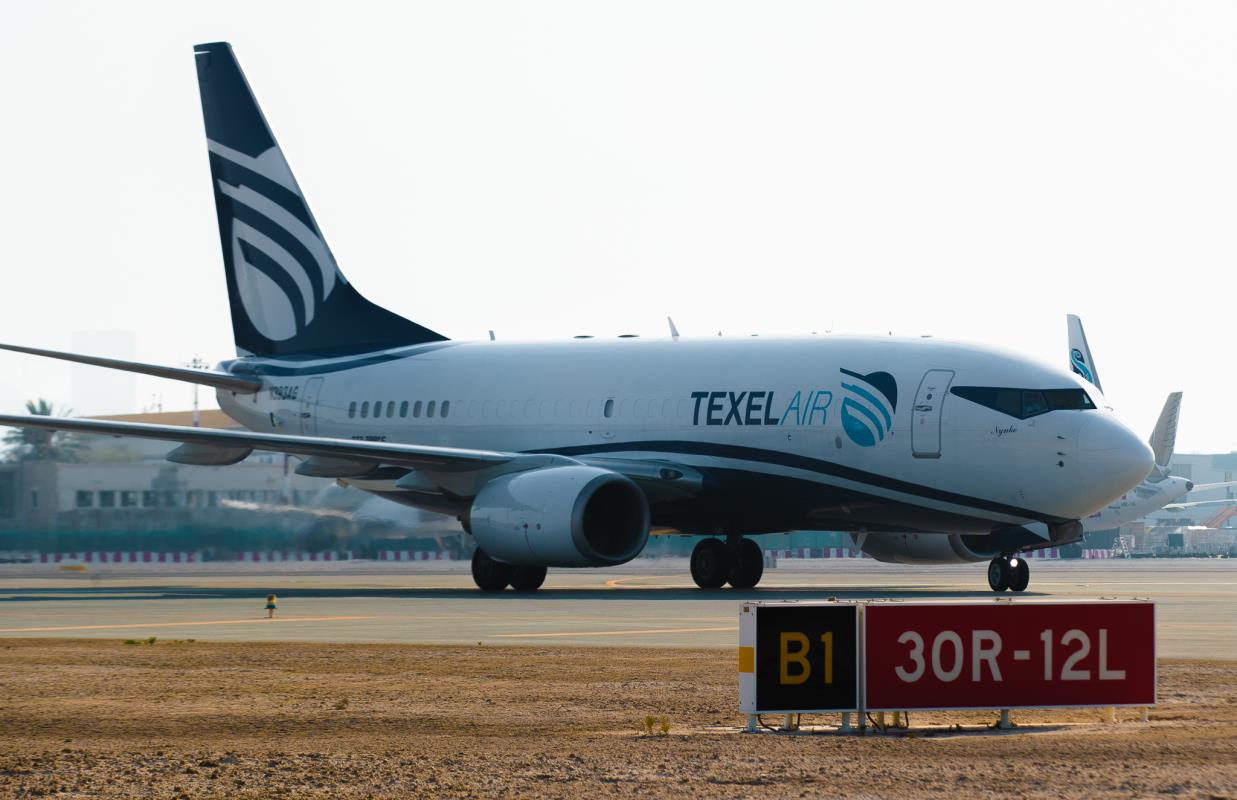
Pemco World Air Services (Pemco) ha transferido el primer Boeing 737-700NG FlexCombi (FC) a Texel Air. Pemco, el especialista en reconversiones de aeronaves del mundo ha mostrado el primero al Boeing 737-700NG FC con los colores del cliente de lanzamiento Texel Air en el Bahrain Air Show 2018. La orden de conversión fue otorgada por Chisholm Enterprises, con sede en Bahrein, para su despliegue con la subsidiaria de carga Texel Air, que se estableció en 2013. La compañía de carga comenzará a operar vuelos comerciales en el transcurso de 2020, además de dos variantes 737-300SF.

Tres configuraciones

En la versión Flex-Combi, opcionalmente puede transportar 24 pasajeros y hasta 13.600 kg de mercancía en seis paletas en el área de carga con un volumen de casi 75 metros cúbicos. Si se eligen doce pasajeros, el volumen de bodega aumentará a 85 metros cúbicos con un máximo de 15,8 toneladas de carga en siete paletas. Si todos los asientos permanecen fuera, ocho pallets pueden transportar hasta 18.000 kg de carga.

Pemco comenzó a convertir el primer 737-300 en 1991 y entregó el centésimo avión de este tipo en 2017. El Certificado de tipo suplementario de EE.UU. para el 737-700NG FC se emitió en Julio 2020. Pemco ahora también trabajará en un certificado adicional europeo y chino.

La empresa de conversión también tiene la intención de derivar una variante de carguero completa del 737-700. Ese avión podrá transportar hasta 20,5 toneladas de carga en nueve pallets. Además de Pemco, Israel Aerospace Industries (IAI) también se dedica a la conversión de Boeings del tipo 737-700 en aviones de carga. IAI entregó el primer avión de este tipo a Alaska Air Cargo. Se entregaron 1.128 Boeing 737-700 entre Marzo 1998 y Septiembre 2017.

Texel Air 1er 737-700 FlexCombi

Texel Air airline takes delivery of first 737-700 FleCombi

Pemco World Air Services (Pemco) has transferred the first Boeing 737-700NG FlexCombi (FC) to Texel Air. Pemco, the world’s aircraft retrofit specialist, has shown the first Boeing 737-700NG FC in the colors of launch customer Texel Air at the 2018 Bahrain Air Show. The conversion order was awarded by Bahrain-based Chisholm Enterprises, for deployment with the cargo subsidiary Texel Air, which was established in 2013. The cargo company will begin operating commercial flights in the course of 2020, in addition to two 737-300SF variants.

Three configurations

In the Flex-Combi version, it can optionally transport 24 passengers and up to 13,600 kg of goods on six pallets in the cargo area with a volume of almost 75 cubic meters. If twelve passengers are chosen, the hold volume will increase to 85 cubic meters with a maximum of 15.8 tons of cargo on seven pallets. If all the seats remain outside, eight pallets can carry up to 18,000 kg of cargo.

Pemco began converting the first 737-300 in 1991 and delivered the 100th aircraft of this type in 2017. The US Supplemental Type Certificate for the 737-700NG FC was issued in July 2020. Pemco will now also work on an additional European and Chinese certificate.

The conversion company also intends to derive a full freighter variant of the 737-700. This plane will be able to transport up to 20.5 tons of cargo on nine pallets. In addition to Pemco, Israel Aerospace Industries (IAI) is also engaged in the conversion of Boeings of the type 737-700 into cargo aircraft. IAI delivered the first aircraft of this type to Alaska Air Cargo. 1,128 Boeing 737-700 were delivered between March 1998 and September 2017.

Bahrain's aviation sector marks a milestone

Texel Air 1er 737-700 FlexCombi

TexelAir neemt de eerste 737-700 FleCombi in ontvangst

Pemco World Air Services (Pemco) heeft de eerste Boeing 737-700NG FlexCombi (FC) overgedragen aan Texel Air. Pemco, ‘s werelds specialist in vliegtuigrenovatie, heeft op de Bahrain Air Show 2018 de eerste Boeing 737-700NG FC in de kleuren van lanceerklant Texel Air getoond. De opdracht tot conversie werd toegekend door het in Bahrein gevestigde Chisholm Enterprises , voor inzet bij de in 2013 opgerichte vrachtdochter Texel Air. Naast twee varianten 737-300SF zal de vrachtmaatschappij in de loop van 2020 beginnen met commerciële vluchten.

Drie configuraties

In de Flex-Combi-versie kan hij optioneel 24 passagiers en tot 13.600 kg goederen vervoeren op zes pallets in de laadruimte met een inhoud van bijna 75 kubieke meter. Als er voor twaalf passagiers wordt gekozen, neemt het ruimvolume toe tot 85 kubieke meter met een maximum van 15,8 ton vracht op zeven pallets. Als alle stoelen buiten blijven, kunnen acht pallets tot 18.000 kg vracht vervoeren.

Pemco begon in 1991 met de ombouw van de eerste 737-300 en leverde in 2017 het 100ste vliegtuig van dit type af. Het US Supplemental Type Certificate voor de 737-700NG FC werd in Juli 2020 afgegeven. Pemco zal nu ook werken aan een aanvullend Europees en Chinees certificaat.

Het ombouwbedrijf is ook van plan om een ​​full freighter variant van de 737-700 af te leiden. Dit vliegtuig kan tot 20,5 ton vracht vervoeren op negen pallets. Naast Pemco houdt Israel Aerospace Industries (IAI) zich ook bezig met de ombouw van Boeings van het type 737-700 tot vrachtvliegtuigen. IAI heeft het eerste vliegtuig van dit type aan Alaska Air Cargo geleverd. Tussen Maart 1998 en September 2017 werden 1128 Boeing 737-700 geleverd.

Ξ A I R G W A Y S Ξ
PUBLISHER: Airgways.com
DBk: Texelair.com / Pilootenvliegtuig.nl / Airgways.com / Aircargonews.net
AW-POST: 202008280922AR

A\W   A I R G W A Y S ®

El Palomar, tendencia mundial

AW | 2020 08 28 00:40 | AIRPORTS / GOVERNMENT

Post-pandemia aeropuertos del mundo solicitan modalidad low cost

La incertidumbre e indefinición por el Aeropuerto Internacional El Palomar respecto al Gobierno de Argentina ha llevado a la población y a la arena política a expresarse respecto a la conservación de la modalidad low cost de la aeroestación bonaerense. Una tendencia post-pandemia se está desarrollande a través del mundo donde aeropuertos y aerolíneas buscan conjugarse para reactivar las economías del mundo de la aviación.

Pronunciamientos a favor

El Diputado Nacional de Argentina, Alberto Asseff (Juntos por el Cambio), ha advirtido que el primer aeropuerto low cost de Sudamérica «genera de forma directa e indirecta 10.000 puestos de trabajo, y que moderniza sus alrededores creando progreso y actividades económicas. Cuenta con prestaciones básicas que disminuyen los costos de operación para las aerolíneas y reduce los valores de las tasas de embarque. Es el primero que está conectado al tren ya que se encuentra a 300 metros de la estación Palomar de la línea San Martín”. Por estas razones, el presidente del Partido Unir pidió que el Aeropuerto El Palomar no sea cerrado, “pues se perderían miles de puestos de trabajo y se vería reducida la política aerocomercial y la conectividad del país”. De esta manera el Diputado ha repudiado los dichos del Ministro de Transporte de la Nación Mario Meoni que consideró que “tres aeropuertos en la megalópolis es mucho”. Para el diputado, en vez de proponer el cerrar del aeropuerto “deberían implementarse políticas que fomenten el trabajo, el turismo, la logística y las conexiones”.

El Intendente de la Ciudad de Morón, Lucas Ghi, ha considerado que “en la medida que el aeropuerto reúna todas las condiciones que los organismos acrediten, tiene que funcionar. En esta Argentina, que está atravesando un momento tan difícil, tomar una decisión de esta naturaleza, que impacte en varios cientos de trabajadores y trabajadoras no me parece que sea adecuado».

«Todas las grandes ciudades del mundo con un claro panorama de progreso y crecimiento presentan una estructura aeroportuaria adecuada, consolidada y preparada. Es lamentable que se esté pensando que el AMBA, y la Argentina en si, no necesiten de un armado idóneo para fomentar el transporte aéreo”, concluyó el Diputado Asseff. Acompañan el pedido José Riccardo, Estela Regidor, Lidia Inés Ascarate, Luis Pastori, Héctor Stefani, Pablo Torello, Jorge Vara, Lorena Matzen, Julio Sahad, Gustavo Menna, Omar De Marchi, Waldo Wolf, Roxana Reyes, Jorge Enríquez y Camila Crescimbrene.

Aeropuertos low cost, tendencia mundial

La actual pandemia de Coronavirus ha traido muchas y profundas transformaciones al sector de la aviación comercial a través del mundo. El fenómeno de los aeropuertos y terminales de bajo costo ha estado cobrando auge en muchos países como Argentina. Algunos informes desde 2007 expresan un fenómeno creciente. Muchas ideas nuevas parecen estar dirigidas hacia la mejor manera de manejar modelos híbridos, de bajo costo y de servicio completo dentro del mismo edificio de terminal, y la adaptación de la infraestructura es más típicamente la de un muelle en lugar de una terminal completa, pero continúan siendo consideradas una tendencia en aumento en varios países como la Federación Rusia. En el contexto de la actual crisis sanitaria mundial, el llamado de un alto ejecutivo de una aerolínea para que se construyan nuevos aeropuertos minimalistas en Rusia, donde la penetración de bajo costo sigue siendo moderada en el mejor de los casos, puede indicar que es hacia donde Aeroflot Russian Airlines ve el rumbo futuro, a medida que los viajes de negocios se ralentizan.

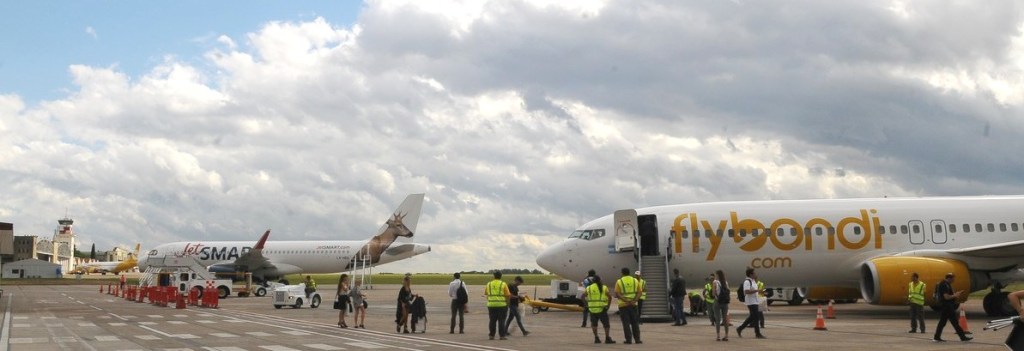
El Palomar Airport a world trend

Post-pandemic crisis, airports in the world request low cost modality

The uncertainty and lack of definition for the El Palomar International Airport with respect to the Government of Argentina has led the population and the political arena to express themselves regarding the conservation of the low cost modality of the Buenos Aires air station. A post-pandemic trend is developing throughout the world where airports and airlines seek to combine to reactivate the economies of the world of aviation.

Pronouncements in favor

The Argentine National Deputy, Alberto Asseff (Together for Change), has warned that the first low cost airport in South America «directly and indirectly generates 10,000 jobs, and that it modernizes its surroundings creating progress and economic activities. basic benefits that reduce operating costs for airlines and reduce the values ​​of boarding fees. It is the first that is connected to the train since it is located 300 meters from the Palomar station on the San Martín line”. For these reasons, the president of the Unir Party asked that the El Palomar Airport not be closed, “because thousands of jobs would be lost and the country’s air-trade policy and connectivity would be reduced”. In this way, the Deputy has repudiated the Minister’s words of Transportation of the Nation Mario Meoni who considered that “three airports in the megalopolis is a lot”. For the deputy, instead of proposing to close the airport “they should imp policies that promote work, tourism, logistics and connections should be implemented”.

The Mayor of the City of Morón, Lucas Ghi, has considered that “as long as the airport meets all the conditions that the agencies accredit, it has to function. In this Argentina, which is going through such a difficult time, making a decision of this nature that impacts several hundred workers does not seem to me to be appropriate».

«All the great cities of the world with a clear panorama of progress and growth present an adequate, consolidated and prepared airport structure. It is regrettable that it is being thought that the AMBA, and Argentina itself, do not need a suitable assembly to promote the air transport», concluded Deputy Asseff. The request is accompanied by José Riccardo, Estela Regidor, Lidia Inés Ascarate, Luis Pastori, Héctor Stefani, Pablo Torello, Jorge Vara, Lorena Matzen, Julio Sahad, Gustavo Menna, Omar De Marchi, Waldo Wolf, Roxana Reyes, Jorge Enríquez and Camila Crescimbrene.

Low cost airports, world trend

The current Coronavirus pandemic has brought many profound transformations to the commercial aviation sector throughout the world. The phenomenon of low-cost airports and terminals has been gaining ground in many countries such as Argentina. Some reports since 2007 express a growing phenomenon. Many new ideas seem to be directed towards the best way to handle hybrid, low-cost and full-service models within the same terminal building, and the infrastructure adaptation is more typically that of a pier rather than a complete terminal, but they continue to be considered an increasing trend in several countries such as the Russian Federation. In the context of the current global health crisis, a call from a senior airline executive for new minimalist airports to be built in Russia, where low-cost penetration remains moderate at best, may indicate that it is towards where Aeroflot Russian Airlines sees the future direction, as business travel slows down.

Ξ A I R G W A Y S Ξ
PUBLISHER: Airgways.com
DBk: Pro.com.ar / Airgways.com
AW-POST: 202008280040AR

A\W   A I R G W A Y S ®

Angkasa Pura II busca tráfico carga

AW | 2020 08 27 22:00 | AIRPORTS

Mayor operador aeroportuario de Indonesia busca transporte carga

Indonesia's largest airport terminal project confirmed to launch in 2021 -  The Moodie Davitt Report - The Moodie Davitt Report

El operador aeroportuario más grande de Indonesia, Angkasa Pura II, está avanzando con la construcción de una nueva instalación de manipulación de mercancías en Jakarta, capital de la República de Indonesia, apostando a que el movimiento de carga ayudará a una industria arruinada por la reducción de vuelos de pasajeros.

PT Angkasa Pura II predice que el tráfico de carga en el aeropuerto Soekarno-Hatta de Jakarta aumentará a 1 millón de toneladas al año desde las 600.000 toneladas actuales en los próximos tres años. Hace un llamado a terceros interesados ​​en invertir junto a él para que presenten propuestas en el cuarto trimestre. Se estima que la inversión total será de US$ 545 millones de Dólares, mostrando mucho interés en el proyecto, ha comunicado el Director Presidente Muhammad Awaluddin. El operador aéreo Garuda Indonesia Airlines también ayudará a desarrollar la instalación.

El depósito de manipulación de mercancías sigue adelante a pesar de que Angkasa Pura tiene la misión de ahorrar efectivo. La compañía planea reducir el gasto de capital hasta en un 90% este año. Con la demanda de pasajeros muy reducida por el coronavirus, las aerolíneas de todo el mundo dependen cada vez más de la carga para mantenerse a flote. Las tarifas de flete han aumentado a medida que la carga de vientre, o bienes que normalmente se habrían transportado en el vientre de los aviones de pasajeros, se retira del mercado. Los volúmenes de carga aérea en Indonesia fueron de casi 24.000 toneladas a finales de Julio 2020 frente a 6.620 toneladas a principios de Marzo 2020, según muestran los datos del Ministerio de Transporte de Indonesia. Angkasa Pura II también ha acumulado cierta liquidez para garantizar que pueda capear la caída en el tráfico de pasajeros del aeropuerto.

Angkasa Pura II opera 19 aeropuertos en Indonesia, incluido un nuevo centro en Medan, en el norte de Sumatra. La cantidad de personas que pasan por todas sus instalaciones a diario es de alrededor de 96.000 en la actualidad, frente a tan solo 1,000 a fines de Abril 2020, cuando gran parte de la nación del sudeste asiático estaba cerrada. Normalmente, la cifra ronda los 243.000.

Angkasa Pura II seeks cargo traffic

Indonesia’s largest airport operator seeks cargo transport

Indonesia’s largest airport operator Angkasa Pura II is moving forward with the construction of a new freight handling facility in Jakarta, capital of the Republic of Indonesia, betting that the movement of cargo will help an industry ruined by downsizing. of passenger flights.

PT Angkasa Pura II predicts that cargo traffic at Jakarta’s Soekarno-Hatta Airport will increase to 1 million tons per year from the current 600,000 tons in the next three years. He calls on third parties interested in investing with him to present proposals in the fourth quarter. It is estimated that the total investment will be US$ 545 million, showing a lot of interest in the project, has communicated the President Muhammad Awaluddin. Air operator Garuda Indonesia Airlines will also help develop the facility.

The freight handling warehouse continues despite Angkasa Pura’s mission to save cash. The company plans to reduce capital spending by up to 90% this year. With passenger demand greatly reduced by the coronavirus, airlines around the world are increasingly relying on cargo to stay afloat. Freight rates have increased as belly cargo, or goods that would normally have been carried in the belly of passenger jets, are withdrawn from the market. Air cargo volumes in Indonesia were almost 24,000 tonnes at the end of July 2020 compared to 6,620 tonnes at the beginning of March 2020, data from the Indonesian Ministry of Transport shows. Angkasa Pura II has also built up some liquidity to ensure it can weather the drop in passenger traffic at the airport.

Angkasa Pura II operates 19 airports in Indonesia, including a new hub in Medan, North Sumatra. The number of people passing through all its facilities on a daily basis is around 96,000 today, up from just 1,000 at the end of April 2020, when much of the Southeast Asian nation was closed. Typically the figure is around 243,000.

Jadi The Leading Indonesia's Airport Company, Ini Target PT Angkasa Pura II  Pada 2020 | Balinetizen

Angkasa Pura II mencari lalu lintas kargo

Operator bandara terbesar di Indonesia mencari transportasi kargo

Index | Angkasa Pura 2

Operator bandara terbesar di Indonesia, Angkasa Pura II, sedang bergerak maju dengan pembangunan fasilitas penanganan kargo baru di Jakarta, ibu kota Republik Indonesia, bertaruh bahwa pergerakan kargo akan membantu industri yang hancur karena perampingan. dari penerbangan penumpang.

PT Angkasa Pura II memprediksi lalu lintas kargo di Bandara Soekarno-Hatta Jakarta akan meningkat menjadi 1 juta ton per tahun dari saat ini 600.000 ton pada tiga tahun mendatang. Ia mengimbau pihak ketiga yang berminat berinvestasi dengannya untuk mempresentasikan proposal di kuartal keempat. Diperkirakan total investasi akan mencapai US$ 545 juta yang menunjukkan minat yang besar pada proyek tersebut, demikian disampaikan Presiden Muhammad Awaluddin. Operator penerbangan Garuda Indonesia Airlines juga akan membantu mengembangkan fasilitas tersebut.

Gudang penanganan kargo terus berlanjut meskipun Angkasa Pura memiliki misi untuk menghemat uang. Perusahaan berencana mengurangi belanja modal hingga 90% tahun ini. Dengan berkurangnya permintaan penumpang akibat virus corona, maskapai penerbangan di seluruh dunia semakin mengandalkan kargo untuk tetap bertahan. Tarif angkutan meningkat karena belly cargo, atau barang yang biasanya diangkut di dalam perut jet penumpang, ditarik dari pasar. Volume kargo udara di Indonesia hampir 24.000 ton pada akhir Juli 2020 dibandingkan dengan 6.620 ton pada awal Maret 2020, menurut data Kementerian Perhubungan Indonesia. Angkasa Pura II juga telah membangun beberapa likuiditas untuk memastikan dapat mengatasi penurunan lalu lintas penumpang di bandara.

Angkasa Pura II mengoperasikan 19 bandara di Indonesia, termasuk hub baru di Medan, Sumatera Utara. Jumlah orang yang melewati semua fasilitasnya setiap hari adalah sekitar 96.000 hari ini, naik dari hanya 1.000 pada akhir April 2020, ketika sebagian besar negara Asia Tenggara tutup. Biasanya angkanya sekitar 243.000.

Ξ A I R G W A Y S Ξ
PUBLISHER: Airgways.com
DBk: Angkasapura2.co.id / Airgways.com / Bloomberg.com
AW-POST: 202008272200AR

A\W   A I R G W A Y S ®
EASA evaluará el Boeing 737 MAX

AW | 2020 08 27 17:07 | AVIATION SAFETY

Europa iniciará vuelos de prueba del Boeing 737 MAX

Los reguladores de aviación Agencia de Seguridad Aérea de la Unión Europea (EASA) de la Unión Europea (UE) han establecido el programada de pruebas de vuelo para el avión Boeing 737 MAX. La agencia europea de fiscalización y seguridad ha comunicado que las pruebas se realizarían en Vancouver, Canadá, en la semana que comienza el 7 Septiembre 2020. EASA dijo que las pruebas de simulador se llevarán a cabo a partir del 1 Septiembre 2020 en el Aeropuerto London/Gatwick del Reino Unido.

El anuncio se produce dos meses después de que los reguladores estadounidenses de aviación de la Federal Aviation Administration (FAA) comenzaran vuelos de prueba iniciales para la recertificación de la aeronave bajo escrutinio internacional. Sin embargo, EASA ha mantenido que la autorización por parte de la FAA estadounidense no significará automáticamente una autorización para volar en el continente europeo.

La agencia EASA dijo que había estado «trabajando de manera constante, en estrecha cooperación con la FAA y Boeing, para devolver el avión Boeing 737 MAX al servicio lo antes posible, pero solo una vez que esté convencido de que es seguro». El proceso de programación de los vuelos de prueba se había visto obstaculizado por las restricciones de viaje de Covid-19 entre Europa y Estados Unidos. «Si bien Boeing aún tiene algunas acciones finales que cerrar, la EASA considera que la madurez general del proceso de rediseño es ahora suficiente para proceder a las pruebas de vuelo. Estos son un requisito previo para que la agencia europea apruebe el nuevo diseño del avión», expresó el organismo fiscalizador europeo.

Ajustes al 737 MAX

Mientras tanto, la FAA ha presentado una amplia lista de cambios que quiere que se hagan antes de que los aviones puedan volver a volar comercialmente entre las líneas aéreas. Estos incluyen actualizar el software de control de vuelo, revisar los procedimientos de la tripulación y redireccionar el cableado interno.

Los reguladores de aviación internacionales dejaron en tierra el Boeing 737 MAX luego de dos accidentes, un vuelo de Lion Air y un vuelo de Ethiopian Airlines, con cinco meses de diferencia. Los accidentes causaron la muerte de los 346 pasajeros y la tripulación de los vuelos. El Boeing 737 MAX ha sufrido las restricciones de vuelo después del segundo accidente aéreo el 10 Marzo 2019 cuando el vuelo ET-302 de Ethiopian Airlines se estrellara en ese país.

El fallo desencadenó una crisis financiera en la empresa de 103 años, provocando demandas de las familias de las víctimas y planteó preguntas sobre cómo The Boeing Company y la FAA llevaron a cabo su proceso de aprobación de seguridad. Los investigadores culparon a fallas en el Sistema de Control de Vuelo conocido como MCAS, que Boeing ha estado revisando durante meses para cumplir con las nuevas demandas de seguridad. Boeing espera que el 737 MAX vuelva a estar en el aire corriéndose ligeramente la agenda establecida últimamente para el 3Q2020 para principios del año 2021.

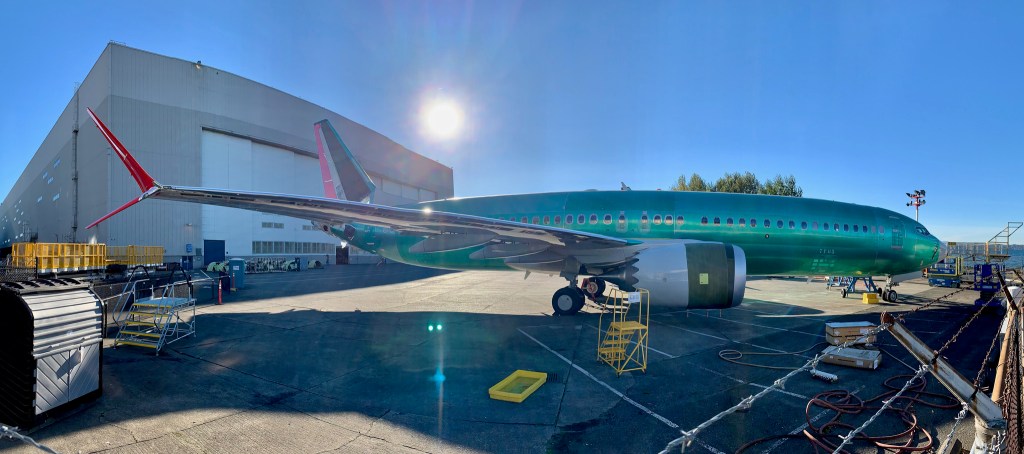
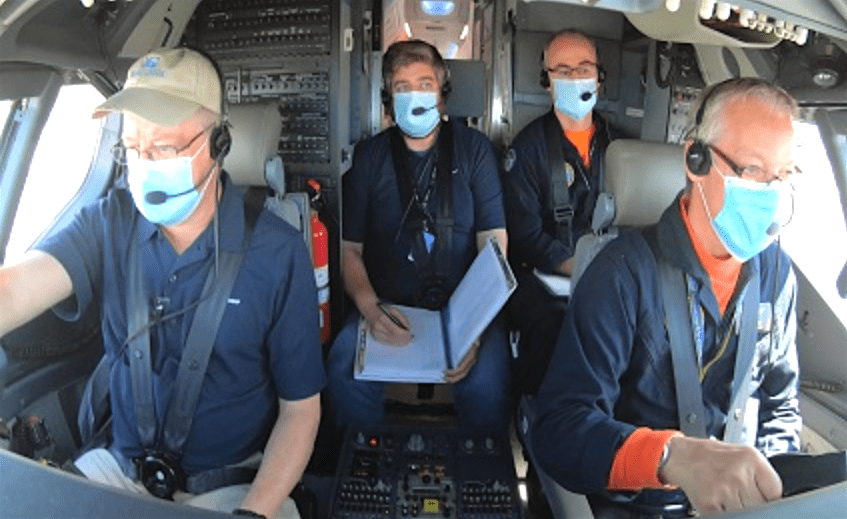
EASA will evaluate the Boeing 737 MAX

Europe to start Boeing 737 MAX test flights

The European Union (EU) Aviation Safety Agency (EASA) aviation regulators have established the scheduled flight tests for the Boeing 737 MAX aircraft. The European enforcement and security agency has announced that the tests would take place in Vancouver, Canada, in the week starting on 7 September 2020. EASA said that the simulator tests will take place starting on 1 September 2020 at London Airport/Gatwick of the United Kingdom.

The announcement comes two months after US aviation regulators from the Federal Aviation Administration (FAA) began initial test flights to recertify the aircraft under international scrutiny. However, EASA has maintained that clearance by the US FAA will not automatically mean clearance to fly on the European continent.

The EASA agency said it had been «working steadily, in close cooperation with the FAA and Boeing, to return the Boeing 737 MAX aircraft to service as soon as possible, but only after it is satisfied that it is safe». The process of scheduling the test flights had been hampered by Covid-19 travel restrictions between Europe and the United States. «While Boeing still has some final actions to close, EASA believes that the overall maturity of the redesign process is now sufficient to proceed with flight tests. These are a prerequisite for the European agency to approve the new aircraft design», expressed the European inspection body.

Settings to the 737 MAX

Meanwhile, the FAA has come up with an extensive list of changes that it wants made before the planes can return to flying commercially between airlines. These include updating flight control software, reviewing crew procedures, and rerouting internal wiring.

International aviation regulators grounded the Boeing 737 MAX after two accidents, a Lion Air flight and an Ethiopian Airlines flight, five months apart. The accidents caused the death of all 346 passengers and flight crews. The Boeing 737 MAX has suffered flight restrictions after the second plane crash on March 10, 2019 when Ethiopian Airlines flight ET-302 crashed in that country.

The ruling triggered a financial crisis at the 103-year-old company, prompting lawsuits from the victims’ families and raising questions about how The Boeing Company and the FAA conducted their safety approval process. Investigators blamed flaws in the Flight Control System known as MCAS, which Boeing has been reviewing for months to meet new safety demands. Boeing expects the 737 MAX to be in the air again, slightly moving the schedule recently established for 3Q2020 by early 2021.

Ξ A I R G W A Y S Ξ
PUBLISHER: Airgways.com
DBk: Easa.europa.eu / Boeing.com / Airgways.com
AW-POST: 202008271707AR

A\W   A I R G W A Y S ®

Perspectivas del Embraer E175-2

AW | 2020 08 27 16:37 | INDUSTRY

Desarrollo de la certificación del Embraer E175-E2

La compañía de aviación brasileña Embraer S.A. ha estado reestructurando sus unidades de la empresa después del fracaso de la asociación con Boeing en el campo de la aviación comercial, sumado a la parálisis de ventas a nivel mundial por la crisis sanitaria que ha afectado a la industria aeronáutica.

La compañía ha asumido el compromiso de rediseñar los proyectos comerciales contunuando de manera independiente. En cuanto al desarrollo del avión más pequeño de la nueva línea E-Jets el Embraer E175-E2, el programa continuará vigente, pero estirando los plazos del cronograma de entrada en servicio planificado desde estimaciones anteriores de finales de 2021 hasta principios de 2022, retrasando hasta el 2023. La compañía atribuye el deslizamiento a las perspectivas debilitadas para la aviación comercial causadas por la crisis sanitaria y las prohibiciones de volar.

El E175-E2 continúa sin órdenes, por lo que la cartera de pedidos continúa nula para la tercer variante del Programa E2, lo que sugiere un futuro incierto para el tipo de aeronave dada las características de mercado orientadas al nivel más bajo del sector regional, donde la aeronave no puede ingresar a las líneas aéreas regionales en Estados Unidos debido por la Cláusula de Alcance de contrato de Pilotos a razones de características de pesos, lo que limita sus perspectivas en el mercado de aviones regionales más grande del mundo. Igualmente, esas características solo se aplican en ese país y no en el resto del mundo.

Los ejecutivos de Embraer insisten en que entrará en servicio con un tiempo más que adecuado para satisfacer la demanda del mercado del jet regional. Mientras tanto, Embraer continuará produciendo y comercializando el E175-E1, un poco más pequeño, que cumple con las cláusulas de alcance de los pilotos de Estados Unidos. La compañía tenía 159 pedidos en firme para el E175-E1 al 30 de Junio 2020. El avión de 76 asientos y de dos clases se ha convertido en el avión regional preferido por las principales aerolíneas estadounidenses durante la pandemia. Los datos del fabricante muestran que el 90% de la flota combinada del tipo en el país ya ha vuelto al servicio activo, en comparación con solo el 61% de todas las aeronaves comerciales de fuselaje estrecho.

Embraer E175-2 perspective

Development of the Embraer E175-E2 certification

The Brazilian aviation company Embraer S.A. has been restructuring its units of the company after the failure of the partnership with Boeing in the field of commercial aviation, added to the paralysis of sales worldwide due to the health crisis that has affected the aeronautical industry.

The company is committed to redesigning commercial projects continuing independently. Regarding the development of the smallest aircraft in the new E-Jets line, the Embraer E175-E2, the program will continue in force, but stretching the terms of the planned entry into service schedule from previous estimates of late 2021 to early 2022, delaying until in 2023. The company attributes the slide to the weakened outlook for commercial aviation caused by the health crisis and flying bans.

The E175-E2 continues without orders, so the order book remains null for the third variant of the E2 Program, which suggests an uncertain future for the type of aircraft given the market characteristics oriented to the lowest level of the regional sector, where the aircraft cannot enter the regional airlines in the United States due to the Pilots Contract Scope Clause for reasons of weight characteristics, which limits its prospects in the world’s largest regional aircraft market. Likewise, these characteristics only apply in that country and not in the rest of the world.

Embraer executives insist that it will enter service with more than adequate time to meet the demand of the regional jet market.In the meantime, Embraer will continue to produce and market the slightly smaller E175-E1 that meets the scope clauses of US pilots. The company had 159 firm orders for the E175-E1 as of June 30, 2020. The 76-seat, two-class aircraft has become the regional aircraft of choice for major US airlines during the pandemic. The manufacturer’s data shows that 90% of the type’s combined fleet in the country has already returned to active service, compared with just 61% of all narrow-body commercial aircraft.

Entusiasta de Airgways, ayuda a valorar el artículo! El equipo de redacción está deseoso que nuestros lectores compartan su opinión al valorar cada información en Airgways.com. Agradecemos mucho su participación para continuar superándonos día a día, cada vez más.

Airgways enthusiast, help to rate the article! The writing team looks forward to hearing from our readers as they rate each piece of information on Airgways.com. We greatly appreciate your participation to continue to improve every day, more and more.

Puntuación: 1 de 5.

Ξ A I R G W A Y S Ξ
PUBLISHER: Airgways.com
DBk: Embraer.com / Aviationweek.com / Airgways.com
AW-POST: 202008271637AR

A\W   A I R G W A Y S ®
Cambios mercado aéreo en México

El transporte aéreo entre México y Estados Unidos | Instituto Mexicano del  Transporte | Gobierno | gob.mx

AW | 2020 08 27 12:43 | AIRLINES MARKET

Aerolíneas ganan mercado con reactivación del mercado aéreo

Tras la fuerte caída en los niveles de pasajeros aéreos durante Abril y Mayo 2020, las aerolíneas de México han comenzado a reabrir vuelos y aumentar frecuencias en un escenario de paulatina reactivación, en el que Volaris Airlines y Viva Aerobus han aumentado su participación de mercado tanto en la medición correspondiente a Julio 2020, como en el acumulado anual. Sin embargo, un mayor flujo de pasajeros no necesariamente se traduce en mayor rentabilidad de parte de las aerolíneas, por lo que la actual composición del mercado aún podría cambiar. «Manejar más pasajeros no necesariamente significa que haya una viabilidad financiera para la empresa, no hay que perder de vista eso. Las compañías ofrecen tarifas muy bajas, pero hay que mantener la actividad», afirmó Fernando Gómez Suárez, Analista del sector aéreo.

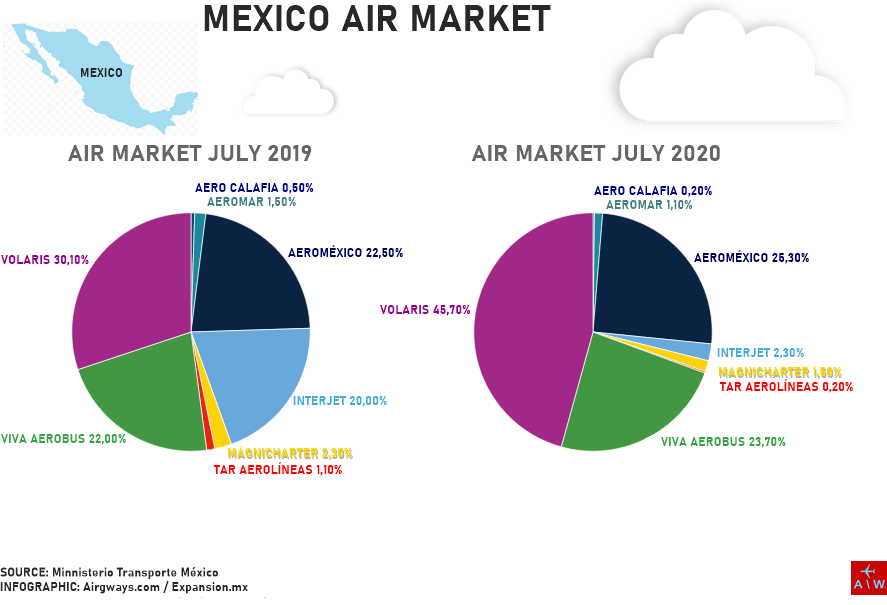
En Julio 2020, Volaris Airlines concentró 45,7%, 765.000 pasajeros, un incremento de 15,6 puntos respecto a 2019, mientras que Interjet Airlines pasó de tener una cuota de 20% a sólo 2%, además de dejar una importante brecha con su competidor más inmediato, Aeroméxico, que transportó poco más de 423.000 pasajeros en el mismo mes, con una cuota de mercado de 25,3%, que a pesar de representar un avance de 2.8 puntos porcentuales respecto a 2019, le deja en niveles similares a Viva Aerobus, que tuvo un flujo de más de 396.000 pasajeros, concentrando 23,7% del mercado aéreo.

Esta reconfiguración ha comenzado a verse en la distribución del mercado durante los primeros siete meses del 2020. Aunque Volaris y Aeroméxico se mantienen como los líderes del mercado, la primera ha ganado cuatro puntos porcentuales de cuota, concentrando 36% desde el índice de 32% en el mismo periodo de 2019. Parte de esta dinámica se adjudica a las tarifas que están ofreciendo Volaris y Viva Aerobus, considera Gómez Suárez, y que ha coincidido con una temporada vacacional que, pese a la pandemia, varias personas buscan aprovechar. “Además de los viajes de playa, la promoción de viajes familiares se ha hecho aprovechando la temporada, y si bien es un poco riesgosa aún en cuanto a la cuestión sanitaria, la gente ya está retomando sus actividades habituales. Mientras haya demanda, es válido aprovechar esta coyuntura”, explicó.

Interjet ha sido la compañía que más pasajeros ha perdido frente a sus competidores. Mientras que en julio de 2019 tenía 20% del mercado, en 2020 transportó poco más de 2%, lo que incidió en que su participación de enero a julio se redujera en cuatro puntos porcentuales situándose en 16%, con lo cual Viva Aerobus se posiciona como la tercera mayor aerolínea del segmento, con 21% del mercado. Respecto a Interjet, Gómez Suárez considera que el entorno es difícil dada una falta de confianza del consumidor por experiencias previas, refiriéndose a las jornadas de demoras y cancelaciones de vuelos que permanecieron en gran parte de 2019. «Va a tomarles mucho tiempo recuperar la confianza de sus clientes. Que logre captar la atención de nuevos clientes es otra cosa. Esto también conlleva que, con los nuevos accionistas y la recapitalización que tuvo, cambien la estrategia, y se avoquen a cumplir ofreciendo un buen servicio», dijo.

Mercado internacional

En el mercado internacional el cambio ha sido más significativo, con Volaris concentrando 56% del mercado, un repunte de 33.2 puntos porcentuales, aunque con poco más de 132.000 pasajeros de los más de 373.000 percibidos en 2019. Aeroméxico, líder del segmento con más de 47% de los pasajeros en julio del año pasado, redujo su cuota a 35%, mientras que Interjet ha sido el más afectado tras cuatro meses sin pasajeros internacionales. Para entender estos números, también hay que considerar la limitación en los viajes hacia Europa y Asia, un mercado que solo atiende Aeroméxico, como la única aerolínea mexicana que realiza vuelos de larga distancia.

Mercado aéreo en México |

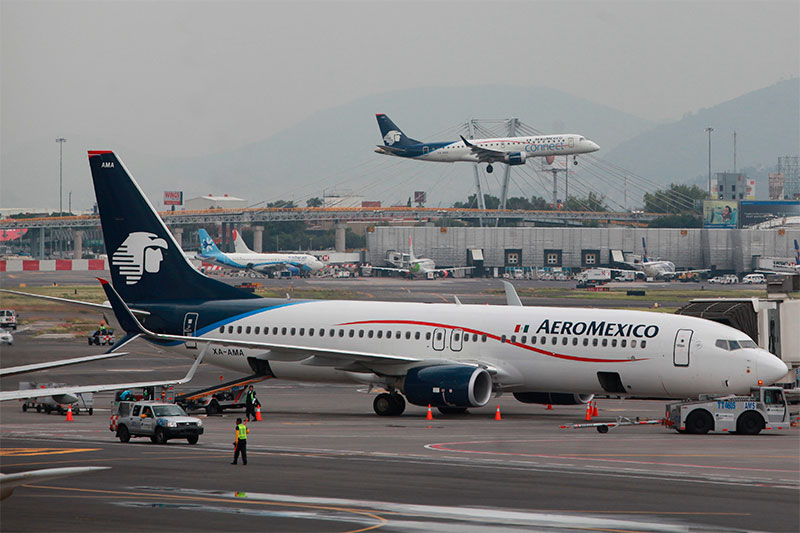
Changes in the air market in Mexico

Airlines gain market with the reactivation of the air market

After the sharp drop in air passenger levels during April and May 2020, Mexican airlines have begun to reopen flights and increase frequencies in a scenario of gradual reactivation, in which Volaris Airlines and Viva Aerobus have increased their market share both in the measurement corresponding to July 2020, as in the annual accumulated. However, a higher flow of passengers does not necessarily translate into higher profitability on the part of airlines, so the current composition of the market could still change. «Handling more passengers does not necessarily mean that there is financial viability for the company, we must not lose sight of that. The companies offer very low rates, but we must maintain activity«, said Fernando Gómez Suárez, Air Sector Analyst.

In July 2020, Volaris Airlines concentrated 45.7%, 765,000 passengers, an increase of 15.6 points compared to 2019, while Interjet Airlines went from having a share of 20% to only 2%, in addition to leaving a significant gap with its most immediate competitor, Aeroméxico, which transported just over 423,000 passengers in the same month, with a market share of 25.3%, which despite representing an advance of 2.8 percentage points compared to 2019, leaves it at similar levels to Viva Aerobus, which had a flow of more than 396,000 passengers, concentrating 23.7% of the air market.

La imagen tiene un atributo ALT vacío; su nombre de archivo es aw-airmarket_mexico_07-2019-2020.png

This reconfiguration has begun to be seen in the market distribution during the first seven months of 2020. Although Volaris and Aeroméxico remain the market leaders, the former has gained four percentage points of share, concentrating 36% from the 32% index. in the same period of 2019. Part of this dynamic is attributed to the rates that Volaris and Viva Aerobus are offering, Gómez Suárez considers, and which has coincided with a holiday season that, despite the pandemic, several people seek to take advantage of. “In addition to beach trips, the promotion of family trips has been done taking advantage of the season, and although it is still a bit risky in terms of health, people are already resuming their usual activities. As long as there is demand, it is valid to take advantage of this situation”, he explained.

Interjet has been the company that has lost the most passengers compared to its competitors. While in July 2019 it had 20% of the market, in 2020 it transported just over 2%, which had an impact on its share from January to July being reduced by four percentage points to 16%, with which Viva Aerobus is positioned as the third largest airline in the segment, with 21% of the market. Regarding Interjet, Gómez Suárez considers that the environment is difficult given a lack of consumer confidence due to previous experiences, referring to the days of delays and flight cancellations that remained for most of 2019. «It will take a long time for them to regain confidence. That it manages to attract the attention of new clients is another thing. This also means that, with the new shareholders and the recapitalization that it had, they change the strategy, and are committed to comply by offering a good service», he said.

International market

In the international market, the change has been more significant, with Volaris concentrating 56% of the market, an increase of 33.2 percentage points, although with just over 132,000 passengers out of the more than 373,000 received in 2019. Aeromexico, leader in the segment with more than 47% of passengers in July of last year, reduced their quota to 35%, while Interjet has been the most affected after four months without international passengers. To understand these numbers, we must also consider the limitation on travel to Europe and Asia, a market that only Aeroméxico serves, as the only Mexican airline that operates long-haul flights.

Ξ A I R G W A Y S Ξ
PUBLISHER: Airgways.com
DBk: Gob.mx/sct / Expansion.mx / Airgways.com
AW-POST: 202008271243AR

A\W   A I R G W A Y S ®

Huracán Laura a Categoría 1

Some flights at BTR Airport canceled ahead of Hurricane Laura

AW | 2020 08 27 11:37 | AVIATION SAFETY / AIR TRAFFIC

Huracán Laura disminuye a CAT1 sobre Louisiana y Texas

El Estado de Louisiana está experimenta las interrupciones más importantes por el paso del Huracán Laura que ha ingresado en Categoría 1 este Jueves 27/08. Laura se ha debilitado a Categoría 1, según reportes de última hora. Laura es ahora un huracán de categoría 1 con vientos de 136 km/h, según la actualización horaria del Centro Nacional de Huracanes. El centro de Laura se ha movido más de 160 kilómetros tierra adentro hacia el interior de Louisiana y continuará debilitándose hasta convertirse en una tormenta tropical más tarde este Jueves. Los vientos continúan soplando sobre la fuerza de un huracán en Louisiana, que continuará derribando árboles y líneas eléctricas. Casi medio millón están sin electricidad en Louisiana, con otros 125.000 clientes sin electricidad en Texas, y se esperan cortes de energía adicionales a medida que la tormenta avanza hacia Arkansas.

Laura decrece intensidad

El huracán Laura se debilitaba a Categoría 2 hace tres horas atrás con vientos de 117 kilómetros por hora, según el aviso anterior del Centro Nacional de Huracanes. Anteriormente el huracán estaba categorizado con Categoría 3, con vientos ahora de 120 mph (195 km/h), según aviso del Centro Nacional de Huracanes.

Tráfico aéreo

Los vuelos del Aeropuerto Metropolitano de Baton Rouge (BTR) y Dallas/Ft. Worth están en funcionamiento. Tanto las compañías aéreas AmericanAirlines y Delta Air Lines están operando vuelos con algunas cancelaciones. En tanto United Airlines canceló todos los vuelos de BTR hacia y desde su centro de Houston desde el 26/08 debido a la llegada del Huracán Laura.

Some flights at BTR Airport canceled ahead of Hurricane Laura

Hurricane Laura to Category 1

Hurricane Laura drops to CAT1 over Louisiana and Texas

The State of Louisiana is experiencing the most important interruptions due to the passage of Hurricane Laura, which has entered Category 1 this Thursday, 08/27. Laura has weakened to Category 1, according to breaking reports. Laura is now a Category 1 hurricane with winds of 136 km/h, according to the time update from the National Hurricane Center. The center of Laura has moved more than 100 miles inland into Louisiana and will continue to weaken into a tropical storm later this Thursday. The winds continue to blow over the force of a hurricane in Louisiana, which will continue to bring down trees and power lines. Nearly half a million are without power in Louisiana, with another 125,000 customers without power in Texas, and additional power outages are expected as the storm moves toward Arkansas.

Laura decreases intensity

Hurricane Laura was weakening to Category 2 three hours ago with winds of 117 kilometers per hour, according to the previous advisory from the National Hurricane Center. Previously the hurricane was categorized as Category 3, with winds now of 120 mph (195 km/h), according to a warning from the National Hurricane Center.

Air traffic

Flights from Baton Rouge Metropolitan Airport (BTR) and Dallas/Ft. Worth are up and running. Both the airlines AmericanAirlines and Delta Air Lines are operating flights with some cancellations. Meanwhile, United Airlines canceled all BTR flights to and from its Houston hub since 08/26 due to the arrival of Hurricane Laura.

Ξ A I R G W A Y S Ξ
PUBLISHER: Airgways.com
DBk: Nhc.noaa.gov / Cnn.com / Airgways.com / Wafb.com
AW-POST: 202008271137AR

A\W   A I R G W A Y S ®