Allegiant Air ordena 10 A320-200 usados

AW | 2021 08 04 17:50 | AIRLINES

Allegiant Air incorporará A320 adicionales a su flota

Allegiant_Air_Logo.svg

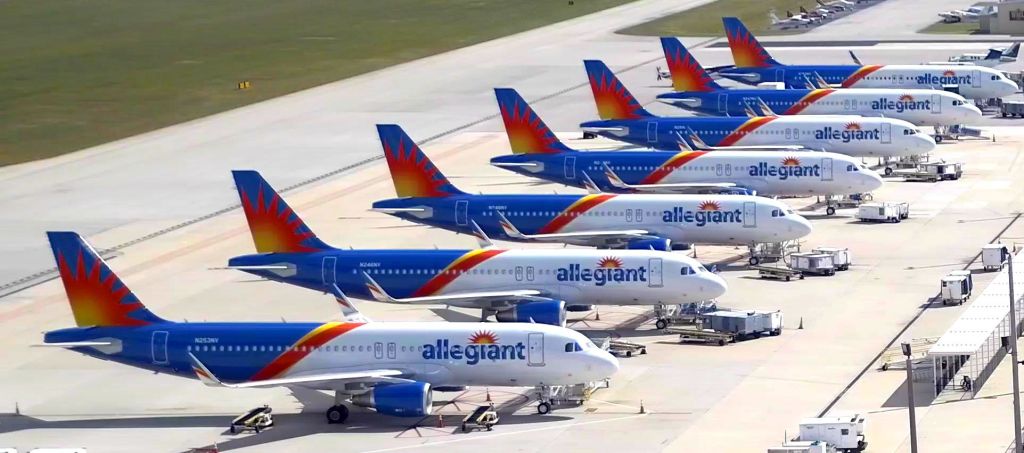
La aerolínea con sede en Las Vegas, Allegiant Air, ha firmado este 3 de Agosto de 2021 un compromiso con la Air Lease Corporation (ALC) para agregar diez A320-200 (10) de segunda mano. Las primeras aeronaves arribarán entre 3Q2021 y el 1Q2022.

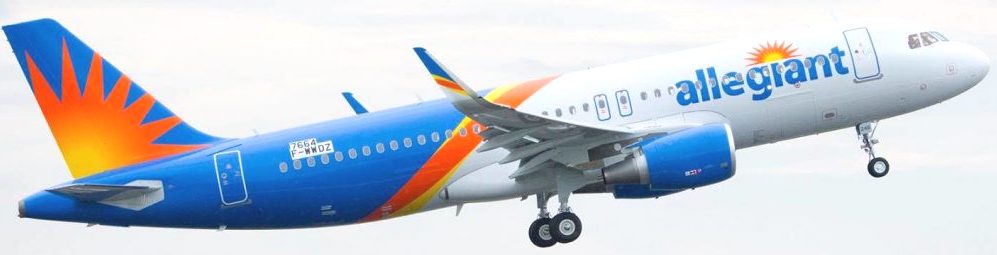
Allegiant Air como ALC no revelaron más detalles sobre el acuerdo en el contrato de arrendamiento. La aerolínea opera actualmente Airbus A319-100CEO (35) y A320-200CEO (79). Air Lease Corporation había anunciado la noticia de las colocaciones de arrendamiento a largo plazo para 10 Airbus A320-200 de segunda mano con el Allegiant Air de vuelta en 28/07. El Presidente Ejecutivo de Air Lease Corporation, Steven F. Udvar-Házy, había anunciado la noticia revelando que los jóvenes aviones A320 complementarán la flota de Airbus de Allegiant Air dando a la aerolínea una ventaja competitiva que respalda el crecimiento de sus operaciones en América del Norte.

El Vicepresidente sénior de Finanzas Corporativas y Tesorero de Allegiant, Robert Neal, también declaró cómo traer estos diez aviones proporcionaría numerosas ventajas al modelo de negocio y objetivo único de la compañía. También se espera que los aviones hermanos equipados con sharkets, además de aportar eficiencia a la flota de Airbus de la aerolínea, proporcionen años de utilización más allá de la esperanza de vida promedio de las aeronaves operadas anteriormente.

Plan de expansión

Hacia el segundo trimestre de 2021, Allegiant Air tenía un total de 103 aviones en servicio a finales de 06/2021, pero ha establecido aumentar el número de aeronaves en servicio a 108 para fines de 2021. Allegiant Air previó la oportunidad de su crecimiento en medio de la pandemia. Con una tasa de descuento de precio promedio del 30% en comparación con el rango de precios anterior a las pandemias, Allegiant Air se abalanzó sobre el gran número de aviones Airbus por su crecimiento estratégico. Sin embargo, Allegiant no es la única aerolínea que ha visto la oportunidad de crecimiento potencial en el mundo de la pandemia; muchas compañías aéreas consideraron que el escenario actual era un momento oportuno para poner en práctica la ambición estratégica. A medida que los precios de los aviones han ido muy por debajo del mercado anterior a la pandemia, muchas aerolíneas están aprovechando la situación actual para agregar nuevos aviones o reemplazar las variantes más antiguas con nuevas líneas de productos a un precio razonable.

Probablemente, con el montón de nuevas oportunidades de compra, las aerolíneas también han hecho retiros de aviones o devuelto los aviones fuera del arrendamiento antes que la variante de avión más antigua. Esto ha dejado al arrendador con más aviones usados de mediana vida con dificultades para encontrar un hogar para esos aviones. Ahí es donde Allegiant Air ha tomado posición persiguiendo precios atractivos de los arrendadores aéreos, lo que ha posiblitado abrir los cielos para la inversión estratégica de la aerolínea para su expansión.

Las aerolíneas de Las Vegas es muy popular para hacer inversiones oportunistas; de hecho, las aerolíneas dependen en gran medida de los aviones de segunda mano de mediana vida para su crecimiento. De toda su flota de 114 aviones, solo 13 de los A320 son de nueva construcción, mientras que los 101 restantes son la adición oportunista a la flota de la aerolínea del mercado de segunda mano.

En la actualidad, el movimiento de Allegiant Air en el A320-200 de segunda mano de la ALC se ha tomado como un componente valioso para su plan de crecimiento y flota para 2022 y más allá. Aunque no ha esbozado su número intencional de aviones adicionales para el año 2022, se espera que la aerolínea tenga una flota masiva de 127 aviones el próximo año, 19 más que el tamaño de la flota que alcanzará a finales de 2021.

Allegiant Air fue fundada en 1997, certificada por el Departamento de Transporte de los Estados Unidos (DOT) como aerolínea aérea regular, las aerolíneas de Las Vegas han hecho que los viajes de ocio sean asequibles y convenientes desde las ciudades estadounidenses a destinos de clase mundial. Con las tarifas bajas y los servicios de jet sin escalas, incluidas las ventajas de los principales socios de viajes, Allegiant Air tiene autoridad para operar operaciones de aerolíneas regulares y chárter en todo Estados Unidos, incluidos los servicios chárter a Canadá y México.

Allegiant Air orders 10 used A320-200s
Allegiant Air to add additional A320s to its fleet

Allegiant Air_Isologotype_Icon

The airline based in Las Vegas, Allegiant Air, has signed on August 3, 2021 a commitment with the Air Lease Corporation (ALC) to add ten second-hand A320-200s (10). The first aircraft will arrive between 3Q2021 and 1Q2022.

Allegiant Air and ALC did not disclose further details about the agreement in the lease. The airline currently operates Airbus A319-100CEO (35) and A320-200CEO (79). Air Lease Corporation had announced the news of long-term lease placements for 10 pre-owned Airbus A320-200s with the Allegiant Air back on 07/28. Air Lease Corporation Executive Chairman Steven F. Udvar-Házy announced the news revealing that the young A320 aircraft will complement Allegiant Air’s Airbus fleet by giving the airline a competitive advantage that supports the growth of its operations in the Americas. North.

Allegiant Senior Vice President of Corporate Finance and Treasurer Robert Neal also stated how bringing in these ten aircraft would provide numerous benefits to the company’s unique purpose and business model. Sister aircraft equipped with sharklets, in addition to bringing efficiencies to the airline’s Airbus fleet, are also expected to provide years of utilization beyond the average life expectancy of previously operated aircraft.

Expansion plan

As of the second quarter of 2021, Allegiant Air had a total of 103 aircraft in service at the end of 06/2021, but has set to increase the number of aircraft in service to 108 by the end of 2021. Allegiant Air foresaw the opportunity for its growth in middle of the pandemic. With an average price discount rate of 30% compared to the pre-pandemic price range, Allegiant Air pounced on the large number of Airbus jets for its strategic growth. However, Allegiant is not the only airline that has seen potential growth opportunity in the pandemic world; many airlines viewed the current scenario as an opportune time to implement strategic ambition. As aircraft prices have fallen well below the pre-pandemic market, many airlines are taking advantage of the current situation to add new aircraft or replace older variants with reasonably priced new product lines.
AW-Allegiant Air_A32020001

Probably, with the plethora of new buying opportunities, airlines have also made aircraft recalls or returned planes out of lease earlier than the older aircraft variant. This has left the lessor with more used mid-life planes with a hard time finding a home for those planes. This is where Allegiant Air has taken a position by pursuing attractive prices from air lessors, which has opened the skies for the airline’s strategic investment for its expansion.

Las Vegas Airlines is very popular for making opportunistic investments; in fact, airlines rely heavily on second-hand mid-life aircraft for their growth. Of its entire fleet of 114 aircraft, only 13 of the A320s are newly built, while the remaining 101 are the opportunistic addition to the airline’s second-hand market fleet.

At present, Allegiant Air’s movement in LAC’s pre-owned A320-200 has been taken as a valuable component of its fleet and growth plan for 2022 and beyond. Although it has not outlined its intentional number of additional aircraft by 2022, the airline is expected to have a massive fleet of 127 aircraft next year, 19 more than the fleet size it will reach by the end of 2021.

Allegiant Air was founded in 1997, certified by the United States Department of Transportation (DOT) as a regular airline, Las Vegas airlines have made leisure travel affordable and convenient from American cities to world-class destinations. With low fares and nonstop jet services, including benefits from major travel partners, Allegiant Air has the authority to operate scheduled and charter airline operations throughout the United States, including charter services to Canada and Mexico.

PUBLISHER: Airgways.com
DBk: Allegiantair.com / Airbus.com / Airwaysmag.com / Airgways.com
AW-POST: 202108041750AR

A\W   A I R G W A Y S ®

Global Crossing Airlines recibe AOC

AW | 2021 08 04 17:48 | AIRLINES / AVIATION ORGANISMS

Startup estadounidense iniciará operaciones

AW-GlobalX Airlines_Isologotype

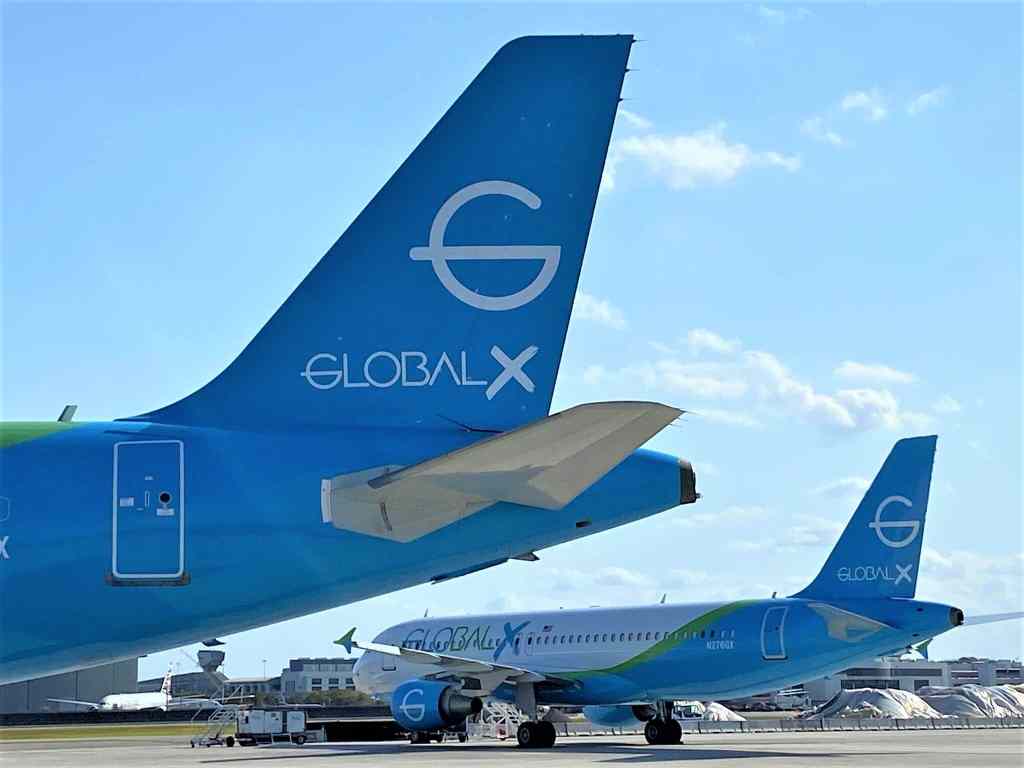
Global Crossing Airlines (GlobalX), ha anunciado próximo inicio de operaciones aerocomerciales en Estados Unidos, convirtiéndose en otra nueva startup americana post-pandemia. La nueva compañía aérea ha recibido su Certificado de Operador Aéreo (AOC) de la Administración Federal de Aviación (FAA).

Un comunicado de la línea aérea este 4 de Agosto de 2021 expresa la complacencia en anunciar que ha recibido su AOC que lo autoriza como una aerolínea comercial PART 121 y suplementaria. Las aerolíneas con autorizaciones FAR 121 Flag Operation para realizar operaciones aerocomerciales regulares de transporte aéreo de más de nueve pasajeros transportados. Seguidamente, continúa con las autorizaciones pendientes por parte del Departamento de Transporte de los Estados Unidos (DOT).

GlobalX se convertirá en la aerolínea más nueva de los Estados Unidos. GlobalX planea comenzar operaciones con aeronaves Airbus A320-200CEO (1) configurado para 180 pasajeros en una sola clase Economy y A321-200CEO (1) con 183 asientos configurado en tres clases. como parte del inicio de sus operaciones aéreas domésticas. Ambas aeronaves se encuentran bajo régimen de alquiler. El Airbus A320-200 es propiedad de la compañía de arrendamiento de aeronaves más grande de Oriente Medio, Dubai Aerospace Enterprise (DAE Capital). El Airbus A321-200 es propiedad de Magnetic Leasing, con sede en Tallin, Estonia, una subsidiaria de Guangzhou Hangxin Aviation Technology.

Base Operaciones

La nueva startup iniciará operaciones en dos hub, en el Aeropuerto Internacional de Miami (MIA) y el Aeropuerto Internacional de Atlantic City (ACY). GlobalX se ha focalizado en atraer clientes para los negocios de los casinos de Atlantic City y las operaciones desde Miami para recibir tráfico de las líneas de cruceros del sur de la Florida. Además, la aerolínea apunta a un mercado disponible para transportar personas a destinos importantes de cadenas hoteleras y resorts, grupos de incentivos y vuelos de logística. Adicionalmente, GlobalX Crossing Airlines ha señalado la intención de agregar dos aeronaves Airbus A320 hacia el 4Q2021.

Global Crossing Airlines receives AOC

American startup will start operations

Global Crossing Airlines (GlobalX), has announced the upcoming start of commercial air operations in the United States, becoming another new post-pandemic American startup. The new airline has received its Air Operator Certificate (AOC) from the Federal Aviation Administration (FAA).

A statement from the airline on August 4, 2021 expresses its pleasure in announcing that it has received its AOC that authorizes it as a PART 121 commercial airline and supplementary. Airlines with FAR 121 Flag Operation authorizations to carry out regular commercial air operations of more than nine passengers transported. Next, it continues with the pending autoirizations by the United States Department of Transportation (DOT).

GlobalX will become the newest airline in the United States. GlobalX plans to begin operations with Airbus A320-200CEO (1) aircraft configured for 180 passengers in a single Economy class and A321-200CEO (1) with 183 seats configured in three classes. as part of the start of its domestic air operations. Both aircraft are under lease. The Airbus A320-200 is owned by the largest aircraft leasing company in the Middle East, Dubai Aerospace Enterprise (DAE Capital). The Airbus A321-200 is owned by Tallinn, Estonia-based Magnetic Leasing, a subsidiary of Guangzhou Hangxin Aviation Technology.

Operations Base

The new startup will begin operations in two hubs, at Miami International Airport (MIA) and Atlantic City International Airport (ACY). GlobalX has focused on attracting customers for the Atlantic City casino businesses and operations from Miami to receive traffic from the South Florida cruise lines. In addition, the airline is targeting an available market to transport people to major destinations for hotel chains and resorts, incentive groups and logistics flights. Additionally, GlobalX Crossing Airlines has indicated the intention to add two Airbus A320 aircraft by 4Q2021.

PUBLISHER: Airgways.com
DBk: Globalairlinesgroup.com / Faa.gov / Airgways.com
AW-POST: 202108041748AR

A\W   A I R G W A Y S ®

Aerolíneas retorna rutas desde Rosario

AW | 2021 08 04 14:57 | AIRLINES ROUTES

Aerolíneas Argentinas aumentará rutas desde Aeropuerto Rosario

Aerolíneas_Isotype

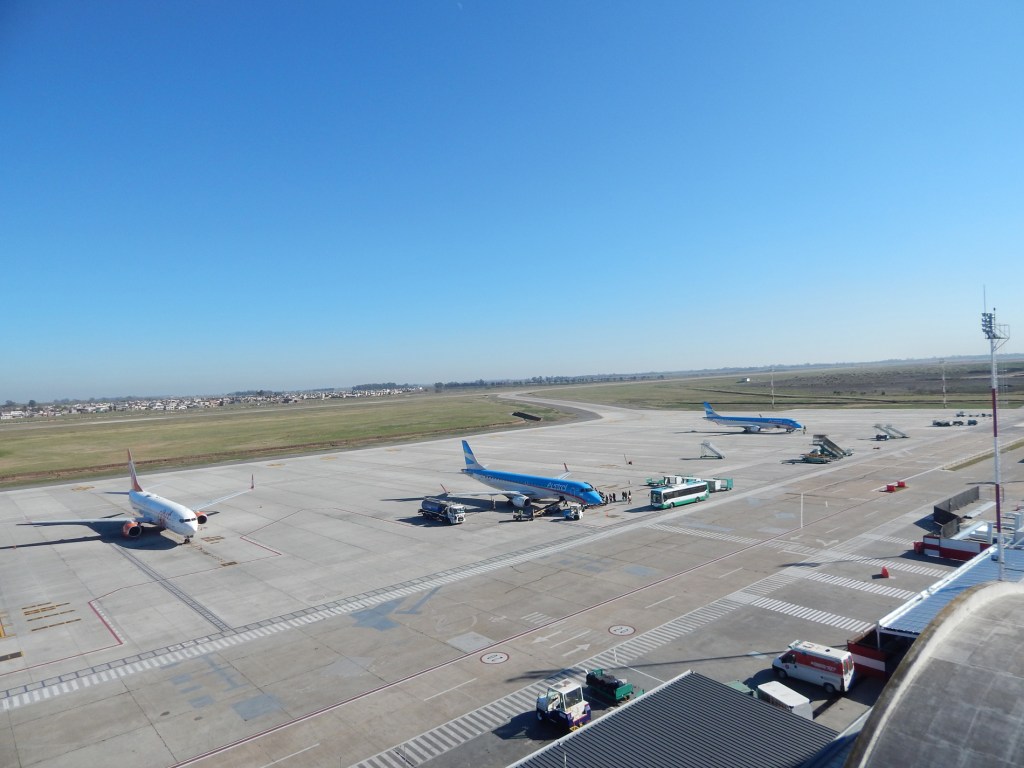
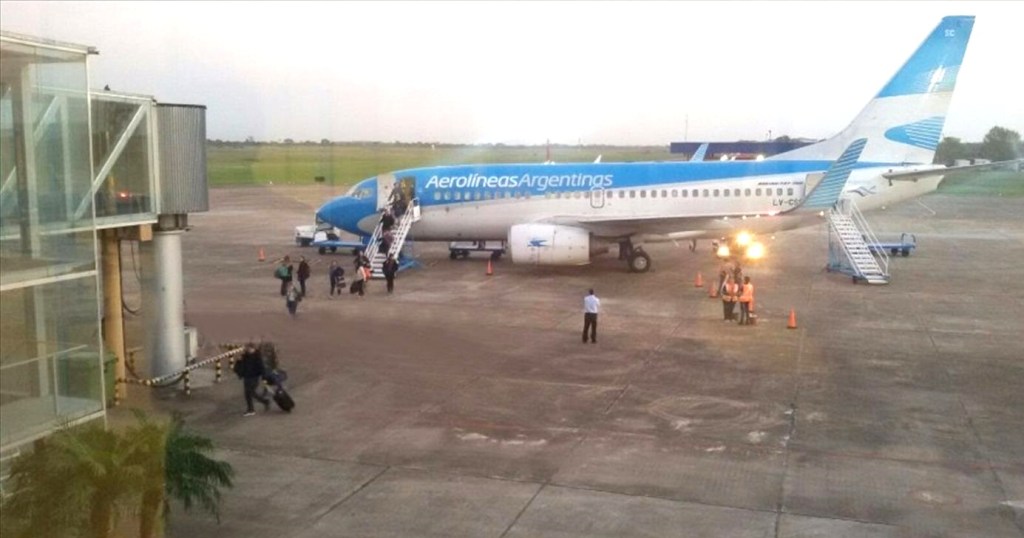
Aerolíneas Argentinas ha abierto la programación de venta de tickets aéreos desde el Aeropuerto Internacional Rosario hacia los destinos de Mendoza y Salta. Aunque el anuncio no ha sido oficial por parte de la aerolínea, desde Septiembre 2021 se establecerían estas dos conexiones hacia el interior del país. Las dos rutas desde Rosario—Mendoza los días Lunes y Viernes (2Frq/S) y Rosario—Salta los Miércoles y Sábado (2Frq/S). Los valores de los pasajes aéreos estarían en el orden de los AR$ 10.000 Pesos ida y vuelta.

Las rutas desde el Aeropuerto Rosario hacia la ciudad cuyana de Mendoza y la ciudad puntana de Salta estaban en la programación asignada previa a la pandemia; por lo que Aerolíneas Argentinas ha vuelto a reasignarlas en la post-pandemia. El el sitio web se encuentran disponibles los trayectos anunciados para poder acceder a las rutas sin pasar por Buenos Aires. Mientras tanto, desde el Aeropuerto Internacional Rosario/Islas Malvinas, aclararon que Aerolíneas no ha formalizado el anuncio, como así también acerca de las habilitaciones por parte de la Administración Nacional de Aviación Civil (ANAC) para autorizar los nuevos vuelos muy cercanos a la fecha para su respectivas aprobaciones.

Aerolíneas increases presence from Rosario

Aerolíneas Argentinas will increase routes from Rosario Airport

Aerolíneas Argentinas has opened the schedule for the sale of air tickets from Rosario International Airport to the destinations of Mendoza and Salta. Although the announcement has not been official by the airline, from September 2021 these two connections would be established to the interior of the country. The two routes from Rosario—Mendoza on Monday and Friday (2Frq/S) and Rosario—Salta on Wednesday and Saturday (2Frq/S). The values ​​of the air tickets would be in the order of AR$ 10,000 pesos round trip.

The routes from Rosario Airport to the Cuyo city of Mendoza and the San Luis city of Salta were on the schedule assigned prior to the pandemic; so Aerolíneas Argentinas has reassigned them in the post-pandemic. The advertised routes are available on the website to be able to access the routes without going through Buenos Aires. Meanwhile, from Rosario/Islas Malvinas International Airport, they clarified that Aerolíneas has not formalized the announcement, as well as about the authorizations by the National Civil Aviation Administration (ANAC) to authorize new flights very close to the date for their respective approvals.

PUBLISHER: Airgways.com
DBk: Aerolineas.com / Aeropuertorosario.com / Airgways.com
AW-POST: 202108041457AR

A\W   A I R G W A Y S ®

Nuevo ILS Aeropuerto Corrientes

AW | 2021 08 04 14:55 | AIRPORTS

Aeropuerto elevará Categoría II con nuevo sistema de aterrizaje

El Aeropuerto Corrientes de la República Argentina estará concluyendo en dos semanas el nuevo sistema de Aterrizaje por Instrumentos (ILS), junto con un progresivo aumento en la frecuencia de los vuelos. La modernización está acompañada por los aeropuertos de Resistencia, Provincia de Chaco y Posadas, Provincia de Misiones. La Empresa Argentina de Navegación Aérea (EANA) anunció la próxima finalización de los trabajos de instalación de un nuevo ILS en el Aeropuerto Corrientes/Fernando Piragine Niveyro.

Los trabajos se enmarcan en la modernización de la infraestructura tecnológica en todo el país, que tuvo innovaciones similares en Resistencia así como en Posadas. De este modo, el aeropuerto capitalino será elevado a la Categoría II, al igual que en las otras dos capitales de provincia. Los trabajos concluirán en aproximadamente dos semanas, según el responsable de la aeroestación correntina Martín Romero. “El 90% ya está listo, está faltando la conectividad para que el nuevo sistema de radioayuda reduzca el techo de nubes de 1.200 a 800 metros, y que el sistema de fuerza aérea con un avión verificador haga las pruebas pertinentes”, explicó Martín Romero.

El nuevo sistema ILS permitirá que las aeronaves puedan aproximarse a la pista de manera segura aún en condiciones de poca visibilidad, indicó la EANA. Además de las innovaciones en la infraestructura aérea, se espera un progresivo aumento de las frecuencias de vuelos baratos con destino a Buenos Aires durante este mes. Esta instalación, enmarcada en el Plan de Modernización del Transporte Aéreo, significa un avance tecnológico con el cual se ha buscado previsibilidad en la operación asegurando índices de disponibilidad mayores a los actuales, además de garantizar la continuidad del servicio, dado que su antecesor carecía de repuestos en el mercado. “El anterior funcionó por más 20 años, tenía conexión desde Paso de los Libres hasta el aeropuerto capitalino. El sistema de radioayuda estaba operativo 100%, pero necesitamos modernizar”, señaló Martín Romero.

Las inversiones realizadas en el Aeropuerto Corrientes alcanza una inversión de US$ 2 millones de Dólares, lo que permitirá elevar la categoría del aeropuerto. El nuevo ILS también incorpora un transmisor de señales DME gracias al que las tripulaciones pueden conocer con exactitud su distancia al aeropuerto. Un sistema ILS consiste en un conjunto de transmisores terrestres que emiten señales para guiar a las aeronaves en su descenso hacia la pista de aterrizaje, siendo de gran utilidad por su precisión y seguridad.

New ILS Corrientes Airport

Airport will raise Category II by incorporating new landing system

The Corrientes Airport of the Argentine Republic will be completing the new Instrument Landing system (ILS) in two weeks, together with a progressive increase in the frequency of flights. The modernization is accompanied by the airports of Resistencia, Province of Chaco and Posadas, Province of Misiones. The Argentine Air Navigation Company (EANA) announced the upcoming completion of the installation work for a new ILS at the Corrientes/Fernando Piragine Niveyro Airport.

The works are part of the modernization of the technological infrastructure throughout the country, which had similar innovations in Resistencia as well as in Posadas. In this way, the capital airport will be upgraded to Category II, as in the other two provincial capitals. The works will conclude in approximately two weeks, according to the person in charge of the Corrientes air station Martín Romero. «The 90% are already ready, connectivity is lacking so that the new radio aid system reduces the ceiling of clouds from 1,200 to 800 meters, and that the air force system with a verification plane does the pertinent tests», explained Martín Romero.

The new ILS system will allow aircraft to approach the runway safely even in poor visibility conditions, EANA said. In addition to the innovations in the air infrastructure, a progressive increase in the frequencies of cheap flights to Buenos Aires is expected during this month. This facility, framed in the Air Transport Modernization Plan, signifies a technological advance with which predictability has been sought in the operation, ensuring availability rates higher than the current ones, in addition to guaranteeing the continuity of the service, given that its predecessor lacked spare parts on the market. “The previous one worked for more than 20 years, it had a connection from Paso de los Libres to the capital airport. The radio aid system was 100% operational, but we need to modernize», said Martín Romero.

The investments made at the Corrientes Airport amount to an investment of US$ 2 million, which will allow the airport to be upgraded. The new ILS also incorporates a DME signal transmitter thanks to which crews can know exactly their distance to the airport. An ILS system consists of a set of ground transmitters that emit signals to guide the aircraft on their descent towards the runway, being very useful for their precision and safety.

PUBLISHER: Airgways.com
DBk: Eana.com.ar / Aa2000.com.ar / Airgways.com
AW-POST: 202108041455AR

A\W   A I R G W A Y S ®

GOL ordena 28 Boeing 737-8 MAX

AW | 2021 08 04 12:27 | AIRLINES / INDUSTRY

GOL encomienda 28 Boeing 737-8 MAX adicionales

AW-GOL_Boeing 737 MAX

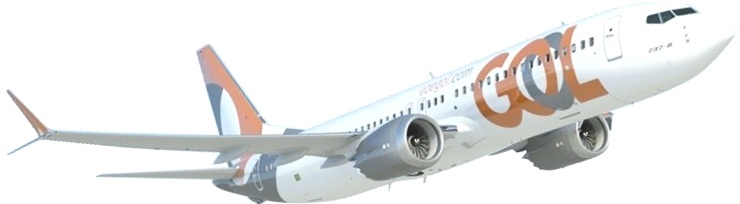
GOL Linhas Aéreas ha anunciado este Martes 03/08 recientemente un acuerdo para colocar un pedido por 28 aeronaves Boeing 737-8 MAX adicionales. Los nuevos 737-8 MAX se destinarán a reemplazar en parte a una flota de 23 Boeing 737-800 hacia finales de 2022. «Estamos acelerando nuestro plan de transformación de flotas en previsión de la fuerte recuperación de los viajes aéreos en el escenario post-pandemia. El 737 MAX posiciona a GOL para crecer aún más competitivamente con la expansión de las rutas a los destinos, al mismo tiempo que proporciona ganancias de eficiencia», dijo Paulo Kakinoff, CEO de GOL Linhas Aéreas.

GOL Linhas Aéreas se ha constituido como el mejor cliente en Sudamérica de la línea 737 MAX, contando con una flota actualizada de 127 aviones de la línea 737 en toda su flota. Actualmente, GOL opera 12 aviones de la serie MAX 8, con el objetivo de adquirir 28 aviones adicionales 737-8 MAX para finales de 2021 y 44 unidades volando para finales de 2022. Para entonces, el Boeing 737 MAX formará el 32% de la flota total dela aerolínea brasileña. La declaración de GOL que acompaña el acuerdo establecido, permitirá negociar los aviones Boeing 737-700 y 737-800 en arrendamientos a corto plazo, permitiendo obtener una flexibilidad sustancial en la gestión de su flota en general a medida que la demanda de viajes aéreos siga fluctuando.

El acuerdo para la adquisición de este nuevo pedido de 28 nuevos Boeing 737-8 MAX se financiarán a través de quince arrendamientos operativos directos, nueve ventas-arrendamientos (leasing) y cuatro arrendamientos financieros. La estrategia de GOL en el futuro es tener la mitad de su flota total en arrendamientos financieros y la parte restante en arrendamientos operativos. La aerolínea dice que esto maximizará la flexibilidad y le permitirá atender la capacidad en respuesta a los cambios en la demanda. «Estamos orgullosos de seguir apoyando a GOL, que tiene una flota 100% Boeing, a medida que amplía su libro de pedidos para el 737», dice Ricardo Cavero Jiménez, Vicepresidente de Ventas para América Latina y el Caribe de The Boeing Company. El constructor americano dice que el MAX puede volar desde ciudades brasileñas a destinos en todo el Caribe, México y Estados Unidos de un solo salto.

Perspectivas GOL

Para finales de 2025, la aerolínea planea tener 75 unidades en servicio comercial con Boeing 737-8 MAX (65) como así también la introducción de la variante de mayor tamaño el Boeing 737-10 MAX (10) hacia el 2022 con una configuración de 216 pasajeros. El CEO Paulo Kakinoff dice que el 737 MAX ofrece a la aerolínea nuevas oportunidades de red al tiempo que proporciona eficiencias de costos y es más amable con el medio ambiente que sus Boeing de la generación anterior. El MAX desempeñará un papel clave en el objetivo de GOL de neutralidad de carbono para 2050 ahorrando un consumo con respecto a la versión anterior 737 Next Generation de un 15% menos de combustible, generando un 16% menos de emisiones de carbono y es un 40% más silencioso. La flota de Boeing 737 MAX reducirán los costos unitarios generales de GOL Linhas Aéreas en un 8% hacia 2022.

«La familia 737 MAX ofrece reducciones significativas en el consumo de combustible, las emisiones de combustible, el carbono y los costos, en comparación con otros aviones de pasillo único, además de proporcionar un mayor uso y altas tasas de ocupación. Esto está en línea con el compromiso de GOL con la sostenibilidad, a través de la modernización continua de nuestra flota, con aviones más ecológicos y eficientes en términos de consumo de combustible», dice el Vicepresidente de Operaciones de GOL Linhas Aéreas, Celso Ferrer.

La reducción de costos operativos unitarios (CASK) continúa consolidándose en la compañía de presupuesto brasileña, esperando generar ganancias por valores a US$ 200 millones. «Desde su fundación, la creación de valor a largo plazo a través de la adquisición y financiación de aeronaves ha sido un componente clave del negocio de GOL», señala Richard Lark, Vicepresidente Ejecutivo, Director Financiero y Oficial de Relaciones con Inversionistas de la Compañía de GOL Linhas Aéreas.

GOL orders 28 Boeing 737-8 MAX

GOL orders an additional 28 Boeing 737-8 MAXs

GOL Linhas Aéreas recently announced this Tuesday 03/08 an agreement to place an order for an additional 28 Boeing 737-8 MAX aircraft. The new 737-8 MAXs will be used to partially replace a fleet of 23 Boeing 737-800s by the end of 2022. «We are accelerating our fleet transformation plan in anticipation of the strong recovery in air travel in the post-war scenario. pandemic. The 737 MAX positions GOL to grow even more competitive with the expansion of routes to destinations, while providing efficiency gains», said Paulo Kakinoff, CEO of GOL Linhas Aéreas.

GOL_737MAX

GOL Linhas Aéreas has become the best customer in South America for the 737 MAX line, with an updated fleet of 127 737 line aircraft in its entire fleet. Currently, GOL operates 12 MAX 8 series aircraft, with the goal of acquiring an additional 28 737-8 MAX aircraft by the end of 2021 and 44 units flying by the end of 2022. By then, the Boeing 737 MAX will make up 32% of the total fleet of the Brazilian airline. The GOL declaration that accompanies the established agreement will allow the Boeing 737-700 and 737-800 aircraft to be negotiated in short-term leases, allowing it to obtain substantial flexibility in the management of its fleet in general as the demand for air travel continues. fluctuating.

The agreement to acquire this new order for 28 new Boeing 737-8 MAXs will be financed through fifteen direct operating leases, nine sales-leases and four finance leases. GOL’s strategy in the future is to have half of its total fleet in finance leases and the remaining part in operating leases. The airline says this will maximize flexibility and allow it to cater to capacity in response to changes in demand. «We are proud to continue supporting GOL, which has a 100% Boeing fleet, as it expands its order book for the 737», says Ricardo Cavero Jiménez, Vice President of Sales for Latin America and the Caribbean for The Boeing Company. The American builder says the MAX can fly from Brazilian cities to destinations throughout the Caribbean, Mexico and the United States in a single hop.

GOL Perspectives

By the end of 2025, the airline plans to have 75 units in commercial service with the Boeing 737-8 MAX (65) as well as the introduction of the larger variant, the Boeing 737-10 MAX (10) by 2022 with a configuration of 216 passengers. CEO Paulo Kakinoff says the 737 MAX offers the airline new network opportunities while providing cost efficiencies and being more environmentally friendly than its previous-generation Boeing. The MAX will play a key role in the GOL goal of carbon neutrality by 2050 saving 15% less fuel consumption compared to the previous 737 Next Generation version, generating 16% less carbon emissions and it is 40 % more silence. The Boeing 737 MAX fleet will reduce GOL Linhas Aéreas’ overall unit costs by 8% by 2022.

«The 737 MAX family offers significant reductions in fuel consumption, fuel emissions, carbon and costs compared to other single-aisle aircraft, as well as providing higher usage and high occupancy rates. This is in line with GOL’s commitment to sustainability, through the continuous modernization of our fleet, with more ecological and efficient aircraft in terms of fuel consumption», says the Vice President of Operations of GOL Linhas Aéreas, Celso Ferrer.

The unit operating cost reduction (CASK) continues to consolidate in the Brazilian budget company, expecting to generate profits for values ​​of US$ 200 million. «Since its founding, creating long-term value through the acquisition and financing of aircraft has been a key component of GOL’s business», said Richard Lark, Executive Vice President, Chief Financial Officer and Investor Relations Officer of the Company. of GOL Linhas Aéreas.

GOL encomenda 28 Boeing 737-8 MAX

A GOL encomenda mais 28 Boeing 737-8 MAXs

A GOL Linhas Aéreas anunciou recentemente nesta Terça-feira 03/08 um acordo para fazer o pedido de mais 28 aeronaves Boeing 737-8 MAX. Os novos 737-8 MAXs serão usados ​​para substituir parcialmente uma frota de 23 Boeing 737-800 até o final de 2022. «Estamos acelerando nosso plano de transformação da frota em antecipação à forte recuperação das viagens aéreas no cenário do pós-guerra. pandemia. O 737 MAX posiciona a GOL para crescer ainda mais competitiva com a expansão das rotas aos destinos, ao mesmo tempo em que proporciona ganhos de eficiência», disse Paulo Kakinoff, CEO da GOL Linhas Aéreas.

A GOL Linhas Aéreas tornou-se o melhor cliente da linha 737 MAX da América do Sul, com uma frota atualizada de 127 aeronaves da linha 737 em toda a sua frota. Atualmente, a GOL opera 12 aeronaves da série MAX 8, com a meta de adquirir mais 28 aeronaves 737-8 MAX até o final de 2021 e 44 unidades voando até o final de 2022. Até lá, o Boeing 737 MAX representará 32% da frota total da companhia aérea brasileira. A declaração da GOL que acompanha o contrato firmado permitirá que as aeronaves Boeing 737-700 e 737-800 sejam negociadas em arrendamentos de curto prazo, permitindo-lhe obter grande flexibilidade na gestão de sua frota em geral conforme a demanda por viagens aéreas continua flutuando.

O contrato para adquirir este novo pedido de 28 novos Boeing 737-8 MAXs será financiado por meio de quinze arrendamentos operacionais diretos, nove arrendamentos-venda e quatro arrendamentos financeiros. A estratégia da GOL no futuro é ter metade de sua frota total em arrendamentos financeiros e o restante em arrendamentos operacionais. A companhia aérea diz que isso irá maximizar a flexibilidade e permitir que ela atenda à capacidade em resposta às mudanças na demanda. “Estamos orgulhosos de continuar apoiando a GOL, que tem uma frota 100% Boeing, ao expandir sua carteira de pedidos do 737”, disse Ricardo Cavero Jiménez, Vice-presidente de Vendas para a América Latina e Caribe da The Boeing Company. O construtor americano diz que o MAX pode voar de cidades brasileiras para destinos no Caribe, México e Estados Unidos em um único salto.

Perspectivas GOL

Até o final de 2025, a companhia aérea planeja ter 75 unidades em serviço comercial com o Boeing 737-8 MAX (65), bem como a introdução da variante maior, o Boeing 737-10 MAX (10) até 2022 com uma configuração de 216 passageiros. O CEO Paulo Kakinoff diz que o 737 MAX oferece às companhias aéreas novas oportunidades de rede, ao mesmo tempo em que oferece eficiência de custos e é mais ecologicamente correto do que a geração anterior do Boeing. El MAX desempeñará un papel clave en el objetivo de GOL de neutralidad de carbono para 2050 ahorrando un consumo con respecto a la versión anterior 737 Next Generation de un 15% menos de combustible, generando un 16% menos de emisiones de carbono y es un 40% mais silencioso. A frota do Boeing 737 MAX reduzirá os custos unitários gerais da GOL Linhas Aéreas em 8% até 2022.

“A família 737 MAX oferece reduções significativas no consumo de combustível, emissões de combustível, carbono e custos em comparação com outras aeronaves de corredor único, além de proporcionar maior utilização e altas taxas de ocupação. Isso está em linha com o compromisso da GOL com a sustentabilidade, por meio do contínuo modernização da nossa frota, com aeronaves mais ecológicas e eficientes em termos de consumo de combustível”, afirma o Vice-presidente de Operações da GOL Linhas Aéreas, Celso Ferrer.

A redução do custo operacional unitário (CASK) continua se consolidando no orçamento da empresa brasileira, com expectativa de geração de lucros em valores de US$ 200 milhões. “Desde sua fundação, a criação de valor de longo prazo por meio da aquisição e financiamento de aeronaves tem sido um componente fundamental dos negócios da GOL”, disse Richard Lark, Vice-Presidente Executivo, Diretor Financeiro e de Relações com Investidores da GOL Linhas Aéreas.

PUBLISHER: Airgways.com
DBk: Voegol.com.br / Boeing.com / Exame.com / Airgways.com
AW-POST: 202108041227AR

A\W   A I R G W A Y S ®
2020 peor año histórico aviación

AW | 2021 08 04 11:07 | AVIATION / AVIATION ORGANISMS

IATA confirma 2020 peor año industria aerocomercial

La International Air Transport Asociation (IATA), el organismo de aviación que nuclea a muchas aerolíneas a nivel mundial ha expresado que el 2020 ha representado el peor año en la historia de la aviación comercial mundial. “El 2020 fue el peor año registrado y que a todos nos gustaría olvidar. Pero el análisis de las estadísticas de rendimiento revela una asombrosa historia de perseverancia. En lo más profundo de la crisis en abril de 2020, el 66% de la flota de transporte aéreo comercial del mundo quedó en tierra cuando los gobiernos cerraron fronteras o impusieron cuarentenas estrictas. Desaparecieron un millón de puestos de trabajo. Y las pérdidas de la industria durante el año totalizaron 126.000 millones de dólares. Muchos gobiernos reconocieron las contribuciones críticas de la aviación y brindaron salvavidas financieros y otras formas de apoyo. Pero fueron las rápidas acciones de las aerolíneas y el compromiso de nuestra gente lo que hizo que la industria de las aerolíneas atravesara el año más difícil de su historia”, ha expresado Willie Walsh, Director General de IATA.

IATA_Logo.svg

Las compañías aéreas transportaron a través del mundo un total de 1.800 millones de pasajeros en servicios regulares, lo que representa una disminución del 60,2% con respecto al año 2019. De promedio, hubo una pérdida de US$ 71,7 Dólares por pasajero en 2020, correspondiente a pérdidas netas de US$ 126.400 millones de Dólares totales. La capacidad global de las aerolíneas se desplomó en un 56,7% ASK, siendo la capacidad internacional la más afectada con una reducción del 68,3%. El factor de carga de pasajeros en todo el sistema se redujo al 65,1% en 2020, en comparación con el 82,5% del año anterior 2019. La región de Oriente Medio sufrió la mayor proporción de pérdidas por tráfico de pasajeros con una caída del 71,5% en RPK en comparación con 2019, seguida de Europa (-69,7%) y la región de África (-68,5%). China se convirtió en el mercado interno más grande en 2020 por primera vez registrada, ya que los viajes aéreos se recuperaron más rápido en su mercado interno tras sus esfuerzos por controlar los rebrotes del Coronavirus.

Déficit pilotos

La escasez de pilotos comerciales es un problema con el que el sector de la aviación lleva años lidiando y, según un estudio de la consultora estratégica Oliver Wyman, para el año 2025 existirá un déficit en este grupo profesional de entre 34.000 y 50.000 personas. En una encuesta a los líderes de operaciones de vuelo de varias aerolíneas de todo el mundo hace dos años, el 62% ya consideraba la escasez de pilotos cualificados como un riesgo clave para el funcionamiento del sector, que se enfrenta ahora a una delicada situación de cara a su crecimiento futuro.

La escasez de pilotos es un problema que atañe a todas las regiones del planeta, mientras que algunas lo atraviesan un problema mayor. En Estados Unidos, por ejemplo, se encuentra en una delicada situación de desequilibrio entre la oferta y la demanda de pilotos debido en gran medida al envejecimiento, jubilaciones anticipadas y jubilaciones corrientes de un sector importante de ese sector de la aviación comercial. Otro factor es la entrada que supone el coste de la capacitación. De este modo, el país se enfrentará a un déficit de 12.000 pilotos en 2023, agrupando el 13% del total de la demanda sin cubrir de todo el mundo. En Asia-Pacífico, otra de las regiones castigadas por la escasez, hará frente a un déficit de 23.000 pilotos para finales de la década. En China, la escasez de pilotos se debe esencialmente al rápido aumento de la demanda de viajes aéreos impulsada por una creciente clase media, que sitúa al sector ante la obligación de una rapidísima ampliación de capacidades. En Oriente Medio se suma a las áreas con una escasez más acuciante, mientras que Europa, África y Latinoamérica mantienen un mayor equilibrio entre oferta y demanda.

El impacto de la crisis sanitaria mundial ha dado lugar a una disminución de la actividad social, económica y comercial generado por la pandemia con un descenso en picado del número de vuelos operados y, en consecuencia, de la demanda de pilotos comerciales. Aún así, a pesar de lasa nuevas variantes del virus que continúan en diferentes lugares del mundo, la aviación comercial continúa mostrando signos de recuperación, estimando una recomposición total del número de pasajeros hacia el 2022 al 2024, mientras que la demanda de pilotos vendrá marcada por la activación de aeronaves en el mercado, que ha recuperado el 76% de los niveles previos al Covid-19, alcanzando el 99% en China.

La actual crisis sanitaria mundial ha provocado que muchas aerolíneas tengan dificultades respecto a los programas de formación de nuevos pilotos, mientras que atraviesan dificultades financieras que intentan restructurar para sobrevivir. Se estima que muchos de los pilotos despedidos durante la pandemia estarían retornando a sus puestos; entre 25.000 y 35.000 pilotos actuales y futuros podrían quedar afuera por retiros u otros motivos. Pero la velocidad con la que las aerolíneas puedan recuperar sus operaciones dependerá de la agilidad con la que consigan recuperar y consolidar sus filas de pilotos.

2020 worst historical year commercial aviation

IATA confirms 2020 worst year for the commercial airline industry

The International Air Transport Asociation (IATA), the aviation body that brings together many airlines worldwide has stated that 2020 has represented the worst year in the history of global commercial aviation. “2020 was the worst year on record and one that we would all like to forget. But analysis of the performance statistics reveals an astonishing story of perseverance. In the depths of the crisis in April 2020, 66% of the world’s commercial air transport fleet was grounded when governments closed borders or imposed strict quarantines. One million jobs disappeared. And the industry’s losses for the year totaled US$ 126 billion. Many governments recognized the critical contributions of aviation and provided financial lifesavers and other forms of support. But it was the swift actions of the airlines and the commitment of our people that put the airline industry through the most difficult year in its history”, said Willie Walsh, IATA Director General.

Air companies transported a total of 1.8 billion passengers in scheduled services throughout the world, representing a decrease of 60.2% compared to 2019. On average, there was a loss of US$ 71.7 Dollars per passenger in 2020, corresponding to net losses of US$ 126,400 million in total dollars. The global capacity of the airlines collapsed by 56.7% ASK, with international capacity being the most affected with a reduction of 68.3%. The system-wide passenger load factor decreased to 65.1% in 2020, compared to 82.5% in the prior year 2019. The Middle East region suffered the highest proportion of passenger traffic losses with a 71.5% drop in RPK compared to 2019, followed by Europe (-69.7%) and the Africa region (-68.5%). China became the largest domestic market in 2020 for the first time on record, as air travel recovered faster in its domestic market following its efforts to control Coronavirus outbreaks.

Pilot deficit

IATA-Headquarters _001

The shortage of commercial pilots is a problem that the aviation sector has been dealing with for years and, according to a study by the strategic consultancy Oliver Wyman, by 2025 there will be a deficit in this professional group of between 34,000 and 50,000 people. In a survey of flight operations leaders of various airlines around the world two years ago, 62% already considered the shortage of qualified pilots as a key risk for the operation of the sector, which now faces a delicate situation of face to its future growth.

The shortage of pilots is a problem that affects all regions of the planet, while some face a bigger problem. In the United States, for example, it is in a delicate situation of imbalance between the supply and demand of pilots largely due to the aging, early retirement and current retirements of an important sector of that sector of commercial aviation. Another factor is the input cost of the training. Thus, the country will face a deficit of 12,000 pilots in 2023, accounting for 13% of the total unmet demand from around the world. In Asia-Pacific, another region hit by shortages, it will face a shortfall of 23,000 pilots by the end of the decade. In China, the shortage of pilots is essentially due to the rapid increase in demand for air travel driven by a growing middle class, which places the sector facing the obligation of a very rapid expansion of capacities. In the Middle East, it joins the areas with the most pressing shortages, while Europe, Africa and Latin America maintain a greater balance between supply and demand.

The impact of the global health crisis has led to a decline in social, economic and commercial activity generated by the pandemic with a steep decline in the number of flights operated and, consequently, in the demand for commercial pilots. Even so, despite the new variants of the virus that continue in different parts of the world, commercial aviation continues to show signs of recovery, estimating a total recomposition of the number of passengers by 2022 to 2024, while the demand for pilots will be marked due to the activation of aircraft in the market, which has recovered 76% of the pre-Covid-19 levels, reaching 99% in China.

The current global health crisis has caused many airlines to struggle with new pilot training programs, while facing financial difficulties trying to restructure to survive. It is estimated that many of the pilots fired during the pandemic would be returning to their posts; between 25,000 and 35,000 current and future pilots could be left out due to retirements or other reasons. But the speed with which airlines can recover their operations will depend on the agility with which they manage to recover and consolidate their ranks of pilots.

PUBLISHER: Airgways.com
DBk: Iata.org / Oliverwyman.com / Gettyimages.com/Justin Sullivan / Airgways.com
AW-POST: 202108041107AR

A\W   A I R G W A Y S ®

Flybondi aumenta 5Frq/S a Córdoba

AW | 2021 08 04 09:47 | AIRLINES ROUTES

Low cost amplía frecuencias a la ciudad mediterránea

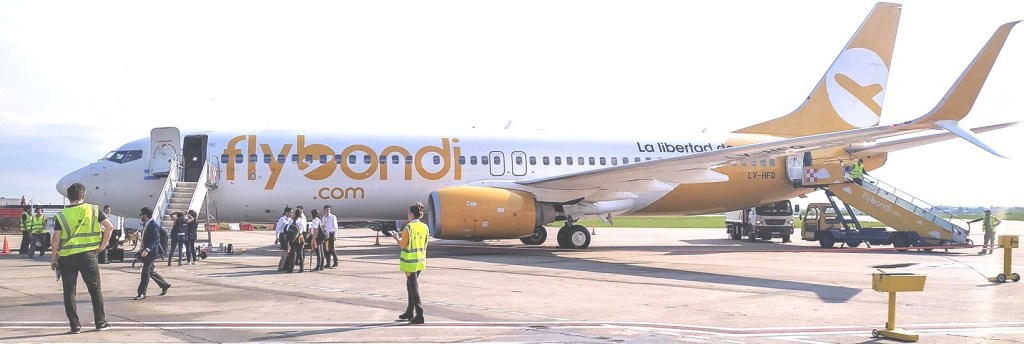
La aerolínea low cost Flybondi Líneas Aéreas ha incorporado más vuelos y frecuencias a sus trece destinos de cabotaje. Con la incorporación de su tercer Boeing 737-800 permitirá ampliar mas destinos y frecuencias en el país. La nueva aeronave matrícula LV-KAH arribó el 21/07 al Aeropuerto Internacional Ezeiza proveniente de Tucson, Estados Unidos, y comenzó a prestar servicio desde este Martes 03/08 su nuevo vuelo inaugural desde Buenos Aires a Córdoba a las 11:55 hs. pasando a tener cinco frecuencias semanales (5Frq/S) en la ruta desde Buenos Aires hacia Córdoba los días Lunes, Martes, Viernes, Sábado y Domingo. También, la ruta Córdoba-Bariloche continúa con dos frecuencias semanales (2Frq/S), los días Martes y Sábados.

El objetivo de la firma es aumentar su oferta de vuelos y sumar frecuencias para sus trece destinos nacionales. “Los resultados de la primera mitad del año 2021 nos permiten ser optimistas con la recuperación del sector en el mediano y largo plazo, y en esto nuestros clientes han sido una pieza fundamental. Volamos desde Aeroparque con una performance de excelencia, con puntualidad y ocupación récord en estos meses, que nos acercan a nuevas personas que se están decidiendo por volar. Por eso, seguimos firmes con nuestro plan de inversión y recuperación, incorporando ahora nuestro tercer avión y entre Septiembre y Octubre, el cuarto. En la medida en la que la demanda mantenga la tendencia actual, estamos convencidos de que el camino es sumar conectividad, nuevas opciones para volar en Argentina, generar empleo en este momento tan particular, y por supuesto, más libertad de volar con tarifas bajas y un servicio de calidad”, mencionó Mauricio Sana, CEO de Flybondi.

La temporada de invierno 2021 ha presentado muy buenos niveles de ocupación de sus vuelos y los destinos más elegidos para las vacaciones son Bariloche, Mendoza y Salta. Para la ruta Bariloche-Buenos Aires con la incorporación del tercer avión se incrementó sus frecuencias a 15 vuelos semanales, mientras que la ruta Mendoza-Buenos Aires tiene 5 frecuencias semanales y la ruta Salta-Buenos Aires 7Frq/S. De esta manera, la compañía aumenta a 134 vuelos semanales para los 13 destinos nacionales.

Con la tercer incorporación de Boeing 737-800, Flybondi aumentará su oferta de vuelos en el país. “Con la incorporación de aviones a su flota radicada en el país, Flybondi consolida su inversión en Argentina apuntando a recuperar capacidad de oferta. Por esto mismo, la compañía ya proyecta el ingreso de un cuarto avión para el último trimestre del año, momento en el que reiniciará también su operación a destinos internacionales como Brasil y Paraguay”, expresó Mauricio Sana CEO de la compañía de presupuesto argentina.

Flybondi increases 5Frq/S to Córdoba

Low cost expands frequencies to the Mediterranean city

The low cost airline Flybondi Líneas Aéreas has incorporated more flights and frequencies to its thirteen domestic destinations. With the incorporation of its third Boeing 737-800, it will allow it to expand more destinations and frequencies in the country. The new aircraft registration LV-KAH arrived on 07/21 at Ezeiza International Airport from Tucson, United States, and began serving its new maiden flight from Buenos Aires to Córdoba on Tuesday 08/03 at 11:55 am. going to have five weekly frequencies (5Frq/S) on the route from Buenos Aires to Córdoba on Monday, Tuesday, Friday, Saturday and Sunday. Likewise, the Córdoba-Bariloche route continues with two weekly frequencies (2Frq/S), on Tuesdays and Saturdays.

The objective of the firm is to increase its flight offer and add frequencies to its thirteen national destinations. “The results of the first half of the year 2021 allow us to be optimistic with the recovery of the sector in the medium and long term, and in this our clients have been a fundamental piece. We fly from Aeroparque with a performance of excellence, with punctuality and record occupancy in these months, which bring us closer to new people who are deciding to fly. For this reason, we remain firm with our investment and recovery plan, now incorporating our third aircraft and between September and October, the fourth. To the extent that demand maintains the current trend, we are convinced that the way is to add connectivity, new options to fly in Argentina, generate employment at this particular time, and of course, more freedom to fly with low rates and a quality service”, mentioned Mauricio Sana, CEO of Flybondi.

The 2021 winter season has presented very good occupancy levels of its flights and the most chosen destinations for vacations are Bariloche, Mendoza and Salta. For the Bariloche-Buenos Aires route, with the incorporation of the third plane, its frequencies were increased to 15 weekly flights, while the Mendoza-Buenos Aires route has five weekly frequencies and the Salta-Buenos Aires route 7Frq/S. In this way, the company increases to 134 weekly flights to 13 national destinations.

With the third incorporation of Boeing 737-800, Flybondi will increase its offer of flights in the country. “With the incorporation of airplanes to its fleet based in the country, Flybondi consolidates its investment in Argentina aiming to recover supply capacity. For this reason, the company already projects the entry of a fourth plane for the last quarter of the year, at which time it will also restart its operation to international destinations such as Brazil and Paraguay”, stated Mauricio Sana CEO of the Argentine budget company.

PUBLISHER: Airgways.com
DBk: Flybondi.com / Airgways.com
AW-POST: 202108040947AR

A\W   A I R G W A Y S ®
Flybondi incrementa 10Frq/S Misiones

AW | 2021 08 03 20:47 | AIRLINES ROUTES

Flybondi aumenta diez frecuencias semanales a Misiones

AW-Flybondi_B737800

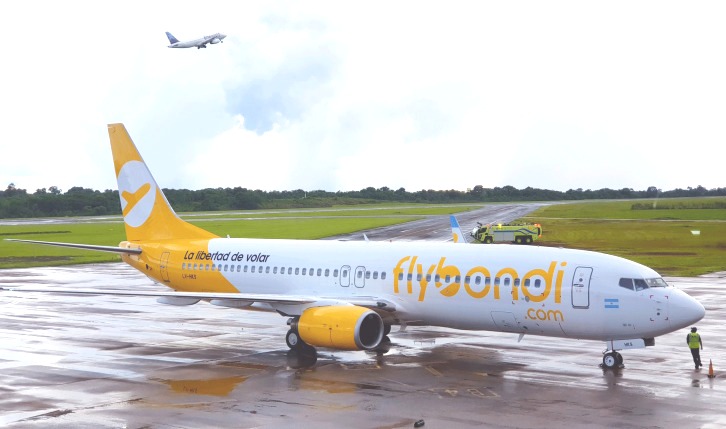
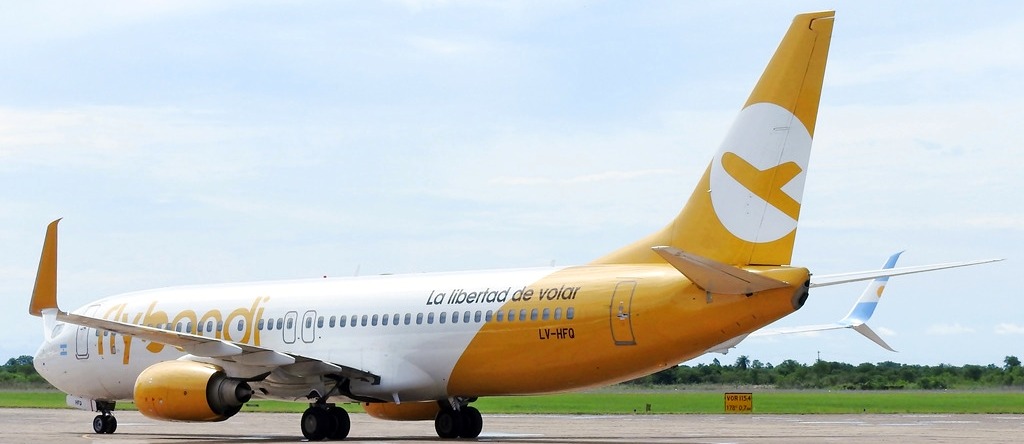
Flybondi Líneas Aéreas ha anunciado la incorporación de diez frecuencias semanales en las rutas a la Provincia de Misiones como parte de su notable expansión, con el arribo de su tercer aeronave Boeing 737-800. El nuevo avión en su flota tiene como objetivo aumentar su oferta de vuelos y sumar frecuencias para sus trece destinos nacionales.

La Provincia de Misiones tendrá en Agosto diez frecuencias semanales, para la ruta Buenos Aires–Iguazú con la incorporación del tercer avión se incrementan sus frecuencias a 5 semanales, los días Miércoles, Jueves, Viernes, Sábado y Domingo y el vuelo tiene una duración de 01:50 hs. La ruta Buenos Aires–Posadas aumentan sus frecuencias a cinco semanales, los días Lunes, Martes, Miércoles, Viernes y Domingo y el vuelo tiene una duración de 01:35 hs.

La aeronave Boeing 737-800 Netx Generation con matrícula LV-KAH arribó el 21 de Julio de 2021 al Aeropuerto Internacional Ezeiza proveniente de Tucson, Estados Unidos, y comenzó a prestar servicio este Martes 03/08 con su vuelo desde Buenos Aires a Córdoba a las 11:55 hs.

Con la incorporación de aviones a su flota, Flybondi consolida su inversión en Argentina apuntando a recuperar capacidad de oferta. La aerolínea de presupuesto proyecta el ingreso de un cuarto avión para el último trimestre del año (4Q2021), con las perspectivas de reiniciar sus operaciones a destinos internacionales como Brasil y Paraguay, según permitan las circunstancias sanitarias vigentes.

“Los resultados de la primera mitad del año 2021 nos permiten ser optimistas con la recuperación del sector en el mediano y largo plazo, y en esto nuestros clientes han sido una pieza fundamental. Volamos desde Aeroparque con una performance de excelencia, con puntualidad y ocupación récord en estos meses, que nos acercan a nuevas personas que se están decidiendo por volar. Por eso, seguimos firmes con nuestro plan de inversión y recuperación, incorporando ahora nuestro tercer avión y entre Septiembre y Octubre, el cuarto. En la medida en la que la demanda mantenga la tendencia actual, estamos convencidos de que el camino es sumar conectividad, nuevas opciones para volar en Argentina, generar empleo en este momento tan particular, y por supuesto, más libertad de volar con tarifas bajas y un servicio de calidad”, expresó el CEO de Flybondi, Mauricio Sana.

En cuanto a la temporada de invierno la compañía presenta muy buenos niveles de ocupación de sus vuelos y los destinos más elegidos para las vacaciones son Bariloche, Mendoza y Salta. Para la ruta Buenos Aires–Bariloche con la incorporación del tercer avión se incrementó sus frecuencias a 15 vuelos semanales, mientras que la ruta Buenos Aires–Mendoza tiene cinco frecuencias semanales y la ruta Buenos Aires–Salta con 7Frq/S. De esta manera, la compañía aumenta a 134 vuelos semanales para los trece destinos nacionales actuales.

Flybondi en números

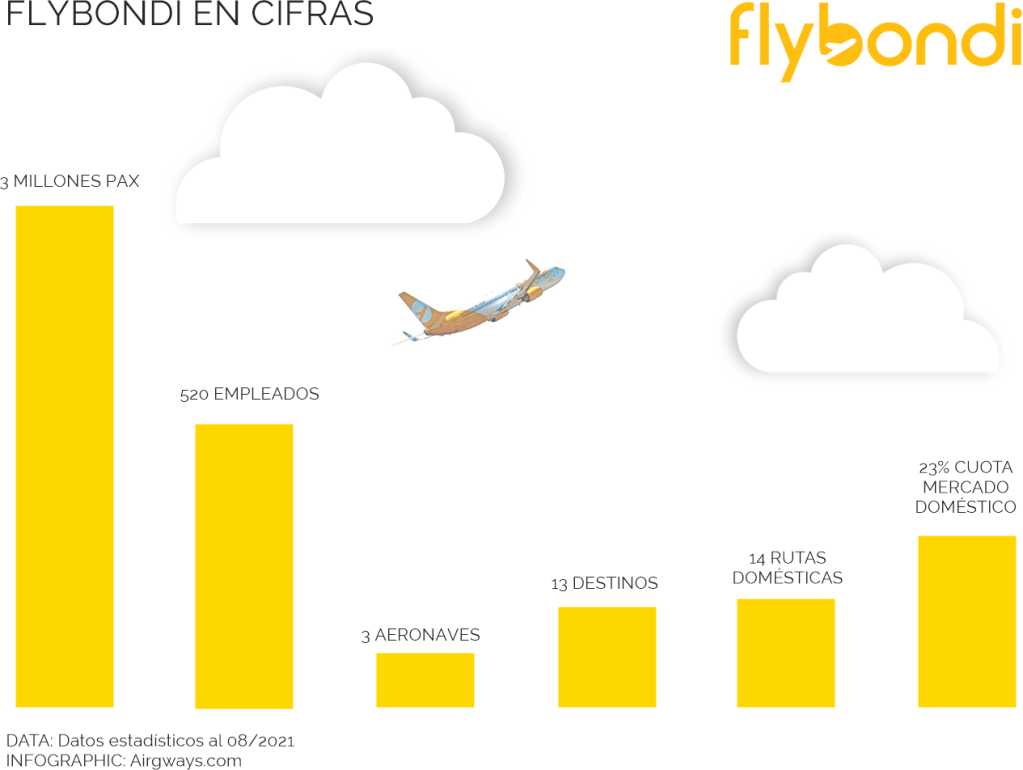
Flybondi comenzó a operar en Argentina en 2018 y ha transportado a más de 3 millones de personas. Cuenta con más de 520 empleados en todo el país. A su flota de dos aviones Boeing 737-800 se incorpora la tercera aeronave. Actualmente vuelos a trece destinos domésticos, con catorce rutas nacionales, con un 23% de cuota de mercado en Argentina. La perspectiva hacia el 4Q2021 es volver a retomar los destinos internacionales en Sudamérica. Actualmente, es la línea aérea con mejor nivel de coeficiente de ocupación de sus vuelos en la República Argentina.

Flybondi increases 10Frq/S Missions

Flybondi increases ten weekly frequencies to Misiones

AW-Flybondi-Jet

Flybondi Líneas Aéreas has announced the incorporation of ten weekly frequencies on the routes to the Province of Misiones as part of its notable expansion, with the arrival of its third Boeing 737-800 aircraft. The new aircraft in its fleet aims to increase its flight offer and add frequencies to its thirteen national destinations.

The Province of Misiones will have ten weekly frequencies in August, for the Buenos Aires-Iguazú route with the incorporation of the third plane, its frequencies are increased to 5 weekly, on Wednesday, Thursday, Friday, Saturday and Sunday and the flight has a duration of 01:50 hs. The Buenos Aires–Posadas route increases its frequencies to five a week, on Monday, Tuesday, Wednesday, Friday and Sunday and the flight lasts for 01:35 hours.

The Boeing 737-800 Netx Generation aircraft with registration LV-KAH arrived on July 21, 2021 at Ezeiza International Airport from Tucson, United States, and began to serve this Tuesday 03/08 with its flight from Buenos Aires to Córdoba at 11:55 am.

With the incorporation of airplanes to its fleet, Flybondi consolidates its investment in Argentina aiming to recover supply capacity. The budget airline projects the entry of a fourth plane for the last quarter of the year (4Q2021), with the prospects of restarting its operations to international destinations such as Brazil and Paraguay, as current sanitary circumstances allow.

“The results of the first half of the year 2021 allow us to be optimistic with the recovery of the sector in the medium and long term, and in this our clients have been a fundamental piece. We fly from Aeroparque with a performance of excellence, with punctuality and record occupancy in these months, which bring us closer to new people who are deciding to fly. For this reason, we remain firm with our investment and recovery plan, now incorporating our third aircraft and between September and October, the fourth. To the extent that demand maintains the current trend, we are convinced that the way is to add connectivity, new options to fly in Argentina, generate employment at this particular time, and of course, more freedom to fly with low rates and a quality service”, expressed the CEO of Flybondi, Mauricio Sana.

Regarding the winter season, the company presents very good levels of occupation of its flights and the most chosen destinations for vacations are Bariloche, Mendoza and Salta. For the Buenos Aires–Bariloche route, with the incorporation of the third plane, its frequencies were increased to 15 weekly flights, while the Buenos Aires–Mendoza route has five weekly frequencies and the Buenos Aires–Salta route with 7Frq/S. In this way, the company increases to 134 weekly flights for the thirteen current national destinations.

Flybondi in numbers

Flybondi started its operations in Argentina in 2018 and has transported more than 3 million people. It has more than 520 employees throughout the country. The third aircraft is added to its fleet of two Boeing 737-800 aircraft. Currently flights to thirteen domestic destinations, with fourteen national routes, with a 23% market share in Argentina. The perspective towards 4Q2021 is to return to international destinations in South America. Currently, it is the airline with the best level of load factor for its flights in the Argentine Republic.

PUBLISHER: Airgways.com
DBk: Flybondi.com / Airgways.com
AW-POST: 202108032047AR

A\W   A I R G W A Y S ®

Airbus amplía suministros en China

AW | 2021 08 03 19:11 | INDUSTRY

Airbus expande cadena de suministro local en China

AirbusTJ_logo - copia

Airbus Group está construyendo una cadena de suministro de integración vertical en la República Popular de China con el objetivo de fortalecer su presencia en el mercado. La remodelación de la cadena de suministro global de Airbus durante la pandemia cambiará un mayor enfoque hacia China, el mercado de aviación de más rápido crecimiento del mundo.

AW-Airbus China_Dragon

Yang Xiaoyu, Jefe de Adquisiciones volables de la compañía en China y Asia oriental, dice que Airbus está construyendo una cadena de suministro de integración vertical para obtener piezas y materiales, ensamblar y entregar aeronaves localmente. Una mayor expansión en China no es sorprendente dado el continuo surgimiento de la nación como la superpotencia económica del mundo. Se está convirtiendo constantemente en el mercado de aviación más grande del mundo, y es un territorio estratégico para Airbus para las entregas y la producción global.

China representa actualmente alrededor de una cuarta parte de la producción global de aviones comerciales de Airbus, con más de 1.700 aviones comerciales Airbus en servicio en China a finales de 2018. Incluso bajo la pandemia Airbus entregó 99 aviones a China en 2020 y 64 en la primera mitad de 2021, a pesar de la interrupción en curso y la desaceleración generalizada en la aviación. El país también es un punto caliente estratégico en la cadena de suministro global de Airbus.

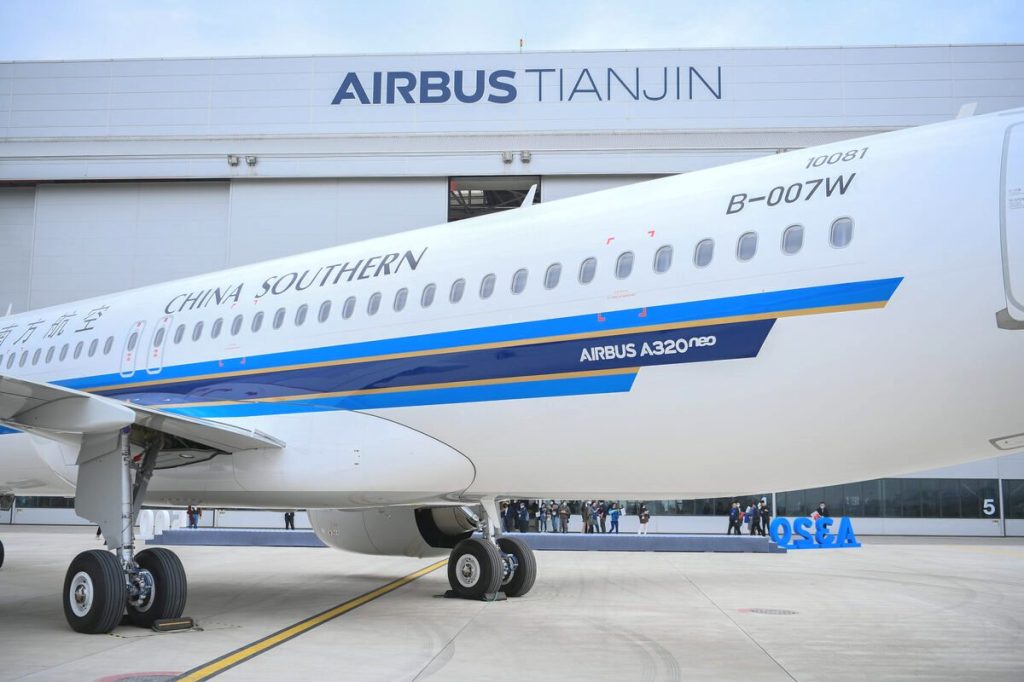
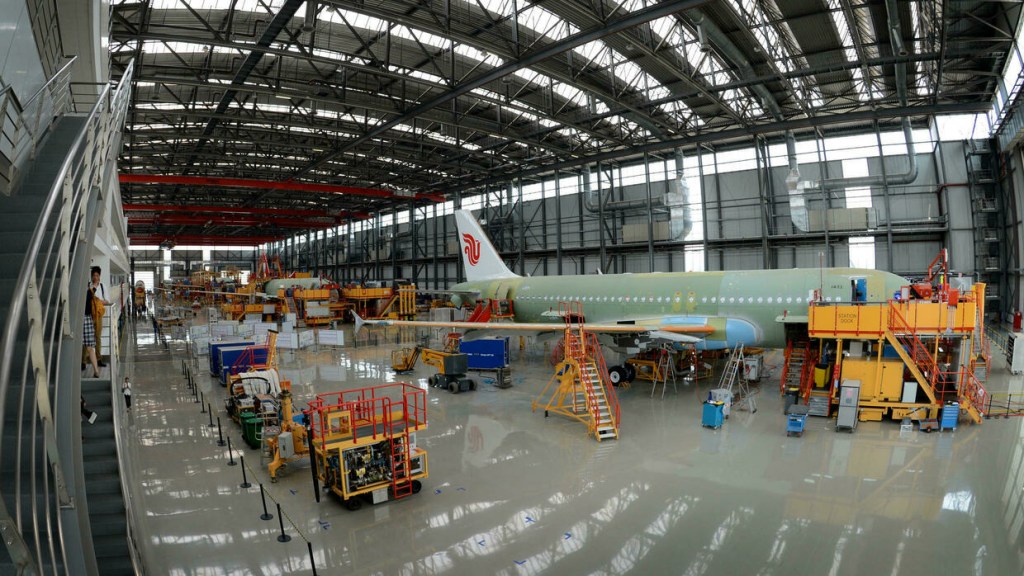
El gigante aeroespacial europeo estableció una Línea de Montaje Final (FAL) en Tianjin, una ciudad portuaria en el noreste de China, en 2008. Fue el primero en construirse fuera de las fronteras de sus cuatro países europeos fundadores: Francia, Alemania, España y el Reino Unido. Amplió el sitio para incluir un centro de terminación y entrega de cuerpo ancho en 2017. En julio de 2021, el sitio de producción entregó el primer Airbus A350 a China Eastern Airlines. George Xu, vicepresidente ejecutivo de Airbus y consejero delegado de Airbus en China, dijo: «Este es un nuevo hito en la cooperación a largo plazo entre China y Airbus, que demuestra aún más el compromiso de Airbus con el país». A finales de Junio de 2021, China Eastern Airlines operaba una flota de Airbus de 413 aviones, incluidos 349 aviones de la familia A320, 55 aviones de la familia A330 y nueve aviones A350. En la actualidad Airbus cuenta con unos 200 proveedores chinos. Estos incluyen un centro de fabricación de compuestos en Harbin, así como centros de ingeniería, atención al cliente y capacitación ubicados en Beijing.

Airbus expands supplies in China

Airbus expands local supply chain in China

Airbus_Logotype Globe

Airbus Group is building a vertically integrated supply chain in the People’s Republic of China with the aim of strengthening its market presence. The reshaping of Airbus’ global supply chain during the pandemic will shift a greater focus to China, the world’s fastest growing aviation market.

Yang Xiaoyu, the company’s Head of Volatile Procurement in China and East Asia, says Airbus is building a vertically integrated supply chain to source parts and materials, assemble and deliver aircraft locally. Further expansion in China is not surprising given the nation’s continued emergence as the world’s economic superpower. It is steadily becoming the world’s largest aviation market, and is a strategic territory for Airbus for global production and deliveries.

China currently accounts for around a quarter of Airbus’ global commercial aircraft production, with more than 1,700 Airbus commercial aircraft in service in China at the end of 2018. Even under the pandemic, Airbus delivered 99 aircraft to China in 2020 and 64 in the first half of 2021, despite the ongoing disruption and widespread slowdown in aviation. The country is also a strategic hot spot in Airbus’ global supply chain.

The European aerospace giant established a Final Assembly Line (FAL) in Tianjin, a port city in northeast China, in 2008. It was the first to be built outside the borders of its four founding European countries: France, Germany, Spain and the United Kingdom. It expanded the site to include a wide-body delivery and completion center in 2017. In July 2021, the production site delivered the first Airbus A350 to China Eastern Airlines. George Xu, Airbus Executive Vice President and Chief Executive Officer of Airbus in China, said: «This is a new milestone in the long-term cooperation between China and Airbus, further demonstrating Airbus’s commitment to the country». At the end of June 2021, China Eastern Airlines operated an Airbus fleet of 413 aircraft, including 349 A320 family aircraft, 55 A330 family aircraft and nine A350 aircraft. Airbus currently has about 200 Chinese suppliers. These include a composite manufacturing center in Harbin, as well as engineering, customer service and training centers located in Beijing.

空客擴大在華供應

空客拓展中國本土供應鏈

AIRBUS CHINA

空車集團正在中華人民共和國建立垂直整合的供應鏈,旨在加強其市場佔有率。大流行期間空客全球供應鏈的重塑將把更多的注意力轉移到中國這個全球增長最快的航空市場。

該公司在中國和東亞地區的易失性採購負責人楊曉宇表示,空中客車正在建立一個垂直整合的供應鏈,以在當地採購零件和材料、組裝和交付飛機。考慮到中國作為世界經濟超級大國的持續崛起,中國的進一步擴張並不令人意外。它正在穩步成為全球最大的航空市場,是空中客車全球生產和交付的戰略領土。

中國目前約佔空客全球商用飛機產量的四分之一,截至 2018 年底,在中國服役的空客商用飛機超過 1,700 架。 即使在大流行的情況下,空客在 2020 年向中國交付了 99 架飛機,第一年交付了 64 架2021 年的一半,儘管航空業持續中斷和普遍放緩。該國也是空客全球供應鏈的戰略熱點。

這家歐洲航空航天巨頭於 2008 年在中國東北的港口城市天津建立了總裝線 (FAL)。它是第一條在其四個歐洲創始國:法國、德國、西班牙和美國之外建造的。王國。它於 2017 年擴大了基地,包括一個寬體交付和完成中心。 2021 年 7 月,生產基地向中國東方航空公司交付了第一架空客 A350。空客執行副總裁兼空客中國區首席執行官喬治徐表示:“這是中國與空客長期合作的一個新里程碑,進一步彰顯了空客對中國的承諾»。截至 2021 年 6 月末,東航擁有 413 架空客機隊,其中 A320 系列飛機 349 架,A330 系列飛機 55 架,A350 飛機 9 架。空客目前擁有約200家中國供應商。其中包括位於哈爾濱的複合材料製造中心,以及位於北京的工程、客戶服務和培訓中心。

PUBLISHER: Airgways.com
DBk: Airbus.com / Barcroftstudios.com / Airgways.com
AW-POST: 202108031911AR

A\W   A I R G W A Y S ®

Lanzamiento Starliner pospuesto

AW | 2021 08 03 18:33 | AEROSPACE

Lanzamiento Boeing Starliner se retrasó una vez más

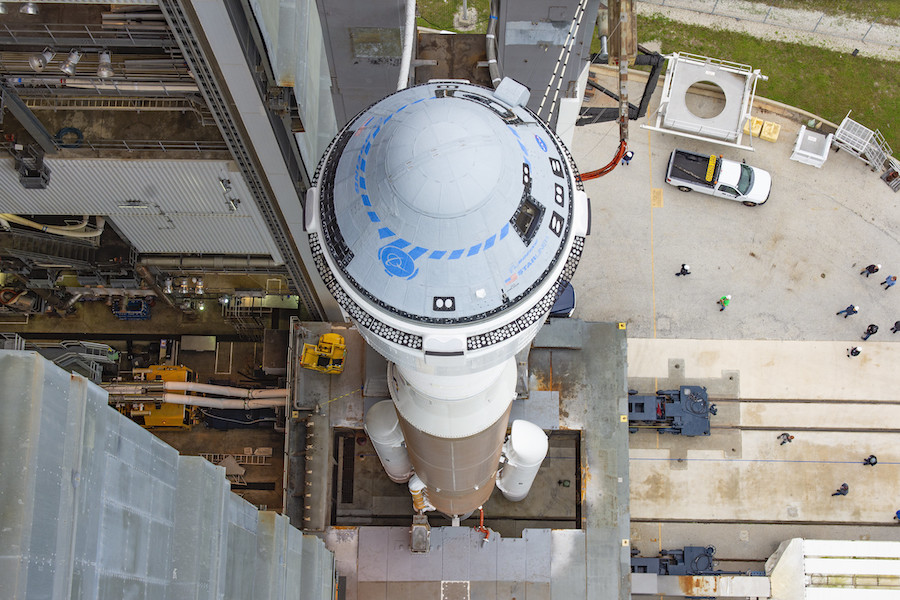
Los ingenieros encontraron un problema inesperado con el Sistema de Propulsión de Starliner CST-100. The Boeing Company anunció que su misión Starliner Orbital Flight Test-2 (OFT-2), que se había programado para este Martes 3 de Agosto de 2021 se pospondría debido a problemas inesperados con el Sistema de Propulsión de la cápsula espacial, reveló la compañía en un comunicado. La próxima oportunidad de lanzamiento disponible para Starliner es mañana 04/08, pero el equipo aún no ha confirmado que buscará esa ventana para el próximo lanzamiento. «Durante los preparativos previos al lanzamiento para el vuelo de prueba desenroscado de la nave espacial CST-100 Starliner, los ingenieros de Boeing que monitoreaban la salud y el estado del vehículo detectaron indicaciones inesperadas de posición de la válvula en el sistema de propulsión. El problema se detectó inicialmente durante las salidas después de las tormentas eléctricas de ayer en la región del Centro Espacial Kennedy. En consecuencia, se pospondrá el lanzamiento de la nave espacial Starliner a la Estación Espacial Internacional sobre un cohete Atlas V de la United Launch Alliance. El lanzamiento estaba programado para la 01:20 p.m. ET el Martes 3 de agosto. Los equipos de Boeing y la NASA están evaluando la situación. El equipo proporcionará actualizaciones con respecto a un intento de lanzamiento el miércoles 4 de Agosto», escribieron funcionarios de Boeing en el comunicado.

«Estamos confirmando que el lanzamiento de la Prueba de Vuelo Orbital-2 de #Starliner de hoy está fregado. Más detalles pronto», tuiteó The Boeing Company esta mañana.

«Estamos decepcionados con el resultado de hoy y la necesidad de reprogramar nuestro lanzamiento de Starliner. Los vuelos espaciales humanos son un esfuerzo complejo, preciso e implacable, y los equipos de Boeing y la NASA se tomarán el tiempo que necesitan para garantizar la seguridad e integridad de la nave espacial y el logro de los objetivos de nuestra misión», dijo en el comunicado John Vollmer, Vicepresidente y Gerente de Programas del Programa de Tripulación Comercial de Boeing.

La NASA confirmó el retraso del lanzamiento: «La NASA, Boeing y United Launch Alliance (ULA) han fregado el intento de lanzamiento el 3 de Agosto de la Prueba de Vuelo Orbital-2 de la agencia a la Estación Espacial Internacional debido a indicaciones inesperadas de posición de válvulas en el sistema de propulsión Starliner. ULA comenzará a retirar el propulsor del cohete Atlas V», dijo la agencia en un comunicado y agregó que dependiendo de la resolución de este problema, estarían disponibles para lanzarse mañana próximo.

Esta noticia llega después de otro breve retraso, desde la fecha de lanzamiento anterior del vehículo el pasado Jueves 29 de Julio, causado por problemas relacionados con el percance con el módulo Nauka de Rusia después de acoplarse a la Estación Espacial Internacional (ISS).

Antes de que se anunciara formalmente el exfoliante, el Administrador de la NASA, Bill Nelson, aludió a este retraso durante su discurso de apertura de la Conferencia Internacional de Investigación y Desarrollo de la Estación Espacial en la mañana del 03/08. «Más tarde hoy, la NASA y la nave espacial Starliner de Boeing, estaba programado para lanzarse. Se lanzará cuando sea correcto. Este es otro paso en la certificación de Starliner para transportar a la tripulación a la ISS. El transporte seguro y confiable a la ISS es exactamente la visión que la NASA tenía cuando la agencia se embarcó en el Programa de Tripulación Comercial hace diez años. Con las misiones rotativas de Boeing y Spacex, cada una llevando a cabo cuatro astronautas [a la ISS], ya hemos ampliado el número de miembros de la tripulación en la ISS, duplicando efectivamente la cantidad de tiempo semanal de la tripulación que se puede dedicar a la investigación. Cuantos más miembros de la tripulación, más tiempo podrán dedicar a la investigación científica. Y cuantas más investigaciones, más resultados», expresaron en el comunicado previo al lanzamiento.

OFT-2 es el segundo intento de Boeing en un vuelo de prueba desenroscado de su vehículo Starliner a la estación espacial. El vuelo verá la nave lanzarse sobre un cohete Atlas V de United Launch Alliance, enviándola a la estación donde atracará, descargará carga importante y después de algún tiempo regresará a casa a la Tierra. Con el éxito de esta misión, Boeing pretende comenzar a lanzar misiones tripuladas, como ha hecho SpaceX con su cápsula Crew Dragon, hacia y desde el laboratorio en órbita.

Atlas V/Starliner launch postponed

Boeing Starliner launch delayed yet again

Engineers found an unexpected problem with the Starliner CST-100 Propulsion System. The Boeing Company announced that its Starliner Orbital Flight Test-2 (OFT-2) mission, which had been scheduled for this Tuesday, August 3, 2021, would be postponed due to unexpected problems with the Propulsion System of the space capsule, the company revealed. it’s a statement. The next available launch opportunity for Starliner is tomorrow 08/04, but the team has not yet confirmed that it will be looking for that window for the next launch. “During pre-launch preparations for the unscrewed test flight of the CST-100 Starliner spacecraft, Boeing engineers monitoring the health and condition of the vehicle detected unexpected indications of valve position in the propulsion system. The problem was initially detected during departures after yesterday’s thunderstorms in the Kennedy Space Center region, as a result, the launch of the Starliner spacecraft to the International Space Station on a United Launch Alliance Atlas V rocket will be postponed. The launch was scheduled for 01:20 pm ET on Tuesday, August 3. Boeing and NASA teams are assessing the situation. The team will provide updates regarding a launch attempt on Wednesday, August 4″, wrote officials from Boeing in the statement.

«We are confirming that today’s #Starliner Orbital Flight Test-2 launch is screwed up. More details soon», The Boeing Company tweeted this morning.

«We are disappointed with today’s outcome and the need to reschedule our Starliner launch. Human spaceflight is a complex, precise, and relentless endeavor, and teams at Boeing and NASA will take the time they need to ensure the safety and integrity of the spacecraft and the achievement of our mission objectives», John Vollmer, Vice-president and Program Manager of Boeing’s Commercial Crew Program, said in the statement.

NASA confirmed the launch delay: «NASA, Boeing and United Launch Alliance (ULA) have scrambled the Aug. 3 launch attempt of the agency’s Orbital Flight Test-2 to the International Space Station due to unexpected prompts. valve position in the Starliner propulsion system. ULA will begin to withdraw the propellant from the Atlas V rocket», the agency said in a statement, adding that depending on the resolution of this problem, they would be available to launch next tomorrow.

This news comes after another brief delay, from the vehicle’s previous launch date on Thursday July 29, caused by problems related to the mishap with Russia’s Nauka module after docking with the International Space Station (ISS).

Before the scrub was formally announced, NASA Administrator Bill Nelson alluded to this delay during his keynote address at the International Space Station Research and Development Conference on the morning of 08/03. «Later today, NASA and Boeing’s Starliner spacecraft, was scheduled to launch. It will launch when it’s right. This is another step in Starliner certification to transport the crew to the ISS. Safe and reliable transportation to and from The ISS is exactly the vision NASA had when the agency embarked on the Commercial Crew Program ten years ago. With Boeing and Spacex rotating missions each carrying four astronauts [to the ISS], we have already expanded the number of crew members on the ISS, effectively doubling the amount of weekly crew time that can be devoted to research. The more crew members, the more time they can devote to scientific research. And the more research, more results», they said in the pre-launch statement.

OFT-2 is Boeing’s second attempt at an unscrewed test flight from its Starliner vehicle to the space station. The flight will see the ship launch onto a United Launch Alliance Atlas V rocket, sending it to the station where it will dock, unload important cargo, and after some time return home to Earth. With the success of this mission, Boeing intends to begin launching manned missions, as SpaceX has done with its Crew Dragon capsule, to and from the orbiting laboratory.

PUBLISHER: Airgways.com
DBk: Nasa.gov / Boeing.com / Space.com / Airgways.com
AW-POST: 202108031833AR

A\W   A I R G W A Y S ®