Aerolíneas ops mínimas en cabotaje

AW-700844433AW | 2020 04 10 23:14 | AIRLINES

Aerolíneas Argentinas_Isologotype 2010Aerolíneas Argentinas ha reducido sus operaciones comerciales

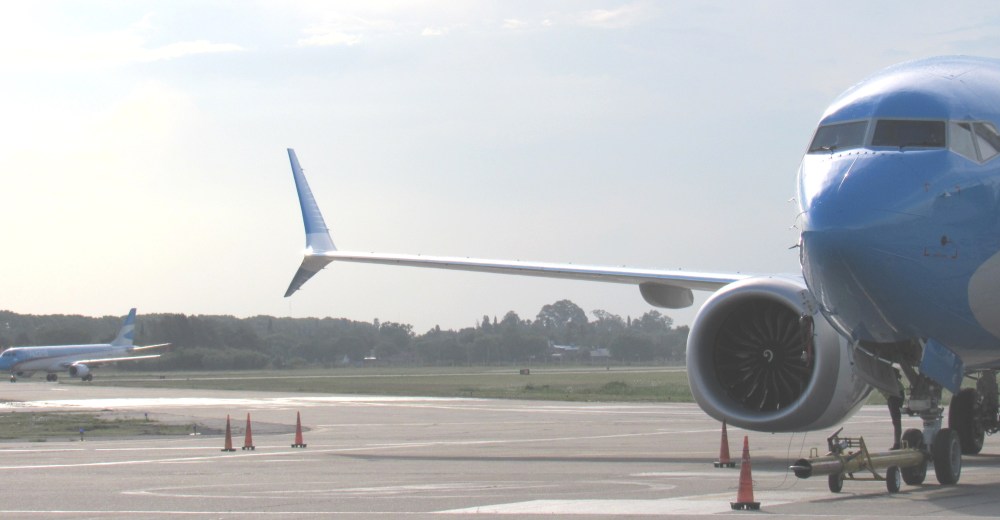
Aerolíneas Argentinas ha anunciado la suspensión de las operaciones comerciales preservando vuelos mínimos en el período entre Mayo-Junio 2020. El grupo Aerolíneas solo programará servicios especiales de repatriación controlada en la Fase II donde permitirán administrar de manera más eficiente la cuarentena de los arribados de vuelos internacionales. Mientras tanto, la aerolínea de bandera ya canceló todos sus vuelos comerciales comunes hasta el 30 Abril 2020, en el contexto de la extensión del aislamiento obligatorio por parte del Gobierno de Argentina anunciado este Viernes 10/04.

El impacto de la pandemia del Coronavirus ha resultado en una caída en la cantidad de reservas de pasajes es de entre el 80 y el 85% en la compañía aérea de Argentina. El plan AW-7000737melaborado por Aerolíneas, algunos destinos tendrán cinco frecuencias menos, como es el caso de Santiago de Chile, que realiza 35 vuelos semanales a la capital trasandina, pero para Mayo y Junio solo programó siete por semana. Las principales ciudades brasileñas estarán conectadas con vuelos mínimos. Respecto a San Pablo, Aerolíneas tiene normalmente cuatro frecuencias diarias con un total de 28 Frq/S, mientras que en el período Mayo/Junio 2020 solo prevé que haya una frecuencia diaria. Río de Janeiro posee 21 vuelos semanales pero se prevén cinco por semana en Mayo y siete por semana en Junio. Madrid posee 7 vuelos semanales contra 3 Frq/S para Mayo 2020 y 3 por semana en Junio 2020; hacia Asunción 14 Frq/S decreciendo a 3 Frq/S en Mayo y 3 Frq/S en Junio; hacia Bogotá 7 Frq/S reduciendo a 3 Frq/S en Mayo y 3 Frq/S en Junio; hacia Miami 7 Frq/S disminuyendo 5 Frq/S en Mayo y 5 Frq/S en Junio y hacia Lima 7 Frq/S alcanzando una disminución de 3 Frq/S en Mayo y 3 Frq/S en Junio. Hacia Nueva York y Roma, dos de los lugares más afectados por el coronavirus, poseían 12 y 4 frecuencias respectivamente. No hay previsto ningún vuelo para todo el mes de Mayo y solo 3 Frq/S proyectado en principio para Junio 2020.

El esquema de vuelos previsto actualmente para los dos meses siguientes es provisorio y dependerá de la demanda real que haya así como, por supuesto, de que al mismo tiempo no existan restricciones oficiales sobre las fronteras y el espacio aéreo.

Desde Aerolíneas/Austral sostienen que la programación en vigencia permitirá controlar la emergencia sanitaria, pero al mismo tiempo están atentos a las directivas que el Gobierno de Argentina pudiera adelantar al ir administrando la salida de la cuarentena de manera progresiva. AW-Icon Paragraph-01

AW-707377Aerolíneas minimum ops in cabotage

Aerolíneas Argentinas has reduced its commercial operations

AW-717348MAXAerolíneas Argentinas has announced the suspension of commercial operations preserving minimum flights in the period between May-June 2020. The group Aerolíneas will only program special services of controlled repatriation in Phase II where they will allow to manage more efficiently the quarantine of the arrivals of flights international. Meanwhile, the flag carrier has already canceled all its common commercial flights until April 30, 2020, in the context of the extension of mandatory isolation by the Government AW-70000194of Argentina announced this Friday 10/04.

The impact of the Coronavirus pandemic has resulted in a drop in the number of ticket reservations between 80 and 85% in the Argentine airline. The plan prepared by Airlines, some destinations will have five fewer frequencies, as is the case of Santiago de Chile, which makes 35 weekly flights to the trans-Andean capital, but for May and June it only scheduled seven per week. The main Brazilian cities will be connected with minimal flights. Regarding São Paulo, Airlines normally has four daily frequencies with a total of 28 Frq/S, while in the May/June 2020 period it only foresees that there will be one daily frequency. Rio de Janeiro has 21 weekly flights, but five are planned per week in May and seven per week in June. Madrid has 7 weekly flights against 3 Frq/S for May 2020 and 3 per week in June 2020; towards Asunción 14 Frq/S decreasing to 3 Frq/S in May and 3 Frq/S in June; to Bogotá 7 Frq/S reducing to 3 Frq/S in May and 3 Frq/S in June; to Miami 7 Frq/S decreasing 5 Frq/S in May and 5 Frq/S in June and to Lima 7 Frq/S reaching a decrease of 3 Frq/S in May and 3 Frq/S in June. Towards New York and Rome, two of the places most affected by the coronavirus, had 12 and 4 frequencies respectively. No flight is planned for the entire month of May and only 3 Frq/S initially projected for June 2020.

The flight schedule currently planned for the following two months is provisional and will depend on the real demand that there is as well as, of course, that at the same time there are no official restrictions on borders and airspace.

From Aerolíneas/Austral they maintain that the programming in force will allow to control the health emergency, but at the same time they are attentive to the directives that the Government of Argentina could advance by gradually managing the exit from quarantine. AW-Icon Paragraph-02


Ξ A I R G W A Y S Ξ
SOURCE: Airgways.com
DBk: Aerolineas.com / Baenegocios.com / Airgways.com
AW-POST: 202004102314AR

A\W   A I R G W A Y S ®

Gobiernos de Europa preparan rescate

AW-Fri.fr_710AW | 2020 04 10 18:47 | AIRLINES / GOVERNMENT

Los gobiernos de Europa estatizarían aerolíneas

Tras los cambios abruptos de mercado en el sector de la aviación comercial y el turismo, los gobiernos de Europa se aprontan a planificar un rescate de las compañías aéreas para que puedan continuar su existencia. Aunque no todos los gobiernos podrán hacer frente a los rescates financieros de las líneas aéreas, muchas sufrirán el coletazo de los efectos de la pandemia del Coronavirus.

Caso Alitalia

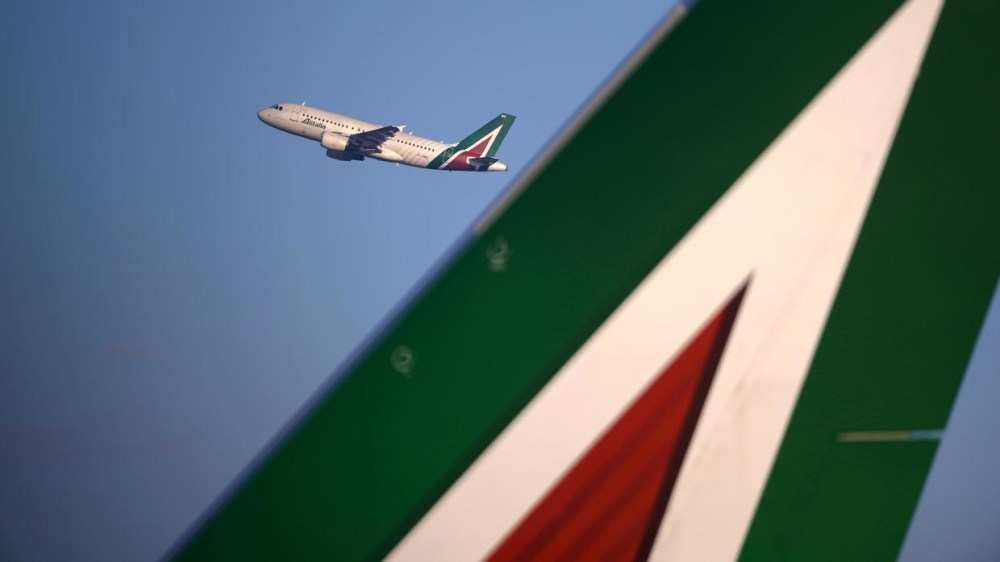
Después de muchas idas y vueltas para conseguir un oferente de compra con respecto a la aerolínea Alitalia, el efecto pandemia ha traido una vuelta de visagra a las estrategias de la aerolínea italiana. Este golpe letal afectan directamente a los capitales de las aerolíneas del mundo; pero en el caso de Alitalia, ha traido una oportunidad para que el Gobierno de Italia efectúe un rescate tras su estatización como única alternativa presente para la línea aérea de Italia.

7551Alitalia en concurso de acreedores desde Mayo 2017, no ha podido conseguir un oferente que mostrara fuerte compromiso por adquirir la compañía. El Lunes 6 Abril 2020, por ley, el Gobierno ha promulgado la aprobación de inyección de 25.000 millones de Euros para articular la crisis del sector de la aerolínea. El Ministerio de Economía y Finanzas asumirá el control a las aerolíneas Alitalia y Alitalia Cityline S.p.A.

El Gobierno de Italia había cerrado la oferta de interesados para Alitalia el 18 Marzo 2020 como fecha límite para rescatar el grupo estableciendo un tope el 31 Mayo 2020 como tiempo límite para la venta de Alitalia. Por ahora, los vientos de cambios permitirán renacionalizar la aerolínea dando un giro completo al futuro de la aerolínea de bandera italiana.

Air France-KLM Group

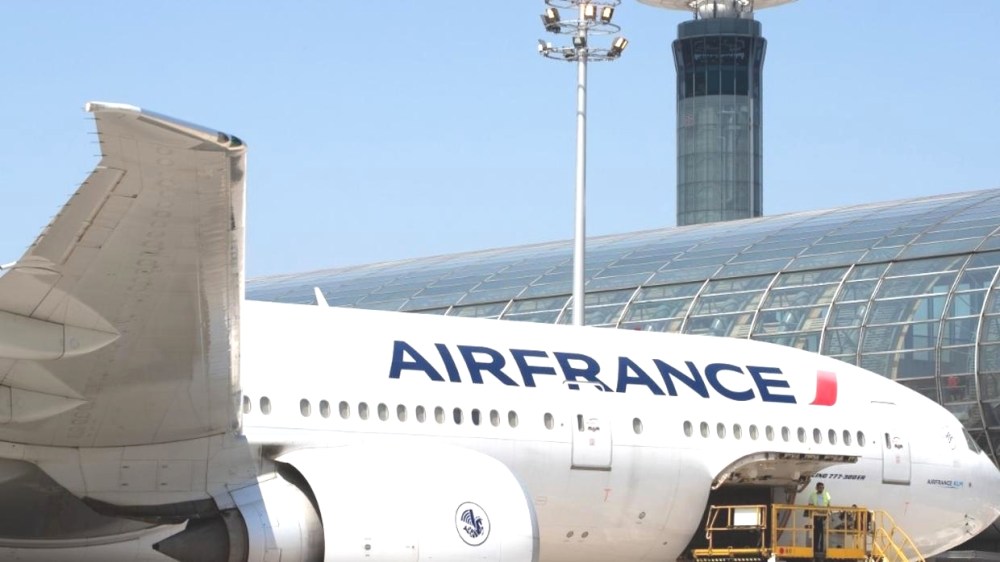
El grupo Air France-KLM ha presentado a los estados respectivos el reclamo para ayudas para combatir el impacto de la pandemia del Coronavirus. Los miembros de la Junta del grupo Air France-KLM participarán en el esfuerzo de acuerdo con las medidas aplicables a los empleados de ambas compañías para una reducción de sus remuneraciones.

«A medida que la crisis continúa, las condiciones para una recuperación siguen siendo inciertas, tanto en términos de nuestras operaciones aéreas, como en términos más generales en términos del calendario de recuperación económica y de demanda. Nuestras mejores estimaciones actuales, que incorporan las medidas mencionadas anteriormente, muestran que en ausencia de financiamiento adicional, se espera un requerimiento de liquidez en el tercer trimestre de 2020», expresan desde Air France-KLM Group.

Air France y KLM, han entablado conversaciones en profundidad con sus respectivos gobiernos e instituciones financieras para otorgar los recursos que les permitirán asegurar y mantener niveles adecuados de liquidez para todos significa, en particular en el marco del Marco temporal de la Comisión Europea sobre ayudas estatales en vigor publicado el 19 Marzo 2020. En esta etapa, dadas las diversas opciones que se están considerando actualmente y la calidad de las discusiones con los dos Estados e instituciones financieras, el Grupo Air France-KLM confía en que podrá obtener financiamiento adicional para cumplir con todas sus obligaciones financieras futuras y permitirle asegurar la recuperación de su actividad más allá de la crisis actual.

«Nos enfrentamos a una crisis sin precedentes que afecta sin excepción a la industria de las aerolíneas, lo que está causando una gran incertidumbre sobre las perspectivas del transporte aéreo. Desde el comienzo de esta crisis, el Grupo Air France-KLM ha hecho todo lo posible para garantizar la seguridad sanitaria de sus empleados y clientes y, en el aspecto financiero, preservar su liquidez a corto plazo y prepararse para el futuro. Medidas de emergencia se han implementado rápidamente para reducir nuestros costos e inversiones. Saludo el compromiso excepcional de nuestros empleados, que están dando lo mejor de sí mismos en estos tiempos difíciles, particularmente los equipos operativos que están permitiendo los vuelos de repatriación de nuestros conciudadanos, así como el transporte de equipos médicos a Francia y los Países Bajos. Ahora es más claro que nunca que se necesita el apoyo de nuestros gobiernos holandés y francés para cumplir con nuestros requisitos de efectivo y permitirnos continuar nuestras operaciones una vez que la crisis haya terminado. Las conversaciones con ellos y socios financieros están en curso, y estoy seguro de su disposición a apoyarnos y al futuro del Grupo Air France-KLM, un jugador clave para el empleo y las economías más grandes de nuestras dos naciones, cuyas banderas ondean nuestras aerolíneas el mundo y confiamos en su disposición a apoyarnos y al futuro del Grupo Air France-KLM, un jugador clave para el empleo y las economías más grandes de nuestras dos naciones, cuyas banderas ondean nuestras aerolíneas en todo el mundo y confío en su disposición a apoyarnos y al futuro del Grupo Air France-KLM, un jugador clave para el empleo y las economías más grandes de nuestras dos naciones, cuyas banderas ondean nuestras aerolíneas en todo el mundo», dijo Benjamin Smith, Director Ejecutivo de Air France-KLM.

Desde el comienzo de la crisis del COVID-19, el Grupo ha implementado medidas adecuadas para proteger a sus pasajeros y personal, así como para preservar su sostenibilidad financiera. En vista de las medidas cada vez más estrictas tomadas por muchos países, incluidas las restricciones a las oportunidades de viaje o el cierre de fronteras, el Grupo Air France-KLM ha reducido drásticamente su actividad de vuelo, que en los próximos meses debería ser inferior al 10% del nivel del año pasado. AW-Icon Paragraph-01

AW-Fri.fr_711Governments of Europe prepare rescue

European governments would nationalize airlines

Following abrupt market changes in the commercial aviation and tourism sector, the governments of Europe are preparing to plan a rescue of the airlines so that they can continue their existence. Although not all governments will be able to cope with airline bailouts, many will be hit by the effects of the Coronavirus pandemic.

Alitalia case

alitalia-logo-2015After many twists and turns to get a purchase offeror regarding Alitalia airline, the pandemic effect has brought a hinge turn to the strategies of the Italian airline. This lethal blow directly affects the capital of the world’s airlines; But in the case of Alitalia, it has brought an opportunity for the Italian Government to carry out a rescue after its nationalization as the only alternative present for the Italian airline.

Alitalia in bankruptcy since May 2017, has not been able to get an offeror who showed a strong commitment to acquire the company. On Monday, April 6, 2020, by law, the Government has promulgated the injection approval of 25,000 million Euros to articulate the crisis in the airline sector. The Ministry of Economy and Finance will assume control of the airlines Alitalia and Alitalia Cityline S.p.A.

The Italian Government had closed the offer of interested parties for Alitalia on March 18, 2020, as the deadline to rescue the group, establishing a cap on May 31, 2020, as the deadline for the sale of Alitalia. For now, the winds of change will allow the airline to be renationalized, giving a complete turnaround to the future of the Italian flag carrier.

Air France-KLM Group

1000px-Air_France-KLM.svgThe Air France-KLM group has submitted to the respective states the claim for aid to combat the impact of the Coronavirus pandemic. The members of the Board of the Air France-KLM group will participate in the effort in accordance with the measures applicable to the employees of both companies to reduce their remuneration.

«As the crisis continues, conditions for a recovery remain uncertain, both in terms of our air operations, and more generally in terms of the economic recovery and demand schedule. Our best current estimates, which incorporate the measures mentioned above, show that in the absence of additional financing, a liquidity requirement is expected in the third quarter of 2020», they express from Air France-KLM Group.

Air France and KLM have entered into in-depth talks with their respective governments and financial institutions to provide the resources that will enable them to secure and maintain adequate levels of liquidity for all means, in particular within the framework of the European Commission’s Temporary Framework on State aid in force published on March 19, 2020. At this stage, given the various options currently being considered and the quality of discussions with the two states and financial institutions, the Air France-KLM Group is confident that it will be able to obtain additional financing to meet with all its future financial obligations and enable it to ensure the recovery of its activity beyond the current crisis.

imagem_release_1105878

«We are facing an unprecedented crisis affecting the airline industry without exception, which is causing great uncertainty about the prospects for air transport. Since the beginning of this crisis, the Air France-KLM Group has done everything possible to guarantee the health security of its employees and customers and, financially, preserve its liquidity in the short term and prepare for the future. emergencies have been rapidly implemented to reduce our costs and investments. I salute the exceptional commitment of our employees, who are doing their best in these difficult times, particularly the operational teams that are allowing the repatriation flights of our fellow citizens, as well as transporting medical equipment to France and the Netherlands It is now clearer than ever that the support of our Dutch and French governments is needed to meet our cash requirements and allow us to continue our operations once the crisis is over. conversations with them and financial partners are ongoing, and I am confident of their willingness to support us and the future of the Air France-KLM Group, a key player for employment and the largest economies of our two nations, whose flags fly our airlines around the world and we are confident in their readiness to support us and the future of the Air France-KLM Group, a key player for jobs and the largest economies of our two nations, whose flags fly our airlines around the world. And I am confident in your readiness to support us and the future of the Air France-KLM Group, a key player for employment and the larger economies of our two nations, whose flags fly our airlines around the world», said Benjamin Smith, Executive Director of Air France-KLM.

Since the beginning of the COVID-19 crisis, the Group has implemented adequate measures to protect its passengers and personnel, as well as to preserve its financial sustainability. In view of the increasingly stringent measures taken by many countries, including restrictions on travel opportunities or the closure of borders, the Air France-KLM Group has drastically reduced its flight activity, which in the coming months should be less at 10% of last year’s level. AW-Icon Paragraph-02


Ξ A I R G W A Y S Ξ
SOURCE: Airgways.com
DBk: Airfrance-klm.com / Alitalia.com / Airgways.com
AW-POST: 202004101847AR

A\W   A I R G W A Y S ®

EEUU declara rescatar sus aerolíneas

AW-Americam_70066AW | 2020 04 10 18:00 | AIRLINES MARKET / GOVERNMENT

La Administración Trump apoya compromiso de rescate de aerolíneas de Estados Unidos

El Presidente de Estados Unidos, Donald Trump, ha expresado el Viernes 10/04 por medio de Twitter que se deben salvar las aerolíneas del país, mientras su gobierno se prepara para informar al sector este fin de semana sobre los términos de una ayuda por un monto de US$ 32.000 millones de dólares para compensar el impacto de la pandemia del Coronavirus.

El Presidente Donald Trump en un retuit de un artículo de un comentarista de Fox News Channel sobre el rescate a las aerolíneas, escribió: «No es bueno (…), pero es lo que es. ¡Hay que salvar las aerolíneas!». El fuerte compromiso de la actual Administración permitirá palear la situación del sector del mercado aéreo en Estados Unidos. Las perspectivas de las compañías con respecto a las ayudas bajo el paraguas de la Ley CARES permitirá atender las urgencias de pagos a empleados y compromisos a corto plazo; permitiendo observarse a futuro una fuerte restructuración después de las inyecciones de capital por parte del Estado. AW-Icon AW001

AW-Theguardian_7006The US declares to rescue its airlines

Trump Administration Supports U.S. Airline Rescue Commitment

The President of the United States, Donald Trump, expressed on Friday 10/04 through Twitter that the country’s airlines must be saved, while his government prepares to inform the sector this weekend about the terms of aid for amount of US $ 32,000 million to offset the impact of the Coronavirus pandemic.

President Donald Trump, in a retweet of an article by a Fox News Channel commentator on the airline bailout, wrote: «It is not good (…), but it is what it is. Airlines must be saved!». The strong commitment of the current Administration will enable the situation of the aviation market sector in the United States to be overcome. The companies’ perspectives regarding aid under the umbrella of the CARES Law will allow to attend to urgent payments to employees and short-term commitments; allowing a strong restructuring to be observed in the future after capital injections by the State. AW-Icon AW002


Ξ A I R G W A Y S Ξ
SOURCE: Airgways.com
DBk: Usa.gov / Airgways.com
AW-POST: 202004101800AR

A\W   A I R G W A Y S ®

Activa Volcán Merapi en Indonesia

Indonesia's most active volcano Merapi erupts again, flight ...AW | 2020 04 10 12:48 | AVIATION SAFETY

AW-VONA.idEl Volcán Merapi entra en erupción en la República de IndonesiaAW-Volcano_001

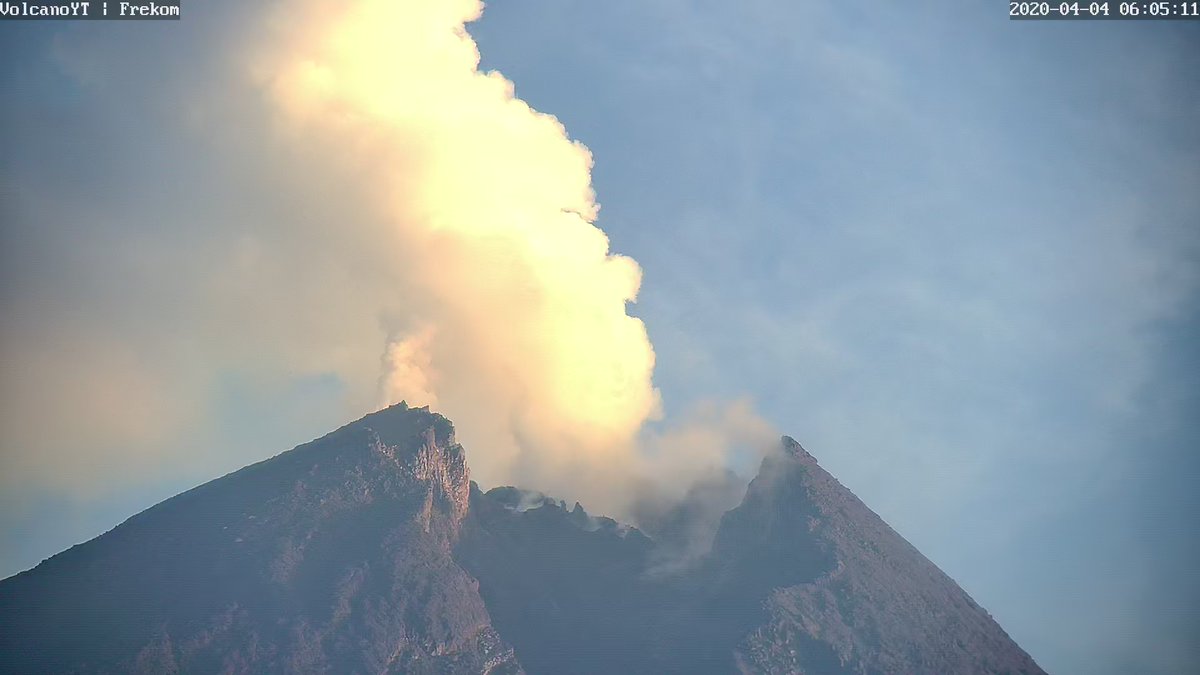
El Volcán Merapi es más activo de Indonesia, vuelve a entrar en erupción, se emite una advertencia de vuelo. El Monte Merapi, el volcán más activo de Indonesia, hizo erupción nuevamente el Viernes 10 Abril 2020, arrojando una columna de cenizas de hasta 3.000 metros de altura, dijo la Agencia de Vulcanología de Indonesia.

El volcán de 2.930 metros que se encuentra en la isla principal de Java en la República de Indonesia, ha arrojado cenizas 13 veces desde Septiembre 2019, lo que indica que la intrusión de nuevo magma ha estado ocurriendo, dijo la agencia. Se pidió a los residentes que viven alrededor de las laderas que tomen medidas de precaución ante posibles lluvias de cenizas, dijo la agencia en un comunicado. Una zona prohibida ha sido declarada en un radio de 3 km desde el cráter, dijo.

La agencia emitió un aviso de observación de volcanes para la aviación (VONA) con el nivel del segundo código naranja más alto, lo que significa que la erupción pone en peligro la aviación y se requieren aviones para evitar el espacio aéreo alrededor de las nubes calientes. El Volcán Merapi entró en erupción el 2 Abril 2020 con una columna de cenizas esparcidas por hasta 3 km hasta el cielo.

El Monte Merapi, uno de los 129 volcanes activos de Indonesia, ha entrado en erupción regularmente desde 1548. Durante sus erupciones de octubre a Noviembre 2010, un total de 353 personas fueron asesinadas y otras 350,000 fueron desplazadas. Indonesia, una gran nación archipelágica, es propensa a actividades volcánicas y terremotos, ya que se encuentra a lo largo del «Anillo de Fuego del Pacífico».

Merapi 20200410/0216Z

(1) AVISO DE OBSERVATORIO DE VOLCÁN PARA AVIACIÓN – VONA
(2) Emitido: 20200410/0216Z
(3) Volcán: Merapi (263250)
(4) Código de color de aviación actual: NARANJA
(5) Código de color de aviación anterior:naranja
(6) Fuente: Observatorio del Volcán Merapi
(7) Número de aviso: 2020MER12
(8) Volcán Ubicación: S 07 grados 32 min 31 segundos E 110 grados 26 minutos 31 segundos
(9) Zona: Región especial de Yogyakarta, Indonesia
(10) Elevación de cumbre: 9498 pies (2968 m)
(11) Resumen de actividad volcánica: Erupción con nube de cenizas volcánicas a las 0910Z (0210 LT).
(12) Altura de la nube volcánica: La mejor estimación de la cima de la nube de cenizas es de alrededor de 19098 FT (5968 M) sobre el nivel del mar, puede ser mayor de lo que se puede observar claramente. Fuente de datos de altura: observador en tierra.
(13) Otra información de la nube volcánica: Nube de cenizas moviéndose hacia el noroeste
(14) Observaciones: Erupción registrada en el sismograma con amplitud máxima de 75 mm y 103 segundos de duración. La erupción se ha detenido.
(15) Contactos: Centro de la Agencia Geológica del Ministerio de Energía y Recursos Minerales para la mitigación de riesgos geológicos y vulcanológicos (CVGHM)
Tel: + 62-22-727-2606
Facsímil: +62-22-720-2761
Correo electrónico: pvmbg@esdm.go.id
(16) Siguiente aviso: Se emitirá un nuevo VONA si las condiciones cambian significativamente o si se cambia el código de color.
La última información volcánica se publica en VONA
MAGMA Indonesia: https://magma.vsi.esdm.go.id/vona/ AW-Icon AW001

Volcanian (@_Volcanian_) | TwitterActivate Merapi Volcano in Indonesia

Archivo:Indonesia on the globe (Indonesia centered).svg ...Merapi Volcano erupts in the Republic of Indonesia

Indonesia’s most active volcano, Merapi, erupts again, a flight warning is issued. Mount Merapi, Indonesia’s most active volcano, erupted again on Friday April 10, 2020, spewing a column of ash up to 3,000 meters high, the Indonesian Volcanology Agency said.

The 2,930-meter volcano, located on the main island of Java in the Republic of Indonesia, has spewed ash 13 times since September 2019, indicating that the intrusion of new magma has been occurring, the agency said. Residents living around the slopes were asked to take precautionary measures against possible ashfalls, the agency said in a statement. A prohibited zone has been declared within a 3 km radius from the crater, he said.

The agency issued an Aviation Volcano Observation Notice (VONA) with the second-highest orange code level, meaning the eruption endangers aviation and aircraft are required to avoid airspace around hot clouds. The Merapi Volcano erupted on April 2 with a column of ash scattered for up to 3 km to the sky.

Mount Merapi, one of Indonesia’s 129 active volcanoes, has erupted regularly since 1548. During its eruptions from October to November 2010, a total of 353 people were killed and another 350,000 were displaced. Indonesia, a great archipelagic nation, is prone to volcanic activities and earthquakes as it is located along the «Pacific Ring of Fire».

Merapi 20200410 / 0216Z

(1) NOTICE OF VOLCANO OBSERVATORY FOR AVIATION – VONA
(2) Issued: 20200410 / 0216Z
(3) Volcano: Merapi (263250)
(4) Current aviation color code: ORANGE
(5) Previous aviation color code: orange
(6) Source: Merapi Volcano Observatory
(7) Notice number: 2020MER12
(8) Volcano Location: S 07 degrees 32 min 31 seconds E 110 degrees 26 minutes 31 seconds
(9) Zone: Yogyakarta Special Region, Indonesia
(10) Summit elevation: 9498 ft (2968 m)
(11) Summary of volcanic activity: Eruption with volcanic ash cloud at 0910Z (0210 LT).
(12) Volcanic Cloud Height: The best estimate of the top of the ash cloud is around 19098 FT (5968 M) above sea level, it may be higher than can be clearly seen. Height data source: ground observer.
(13) Other volcanic cloud information: Ash cloud moving northwest
(14) Observations: Eruption registered in the seismogram with a maximum amplitude of 75 mm and a duration of 103 seconds. The eruption has stopped.
(15) Contacts: Center of the Geological Agency of the Ministry of Energy and Mineral Resources for the mitigation of geological and volcanological risks (CVGHM)
Tel: + 62-22-727-2606
Facsimile: + 62-22-720-2761
Email: pvmbg@esdm.go.id
(16) Next notice: A new VONA will be issued if conditions change significantly or if the color code is changed.
The latest volcanic information is published in VONA
MAGMA Indonesia website: https://magma.vsi.esdm.go.id/vona/ AW-Icon AW002

2020MER12Aktifkan Gunung Merapi di Indonesia

Gunung Merapi meletus di Republik Indonesia

Gunung berapi paling aktif di Indonesia, Merapi, meletus lagi, peringatan penerbangan dikeluarkan. Gunung Merapi, gunung berapi paling aktif di Indonesia, meletus lagi pada Jumat 10 April 2020, memuntahkan satu kolom abu setinggi 3.000 meter, kata Badan Vulkanologi Indonesia.

Gunung berapi 2.930 meter, yang terletak di pulau utama Jawa di Republik Indonesia, telah memuntahkan abu 13 kali sejak September 2019, menunjukkan bahwa intrusi magma baru telah terjadi, kata badan tersebut. Warga yang tinggal di sekitar lereng diminta untuk mengambil tindakan pencegahan terhadap kemungkinan abu, kata badan itu dalam sebuah pernyataan. Zona terlarang telah dinyatakan dalam radius 3 km dari kawah, katanya.

Badan itu mengeluarkan Aviation Volcano Observation Notice (VONA) dengan tingkat kode oranye tertinggi kedua, yang berarti letusan itu membahayakan penerbangan dan pesawat diminta untuk menghindari wilayah udara di sekitar awan panas. Gunung Merapi meletus pada 2 April 2020 dengan kolom abu yang tersebar hingga 3 km ke langit.

Gunung Merapi, salah satu dari 129 gunung berapi aktif di Indonesia, telah meletus secara teratur sejak 1548. Selama letusannya dari Oktober hingga November 2010, total 353 orang tewas dan 350.000 lainnya mengungsi. Indonesia, negara kepulauan yang hebat, rentan terhadap aktivitas vulkanik dan gempa bumi karena terletak di sepanjang «Cincin Api Pasifik».

Merapi 20200410 / 0216Z

(1) PEMBERITAHUAN OBSERVATORIUM VOLCANO UNTUK PENERBANGAN – VONA
(2) Dikeluarkan: 20200410/0216Z
(3) Gunung berapi: Merapi (263250)
(4) Kode warna penerbangan saat ini: ORANGE
(5) Kode warna penerbangan sebelumnya: oranye
(6) Sumber: Observatorium Gunung Merapi
(7) Nomor pemberitahuan: 2020MER12
(8) Lokasi Gunung Berapi: S 07 derajat 32 menit 31 detik E 110 derajat 26 menit 31 detik
(9) Zona: Daerah Istimewa Yogyakarta, Indonesia
(10) Ketinggian puncak: 9498 kaki (2968 m)
(11) Ringkasan aktivitas vulkanik: Erupsi dengan awan abu vulkanik pada 0910Z (0210 LT).
(12) Tinggi Awan Vulkanik: Perkiraan terbaik dari puncak awan abu adalah sekitar 19098 FT (5968 M) di atas permukaan laut, mungkin lebih tinggi daripada yang dapat dilihat dengan jelas. Sumber data ketinggian: pengamat tanah.
(13) Informasi awan vulkanik lainnya: Awan abu bergerak ke barat laut
(14) Pengamatan: Letusan terdaftar dalam seismogram dengan amplitudo maksimum 75 mm dan durasi 103 detik. Letusan telah berhenti.
(15) Kontak: Pusat Badan Geologi Kementerian Energi dan Sumber Daya Mineral untuk mitigasi risiko geologis dan vulkanologis (CVGHM)
Tel: + 62-22-727-2606
Faksimili: + 62-22-720-2761
Email: pvmbg@esdm.go.id
(16) Pemberitahuan selanjutnya: VONA baru akan dikeluarkan jika kondisinya berubah secara signifikan atau jika kode warna diubah.
Informasi vulkanik terbaru dipublikasikan di VONA
MAGMA Indonesia: https://magma.vsi.esdm.go.id/vona/ AW-Icon AW002


Ξ A I R G W A Y S Ξ
SOURCE: Airgways.com
DBk: Magma.vsi.esdm.go.id/vona / Straitstimes.com / Airgways.com
AW-POST: 202004101248AR

A\W   A I R G W A Y S ®

Boeing considera recorte 10% personal

AW-Boeing 737 MAX_Assembly-lineAW | 2020 04 10 11:05 | INDUSTRY

Boeing_IsologotypeLa compañía Boeing consideraría recorte 10% de personal

The Boeing Company está considerando un recorte del 10% en su fuerza laboral. El plan de Boeing podría incluir compras, jubilaciones anticipadas y despidos involuntarios, según un informe. Se esperaba que los recortes de la fuerza laboral de Boeing provengan en gran medida del brazo comercial del gigante aeroespacial, que ha sido presionado por la crisis en la industria de las aerolíneas globales.

La compañía aeroespacial estadounidense no ha tomado ninguna decisión todavía sobre inminentes recortes laborales del 10% del personal, pero se encontraba entre los escenarios bajo consideración. La semana pasada, Boeing anunció ofertas de compra voluntaria para sus aproximadamente 160.000 empleados, mientras continúa lidiando con las consecuencias de la pandemia del Coronavirus en los viajes aéreos y la perspectiva de un alto a largo plazo en los pedidos de nuevos aviones. El CEO de Boeing, David Calhoun, dijo que la oferta de despidos voluntarios «apunta a reducir la necesidad de otras acciones de la fuerza laboral».

Deteniendo producción

El fabricante de aeronaves que todavía continua lidiando por la puesta a tierra prolongada de su Boeing 737 MAX, a principios de esta semana había anunciado la suspensión temporal de la línea de ensamblaje del Boeing 787 en su fábrica en North Charleston, en el Estado de Carolina del Sur, siguiendo una orden del Gobernador Henry McMaster que ordena que los residentes deben quedarse en casa y limitar la actividad no esencial.

«Es nuestro compromiso centrarnos en la salud y la seguridad de nuestros compañeros de equipo al evaluar la propagación del [Coronavirus] en todo el estado, su impacto en la confiabilidad de nuestra cadena de suministro global y ese efecto dominó en el programa 787. Estamos trabajando en alineación con los funcionarios del gobierno estatal y local y los funcionarios de salud pública para tomar las medidas que mejor protejan a nuestra gente», dijo Brad Zaback, Vicepresidente y Gerente General del Programa 787. La planta en Carolina del Sur fue la última fábrica de aviones comerciales de Boeing que todavía operaba durante la pandemia del Coronavirus.

Boeing dijo el Domingo 05/04 por la noche que sus centros de fabricación en el área de Seattle permanecerían cerrados indefinidamente debido a la propagación del Coronavirus. Boeing, en un correo electrónico a los empleados de Washington, dijo que estaba extendiendo el cierre planificado de dos semanas en Seattle en lugar de reabrir el Miércoles 08/04. La decisión afecta a unos 30.000 de los 70.000 empleados de Boeing en el Estado de Washington. AW-Icon AW001

AW-North_Charleston_001Boeing considers 10% personal cut

Boeing company would consider cutting 10% of personnel

AW-Boeing_RentonThe Boeing Company is considering a 10% cut in its workforce. Boeing’s plan could include purchases, early retirements, and involuntary layoffs, according to a report. Boeing’s workforce cuts were expected to come largely from the commercial arm of the aerospace giant, which has been pressured by the crisis in the global airline industry.

The US aerospace company has not yet made a decision on impending job cuts of 10% of staff, but it was among the scenarios under consideration. Last week, Boeing announced voluntary purchase offers for its approximately 160,000 employees, while continuing to grapple with the consequences of the Coronavirus pandemic on air travel and the prospect of a long-term halt in orders for new planes. Boeing CEO David Calhoun said the offer of voluntary layoffs «aims to reduce the need for further action by the workforce».

Stopping production

The aircraft manufacturer, which is still struggling with the prolonged grounding of its Boeing 737 MAX, earlier this week had announced the temporary suspension of the Boeing 787 assembly line at its factory in North Charleston, in the State of Carolina. South, following an order from Governor Henry McMaster that residents must stay home and limit nonessential activity.

«It is our commitment to focus on the health and safety of our teammates as we assess the spread of [Coronavirus] across the state, its impact on the reliability of our global supply chain, and that effect dominated the 787 Program. We are working in alignment with state and local government officials and public health officials to take steps that best protect our people», said Brad Zaback, Vice President and General Manager of the 787 Program. The South Carolina plant was the last Boeing commercial aircraft factory to still operate during the Coronavirus pandemic.

Boeing said Sunday 05/04 at night that its manufacturing centers in the Seattle area would remain closed indefinitely due to the spread of the Coronavirus. Boeing, in an email to Washington employees, said it was extending the planned two-week shutdown in Seattle instead of reopening on Wednesday 08/04. The decision affects some 30,000 of Boeing’s 70,000 employees in Washington State. AW-Icon AW002


Ξ A I R G W A Y S Ξ
SOURCE: Airgways.com
DBk: Boeing.com / Airgways.com
AW-POST: 202004101105AR

A\W   A I R G W A Y S ®

Stand-by nueva línea ensamblaje A321

AW-Airbus_A321_700AW | 2020 04 10 10:44 | INDUSTRY

Airbus_Group_Logo_2014.svg - copiaAirbus suspende agregar nueva línea de ensamblaje del A321

Airbus Group SE ha archivado sus planes para crear una nueva línea de ensamblaje en Toulouse, Francia, para su avión A321 mientras la compañía lucha con la crisis del coronavirus. El consorcio europeo anunció planes para la línea en Enero 2020 cuando su problema era cómo satisfacer la demanda récord del avión desde su sitio en Hamburgo, Alemania, que ha tenido problemas para acomodar las horas adicionales y la complejidad que implica hacer el avión de pasillo único más ambicioso de Airbus.

Aunque el plan para convertir la planta de la línea de producción del A380 en franco retroceso de la compañía en Toulouse, Francia, la urgencia de seguir adelante con la planificación de activar otra línea adicional ha desaparecido con las presiones financieras de la crisis de lapandemia, dijeron fuentes de la industria. «Nuestros planes para una nueva línea A321 en Toulouse están pausados, en espera. Cuando veamos que las tarifas vuelven a subir, nos volveremos a conectar a los planes», confirmó un portavoz de Airbus. AW-Icon AW001

Airbus to Add A321 Production Capacity in ToulouseAirbus stand-by new assembly line A321

Airbus suspends adding new A321 assembly line

Airbus_Isologotype_001Airbus Group SE has archived its plans to create a new assembly line in Toulouse, France, for its A321 aircraft as the company struggles with the coronavirus crisis. The European consortium announced plans for the line in January 2020 when its problem was how to meet the plane’s record demand from its site in Hamburg, Germany, which has struggled to accommodate overtime and the complexity of making the single-aisle plane. more ambitious than Airbus.

Although the plan to turn the A380 production line plant into frank setback for the company in Toulouse, France, the urgency to move forward with planning to activate another additional line has disappeared with the financial pressures of the pandemic crisis, industry sources said. «Our plans for a new A321 line in Toulouse are paused, on hold. When we see fares go up again, we will reconnect to the plans», confirmed an Airbus spokesperson. AW-Icon AW002


Ξ A I R G W A Y S Ξ
SOURCE: Airgways.com
DBk: Airbus.com / Airgways.com
AW-POST: 202004101044AR

A\W   A I R G W A Y S ®

Autorizan vuelos expatriación

AW-Wikipedia_Buenos_Aires_-_Aéroport_International_Ezeiza_-_Janvier_2010AW | 2020 04 10 10:17 | AIRLINES / GOVERNMENT

Gobierno Argentina autorizará vuelos de otras compañías para repatriación/expatriación

La Administración Nacional de Aviación Civil (ANAC) de Argentina será la encargada de analizar el pedido de otras líneas aéreas para realizar vuelos especiales que trasladen pasajeros de expatriación. El Gobierno de Argentina autorizará a las compañías aéreas que lo soliciten la posibilidad de realizar un vuelo especial para trasladar a los pasajeros que se encuentren en nuestro país y no pudieron viajar en los vuelos regulares que arribaron por última vez el Lunes 06/04, confirmaron fuentes del Ministerio de Transporte de la Nación.

La autorización será canalizada por la Administración Nacional de Aviación Civil de Argentina, que fue instruida en ese sentido por la cartera de Transporte y será la encargada de analizar cada solicitud en particular y resolver, en consecuencia, junto a las autoridades de Salud. La condición para poder concretar el vuelo, que tendrá carácter de sanitario, es que, en su viaje a Buenos Aires, traiga argentinos que se encuentran varados en el exterior y no lograron abordar alguno de los vuelos regulares que llegaron hasta el 06/04 o no tienen lugar en los vuelos especiales programados por Aerolíneas Argentinas.

Existen varias compañías que analizan la posibilidad de concretar un vuelo de estas características, teniendo en cuenta la cantidad de europeos y estadounidenses que se encuentran en Argentina sin haber podido retornar a sus países de origen. “Se está analizando cada pedido y se irá resolviendo puntualmente, de a uno por vez. Se trata de una situación de emergencia total, en la cual hay que ir tomando decisiones que permitan acercar una solución a los problemas que presenta cada viajero. Estamos ante un panorama complejo, con cierre de fronteras y circulación, con estrictas medidas sanitarias y hay que contemplar cada una de estas situaciones, antes de cada decisión”, indicó la cartera de Transporte.

La ANAC ha expresado que “se están tomando medidas sustanciales, haciendo todo lo posible para que esos vuelos finalmente se realicen y los argentinos que se encuentran en el exterior, puedan retornar a sus hogares. Se está hablando con aerolíneas de todo el mundo, procurando concretar vuelos a los que pueda acceder cada argentino varado. Existe un equipo en la ANAC que está trabajando a destajo para poder aportar las soluciones necesarias desde que se inició esto, con un cuerpo de médicos que no descansa en los aeropuertos”. AW-Icon AW001

AW-78788WkExpatriation flights authorized

Argentine Government will authorize flights from other companies for repatriation/expatriation

The National Civil Aviation Administration (ANAC) of Argentina will be in charge of analyzing the request of other airlines to carry out special flights that transfer expatriation passengers. The Government of Argentina will authorize the airlines that request it, the possibility of making a special flight to transfer passengers who are in our country and could not travel on the regular flights that last arrived on Monday 06/04, they confirmed sources of the Ministry of Transport of the Nation.

The authorization will be channeled by the National Civil Aviation Administration of Argentina, which was instructed in this regard by the Transportation portfolio and will be in charge of analyzing each particular request and, consequently, working with the Health authorities. The condition to be able to make the flight, which will be sanitary, is that, on your trip to Buenos Aires, you bring Argentines who are stranded abroad and were unable to board any of the regular flights that arrived until 06/04 or they do not take place on special flights scheduled by Aerolíneas Argentinas.

There are several companies that analyze the possibility of completing a flight of these characteristics, taking into account the number of Europeans and Americans who are in Argentina without having been able to return to their countries of origin. “Each order is being analyzed and will be resolved promptly, one at a time. It is a total emergency situation, in which decisions must be made to bring a solution to the problems that each traveler presents. We are faced with a complex panorama, with the closing of borders and circulation, with strict sanitary measures, and each of these situations must be considered before each decision», said the Transport Ministry.

ANAC has expressed that “substantial measures are being taken, doing everything possible so that these flights are finally carried out and the Argentines who are abroad can return to their homes. We are talking to airlines around the world, trying to specify flights that every stranded Argentine can access. There is a team at ANAC that is working overtime to be able to provide the necessary solutions since this started, with a body of doctors who do not rest at airports”. AW-Icon AW002


Ξ A I R G W A Y S Ξ
SOURCE: Airgways.com
DBk: Argentina.gob.ar/transporte / Anac.gov.ar / Airgways.com / Wikipedia.org
AW-POST: 202004101017AR

A\W   A I R G W A Y S ®

Boeing persiguiendo volar 737 MAX

Adrien Daste / SafranAW | 2020 04 09 18:12 | INDUSTRY / AVIATION SAFETY

Boeing_IsologotypeLos peligros de solucionar un problema de hardware con softwareAW-Icon_Boeing 737 MAX

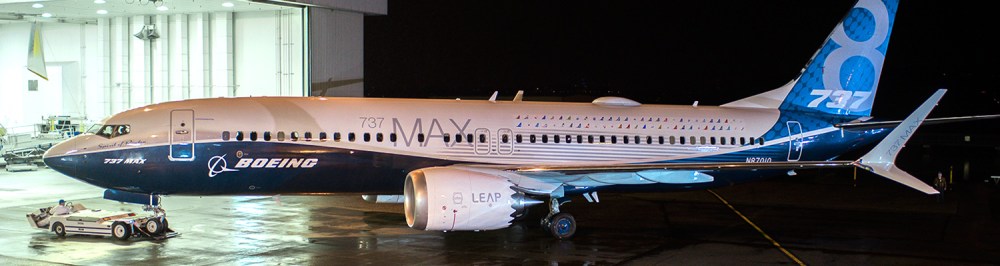
Un nuevo Boeing 737 MAX se construyó en sólo nueve días. En ese momento, un equipo de 12.000 personas convierte un conjunto suelto de piezas en un avión terminado de US$ 120 millones con una tecnología verdaderamente de vanguardia: alerones basados ​​en los diseñados por la NASA, motores que cuentan con el primer ventilador de álabes de fibra de carbono del mundo y computadoras con la misma potencia de procesamiento que el Super Nintendo.

El 737 MAX está conectado a tierra desde Marzo 2019, después de que un software mal programado ha causado dos bloqueos en dos aeronaves produciendo dos accidentes aéreos con un saldo de 346 personas fallecidas. En el transcurso de este tiempo, Boeing ha recibido mucho escrutinio desde la puesta en tierra de su aeronave best seller.

Cada Boeing 737 MAX tiene dos computadoras de control de vuelo. Esto quita parte de la carga de trabajo de los pilotos, ya sea a través de la automatización completa (como el piloto automático) o mediante ajustes de control precisos durante el vuelo manual. Estas computadoras pueden volar literalmente el avión, tienen autoridad sobre las principales superficies de control y estranguladores, lo que significa que cualquier mal funcionamiento podría volverse catastrófico rápidamente. Por lo tanto, es más importante que los fabricantes elijan hardware que sea seguro, en lugar de ejecutar una flota de aviones con tecnología de punta con errores que aún no se han resuelto.

Boeing tuvo incorporado en el 737 MAX el mantener los Sistemas Collins Aeroespacial serie FCC-730, que fue construido en 1996. Cada equipo cuenta con un par de un solo núcleo, los procesadores de 16 bits que se ejecutan de forma independiente el uno del otro, lo que reduce la potencia de cálculo pero también evita que un procesador defectuoso destruya todo el sistema. Incluso para los estándares de tecnología de consumo de finales de los 90, los FCC-730 estaban detrás de la curva. Cuando salieron al mercado, Nintendo ya había reemplazado su consola SNES de 16 bits con la Nintendo 64, e IBM había creado la primera consola dual de procesador de núcleo del mundo.

Por supuesto, lo antiguo y lo lento no siempre es peor: la serie 737 Next Generation es el avión de cuerpo estrecho más seguro jamás fabricado, en parte debido a estas computadoras confiables, aunque poco espectaculares. Para mantener bajos los costos, Boeing también quería reutilizarlos en la próxima versión del 737. El 737 MAX aún podría estar volando hoy si esas computadoras simplemente tuvieran que realizar las mismas tareas que tuvieron durante casi 30 años. Pero Boeing necesitaba que hicieran mucho más, pero se trataba de acelerar el trabajo urgente frente a la competitividad del mercado europeo. En 2010, el único rival de Boeing, Airbus, presentó el A320NEO, un competidor directo de la 737 Next Generation que podría volar más lejos con menos combustible y con menos emisiones que cualquier otro avión de cuerpo estrecho. Boeing fue tomado por sorpresa: mientras Airbus había desarrollado la tercer generación del A320 en secreto, los ingenieros de Boeing habían pasado cinco años debatiendo si diseñar una nueva aeronave de reemplazo del legendario 737 o simplemente actualizar el fuselaje. El A320NEO cambió eso en cuestión de meses.

AW-Boeing737max_737001

Pero para ofrecer su propio producto nuevo cuando salió el nuevo Airbus, Boeing tendría que sacar el avión por la puerta en solo cinco años, menos tiempo del que llevó desarrollar el 777 o el 787. El principal punto de venta del nuevo 737 era claro, presentar la variante MAX con nuevos motores que aumentarían la eficiencia de combustible y el alcance del avión. Pero para alcanzar esa ambiciosa fecha de lanzamiento, Boeing tendría que tomar atajos en casi todo lo demás. Los nuevos motores, que eran más grandes y pesados ​​que los de la próxima generación, hicieron que el 737 MAX fuera tan eficiente en combustible como su rival. Pero también interrumpieron el flujo de aire alrededor de las alas y las superficies de control del avión de una manera muy específica. Durante los ascensos en ángulos altos, esta interrupción causaría que las columnas de control en el avión se aflojen repentinamente, lo que podría causar que los pilotos pierdan el control del avión durante una maniobra peligrosa.

Boeing podría haber solucionado esta anomalía aerodinámica con un cambio de hardware de superficies adaptativas en la carcasa del motor, alas reestructuradas, o incluso simplemente agregando un Empujador de Palanca a los controles que presionarían mecánicamente la columna de control en el momento justo. Pero los cambios de hardware agregaron tiempo, costo y escrutinio regulatorio al proceso de desarrollo. La gestión de Boeing tenía un objetivo: evitar cambios, evitar reguladores, cumplir con el cronograma de período para su rollout.

AW-Boeing737max_737001-1

Entonces, el equipo de desarrollo atacó el problema de hardware con el software. Además del paquete de software estándar en las dos computadoras del 737 MAX, Boeing cargó otra rutina llamada Sistema de Aumento de las Características de Maniobra (MCAS). El sistema actuaría esperando que el avión entrara en una subida de alto ángulo, entonces actuaría, girando el estabilizador horizontal del avión para contrarrestar las fuerzas aerodinámicas cambiantes. Sobre el papel, parecía lo suficientemente elegante. También tenía un beneficio secundario: la Administración Federal de Aviación (FAA) no analiza el software tan duro como lo hace cualquier cambio físico en la célula. Entonces MCAS fue aprobado con una revisión mínima, computadoras obsoletas y todo.

Pero el acceso directo de software de Boeing tenía un problema grave. Bajo ciertas circunstancias, se activó erróneamente, enviando al avión a un bucle infinito de inmersiones de nariz. A menos que los pilotos puedan, en menos de cuatro segundos, diagnosticar correctamente el error, accionar un interruptor de emergencia específico y comenzar las maniobras de recuperación, perderán el control del avión y se estrellarán, que es exactamente lo que sucedió en el caso del vuelo JT-610 de Lion Air y el vuelo ET-302 de Ethiopian Airlines.

Con el segundo accidente el Boeing 737 MAX fue aterrizado en todo el mundo. Desde entonces, Boeing ha estado trabajando para solucionar el problema del software y lograr que el avión sea aprobado por los reguladores, pero las fiscalizaciones han sido lentas.

AW-Boeing737max_737001-2

En Junio 2019, Boeing presentó una solución de software a la FAA para su aprobación, pero las pruebas de estrés posteriores de las computadoras del 737 MAX revelaron más fallas. Son vulnerables a los errores de un solo bit que podrían deshabilitar sistemas de control completos o lanzar el avión a una inmersión no ordenada. No se inician correctamente, incluso pueden congelarse en el modo de piloto automático, incluso cuando el avión está en una parada, lo que podría dificultar los esfuerzos de recuperación en medio de una emergencia en vuelo. A pesar de todo esto, Boeing insiste en que puede arreglar todo con software. Boeing ha optado por no ir con una computadora nueva y más potente o agregar más de ellos a los dos que ya están allí, para distribuir mejor la carga de trabajo. A modo de comparación, el A320NEO de Airbus tiene computadoras de época similar, pero tiene siete de ellas. Boeing está «dedicando todos los recursos necesarios para garantizar que las mejoras al 737 MAX sean exhaustivas y se prueben a fondo. No anticipamos cambios en el hardware», dijo un portavoz.

Hasta ahora, la FAA está de acuerdo: completó su revisión del software a principios de este año, y parece estar de acuerdo con las correcciones de software propuestas. Pero devolver el 737 MAX al servicio no es tan simple como obtener la aprobación de la agencia para el software. Debido a que Boeing esencialmente intimidó a la FAA para que certifique al 737 MAX en primer lugar, la agencia está ansiosa por demostrar que sabe lo que está haciendo ahora. Sus inspectores están escudriñando el avión con menos presión para precipitarse, y han encontrado varios problemas nuevos con el avión: cableado defectuoso, escombros en los tanques de combustible y componentes del ala que no cumplen con los estándares de la FAA.
AW-Boeing_700877

Aun así, la reputación de la FAA ya está arruinada. Durante décadas, los reguladores de la aviación se han basado en acuerdos recíprocos para acelerar el proceso de certificación de aviones en otros países: si un avión es aprobado por un regulador, casi siempre lo aprueban todos. Ahora, sin embargo, Europa, China e India quieren certificar el avión de forma independiente, lo que agregará meses a la línea de tiempo.

Una vez que el Boeing 737 MAX obtenga la luz verde reglamentaria, aún pasarán varios meses antes de que pueda transportar pasajeros nuevamente. En Enero 2020, Boeing anunció que para obtener la certificación para volar el 737 MAX, los pilotos tendrán que pasar por un entrenamiento de simulador de movimiento completo actualizado. Este es un retiro completo de uno de los puntos originales del avión: que los pilotos solo necesitaban una lección de iPad de una hora para volar el nuevo modelo 737.

El problema es que simplemente no hay tantos simuladores para todos. Solo hay 34 en todo el mundo, con solo dos compañías aprobadas para hacer entrenamientos. Para poner esto en perspectiva, un ejemplo es el hogar de dos aerolíneas con base en Dallas-Fort Worth. Tanto Southwest Airlines y American Airlines tienen 13.000 pilotos formados en Boeing 737 y solo un simulador 737 MAX. Asumiendo cuatro horas de simulador por piloto y ejecutando los simuladores las 24 horas del día, los siete días de la semana, a ambas aerolíneas les tomaría unos seis años obtener la aprobación de todos para volar el 737 MAX. Aunque hay que realizar la salvedad de que no todos volarán al mismo tiempo las nuevas unidades incorporadas por ambas compañías. El mismo ejemplo se reproduce a nivel mundial donde unas cincuenta aerolíneas con aeronaves 737 MAX en sus flotas necesitarían entrenamiento.

AW-Boeing737max_737001-3

Los atajos que Boeing ha realizado para llevar al 737 MAX a la producción ahora lo mantienen en el suelo. Alguna vez fue el avión más vendido en la historia. Ahora, los pedidos de estas aeronaves se han detenido. La compañía recibió solo 18 pedidos nuevos, una disminución del 80% en comparación con 2019. Su competidor, Airbus, registró 296 nuevas órdenes.

Perspectivas del 737 MAX

A pesar de la disminución de la popularidad del Boeing 737 MAX, Boeing sigue siendo optimista sobre las perspectivas futuras de la variante más moderna de la línea 737. «Nuestra estimación para devolver la flota 737 MAX al servicio sigue siendo a mediados de 2020», dijo el portavoz de Boeing.

Parece que nada impulsará a la FAA a enviar este diseño en particular de nuevo a la mesa de los tableros de dibujo. En cambio, Boeing intentará nuevamente compensar una falla de hardware en el 737 MAX con un software ligeramente reescrito. Es la misma filosofía de diseño que creó esta catástrofe para Boeing en primer lugar, y es la misma filosofía que hasta ahora no ha logrado producir un avión seguro y confiable. AW-Icon AW001

300_6083Boeing chasing fly 737 MAX

Boeing_Isologo.svgThe dangers of solving a hardware problem with software

A new Boeing 737 MAX was built in just nine days. At the time, a team of 12,000 people turns a loose set of parts into a US$ 120 million finished aircraft with truly cutting-edge technology: spoilers based on those designed by NASA, engines that feature the world’s first fan. The world’s carbon fiber blades and computers with the same processing power as the Super Nintendo.

The 737 MAX has been grounded since March 2019, after poorly programmed software has caused two crashes on two aircraft resulting in two plane crashes with a balance of 346 people killed. Over the course of this time, Boeing has received a lot of scrutiny since the grounding of its best-selling aircraft.

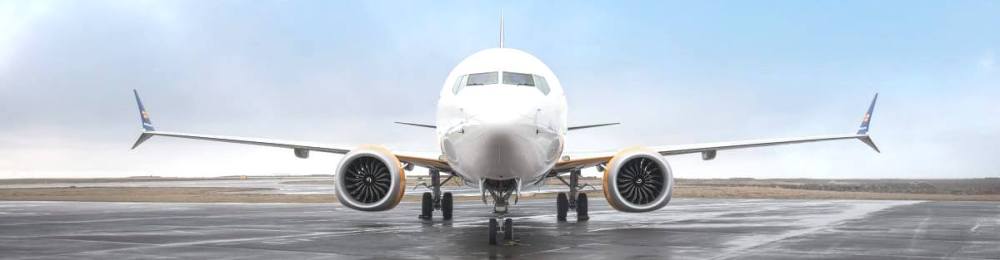
Each Boeing 737 MAX has two flight control computers. This takes some of the pilots’ workload off, either through full automation (like the autopilot) or through fine-tuning control adjustments during manual flight. These computers can literally fly the plane, they have authority over major throttles and control surfaces, meaning that any malfunction could quickly become catastrophic. Therefore, it is more important for manufacturers to choose hardware that is secure, rather than running a fleet of high-tech aircraft with bugs that have yet to be resolved.

Boeing had built into the 737 MAX maintaining the Collins Aerospace Systems FCC-730 series, which was built in 1996. Each team has a pair of single-core, 16-bit processors that run independently of each other. This reduces computing power but also prevents a faulty processor from destroying the entire system. Even by the consumer technology standards of the late 1990s, the FCC-730s were behind the curve. When they were released, Nintendo had already replaced its 16-bit SNES console with the Nintendo 64, and IBM had created the world’s first dual-core processor console.
AW-7000432567

Of course, the old and the slow is not always worse: the 737 Next Generation series is the safest narrow-body aircraft ever made, in part because of these reliable, if unspectacular, computers. To keep costs down, Boeing also wanted to reuse them in the next version of the 737. The 737 MAX could still be flying today if those computers simply had to do the same tasks they had for nearly 30 years. But Boeing needed them to do much more, but it was about speeding up the urgent work against the competitiveness of the European market. In 2010, Boeing’s only rival, Airbus, introduced the A320NEO, a direct competitor to the 737 Next Generation that could fly further with less fuel and lower emissions than any other narrow-body aircraft. Boeing was caught off guard: While Airbus had secretly developed the third-generation A320, Boeing engineers had spent five years debating whether to design a new replacement aircraft for the legendary 737 or simply upgrade the fuselage. The A320NEO changed that in a matter of months.

AW-Boeing737max_737002

But to offer its own new product when the new Airbus came out, Boeing would have to get the plane out the door in just five years, less time than it took to develop the 777 or 787. The main selling point of the new 737 was clear, Introducing the MAX variant with new engines that would increase the fuel efficiency and range of the aircraft. But to reach that ambitious launch date, Boeing would have to take shortcuts on almost everything else. The new engines, which were bigger and heavier than the next generation, made the 737 MAX as fuel-efficient as its rival. But they also disrupted air-flow around the plane’s wings and control surfaces in a very specific way. During high angle ascents, this disruption would cause the control columns on the plane to suddenly loosen, which could cause pilots to lose control of the plane during a dangerous maneuver.

Boeing could have fixed this aerodynamic anomaly with a hardware change of adaptive surfaces on the engine case, restructured wings, or even simply adding a Lever Pusher to the controls that would mechanically press the control column at the right time. But the hardware changes added time, cost, and regulatory scrutiny to the development process. Boeing’s management had one goal: to avoid changes, to avoid regulators, to meet the timeline for its rollout.AW-Boeing737max_737002-1

So the development team attacked the hardware issue with the software. In addition to the standard software package on the two 737 MAX computers, Boeing loaded another routine called the Maneuvering Characteristics Enhancement System (MCAS). The system would act by waiting for the plane to enter a high-angle climb, then it would act, rotating the plane’s horizontal stabilizer to counter the changing aerodynamic forces. On paper, it looked elegant enough. It also had a side benefit: The Federal Aviation Administration (FAA) doesn’t scan software as hard as any physical change in the cell does. So MCAS was approved with minimal revision, outdated computers, and everything.

But Boeing’s software shortcut had a serious problem. Under certain circumstances, it was mistakenly activated, sending the plane into an endless loop of nose dives. Unless pilots can, in less than four seconds, correctly diagnose the error, flip a dedicated emergency switch, and begin recovery maneuvers, they will lose control of the plane and crash, which is exactly what happened in the case of the Lion Air flight JT-610 and Ethiopian Airlines flight ET-302.

With the second accident of the Boeing 737 MAX was landed worldwide. Since then, Boeing has been working to fix the software problem and get the plane approved by regulators, but audits have been slow.

AW-Boeing737max_737002-2

In June 2019, Boeing submitted a software solution to the FAA for approval, but subsequent stress tests of the 737 MAX computers revealed more flaws. They are vulnerable to single-bit errors that could disable complete control systems or launch the plane into an unstructured dive. They don’t start correctly, they can even freeze in autopilot mode, even when the plane is at a stop, which could hinder recovery efforts in the midst of an in-flight emergency. Despite all this, Boeing insists that it can fix everything with software. Boeing has chosen not to go with a new, more powerful computer, or add more of them to the two already there, to better distribute the workload. For comparison, the Airbus A320NEO has similar vintage computers, but it has seven of them. Boeing is «dedicating all necessary resources to ensure that the improvements to the 737 MAX are comprehensive and thoroughly tested. We do not anticipate changes in hardware», a spokesperson said.

AW-B737MAX-United_rotate19So far, the FAA agrees: It completed its review of the software earlier this year and appears to agree with the proposed software fixes. But returning the 737 MAX to service is not as simple as getting agency approval for the software. Because Boeing essentially bullied the FAA into certifying the 737 MAX in the first place, the agency is eager to demonstrate that it knows what it is doing now. Its inspectors are scrutinizing the plane with less pressure to rush, and have found several new problems with the plane: faulty wiring, debris in fuel tanks, and wing components that do not meet FAA standards.

Still, the FAA’s reputation is already ruined. For decades, aviation regulators have relied on reciprocal agreements to speed up the aircraft certification process in other countries: if an aircraft is approved by a regulator, it is almost always approved by all. Now, however, Europe, China, and India want to independently certify the plane, which will add months to the timeline.

Once the Boeing 737 MAX gets the regulatory green light, it will still be several months before it can transport passengers again. In January 2020, Boeing announced that to obtain certification to fly the 737 MAX, pilots will have to go through an updated full-motion simulator training. This is a complete recall of one of the plane’s original highlights: that the pilots only needed an hour-long iPad lesson to fly the new 737.

The problem is that there simply are not so many simulators for everyone. There are only 34 worldwide, with only two companies approved for training. To put this in perspective, one example is the home of two Dallas-Fort Worth-based airlines. Both Southwest Airlines and American Airlines have 13,000 pilots trained in Boeing 737 and only one 737 MAX simulator. Assuming four hours of simulator per pilot and running the simulators 24 hours a day, seven days a week, it would take both airlines about six years to get everyone’s approval to fly the 737 MAX. Although it is necessary to realize that not all will fly at the same time the new units incorporated by both companies. The same example is replicated globally where some fifty airlines with 737 MAX aircraft in their fleets would need training.

AW-Boeing737max_737002-3

The shortcuts Boeing has made to get the 737 MAX into production now keep it on the ground. It was once the best-selling aircraft in history. Now, orders for these aircraft have stopped. The company received only 18 new orders, a decrease of 80% compared to 2019. Its competitor, Airbus, registered 296 new orders.

737 MAX Insights

Despite the decline in popularity of the Boeing 737 MAX, Boeing remains optimistic about the future prospects for the more modern variant of the 737 line. «Our estimate for returning the 737 MAX fleet to service remains in mid-2020», Boeing spokesman said.

It looks like nothing will prompt the FAA to send this particular design back to the drawing board table. Instead, Boeing will again try to compensate for a hardware failure in the 737 MAX with slightly rewritten software. It is the same design philosophy that created this catastrophe for Boeing in the first place, and it is the same philosophy that has so far failed to produce a safe and reliable aircraft. AW-Icon AW002


Ξ A I R G W A Y S Ξ
SOURCE: Airgways.com
DBk: Boeing.com / Faa.gov / Theverge.com / Airgways.com
AW-POST: 202004091812AR

A\W   A I R G W A Y S ®

Low cost Argentina sobrevuelan crisis

Aeropuerto El PalomarAW | 2020 04 09 16:16 | AIRLINES MARKET

Las low cost de Argentina pilotean mejor la crisis sanitaria mundial

La aviación es una de las industrias más perjudicadas por las restricciones gubernamentales para combatir la pandemia del Coronavirus. Desde la Asociación de Transporte Aéreo Internacional (IATA), el organismo que agrupa a las aerolíneas a nivel mundial, estiman que las pérdidas en el sector a nivel global alcanzarán los 252 mil millones de dólares y llegarán a 2431 millones de dólares puntualmente en la Argentina, donde están en riesgo 15 mil puestos de trabajo directos. El organismo, por intermedio de Peter Cerdá, Vicepresidente para las Américas, advirtió que «algunas aerolíneas locales podrían dejar de existir».

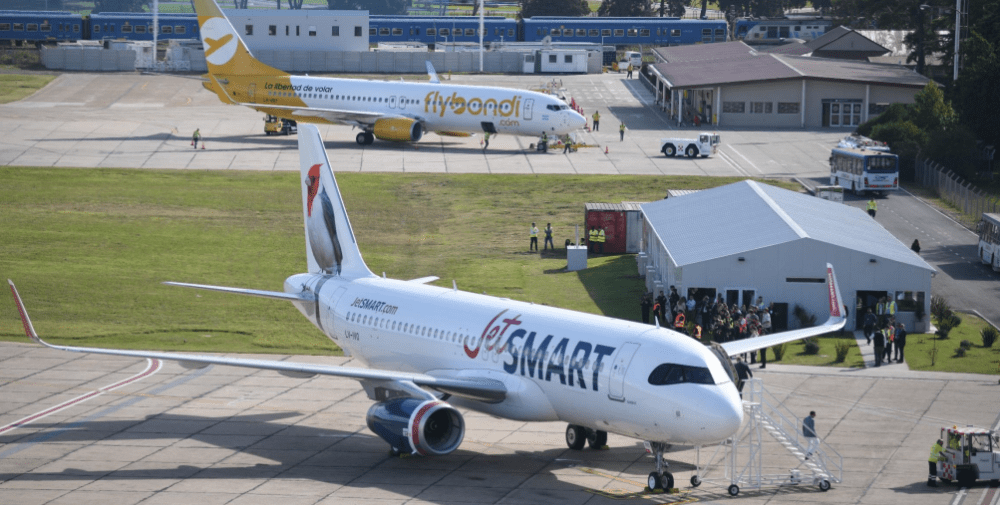
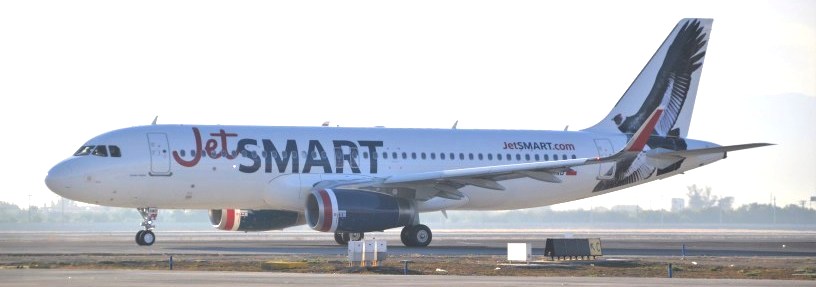
Teniendo este panorama sombrío sobre la Región Latinoamérica las jóvenes aerolíneas low cost de argentina como JetSmart Airlines Argentina y Flybondi Líneas Aéreas, que se incorporaron al mercado aerocomercial argentino en el últimos años, aseguran que tienen más capacidad, adaptación y rapidez de reacción para sobrevivir a las crisis. Con reducciones de sueldo al personal, estrictos controles de gastos y negociaciones con los lessors, las empresas que les alquilan los aviones, y con otros otros proveedores intentan reducir al mínimo los gastos hasta que puedan volver a volar.

«Las aerolíneas low cost somos más resilientes a las crisis. En JetSmart tenemos una estructura de costos muy eficiente, con poco personal administrativo, con lugares de trabajo accesibles y sueldos con un porcentaje variable. Las aerolíneas más tradicionales tienen más gente, más estructuras, más costos fijos y seguramente se les complica más», explica Gonzalo Pérez Corral, gerente general de JetSmart, sobre como la aerolínea low cost que opera en el mercado argentino y ofrece vuelos domésticos y regionales desde hace poco más de un año, sobrelleva la crisis desatada por el coronavirus, que dejó a todos los aviones en tierra dentro de la Argentina y paralizó por completo los ingresos.

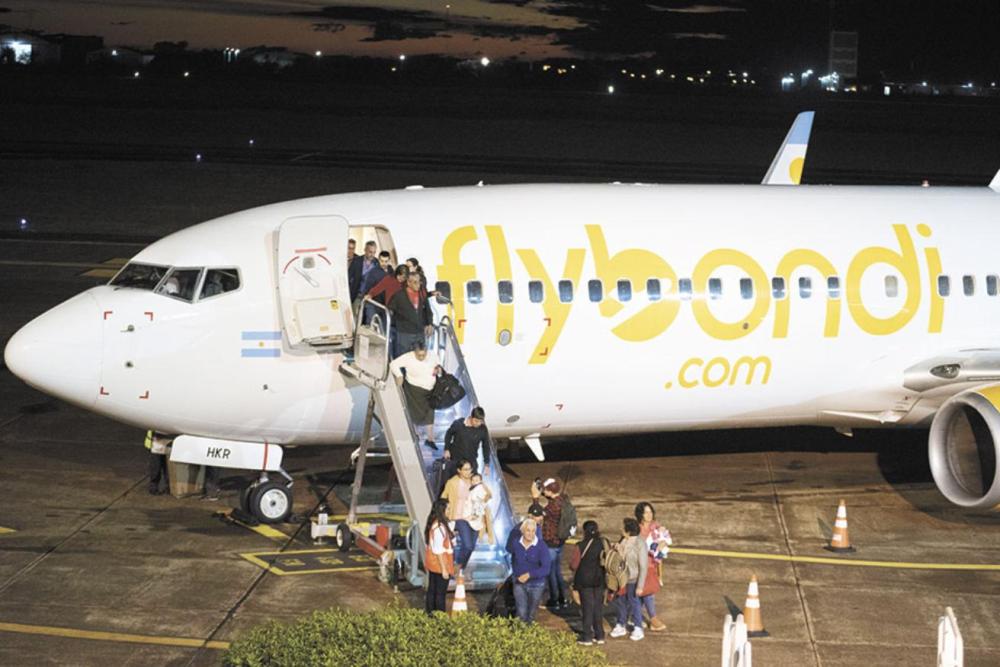
Flybondi Líneas Aéreas, que desde hace poco más de dos años opera en el mercado doméstico nacional también la beneficia tener una estructura chica: «Si bien el impacto de las crisis afecta a todas las aerolíneas por igual porque los ingresos se redujeron a cero, las low cost tienen más cintura para afrontar las crisis, porque son más eficientes en términos de personal y de costos de la operación. Es más fácil recuperarse y rediseñar itinerarios, porque es una estructura más chica, y es más sencillo reaccionar», asegura Mauricio Sana, Chief Commercial Officer (CCO) de Flybondi.

Low cost junto al personal

AW-Jetsmart_AirlinesEn JetSmart Argentina aseguraron que no habrá despidos de personal, pero sí reducción de sueldos en un promedio de un 30%. «Nunca se vio que las compañías paren sus aviones al ciento por ciento. Estamos haciendo números para ver que implica esta situación. El no recibir ingresos hace que la ecuación se complique, pero somos una compañía que nacimos hace poco con una estructura de costos muy eficiente en donde somos muy racionales en el uso de los recursos y tenemos una parte importante de la paga que es variable. Nuestra intención es no hacer despidos, pero el impacto en el sueldo de bolsillo va a ser considerable, porque al no volar no se pagan los conceptos variables. La gente lo entiende, prefiere que no haya despidos por más que el sueldo se vea reducido», admite Pérez Corral.

El sueldo de los empleados tiene un componente variable que está asociado a los vuelos que realizan. Como no vuelan y no hay operaciones, ese casi tercio de sueldo no se los pagan a pilotos, tripulantes y operarios de rampa. Para los administrativos se decidió postergar el aumento previsto por inflación que estaba estipulado en abril y pagar más adelante los bonos, quizás en septiembre. «Tenemos que realizar un sacrificio para mantener todos los puestos de trabajo y esperar volver a operar, nosotros estamos listos para volar apenas se restablezca el servicio y tengamos la autorización», dice Pérez Corral. A diferencia de otras aerolíneas que ya anunciaron que no van a volar hasta el 30 Abril, como Latam y Flybondi; Jetsmart quiere despegar cuanto antes.

AW-700FlybondiFlybondi tampoco hará despidos de empleados porque necesitan el mismo equipo cuando se restablezca el servicio, pero también le redujo el sueldo a su plantilla, según la escala salarial. Para el CEO y los ejecutivos, una baja del 50% del sueldo durante los próximos 3 meses. El resto de los empleados, una reducción de entre 12% y 40% según escalas salariales con el concepto de que el que menos gana, tenga la menor afectación. «En tiempos de una crisis sin precedentes a nivel mundial, consideramos que la mejor estrategia es aquella en la que el esfuerzo de todos también sea para beneficio de todos.Definimos junto con los empleados y el gremio una reducción salarial durante los meses en los que la compañía no tendrá ningún tipo de ingreso. Es muy valioso y habla del nivel de compromiso de cada una de las 570 personas que trabajan en Flybondi», dice Esteban Tossutti, Presidente de la compañía.
En el caso de Flybondi, ya comunicó que no operará hasta el 30 de abril, en principio, según lo disponga el Gobierno, porque aseguran que cuando tengan la autorización para retomar las operaciones necesitan una ventana de tiempo para poner todo a punto y vender los pasajes.

Bajar los gastos

Además de reducción de sueldos, mientras no vuelvan a volar las dos low cost argentinas están abocados a racionalizar los gastos para hacer las menores erogaciones posibles.También están en negociaciones con las empresas que les alquilan los aviones y otros proveedores para solicitar reducción o postergación de pagos.

«En el peor de los escenarios, si estamos dos meses parados estamos bien para seguir con la operación. En la Argentina es una operación de largo plazo y no se han modificado nuestros planes estratégicos para seguir volando en el país. JetSmart tiene la caja suficiente y el respaldo suficiente para poder restablecer la operación y seguir volando en la Argentina que es lo que queremos hacer», agrega Pérez Corral. Aunque cuando se restablezca el servicio, no descartan cambios y alternaciones en las rutas que ya operaban, en muchos casos porque dependerá si todas las provincias abren sus aeropuertos.

En Flybondi comentan que los accionistas están comprometidos con la empresa y la prioridad es resguardar el negocio y la fuente de trabajo, por eso están renegociando con proveedores todas las opciones posibles para mantener la empresa a salvo. «Nos preocupa pero somos optimistas, sabemos que un modelo de negocio eficiente nos da en este contexto mayor agilidad para sobrellevar esta situación y mantenernos sólidos y fuertes para cuando podamos volver a volar», agrega Tossutti.

También como todo el sector aerocomercial y vinculado al turismo, las empresas reclaman ayuda estatal. Junto con otras aerolíneas solicitaron al gobierno mediante cartas exenciones impositivas, crédito fiscal para pago de impuestos, líneas de crédito, entre otras prerrogativas para sortear la crisis, como está sucediendo en otros países.

Disputa Aeroparque de JetSmart

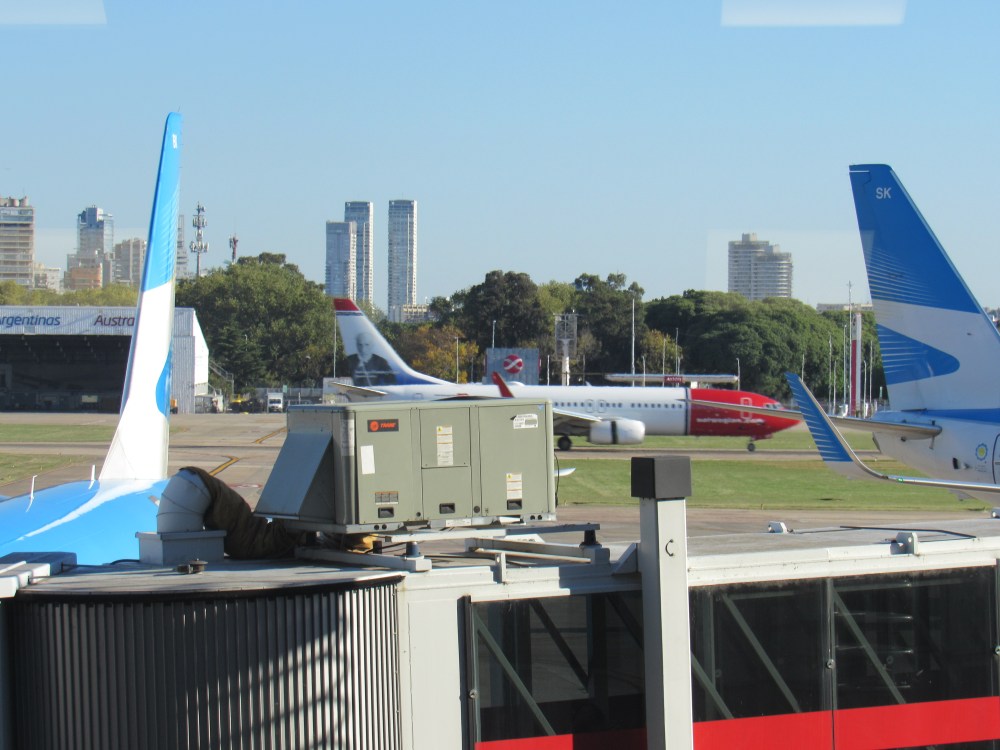
La crisis por el coronavirus se suma a otros problemas operativos que enfrenta Jetsmart. Hace unos meses compró la filial argentina de Norwegian Air Argentina para expandirse y poder operar desde Aeroparque y El Palomar. Pero por ahora no tienen la autorización de la ANAC para operar en Aeroparque las antiguas rutas de Norwegian con los aviones Airbus A320CEO de JetSmart Argentina. La intención de la empresa es operar con dos bases: Jorge Newbery (Aeroparque) y El Palomar, que los consideran complementarios. «Nosotros firmamos un acuerdo de consolidación con Norwegian para usar los aviones de JetSmart en Aeroparque y hasta ahora no nos han permitido realizar el cambio de aeronave, con lo cual eso también nos tiene en jaque y habría rutas que podrían sufrir bajas si es que no se nos autoriza esa posibilidad. Así que a los dos problemas que teníamos se sumó uno mayor que tapa todo el resto, pero en la medida que vaya pasando la crisis en algún momento y se restablezcan los vuelos van a surgir estos dos problemas que siguen latentes», explica Pérez Corral. En otro frente de reclamos, también batallan contra la prohibición de operar de noche en el Aeropuerto El Palomar. AW-Icon AW001

AW-7001311 (18)Low cost Argentina fly over crisis

The low cost of Argentina better pilot the world health crisis

Aviation is one of the industries hardest hit by government restrictions to combat the Coronavirus pandemic. From the International Air Transport Association (IATA), the body that brings together airlines worldwide, they estimate that losses in the sector globally will reach 252 billion dollars and will reach 2,431 million dollars punctually in Argentina, where 15 thousand direct jobs are at risk. The agency, through Peter Cerdá, Vice President for the Americas, warned that «some local airlines may cease to exist».

Having this gloomy outlook over the Latin American Region, young Argentine low-cost airlines such as JetSmart Airlines Argentina and Flybondi Líneas Aéreas, which have entered the Argentine aviation market in recent years, ensure that they have more capacity, adaptation and quick reaction to survive the crises. With staff pay cuts, tight spending controls, and negotiations with the lessors, the companies that rent the planes to them, and with other providers try to minimize expenses until they can fly again.

«Low-cost airlines are more resilient to crises. At JetSmart we have a very efficient cost structure, with few administrative personnel, with accessible workplaces and salaries with a variable percentage. More traditional airlines have more people, more structures, more fixed costs and surely more complicated for them», explains Gonzalo Pérez Corral, general manager of JetSmart, about how the low-cost airline that operates in the Argentine market and offers domestic and regional flights for just over a year, has been dealing with the crisis unleashed by the coronavirus, which left all aircraft on the ground within Argentina and completely paralyzed income.

Flybondi Líneas Aéreas, which has been operating in the domestic market for just over two years, also benefits from having a small structure: «Although the impact of the crises affects all airlines equally because revenues were reduced to zero, the low cost have more waist to face the crises, because they are more efficient in terms of personnel and operating costs. It is easier to recover and redesign itineraries, because it is a smaller structure, and it is easier to react», says Mauricio Sana, Chief Commercial Officer (CCO) of Flybondi.

Low cost with staff

At JetSmart Argentina they assured that there will be no layoffs, but there will be an average salary reduction of 30%. «Companies have never been seen to stop their planes 100 percent. We are making numbers to see what this situation implies. Not receiving income makes the equation complicated, but we are a company that was born recently with a very cost structure efficient where we are very rational in the use of resources and we have an important part of the pay that is variable. Our intention is not to make layoffs, but the impact on the pocket salary is going to be considerable, because by not flying you will not variable concepts pay. People understand it, prefer that there be no layoffs, even if the salary is reduced», admits Pérez Corral.

AW-7000023Employee salary has a variable component that is associated with the flights they take. As they do not fly and there are no operations, that almost third of salary is not paid to pilots, crew and ramp operators. For the administrators, it was decided to postpone the expected inflation increase that was stipulated in April and pay the bonds later, perhaps in September. «We have to make a sacrifice to keep all the jobs and hope to return to operate, we are ready to fly as soon as service is restored and we have authorization», says Pérez Corral. Unlike other airlines that have already announced that they will not fly until April 30, such as Latam and Flybondi; Jetsmart wants to take off as soon as possible.
Flybondi will also not lay off employees because they need the same equipment when service is restored, but it also reduced the pay for its staff, based on the salary scale. For the CEO and executives, a 50% drop in salary for the next 3 months. The rest of the employees, a reduction of between 12% and 40% according to salary scales with the concept that the one who earns the least, has the least impact. «In times of an unprecedented crisis worldwide, we consider that the best strategy is one in which everyone’s effort is also for the benefit of all. Together with employees and the union, we define a salary reduction during the months in which the company will not have any kind of income. It is very valuable and speaks to the level of commitment of each of the 570 people who work at Flybondi», says Esteban Tossutti, President of the company.

In the case of Flybondi, it has already communicated that it will not operate until April 30, in principle, as the Government provides, because they assure that when they have the authorization to resume operations they need a time window to set everything up and sell the tickets.

Lower expenses

In addition to reducing wages, as long as the two Argentine low-cost airlines do not fly again, they are bound to rationalize expenses to make the least possible expenses. They are also in negotiations with the companies that rent the planes and other providers to request a reduction or postponement of payments.

AW-Jetsmart_0034577

«In the worst-case scenario, if we are standing for two months we are fine to continue with the operation. In Argentina, it is a long-term operation and our strategic plans to continue flying in the country have not been modified. JetSmart has enough cash and sufficient support to be able to reestablish the operation and continue flying in Argentina, which is what we want to do», adds Pérez Corral. Although when the service is restored, they do not rule out changes and alternations in the routes that were already operating, in many cases because it will depend on whether all the provinces open their airports.

In Flybondi they comment that the shareholders are committed to the company and the priority is to safeguard the business and the source of work, so they are renegotiating with suppliers all possible options to keep the company safe. «We are concerned but we are optimistic, we know that an efficient business model gives us in this context greater agility to cope with this situation and stay solid and strong for when we can fly again», adds Tossutti.

Also like the entire aero-commercial sector and linked to tourism, companies claim state aid. Along with other airlines, they asked the government by means of tax exemptions, tax credit for payment of taxes, lines of credit, among other prerogatives to avoid the crisis, as is happening in other countries.

Jetsmart discusses Aeroparque

The coronavirus crisis adds to other operational problems facing JetSmart. A few months ago, it bought the Argentine subsidiary of Norwegian Air Argentina to expand and operate from Aeroparque and El Palomar. But for now, they do not have the authorization of ANAC to operate Norwegian’s old routes in Aeroparque with JetSmart Argentina Airbus A320CEO aircraft. The company’s intention is to operate with two bases: Jorge Newbery (Aeroparque) and El Palomar, which consider them complementary. «We signed a consolidation agreement with Norwegian to use JetSmart planes in Aeroparque and until now they have not allowed us to make the change of aircraft, which also has us in check and there would be routes that could suffer losses if not We are authorized that possibility. So to the two problems that we had, a greater one was added that covers all the rest, but as the crisis passes at some point and the flights are restored, these two problems that are still latent will arise», explains Pérez Corral. On another claims front, they are also battling the ban on operating at night at the El Palomar Airport. AW-Icon AW002


Ξ A I R G W A Y S Ξ
SOURCE: Airgways.com
DBk: Jetsmart.com / Flybondi.com / Baenegocios.com / Airgways.com
AW-POST: 202004091616AR

A\W   A I R G W A Y S ®

Flybondi ajusta cinturón

AW-Elterritorio_76660AW | 2020 04 09 15:39 | AIRLINES

Flybondi-logoLa low cost Flybondi sobrevuela la crisis de la pandemia
El caso de Flybondi Líneas Aéreas no escapa a lo que ocurre en toda la industria aeronáutica. La aerolínea low cost anunció una rebaja de sueldos que va del 12 al 50%, de acuerdo a la escala salarial. Esteban Tossutti ha comunicado que fue el acuerdo que le permite no despedir empleados y tener espaldas por tres meses, si se prolonga la cuarentena. Hasta el 20 Marzo 2020 cuando se había iniciado la cuarentena volaban a cuatro destinos regionales: Río de Janeiro, San Pablo, Puerto Alegre y Asunción. Además de 14 rutas nacionales y Punta del Este y Florianópolis como destinos estacionales. Cuando se suspendió la programación, la compañía ha tenido que armar un equipo de emergencia para apoyar al call center y poder atender reclamos de usuarios.

Flybondi pertenece en un 80% a Cartesian Capital Group y al fondo Yamasa. Desembarcó en el país en 2016, de la mano de Julián Cook que hace tres meses se volvió al Reino Unido. A la empresa le permitieron operar 86 rutas y comenzó a operar Enero 2018.

El Presidente de Flybondi, Esteban Tossutti expresó el posicionamiento de la compañía frente a la pandemia: “La cuarentena nos agarró con un 91% de ocupación en el primer trimestre y con un nivel de óptimo. Tenemos una pequeña gran ventaja no tenemos deuda. Nuestra prioridad es cuidar las 570 posiciones de trabajo, son muy calificados sería impensado perder esos recursos. Tenemos dos accionistas muy sólidos y tenemos liquidez en casa. Con la ayuda de nuestros empleados estamos para esperar tres meses, hasta Junio estaremos en equilibrio. Más de cien trabajadores se sumaron para ayudar con la atención al cliente. Logramos devolver el dinero a los que tenían fecha para la última semana de Marzo y desde Abril en adelante, resolvimos dejar los pasajes abiertos por un año. No hay visibilidad de cuando volveremos a operar”, explicó el CEO de Flybondi.

Acuerdo Flybondi-Sindicato

AW-Flybondi_701Los directivos de Flybondi se reunieron con la Asociación Sindical de Trabajadores de Flybondi donde arribaron a un acuerdo: “Es un acuerdo colaborativo, la meta era ahorrar el 42% del costo laboral mensual de la compañía. Analizamos cada categoría, el que más gana también tenía que estar dispuesto a esta reducción. Cuando digo todos, es todo, el comité ejecutivo y yo, nos bajamos el sueldo un 50%”.
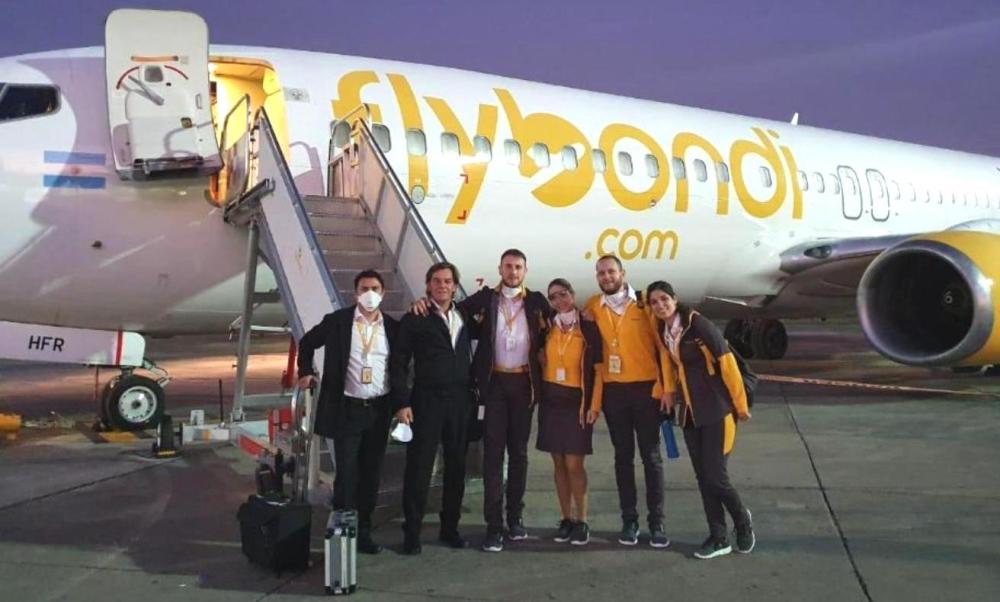
El Presidente de Flybondi explicó: «Lo sueldos más bajos, un maletero, un agente de ckeck in tuvieron una reducción del 12%; un 15% la rama de administrativos; 30% los líderes y coordinadores (esto afectó a la mayor parte); 40% los pilotos y copilotos y 50% el comité ejecutivo y presidente. El acuerdo es por tres meses, si esto se levanta antes, volvemos a la normalidad. En Julio, nos imaginamos estar volando bien”.

Sobrevolando la cuarentena

Las perspectivas de la compañía por ahora detallan que es imposible de predecir lo que ocurrirá. “Piensan que puede ser más de tres meses, estamos en diálogo permanente. Será una apertura paulatina, se podrán conectar algunas ciudades, pero habrá que ver si los gobernadores lo aceptan. Esto no es como un McDonald’s que cerras y abrís mañana y empezas a vender hamburguesas”, grafica Eduardo Tossutti.

AW-Flybondi_7001Flybondi mientras atraviesa la cuarentena, aprovechan para hacer el mantenimiento de las aeronaves Boeing 737-800 y están en diálogo constante con los empleados. “Hablamos cada dos días con todos para saber cómo están, darles tranquilidad y saber si necesitan algo ellos o su familia. Los asistimos con barbijos, guantes y alcohol en gel para que tengan en su casa. Hay gerentes que organizan los Viernes juegos para elegir el mejor desayuno o el que se viste más loco. Tratamos de estar juntos”.
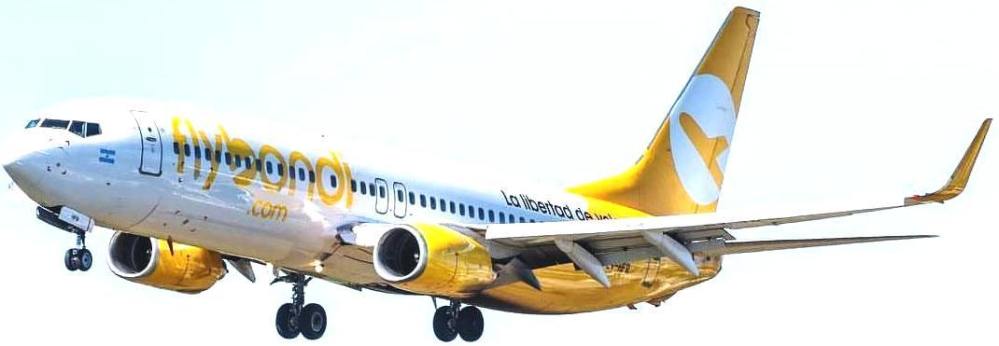

Situación actual de Flybondi

“Las ventas se cayeron al 70%, estamos vendiendo por debajo de las 30%. Debemos enfrentar el pago del leasing de US$ 200.000 por avión y tenemos cinco, costo por combustible que venis quemando o dejaste de quemar, sumado a la masa salarial. Estamos tratando de renegociar el leasing”, expresa el CEO de Flybondi.

Flybondi formará parte de la Comisión evaluativa del impacto económico que está formando los ministerios de Transporte y Turismo. Algunos temas que planteará Tossutti serán: “Necesitamos poder refinanciar el combustible y no tener que pagarlo de contado. YPF es nuestra y pagamos el combustible en dólares. Reveer la diferencia entre el 21% IVA combustible y el 10% del IVA del ticket. Hay otro tema con IVA leasing”. En un contexto complejo, el Presidente de Flybondi insiste: “Es el momento de replantear la matriz de conectividad de la Argentina para que muchas empresas no quiebren. Después podemos discutir el valor de la tasa internacional y de cabotaje que están en manos de una sola persona”. AW-Icon AW001


32321855_619737138376831_4119904145547198464_n

Flybondi adjusts belt

Low-cost Flybondi flies over the pandemic crisis

AW-Flybondi_Aircraft-001 (2)The Flybondi Líneas Aéreas case does not escape what happens in the entire aeronautical industry. The low-cost airline announced a reduction in salaries ranging from 12 to 50%, according to the salary scale. Esteban Tossutti has communicated that it was the agreement that allows him not to fire employees and have backs for three months if the quarantine is prolonged. Until March 20, 2020, when the quarantine had begun, they flew to four regional destinations: Rio de Janeiro, San Pablo, Porto Alegre, and Asunción. In addition to 14 national routes and Punta del Este and Florianópolis as seasonal destinations. When the programming was suspended, the company has had to assemble an emergency team to support the call center and be able to attend to user complaints.
Flybondi is 80% owned by Cartesian Capital Group and the Yamasa fund. He landed in the country in 2016, thanks to Julián Cook who returned to the United Kingdom three months ago. The company was allowed to operate 86 routes and began operating January 2018.

The Flybondi President expressed the company’s position in the face of the pandemic: “The quarantine caught us with 91% occupancy in the first quarter and with an optimum level. We have a great little advantage we have no debt. Our priority is to take care of the 570 job positions, they are very qualified, it would be unthinkable to lose those resources. We have two very strong shareholders and we have liquidity at home. With the help of our employees we are to wait three months, until June we will be in balance. More than one hundred workers joined to help with customer service. We managed to return the money to those who had a date for the last week of March and from April onwards, we decided to leave the tickets open for a year. There is no visibility of when we will operate again”, explained the CEO of Flybondi.

Flybondi-Union Agreement

Dab2fceW4AA54q9Flybondi executives met with the Asociación Sindical de Trabajadores de Flybondi where they reached an agreement: “It is a collaborative agreement, the goal was to save 42% of the company’s monthly labor cost. We analyzed each category, the one who wins the most also had to be willing to this reduction. When I say everyone, that’s it, the executive committee and I, we cut our wages by 50%”.

The President of Flybondi explained: «The lowest salaries, a boot, a ckeck in agent had a reduction of 12%; 15% the administrative branch; 30% the leaders and coordinators (this affected most of them); 40% pilots and co-pilots and 50% the executive committee and president. The agreement is for three months, if this is lifted earlier, we are back to normal. In July, we imagine we are flying well».

Flying over quarantine

The company’s perspectives for now detail that it is impossible to predict what will happen. «They think it may be more than three months, we are in permanent dialogue. It will be a gradual opening, some cities can be connected, but it will be necessary to see if the governors accept it. This is not like a McDonald’s that you close and open tomorrow and start selling hamburgers”, graphs Eduardo Tossutti.

As Flybondi goes through quarantine, they take the opportunity to maintain Boeing 737-800 aircraft and are in constant dialogue with employees. “We talk every two days with everyone to find out how they are, give them peace of mind and find out if they or their family need anything. We assist them with chinstraps, gloves and gel alcohol to keep at home. There are managers who organize games on Fridays to choose the best breakfast or the one that dresses craziest. We try to be together».

Current situation of Flybondi

«Sales fell to 70%, we are selling below 30%. We have to face the lease payment of US$ 200,000 per plane and we have five, the cost of fuel that you have been burning or stopped burning, added to the salary bill. We are trying to renegotiate the leasing”, said CEO Flybondi.

Flybondi will be part of the Commission evaluating the economic impact that is forming the ministries of Transport and Tourism. Some of the issues that Tossutti will raise will be: “We need to be able to refinance the fuel and not have to pay cash. YPF is ours and we pay the fuel in dollars. Review the difference between 21% fuel VAT and 10% of the ticket VAT. There is another issue with VAT leasing”. In a complex context, the President of Flybondi insists: “It is time to rethink the connectivity matrix of Argentina so that many companies do not fail. Then we can discuss the value of the international and cabotage tax in the hands of one person”. AW-Icon AW002


Ξ A I R G W A Y S Ξ
SOURCE: Airgways.com
DBk: Flybondi.com / Lanacion.com.ar / Elterritorio.com.ar / Airgways.com
AW-POST: 202004091539AR

A\W   A I R G W A Y S ®