Turismo en Argentina post-pandemia

AW | 2020 12 21 09:00 | TOURISM

Reactivando las economías del turismo del país

Después de un largo período de invernación de las economías regionales producto de la parálisis mundial por la crisis sanitaria, los principales centros turísticos de Argentina comienzan a recibir visitantes en esta temporada de verano 2020/21, con protocolos establecidos en unas vacaciones atípicas por la pandemia de Coronavirus.

Costa Atlántica

Aunque la reactivación comienza muy lentamente, las distintas alternativas de precios y aumentos de alrededor de 30% respecto al año anterior 2019 se hacen sentir. Según Rodrigo Alejandro Sanz, del Colegio de Martilleros y Corredores Públicos de General Pueyrredón, «por la quincena se planteó un costo base promedio [de alquileres] en Mar del Plata desde AR$ 23 mil para un departamento de dos ambientes y AR$ 42 mil para un chalet de tres ambientes. Los precios simplemente sirven como una orientación, ya que puede haber diferentes variaciones, que implican un aumento de 30% con respecto a la anterior». Desde la Cámara de Empresarios de Balnearios y Afines (CEBRA) indicaron que «los precios varían según la zona y la variedad de servicios. En la zona norte la carpa para toda la temporada está AR$ 95 mil y la sombrilla AR$ 75 mil; en la zona del Torreón del Monje la carpa se ofrece a AR$ 100 mil y la sombrilla a AR$ 80 mil; y en los balnearios del sur, por Punta Mogotes, desde AR$ 65 mil a AR$ 120 mil», precisaron. Marcelo Gómez, responsable de un balneario de Playa Grande, informó que «una carpa para seis personas por toda la temporada ronda los AR$ 120 mil, mientras que una sombrilla (para cuatro), AR$ 100 mil; por día una carpa costará AR$ 3.500 y una sombrilla AR$ 2.300». Fuentes de la Asociación Empresaria Hotelera Gastronómica marplatense confirmaron que una habitación doble en un hotel tres estrellas rondará entre AR$ 3.000 y AR$ 4.000 la noche en una habitación doble, y los superiores entre AR$ 6.000 y AR$ 10.000.

A la hora de comer, en la zona del microcentro de Mar del Plata se ofrecen promociones de pizzas entre AR$ 300 y AR$ 600, empanadas entre AR$ 500 a AR$ 630 la docena, menú fijo con plato principal, bebida sin alcohol y postre a entre AR$ 650 y AR$ 850; hamburguesa, con guarnición y bebida cola a AR$ 400 y helado de dos bochas a AR$ 120, pero varían en la zona de calle Güemes, Olavarría, Playa Grande y el puerto de marplatense. Juan Pierino, mozo de un local del Puerto dijo que «una porción de rabas cuesta AR$ 700, mientras que una bandeja de frutos de mar para compartir entre dos personas ronda los AR$ 1.300; una porción individual de pastas, entre AR$ 400 y AR$ 550, un filet de lenguado con acompañamiento AR$ 780, una ensalada AR$ 380 y una porción de torta AR$ 280». Por otra parte, Germán Repeto, Gerente de una cervecería, contó que «una pinta cuesta entre AR$ 120 y AR$ 160, y unas papas gratinadas para compartir cuestan AR$ 350», además de «Happy Hour» con promociones 2×1 y guarniciones a mitad de precio. El precio de los helados también varía: un kilo está entre AR$ 800 y AR$ 1.100, y un cucurucho con dos bocas entre AR$ 130 y AR$ 210.

En el caso del transporte, las opciones van desde los vuelos de Aerolíneas Argentinas, con pasajes desde AR$ 6.650 en clase económica desde la ciudad de Buenos Aires. Los pasajes en micro, desde Buenos Aires a Mar del Plata rondan entre AR$ 1.500 y AR$ 2.300. En el caso de los trenes, «las tarifas no sufrirán incrementos por lo que los pasajes de ida se mantendrían en AR$ 660 en Primera Clase y AR$ 795 en Pulman», informó Martín Marinucci, el Presidente de Trenes Argentinos. Los trenes incrementarán sus frecuencias diarias de dos a cinco entre Plaza Constitución (Buenos Aires) y Mar del Plata durante este período estival 2020-2021.

Córdoba

En Villa Carlos Paz (Córdoba), el incremento en los precios de hoteles, gastronomía y teatros «ronda entre un 20 y 30% respecto a la temporada pasada», aseguraron fuentes de la Secretaría de Turismo local. La villa serrana, máxima localidad turística de Córdoba con unas 75.000 plazas de alojamiento disponibles, marcha a buen ritmo en cuanto a la demanda de turistas que ya realizaron reservas para pasar vacaciones entre Enero y Febrero 2021. Las tarifas aproximadas para este verano en locales gastronómicos son: pizza con gaseosa o cerveza a AR$ 400, lomo con papas y gaseosa o cerveza a AR$ 450, parrillada para dos a AR$ 1.600, milanesas con papas a AR$ 500, rabas para dos personas a AR$ 750, pastas a AR$ 350, cerveza de litro a AR$ 300, Gaseosa de litro a AR$ 130, vino a AR$ 350, agua a AR$ 120 y sushi 45 piezas a AR$ 1.250. El paseo en catamarán cuesta AR$ 700 (adultos) y AR$ 400 (menores); y la aerosilla, AR$ 500 (mayores), AR$ 400 (menores) y AR$ 300 (jubilados). En Potrero de Garay, Valle de Calamuchita, para Enero 2021 las reservas de cabañas y casas de alquiler alcanzan a 90%, con precios desde AR$ 4.000 hasta AR$ 15.000 por día para cuatro personas.

Mendoza

En Mendoza no se registran aumentos en los precios de hospedaje mayores a 20% en Diciembre 2020 pero se esperan incrementos mayores a partir de Enero 2021. Según Noelia Sahar, de la Asociación Empresaria Hotelero Gastronómica y Afines de Mendoza, los aumentos en las tarifas de hospedaje para diciembre en ciudad capital «no llegan al 20%, pero si habrá un aumento mayor a partir de Enero, siempre y cuando tengamos una reactivación y mayor demanda». Ese aumento sería de otro 20%, por lo que «para 2021 las tarifas tendrían un incremento del 40% en ciudad. Debido a la pandemia por Covid-19 no hay un mayor nivel de reservas turísticas respecto a esta misma fecha del año pasado, pero las reservas pueden variar día día debido a que el turista está contratando a último momento», dijo Noelia Sahar. Desde el Ministerio de Turismo de Mendoza indicaron que los precios de las habitaciones en hoteles con base doble con desayuno van desde AR$ 2.200 a AR$ 12.000 y las cabañas van desde AR$ 5.200 (para cuatro personas), AR$ 6.200 (seis personas) y AR$ 7.200 (ocho personas).

Perspectivas turísticas

Aunque se señalas solo algunos destinos principales más concurridos del país, las posiciones de los precios y disponibilidades varían en diferentes lugares. Es importante recalcar que los precios establecidos corresponden a tarifas vigentes y recordando que complementarán los protocolos sanitarios en todo el país.

Tourism in Argentina post-pandemic

Reactivating the country’s tourism economies

After a long period of wintering of the regional economies as a result of the global paralysis due to the health crisis, the main tourist centers in Argentina begin to receive visitors in this summer 2020/21 season, with protocols established in an atypical vacation due to the pandemic of Coronavirus.

Atlantic Coast

Although the reactivation begins very slowly, the different price alternatives and increases of around 30% compared to the previous year 2019 are being felt. According to Rodrigo Alejandro Sanz, from the College of Auctioneers and Public Brokers of General Pueyrredón, «for the fortnight an average base cost [of rentals] was raised in Mar del Plata from AR$ 23 thousand for a two-room apartment and AR$ 42 thousand for a chalet with three rooms. The prices simply serve as an orientation, since there may be different variations, which imply an increase of 30% compared to the previous one». From the Chamber of Businessmen of Spas and Related (CEBRA) they indicated that «prices vary according to the area and the variety of services. In the northern area the tent for the whole season is AR$ 95 thousand and the umbrella AR$ 75 thousand; in the Torreón del Monje area the tent is offered at AR$ 100,000 and the umbrella at AR$ 80 thousand; and in the southern resorts, by Punta Mogotes, from AR$ 65 thousand to AR$ 120 thousand», they specified. Marcelo Gómez, head of a beach resort in Playa Grande, reported that «a tent for six people for the entire season is around AR$ 120 thousand, while an umbrella (for four), AR$ 100 thousand; per day a tent will cost AR$ 3,500 and an umbrella AR$ 2,300». Sources from the Mar del Plata Gastronomic Hotel Business Association confirmed that a double room in a three-star hotel will be between AR$ 3,000 and AR$ 4,000 per night in a double room, and the superior ones between AR$ 6,000 and AR$ 10,000.

At lunchtime, in the downtown area of ​​Mar del Plata pizza promotions are offered between AR$ 300 and AR$ 600, empanadas between AR$ 500 and AR$ 630 a dozen, fixed menu with main course, non-alcoholic drink and dessert between AR$ 650 and AR$ 850; hamburger with garnish and cola at AR$ 400 and ice cream with two bowls at AR$ 120, but they vary in the area of ​​Güemes street, Olavarría, Playa Grande and the port of Mar del Plata. Juan Pierino, a porter at a local port said that «a portion of squid costs AR$ 700, while a tray of seafood to share between two people is around AR$ 1,300; an individual portion of pasta costs AR$ 400 and AR$ 550, a filet of sole with accompaniment AR$ 780, a salad AR$ 380 and a portion of cake AR$ 280». On the other hand, Germán Repeto, manager of a brewery, said that «a pint costs between AR$ 120 and AR$ 160, and some gratin potatoes to share cost AR$ 350», in addition to «Happy Hour» with 2×1 promotions and garnishes half-price. The price of ice cream also varies: a kilo is between AR$ 800 and AR$ 1,100, and a cone with two mouths between AR$ 130 and AR$ 210.

In the case of transportation, the options range from Aerolíneas Argentinas flights, with tickets starting at AR$ 6,650 in economy class from the city of Buenos Aires. Bus tickets from Buenos Aires to Mar del Plata are between AR$ 1,500 and AR$ 2,300. In the case of trains, «fares will not increase, so the one-way tickets will remain at AR$ 660 in First Class and AR$ 795 in Pulman», reported Martín Marinucci, the President of Argentine Trenes. The trains will increase their daily frequencies from two to five between Plaza Constitución (Buenos Aires) and Mar del Plata during this summer period 2020-2021.

Cordoba

In Villa Carlos Paz (Córdoba), the increase in the prices of hotels, gastronomy and theaters «is between 20 and 30% compared to last season», sources from the local Tourism Secretariat assured. The mountain village, the maximum tourist town in Córdoba with some 75,000 accommodation places available, is going at a good pace in terms of the demand of tourists who have already made reservations to spend vacations between January and February 2021. The approximate rates for this summer in gastronomic places They are: pizza with soda or beer at AR$ 400, loin with potatoes and soda or beer at AR$ 450, barbecue for two at AR$ 1,600, Milanese with potatoes at AR$ 500, rabas for two at AR$ 750, pasta at AR$ 350, liter beer at AR$ 300, liter soda at AR$ 130, wine at AR$ 350, water at AR$ 120 and sushi 45 pieces at AR$ 1,250. The catamaran ride costs AR $ 700 (adults) and AR$ 400 (minors); and the chairlift, AR$ 500 (seniors), AR$ 400 (minors) and AR$ 300 (retired). In Potrero de Garay, Valle de Calamuchita, for January 2021 the reservations of cabins and rental houses reach 90%, with prices from AR$ 4,000 to AR$ 15,000 per day for four people.

Mendoza

In Mendoza, there are no increases in lodging prices greater than 20% in December 2020, but greater increases are expected from January 2021. According to Noelia Sahar, from the Asociación Empresarial Hotelero Gastronómica y Afines de Mendoza, the increases in the rates of accommodation for December in the capital city «does not reach 20%, but there will be a greater increase from January, as long as we have a reactivation and greater demand». That increase would be another 20%, so «by 2021 the rates would have an increase of 40% in the city. Due to the Covid-19 pandemic there is no higher level of tourist reservations compared to this same date last year, but reservations can vary from day to day because the tourist is hiring at the last minute», said Noelia Sahar. From the Ministry of Tourism of Mendoza they indicated that the prices of the rooms in hotels with double base with breakfast go from AR$ 2,200 to AR$ 12,000 and the cabins go from AR$ 5,200 (for four people), AR$ 6,200 (six people ) and AR$ 7,200 (eight people).

Tourism perspectives

Although only some of the busiest main destinations in the country are pointed out, the price positions and availabilities vary in different places. It is important to emphasize that the established prices correspond to current rates and remembering that they will complement the sanitary proctocolos throughout the country.


PUBLISHER: Airgways.com
DBk: Telam.com.ar / Airgways.com
AW-POST: 202012210900AR

A\W   A I R G W A Y S ®
Paro en American Jet

AW | 2020 12 21 08:13 | AIRLINES

Negociaciones salariales aerolínea regional argentina

American Jet_Isologotype

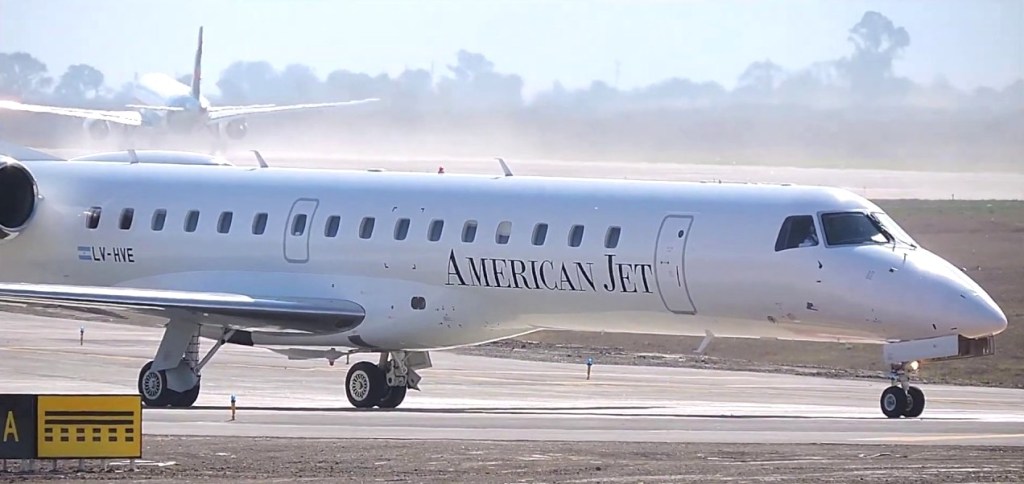
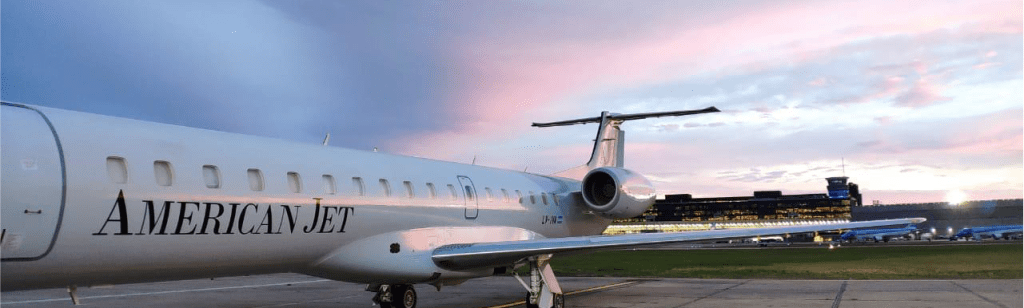
La Asociación de Pilotos de Líneas Aéreas (APLA) por medio de un comunicado interno ha informado la medida de fuerza solicitada por los empleados de American Jet Líneas Aéreas tras fracasar las negociaciones salariales, por lo que han iniciado un paro de cuarenta y ocho horas iniciados desde este Lunes 21/12 desde las primeras horas.

El comunicado de APLA expresa: “ante la falta total de avances en las negociaciones con la empresa, se iniciaran medidas de acción directa con paro total de actividades por 48 hs a partir de las 00:00 del día Lunes 21 de Diciembre”. El sindicato ha manifestado que tras negociaciones entre los pilotos de la compañía no han arribado a un acuerdo de recomposición salarial. Desde el gremio APLA han mantenido las líneas abiertas para que los directivos reviertan su posición para lograr un acuerdo satisfactorio, que cumplidos los plazos establecidos, han iniciado las medidas de paro de actividades.

American Jet Líneas Aéreas es una compañía aérea regional de Argentina desde 1984. Posee dos bases aéreas, Buenos Aires y Neuquén, efectúa vuelos de taxi aéreo, charters y de línea aérea regular.

Strike in American Jet

Salary negotiations Argentine regional airline

The Airline Pilots Association (APLA) by means of an internal statement has reported the measure of force requested by the employees of American Jet Líneas Aéreas after the failure of the wage negotiations, for which they have initiated a strike of forty-eight hours started since this Monday 12/21 from the early hours.

The APLA statement states: «Given the total lack of progress in the negotiations with the company, direct action measures will be initiated with a total stoppage of activities for 48 hours starting at 00:00 on Monday, December 21». The union has stated that after negotiations between the pilots of the company they have not reached a salary recomposition agreement. The APLA union has kept the lines open for the managers to revert their position to achieve a satisfactory agreement, which, once the established deadlines have been met, have initiated the measures to stop activities.

American Jet Líneas Aéreas has been a regional airline in Argentina since 1984. It has two air bases, Buenos Aires and Neuquén, and operates air taxi, charter and regular airline flights.


PUBLISHER: Airgways.com
DBk: Apla.org.ar / Americanjet.com.ar / Airgways.com
AW-POST: 202012210813AR

A\W   A I R G W A Y S ®

Profundización reformas en FAA

AW | 2020 12 20 15:37 | AVIATION SAFETY / GOVERNMENT

Congreso EEUU tras importante reforma de supervisión aviación

Boeing 737 MAX_Isologotype

US-Senate-Logo

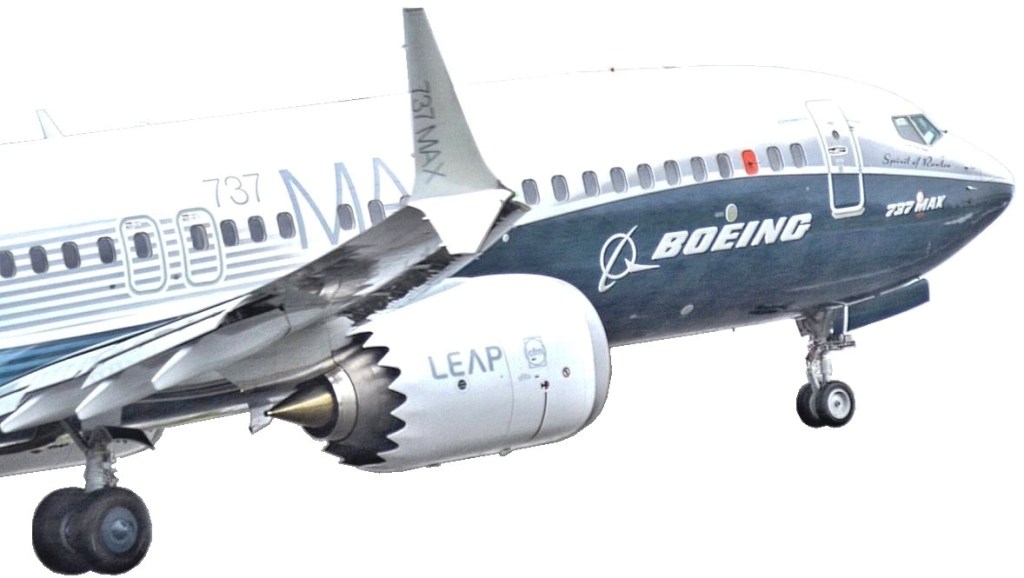
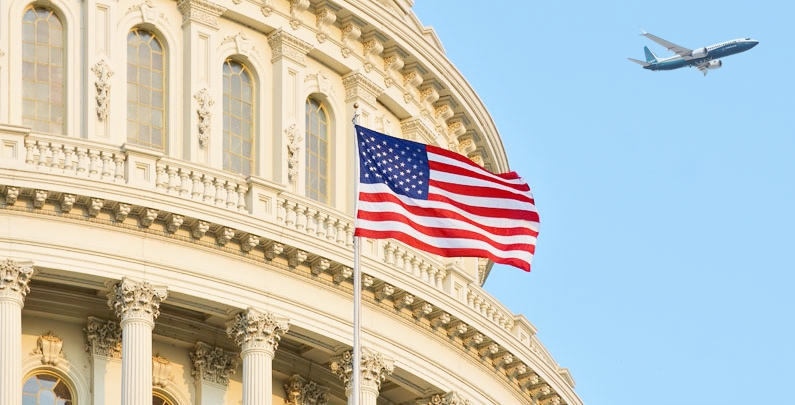
Una importante reforma continúa avanzando en la arena política del Congreso de Estados Unidos acerca de las políticas de fiscalización de la Administración Federal de Aviación (FAA), el organismo regulador de aviación. La legislatura bicameral del Gobierno Federal de los Estados Unidos que está formado por la Cámara de Representantes y el Senado está al borde de su aprobación en el Congreso, impulsada por las reacciones negativas de los dos accidentes aéreos de la línea Boeing 737 MAX con gran impacto en el mundo. Demócratas y Republicanos en los comités de la Cámara de Representantes y el Senado de los Estados Unidos llegaron a un acuerdo en las negociaciones del Domingo 13/12 sobre un proyecto de ley adaptado para abordar los fracasos de supervisión de la FAA en su certificación original del 737 MAX. Se espera que la legislación se incorpore al enorme proyecto de Ley de Gastos Ómnibus de US$ 1,4 billones de Dólares que el Congreso debe aprobar para buscar credibilidad al futuro de la seguridad aérea. De acuerdo con los detalles del proyecto de ley, la legislación fortalece la supervisión directa de la FAA de los ingenieros de The Boeing Company que realizan evaluaciones de seguridad en nombre de la agencia. Si bien la FAA todavía delegaría en Boeing una gran parte del trabajo de certificación sobre futuras aeronaves, las nuevas disposiciones tienen por objeto garantizar que los expertos en seguridad de la FAA vigilen de cerca cómo se lleva a cabo ese trabajo y que los objetivos de costos y calendarios de Boeing no dominen la toma de decisiones.

El proyecto de ley también requiere una mayor divulgación y análisis de los sistemas críticos para la seguridad al comienzo del proceso de certificación. Crea nuevas sanciones para los supervisores que ejercen una presión indebida sobre los empleados que plantean preocupaciones de seguridad, establece nuevas protecciones de denunciantes y establece mecanismos de información de seguridad para el personal técnico de primera línea de la FAA. Además, el proyecto de ley autoriza nuevos fondos para desarrollar conocimientos técnicos en la FAA y llevar a cabo más investigaciones sobre factores humanos sobre cómo los pilotos interactúan con los sistemas automatizados de control de vuelo. Aumenta la supervisión del Congreso de la FAA, requiriendo que la agencia proporcione a Capitol Hill informes, informes y divulgaciones sobre cómo está cumpliendo con los objetivos establecidos en el proyecto de ley.

Trabajo de Certificación

Los procedimientos actuales de la FAA han sido criticados por delegar demasiado del trabajo de certificación a Boeing y por permitir que los gerentes de la compañía controlen demasiado a los ingenieros que hacen las evaluaciones técnicas en nombre de la FAA, socavando su independencia y dando a Boeing la ventaja en el proceso mientras restringen cuánto la FAA es consciente de los detalles. La legislación propuesta, llamada Ley de Certificación, Seguridad y Responsabilidad de Aeronaves, revierte algunos de los cambios realizados en los últimos años que desplazaron el equilibrio de supervisión de la FAA hacia Boeing. La medida requiere una revisión inicial de cualquier sistema de tecnología nueva crítica antes de que se tome cualquier decisión para delegar la certificación de esos sistemas, incluido el escrutinio de un panel independiente de expertos de otras agencias federales como la NASA y la Fuerza Aérea.

La agencia no puede delegar ningún trabajo de supervisión hasta que haya revisado y validado los supuestos subyacentes relacionados con las reacciones piloto a las fallas del sistema. Estas cláusulas invierten la tendencia de años de aumento de la delegación al fabricante que culminó en la Ley de Reautorización de la FAA de 2018. Esa ley, aprobada apenas un mes antes del primer accidente MAX de un avión de Lion Air en Indonesia en Octubre de 2018, ordenó la máxima delegación de trabajo de certificación al exigir a la FAA que presentara un caso si quería que no se delegara alguna parte específica del trabajo de supervisión. La Senadora Demócrata Maria Cantwell (WA) es una defensora agresiva de la nueva legislación en el Comité de Comercio del Senado, que ha transmitido que la tendencia implacable hacia la autocertificación de la industria ha terminado. «Estamos poniendo una gran señal de alto en el camino aquí», expresó Maria Cantwell.

Proyecto Ley Certificación

El proyecto de ley establece que los ingenieros de Boeing asignados para trabajar en nombre de la FAA deben ser aprobados o retirados no por la compañía, como es el caso ahora, sino por la agencia de aviación federal. Cada uno tendrá una línea directa de comunicación con un inspector de seguridad de la FAA que actúa como asesor y supervisor del trabajo. Una conclusión condenable de una investigación importante sobre la certificación del 737 MAX fue que Boeing presentó a la FAA sólo información fragmentada y parcial sobre el nuevo sistema de control de vuelo que causó los accidentes, el Sistema de Aumento de Características de Maniobra (MCAS). Con arreglo a la nueva legislación, cualquier nuevo diseño de sistema tan crítico debe someterse a un análisis exhaustivo de la seguridad de cómo podría afectar a los sistemas existentes y las suposiciones hechas sobre cómo reaccionarían los pilotos ante las fallas del sistema. El proyecto de ley también establece que un supervisor individual de Boeing u otro fabricante que ejerza una presión indebida sobre el personal que realiza el trabajo de certificación, o que no divulgue información crítica sobre la seguridad a la FAA, puede ser considerado personalmente responsable y sujeto a fuertes sanciones civiles. Para evitar que las decisiones de la FAA sobre seguridad se vean comprometidas por los objetivos comerciales de Boeing, el proyecto de ley deroga las leyes existentes que permiten a los empleados de la FAA recibir bonos u otros incentivos financieros basados en el cumplimiento de los calendarios de certificación impulsados por el fabricante. El proyecto de ley deroga la autoridad para que los paneles asesores favorables a la industria establezcan metas de desempeño de la FAA que no prioricen la seguridad.

En respuesta a encuestas internas de la FAA que mostraron a los empleados represalias por plantear problemas de seguridad, el proyecto de ley proporciona canales de denuncia anónimos y protecciones de denuncias para ingenieros de primera línea de la FAA que desean señalar problemas de seguridad. Muchas de las disposiciones detalladas del proyecto de ley siguen las recomendaciones de varias investigaciones sobre los accidentes MAX y apuntan a errores muy específicos en el desarrollo y certificación del avión Boeing. Por ejemplo, una cláusula prohíbe directamente cualquier acuerdo contractual similar al que Boeing hizo con Southwest Airlines, comprometiéndose a reembolsar a la compañía aérea US$ 1 millón de Dólares por avión si sus pilotos debían tener un nuevo entrenamiento de simulador de vuelo para volar el MAX. Otro detalle indica a la FAA que revoque la licencia de cualquier piloto que no divulgue información crítica sobre seguridad en nombre de un fabricante. El impulso de esto se pone de relieve en un resumen de la legislación compilada por el personal del Senado, que señala en referencia a esta cláusula que el ex piloto técnico jefe de Boeing 737 Mark Forkner «está bajo investigación federal por mentir intencionalmente a la FAA sobre la naturaleza de MCAS».

Otra disposición establece que la FAA no puede certificar una aeronave sin llevar a cabo una revisión de seguridad del sistema de alertas de la tripulación de vuelo y suposiciones sobre cómo los pilotos responderían a las advertencias de la cabina. Si esa directiva hubiera estado en vigor cuando se certificó el MAX, la FAA podría haber detectado los defectos de diseño de la MCAS. En su lugar, Boeing estaba exento de cumplir con las últimas normas de seguridad de alerta de la tripulación, y las suposiciones que hizo sobre las reacciones piloto resultaron catastróficamente equivocadas.

Un ingeniero de seguridad de la FAA, hablando con la condición de anonimato para proteger su trabajo, acogió con beneplácito las disposiciones del proyecto de ley como «un buen paso adelante. Las herramientas están aquí para abordar mucho de lo que ha salido mal», dijo. Sin embargo, advirtió que en la práctica mucho dependerá de que el administrador de la FAA cambie la cultura de la agencia de un enfoque en dar a la industria lo que quiere, e implementar sólidamente estos nuevos protocolos de seguridad. Maria Cantwell respondió a esa preocupación diciendo que ve la factura como un pago inicial. Vamos a presionar a la Administración Biden para que examine nuevas reformas en la FAA más allá de esta legislación. Tenemos que asegurarnos de que tenemos el mensaje correcto que sale de la FAA para garantizar que la ley que estamos poniendo en marcha va a ser promulgada y llevada a cabo. Maria Cantwell dijo que «garantizar la seguridad de la aviación es necesario no sólo para proteger al público volador, sino para proteger el futuro de la industria de fabricación de aviones y los trabajos que trae al noroeste del Pacífico. Dijo que el proyecto de ley tiene como objetivo hacer eso haciendo hincapié en que cuando se toman decisiones de seguridad, los ingenieros sobre el terreno están a cargo».

Perspectivas nueva ley

Se espera que la redacción de la legislación de reforma de la FAA se incluya en el Proyecto de Ley Omnibus hacia final del 2020, según múltiples fuentes. Este es un paquete de elaboración de leyes que está destinado a asegurar la aprobación de la legislación esencial antes de que el Congreso se aplace. Para acelerar el proceso antes del aplazamiento, no se permiten enmiendas en el Proyecto de Ley Omnibus.

El acuerdo de reforma de la FAA fue impulsado por el Presidente del Comité de Comercio del Senado, Roger Wicker (R-MISS.); Maria Cantwell, miembro minoritario del Comité; Peter DeFazio (Dem./ORE, Presidente del Comité de Transporte de la Cámara de Representantes, y el representante Rick Larsen, (D./Everett/WA), Presidente del Subcomité de Aviación.

Michael Stumo, padre de Samya Rose Stumo, de 26 años, que murió en el accidente del vuelo ET-302 de Ethiopian Airlines en un Boeing 737-8 MAX en Marzo de 2019, siguió de cerca el proceso legislativo y presionó incesantemente en persona para la aprobación de las reformas de la FAA. Dijo que las mejoras más importantes en el proceso de certificación que él y las otras familias de víctimas habían impulsado fueron retenidas en el acuerdo final. Michael Stumo, que estuvo presente en la sesión de marcado a finales de Septiembre 2020 que finalizó la versión de la Cámara de Representantes del proyecto de ley, señaló que Peter DeFazio obtuvo la compra completa republicana para las reformas propuestas de Sam Graves (Rep./MO.) y sus colegas. «Fue un acuerdo total. No hubo disidencia. Me levanté y aplaudió cuando todos lo pasaron», dijo Michael Stumo. Del mismo modo, en el Senado, Maria Cantwell, el conservador Senador Ted Cruz (Rep./TX), trabajado junto al Senador Liberal Richard Blumenthal (Dem./CONN.), para sugerir mejoras en el proyecto de ley.

El Viernes 18/12, como preludio de la nueva legislación, la mayoría Republicana en el Comité de Comercio publicó un informe de investigación mordaz que enumeraba lapsos significativos en la supervisión de la seguridad de la aviación y el liderazgo fallido en la FAA. La recomendación final de ese informe exige específicamente que la FAA debe apoyar la reforma legislativa aplicando completamente la ley mientras cumple con la intención del Congreso. La prisa por tratar de conseguir el proyecto de ley a través del Congreso este fin de semana es la culminación de muchos meses de maniobras políticas que siguieron a investigaciones agresivas sobre los accidentes MAX y las audiencias testy el año pasado cuando el administrador de la FAA Steve Dickson fue interrogado y criticado por los legisladores tanto en la Cámara de Condiciones como en el Senado.

A pesar de que los comités de la Cámara de Cámara y el Senado habían acordado para este mes cada uno sus versiones separadas de las reformas de certificación de aeronaves, poco después de las elecciones la perspectiva de obtener un proyecto de ley parecía poco probable a medida que se agotaba el tiempo para este Congreso. Si bien la Cámara de Estado había aprobado su versión del proyecto de ley, el Senado completo no lo había hecho. Las principales prioridades políticas eran un paquete de reautorización de defensa, ahora aprobado, y un posible proyecto de ley de socorro COVID. En las últimas semanas, las negociaciones sobre los detalles de un proyecto de ley de reforma de la FAA que podría acordarse entre la Cámara de Cámara y el Senado continuaron hasta altas horas de la noche, dijeron los funcionarios del Congreso.

Desde que se finalizó el acuerdo bipartidista entre los dos comités a finales del Domingo 13/12, los patrocinadores se han abstenido de anunciarlo públicamente, temiendo un bloqueo de última hora. Sin embargo, en el comercio de caballos políticos que ha sostenido el proyecto de ley ómnibus en los últimos días, el proyecto de ley de la FAA no era un problema. Como era de esperar, el texto de la nueva legislación de la FAA se publica el domingo como parte del proyecto de ley ómnibus entonces, salvo un veto del Presidente Donald Trump, lo que desencadenaría un cierre del Gobierno, este restablecimiento histórico de la forma en que la FAA lleva a cabo la certificación de aviones debería convertirse en ley en cuestión de días.

Deepening reforms in FAA

US Congress after major aviation oversight reform

US-Senate-Logo.svg

A major reform continues to advance in the political arena of the United States Congress over the enforcement policies of the Federal Aviation Administration (FAA), the aviation regulatory body. The bicameral legislature of the Federal Government of the United States that is made up of the House of Representatives and the Senate is on the verge of its approval in Congress, driven by the negative reactions of the two air accidents of the Boeing 737 MAX line with great impact. in the world. Democrats and Republicans on the United States House and Senate committees reached an agreement in negotiations on Sunday 12/13 on an adapted bill to address the FAA’s oversight failures in its original certification of the 737 MAX. The legislation is expected to be incorporated into the massive US$ 1.4 billion Omnibus Spending Bill that Congress must pass to seek credibility for the future of air safety. According to the details of the bill, the legislation strengthens the FAA’s direct supervision of The Boeing Company engineers conducting safety assessments on behalf of the agency. While the FAA would still delegate much of the certification work on future aircraft to Boeing, the new provisions are intended to ensure that FAA safety experts keep a close eye on how that work is carried out and that cost targets and Boeing calendars don’t dominate decision making.

The bill also requires further disclosure and analysis of safety-critical systems early in the certification process. It creates new penalties for supervisors who put undue pressure on employees who raise safety concerns, establishes new whistleblower protections, and establishes safety reporting mechanisms for front-line FAA technical staff. Additionally, the bill authorizes new funding to develop technical expertise in the FAA and conduct more human factors research on how pilots interact with automated flight control systems. Increases congressional oversight of the FAA, requiring the agency to provide Capitol Hill with reports, reports, and disclosures on how it is meeting the goals set out in the bill.

Certification Work

AW-70033007

The current FAA procedures have been criticized for delegating too much of the certification work to Boeing and for allowing company managers to control too much of the engineers who do technical evaluations on behalf of the FAA, undermining its independence and giving Boeing the advantage in the process while restricting how much the FAA is aware of the details. The proposed legislation, called the Aircraft Certification, Safety and Accountability Act, reverses some of the changes made in recent years that shifted the FAA’s oversight balance to Boeing. The measure requires an initial review of any critical new technology systems before any decision is made to delegate certification of those systems, including scrutiny by an independent panel of experts from other federal agencies such as NASA and the Air Force.

The agency cannot delegate any oversight work until it has reviewed and validated the underlying assumptions related to the pilot reactions to system failures. These clauses reverse the years-long trend of increased delegation to the manufacturer that culminated in the FAA Reauthorization Act of 2018. That law, passed just a month before the first MAX crash of a Lion Air plane in Indonesia in October 2018, mandated the maximum delegation of certification work by requiring the FAA to file a case if it wanted some specific part of oversight work not to be delegated. Democratic Senator Maria Cantwell (WA) is an aggressive advocate for the new legislation in the Senate Commerce Committee, who has conveyed that the relentless trend toward self-certification of the industry is over. «We are putting a big stop sign on the road here», said Maria Cantwell.

Certification Law Project

The bill states that Boeing engineers assigned to work on behalf of the FAA must be approved or removed not by the company, as is the case now, but by the federal aviation agency. Each will have a direct line of communication with an FAA safety inspector who acts as an advisor and supervisor of the job. One damning conclusion of a major 737 MAX certification investigation was that Boeing submitted only fragmented and partial information to the FAA about the new flight control system that caused the accidents, the Maneuvering Characteristics Augmentation System (MCAS). Under the new legislation, any such critical new system design must undergo a thorough safety analysis of how it might affect existing systems and the assumptions made about how pilots would react to system failures. The bill also states that an individual supervisor from Boeing or another manufacturer who puts undue pressure on personnel performing certification work, or who fails to disclose critical safety information to the FAA, can be held personally liable and subject. to heavy civil penalties. To prevent the FAA’s safety decisions from being compromised by Boeing’s business goals, the bill repeals existing laws that allow FAA employees to receive bonuses or other financial incentives based on meeting schedule schedules. manufacturer-driven certification. The bill repeals the authority for industry-friendly advisory panels to set FAA performance goals that do not prioritize safety.

In response to internal FAA surveys that showed employees retaliating for raising safety concerns, the bill provides anonymous reporting channels and reporting protections for FAA front-line engineers who wish to flag safety concerns. Many of the detailed provisions of the bill follow the recommendations of various investigations into MAX accidents and point to very specific errors in the development and certification of the boeing aircraft. For example, one clause directly prohibits any contractual arrangement similar to the one Boeing made with Southwest Airlines, promising to reimburse the airline US$ 1 million per plane if its pilots had to undergo new flight simulator training to fly the MAX. Another detail directs the FAA to revoke the license of any pilot who does not release critical safety information on behalf of a manufacturer. The momentum for this is highlighted in a summary of legislation compiled by Senate staff, which notes in reference to this clause that former Boeing 737 Chief Technical Pilot Mark Forkner «is under federal investigation for intentionally lying to the FAA. on the nature of MCAS».

Another provision states that the FAA cannot certify an aircraft without conducting a safety review of the flight crew alert system and assumptions about how pilots would respond to cockpit warnings. Had that directive been in effect when the MAX was certified, the FAA could have spotted the design flaws of the MCAS. Instead, Boeing was exempted from complying with the latest crew alert safety standards, and the assumptions it made about pilot reactions were catastrophically wrong.

An FAA safety engineer, speaking on the condition of anonymity to protect his work, welcomed the provisions of the bill as «a good step forward. The tools are here to address much of what has gone wrong», said. However, he cautioned that in practice much will depend on the FAA administrator changing the agency’s culture from a focus on giving the industry what it wants, and robustly implementing these new security protocols. Maria Cantwell responded to that concern by saying that she sees the bill as a down payment. We are going to pressure the Biden administration to examine further reforms in the FAA beyond this legislation. We have to make sure we have the right message coming out of the FAA to ensure that the law we are putting in place is going to be enacted and carried out. Maria Cantwell said «ensuring aviation safety is necessary not only to protect the flying public, but to protect the future of the flying industry aircraft manufacturing and the jobs it brings to the Pacific Northwest he said the bill aims to do that by emphasizing that when safety decisions are made», engineers on the ground are in charge.

New law prospects

The wording of the FAA reform legislation is expected to be included in the Omnibus Bill by the end of 2020, according to multiple sources. This is a law-making package that is intended to ensure the passage of essential legislation before Congress is postponed. To speed up the process before the postponement, no amendments are allowed to the Omnibus Bill.

The FAA reform agreement was promoted by the Chairman of the Senate Commerce Committee, Roger Wicker (R-MISS.); Maria Cantwell, minority member of the Committee; Peter DeFazio (Dem./ORE, Chairman of the House Transportation Committee, and Representative Rick Larsen, (D./Everett/WA), Chairman of the Subcommittee on Aviation.

Michael Stumo, father of 26-year-old Samya Rose Stumo, who died in the crash of Ethiopian Airlines Flight ET-302 on a Boeing 737-8 MAX in March 2019, closely followed the legislative process and lobbied incessantly in person to the approval of the FAA reforms. He said the most important improvements to the certification process that he and the other families of victims had pushed for were retained in the final agreement. Michael Stumo, who was present at the marking session in late September 2020 that finalized the House version of the bill, noted that Peter DeFazio obtained the full Republican buyout for the proposed reforms from Sam Graves (Rep./ MO.) And his colleagues. «It was a total agreement. There was no dissent. I stood up and clapped when everyone passed it», said Michael Stumo. Similarly, in the Senate, Maria Cantwell, Conservative Senator Ted Cruz (Rep./TX), worked alongside Liberal Senator Richard Blumenthal (Dem./CONN.), To suggest improvements to the bill.

On Friday 12/18, as a prelude to the new legislation, the Republican majority on the Commerce Committee released a scathing investigative report that listed significant lapses in aviation security oversight and failed leadership in the FAA. The final recommendation in that report specifically requires the FAA to support legislative reform by fully implementing the law while meeting the intent of Congress. The rush to try to get the bill through Congress this weekend is the culmination of many months of political maneuvering that followed aggressive investigations into MAX accidents and testy hearings last year when FAA Administrator Steve Dickson was questioned and criticized by lawmakers in both the Conditions Chamber and the Senate.

Even though House and Senate committees had each agreed to their separate versions of the aircraft certification reforms for this month, shortly after the election the prospect of getting a bill seemed unlikely as that time was running out for this Congress. While the State House had passed its version of the bill, the entire Senate had not. The top political priorities were a defense reauthorization package, now passed, and a possible COVID relief bill. In recent weeks, negotiations on the details of an FAA reform bill that could be agreed between the House of Representatives and the Senate continued late into the night, congressional officials said.

Since the bipartisan agreement between the two committees was finalized at the end of Sunday 12/13, the sponsors have refrained from announcing it publicly, fearing a last minute lockdown. However, in the political horse trade that has underpinned the omnibus bill in recent days, the FAA bill was not a problem. Unsurprisingly, the text of the new FAA legislation is published on Sunday as part of the omnibus bill then, barring a veto from President Donald Trump, which would trigger a government shutdown, this historic reestablishment of the way that the FAA conducts aircraft certification should become law in a matter of days.


PUBLISHER: Airgways.com
DBk: Boeing.com / Seattletimes.com / Airgways.com
AW-POST: 202012201537AR

A\W   A I R G W A Y S ®

35º aniversarios JAT Boeing 737-300

AW | 2020 12 20 14:33 | AIRLINES HISTORY

Continua volando Boeing 737-300 más antiguo del mundo

JAT_Yugoslav_Airlines_Isologotype

El 17 de Diciembre de 1985 aterriza en Belgrado, la República de Yugoslavia el primer Boeing 737-300 después de volar en ferry 12.000 kilómetros desde Seattle (WA) con dos repostadas de combustible en Canadá y Shannon (Irlanda), el cuarto Boeing 737-300 para JAT Jugoslovenski Aerotransport, registrado YU-ANI Boeing 737-3H9 MSN: 23416, arribando por primera vez en la pista del Aeropuerto de Belgrado. Al día siguiente, iniciaba una larga trayectoria con el primer vuelo JU350 a Frankfurt, Alemania. Después de transportar a más de tres millones de pasajeros en 35 años, el YU-ANI sigue en servicio y marcando un hito histórico, convirtiéndose el Boeing 737 de pasajeros más antiguo de la Serie 300, conocida como la Serie Classic todavía en servicio regular de pasajeros.

La historia detrás del tipo de avión Boeing 737-300 en JAT se remonta a 1984, cuando la aerolínea estaba buscando un nuevo avión para su red euro-mediterránea, que reemplazaría a la flota DC-9 y Boeing 727. El DC-9 más antiguo en ese momento tenía catorce años, y el Boeing 727 tenía diez años. Debido a un mercado volátil, altos precios de combustible y competencia, JAT reaccionó antes de lo previsto. El objetivo principal era encontrar un tipo de aeronave que proporcionara frecuencias más altas. Se tomó la decisión de ir con el Boeing 737-300, en lugar del MD-80/81/82 (DC-9 Super 80) que ya estaba en uso en la flota de Inex Adria, mientras que el Airbus A320 iba a entrar recién en servicio comercial en Abril de 1988 con la aerolínea de lanzamiento Air France.

Para JAT Airlines había sido una decisión muy arriesgada. El Boeing 737-300 estaba entrando en servicio a finales de 1984 y además de una compañía de chárter británica, no había pedidos para este tipo de avión en Europa, de los cuales seis transportistas habían solicitados pedidos en ese momento a través del mundo. Esto dificultó el uso de la aeronave en términos de operaciones, mantenimiento, entrenamiento de la tripulación, entre otros detalles. El nuevo concepto adoptado por la Boeing en la nueva generación del Boeing 737 Classic había traído una serie de nuevas características y muchas mejoras aerodinámicas, estructurales, de cabina entre otros detalles, como así también cambios estructurales de los materiales compuestos en todos los controles de vuelo para reducir el peso específico de la aeronave. La única planta motriz fue la impulsada por la General Electric GE Snecma CFM-56-3, que estaba en el núcleo de las mejoras del Boeing 737-300 la versión inicial y demostró ser casi un 20% más eficiente que el Pratt & Whitney JT8D utilizado en modelos de la versión inicial Boeing 737-200/200ADV, como así en los McDonnell Douglas DC-9 en aquel tiempo.

JAT se convirtió en el primer operador europeo en introducir el tipo de aeronave de segunda generación en el servicio programado y, en ese momento, tenía a su disposición una de las flotas más modernas del mundo. El contrato con la Boeing y JAT fue firmado el 23 de Septiembre de 1984, inicialmente para la compra de dos aviones 737-300. La capacitación de la tripulación para la introducción del primer par de 737-300 involucrados involucraron a doce capitanes y doce primeros oficiales, volando 100 horas bajo la supervisión de instructores de Boeing. Se siguió un proceso similar para los dos Serie 300 adicionales, ordenados en Marzo de 1985. El tercer y cuarto Classic 737 fueron YU-ANH y YU-ANI. Tuvieron sus primeros vuelos en Diciembre de 1985. En 1986 llegaron dos 737 más denominados YU-ANJ y YU-ANL, mientras que en Noviembre de 1987 el registrado YU-ANK había iniciado operaciones. Finalmente, los dos últimos, YU-ANV y YU-ANW, desembarcaron en Belgrado en 1988. En este año, la utilización diaria media de los nueve Boeing 737-300 era de 08:16 horas. Las versiones de los Boeing 737-300 de JAT tenían un total de 138 asientos. En la parte delantera del avión había 54 asientos previstos para los pasajeros en la Adriatic Class y 84 para los pasajeros de Economy Class. La Adriatic Class fue la clase de negocios especial de JAT, un producto único en los cielos de Europa y fue introducido en 1983. Ambas clases tenían asientos más cómodos y el compartimento de cabeza para equipaje de mano era más grande que cualquier otro avión de la flota de JAT. La cabina también contaba con un sistema de transmisión de vídeo para películas más cortas y demostraciones de seguridad, así como un sistema de música de ocho canales. Más tarde, algunos de los Boeing 737 tenían una nueva clase ejecutiva con una configuración de 2-2 en las tres primeras filas, mientras que algunos tenían asientos medios bloqueados, y ahora, los 737 restantes están volando en todos los diseños de clase económica (144 asientos). Los Boeing 737 de JAT contaban con una diferenciación a los otros en la Serie 300 porque no tenía una cabina EFIS (Electronic Flight Instrument System). Además, otro hecho interesante es que durante la década de 1990, los ingenieros y mecánicos de JAT trataron con éxito la corrosión en una parte del ala del 737, que era un procedimiento desconocido en ese momento. Más tarde, Boeing introdujo esta práctica como un procedimiento de mantenimiento estándar para toda la familia.

Además de su propia flota 737-300, JAT Airlines arrendó varios Boeing 737 adicionales durante el tiempo. El más longevo de ellos fue el Boeing 737-3Q4 YU-AON, seguido por YU-AOU y YU-AOV, arrendado de Bulgaria Air. También la versión más grande, Boeing 737-400 fue parte de la flota durante la década de 2000 con registros YU-AOO, YU-AOR, YU-AOS y YU-AOK. La aerolínea desplegó exclusivamente el avión en algunas rutas, como el servicio Belgrado-Tivat-Londres en 2004. Además, JAT arrendó, dominantemente a través del arrendamiento drive-lease, su propia flota de Boeing 737-300 a otras aerolíneas de Europa, Africa, Oriente Medio e incluso en Australia en 1989 los aviones matrículas YU-AND y YU-ANJ que volaron para Australian Airlines. Además, debido a las sanciones de las Naciones Unidas, el Boeing 737-300 registro YU-ANI fue castigado por la fuerza y mantenido en el Aeropuerto de Istambul durante ocho años, siendo devuelto a su base en Mayo 2000.

La aeronave adquirida por JAT Yugoslav Airlines también ha volado para su sucesor Jat Airways y actualmente está volando bajo la marca chárter de Air Serbia/Aviolet. A lo largo de su vida útil, ha sido arrendado a varias aerolíneas, incluyendo Constellation International, Camerún Airlines, Air Malta, Tunis Air, MAT y Air Ivoire.

Hoy en día, sólo dos Boeing 737-300 con registros YU-ANI y ANK continúan volando para la aerolínea chárter de Air Serbia/Aviolet, efectuando vuelos de ocio, pero también se puede ver en algunos de los principales aeropuertos europeos en servicios regulares. El primer Boeing 737, YU-AND, está aparcado desde Febrero de 2020 y está a la espera de ser colocado en el Museo de Aviación de Belgrado. Después de millones de pasajeros y kilómetros volados, el futuro de los 737-300 restantes es incierto, especialmente en la actualidad, cuando el sector de la aviación está en uno de sus períodos más difíciles de transitar. Después de un largo historial de vuelo, el Boeing 737-300 todavía continúa volando, muchas veces resistiéndose a los embates del tiempo y los cambios vertiginosos económicos que trae la actualidad, pero que sin lugar a dudas, después de 35 años de gloriosas aventuras continúa marcando un hito en la aviación comercial mundial.

35th JAT Boeing 737-300 Anniversaries

The world’s oldest Boeing 737-300 continues to fly

JAT_Isologotype_001

On December 17, 1985, the first Boeing 737-300 landed in Belgrade, the Republic of Yugoslavia after flying 12,000 kilometers by ferry from Seattle (WA) with two refueling in Canada and Shannon (Ireland), the fourth Boeing 737- 300 for JAT Jugoslovenski Aerotransport, registered YU-ANI Boeing 737-3H9 MSN: 23416, arriving for the first time on the runway at Belgrade Airport. The next day, he began a long journey with the first JU350 flight to Frankfurt, Germany. After carrying more than three million passengers in 35 years, the YU-ANI remains in service and marking a historic milestone, becoming the oldest passenger Boeing 737 of the 300 Series, known as the Classic Series still in regular service from passengers.

The history behind the Boeing 737-300 aircraft type at JAT dates back to 1984, when the airline was looking for a new aircraft for its Euro-Mediterranean network, which would replace the DC-9 and Boeing 727 fleet. The older DC-9 in He was fourteen at the time, and the Boeing 727 was ten. Due to a volatile market, high fuel prices and competition, JAT reacted earlier than expected. The main goal was to find a type of aircraft that would provide higher frequencies. The decision was made to go with the Boeing 737-300, instead of the MD-80/81/82 (DC-9 Super 80) that was already in use in the Inex Adria fleet, while the Airbus A320 was to enter. newly in commercial service in April 1988 with the launch airline Air France.

For JAT Airlines it had been a very risky decision. The Boeing 737-300 was entering service in late 1984 and in addition to a British charter company, there were no orders for this type of aircraft in Europe, of which six carriers had placed orders at that time across the world. This made it difficult to use the aircraft in terms of operations, maintenance, crew training, among other details. The new concept adopted by Boeing in the new generation of the Boeing 737 Classic had brought a series of new features and many aerodynamic, structural, and cabin improvements among other details, as well as structural changes to the composite materials in all flight controls. to reduce the specific weight of the aircraft. The sole powerplant was the one powered by the General Electric GE Snecma CFM-56-3, which was at the core of the improvements to the initial Boeing 737-300 and proved to be nearly 20% more efficient than the Pratt & Whitney JT8D. used in early version Boeing 737-200 / 200ADV models, as well as McDonnell Douglas DC-9 models at that time.

JAT became the first European operator to introduce the second-generation type of aircraft into scheduled service, and at that time had one of the most modern fleets in the world at its disposal. The contract with Boeing and JAT was signed on September 23, 1984, initially for the purchase of two 737-300 aircraft. Crew training for the introduction of the first pair of 737-300s involved involved twelve captains and twelve first officers, flying 100 hours under the supervision of Boeing instructors. A similar process was followed for the two additional 300 Series, ordered in March 1985. The third and fourth Classic 737s were YU-ANH and YU-ANI. They had their first flights in December 1985. In 1986 two more 737s called YU-ANJ and YU-ANL arrived, while in November 1987 the registered YU-ANK had started operations. Finally, the last two, YU-ANV and YU-ANW, landed in Belgrade in 1988. In this year, the average daily use of the nine Boeing 737-300s was 08:16 hours. JAT versions of the Boeing 737-300 had a total of 138 seats. At the front of the plane there were 54 seats provided for passengers in Adriatic Class and 84 for passengers in Economy Class. The Adriatic Class was JAT’s special business class, a unique product in the skies of Europe and was introduced in 1983. Both classes had more comfortable seats and the head compartment for carry-on luggage was larger than any other aircraft in the company. JAT fleet. The cabin also featured a video transmission system for shorter movies and safety demonstrations, as well as an eight-channel music system. Later, some of the Boeing 737s had a new business class with a 2-2 configuration in the first three rows, while some had locked middle seats, and now, the remaining 737s are flying in all economy class designs (144 seats). JAT’s Boeing 737s had a differentiation from the others in the 300 Series because they did not have an EFIS (Electronic Flight Instrument System) cockpit. Also, another interesting fact is that during the 1990s, JAT engineers and mechanics successfully treated corrosion on a part of the 737’s wing, which was an unknown procedure at the time. Later, Boeing introduced this practice as a standard maintenance procedure for the entire family.

In addition to its own 737-300 fleet, JAT Airlines leased several additional Boeing 737s during the time. The oldest of these was the Boeing 737-3Q4 YU-AON, followed by YU-AOU and YU-AOV, leased from Bulgaria Air. Also the largest version, Boeing 737-400 was part of the fleet during the 2000s with YU-AOO, YU-AOR, YU-AOS and YU-AOK registrations. The airline exclusively deployed the aircraft on some routes, such as the Belgrade-Tivat-London service in 2004. In addition, JAT leased, predominantly through drive-lease, its own fleet of Boeing 737-300s to other airlines in Europe, Africa , The Middle East and even in Australia in 1989 the aircraft registration YU-AND and YU-ANJ that flew for Australian Airlines. Furthermore, due to United Nations sanctions, the YU-ANI registered Boeing 737-300 was forcibly punished and kept at Istanbul Airport for eight years, being returned to its base in May 2000.

The aircraft acquired by JAT Yugoslav Airlines has also flown for its successor Jat Airways and is currently flying under the Air Serbia/Aviolet charter brand. Throughout its useful life, it has been leased to various airlines, including Constellation International, Cameroon Airlines, Air Malta, Tunis Air, MAT and Air Ivoire.

Today, only two Boeing 737-300s with YU-ANI and ANK registrations continue to fly for Air Serbia / Aviolet’s charter airline, making leisure flights, but it can also be seen at some of the main European airports on regular services. The first Boeing 737, YU-AND, has been parked since February 2020 and is waiting to be placed at the Belgrade Aviation Museum. After millions of passengers and kilometers flown, the future of the remaining 737-300s is uncertain, especially today, when the aviation sector is in one of its most difficult periods to travel. After a long flight history, the Boeing 737-300 still continues to fly, often resisting the ravages of time and the dizzying economic changes that today brings, but without a doubt, after 35 years of glorious adventures it continues marking a milestone in global commercial aviation.

JAT AIRLINES HISTORY

Jat Airways was the national flag carrier and the largest airline in Serbia, and formerly Yugoslavia. Founded in 1927 as Aeroput, the airline ceased operations during World War II. After resuming flights in 1947, the airline was renamed Jugoslovenski Aerotransport (JAT) on April 1, 1947. The airline was renamed again on August 8, 2003. Jat Airways and its predecessors were one of the oldest airlines that they were still in operation. Flight operations were based at Belgrade’s Nikola Tesla Airport, and the airline operated scheduled services to 72 international destinations, outside of areas that were previously part of Yugoslavia, as well as charters and wet leases. Jat Airways was owned by the Serbian government and had 1,250 employees. On August 1, 2013, the Government of Serbia and Etihad Airways entered into an agreement that reorganized the operations of Jat Airways, renaming it Air Serbia after the end of the transition period. Certain assets, such as the ATR 72 aircraft, would be transitioned to Air Serbia, while other assets (such as the 737-300) would remain under the JAT Airways brand until retired. The change marked the end of 66 years for the JAT brand.

35º годишњица ЈАТ-овог боинга 737-300

Најстарији Боеинг 737-300 и даље лети

JAT_Isologotype

17 децембра 1985. први Боеинг 737-300 слетео је у Београд, Република Југославија, након што је 12.000 километара прелетео трајектом из Сијетла (ВА) са два пуњења горивом у Канади и Шенону (Ирска), четврти Боеинг 737- 300 за ЈАТ Југословенски Аеротранспорт, регистровани ИУ-АНИ Боеинг 737-3Х9 МСН: 23416, који први пут стиже на писту на београдски аеродром. Следећег дана започео је дуго путовање првим летом ЈУ350 за Франкфурт, Немачка. Након превоза више од три милиона путника у 35 година, ИУ-АНИ остаје у служби и обележава историјску прекретницу, постајући најстарији путнички Боеинг 737 из серије 300, познат као класична серија која је и даље у редовном саобраћају путници.

AW-700044

Историја иза типа авиона Боеинг 737-300 у ЈАТ-у датира из 1984. године, када је авио-компанија тражила нови авион за своју евро-медитеранску мрежу, који би заменио флоту ДЦ-9 и Боеинг 727. Старији ДЦ-9 у Тада је имао четрнаест, а Боеинг 727 десет година. Због нестабилног тржишта, високих цена горива и конкуренције, ЈАТ је реаговао раније него што се очекивало. Главни циљ је био пронаћи врсту летелице која би пружала веће фреквенције. Донета је одлука да се иде са Боеингом 737-300, уместо МД-80/81/82 (ДЦ-9 Супер 80) који је већ био у употреби у флоти Инек Адриа, док је требало да уђе Аирбус А320. недавно у комерцијалној служби у априлу 1988. године са лансираном авиокомпанијом Аир Франце.

За ЈАТ Аирлинес то је била врло ризична одлука. Боеинг 737-300 је почео да се користи крајем 1984. године, а поред британске компаније за чартер, у Европи није било наруџби за ову врсту авиона, од којих је шест превозника тада наручило широм света. То је отежало употребу авиона у погледу операција, одржавања, обуке посаде, између осталих детаља. Нови концепт који је Боеинг усвојио у новој генерацији Боеинга 737 Цлассиц донео је низ нових карактеристика и многа аеродинамичка, структурна и побољшања кабине, између осталих детаља, као и структурне промене композитних материјала у свим контролама лета. да се смањи специфична тежина летелице. Једина погонска јединица била је она коју је покретао Генерал Елецтриц ГЕ Снецма ЦФМ-56-3, која је била у основи побољшања почетног Боеинга 737-300 и показала се готово 20% ефикаснијом од Пратт & Вхитнеи ЈТ8Д. коришћени у раној верзији модела Боеинг 737-200/200АДВ, као и модели МцДоннелл Доуглас ДЦ-9 у то време.

ЈАТ је постао први европски оператер који је увео авион друге генерације у редовни промет и у то време је имао на располагању једну од најмодернијих флота на свету. Уговор са Боингом и ЈАТ-ом потписан је 23. септембра 1984. године, у почетку за куповину два авиона 737-300. У обуци посаде за увођење првог пара од 737-300, учествовало је дванаест капетана и дванаест првих официра, летећи 100 сати под надзором инструктора Боинга. Сличан поступак је следен за две додатне серије 300, наручене у марту 1985. Трећи и четврти Цлассиц 737 били су ИУ-АНХ и ИУ-АНИ. Прве летове имали су у децембру 1985. 1986. године стигла су још два 737 под називом ИУ-АЊ и ИУ-АНЛ, док је у новембру 1987. регистровани ИУ-АНК започео са радом. Коначно, последња два, ИУ-АНВ и ИУ-АНВ, слетела су у Београд 1988. У овој години просечна дневна употреба девет Боинга 737-300 била је 08:16 сати. ЈАТ верзије Боеинга 737-300 имале су укупно 138 седишта. Испред авиона било је предвиђено 54 места за путнике у јадранској класи и 84 за путнике у економској класи. Јадранска класа била је посебна ЈАТ-ова пословна класа, јединствени производ на небу Европе, који је представљен 1983. Обе класе су имале удобнија седишта, а главни претинац за ручни пртљаг био је већи од било ког другог авиона у компанији. Флота ЈАТ-а. Кабина је такође имала систем видео преноса за краће филмове и безбедносне демонстрације, као и осмоканални музички систем. Касније су неки од Боинга 737 имали нову пословну класу са конфигурацијом 2-2 у прва три реда, док су неки имали закључана средња седишта, а сада преостали 737 лете у свим дизајном економске класе ( 144 места). ЈАТ-ови Боеинг 737 разликовали су се од осталих у серији 300 јер нису имали кокпит ЕФИС (Елецтрониц Флигхт Инструмент Систем). Такође, још једна занимљива чињеница је да су током 1990-их ЈАТ-ови инжењери и механичари успешно третирали корозију на делу крила 737, што је у то време био непознат поступак. Касније је Боеинг увео ову праксу као стандардни поступак одржавања за целу породицу.

Поред сопствене флоте 737-300, ЈАТ Аирлинес је за то време закупио и неколико додатних боинга 737. Најстарији од њих био је Боеинг 737-3К4 ИУ-АОН, праћен ИУ-АОУ и ИУ-АОВ, изнајмљеним од компаније Булгариа Аир. Такође највећа верзија, Боеинг 737-400 био је део флоте током 2000-их година са ИУ-АОО, ИУ-АОР, ИУ-АОС и ИУ-АОК регистрацијама. Авиокомпанија је ваздухоплов ексклузивно распоредила на неким линијама, попут услуге Београд-Тиват-Лондон 2004. Поред тога, ЈАТ је изнајмио, углавном путем драјвера, сопствену флоту Боинга 737-300с другим авиокомпанијама у Европи, Африци. , Блиски Исток, па чак и у Аустралији 1989. године, регистрација ваздухоплова ИУ-АНД и ИУ-АЊ која је летела за Аустралиан Аирлинес. Даље, због санкција Уједињених нација, регистровани ИУ-АНИ Боеинг 737-300 присилно је кажњен и осам година задржан на аеродрому у Истанбулу, враћен у своју базу у мају 2000 године.

Авион који је набавио ЈАТ Југословенски авио-превозник такође је летео за свог наследника Јат Аирваис-а и тренутно лети под чартер марком Аир Сербиа/Авиолет. Током свог корисног века коришћења изнајмљиван је разним авио компанијама, укључујући Цонстеллатион Интернатионал, Цамероон Аирлинес, Аир Малта, Тунис Аир, МАТ и Аир Ивоире.

Данас само два авиона типа Боеинг 737-300 са ИУ-АНИ и АНК регистрацијама настављају да лете за чартер авио-компанију Аир Сербиа / Авиолет, обављајући летове за разоноду, али то се може видети и на неким од главних европских аеродрома на редовним линијама. Први Боеинг 737, ИУ-АНД, паркиран је од фебруара 2020. године и чека на смештај у београдском Музеју ваздухопловства. Након прелета милиона милиона путника и километара, будућност преосталих 737-300-их је неизвесна, посебно данас, када је ваздухопловни сектор у једном од најтежих периода путовања. После дуге историје лета, Боеинг 737-300 и даље наставља да лети, често се одупирући зубу времена и вртоглавим економским променама које данас доноси, али без сумње, после 35 година славних авантура наставља се представљајући прекретницу у глобалном комерцијалном ваздухопловству.


PUBLISHER: Airgways.com
DBk: Airserbia.com / Exyuaviation.com / Boeing.com / Alastair Gardiner / Airgways.com
AW-POST: 202012201433AR

A\W   A I R G W A Y S ®

Delta optimista recuperación en 2021

AW | 2020 12 20 11:11 | AIRLINES

CEO de Delta Air Lines pronostica futuro promisorio

El CEO de Delta Air Lines, Ed Bastian, es optimista en la recuperación para la industria aérea a pesar del impacto financiero que continuará el próximo año. «A lo largo de los desafíos de 2020, el carácter de nuestros héroes de la salud y trabajadores esenciales ha demostrado a través de. Tengo una enorme esperanza para el año que viene gracias a las personas que nos han llevado a través de uno de los períodos más desafiantes de nuestra historia. Aunque seguimos trabajando para prevenir la propagación del virus, soy optimista de que 2021 va a ser un año de recuperación para nuestro mundo gracias a los increíbles científicos e investigadores que han desarrollado vacunas en un período de tiempo extraordinariamente corto», dijo Ed Bastian.

Impulsado por las perspectivas, el CEO de Delta Air Lineas también esbozó las expectativas para la aerolínea en términos de atención al cliente, que entre ellas incluyen: Más flexibilidad sin tasas de cambio, permanentemente. Un estándar elevado de limpieza en todo momento. Pruebas periódicas de los empleados para mantener a todos sanos y seguros a bordo. Evolución continua de una experiencia de viaje segura y cómoda, en colaboración con expertos. Otras expectativas incluyen más tranquilidad con asientos medianos bloqueados hasta el 30 de Marzo de 2021, orientación simplificada sobre restricciones de viaje y mayores formas de aprovechar sus beneficios de Medallion Status, un programa de beneficios para los pasajeros de Delta Air Lines.

Optimistic Delta Recovery in 2021

Delta Air Lines CEO forecasts promising future

Delta_Isoglotype_Intersected

Delta Air Lines CEO Ed Bastian is optimistic about the recovery for the airline industry despite the financial impact that will continue next year. «Throughout the challenges of 2020, the character of our health heroes and essential workers has shown through. I have tremendous hope for the coming year thanks to the people who have led us through one of the most challenging periods in our history. While we continue to work to prevent the spread of the virus, I am optimistic that 2021 is going to be a year of recovery for our world thanks to the incredible scientists and researchers who have developed vaccines in an extraordinarily short period of time«, Ed Bastian said.

Driven by the outlook, the CEO of Delta Air Lineas also outlined expectations for the airline in terms of customer service, which among them include: More flexibility with no exchange rates, permanently. A high standard of cleanliness at all times. Regular employee testing to keep everyone healthy and safe on board. Continuous evolution of a safe and comfortable travel experience, in collaboration with experts. Other expectations include more peace of mind with mid-size seats locked through March 30, 2021, simplified guidance on travel restrictions, and more ways to take advantage of your Medallion Status benefits, a benefit program for Delta Air Lines passengers.


PUBLISHER: Airgways.com
DBk: Delta.com / Atlantamagazine.com / Wsj.com / Airgways.com
AW-POST: 202012201111AR

A\W   A I R G W A Y S ®

Reclaman obras Aeropuerto San Rafael

AW | 2020 12 20 10:40 | AIRPORTS / GOVERNMENT

Pedido de obras Aeropuerto San Rafael de Argentina

El arco político y los diferentes organismos institucionales de San Rafael, Provincia de Mendoza, continúan solicitando un nuevo pedido a la concesionaria aeroportuaria Aeropuertos Argentina 2000 (AA2000), al Ministerio de Transporte de la Nación y al Organismo Regulador del Sistema Nacional de Aeropuertos (ORSNA) por las obras pendientes en el Aeropuerto San Rafeal/Santiago Germanó, que reclaman la necesidad de mejoramiento de la aeroestación vital para la reactivación turística de la región. La terminal aeroportuaria se encuentra en la necesidad de contar con mejores infraestructuras para soportar el futuro aumento de la demanda de más tráfico vuelos y optimizar la limitada conectividad aérea del Sur mendocino. Con el objetivo de promover el reclamo, la Legislatura de la Provincia de Mendoza han elevado un nuevo pedido a la concesionaria y autoridades gubernamentales de Nación para solicitar el avance de las obras necesarias para la aeroestación, acordes al desarrollo turístico que la región demanda. “En consonancia con su misión, y atendiendo a las necesidades que se presentan en el Aeropuerto de San Rafael, creemos necesario solicitarles que lleven adelante todas las acciones necesarias para promover la integración de San Rafael con el resto del país. Actualmente solo tenemos conectividad con Buenos Aires. Las mejoras redundarán en conexiones ajenas a Buenos Aires, y la opción que más interesa al Sur provincial, es la zona centro (Santa Fe y Córdoba), especialmente la ciudad de Rosario. San Rafael es como una isla sin puerto, a la que es difícil llegar”, apunta el pedido elevado a Aeropuertos Argentina 2000, el Ministerio de Transporte de la Nación y el ORSNA.

Las mejoras en el Aeropuerto San Rafael tienen por objetivo optimizar la pista para recibir aviones de gran porte como los que utilizan la mayoría de las aerolíneas en la actualidad, por lo que encuentran necesario desde la concesionaria aeroportuaria que se de impulso al requerimiento de la solicitud que marcará un beneficio para el turismo y el desarrollo de la región. Con respecto a las frecuencias de vuelos en la Terminal aérea sanrafaelina, el transportador aéreo Aerolíneas Argentinas iba a ampliar sus vuelos durante Diciembre 2020 a dos frecuencias semanales entre Buenos Aires y San Rafael, y hacia Enero 2021 ha anunciado una tercer frecuencia semanal. El aeropuerto ha sufrido una fuerte disminución en la conectividad para una región que estaba acostumbrada a recibir un vuelo diario, teniendo presente la apertura turística 2020-2021, por lo que reconocen lo importante que es la conexión con los grandes centros como Buenos Aires, Rosario, Córdoba, entre otros. Desde los diferentes agentes que reclaman mayor asistencia, detallan que un aumento de los vuelos permitiría bajar los costos de las tarifas aéreas, teniendo en cuenta la monopolización del mercado concentrado en Aerolíneas Argentinas y los precios no bajan de los AR$ 8.000 Pesos en un pasaje sólo con tarifa de ida.

Pese al potencial del destino, la falta de obras junto con las limitaciones operativas en el Aeropuerto San Rafael, no permite que se desarrollen más vuelos. Por ello, desde la Cámara de Comercio, Industria y Agropecuaria (CCIA) ha reclamado en la necesidad de continuar las tareas iniciadas para la ampliación del aeropuerto local. Una pista de aterrizaje con capacidad de soportar aviones de mayor porte como los Boeing 737 son fundamentales para la aeroestación, pero van acompañados con obras complementarias en la mejora del edificio y entorno del aeropuerto. Desde la CCIA, impulsores de esta iniciativa, destacan que esto permitirá “la llegada de más vuelos comerciales y nuevas rutas desde y hacia nuestro departamento, mejorando y facilitando el acceso a la ciudad”. Asimismo, se destaca la posibilidad de nuevas rutas con Santa Fe y Córdoba para potenciar la existente a Buenos Aires e incluso la llegada de low cost que se han mostrado interesadas en el destino, pero que no pueden desembarcar por cuestiones de infraestructura.

El concesionario Aeropuertos Argentina 2000 ha realizado estudios complementarios entre fines de 2019 y principios de 2020 que marcan un paso importante para la concreción de obras. Ahora se ha solicitado una reunión de carácter urgente para el tratamiento de las obras de infraestructura al Ministerio de Planificación e Infraestructura Pública de la Provincia de Mendoza, para iniciar el reclamo con una presentación del impacto positivo que el Aeropuerto San Rafael puede tener una vez concluidas las obras reclamadas.

San Rafael Airport works claim

Work order at San Rafael Airport in Argentina

The political arch and the different institutional bodies of San Rafael, Mendoza Province, continue to request a new request from the airport concessionaire Aeropuertos Argentina 2000 (AA2000), the Ministry of Transportation of the Nation and the Regulatory Body of the National Airport System (ORSNA) for the pending works at the San Rafeal/Santiago Germanó Airport, which call for the need to improve the vital air station for the reactivation of tourism in the region. The airport terminal is in need of better infrastructures to support the future increase in demand for more flight traffic and to optimize the limited air connectivity in the south of Mendoza. In order to promote the claim, the Legislature of the Province of Mendoza has submitted a new request to the concessionaire and government authorities of the Nation to request the progress of the works necessary for the air station, according to the tourism development that the region demands. “In keeping with its mission, and in response to the needs that arise at the San Rafael Airport, we believe it is necessary to ask you to carry out all the necessary actions to promote the integration of San Rafael with the rest of the country. Currently we only have connectivity with Buenos Aires. The improvements will result in connections outside of Buenos Aires, and the option that most interests the southern province is the downtown area (Santa Fe and Córdoba), especially the city of Rosario. San Rafael is like an island without a port, which is difficult to reach”, points out the request submitted to Aeropuertos Argentina 2000, the Ministry of Transportation of the Nation and the ORSNA.

The improvements at the San Rafael Airport are aimed at optimizing the runway to receive large aircraft such as those used by most airlines today, which is why they find it necessary from the airport concessionaire to boost the request requirement. that will mark a benefit for tourism and the development of the region. Regarding the frequencies of flights in the San Rafael Air Terminal, the air carrier Aerolíneas Argentinas was going to expand its flights during December 2020 to two weekly frequencies between Buenos Aires and San Rafael, and by January 2021 it has announced a third weekly frequency. The airport has suffered a strong decrease in connectivity for a region that was used to receiving a daily flight, bearing in mind the 2020-2021 tourist opening, so they recognize how important it is to connect with large centers such as Buenos Aires, Rosario, Córdoba, among others. From the different agents that demand more assistance, they detail that an increase in flights would lower the costs of airfares, taking into account the monopolization of the market concentrated in Aerolíneas Argentinas and prices do not fall below AR$ 8,000 pesos in a ticket one way fare only.

Despite the potential of the destination, the lack of works together with the operational limitations at San Rafael Airport, does not allow more flights to be developed. For this reason, the Chamber of Commerce, Industry and Agriculture (CCIA) has claimed the need to continue the tasks started for the expansion of the local airport. A runway capable of supporting larger aircraft such as the Boeing 737 is essential for the air station, but they are accompanied by complementary works to improve the airport building and surroundings. From the CCIA, promoters of this initiative, they emphasize that this will allow «the arrival of more commercial flights and new routes to and from our department, improving and facilitating access to the city». Likewise, the possibility of new routes with Santa Fe and Córdoba to enhance the existing one to Buenos Aires and even the arrival of low cost routes that have shown interest in the destination, but who cannot disembark due to infrastructure issues, are also highlighted.

The concessionaire Aeropuertos Argentina 2000 has carried out complementary studies between the end of 2019 and the beginning of 2020 that mark an important step for the completion of works. Now an urgent meeting has been requested for the treatment of infrastructure works to the Ministry of Planning and Public Infrastructure of the Province of Mendoza, to initiate the claim with a presentation of the positive impact that the San Rafael Airport can have once concluded the works claimed.


PUBLISHER: Airgways.com
DBk: Diariosanrafael.com.ar / Camarasanrafael.com.ar / Airgways.com
AW-POST: 202012201040AR

A\W   A I R G W A Y S ®

SLM estrena Boeing 777 a Schiphol

AW | 2020 12 19 21:27 | AIRLINES ROUTES

Surinam Airlines primer vuelo comercial Boeing 777

Surinam Airways_Isologotype

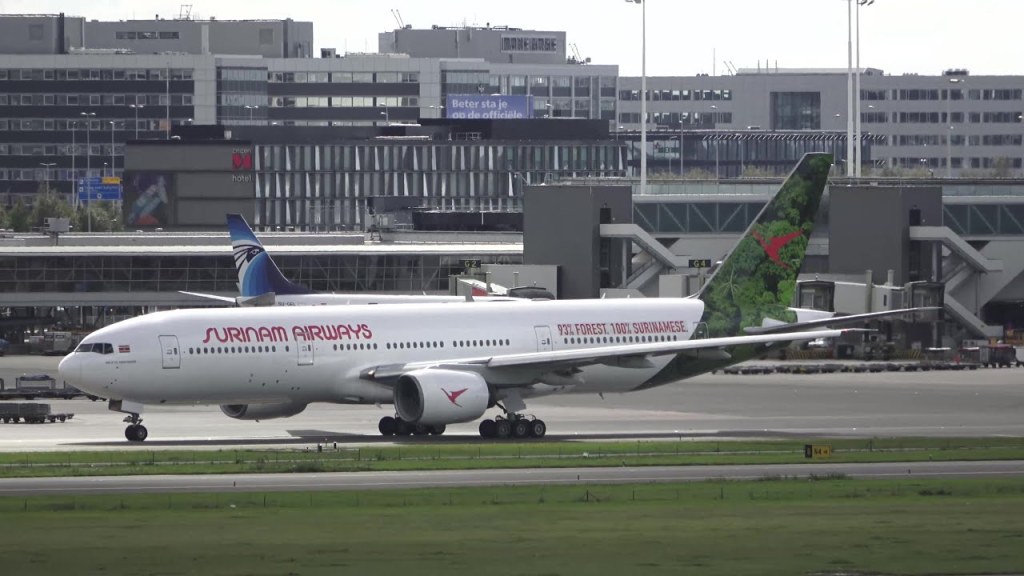
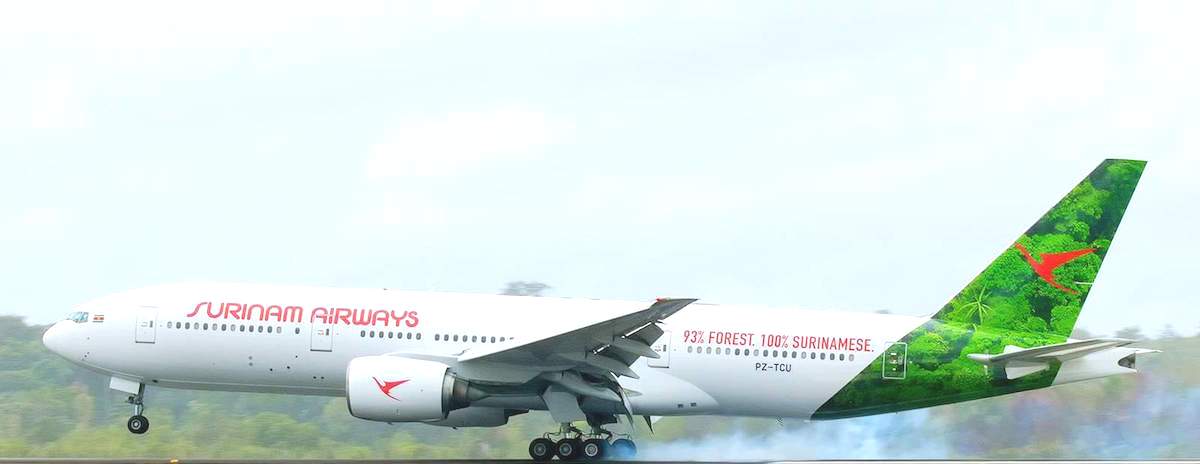
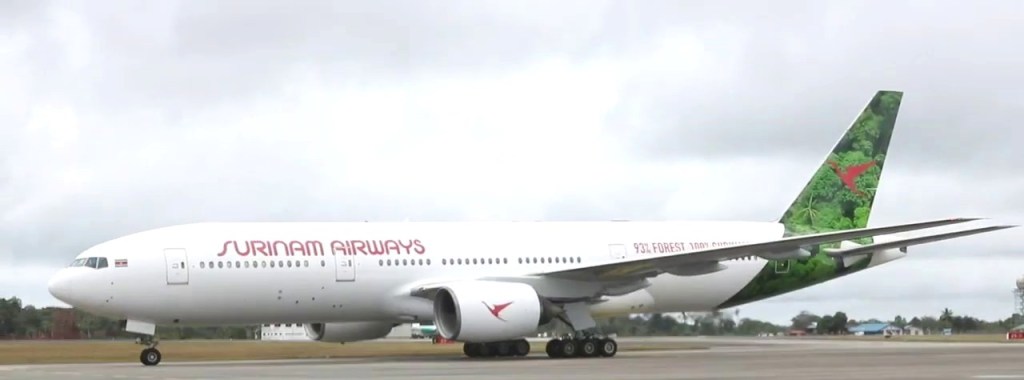
La aerolínea surinamés Surinam Airlines (SLM) ha realizado este Miércoles 16/12 su primer vuelo comercial con su nuevo Boeing 777-200ER que ha realizado un vuelo de carga pura hacia el Aeropuerto Amsterdam/Schiphol; pero el Jueves 17 de Diciembre de 2020 realizó su primer vuelo con pasajeros. La aeronave Boeing 777-200ER adquirida desde el año pasado ha sido necesario la tramitación y puesta a punto del nuevo avión para realizar vuelos sin escala transatlánticos directos. La aeronave ha sido reacondicionada para realizar vuelos hacia Amsterdam/Schiphol sin desviarse. Debido a que la categoría ETOPS de la aeronave había vencido, no podía efectuar la ruta más corta a través del Atlántico. Este tipo de avión requiere un permiso separado por ser una aeronave de dos motores, lo que permite cruzar el océano sin volar a poca distancia de los aeropuertos alternativos. Debido a la llamada certificación ETOPS, Surinam Airways sólo podía volar a los Países Bajos tomando una ruta a lo largo de la costa Este de los Estados Unidos, lo que significaba un desvío de muchas horas. Pero la compañía surinamesa ha acondicionado la aeronave para efectuar la ruta más directa y en el menor tiempo. Mientras tanto, Surinam Airways ha contratado un Airbus 340-300 de Air Belgium para reforzar la ruta transatlántica.

La nueva incorporación del Boeing 777-200ER matrícula PZ-TCU tiene una larga historia detrás de él, con dieciocho años de antigüedad ha volado anteriormente para Singapore Airlines y Air New Zealand. Ahora SLM utilizará principalmente el avión en la ruta a Paramaribo-Amsterdam.

SLM launches Boeing 777 at Schiphol

AW-Waterkant.com_70006

Suriname Airlines first commercial flight Boeing 777

The Surinamese airline Surinam Airlines (SLM) made its first commercial flight with its new Boeing 777-200ER this Wednesday, December 16, which has made a pure cargo flight to Amsterdam/Schiphol Airport; But on Thursday, December 17, 2020 he made his first flight with passengers. The Boeing 777-200ER aircraft acquired since last year has required the processing and fine-tuning of the new aircraft for direct non-stop transatlantic flights. The aircraft has been reconditioned to fly to Amsterdam/Schiphol without deviation. Because the aircraft’s ETOPS category had expired, it could not fly the shortest route across the Atlantic. This type of aircraft requires a separate permit as it is a twin-engine aircraft, allowing it to cross the ocean without flying a short distance from alternative airports. Due to the so-called ETOPS certification, Surinam Airways could only fly to the Netherlands by taking a route along the East Coast of the United States, which meant a detour of many hours. But the surinamese company has conditioned the aircraft to carry out the most direct route and in the shortest time. Meanwhile, Surinam Airways has contracted an Air Belgium Airbus 340-300 to reinforce the transatlantic route.

The new addition of the Boeing 777-200ER registration PZ-TCU has a long history behind it, with eighteen years old it has previously flown for Singapore Airlines and Air New Zealand. Now SLM will mainly use the aircraft on the route to Paramaribo-Amsterdam.

SLM lanceert Boeing 777 op Schiphol

Suriname Airlines eerste commerciële vlucht Boeing 777

Surinam Airways_Isologotype_001

De Surinaamse luchtvaartmaatschappij Surinam Airlines (SLM) Maakte woensdag 16 december haar eerste commerciële vlucht met haar nieuwe Boeing 777-200ER, die een pure vrachtvlucht heeft gemaakt naar Amsterdam/Schiphol Airport; Maar op donderdag 17 december 2020 maakte hij zijn eerste vlucht met passagiers.

Het Boeing 777-200ER-vliegtuig dat sinds vorig jaar is aangeschaft, vereiste de verwerking en verfijning van het nieuwe vliegtuig voor directe non-stop transatlantische vluchten. Het vliegtuig is gereviseerd om zonder afwijking naar Amsterdam/Schiphol te vliegen. Omdat de ETOPS-categorie van het vliegtuig was verlopen, kon het niet de kortste route over de Atlantische Oceaan vliegen. Voor dit type vliegtuig is een aparte vergunning vereist, aangezien het een tweemotorig vliegtuig is, waardoor het de oceaan kan oversteken zonder te vliegen op korte afstand van alternatieve luchthavens. Door de zogenaamde ETOPS-certificering kon Surinam Airways alleen naar Nederland vliegen via een route langs de oostkust van de Verenigde Staten, wat een omweg van vele uren betekende. Maar het bedrijf surinaams heeft het vliegtuig geconditioneerd om de meest directe route en in de kortste tijd uit te voeren. Inmiddels heeft Surinam Airways een Air Belgium Airbus 340-300 gecontracteerd om de transatlantische route te versterken.

De nieuwe toevoeging van de Boeing 777-200ER-registratie PZ-TCU heeft een lange geschiedenis achter de rug, met achttien jaar oud vloog hij eerder voor Singapore Airlines en Air New Zealand. Nu zal SLM de vliegtuigen voornamelijk inzetten op de route naar Paramaribo-Amsterdam.


PUBLISHER: Airgways.com
DBk: Flyslm.com / Airgways.com
AW-POST: 202012192127AR

A\W   A I R G W A Y S ®

Informe Senado sobre Boeing 737 MAX

AW | 2020 12 19 14:50 | AVIATION SAFETY / AVIATION ORGANISMS / GOVERNMENT

Investigadores Senado fallan por manipulación seguridad aviación

US-Senate-Logo.svg

Un nuevo informe del Senado de Estados Unidos determina las acusaciones contra la Federal Aviation Administration (FAA) y The Boeing Company contra la manipularon de pruebas del Boeing 737 MAX durante la recertificación. Es una de las muchas acusaciones en un nuevo y condenante informe del Capitol Hill. La compañía Boeing y la Administración Federal de Aviación trabajaron de manera conjunta para manipular las pruebas de recertificación de la línea del modelo Boeing 737 MAX después de dos accidentes aéreos ocurridos en 10/2018 y 03/2019, según un nuevo informe de la Comisión de Transporte del Senado de Estados Unidos. Según el documento del Senado, Boeing ha entrenado inapropiadamente a algunos pilotos de pruebas de la FAA para alcanzar un resultado deseado durante las pruebas de recertificación, y algunos incluso se realizaron en simuladores que no estaban equipados para volver a crear las mismas condiciones que los accidentes. Al hacer esto, los autores del informe del Senado dicen que «la FAA y Boeing estaban tratando de encubrir información importante que pudo haber contribuido a las tragedias del 737 MAX». La FAA también está acusada de tomar represalias contra los denunciantes, posiblemente obstruyendo la investigación de la Oficina del Inspector General sobre los accidentes.

Informe Senado

El Informe sobre el Boeing 737 MAX de 102 páginas, publicado el Viernes 18/12, fue compilado por el Comité de Comercio, Ciencia y Transporte del Senado y se basa en información de 50 denunciantes, entrevistas con el personal de la FAA y más de 15.000 páginas de documentos. La nueva denuncia arriba un mes después de que la FAA ha aprobado al 737 MAX para regresar al vuelo, y actualmente, las aerolíneas de todo el mundo comienzan a reintroducir el avión en sus flotas y vuelos programados.

Los propios fracasos de Boeing que condujeron a los accidentes del 737 MAX han sido completamente sondeados y bien documentados, el nuevo informe del Senado es una de las miradas más íntimas a los problemas dentro del regulador de la FAA que se suponía que mantendría la compañía aeroespacial bajo control. «Nuestros hallazgos son preocupantes. El informe detalla una serie de ejemplos significativos de deficiencias en la supervisión de la seguridad de la aviación y liderazgo fallido en la FAA. Está claro que la agencia requiere una supervisión constante para garantizar que su trabajo para proteger al público volador se ejecute completa y correctamente», dijo el Senador Roger Wicker (R-MS), quien preside el Comité, en un comunicado.

Postura FAA

La posición de la FAA en una declaración reciente dijo que «revisará cuidadosamente el documento, que el Comité reconoce que contiene una serie de alegaciones sin fundamento. Trabajando en estrecha colaboración con otros reguladores internacionales, la FAA llevó a cabo una revisión exhaustiva y deliberada del 737 MAX. Estamos seguros de que los problemas de seguridad que desempeñaron un papel en los trágicos accidentes relacionados con el vuelo JT-610 de Lion Air y el vuelo ET-302 de Ethiopian Airlines se han abordado a través de los cambios de diseño requeridos y aprobados de forma independiente por la FAA y sus socios».

Comunicado Boeing

Por su parte, Boeing dijo en una declaración preparada que «tomara en serio las constataciones del Comité y seguirá examinando el informe en su totalidad. Boeing se compromete a mejorar la seguridad de la aviación, fortalecer nuestra cultura de seguridad y reconstruir la confianza con nuestros clientes, reguladores y el público volador», escribió la compañía.

Boeing se había precipitado a través del desarrollo para que la línea 737 MAX pudiera seguir el ritmo de su rival Airbus, con la línea A320NEO, que había anunciado un avión más eficiente en el consumo de combustible en 2011. En lugar de desarrollar un nuevo avión desde cero, Boeing modificó el 737 Next Generation con motores más grandes y eficientes en el consumo de combustible, pero en ese alocado vuelo por alcanzar la punta en el adelanto tecnológico y comercial, la compañía americana falló en el intento de presentar un producto totalmente seguro para los usuarios del transporte aéreo, un costosísimo resultado que a involucrado a muchos a un desastre sin precedentes en la industria de la aviación comercial.

Senate Report on Boeing 737 MAX

Senate investigators find aviation security tampering

Boeing 737 MAX_Isologotype

A new report from the United States Senate terminates allegations against the Federal Aviation Administration (FAA) and The Boeing Company against tampering with tests of the Boeing 737 MAX during recertification. It’s one of many allegations in a damning new report from Capitol Hill. The Boeing company and the Federal Aviation Administration worked together to manipulate the recertification tests of the 737 MAX model line after two air crashes on 10/2018 and 03/2019, according to a new report from the Transportation Commission. of the United States Senate. According to the Senate document, Boeing has inappropriately trained some FAA test pilots to achieve a desired result during recertification tests, and some were even conducted in simulators that were not equipped to recreate the same conditions as accidents. . In doing so, the authors of the Senate report say that «the FAA and Boeing were trying to cover up important information that may have contributed to the 737 MAX tragedies». The FAA is also accused of retaliating against whistleblowers, possibly obstructing the Office of Inspector General’s investigation into the accidents.

Senate Report

The 102-page Boeing 737 MAX Report, released Friday 12/18, was compiled by the Senate Committee on Commerce, Science and Transportation and is based on information from 50 whistleblowers, interviews with FAA personnel, and more than 15,000 pages of documents. The new complaint comes a month after the FAA has approved the 737 MAX to return to flight, and now, airlines around the world are beginning to reintroduce the plane into their fleets and scheduled flights.

Boeing’s own failures that led to the 737 MAX crashes have been fully probed and well documented, the new Senate report is one of the most intimate looks at the problems within the FAA regulator that the aerospace company was supposed to maintain. under control. «Our findings are concerning. The report details a number of significant examples of deficiencies in aviation security oversight and failed leadership at the FAA. It is clear that the agency requires constant oversight to ensure that its work to protect the public Flying to run completely and properly», said Senator Roger Wicker (R-MS), who chairs the Committee, in a statement.

FAA position

The FAA’s position in a recent statement said it will «carefully review the document, which the Committee acknowledges contains a number of unsubstantiated allegations. Working closely with other international regulators, the FAA conducted a deliberate and comprehensive review of the document. 737 MAX. We are confident that the safety issues that played a role in the tragic accidents related to Lion Air flight JT-610 and Ethiopian Airlines flight ET-302 have been addressed through the required design changes and independently approved by the FAA and its partners».

Boeing statement

For its part, Boeing said in a prepared statement that it will «take the Committee’s findings seriously and will continue to review the report in its entirety. Boeing is committed to enhancing aviation safety, strengthening our safety culture and rebuilding trust with our partners. customers, regulators and the flying public», the company wrote.

Boeing had rushed through development so that the 737 MAX line could keep up with rival Airbus, with the A320NEO line announcing a more fuel-efficient aircraft in 2011. Rather than developing a new aircraft From scratch, Boeing modified the 737 Next Generation with larger and more fuel-efficient engines, but in that crazy flight to reach the top in technological and commercial advancement, the American company failed to present a totally safe product. for air travel users, a costly outcome that has involved many in an unprecedented disaster in the commercial aviation industry.


PUBLISHER: Airgways.com
DBk: Senate.gov / Faa.gov / Boeing.com / Transportation.gov / Airgways.com
AW-POST: 202012191450AR

A\W   A I R G W A Y S ®

Mexicana podría retornar a los cielos

AW | 2020 12 19 12:37 | AIRLINES / GOVERNMENT

Gobierno buscaría apoyo para resurgir Mexicana Aviación

mexicana_logos

El Gobierno de México ha anunciado que se encuentra evaluando buscar revivir la aerolínea Mexicana de Aviación como parte de un proceso de adecuación de mercado tras las dificultades de Interjet por reiniciar operaciones inmerso en deudas que han paralizado a la aerolínea. La glamorosa Mexicana de Aviación, la cual dejó de operar en 2010, podría retornar a sus actividades ante una falta de conectividad ocasionada por la crisis sanitaria de la pandemia. Representantes de Mexicana se reunieron el 16 de Diciembre de 2020 con funcionarios de las secretarías de Gobernación y de Comunicaciones y Transportes, a fin de analizar la posibilidad de reactivar a la línea aérea otrora un símbolo de la aviación mexicana. El Presidente Andrés Manuel López Obrador tiene la voluntad de resolver las demandas de los trabajadores que se quedaron sin empleo debido a los malos manejos de Gastón Azcárraga, el último Director General de Mexicana de Aviación. El Secretario General del Sindicato Nacional de Trabajadores de Transportes, Transformación, Aviación, Servicios y Similares, Miguel Ángel Yúdico Colín, dijo que Mexicana cuenta con la infraestructura necesaria para poder retornar sus operaciones, enmarcada en un período de depreciación de los costo operativos en el transporte aéreo que hacen posible el retorno de nuevas compañías aéreas.

Debido a la proximidad de las posibles rupturas de líneas aéreas en México, desde el Gobierno han manifestado el deseo de conservar las frecuencias de vuelo para no ser detentadas por aéreas americanas, por lo que continúan evaluando la incorporación de nuevos protagonistas para el mercado aéreo mexicano. El espacio que pudiera abandonar una aerolínea por sus dificultades financieras, podría reactivarse con Mexicana de Aviación, sostuvieron desde la Gobernación. VLU, la nueva startup mexicana continúa avanzando hacia su puesta a punto para iniciar operaciones hacia principios de 2021.

Mexicana could return to the skies

Government would seek support to resurface Mexicana Aviación

Mexicana_a330

Mexicana_Isologotype

The Government of Mexico has announced that it is working on trying to revive the Mexicana Aviación airline as part of a market adaptation process after Interjet’s difficulties due to restarting operations mired in debt that have paralyzed the airline. The glamorous Mexicana de Aviación, which stopped operating in 2010, could return to its activities due to a lack of connectivity caused by the health crisis of the pandemic. Representatives of Mexicana met on December 16, 2020 with officials from the Ministries of the Interior and of Communications and Transportation, in order to analyze the possibility of reactivating the airline that was once a symbol of Mexican aviation. President Andrés Manuel López Obrador has the will to resolve the demands of workers who were left without employment due to the mismanagement of Gastón Azcárraga, the last General Director of Mexicana de Aviación. The Secretary General of the National Union of Transport, Transformation, Aviation, Services and Similar Workers, Miguel Ángel Yúdico Colín, said that Mexicana has the necessary infrastructure to be able to return its operations, framed in a period of depreciation of operating costs in the air transport that make possible the sighting of new airlines.

Due to the proximity of the possible ruptures of airlines in Mexico, the Government has expressed the desire to preserve the flight frequencies so as not to be held by American airlines, so they continue to work on the incorporation of new protagonists for the Mexican air market . The space that an airline could leave due to its financial difficulties could be reactivated with Mexicana de Aviación, the Government said. VLU, the new Mexican startup continues to advance towards its readiness to start operations towards the beginning of 2021.


PUBLISHER: Airgways.com
DBk: Gov.mx / Airgways.com
AW-POST: 202012191237AR

A\W   A I R G W A Y S ®

Low cost argentinas en Aeroparque

AW | 2020 12 19 12:02 | AIRPORTS / GOVERNMENT

Transporte Argentina garantiza operaciones low cost Aeroparque

Tras los continuos reclamos por el Aeropuerto Internacional El Palomar, el Ministro de Transporte de Argentina, Mario Meoni, anunció que no se reabrirá dicha estación aérea ante la preocupación de los empleados y usuarios del transporte aéreo. Ante una vacilante postura de la cartera de Transporte respecto a la continuidad o no de la aeroestación low cost, las compañías de presupuesto Flybondi Líneas Aéreas y JetSmart Airlines Argentina han iniciado sus operaciones transitorias desde el Aeropuerto Internacional Ezeiza a la espera de obtener los permisos de slots en el Aeropuerto Jorge Newbery de la Ciudad de Buenos Aires. El Ministro de Transporte ha llamado a la tranquilidad y anunció que las low cost comenzarán a operar desde Aeroparque hacia fines de Febrero 2021.

Desde el Ministerio de Transporte sostienen en la regionalización de los vuelos desde el reacondicionado Aeropuerto Jorge Newbery permitirá aumentar las perspectivas de conexiones con el interior de Argentina. Las compañías aéreas de presupuesto realizarán vuelos domésticos desde esta aeroestación, mientras que los vuelos regionales continuarán siendo evaluados sobre qué aerolínea operará esas rutas.

Reclamos El Palomar

Dirigentes principales de Juntos por el Cambio (JXC) participaron este Jueves 17/12 de una nueva marcha con vecinos y comerciantes de Aeropuerto El Palomar, días después de que el Gobierno resolviera que este aeropuerto solo va a estar operativo para vuelos militares. El cierre de El Palomar generó durante los últimos días fuertes cruces entre el oficialismo y la oposición. Lo cierto es que la manifestación que organizaron vecinos de El Palomar continúa reclamando la continuidad de la aeroestación, que ha brindado a los pasajeros una comodidad de ser un aeropuerto low cost con las ventajas operativas que ha representado para los usuarios del transporte y las líneas aéreas de presupuesto.

Argentine low cost in Aeroparque

Argentine transport guarantees low cost operations Aeroparque

After the continuous complaints about the El Palomar International Airport, the Minister of Transport of Argentina, Mario Meoni, announced that said air station will not be reopened due to the concern of the employees and users of air transport. Faced with a fluctuating position of the Transportation portfolio regarding the continuity or not of the low cost air station, the budget companies Flybondi Líneas Aéreas and JetSmart Airlines Argentina have started their transitory operations from the Ezeiza International Airport while waiting to obtain the permits slots at the Jorge Newbery Airport in the City of Buenos Aires. The Minister of Transport has called for tranquility and announced that the low cost will begin operating from Aeroparque towards the end of February 2021.

The Ministry of Transportation maintains that the regionalization of flights from the reconditioned Jorge Newbery Airport will allow increasing the prospects of connections with the interior of Argentina. Budget airlines will conduct domestic flights from this airstation, while regional flights will continue to be evaluated on which airline will operate those routes.

Claims El Palomar

Main leaders of Juntos por el Cambio (JXC) participated this Thursday 17/12 in a new march with residents and merchants of El Palomar Airport, days after the Government decided that this airport will only be operational for military flights. The closure of El Palomar generated strong crossings between the ruling party and the opposition in recent days. The truth is that the demonstration organized by residents of El Palomar continues to demand the continuity of the air station, which has offered passengers the convenience of being a low-cost airport with the operational advantages that it has represented for transport users and airlines of budget.


PUBLISHER: Airgways.com
DBk: Jxc.com.ar / Argentina.gob.ar/transporte / Clarin.com / Airgways.com
AW-POST: 202012191202AR

A\W   A I R G W A Y S ®