Delta renuncia pujar con Lufthansa por Ita Airways
La aguda crisis de Alitalia había permitido a la aerolínea estadounidense Delta Air Lines mostrar interés en entrar en su capital, mientras perseguía ser única candidata a ingresar en el accionario de la compañía italiana. Delta conservaba muchos planes con Alitalia. Sin embargo, tras las vueltas de la crisis entre el Estado italiano y la Comunidad Europea (CE) han ido complicando la situación desembocando en el cierre definitivo de la aerolínea emblemática de Italia.
La formación de una nueva aerolínea estatal totalmente sin los vicios y arrastres de pasivos de la anterior compañía aérea, el Estado italiano empieza a interesarse por desinvertir, con el propósito de captar capital privado. Es allí, donde Lufthansa Airlines podría interesarle entrar, cuando todo el mundo esperaba que Delta Air Lines pujara y presionara, acaba de confirmar el renunciamiento a formar parte del capital privado de la startup italiana ITA Airways.
Las recientes declaraciones del Director General de la aerolínea Delta Air Lines, Ed Bastian, ponen en asombro al Gobierno porque el interés de la aerolínea americana con sede en Atlanta (GA) podía permitir al Gobierno italiano tener un recambio ante Lufthansa, que sí ha mostrado su interés al parecer con una posición más forme en formar parte accionaria de la compañía. Ed Bastian expresó ante los medios la presentación sus cifras financieras anuales y un periodista le preguntó por el histórico interés por la compañía aérea pública italiana. La respuesta fue contundente: “No tenemos ningún plan de inversión en Ita Airways, los acuerdos de código compartido están bien”, sugiriendo que son suficientes.
En una comparecencia parlamentaria, el Presidente de la compañía aérea pública, Alfredo Altavilla, había dejado caer que contaban con Delta Air Lines como uno de los posibles inversores. También se han sugerido los nombres de IAG y Air France-KLM, con quienes la italiana había tenido relaciones durante mucho tiempo, mientras que la aerolínea alemana Lufthansa Airlines permanece como la candidata más firme para captar parte del accionario de ITA Airways.
Delta quits ITA Airways
Delta drops bid with Lufthansa for Ita Airways
The acute crisis of Alitalia had allowed the US airline Delta Air Lines to show interest in entering its capital, while seeking to be the only candidate to enter the shareholding of the Italian company. Delta had many plans with Alitalia. However, after the turns of the crisis between the Italian State and the European Community (EC) they have been complicating the situation, leading to the definitive closure of Italy’s emblematic airline.
The formation of a new state airline totally without the vices and dragging of liabilities of the previous airline, the Italian State begins to be interested in disinvesting, with the purpose of attracting private capital. It is there, where Lufthansa Airlines could be interested in entering, when everyone expected Delta Air Lines to bid and press, it has just confirmed the resignation to be part of the private capital of the Italian startup ITA Airways.
The recent statements by the General Director of the airline Delta Air Lines, Ed Bastian, amaze the Government because the interest of the American airline based in Atlanta (GA) could allow the Italian Government to have a replacement before Lufthansa, which has shown his interest apparently with a more formal position in becoming a shareholder of the company. Ed Bastian expressed to the media the presentation of his annual financial figures and a journalist asked him about the historic interest in the Italian public airline. The answer was forceful: «We don’t have any investment plan in Ita Airways, the codeshare agreements are fine», suggesting that they are enough.
In a parliamentary appearance, the President of the public airline, Alfredo Altavilla, had dropped that they had Delta Air Lines as one of the possible investors. The names of IAG and Air France-KLM, with whom the Italian had long had relations, have also been suggested, while the German airline Lufthansa Airlines remains the strongest candidate to capture part of the shareholding of ITA Airways.
Delta lascia ITA Airways
Delta abbassa l’offerta con Lufthansa per Ita Airways
L’acuta crisi di Alitalia aveva consentito alla compagnia aerea statunitense Delta Air Lines di manifestare interesse ad entrare nel suo capitale, pur cercando di essere l’unica candidata a diventare azionista della compagnia italiana. Delta aveva molti progetti con Alitalia. Tuttavia, dopo le svolte della crisi tra lo Stato italiano e la Comunità Europea (CE) stanno complicando la situazione, portando alla chiusura definitiva dell’emblematica compagnia aerea italiana.
La costituzione di una nuova compagnia aerea statale totalmente priva dei vizi e del trascinamento delle passività della precedente compagnia aerea, lo Stato italiano inizia ad interessarsi a disinvestire, con lo scopo di attrarre capitali privati. È lì, dove Lufthansa Airlines potrebbe essere interessata ad entrare, quando tutti si aspettavano che Delta Air Lines facesse offerte e premesse, ha appena confermato le dimissioni da parte del capitale privato della startup italiana ITA Airways.
Le recenti dichiarazioni del Direttore Generale della compagnia aerea Delta Air Lines, Ed Bastian, stupiscono il Governo perché l’interesse della compagnia aerea americana con sede ad Atlanta (GA) potrebbe consentire al governo italiano di avere un sostituto prima di Lufthansa, che ha mostrato il suo interesse apparentemente con una posizione più formale nel diventare azionista della società. Ed Bastian ha espresso ai media la presentazione dei suoi dati finanziari annuali e un giornalista gli ha chiesto informazioni sull’interesse storico per la compagnia aerea pubblica italiana. La risposta è stata forte: «Non abbiamo nessun piano di investimenti in Ita Airways, gli accordi di codeshare vanno bene», lasciando intendere che bastano.
In una apparizione parlamentare, il presidente della compagnia aerea pubblica, Alfredo Altavilla, aveva lasciato cadere che aveva Delta Air Lines come uno dei possibili investitori. Sono stati suggeriti anche i nomi di IAG e Air France-KLM, con cui l’italiano aveva rapporti da tempo, mentre la compagnia aerea tedesca Lufthansa Airlines resta il candidato più forte per acquisire parte della partecipazione di ITA Airways.
PUBLISHER: Airgways.com DBk: Delta.com / Governo.it / Airgways.com AW-POST: 202201160945AR OWNERSHIP: Airways Inc. A\W A I R G W A Y S ®
El Vicepresidente de The Boeing Company, Michael Teal, el ex ingeniero Jefe de Proyectos en el Programa Boeing 737 MAX durante el desarrollo de ese avión se retirará, tras el anuncio internamente de la compañía este Viernes 14/01. Aunque Michael Teal se ha desempeñado como un ingeniero destacado en el Programa 737 MAX durante el proceso de certificación del avión, en un testimonio ante el Congreso en 2020 negó todo conocimiento de las fallas de ingeniería que llevaron a la tragedia de dos accidentes aéreos que mataron a 346 personas. Nunca fue considerado responsable de esos errores. En su lugar, fue nombrado oportunamente ingeniero Jefe de proyectos del Programa Boeing 777X que actualmente se encuentra en desarrollo.
Una mirada detrás de escena al cambiante panorama de liderazgo de Boeing y sus profundos efectos permiten observar que Boeing y sus proveedores han suprimido los controles de supervisión de la seguridad, según un informe de un denunciante del Senado de Estados Unidos. Con la esperanza de recuperación, los jefes de Boeing miran hacia el futuro y desvían las preguntas sobre los accidentes del 737 MAX. En el anuncio interno de su partida a partir del 1 de Abril de 2022, Howard McKenzie, Vicepresidente e Ingeniero Jefe de Boeing Commercial Airplanes, elogió efusivamente a Michael Teal por sus 35 años en Boeing, y escribió que «deja un legado de excelencia técnica y su influencia en los productos actuales y futuros se sentirá en los próximos años».
Interrogado por los investigadores del Comité de la Cámara de Representantes en 2020, Michael Teal testificó que no estaba al tanto de que el software de Control de Vuelo errante, el Sistema de Aumento de Características de Maniobra (MCAS) ,que derribó los dos aviones Boeing 737-8 MAX en Indonesia y Etiopía, fue activado por un solo sensor. Se enteró de que solo después del primer accidente, el vuelo JT610 de Lion Air, dijo: «Muy probablemente a través de la prensa». Dijo a los investigadores que no tenía «conocimiento de que MCAS tuviera una función de repetición», otro elemento defectuoso del diseño que causó que el sistema se reactivara repetidamente mientras los pilotos luchaban por contrarrestarlo.
La luz de advertencia que suponía que debía decirle a los pilotos si dos sensores de Ángulo de Ataque (AOA) no estaban de acuerdo no estaba funcionando en la mayoría de los 737 MAX, incluidos los dos que se estrellaron, a pesar de que los ingenieros de Boeing habían descubierto esta falla en Agosto de 2017, más de un año antes del primer accidente aéreo. Aunque Michael Teal admitió que había «firmado la configuración del avión para incluir la función MCAS», dijo que no podía recordar ninguna discusión sobre la decisión de eliminar toda mención de MCAS de los manuales de vuelo del piloto. Antes de dirigir la ingeniería en el MAX, Michael Teal fue ingeniero Jefe de proyectos en el modelo de carguero Boeing 747-8F.
Una persona familiarizada con la posición de Michael Teal en Boeing dijo que es posible que la compañía contrate al ingeniero como consultor posterior a la jubilación en sus áreas de especialización. Boeing se negó a comentar sobre esa posibilidad. Michael Teal será reemplazado inmediatamente como ingeniero Jefe de proyectos 777X por David Loffing, quien ha sido ingeniero Jefe de proyectos en el modelo 777 actual. El papel de David Loffing en el modelo 777 actual será asumido por Ben Linder, Director de Ingeniería del 777/777X.
MAX, efecto colateral
La partida de Michael Teal significa que todos los altos ejecutivos con roles importantes que supervisan el Programa 737 MAX durante su desarrollo han sido retirados debido a la crítica mundial por los errores de diseño industrial. Kevin McAllister, CEO de Boeing Commercial Airplanes, fue despedido en Octubre de 2019. El máximo representante de la compañía, el CEO de Boeing, Dennis Muilenburg, fue despedido dos meses después. Keith Leverkuhn, quien se desempeñaba como Vicepresidente a cargo general del programa de desarrollo del 737 MAX, se retiró en Julio de 2020.
En las entrevistas del Congreso de 2020, Keith Leverkuhn, al igual que Michael Teal, dijo a los investigadores de la Cámara de Representantes de los Estados Unidos que no sabía nada de los detalles clave sobre el MCAS y dijo que había un enfoque mínimo en ese Sistema de Control de Vuelo a su nivel. David Leverkuhn negó que las decisiones clave de diseño de ingeniería y entrenamiento de pilotos estuvieran impulsadas por consideraciones de costos y dijo que consideraba que el desarrollo del Boeing 737 MAX era un éxito.
Head Line Retirees Boeing 737 MAX
Chief Engineer 737 MAX retires from the company
The Vice President of The Boeing Company, Michael Teal, the former Chief Project Engineer in the Boeing 737 MAX Program during the development of that aircraft, will retire, after the company’s internal announcement this Friday 01/14. Although Michael Teal has served as a lead engineer on the 737 MAX Program during the plane’s certification process, in 2020 congressional testimony he denied all knowledge of the engineering flaws that led to the tragedy of two plane crashes that killed to 346 people. He was never held responsible for those mistakes. In his place, he was duly appointed Chief Project Engineer for the Boeing 777X Program currently under development.
A behind-the-scenes look at Boeing’s changing leadership landscape and its profound effects reveal that Boeing and its suppliers have removed safety oversight controls, according to a US Senate whistleblower report. Hoping for recovery, Boeing bosses look to the future and deflect questions about the 737 MAX crashes. In the internal announcement of his departure effective April 1, 2022, Howard McKenzie, Boeing Commercial Airplanes Vice President and Chief Engineer, eulogized Michael Teal for his 35 years with Boeing, writing that he «leaves a legacy of technical excellence and its influence on current and future products will be felt for years to come».
Questioned by House Committee investigators in 2020, Michael Teal testified that he was unaware that the errant Flight Control software, the Maneuvering Characteristics Augmentation System (MCAS), that brought down the two Boeing aircraft 737-8 MAX in Indonesia and Ethiopia, was activated by a single sensor. He learned that only after the first crash, Lion Air flight JT610, did he say, «Most likely through the press». He told investigators that he was «not aware that MCAS had a snooze function», another design flaw that caused the system to repeatedly reactivate as pilots struggled to counter it.
The warning light that was supposed to tell pilots if two Angle of Attack (AOA) sensors didn’t agree wasn’t working on most 737 MAXs, including the two that crashed, even though engineers Boeing had discovered this flaw in August 2017, more than a year before the first plane crash. Although Michael Teal admitted that he had «signed the configuration of the aircraft to include the MCAS function», he said that he could not recall any discussion of the decision to remove all mention of MCAS from the pilot’s flight manuals. Before leading engineering on the MAX, Michael Teal was the Lead Project Engineer on the Boeing 747-8F freighter model.
A person familiar with Michael Teal’s position at Boeing said the company may hire the engineer as a post-retirement consultant in his areas of expertise. Boeing declined to comment on that possibility. Michael Teal will be replaced immediately as 777X Project Lead Engineer by David Loffing, who has been Project Lead Engineer on the current 777 model. David Loffing’s role on the current 777 model will be assumed by Ben Linder, Director of Engineering for the 777/777X.
MAX, side effect
Michael Teal’s departure means that all senior executives with important roles overseeing the 737 MAX Program during its development have been removed due to worldwide criticism of industrial design errors. Kevin McAllister, CEO of Boeing Commercial Airplanes, was fired in October 2019. The company’s top representative, Boeing CEO Dennis Muilenburg, was fired two months later. Keith Leverkuhn, who was serving as Vice President Overall for the 737 MAX Development Program, retired in July 2020.
In the 2020 congressional interviews, Keith Leverkuhn, like Michael Teal, told US House investigators that he knew nothing of the key details about MCAS and said there was minimal focus on that. Flight Control System at your level. David Leverkuhn denied that key engineering design and pilot training decisions were driven by cost considerations and said that he considered the development of the Boeing 737 MAX a success.
PUBLISHER: Airgways.com DBk: Boeing.com / Airgways.com AW-POST: 202201141821AR OWNERSHIP: Airgways Inc. A \ W A I R G W A Y S ®
Un 12 de Enero de 1972, un hidroavión Grumman HU-16 Albatros de la Fuerza Aérea Argentina aterrizó en el Puerto Argentino/Stanley Port estableciendo el primer vuelo regular entre Comodoro Rivadavia y las Islas Malvinas. Desde esa fecha la compañía LADE Líneas Aéreas ha transportado carga sanitaria, de pasajeros, correo, alimentos frescos y medicinas, convirtiendo en vuelos regulares desde el Continente Americano hacia las Islas Malvinas cumpliendo cincuenta aniversarios de aquellos primeros vuelos.
Bernardo Veksler, un historiador de la Ciudad de Ushuaia, quien colabora diariamente con un periódico local ha recordado hechos relevantes relativos al calendario de la Provincia de Tierra del Fuego, sobre la ocasión en 1972. El historiador ha explicado que el hidroavión Grumman HU-16 Albatros de la Fuerza Aérea podía operar en tierra, mar y nieve, y podía transportar a unos cinco pasajeros. La frecuencia de los vuelos que unían Comodoro Rivadavia—Stanley Port se realizaban con una frecuencia de dos veces mensuales (2Frq/M). Sin embargo, en Octubre 1972, LADE estableció una oficina en Stanley, nombró un Jefe de Estación, instaló un sistema de radio BLU y organizó el aumento del número de vuelos regulares. Para ello, la Fuerza Aérea Argentina instaló una pista de aterrizaje con tablones de aluminio en lo que hoy es el Aeropuerto Stanley, y un mes después LADE aterrizó por primera vez en Malvinas con un Fokker F27 turboprop. A partir de entonces, el enlace aéreo con Argentina se convirtió en vuelos semanales con F27 o F28 Mk-1000 jet. En 1973, en el aniversario de la inauguración de la pista de aterrizaje de tablones de aluminio, el Gobernador de las Islas en ese momento, Ernest Gordon Lewis, recibió al Jefe de Estado Mayor de la Fuerza Aérea Argentina, Brigadier Roberto Donato Bortot, quien llegó en un Focker F27 (T-44) de la aerolínea de fomento LADE Líneas Aéreas.
El 15 de Febrero de 1971, el trifibio Grumman UH-16B Albatross, matrícula BS-03, del Escuadrón Tareas Especiales de la Base Aérea Militar Tandil, realiza el primer vuelo a las Islas Malvinas, con la misión de llevar a cabo una evacuación sanitaria. Despega de Comodoro Rivadavia y luego de tres horas y media ameriza en la bahía de Puerto Stanley (Puerto Argentino) en las islas Malvinas.
En Octubre de 1974 dos vehículos de fabricación argentina, un Dodge D200 y un Citroën 2CV estaban en las Islas como soporte de transporte para la estación LADE. En 1975 el Congreso de Argentina sancionó la Ley 20.087 solicitando la ampliación de la pista de aterrizaje provisional en Stanley, de 700 a 1.200 metros, a completar por la Fuerza Aérea Argentina. El costo de la ampliación del aeródromo se estimó en US$ 2,3 millones de Dólares y se concluyó en Octubre de 1976. Según Bernardo Veksler, en la infraestructura participó personal de la Fuerza Aérea, el Ejército y las Obras Públicas argentinas. A partir de entonces, el avión multipropósito de logística Lockheed C130 Hércules podría aterrizar aumentando el volumen de carga y mercancías transportadas. Con el enlace de las aeronaves C130, Gas del Estado e YPF de Argentina establecieron oficinas e instalaciones de depósito en Stanley para abastecer a las Malvinas. También hubo un acuerdo de cooperación científica firmado por Argentina y el Reino Unido, y dos profesores argentinos fueron enviados a las Islas Malvinas para enseñar español. Estos acuerdos fueron parte de la Declaración Conjunta Argentina/Reino Unido sobre Comunicaciones entre las Islas Malvinas y la Argentina continental acordada en 1971, y que se inició en 1972, una gran epopeya que permitió unir a los pueblos del continente con las Islas Malvinas.
Ξ 50th anniversary Commodoro-Malvinas link Ξ
Fifty years air link between Comodoro Rivadavia—Islas Malvinas
On January 12, 1972, a Grumman HU-16 Albatros seaplane of the Argentine Air Force landed in Puerto Argentino/Stanley Port establishing the first regular flight between Comodoro Rivadavia and the Malvinas Islands. Since that date, the company LADE Líneas Aéreas has transported medical cargo, passengers, mail, fresh food and medicine, converting regular flights from the American Continent to the Malvinas Islands, marking the fiftieth anniversary of those first flights.
Bernardo Veksler, a historian from the City of Ushuaia, who collaborates daily with a local newspaper, has recalled relevant facts related to the calendar of the Province of Tierra del Fuego, on the occasion in 1972. The historian has explained that the Grumman HU-16 seaplane Air Force Albatross could operate on land, sea and snow, and could carry about five passengers. The frequency of the flights that linked Comodoro Rivadavia-Stanley Port was carried out with a frequency of twice a month (2Frq/M). However, in October 1972, LADE established an office in Stanley, appointed a Station Chief, installed a SSB radio system and organized an increase in the number of scheduled flights. For this, the Argentine Air Force installed a runway with aluminum planks in what is now the Stanley Airport, and a month later LADE landed for the first time in Malvinas with a Fokker F27 turboprop. From then on, the air link with Argentina became weekly flights with F27 or F28 Mk-1000 jet. In 1973, on the anniversary of the inauguration of the aluminum plank runway, the Governor of the Islands at the time, Ernest Gordon Lewis, received the Chief of Staff of the Argentine Air Force, Brigadier Roberto Donato Bortot, who He arrived in a Focker F27 (T-44) belonging to the promotion airline LADE Líneas Aéreas.
In October 1974, two Argentine-made vehicles, a Dodge D200 and a Citroën 2CV, were in the Islands as transport support for the LADE station. In 1975, the Argentine Congress passed Law 20,087 requesting the expansion of the provisional runway in Stanley, from 700 to 1,200 meters, to be completed by the Argentine Air Force. The cost of expanding the aerodrome was estimated at US$ 2.3 million and was completed in October 1976. According to Bernardo Veksler, personnel from the Argentine Air Force, Army and Public Works participated in the infrastructure. Thereafter, the Lockheed C130 Hercules multipurpose logistics aircraft could land, increasing the volume of cargo and goods carried. With the connection of the C130 aircraft, Gas del Estado and YPF of Argentina established offices and storage facilities in Stanley to supply the Malvinas. There was also a scientific cooperation agreement signed by Argentina and the United Kingdom, and two Argentine professors were sent to the Falkland Islands to teach Spanish. These agreements were part of the Argentina/United Kingdom Joint Declaration on Communications between the Malvinas Islands and mainland Argentina agreed in 1971, and which began in 1972, a great epic that allowed the peoples of the continent to be united with the Malvinas Islands.
PUBLISHER: Airgways.com DBk: Lade.com.ar / Bernardo Veksler / Airgways.com AW-POST: 202201141707AR OWNERSHIP: Airgways Inc. A \ W A I R G W A Y S ®
Rechazaron reclamo para amarrar avión en Aeroparque
La Sala de Feria de la Cámara en lo Civil y Comercial Federal de Argentina ha rechazado el pedido de la aerolínea de bajo costo JetSmart Airlines Argentina para que se le otorgara un lugar donde amarrar uno de sus aviones en el Aeropuerto Jorge Newbery/AEP. Jetsmart Airlines Argentina reclamó a la administradora de la aeroestación, Aeropuertos Argentina 2000, un nuevo amarre en el Aeroparque para una aeronave Airbus A320 y pidió el cese de la aplicación de la normativa aeronáutica en una forma arbitraria e ilegal.
Jetsmart Argentina pidió una cautelar para el amarre de la aeronave de manera inmediata, pero recibió como respuesta de la Justicia que “no se ha acreditado sumariamente la existencia de una posición disponible para el otorgamiento del amarre requerido”. Ello, pese a que de la documentación presentada en el expediente surge “la existencia de un total de 52 posiciones de amarre en el aeropuerto, de las cuales sólo 46 están asignadas a aeronaves empleadas por líneas aéreas”. Pero el Tribunal, con las firmas de los camaristas Florencia Nallar, Alfredo Gusman y Fernando Uriarte, replicó que “de seis posiciones desocupadas: una de ellas es para el tipo de aeronave CRJ2, cuatro para ascenso y descenso de pasajeros de Aviación Ejecutiva y una exclusiva para vuelos sanitarios y humanitarios. Descartando el uso de esta última en razón de su destino, no se ha invocado que alguna de las otras cinco posiciones sean idóneas para el amarre de una aeronave de gran porte, como lo es el Airbus A320”, subrayó el fallo. Los jueces ratificaron que “la distribución de los amarres es una facultad propia de quien ostenta la concesión de un aeródromo”, pero rechazaron el planteo de Jetsmart, que argumentaba que “lo hace en forma arbitraria”.
Justice rejects JetSmart request
They rejected a claim to moor a plane in Aeroparque
The Fair Room of the Federal Civil and Commercial Chamber of Argentina has rejected the request of the low-cost airline JetSmart Airlines Argentina to be granted a place to moor one of its planes at the Jorge Newbery/AEP Airport. Jetsmart Airlines Argentina demanded from the administrator of the aerostation, Aeropuertos Argentina 2000, a new mooring in the Aeroparque for an Airbus A320 aircraft and requested the cessation of the application of the aeronautical regulations in an arbitrary and illegal manner.
Jetsmart Argentina requested an injunction for the mooring of the aircraft immediately, but received as a response from the Justice that «the existence of an available position for the granting of the required mooring has not been summarily proven». This, despite the fact that the documentation presented in the file reveals «the existence of a total of 52 mooring positions at the airport, of which only 46 are assigned to aircraft used by airlines». But the Court, with the signatures of the maids Florencia Nallar, Alfredo Gusman and Fernando Uriarte, replied that “of six unoccupied positions: one of them is for the type of aircraft CRJ2, four for boarding and alighting of Executive Aviation passengers and one exclusively for medical and humanitarian flights. Dismissing the use of the latter due to its destination, it has not been invoked that any of the other five positions are suitable for the mooring of a large aircraft, such as the Airbus A320”, the ruling underlined. The judges confirmed that “the distribution of moorings is the power of whoever holds the concession of an aerodrome”, but rejected Jetsmart’s proposal, which argued that “it does so arbitrarily”.
PUBLISHER: Airgways.com DBk: Jetsmart.com / Pjn.gov.ar / Airgways.com AW-POST: 202201141612AR OWNERSHIP: Airgways Inc. A \ W A I R G W A Y S ®
Gremios aeronáuticos evalúan medidas fuerza Política aerocomercial posición dominante
Los sindicatos aeronáuticos que representan a los trabajadores las compañías aéreas low cost Flybondi Líneas Aéreas y JetSmart Airlines Argentina cargaron contra las medidas oficiales que generan una competencia desleal, comunicando evaluar medidas de fuerza gremiales. Ambas aerolíneas emitieron un comunicado en el cual se manifestaron duramente contra la política aerocomercial del Gobierno actual, la cual aseguran que privilegia a unos pocos y violenta la libertad de los ciudadanos.
La representación gremial de ATAF (Flybondi) y ASTJ (JetSmart Argentina) sostienen que la estrategia oficial está diseñada para perpetuar «el privilegios de un puñado de funcionarios de turno y sindicalistas con prácticas retrógradas destructivas de fuentes de trabajo». Los gremios de estas líneas aéreas de presupuesto afirman que «las acciones gubernamentales alientan la destrucción de las aerolíneas low cost, lo que genera una competencia desleal favoreciendo a la aerolínea de bandera con subsidios absolutamente disparatados y poniéndoles palos en la rueda para que no puedan trabajar de manera eficiente». Entre las iniciativas oficiales cuestionadas, se destacan «aplicar medidas para encarecer costos de las low cost, imponer bandas tarifarias para encarecer los pasajes y eliminar la libre competencia, perjudicando a los que menos al sector económicamente más débil y contribuyendo a destruir las economías regionales, además del cierre del aeropuerto de El Palomar». También mencionaron la fijación de tasas aeroportuarias onerosas; la promoción de negociación de convenios colectivos por actividad que «en nada nos representan y cuyo único fin es generar condiciones de trabajo tan inviables para Flybondi y JetSmart que las lleven a su cierre».
Ambas aerolíneas permitieron negociar acuerdos de crisis durante la crisis sanitaria que les permitieron mantener todas las fuentes laborales y cuestionaron el impedimento del ingreso de trabajadores de rampa al Aeropuerto Jorge Newbery/AEP, lo que obligó a que 38 empleados se deban relocalizar en otras bases. Estas medidas destructivas, provocaron que Latam Argentina «fuera expulsada del país y dejara a 1.715 familias en la calle, que cada vez menos pasajeros puedan viajar por modo aéreo y que se violente la libertad sindical de los trabajadores de Flybondi y JetSmart».
Movilización
Ante este panorama de presiones han anunciado evaluar una convocatoria a una movilización para que el Gobierno escuche sus reclamos de defensa de sus puestos laborales y lograr que cesen los hostigamientos a la libertad de volar de manera democrática. Los sindicatos buscarán concientizar a la sociedad sobre el «perjuicio y daño que ya le están generando al esquilmarla con impuestos abusivos e inmorales para sostener subsidios obscenos, y que ahora les impondrán pasajes aéreos más caros e inviables; todo en beneficio de unos pocos y exclusivamente de la aerolínea de bandera la cual insume más de US$ 700 millones de Dólares cada año».
Cuota mercado
Las aerolíneas de presupuesto Flybondi Líneas Aéreas y JetSmart Airlines Argentina capturaron durante 2021 casi un tercio del mercado de cabotaje argentino. La Administración Nacional de Aviación Civil (ANAC), ha computado entre Enero y Diciembre 2021 un tráfico doméstico para Flybondi de 878.000 pasajeros que representan un 14 por ciento y JetSmart Airlines Argentina 848.000 pasajeros un 13 por ciento del mercado. Aerolíneas Argentinas mantuvo su liderazgo con el 72 por ciento transportando a 4.31 millones de pasajeros.
Las low cost iniciaban sus operaciones comerciales tras la apertura de la Revolución de los Aviones establecida por el anterior Gobierno hacia el 2018, siendo un objetivo clave el Aeropuerto El Palomar con proyección low cost. A pesar de los obstáculos y presiones del actual Gobierno de suprimir las libertades de volar, JetSmart Argentina y Flybondi continúan soportando las presiones impuestas a la aviación comercial en favor de Aerolíneas Argentinas. «Estamos orgullosos de nuestro trabajo, de poder ofrecer diariamente una verdadera alternativa a los pasajeros, para que cada día más argentinos puedan volar en un verdadero sentido de justicia social para los que menos pueden económicamente y que por primera vez lograron acceder al transporte por medio aéreo», expresaron en sintonía ambas aerolíneas.
Bastión La Cámpora
La agrupación política La Cámpora continúa manejando la política aerocomercial a través de Aerolíneas Argentinas, La agrupación que lidera Máximo Kirchner avanza hacia el verdadero monopolio aerocomercial. De la mano del Senador Mariano Recalde y del líder del gremio de los pilotos APLA, Pablo Biró, el dominio del mercado por parte de la línea de bandera viene incrementándose, junto con la asignación de fondos. En 2021, la empresa estatal recibió una partida por valor de AR$ 63.500 millones. Desde el cambio de Gobierno, la línea aérea de bandera ganó 10 puntos de mercado y tiene más del 70% de las operaciones de cabotaje.
Aerolíneas Argentinas concentraba el 62,7% del mercado de cabotaje, según los datos del 2019. Las operaciones del 2021 han representado un total de pasajeros domésticos transportados del 71,2%, lo que ha aumentado un 8,5% de mercado local. Gran parte de este crecimiento se explica por la salida forzada del negocio de vuelos internos de Latam Airlines Argentina, que tenía una cuota de mercado de 16%. Otra compañía que dejó de operar en el país fue Norwegian Air Argentina que poseía una participación de mercado del 6,5% de las operaciones. Andes Líneas Aéreas y Avianca Airlines Argentina también abandonaron el mercado que representaba menos de 3% de los vuelos que realizaban entre las ambas aerolíneas. La gran ganadora de esta concentración de operaciones fue Aerolíneas Argentinas absorbiendo en Noviembre 2020 a su filial Austral Líneas Aéreas, aunque las low cost Flybondi y JetSmart crecieron su participación gracias a las políticas austeras de precios competitivos, hasta el arribo por parte del Gobierno de la regulación tarifaria de bandas máximas y mínimas. Entre bastidores, desde el ambiente del sector aerocomercial sugieren que el crecimiento momentáneo de estas dos aerolíneas sirve para no hacer tan evidente el vuelo monopólico al que apunta Aerolíneas Argentinas. La idea final sería el control total de los servicios de cabotaje.
Pujas internas
Actualmente, Aerolíneas Argentinas, por cuestiones técnico-operativas no tiene toda su flota de 80 aviones en funciones, lo que limita su crecimiento real. Las low cost, con muchos menos aviones, logran un volumen operacional proporcionalmente mayor. Desde el sindicalismo de APLA tienen una posición dura y buscan la eliminación de las low cost. Hay que recordar las palabras de Alberto Fernández cuando, en la campaña del 2019, le prometió públicamente al gremialista “todos los cielos para Aerolíneas Argentinas”. Las cancelaciones de vuelos de estos días responde a una puja gremial que refleja el estado deliberativo dentro de Aerolíneas Argentinas por el reparto de poder. El sindicalista Pablo Biró busca el control total de la compañía, pero no puede, por ahora, dar una batalla abierta contra Máximo Kirchner, el referente de La Cámpora.
Perspectivas mercado
El avance hacia una mayor concentración aérea en Argentina continúa avanzando con el objetivo de limitar las operaciones domésticas de las dos compañías low cost que siguen operando en el país. La decisión de restablecer el sistema de bandas tarifarias le pone un piso al precio de los pasajes por lo que le quita a Flybondi y JetSmart la esencia de volar a precios low fare, es decir, elimina la posibilidad de competir con mejores precios; mientras que Aerolíneas Argentinas no puede cumplir ser una compañía competitiva y ofrecer precios ventajosos.
El conjunto de mecanismos que se han tramado para eliminar las operaciones en el Aeropuerto El Palomar, concentrar los vuelos en Aeroparque al manejar la disponibilidad de las franjas horarias (slots) y la imposición de un tope al piso mínimo de los precios de los pasajes aéreos, conduce a una mayor concentración del mercado de cabotaje en manos de la compañía estatal Aerolíneas Argentinas. En el mismo sentido involuciona el mercado internacional que continúan estableciendo medidas restrictivas de otorgamiento de frecuencia que desalienta la competitividad del mercado aéreo y la libertad de volar.
Strong claims low cost Argentina
Aeronautical unions evaluate force measures Commercial aviation policy dominant position
The aeronautical unions that represent the workers of the low cost airlines Flybondi Líneas Aéreas and JetSmart Airlines Argentina charged against the official measures that generate unfair competition, communicating the evaluation of union force measures. Both airlines issued a statement in which they spoke out harshly against the commercial aviation policy of the current government, which they say privileges a few and violates the freedom of citizens.
The trade union representation of ATAF (Flybondi) and ASTJ (JetSmart Argentina) maintain that the official strategy is designed to perpetuate «the privileges of a handful of shift officials and trade unionists with retrograde practices that are destructive of job sources». The unions of these budget airlines affirm that «Government actions encourage the destruction of low cost airlines, which generates unfair competition favoring the flag carrier with absolutely crazy subsidies and putting spokes in the wheel so that they cannot work efficiently». Among the official initiatives questioned, stand out «applying measures to increase costs of low cost, imposing fare bands to make tickets more expensive and eliminate free competition, harming those who least to the economically weakest sector and contributing to destroy regional economies, in addition to the closure of the El Palomar Airport». They also mentioned setting onerous airport taxes; the promotion of negotiation of collective agreements for activity that «represent us in no way and whose sole purpose is to generate working conditions so unfeasible for Flybondi and JetSmart that they lead to their closure».
Both airlines allowed crisis agreements to be negotiated during the health crisis that allowed them to maintain all sources of employment and questioned the impediment of ramp workers entering the Jorge Newbery/AEP Airport, which forced 38 employees to relocate to other bases. These destructive measures caused Latam Argentina «to be expelled from the country and leave 1,715 families on the streets, that fewer and fewer passengers can travel by air and that the freedom of association of Flybondi and JetSmart workers is violated».
Mobilization
Given this panorama of pressures, they have announced evaluating a call for a mobilization so that the Government listens to their demands to defend their jobs and achieve an end to the harassment of the freedom to fly democratically. The unions will seek to make society aware of the «harm and damage that they are already causing by fleecing it with abusive and immoral taxes to support obscene subsidies, and that they will now impose more expensive and unviable air tickets; all for the benefit of a few and exclusively of the flag carrier which consumes more than US$ 700 million dollars each year».
Market share
Budget airlines Flybondi Líneas Aéreas and JetSmart Airlines Argentina captured almost a third of the Argentine cabotage market during 2021. The National Civil Aviation Administration (ANAC), has computed between January and December 2021 a domestic traffic for Flybondi of 878,000 passengers representing 14 percent and JetSmart Airlines Argentina 848,000 passengers representing 13 percent of the market. Aerolíneas Argentinas maintained its leadership with 72 percent transporting 4.31 million passengers.
The low cost began their commercial operations after the opening of the Aircraft Revolution established by the previous Government around 2018, with El Palomar Airport being a key objective with low cost projection. Despite the obstacles and pressures of the current Government to suppress the freedoms to fly, JetSmart Argentina and Flybondi continue to support the pressures imposed on commercial aviation in favor of Aerolíneas Argentinas. «We are proud of our work, of being able to offer passengers a true alternative every day, so that more Argentines can fly every day in a true sense of social justice for those who can least afford it and who for the first time managed to access transportation through airline», both airlines expressed in tune.
La Cámpora bastion
The political group La Cámpora continues to handle commercial aviation policy through Aerolineas Argentinas. The group led by Máximo Kirchner is advancing towards a true commercial monopoly. From the hand of Senator Mariano Recalde and the leader of the APLA pilots’ union, Pablo Biró, the dominance of the market by the flag line has been increasing, along with the allocation of funds. In 2021, the state company received an item worth AR$ 63,500 million. Since the change of government, the flag carrier has gained 10 market points and has more than 70% of cabotage operations.
Aerolíneas Argentinas concentrated 62.7% of the cabotage market, according to 2019 data. Operations in 2021 have represented a total of 71.2% of domestic passengers transported, which has increased the local market by 8.5%. Much of this growth is explained by the forced exit of the internal flight business of Latam Airlines Argentina, which had a market share of 16%. Another company that stopped operating in the country was Norwegian Air Argentina, which had a market share of 6.5% of operations. Andes Líneas Aéreas and Avianca Airlines Argentina also left the market that represented less than 3% of the flights carried out between the two airlines. The big winner of this concentration of operations was Aerolíneas Argentinas, absorbing in November 2020 its subsidiary Austral Líneas Aéreas, although the low cost Flybondi and JetSmart grew their participation thanks to the austere policies of competitive prices, until the arrival by the Government of the tariff regulation of maximum and minimum bands. Behind the scenes, from the environment of the commercial airline sector they suggest that the momentary growth of these two airlines serves to not make the monopoly flight to which Aerolíneas Argentinas aims so evident. The final idea would be total control of cabotage services.
Internal bids
Currently, Aerolíneas Argentinas, due to technical-operational issues, does not have its entire fleet of 80 aircraft in operation, which limits its real growth. The low cost, with much fewer aircraft, achieve a proportionally higher operational volume. From the unionism of APLA they have a hard position and seek the elimination of low cost. We must remember the words of Alberto Fernández when, in the 2019 campaign, he publicly promised the trade unionist «all skies for Aerolíneas Argentinas». The flight cancellations these days respond to a union bid that reflects the deliberative state within Aerolíneas Argentinas for the distribution of power. Trade unionist Pablo Biró seeks total control of the company, but he cannot, for now, wage an open battle against Máximo Kirchner, the leader of La Cámpora.
Market prospects
The advance towards a greater air concentration in Argentina continues to advance with the objective of limiting the domestic operations of the two low cost companies that continue to operate in the country. The decision to re-establish the fare band system puts a floor on the price of tickets, which removes from Flybondi and JetSmart the essence of flying at low fare prices, that is, it eliminates the possibility of competing with better prices; while Aerolíneas Argentinas cannot be a competitive company and offer advantageous prices.
The set of mechanisms that have been devised to eliminate operations at El Palomar Airport, concentrate flights at Aeroparque by managing the availability of slots and the imposition of a cap on the minimum floor of air ticket prices, leads to a greater concentration of the cabotage market in the hands of the state company Aerolíneas Argentinas. In the same sense, the international market continues to establish restrictive measures to grant frequency that discourages the competitiveness of the air market and the freedom to fly.
PUBLISHER: Airgways.com DBk: Flybondi.com / Jetsmart.com / Airgways.com AW-POST: 202201141553AR OWNERSHIP: Airgways Inc. A \ W A I R G W A Y S ®
Avelo Airlines inicia nuevo servicio sin escalas Sarasota-Bradenton
Este Jueves 13 de Enero de 2022 Avelo Airlines comienza un nuevo servicio sin escalas desde New Haven (Connecticut) hacia el Aeropuerto Internacional de Sarasota/Bradenton/SRQ. El vuelo inaugural saldrá de HVN a las 02:25 p.m., llegando a SRQ a las 05:35 p.m. Las tarifas de ida muy bajas entre SRQ y el Aeropuerto Tweed-New Haven (HVN) del sur de Connecticut a partir de US$ 49 están disponibles en AveloAir.com. «Estamos entusiasmados de comenzar el Año Nuevo con este nuevo, conveniente y asequible servicio directo al sur de Connecticut. Con nuestras tarifas muy bajas y la comodidad inigualable de HVN, Avelo hace que llegar a Connecticut y todo lo que esta región tiene para ofrecer sea más fácil que nunca. No podemos esperar para dar la bienvenida a nuestros nuevos clientes de Sarasota-Bradenton a bordo para experimentar nuestro servicio excepcional y la mejor hospitalidad en la costa este», dijo el Presidente y CEO de Avelo Airlines, Andrew Levy.
El exclusivo servicio sin escalas de Avelo utiliza aviones Boeing 737 Next-Generation (NG), operará tres veces a la semana los Martes, Jueves y Domingos: El vuelo inaugural, 01/13 HVN—SRQ despegó a las 02:25 p.m. arribando a las 05:35 p.m. El retorno SRQ-HVN 07:35 p.m./10:25 p.m. Los Martes SRQ-HVN 05:50 p.m./08:40 p.m. El regreso HVN-SRQ 02:00 p.m. 05:10 p.m. Los Jueves y Domingos SRQ-HVN 07:35 p.m./10:25 p.m. HVN-SRQ 03:55 p.m./07:05 p.m.
«Estamos encantados de que Avelo Airlines haya elegido el Aeropuerto Internacional Sarasota Bradenton para formar parte de su red de servicios aéreos. Con tarifas bajas y un conveniente servicio sin escalas a New Haven, los pasajeros tendrán una conexión asequible entre dos destinos de alta demanda. Esperamos dar la bienvenida a Avelo Airlines a SRQ y estamos seguros de que su servicio será un gran éxito y se expandirá en el futuro», dijo Rick Piccolo, Presidente y Director Ejecutivo del Aeropuerto Internacional Sarasota/Bradenton.
Avelo inaugurates HVN—Sarasota/Bradenton
Avelo Airlines begins new nonstop Sarasota-Bradenton service
This Thursday, January 13, 2022, Avelo Airlines begins a new nonstop service from New Haven (Connecticut) to Sarasota/Bradenton/SRQ International Airport. The inaugural flight will depart HVN at 02:25 PM, arriving in SRQ at 05:35 PM. Very low one-way fares between SRQ and Southern Connecticut’s Tweed-New Haven Airport (HVN) starting at US$ 49 are available at AveloAir.com. «We’re excited to ring in the New Year with this new, convenient and affordable direct service to southern Connecticut. With our very low fares and HVN’s unmatched convenience, Avelo makes getting to Connecticut and all that this region has to offer easy. easier than ever. We can’t wait to welcome our new Sarasota-Bradenton customers on board to experience our exceptional service and best hospitality on the East Coast», said Avelo Airlines President and CEO Andrew Levy.
Avelo’s exclusive nonstop service, using Boeing 737 Next-Generation (NG) aircraft, will operate three times a week on Tuesdays, Thursdays and Sundays: The inaugural flight, 01/13 HVN—SRQ took off at 02:25 p.m. arriving at 05:35 p.m. The return SRQ—HVN 07:35 p.m./10:25 p.m. Tuesdays SRQ—HVN 05:50 p.m./08:40 p.m. The return HVN—SRQ 02:00 p.m. 05:10 pm Thursdays and Sundays SRQ—HVN 07:35 p.m./10:25 p.m. HVN—SRQ 03:55 PM/07:05 PM
«We are delighted that Avelo Airlines has chosen Sarasota Bradenton International Airport to be part of its air service network. With low fares and convenient nonstop service to New Haven, passengers will have an affordable connection between two high-demand destinations. We look forward to welcoming Avelo Airlines to SRQ and are confident that their service will be a great success and expand in the future», said Rick Piccolo, President and CEO of Sarasota/Bradenton International Airport.
PUBLISHER: Airgways.com DBk: Aveloair.com / Srq-airport.com / Airgways.com AW-POST: 202201011743AR OWNERSHIP: Airgways Inc. A \ W A I R G W A Y S ®
Aerolíneas cancelación tickets por fuera de fecha Justicia ordena reprogramar viajes a pasajeros
La Cámara Civil y Comercial Federal de Argentina ha ordenado a Aerolíneas Argentinas a reprogramar los vuelos a unos pasajeros que iniciaron acciones judiciales. En autos «OLID HUGO MARCEL Y OTRO C/AEROLíNEAS ARGENTINAS S.A. S/MEDIDA AUTOSATISFACTIVA», la Sala I de la Cámara Federal Civil y Comercial decidió revocar una resolución apelada, ordenando a Aerolíneas Argentinas la reprogramación de vuelos en la fecha que los accionantes indicaran con destino a Cancún, México, que tenían planificado para realizar unas vacaciones con hijos y una pareja de amigos. Los accionantes realizaron la compra de los vuelos directos con salida el 29 de Enero 2021 y regreso para el 8 de Febrero de 2021, con la compra de cuatro pasajes y cuatro equipajes adicionales, por un valor total de AR$ 207.683,58 pagando con tarjeta de crédito en tres cuotas. Indicaron que el 24/12/20 la Jefatura de Gabinete de Ministros a través de la decisión administrativa 2252/2020, determinó la prohibición del ingreso al territorio nacional hasta el 9/1/21, que se prorrogó luego hasta el 31/1/21, con la Decisión Administrativa 2/2021, motivo por el que no pudieron concretar el viaje.
El 7 de Enero de 2021 los contactaron vía e-mail desde la aerolínea informándoles que sus pasajes habían quedado abiertos y que los mismos tenían vigencia hasta el 31 de Julio de 2021, por lo que previo a esa fecha, se tenían que contactar para concretar una fecha de viaje hasta el 15 de Diciembre de 2021, o bien posterior a esa fecha y utilizar los pasajes como parte de pago. Los magistrados citaron la Ley 27.563 que establece que «las empresas de transporte -en cualquiera de sus modalidades- que se hayan visto afectadas o impedidas de prestar los servicios contratados con motivo de la pandemia por coronavirus Covid-19, y cuyos servicios fueron contratados de manera directa podrán ofrecer alternativamente a los usuarios algunas opciones».
En Julio de 2021, junto con una familia amiga que se encontraba en la misma situación, chequearon disponibilidad a través del sitio web de la aerolínea y el 16/7/21 le informaron vía correo electrónico que las nuevas fechas de vuelo elegidas, es decir, ida 3 de Enero de 2022 y vuelta el 15 de Enero de 2022 y la empresa les informó que los pasajes se encontraban en proceso de devolución.
Reembolso y reprogramación
Aerolíneas Argentinas ha destacado que no solicitaron el reembolso. Hicieron referencia al intercambio de mails y cartas documentos enviadas a la accionada e indicaron que si sus tickets fueron cancelados el 28/12/2020, como les informó la aerolínea, por qué motivo el 07/01/21 les comunicaron que sus pasajes habían quedado abiertos. Los demandantes advirtieron que con el monto que pretendían reembolsar actualmente no les alcanza para comprar más que un pasaje y equipaje; y aclaran que a la otra familia con la que iban a viajar le confirmaron la reprogramación. Requirieron que la aerolínea procediera a reprogramar los vuelos hacia la ciudad de Cancún, México, en las fechas que ellos informaron oportunamente para poder sincronizar con los pasajes obtenidos por la familia amiga con quien tenían planeado viajar. Sin embargo, la jueza de grado rechazó in limine la acción promovida por no encontrarse reunidos los requisitos para su procedencia. Para así decidir concluyó que la determinación de la veracidad de los hechos a los que se hace referencia en la demanda exorbita, en el caso, el marco cognitivo propio de la medida en los términos en que ha sido planteada, más aun teniendo en cuenta que ciertas decisiones de la aerolínea obedecieron a una política sanitaria adoptada por el Estado Nacional. Agregó que los extremos en los que se han apoyado los actores podrían ser, en principio, controvertidos por la demandada y que tampoco se advierte con claridad que la falta de concesión de la medida peticionada pudiera ocasionar la frustración definitiva del derecho invocado con imposibilidad de repararlo en adelante.
Revocaron sentencia Primera Instancia
Los jueces Fernando A. Uriarte y Juan Perozziello Vizier, de la Sala I de la Cámara Federal Civil y Comercial, revocaron la sentencia de primera instancia. Los magistrados citaron la Ley 27.563, promulgada con posterioridad a la fecha en que los actores adquirieron los pasajes aéreos y alegada por aquellos, que dispone en su Artículo 27 que las «empresas de transporte -en cualquiera de sus modalidades- que se hayan visto afectadas o impedidas de prestar los servicios contratados con motivo de la pandemia por coronavirus Covid-19, y cuyos servicios fueron contratados de manera directa» podrán ofrecer alternativamente a los usuarios algunas opciones. Entre ellas, la reprogramación de los servicios contratados, respetando la estacionalidad, calidad y valores convenidos, dentro de un período de doce meses posteriores al levantamiento de las medidas restrictivas de circulación adoptadas por el Poder Ejecutivo; la entrega de vouchers de servicios para ser utilizados hasta doce meses posteriores al cese de las medidas de restricción, los cuales deberán brindar el acceso –sin penalidades a equivalentes servicios contratados u otros que pudiera aceptar el cliente; o el reintegro del monto abonado por los servicios contratados mediante el pago de hasta 6 cuotas iguales, mensuales y consecutivas con vencimiento la primera de ellas dentro de los 60 días de recibida la solicitud de reembolso.
«La norma es aplicable al caso ya que regula el derecho de los consumidores ante las reprogramaciones y cancelaciones de servicios –en este caso, del vuelo- a causa de la incidencia de la pandemia originada en el Covid-19 (Art. 7 del Código Procesal Civil y Comercial de la Nación). Prima facie, ello configura la admisión de la reprogramación del vuelo pero no que sea realizado en la específica fecha que aquí solicitan los actores, más aun teniendo en cuenta que pretenden hacer un viaje con tres días más que el programado originalmente», concluyeron los magistrados.
Court ruling against Aerolíneas
Aerolíneas cancellation tickets for out of date Justice orders to reschedule passenger trips
The Federal Civil and Commercial Chamber of Argentina has ordered Aerolíneas Argentinas to reschedule flights for some passengers who have initiated legal proceedings. In the proceedings «OLID HUGO MARCEL Y OTRO C/AEROLÍNEAS ARGENTINAS SA S/ MEASURE SELF-SATISFACTIVE», Chamber I of the Federal Civil and Commercial Chamber decided to revoke an appealed resolution, ordering Aerolíneas Argentinas to reschedule flights on the date indicated by the plaintiffs. bound for Cancun, Mexico, who had planned to take a vacation with children and a couple of friends. The plaintiffs made the purchase of the direct flights departing on January 29, 2021 and returning on February 8, 2021, with the purchase of four tickets and four additional pieces of luggage, for a total value of AR$ 207,683.58 paying by card. credit in three installments. They indicated that on 12/24/20, the Head of the Cabinet of Ministers, through administrative decision 2252/2020, determined the prohibition of entry into the national territory until 1/9/21, which was later extended until 1/31/ 21, with Administrative Decision 2/2021, which is why they could not make the trip.
On January 7, 2021 they were contacted via e-mail from the airline informing them that their tickets had been opened and that they were valid until July 31, 2021, so prior to that date, they had to contact each other to specify a travel date until December 15, 2021, or after that date and use the tickets as part of payment. The magistrates cited Law 27,563, which establishes that «transport companies -in any of their modalities- that have been affected or prevented from providing contracted services due to the Covid-19 coronavirus pandemic, and whose services were contracted direct way they will be able to alternatively offer users some options».
In July 2021, together with a family friend who was in the same situation, they checked availability through the airline’s website and on 7/16/21 they informed them via email that the new flight dates chosen, that is, departure January 3, 2022 and return on January 15, 2022 and the company informed them that the tickets were in the process of being returned.
Refund and rescheduling
Aerolíneas Argentinas has highlighted that they did not request a refund. They made reference to the exchange of emails and document letters sent to the defendant and indicated that if their tickets were canceled on 12/28/2020, as the airline informed them, for what reason on 01/07/21 they were informed that their tickets had been open. The plaintiffs warned that the amount they intended to reimburse is currently not enough to buy more than a ticket and luggage; and they clarify that the other family with whom they were going to travel confirmed the rescheduling. They required that the airline proceed to reschedule the flights to the city of Cancun, Mexico, on the dates that they informed in a timely manner in order to be able to synchronize with the tickets obtained by the family friend with whom they had planned to travel. However, the grade judge rejected the action promoted in limine because the requirements for its origin were not met. In order to decide, it concluded that the determination of the veracity of the facts referred to in the lawsuit exorbitant, in the case, the cognitive framework of the measure in the terms in which it has been raised, even more so considering that certain decisions of the airline were due to a health policy adopted by the National State. It added that the extremes on which the actors have relied could be, in principle, controversial by the defendant and that it is not clearly noted that the failure to grant the requested measure could cause the definitive frustration of the right invoked with the impossibility of repairing it. onwards.
First Instance judgment revoked
Judges Fernando A. Uriarte and Juan Perozziello Vizier, of Chamber I of the Federal Civil and Commercial Chamber, revoked the first instance sentence. The magistrates cited Law 27,563, enacted after the date on which the plaintiffs purchased the air tickets and alleged by them, which provides in its Article 27 that «transport companies -in any of their modalities- that have been affected or prevented from providing the contracted services due to the Covid-19 coronavirus pandemic, and whose services were contracted directly» may alternatively offer users some options. Among them, the rescheduling of contracted services, respecting the seasonality, quality and agreed values, within a period of twelve months after the lifting of the restrictive circulation measures adopted by the Executive Power; the delivery of service vouchers to be used up to twelve months after the end of the restriction measures, which must provide access without penalties to equivalent contracted services or others that the client may accept; or the reimbursement of the amount paid for the contracted services through the payment of up to 6 equal, monthly and consecutive installments with the first due within 60 days of receiving the request for reimbursement.
«The norm is applicable to the case since it regulates the right of consumers before the rescheduling andcancellation of services -in this case, of the flight- due to the incidence of the pandemic originated in the Covid-19 (Art. 7 of the Code Civil and Commercial Procedure of the Nation). Prima facie, this configures the admission of the rescheduling of the flight but not that it be carried out on the specific date that the actors request here, even more so considering that they intend to make a trip with three more days than originally scheduled», the magistrates concluded.
PUBLISHER: Airgways.com DBk: Argentina.gob.ar/justicia / Aerolineas.com / Airgways.com AW-POST: 202201140658AR OWNERSHIP: Airgways Inc. A \ W A I R G W A Y S ®
The Boeing Company ha anunciado esta semana que se encuentra analizando una nueva versión del Boeing 787 Dreamliner. El anuncio se ha hecho público en una entrevista realizada por el periódico local estadounidense The Seattle Times. El Director Ejecutivo de Boeing Commercial Airplanes Stan Deal indicó que la compañía esta trabajando en un versión High Gross Weight (HGW) del Boeing 787-10, la variante más grande de la familia Dreamliner. La nueva versión High Gross Weight aumentará la carga útil y el alcance de la último versión con el objetivo de presentar un nuevo producto más competitivo frente al Airbus A350-900.
Boeing 787-10 HGW
El Boeing 787-10 representa una aeronave que desarrolla rutas transatlánticas cómodamente, aunque posee una autonomía un tanto menor a las variantes 787-8 y 787-9. Aerolíneas a través del tiempo han empleado rutas para utilizar las aeronaves 787 Dreamliners. United Airlines ha afectado rutas transpacíficas como San Francisco—Auckland y Los Ángeles—Pudong/Shanghái. EVA Airways ha utilizado el 787-10 en vuelos desde Taipéi (Taiwán)—Seattle (EEUU) y Vancouver (Canadá). Air New Zealand sostuvo conversaciones con Boeing para una versión con mayor MTOW del 787-10, de tal manera que la aerolínea pueda utilizar estas aeronaves sin restricciones de carga y pasajeros en sus rutas transpacíficas hacia Los Ángeles, San Francisco y Vancouver. La compañía espera retirar todas sus aeronaves 777 y simplificar su flota de largo recorrido en un solo modelo.
Peerspectivas Dreamliner
La nueva versión HGW del 787-10 podría permitir a varios operadores del mercado transpacífico reemplazar las flotas de Boeing 777 con el objetivo de modernizar las aeronaves y simplificar sus flotas, permitiendo ser una gran opción para reemplazar parte de sus flotas de 777-200ER y 777-200LR y reducir los costos operativos. Esta nueva versión High Gross Weight permitiría a una compañía aérea optimizar sus flotas y rutas de larga distancia. Una versión mejorada del Boeing 787-10 con 1.000 millas náuticas (nm) más de alcance permitiría ser un mejorable competidor en el sector de larga distancia.
Boeing studies 787-10 HGW
Boeing prepares new version of 787 Dreamliner
The Boeing Company has announced this week that it is analyzing a new version of the Boeing 787 Dreamliner. The announcement has been made public in an interview conducted by the local American newspaper The Seattle Times. Boeing Commercial Airplanes Executive Director Stan Deal indicated that the company is working on a High Gross Weight (HGW) version of the Boeing 787-10, the largest variant of the Dreamliner family. The new High Gross Weight version will increase the payload and range of the last version with the aim of presenting a new product that is more competitive against the Airbus A350-900.
Boeing 787-10HGW
The Boeing 787-10 represents an aircraft that comfortably develops transatlantic routes, although it has a somewhat shorter autonomy than the 787-8 and 787-9 variants. Airlines throughout time have used routes to use the 787 Dreamliners aircraft. United Airlines has affected transpacific routes such as San Francisco—Auckland and Los Angeles—Pudong/Shanghai. EVA Airways has used the 787-10 on flights from Taipei (Taiwan)—Seattle (USA) and Vancouver (Canada). Air New Zealand has been in talks with Boeing for a higher MTOW version of the 787-10 so the airline can use these aircraft without cargo and passenger restrictions on its transpacific routes to Los Angeles, San Francisco and Vancouver. The company hopes to retire all of its 777 aircraft and simplify its long-haul fleet into a single model.
Perspectives Dreamliner
The new HGW version of the 787-10 could allow several transpacific market operators to replace Boeing 777 fleets with the aim of modernizing aircraft and simplifying their fleets, making it a great option to replace part of their 777-200ER fleets and 777-200LR and reduce operating costs. This new High Gross Weight version would allow an airline to optimize its fleets and long-distance routes. An improved version of the Boeing 787-10 with 1,000 nautical miles (nm) more range would allow it to be an improvable competitor in the long-haul sector.
PUBLISHER: Airgways.com DBk: Boeing.com / Airgways.com AW-POST: 202201132041AR OWNERSHIP: Airgways Inc. A \ W A I R G W A Y S ®
Aeropuerto Palmerola atiende +40.000 px en primer mes operaciones
El Aeropuerto Internacional de Palmerola/XPL cumplió de forma exitosa su primer mes de operaciones, con cinco aerolíneas internacionales y superando las expectativas de flujo de pasajeros, informó este miércoles el Presidente Ejecutivo de la División Aeropuertos de Grupo Emco, Peter Fleming. La nueva terminal aérea, ubicada en el Valle de Comayagua, está operando alrededor de 18 vuelos diarios, entre llegadas y salidas, lo cual es posible gracias a las facilidades operacionales que brinda el moderno aeropuerto.
Peter Fleming manifestó que se están obteniendo grandes resultados tanto en el aspecto operativo como en cifras de viajeros, desde que llegó el primer vuelo a Palmerola, el 11 de Diciembre de 2021, de la aerolínea estadounidense Spirit Airlines. «En su primer mes de operación, Palmerola ya logró triplicar la cantidad de pasajeros que tenía Toncontín entre diciembre y enero. Esto es posible ya que la nueva terminal aérea es más grande, moderna, tiene más aerolíneas y hay acceso a pasajes aéreos más baratos gracias a las facilidades operacionales y garantías de seguridad que brinda Palmerola», expresó el Presidente de Emco.
Las aerolíneas que están operando actualmente en la nueva aeroestación hondureña son Spirit Airlines, Copa Airlines, Avianca Airlines, American Airlines y United Airlines. Entre las ventajas que ha traído el Aeropuerto Internacional de Palmerola está la reducción del precio de los boletos aéreos, debido a que brinda condiciones seguras y modernas que han permitido la llegada de aerolíneas de bajo costo por primera vez en la zona. Dos de las aerolíneas que vuelan desde Palmerola han puesto a disposición promociones especiales para los viajeros: Spirit Airlines ofrece vuelos a Miami y Houston por US$ 149 Dólares ida y vuelta y American Airlines boletos a US$ 268 Dólares hasta Miami. Anteriormente, un boleto de ida y vuelta entre Toncontín y Miami costaba US$ 1.557 Dólares.
Beneficios Palmerola
Los beneficios del Aeropuerto Palmerola han sido reconocidos por importantes sectores durante el primer mes de operación. «Definitivamente este es un gran adelanto para la zona central. Un aeropuerto de esta magnitud hará la diferencia en la conectividad aérea del país», manifestó el Presidente del Consejo Hondureño de la Empresa Privada (Cohep), Juan Carlos Sikaffy. La Asociación Internacional de Transporte Aéreo (IATA), principal organismo mundial de la aviación comercial, integrado por más de 290 aerolíneas, felicitó al Aeropuerto Internacional de Palmerola por su exitosa transición de operaciones. «Nos complace que el arduo trabajo coordinado entre líneas aéreas y el personal del aeropuerto bajo tu liderazgo haya tenido como resultado una transición imperceptible, sin impacto sobre la conectividad aérea internacional de Tegucigalpa», subrayó el Vicepresidente Regional de las Américas de IATA, Peter Cerdá, en una carta enviada a Peter Fleming el 19 de Diciembre de 2021. Asimismo, a través de su cuenta oficial de Twitter (@IATA), la asociación aérea mundial resaltó que «el nuevo aeropuerto mejorará conectividad del país y aumentará la oferta para pasajeros y añadirá más capacidad para la carga».
El nuevo aeropuerto además ha iniciado con el innovador servicio de brindar transporte gratuito a los pasajeros que viajan de Tegucigalpa a Palmerola y viceversa. Dentro del aeropuerto, que ha generado gran impacto por su diseño. La seguridad aeroportuaria también ha generado satisfacción en los viajeros nacionales y extranjeros. Las autoridades del aeropuerto confirmaron que pronto se estará anunciando la incorporación de nuevas rutas aéreas y servicios de otras aerolíneas para potenciar la competitividad de la terminal.
La aerolínea estadounidense Spirit Airlines realizó el pasado 11 de Diciembre de 2021 los primeros vuelos comerciales desde y hacia el Aeropuerto Internacional de Palmerola. El nuevo aeropuerto de Honduras se encuentra a unos 80 kilómetros de la capital y 8 kilómetros al sur de la ciudad de Comayagua. La Ley de Pasajes Baratos promovida por el presidente Hernández lleva beneficios directos al sector turismo y a la población en general, que ya comenzó a adquirir los boletos aéreos a precios históricos.
Palmerola 40,000 PAX 30 days
Palmerola Airport serves +40,000 pax in the first month operations
The Palmerola International Airport/XPL successfully completed its first month of operations, with five international airlines and exceeding passenger flow expectations, the Executive President of Grupo Emco’s Airports Division, Peter Fleming, reported on Wednesday. The new air terminal, located in the Comayagua Valley, is operating around 18 daily flights, between arrivals and departures, which is possible thanks to the operational facilities provided by the modern airport.
Peter Fleming stated that great results are being obtained both in the operational aspect and in passenger figures, since the first flight arrived at Palmerola, on December 11, 2021, from the American airline Spirit Airlines. «In its first month of operation, Palmerola has already managed to triple the number of passengers that Toncontín had between December and January. This is possible since the new air terminal is larger, more modern, has more airlines and there is access to cheaper air tickets. thanks to the operational facilities and security guarantees that Palmerola provides», expressed the President of Emco.
The airlines that are currently operating in the new Honduran airstation are Spirit Airlines, Copa Airlines, Avianca Airlines, American Airlines and United Airlines. Among the advantages that Palmerola International Airport has brought is the reduction in the price of air tickets, since it provides safe and modern conditions that have allowed the arrival of low-cost airlines for the first time in the area. Two of the airlines that fly from Palmerola have made special promotions available for travelers: Spirit Airlines offers flights to Miami and Houston for US$ 149 round trip and American Airlines tickets for US$ 268 to Miami. Previously, a round trip ticket between Toncontín and Miami cost US$ 1,557.
Benefits of palm tree
The benefits of Palmerola Airport have been recognized by important sectors during the first month of operation. «This is definitely a great advance for the central zone. An airport of this magnitude will make a difference in the air connectivity of the country,» said the President of the Honduran Council of Private Enterprise (Cohep), Juan Carlos Sikaffy. The International Air Transport Association (IATA), the main world body for commercial aviation, made up of more than 290 airlines, congratulated Palmerola International Airport for its successful transition of operations. «We are pleased that the hard coordinated work between airlines and airport staff under your leadership has resulted in a seamless transition, with no impact on Tegucigalpa’s international air connectivity», said IATA Americas Regional Vice President Peter Cerdá, in a letter sent to Peter Fleming on December 19, 2021. Likewise, through its official Twitter account (@IATA), the world air association highlighted that «the new airport will improve the country’s connectivity and increase the offer for passengers and will add more capacity for cargo».
The new airport has also started with the innovative service of providing free transportation to passengers traveling from Tegucigalpa to Palmerola and vice versa. Inside the airport, which has generated a great impact due to its design. Airport security has also generated satisfaction in domestic and foreign travelers. The airport authorities confirmed that the incorporation of new air routes and services from other airlines will soon be announced to enhance the competitiveness of the terminal.
The American airline Spirit Airlines made the first commercial flights to and from Palmerola International Airport on December 11, 2021. The new airport in Honduras is located about 80 kilometers from the capital and 8 kilometers south of the city of Comayagua. The Cheap Tickets Law promoted by President Hernández brings direct benefits to the tourism sector and the population in general, which has already begun to purchase air tickets at historical prices.
PUBLISHER: Airgways.com DBk: Emcoholding.com / Presidencia.gob.hn / Cohep.com / Iata.org / Airgways.com AW-POST: 202201131510AR OWNERSHIP: Airgways Inc. A \ W A I R G W A Y S ®
Gremios aeronáuticos low cost en alerta y movilización Pronuncian contra Decreto Nº789 de bandas tarifarias
Los gremios aeronáuticos low cost de Argentina que nuclean a los trabajadores de las aerolíneas Flybondi Líneas Aéreas y JetSmart Airlines Argentina alertaron que sus fuentes de trabajo están en peligro por la intención de las autoridades nacionales y de los gremios tradicionales que, señalaron, buscan la destrucción de las aerolíneas low cost. En un comunicado conjunto, la Asociación Sindical de Trabajadores de Flybondi (ATAF) y la Asociación Sindical de Trabajadores de JetSmart (ASTJ) se pronunciaron contra el reciente Decreto Nº789 que ordena reinstalar el sistema de tarifas aéreas mínimas para los vuelos de cabotaje. «Desde hace ya dos años, el gobierno alienta la destrucción de las aerolíneas low cost, y con ello nuestro trabajo, a través de diversas medidas y acciones. Generan competencia desleal, favoreciendo a la aerolínea de bandera con subsidios absolutamente disparatados, poniéndonos palos en la rueda para que no podamos llevar a cabo nuestro trabajo libremente y de manera eficiente», expresaron en un comunicado en conjunto.
Los dos gremios de aviación tienen personería jurídica, la cual les fue otorgada durante el Gobierno de Mauricio Macri, y agrupan a la totalidad de los 700 trabajadores de Flybondi y JetSmart, tanto de tripulaciones como personal administrativo y de tierra. No tienen en cambio personería gremial, que es la que otorga a un gremio representatividad para negociar paritarias: allí deben acatar lo que negocian los gremios aeronáuticos tradicionales: APLA (Pilotos), APTA (Técnicos Aeronáuticos), UPSA (Personal Superior), APA (Personal de Tierra) y AAA (Tripulantes de Cabina).
Precisamente, en el comunicado, los gremios de las aerolíneas low cost apuntaron tanto contra el Gobierno actual como contra los gremios tradicionales, que además tienen sus propias divisiones internas. Los sindicatos APLA, APTA, UPSA y APA negocian juntos con Aerolíneas Argentinas, mientras que los tripulantes de cabina de AAA negocian por separado. En comunicado gremial gremial de las low cost se lee lo que a menudo se suele escuchar, en voz baja, por parte de directivos de estas empresas, que buscan no avivar nuevos conflictos con La Cámpora, la agrupación política que tiene a su cargo no sólo el manejo de Aerolíneas Argentinas sino de prácticamente toda la política aerocomercial, a través del Organismo Regulador del Sistema Nacional Aeroportuario (ORSNA).
Argentine union war
Low cost aeronautical unions on alert and mobilization Pronounce against Decree No. 789 of tariff bands
The low cost aeronautical unions of Argentina that bring together the workers of the airlines Flybondi Líneas Aéreas and JetSmart Airlines Argentina warned that their sources of work are in danger due to the intention of the national authorities and the traditional unions that, they pointed out, seek the destruction of low cost airlines. In a joint statement, the Trade Union Association of Flybondi Workers (ATAF) and the Trade Union Association of JetSmart Workers (ASTJ) spoke out against the recent Decree No. 789 that orders the reinstatement of the minimum airfare system for domestic flights. «For two years now, the government has encouraged the destruction of low-cost airlines, and with it our work, through various measures and actions. They generate unfair competition, favoring the flag carrier with absolutely crazy subsidies, putting spokes in the wheel so that we cannot carry out our work freely and efficiently», they said in a joint statement.
The two aviation unions have legal status, which was granted to them during the government of Mauricio Macri, and group together all of the 700 Flybondi and JetSmart workers, both crew members and administrative and ground personnel. On the other hand, they do not have union status, which is what gives a union representation to negotiate parities: there they must abide by what the traditional aeronautical unions negotiate: APLA (Pilots), APTA (Aeronautical Technicians), UPSA (Senior Personnel), APA (Ground Staff) and AAA (Cabin Crew).
Precisely, in the statement, the unions of the low cost airlines pointed both against the current government and against the traditional unions, which also have their own internal divisions. The APLA, APTA, UPSA and APA unions negotiate together with Aerolineas Argentinas, while AAA cabin crews negotiate separately. In a low-cost union union statement we read what is often heard, in a low voice, by executives of these companies, who seek not to fuel new conflicts with La Cámpora, the political group that is in charge of not only the management of Aerolineas Argentinas but of practically the entire commercial aviation policy, through the Regulatory Body of the National Airport System (ORSNA).
Comunicado de las low cost
Los compañeros y compañeras trabajadores de Flybondi y JetSmart permaneceremos unidos y en estado de movilización y alerta permanente, frente a la intención por parte de las autoridades nacionales y de los gremios tradicionales de destruir nuestras fuentes laborales. ¡Luchemos por la defensa de nuestras fuentes laborales! Aplican medidas para encarecer nuestros costos, para que con el tiempo la operación deje de ser rentable, atentando así contra nuestras fuentes de trabajo y perjudicando al ciudadano. Imponen bandas tarifarias para encarecer los boletos de avión y eliminar la libre competencia, perjudicando directamente a los que menos pueden económicamente y contribuyendo a destruir las economías regionales. Cerraron el Aeropuerto Internacional de “El Palomar”, nuestra casa. Era el único aeropuerto verdaderamente inclusivo del país, al que se podía acceder en tren. Los más perjudicados por esta medida han sido los vecinos de Morón y partidos del Oeste Bonaerense, además de los propios pasajeros, ya que el costo del traslado a Aeroparque y Ezeiza es significativamente mayor. Fijan tasas aeroportuarias onerosas, las cuales se trasladan al costo del pasaje e impiden la compra en cuotas de pasajes a destinos limítrofes. Promovieron la negociación de Convenios Colectivos con gremios tradicionales (AAA, APLA, APTA, UPSA, APA) que en nada nos representan y cuyo único fin es generar condiciones de trabajo tan inviables para Flybondi y Jetsmart que las lleven a su cierre, tal como ya ha sucedido con muchas otras. Desconocen la actividad de los gremios de Flybondi y JetSmart que somos quienes supimos acordar exitosos acuerdos de crisis, manteniendo la totalidad de las fuentes laborales durante la pandemia. Impidieron el ingreso de personal de rampa a Aeroparque, debiéndose relocalizar a 38 compañeros de trabajo en otras bases, obligándonos a contratar con Intercargo los servicios de rampa, compañía manejada por “La Cámpora”. Como resultado de estas medidas destructivas, el Gobierno obtuvo que en 2020 LATAM Argentina fuera expulsada del país y dejara a 1.715 familias en la calle. Que cada vez menos pasajeros puedan viajar por modo aéreo, al aumentarles los costos de los pasajes. Que se pierda conectividad aérea de miles de familias, se destruya el turismo y empeoren las economías regionales: más de 10.000 puestos de trabajo indirectos dependen de las low-cost. Que se violente la libertad sindical de los trabajadores de Flybondi y JetSmart. No descartamos en un futuro cercano movilizarnos para hacer escuchar al Gobierno nuestros reclamos en defensa de nuestras fuentes de trabajo. Concientizar a toda la sociedad sobre el perjuicio y daño que ya le están generando al esquilmarla con impuestos abusivos e inmorales para sostener subsidios obscenos, y que ahora les impondrán pasajes aéreos más caros e inviables; todo en beneficio de unos pocos y exclusivamente de la aerolínea de bandera la cual insume más de U$S 700 millones cada año.
Low cost statement
The fellow workers of Flybondi and JetSmart will remain united and in a state of mobilization and permanent alert, against the intention of the national authorities and traditional unions to destroy our labor sources. Let’s fight for the defense of our sources! labor! They apply measures to make our costs more expensive, so that over time the operation stops being profitable, thus attacking our sources of work and harming the citizen. They impose fare bands to make plane tickets more expensive and eliminate free competition, directly harming those who can least afford it economically and contributing to the destruction of regional economies. They closed the International Airport of «El Palomar», our house. It was the only truly inclusive airport in the country, accessible by train. The most affected by this measure have been the residents of Morón and the western Buenos Aires districts, as well as the passengers themselves, since the cost of the transfer to Aeroparque and Ezeiza is significantly higher. They set onerous airport taxes, which are transferred to the cost of the ticket and prevent the purchase of tickets to neighboring destinations in installments. They promoted the negotiation of Collective Agreements with traditional unions (AAA, APLA, APTA, UPSA, APA) that do not represent us at all and whose sole purpose is to generate working conditions so unfeasible for Flybondi and Jetsmart that lead to their closure, as already It has happened with many others. They are unaware of the activity of the Flybondi and JetSmart unions, that we are the ones who knew how to agree on successful crisis agreements, maintaining all of the labor sources during the pandemic. They prevented the entry of ramp personnel to Aeroparque, having to relocate 38 coworkers in other bases, forcing us to contract with Intercargo the ramp services, a company managed by «La Cámpora». As a result of these destructive measures, the Government obtained that in 2020 LATAM Argentina was expelled from the country and left 1,715 families on the streets. That fewer and fewer passengers can travel by air, as the cost of tickets increases. That air connectivity of thousands of families is lost, tourism is destroyed and regional economies worsen: more than 10,000 indirect jobs depend on low-cost. That the union freedom of Flybondi and JetSmart workers be violated. We do not rule out in the near future mobilizing ourselves to make the Government listen to our claims in defense of our sources of work. Make the entire society aware of the damage and harm that they are already causing by fleecing it with abusive and immoral taxes to support obscene subsidies, and that now they will impose more expensive and unviable air tickets; all for the benefit of a few and exclusively for the flag carrier which consumes more than US$700 million each year.
PUBLISHER: Airgways.com DBk: Flybondi.com / Jetsmart.com / Airgways.com AW-POST: 202201131447AR OWNERSHIP: Airgways Inc. A \ W A I R G W A Y S ®






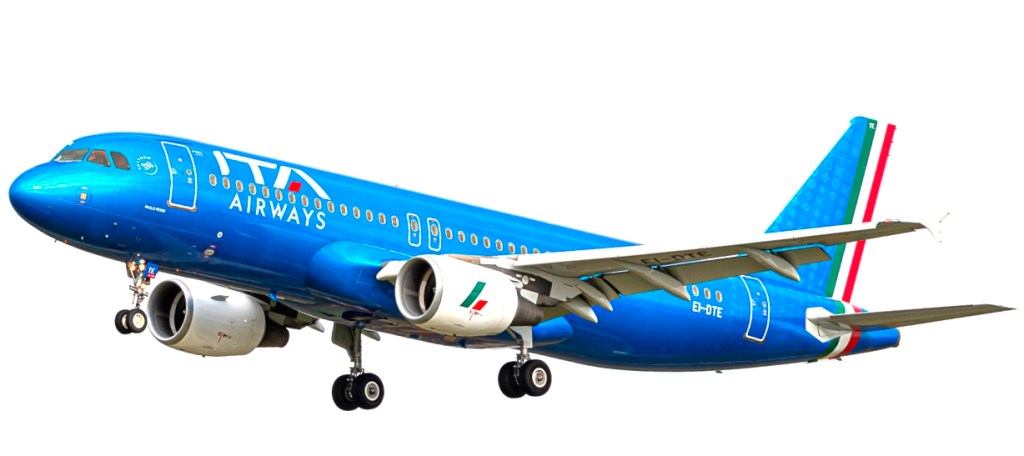
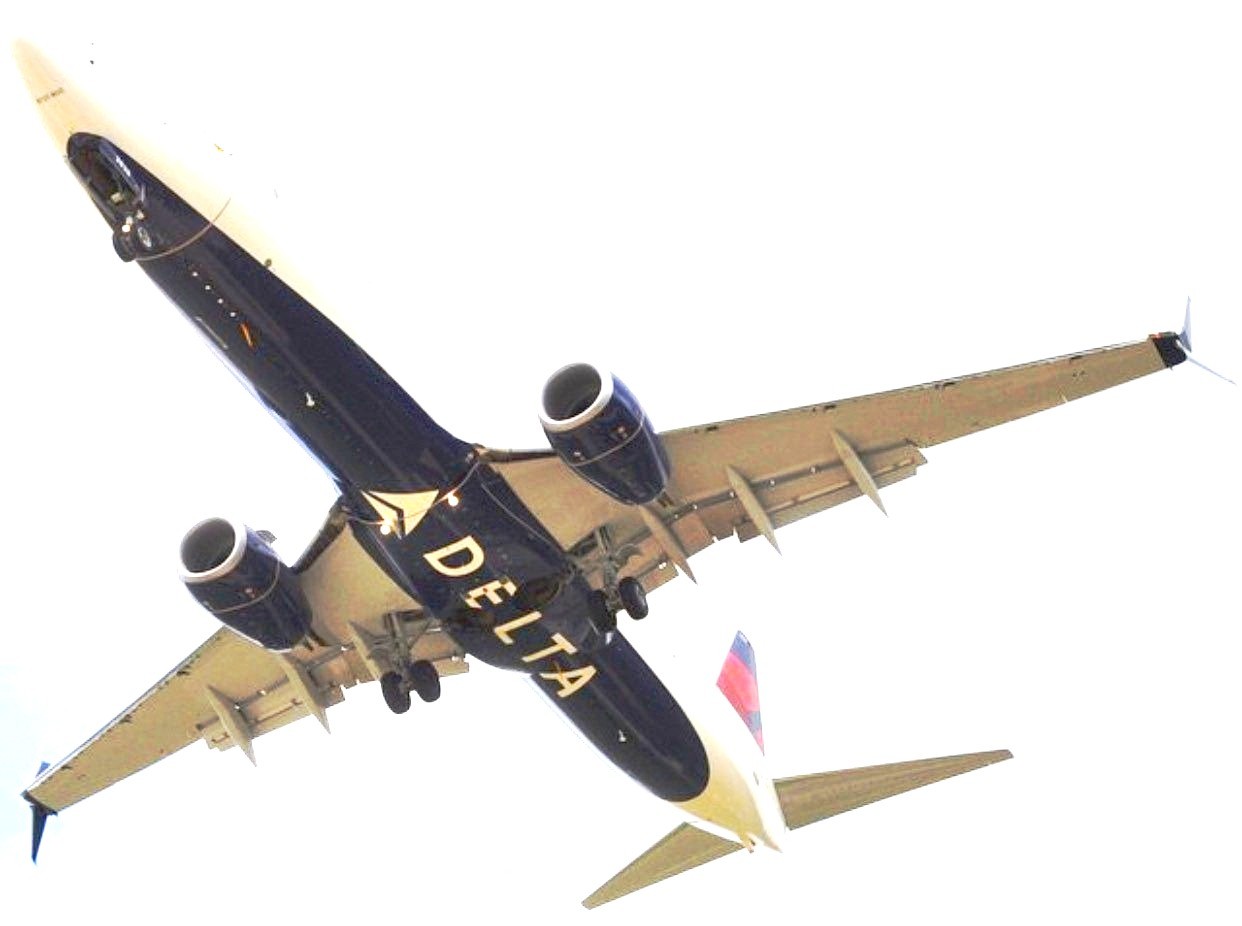



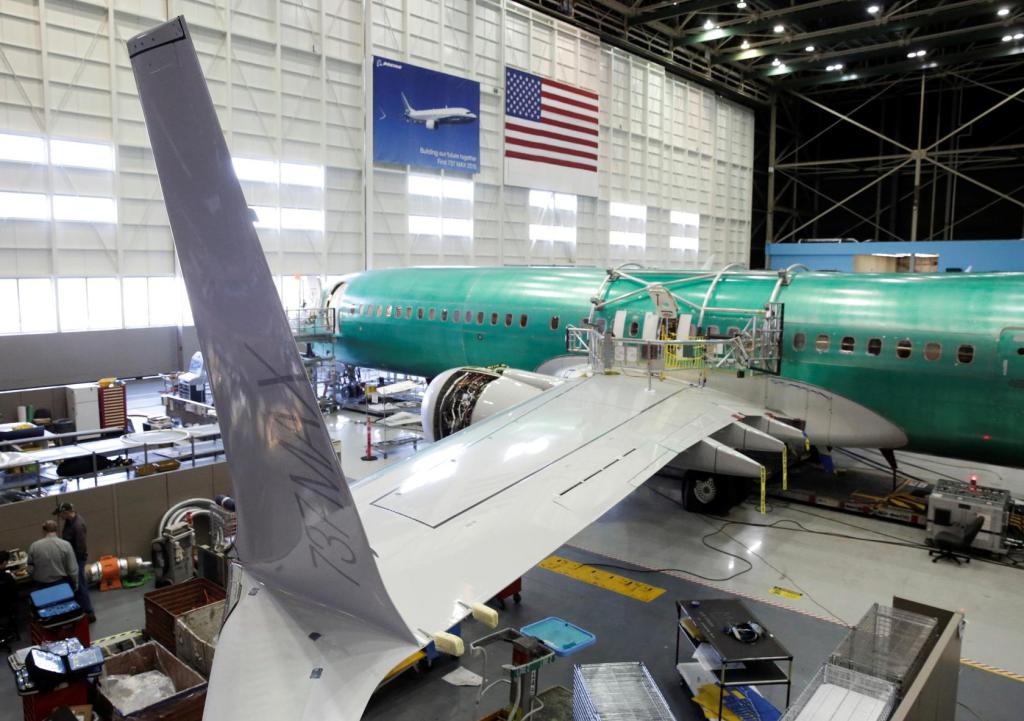

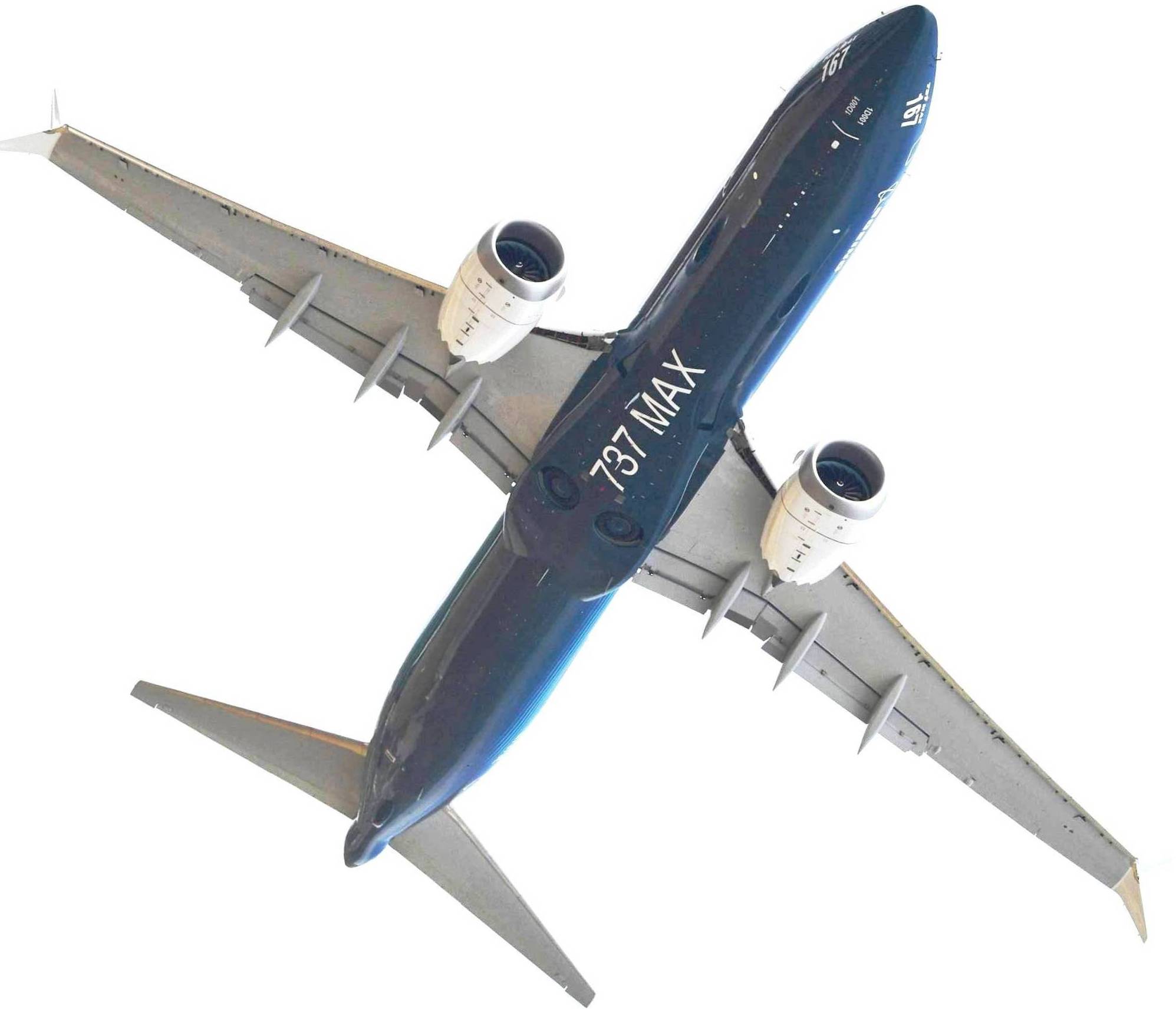
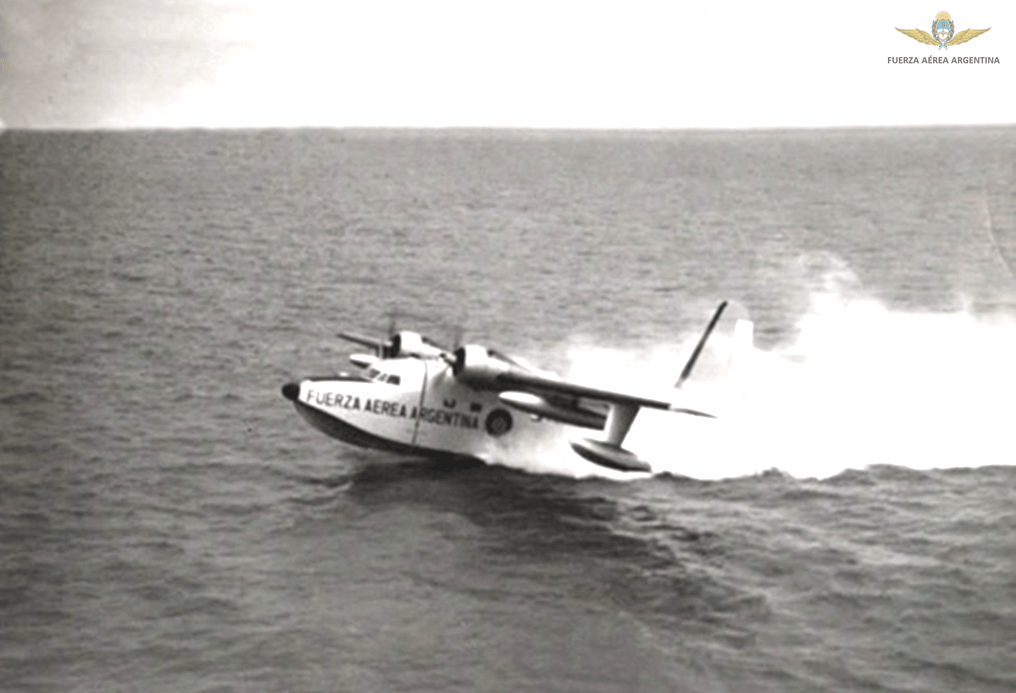


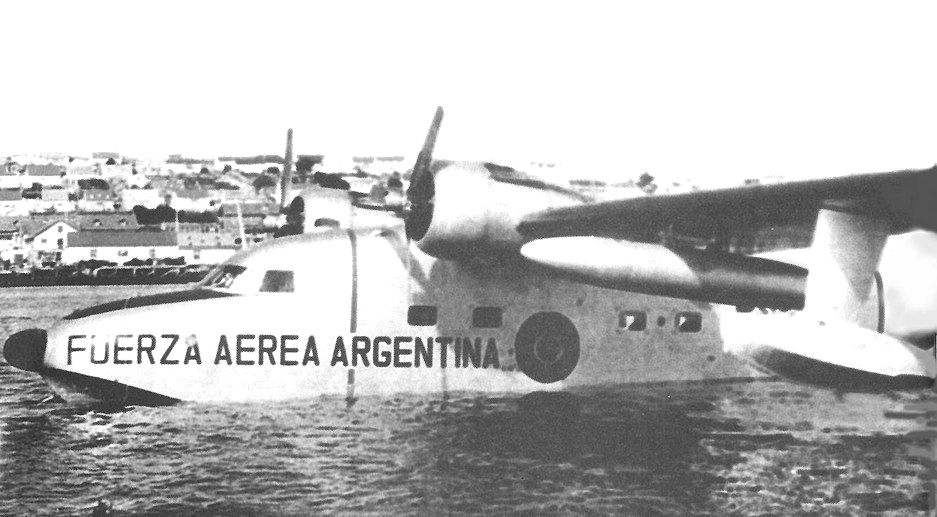




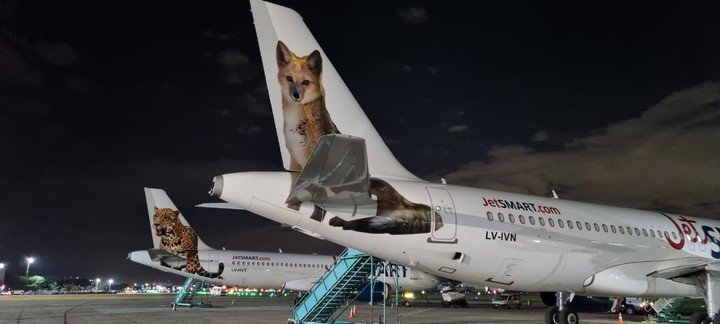


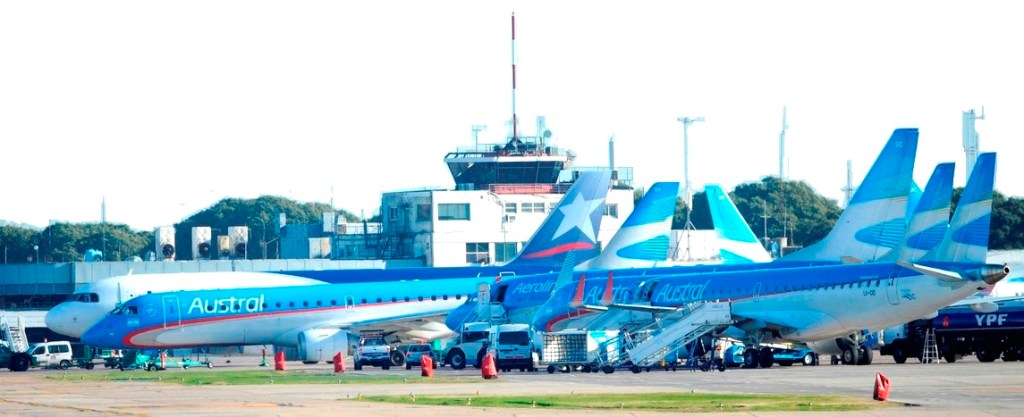
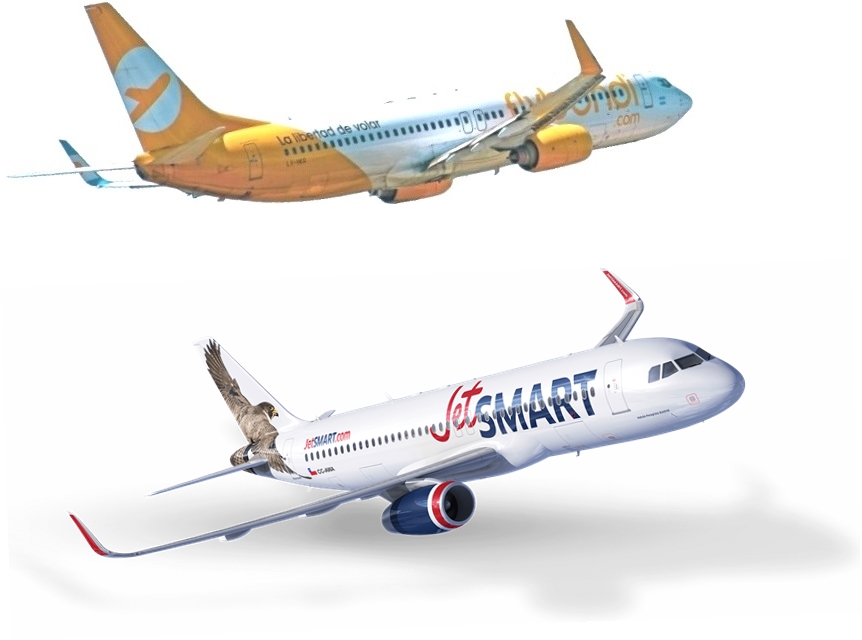


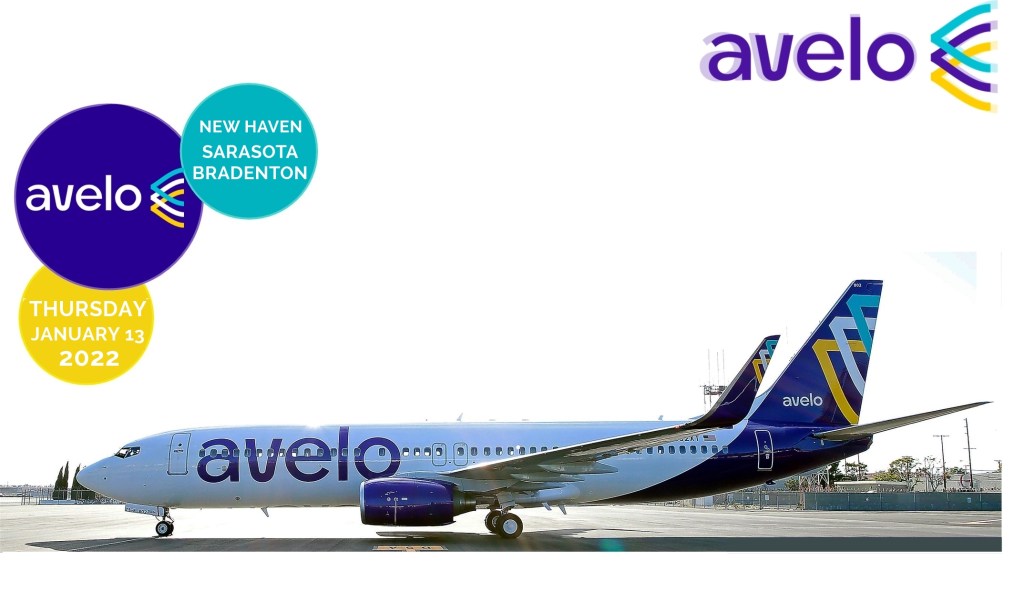
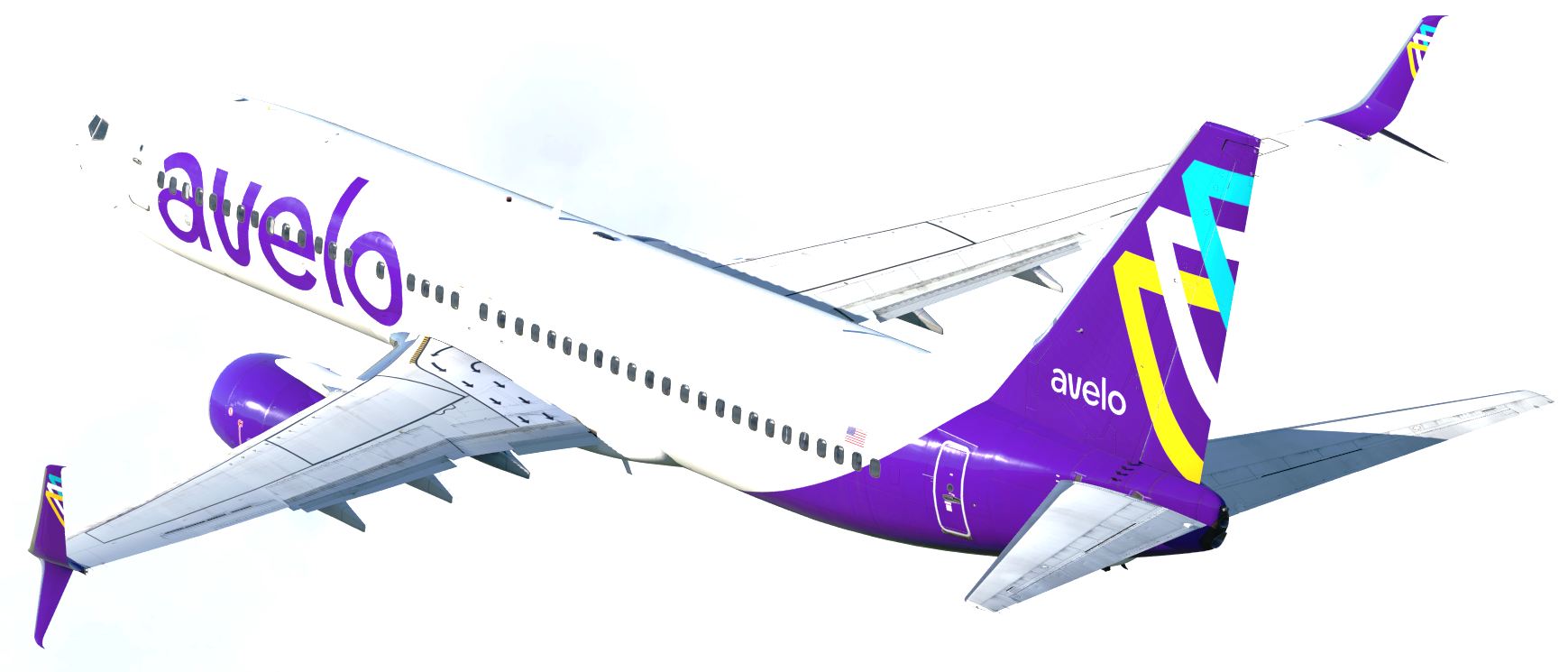
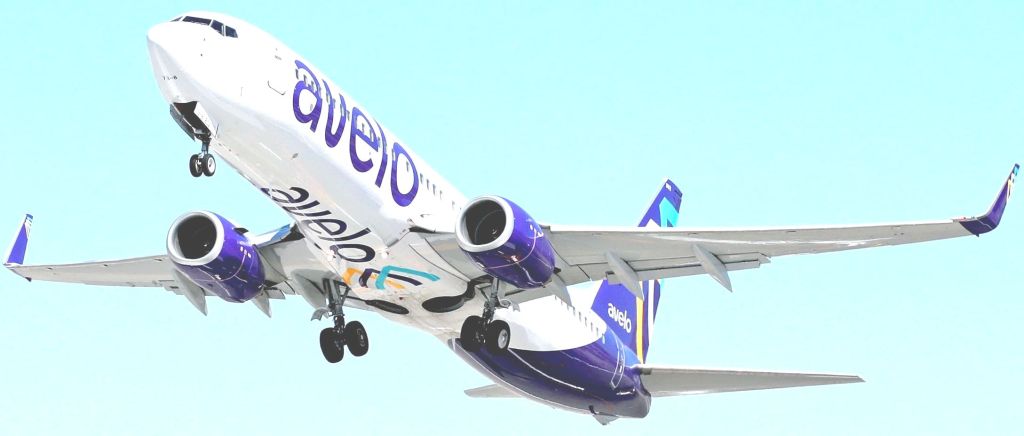

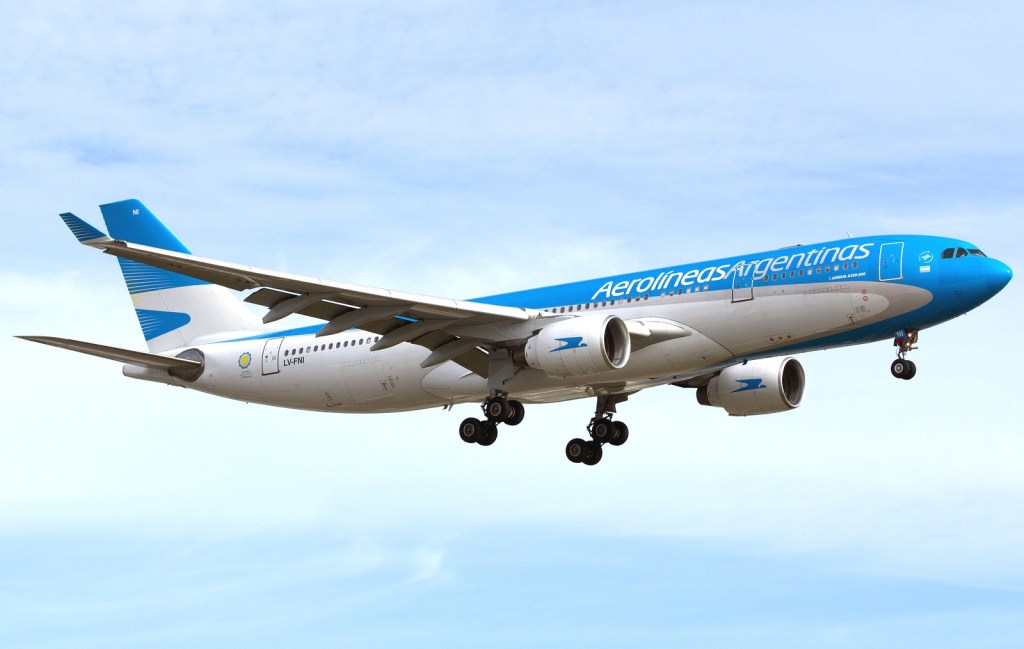


 airgways.com