AW | 2017 11 20 20:13 | INDUSTRY
 Airbus como Boeing exigen reglas claras a vista futura del impacto del Brexit
En una industria aeroespacial donde las economías de las grandes empresas de aviación se entrelazan entre los países europeos y mundial, el Brexit pone a prueba la integridad de los negocios en la propia Europa.
Una fase de transición post-Brexit deberá acordarse lo antes posible, exige Airbus Group. La compañía aeronáutica solicitó un período de transición prolongado para garantizar que la competitividad y la productividad continúen sin obstáculos. Lo mismo aplica a Boeing donde también tiene intereses en Gran Bretaña.
Airbus emplea a 6.000 personas en su planta de ala en Broughton, Flintshire, Reino Unido. La Primera Ministra Theresa May ha sugerido que al gobierno del Reino Unido le gustaría un período de transición de aproximadamente dos años. Una fase de transición podría significar que el acuerdo sobre cómo el Reino Unido comercia con la UE actualmente se mantiene antes de que entre en vigencia cualquier nuevo acuerdo. En pruebas escritas para el Comité de Negocios de los Comunes, Airbus agregó que no alcanzar un acuerdo con la UE tendría «consecuencias significativas» para la compañía.
La «transición brexiana»
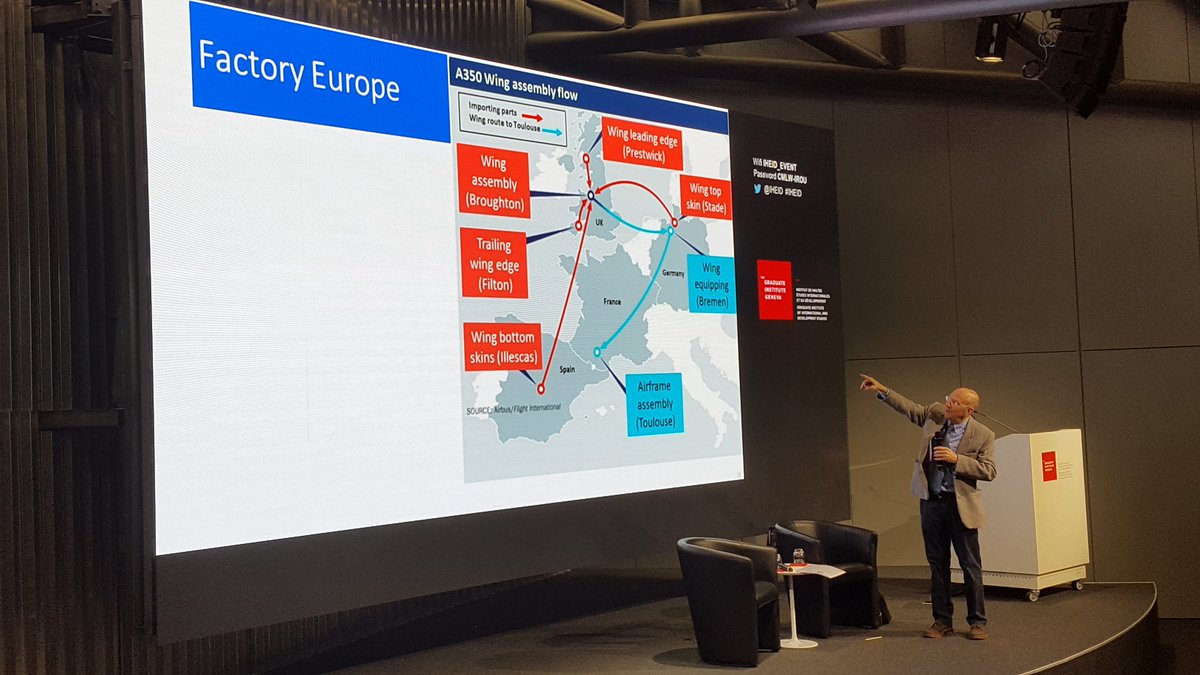
En Enero 2017, el Director de Operaciones de Airbus SE, Tom Williams, dijo a los parlamentarios que estaría entrando en una fase peligrosa si Airbus no podía mover personas y productos a la perfección en toda la UE. Actualmente depende del flujo sin interrupciones de bienes y personas entre sus sitios en el Reino Unido, Francia, Alemania y España.
El principal negociador de Brexit de la UE, Michel Barnier, también ha dicho que empresas como Airbus enfrentan nuevas limitaciones para mover piezas y personal entre sus sitimuy importante entre las fábricas establecidas en toda Europa. Alrededor de 80,000 viajes al año entre el Reino Unido y el resto de los países de la UE se realizan para diferentes tareas directivas, operativas, etc. Cualquier nuevo requisito de visa haría que los empleados calificados del Reino Unido sean más complicados y hagan que los programas que involucran al Reino Unido sean más burocráticos y afecten la competitividad a largo plazo de los sitios del Reino Unido, dijo Airbus en su testimonio.
La compañía dijo que también exporta más de £ 6 mil millones de libras en productos en la Unión Europea. Si los costos aumentan como resultado de que el Reino Unido abandone la UE, esto inevitablemente tendrá un impacto en las futuras decisiones de inversión del Reino Unido.
Las advertencias de la compañía sobre un período de transición y un escenario de no acuerdo se producen antes de una reunión en Downing Street entre la Sra. May y ministros de alto rango para tratar de avanzar en las estancadas conversaciones Brexit. Esta «ley de divorcio» es una de las principales razones del estancamiento en las negociaciones, con la UE diciendo que no discutirá un nuevo acuerdo comercial con el Reino Unido hasta que se resuelvan estos problemas. 

Airbus claims transition agreement «Brexit»
Airbus as Boeing demand clear rules in the future view of the impact of Brexit
In an aerospace industry where the economies of large aviation companies are intertwined between European and global countries, the Brexit tests the integrity of business in Europe itself.
A post-Brexit transition phase should be agreed as soon as possible, demands Airbus Group. The aeronautical company requested a prolonged transition period to ensure that competitiveness and productivity continue unhindered. The same applies to Boeing where it also has interests in Britain.
Airbus employs 6,000 people at its wing plant in Broughton, Flintshire, United Kingdom. Prime Minister Theresa May has suggested that the UK government would like a transition period of approximately two years. A transition phase could mean that the agreement on how the United Kingdom trades with the EU is currently maintained before any new agreement comes into force. In written tests for the Business Committee of the Commons, Airbus added that failure to reach an agreement with the EU would have «significant consequences» for the company.
The «Brexian transition»
In January 2017, Airbus SE’s Director of Operations, Tom Williams, told parliamentarians that he would be entering a dangerous phase if Airbus could not move people and products seamlessly across the EU. Currently it depends on the uninterrupted flow of goods and people between its sites in the United Kingdom, France, Germany and Spain.
The EU’s main Brexit negotiator, Michel Barnier, has also said that companies such as Airbus face new constraints in moving parts and personnel among their sitimuy important among factories established throughout Europe. Around 80,000 trips a year between the United Kingdom and the rest of the countries of the EU are carried out for different management, operational, etc. tasks. Any new visa requirement would make qualified UK employees more complicated and make programs involving the UK more bureaucratic and affect the long-term competitiveness of UK sites, Airbus said in its testimony.
The company said it also exports more than £ 6 billion in products in the European Union. If the costs increase as a result of the UK leaving the EU, this will inevitably have an impact on the future investment decisions of the United Kingdom.
The company’s warnings about a transition period and a non-agreement scenario occur before a meeting in Downing Street between Ms. May and high-ranking ministers to try to move forward in the stalled Brexit talks. This «divorce law» is one of the main reasons for the stalemate in the negotiations, with the EU saying that it will not discuss a new trade agreement with the United Kingdom until these problems are resolved. A \ W
Ξ A I R G W A Y S Ξ
SOURCE: Airgways.com
DBk: Airbus.com / Bbc.com / Irishtimes.com
AW-POST: 201711202013AR
A\W A I R G W A Y S ®
 airgways.com