La crisis sanitaria impacta en aerolíneas del Golfo
Tras la crisis sanitaria mundial por la pandemia de Coronavirus ha llevado a la mayoría de las aerolíneas a restructurar estratégica y financieramente sus compañías para poder reducir los efectos por las suspensiones de los vuelos en todo el mundo. Las aerolíneas de la región del Golfo Pérsico no son la excepción. Las pérdidas de empleo aumentan a medida que más aerolíneas de la región arábiga se reestructuran para poder sobrevivir, se suma a un número cada vez mayor de despidos en el sector de la aviación del Golfo.
La aerolínea líder de la región, Emirates Airline, con sede en Dubai, se está preparando para recortar hasta 30.000 empleos, reduciendo su plantilla general en aproximadamente un 30%.
La aerolínea Qatar Airways, con sede en Doha, dijo a principios de Mayo 2020 que tendría que deshacerse de una cantidad sustancial de empleos redundantes. Algunos informes han sugerido que la pérdida total de empleos en la aerolínea podría llegar a 10.000.
Kuwait Airways se ha convertido en la última aerolínea del Golfo en prepararse para los recortes de empleos a gran escala, ya que las aerolíneas de la región continúan tratando de dar sentido al daño económico que se está infligiendo como resultado de la pandemia de Coronavirus. Los informes de los medios locales en Kuwait indican que el transportista nacional del país despedirá a hasta 1.500 empleados extranjeros, alrededor del 25% del total. Los recortes están ocurriendo en un contexto de demandas de los parlamentarios y otros en el país de que las empresas estatales deberían prescindir del personal internacional y contratar a más locales en su lugar.
También se dice que la tercera de las tres grandes aerolíneas del Golfo, Etihad Airways de Abu Dhabi de los Emiratos Árabes Unidos, recortó cientos de empleos.
Como es el caso de las aerolíneas de todo el mundo, las aerolíneas del Golfo se encuentran con modelos comerciales insostenibles como resultado de la crisis por la supresión de los vuelos a nivel mundial. La mayoría de las aerolíneas en la región han aterrizado la flota de sus aviones, ofreciendo un servicio de vuelos de repatriación de pasajeros junto con servicios de carga, pero la principal excepción a eso ha sido Qatar Airways, que ha mantenido una gama más amplia de vuelos.
Las aerolíneas están regresando lentamente a los cielos los vuelos domésticos se reiniciarán en Arabia Saudita el Domingo 31/05, pero existe una gran incertidumbre sobre qué tan dispuestos estarán los pasajeros a comenzar a volar nuevamente. Según los analistas de la industria, es probable que pasen varios años antes de que el número de pasajeros regrese a sus niveles previos al Coronavirus.
Por otro lado, con una actitud más optimista el Profesor Loizos Heracleous ha expresado: «Siempre que encontremos formas de controlar el virus, a través de pruebas, tratamiento o una vacuna, la industria debería volver a los niveles previos a la pandemia en dos o tres años». Loizos Heracleous, es un experto en la industria de la aviación de la Warwick Business School del Reino Unido.
El organismo comercial de la industria, la Asociación Internacional de Transporte Aéreo (IATA), dice que los gobiernos de toda la región de África y Oriente Medio han ofrecido hasta la fecha un total de ayuda de $ 800 millones a sus aerolíneas, lo que equivale a solo el 1.1% de los ingresos totales de 2019. Ha instado a las autoridades a intensificar su asistencia al sector.
Mucho más empleos podrían estar en riesgo en ausencia de una reactivación económica rápida o más ayuda del gobierno. IATA dice que las aerolíneas del Golfo corren el riesgo de perder más de US$ 19 mil millones en ingresos este año y más de 1 millón de empleos en el sector de la aviación en la región o conectados con él están en riesgo como resultado de la recesión.
Gulf airlines face the crisis
Health crisis impacts Gulf airlines
Following the global health crisis due to the Coronavirus pandemic, it has led most airlines to strategically and financially restructure their companies in order to reduce the effects of flight suspensions worldwide. Airlines in the Persian Gulf region are the exception. Job losses increase as more airlines in the Arab region restructure to survive, adding to an increasing number of layoffs in the Gulf aviation sector.
The region’s leading airline Emirates Airline, based in Dubai, is preparing to cut up to 30,000 jobs, reducing its overall workforce by approximately 30%.
Doha-based Qatar Airways said in early May 2020 that it would have to get rid of a substantial amount of redundant jobs. Some reports have suggested that the total loss of airline jobs could be as high as 10,000.
Kuwait Airways has become the latest Gulf airline to prepare for large-scale job cuts as airlines in the region continue to try to make sense of the economic damage being inflicted as a result of the coronavirus pandemic. Local media reports in Kuwait indicate that the country’s national carrier will lay off up to 1,500 foreign employees, about 25% of the total. The cuts are taking place against a background of demands from parliamentarians and others in the country that state-owned companies should cut international staff and hire more locals instead.
The third of the three major Gulf airlines, Etihad Airways of Abu Dhabi of the United Arab Emirates, is also said to have cut hundreds of jobs.
As is the case with airlines around the world, Gulf airlines are encountering unsustainable business models as a result of the crisis due to the suppression of flights worldwide. Most airlines in the region have landed their aircraft fleet, offering a repatriation passenger flight service alongside cargo services, but the main exception to that has been Qatar Airways, which has maintained a broader range of flights.
Airlines are slowly returning to the skies, domestic flights will restart in Saudi Arabia on Sunday 31/05, but there is great uncertainty about how willing passengers will be to start flying again. According to industry analysts, it is likely to be several years before passenger numbers return to their pre-Coronavirus levels.
On the other hand, with a more optimistic attitude, Professor Loizos Heracleous has expressed: «Whenever we find ways to control the virus, through tests, treatment or a vaccine, the industry should return to pre-pandemic levels in two or three years». Loizos Heracleous is an expert in the aviation industry at the Warwick Business School in the UK.
The industry trade body, the International Air Transport Association (IATA), says that governments across the Africa and Middle East region have so far offered a total of US$ 800 million in aid to their airlines, equivalent to to just 1.1% of total 2019 revenue. It has urged authorities to step up their assistance to the sector.
Far more jobs could be at risk in the absence of a quick economic revival or more government help. IATA says Gulf airlines risk losing more than US$ 19 billion in revenue this year, and more than 1 million connected or connected aviation jobs in the region are at risk as a result of the recession.
Ξ A I R G W A Y S Ξ PUBLISHER: Airgways.com DBk: Forbes.com / Ap.com / Airgways.com AW-POST: 202005281602AR
American reducción 30%administración y personal de apoyo
American Airlines planea reducir su personal de administración y apoyo en un 30% para el 30 Septiembre 2020 y comenzará a despedir trabajadores si no recibe suficientes voluntarios para comprarlos. La aerolínea con sede en Fort Worth, Estado de Texas, despedirá a los trabajadores si no obtiene lo suficiente para realizar compras voluntarias por parte de sus empleados.
American ejecutará menos rutas y, en general, se está preparando para operar una aerolínea más pequeña. Una vez que el transportista haya hecho recortes en el personal de administración y soporte, comenzará a evaluar a los trabajadores de primera línea, incluidos los agentes de la puerta y las azafatas. «Las aceleraciones de jubilación de la flota están en marcha, y volaremos aproximadamente 100 aviones menos el próximo verano, en su mayoría cuerpos anchos, de lo que habíamos planeado originalmente. Además, administrar una aerolínea más pequeña significa que necesitaremos un equipo de administración y personal de apoyo que sea aproximadamente un 30% más ágil», dijo Elise Eberwein, Vicepresidenta Ejecutiva de Personas y Compromiso Global de American Airlines, en una carta a los empleados.
Equipo de gestión reorganizado
El personal administrativo y de apoyo es una de las pocas fuerzas laborales que la empresa puede reducir sin pasar por sindicatos. Hay cerca de 17.000 trabajadores en el grupo de personal de administración y apoyo y la compañía está «reestructurando todos los niveles en torno a futuros líderes y funciones clave, comenzando con nuestro equipo de oficiales», decía la carta.
American también está recortando las bonificaciones de mérito para el personal de administración y apoyo y exige que todos esos empleados tomen la mitad de su tiempo de vacaciones anual para el 30 Septiembre 2020. American no planea pagar la indemnización a los trabajadores que serán despedidos, pero conseguirán el vuelo privilegios por un año.
Perspectivas en American
Los destinatarios incluyen empleados en administración, marketing, planificación, finanzas y otras funciones. El anuncio solo se aplica a aquellos en American Airlines y no a sus aerolíneas regionales. Los recortes podrían afectar la sede de American Airlines en Fort Worth, cerca del Aeropuerto Internacional Dallas/Fort Worth (DFW), donde hay alrededor de 12.000 empleados en un nuevo edificio de US$ 350 millones construido para dar cabida a una creciente fuerza laboral. Pero la pandemia de Coronavirus ha quitado impulso a cualquier crecimiento en la industria de las aerolíneas y, en cambio, tiene líderes que buscan cómo pueden reducir los costos lo más rápido posible en los esfuerzos por preservar sus compañías. American está gastando alrededor de US$ 70 millones por día, ya que la cantidad de pasajeros ha disminuido en más del 90% desde mediados de Marzo 2020. American ya ha publicado su paquete de compra voluntaria y, si no recibe suficientes voluntarios, la compañía comenzará a comunicar la separación involuntaria en Julio y los empleados permanecerán en la nómina hasta el 30 Septiembre 2020.
El Presidente Ejecutivo, Doug Parker, dijo que American Airlines no está considerando la bancarrota como una opción a pesar de gastar US$ 70 millones al día en efectivo y asumir miles de millones en deudas para navegar a travéz de la crisis sanitaria de la pandemia.
Las aerolíneas estadounidenses y otras han acordado no suspender ni despedir trabajadores hasta fines de septiembre a cambio de miles de millones en préstamos y subvenciones del gobierno. American recibió más de US$ 10 mil millones en subvenciones y préstamos y está solicitando otros US$ 4,75 mil millones al Departamento del Tesoro. A la compañía también se le prohíbe la recompra de acciones, dividendos, aumentos salariales ejecutivos y recortar rutas por un período de tiempo a cambio de la asistencia financiera del gobierno. Pero los ejecutivos estadounidenses dijeron el Miércoles 27/05 que necesita ajustar el tamaño de la aerolínea y el CEO, Doug Parker, dijo a principios de este mes que American entrará en 3Q2020 con más miembros del equipo de los que tenemos para trabajar.
American Airlines to reduce Administration
American Airlines plans to reduce 30% administration and support staff
American Airlines plans to reduce its administration and support staff by 30% by September 30, 2020 and will begin laying off workers if it does not receive enough volunteers to buy them. The Fort Worth, Texas-based airline will fire workers if it doesn’t get enough to make voluntary purchases by its employees.
American will run fewer routes and is generally preparing to operate a smaller airline. Once the carrier has cut administrative and support staff, it will begin evaluating front-line workers, including gate agents and hostesses. «Fleet retirement accelerations are underway, and we will fly approximately 100 fewer planes next summer, mostly wide bodies, than we originally planned. Also, managing a smaller airline means we will need a management team and support staff who are approximately 30% more agile», said Elise Eberwein, Executive Vice President of People and Global Engagement for American Airlines, in a letter to employees.
Reorganized management team
Administrative and support staff are one of the few workforces the company can cut without going through unions. There are about 17,000 workers in the administration and support staff group and the company is «restructuring all levels around future leaders and key functions, starting with our team of officers», the letter said.
American is also cutting merit bonuses for management and support staff and requires all of those employees to take half of their annual vacation time by September 30, 2020. American does not plan to pay severance to workers who will be fired, but They will get the flight privileges for a year.
Perspectives at American
Recipients include employees in administration, marketing, planning, finance and other functions. The announcement only applies to those on American Airlines and not to their regional airlines. The cuts could affect American Airlines’ headquarters in Fort Worth, near Dallas/Fort Worth International Airport (DFW), where there are about 12,000 employees in a new $ 350 million building built to accommodate a growing workforce. But the Coronavirus pandemic has dampened any growth in the airline industry, and instead has leaders looking to see how they can cut costs as quickly as possible in efforts to preserve their companies. American is spending around US$ 70 million per day, as the number of passengers has decreased by more than 90% since mid-March 2020. American has already published its voluntary purchase package and, if it does not receive enough volunteers, the company will begin reporting the involuntary separation in July and employees will remain on the payroll until September 30, 2020.
Executive President Doug Parker said American Airlines is not considering bankruptcy as an option despite spending US$ 70 million a day in cash and taking billions in debt to navigate through the pandemic health crisis.
US and other airlines have agreed not to suspend or fire workers until the end of September in exchange for billions in loans and government grants. American received more than US$ 10 billion in grants and loans and is requesting another US$ 4.75 billion from the Treasury Department. The company is also prohibited from repurchasing shares, dividends, executive salary increases, and cutting routes for a period of time in exchange for government financial assistance. But US executives said Wednesday 05/27 that it needs to adjust the size of the airline and CEO Doug Parker said earlier this month that American will enter 3Q2020 with more team members than we have to work with.
Ξ A I R G W A Y S Ξ PUBLISHER: Airgways.com DBk: Aa.com / Dallasnews.com / Airgways.com / Sheryl Lanzel AW-POST: 202005281353
Preparación protocolo sanitario reinicio operaciones de Aerolíneas
Aerolíneas Argentinas ha desarrollado nuevas medidas de seguridad e higiene para aplicarlas para el reinicio delas operaciones aerocomerciales en Argentina. La compañía ha diseñado sus protocolos sanitarios y medidas de higiene y prevención que se aplicarán en sus vuelos, una vez que el Gobierno de autorización para reanudar la actividad aérea en el país.
Las medidas sanitarias para los vuelos comerciales siguen las recomendaciones de organismos internacionales de aviación como International Air Transport Association (IATA), Airports Council International (ACI), la Organización Mundial de la Salud (OMS) y el Ministerio de Salud de la Nación.
Las nuevas disposiciones sanitarias paratodos los pasajeros en los vuelos de Aerolíneas Argentinas y Austral Líneas Aéreas serán: el uso obligatorio de barbijo o tapaboca en todo momento y se suspenderán los servicios de comidas y bebidas. Los protocolos sanitarios se aplicarán en distintas etapas del vuelo que corresponden a:
Etapa Aeropuerto
Para cumplir con las medidas preventivas dentro del aeropuerto, la empresa recomienda a los pasajeros que lleguen con más anticipación. Solo podrán ingresar los pasajeros que tengan vuelos desde esa terminal. No estará permitido el acceso de acompañantes. En la puerta de acceso, se controlará la temperatura. Los pasajeros deberán usar su barbijo o tapaboca en todo momento. Los pasajeros que requieran algún tipo de asistencia, como el uso de silla de ruedas, deberán hacer la reserva por lo menos 48 hábiles antes de la partida de tu vuelo. Todas las sillas de ruedas son sanitizadas antes de su uso.
Área Check-in
La recomendación de la aerolínea para los pasajeros es llegar con el web check-in ya listo. En el caso de realizar el check-in en el aeropuerto, respetar la distancia mínima de separación indicadas con señales. Para validar la identidad del pasajero, únicamente se deberá mostrar el DNI, sin necesidad de entregar la documentación al personal de tráfico. Se va a sugerir viajar únicamente con un artículo personal a bordo cumpliendo con las medidas máximas. Esto agilizará el embarque y desembarque y minimizará los movimientos dentro del aeropuerto. Se podrá llevar en tu equipaje de mano un alcohol en gel de hasta 100 ml.
Área Embarque
Se deberán mantener las distancias mínimas de separación y realizar una higiene frecuentemente de las manos. El embarque se realizará por grupos reducidos y de las últimas filas hacia adelante. Los clientes que viajen en cabina Business o Premium Economy serán los últimos en embarcar. Las tripulaciones de vuelo utilizarán tapabocas durante todo el vuelo. Una vez validada la identidad, el pasajero tendrá que escanear su boarding pass en el lector correspondiente. Siempre que sea posible, se hará embarque por puertas con mangas de acceso. De ser necesario el uso de micros, también se hará en grupos reducidos. Las salas VIP (Salón Cóndor en Ezeiza y las salas del exterior) se encontrarán cerradas.
Etapa Vuelo
Será obligatorio en todo momento el uso de barbijos o tapabocas. Las tripulaciones lo utilizarán durante todo el vuelo. Los pasajeros deberán limitar al máximo sus movimiento dentro del avión. En el caso de necesitar ir al toilette, hay que verificar antes que el cartel indicador de disponibilidad se encuentre encendido en color verde para no formar fila. El material de lectura, mantas, almohadas y auriculares estarán suspendidos. En los vuelos de cabotaje y regionales también quedarán suspendidos los servicios de comidas y bebidas. En los vuelos Internacionales, el servicio de alimentos y bebidas a bordo será limitado. Se ofrecerá, en tanto, un menú de contingencia en bolsas individuales, con productos frescos e industrializados. Al finalizar, se solicitará descartar todos los elementos en la misma bolsa en la que se los recibió para disminuir la interacción con la tripulación. Los servicios de comidas especiales y moisés también estarán temporalmente suspendidos.
Etapa Desembarque
Los pasajeros podrán levantarse de sus asientos cuando la tripulación lo indique y la fila delantera se encuentre desocupada. Habrá que mantener en todo momento el distanciamiento recomendado. En el caso de los vuelos internacionales, se deberá entregar completo y firmado el formulario solicitado por las autoridades sanitarias.
Higiene de las aeronaves
La empresa señaló que por su tratamiento de limpieza y sus filtros especiales de aire acondicionado, sus aviones cuentan con altos estándares de cuidado y prevención. El personal asignado, provisto de equipo de protección (Personal Protective Equipment), realiza el procedimiento de limpieza y desinfección antes y después de cada vuelo.
En los vuelos Internacionales, el servicio de alimentos y bebidas a bordo será limitado. Las tareas se intensifican en las zonas de alto contacto como asientos, apoyabrazos, mesas rebatibles, cinturones de seguridad, pantallas y controles. También se realiza un trabajo minucioso en baños, cestos de residuos, galleys y puertas. El protector del apoyacabeza es reemplazado luego de cada vuelo y se refuerzan los procedimientos de limpieza en tapicería y alfombras. Los productos de limpieza y desinfección utilizados son los recomendados en la Guía de Higiene y Saneamiento de los transportes aéreos de la OMS. Además se ha destacado para el retorno de los vuelos comerciales, se sumarán nuevas medidas, como por ejemplo el bloqueo de asientos para mantener distancias.
La empresa aclaró que cuenta con un sistema de aire acondicionado que posee filtros especiales de alta eficiencia (HEPA, High Efficency Particulalate Air filters). Este sistema utilizado por la industria permite la renovación constante del aire de la cabina, eliminando el 99,9% de bacterias y microbios que circulan para hacer del avión un lugar seguro.
Desde Aerolíneas Argentinas destacaron que viajar en avión es seguro por el sistema de ventilación de los aviones, que permite mantener la calidad y sanidad del aire; por la disposición de los asientos, que actúan como barreras y evitan el contacto cara a cara; y por las medida complementarias como el control de temperatura previo al ingreso al aeropuerto. También por la medida de uso obligatorio de tapaboca de todos los pasajeros y trabajadores.
Repatriaciones
Aerolíneas ha comunicado que se repatriaron de zonas de riesgo más de 22 mil pasajeros y que sólo tuvieron tres contagios en las tripulaciones permitiendo observar la mínima circulación y afectación por el virus debido a las maximizaciones en los requerimientos sanitarios a bordo de cada vuelo.
Health protocol restart ops Aerolíneas
Preparation sanitary protocol to restart ops Aerolíneas Argentinas
Aerolíneas Argentinas has developed new safety and hygiene measures to apply them for the restart of aero-commercial operations in Argentina. The company has designed its sanitary protocols and hygiene and prevention measures that will be applied on its flights, once the Government has authorized it to resume air activity in the country.
The sanitary measures for commercial flights follow the recommendations of international aviation organizations such as the International Air Transport Association (IATA), Airports Council International (ACI), the World Health Organization (WHO) and the National Ministry of Health.
The new sanitary provisions for all passengers on Aerolíneas Argentinas and Austral Líneas Aéreas flights will be: the compulsory use of a chinstrap or face mask at all times and food and beverage services will be suspended. The sanitary protocols will be applied in different stages of the flight that correspond to:
Airport Stage
To comply with preventive measures within the airport, the company recommends that passengers arrive earlier. Only passengers with flights from that terminal may enter. The access of companions will not be allowed. At the access door, the temperature will be controlled. Passengers must wear their chinstrap or face mask at all times. Passengers requiring some type of assistance, such as the use of a wheelchair, must make the reservation at least 48 working days before the departure of your flight. All wheelchairs are sanitized before use.
Check-in Area
The airline’s recommendation for passengers is to arrive with the web check-in ready. In the case of checking in at the airport, respect the minimum separation distance indicated by signs. To validate the passenger’s identity, only the DNI must be shown, without the need to deliver the documentation to the traffic personnel. It will be suggested to travel only with a personal item on board in compliance with the maximum measures. This will streamline boarding and disembarking and minimize movement within the airport. A gel alcohol of up to 100 ml can be carried in your hand luggage.
Boarding Area
Minimum separation distances must be maintained and frequent hand hygiene must be carried out. Boarding will be done in small groups and from the last rows forward. Customers traveling in a Business or Premium Economy cabin will be the last to board. Flight crews will wear face masks throughout the flight. Once the identity has been validated, the passenger will have to scan their boarding pass in the corresponding reader. Whenever possible, shipments will be made through doors with access sleeves. If necessary, the use of microphones will also be done in small groups. The VIP rooms (Salón Cóndor in Ezeiza and the rooms outside) will be closed.
Flight Stage
The use of masks or masks will be mandatory at all times. The crews will use it throughout the flight. Passengers should limit their movement within the aircraft as much as possible. In the case of needing to go to the toilet, it is necessary to verify before the availability indicator sign is lit in green so as not to form a line. Reading material, blankets, pillows and headphones will be suspended. Food and drink services will also be suspended on domestic and regional flights. On international flights, the food and beverage service on board will be limited. Meanwhile, a contingency menu will be offered in individual bags, with fresh and industrialized products. Upon completion, you will be asked to discard all the items in the same bag in which they were received to decrease interaction with the crew. Special meal and bassinet services will also be temporarily suspended.
Landing Stage
Passengers may get up from their seats when instructed to do so and the front row is unoccupied. The recommended spacing must be maintained at all times. In the case of international flights, the form requested by the health authorities must be completed and signed.
Aircraft hygiene
The company pointed out that due to its cleaning treatment and special air conditioning filters, its aircraft have high standards of care and prevention. Assigned personnel, provided with Personal Protective Equipment, perform the cleaning and disinfection procedure before and after each flight.
On international flights, the food and beverage service on board will be limited. Tasks are intensified in high contact areas such as seats, armrests, folding tables, seat belts, screens and controls. Thorough work is also done in bathrooms, waste baskets, galleys, and doors. The headrest protector is replaced after each flight and upholstery and carpet cleaning procedures are reinforced. The cleaning and disinfection products used are those recommended in the WHO Guide to Hygiene and Sanitation for air transport. In addition, it has been highlighted for the return of commercial flights, new measures will be added, such as blocking seats to maintain distances.
The company clarified that it has an air conditioning system that has special high efficiency filters (HEPA, High Efficency Particulalate Air filters). This system used by the industry allows the constant renewal of cabin air, eliminating 99.9% of bacteria and microbes that circulate to make the plane a safe place.
From Aerolíneas Argentinas they highlighted that traveling by plane is safe due to the ventilation system of the planes, which allows the quality and health of the air to be maintained; by the arrangement of the seats, which act as barriers and prevent face-to-face contact; and by complementary measures such as temperature control prior to entering the airport. Also due to the mandatory use of a mask for all passengers and workers.
Repatriations
Aerolíneas have reported that more than 22 thousand passengers repatriated from risky areas and that they only had three infections in the crews, allowing the minimum movement and the effect of the virus to be observed due to the maximization of the sanitary requirements on board each flight.
Ξ A I R G W A Y S Ξ PUBLISHER: Airgways.com DBk: Aerolineas.com / Airgways.com / Infobae.com / Pinterest.com AW-POST: 202005281210AR
Gobierno exige anular recorte salarial a Latam Airlines Argentina
El Ministerio de Trabajo de Argentina ha resolvido el Martes 26/05 a favor de una denuncia de los gremios aeronáuticos en la aerolínea Latam Airlines Argentina para dejar sin efecto el recorte del 50% que aplicó en los salarios de los 2.250 empleados que tiene en el país y que había comenzado a aplicar desde Abril 2020. Latam Argentina posee una flota de trece aeronaves Airbus A320-200CEO con los cuales cubre rutas domésticas y regionales. A raíz de la pandemia toda la flota de aviones ha sido puesta en tierra.
Latam Airlines Group
La compañía matriz Latam Airlines Group, la aérea más grande de América Latina se declaró en quiebra debido a la drástica caída de la actividad causada por la crisis sanitaria,acogiéndose al Capítulo 11 de la Ley de Quiebras de Estados Unidos. El CEO de Latam Group, Roberto Alvo, ha expresado: “El proceso de reorganización financiera del Capítulo 11 es un marco legal bajo el cual Latam y sus filiales podrán redimensionar sus operaciones y adecuarlas al nuevo entorno de demanda y reorganizar sus balances financieros, permitiéndoles resurgir como negocios más ágiles, resilientes y sostenibles”. Por este motivo la compañía pasará a restructurarse para salvar el quebranto económico que ha causado la pandemia.
Latam Argentina
Latam Airlines Argentina no forma parte del paquete de filiales que ingresaron a la protección de quiebras. En cambio, si están incluidas las operaciones de Chile, Perú, Colombia, Ecuador y Estados Unidos. El CEO de Latam Group ha expresado: “En Argentina llevamos operando desde 2005. Ahora la situación económica es compleja y es muy difícil la situación del sector en particular. Tenemos que ver cómo sigue desarrollándose la pandemia y cómo avanzan las conversaciones con el Gobierno para decidir nuestros próximos pasos. Es una crisis sin precedente y ninguna línea aérea puede sobrevivir sin ayuda. No descarto que tengamos que tomar decisiones importantes en las próximas semanas”, dijo Roberto Alvo.
El Gobierno de argentina no tiene en su agenda algún tipo de salvataje a las líneas aéreas, simplemente las ayudas corresponden al Programa de Asistencia para el Trabajo y la Producción (ATP), que les cubre parte de los salarios a los empleados en Argentina. La compañía Latam Argentina ha apelado al recorte salarial como una herramienta para reducir gastos. La medida afecta a los salarios mayores a AR$ 47.500 y generó el rechazo inmediato de los gremios del sector de pilotos, personal técnico, tripulación de cabina, entre otros, pese a que la empresa aseguró que habían sido acordados con el personal aeronáutico.
Desde la Asociación Personal Aeronáutico (APA) expresaron: “Ningún contrato individual puede homologarse sin acuerdo del sindicato”. El reclamo sindical llegó al Ministerio de Trabajo, donde después de varias audiencias virtuales, ayer se resolvió intimar a la aerolínea para que pague el total de los sueldos, dándole plazo de 72 horas para que restituya lo recortado en Abril 2020.
La postura de la compañía Latam Airlines Argentina fue expuesta ante la mesa de trabajo convocada por la ANAC a través de las cámaras del sector de la IATA y JURCA. La aerolínea se encuentra así en una situación delicada al no poder emitir billetes aéreos hasta el 1 Septiembre 2020, que les impide generar facturación anticipada para cubrir parte de sus costos en esta etapa, una encrucijada que coloca a la línea aérea en una situación más delicada cuando la empresa matriz ha mostrado señales de quebranto.
Latam without permission to cut wages
Government demands to cancel wage cut to Latam Airlines Argentina
The Ministry of Labor of Argentina has resolved on Tuesday 26/05 in favor of a complaint by the aeronautical unions at the airline Latam Airlines Argentina to nullify the 50% cut that was applied to the wages of the 2,250 employees it has in the country and which had begun to apply since April 2020. Latam Argentina has a fleet of thirteen Airbus A320-200CEO aircraft with which it covers domestic and regional routes. Following the pandemic, the entire fleet of planes has been grounded.
Latam Airlines Group
The parent company Latam Airlines Group, the largest airline in Latin America, filed for bankruptcy due to the drastic drop in activity caused by the health crisis, under Chapter 11 of the United States Bankruptcy Law. Latam Group CEO Roberto Alvo said: “The Chapter 11 financial reorganization process is a legal framework under which Latam and its subsidiaries will be able to resize their operations and adapt them to the new demand environment and reorganize their financial balances, allowing them re-emerge as more agile, resilient and sustainable businesses”. For this reason, the company will restructure to save the economic loss that the pandemic has caused.
Latam Argentina
Latam Airlines Argentina is not part of the package of subsidiaries that entered bankruptcy protection. On the other hand, if the operations of Chile, Peru, Colombia, Ecuador and the United States are included. The CEO of Latam Group has expressed: “In Argentina we have been operating since 2005. Now the economic situation is complex and the situation of the sector in particular is very difficult. We have to see how the pandemic continues to develop and how the talks with the government are progressing to decide our next steps. It is an unprecedented crisis and no airline can survive without help. I do not rule out that we have to make important decisions in the coming weeks”, said Roberto Alvo.
The Government of Argentina does not have on its agenda any type of salvage for airlines, the aid simply corresponds to the Assistance Program for Work and Production (ATP), which covers part of the salaries of employees in Argentina. The company Latam Argentina has appealed to the salary cut as a tool to reduce expenses. The measure affects salaries greater than AR$ 47,500 and generated immediate rejection by the guilds in the sector of pilots, technical personnel, cabin crew, among others, despite the fact that the company assured that they had been agreed with the aeronautical personnel.
From the Personal Aeronautical Association (APA) expressed: «No individual contract can be approved without union agreement». The union complaint reached the Ministry of Labor, where after several virtual hearings, yesterday it was resolved to intimate the airline to pay the full salary, giving it 72 hours to return the cut in April 2020.
The position of the company Latam Airlines Argentina was exposed before the work table convened by ANAC through the cameras of the IATA and JURCA sector. The airline is thus in a delicate situation since it cannot issue air tickets until September 1, 2020, which prevents them from generating early billing to cover part of their costs at this stage, a crossroads that places the airline in a more delicate situation. when the parent company has shown signs of failure.
Ξ A I R G W A Y S Ξ PUBLISHER: Airgways.com DBk: Latam.com / Argentina.gob.ar/trabajo / Airgways.com AW-POST: 202005280024AR
La low cost argentina desprograma Boeing 737-800 LV-HFQ
Flybondi Líneas Aéreas ha comunicado la desprogramación de uno de sus Boeing 737-800 de su flota de aeronaves. La compañía ha llegado a un acuerdo con la empresa de leasing Avalon Aerospace Leasing Limited, con sede en Dublín, Irlanda.
El Boeing 737-8BK con matrícula LV-HFQ con una antigüedad de catorce años de edad, fue recibido por Flybondi en Junio 2018. La aeronave es reconocida por sus extensiones en las puntas alares denominada Split Scimitar Winglets. La aeronave efectuaba frecuentemente vuelos regionales a Brasil, como así también atendiendo el mercado doméstico.
La empresa lessor Avalon había expresado la intensión de prolongar el alquiler de la aeronave antes de la pandemia, pero la crisis sanitaria mundial y la paralización del mercado aéreo hasta Septiembre 2020 han determinado la cancelación del alquiler de la aeronave. Las condiciones del escenario del mercado y el alto costo de alquiler de la aeronave que corresponden a un 30% superior al resto de la flota, han determinado la salida del Boeing 737-800 de la flota de Flybondi. «En el marco de la suspensión de vuelos, estando sin operaciones y sin generación de ingresos, la devolución de este avión generará un significativo ahorro en los costos fijos de la compañía, por ende permite seguir priorizando la fuente de trabajo de todos nuestros empleados», informaron desde Flybondi.
Flybondi deprogram 737 LV-HFQ
The low cost Argentina deprograms Boeing 737-800 LV-HFQ
Flybondi Líneas Aéreas has reported the deprogramming of one of its Boeing 737-800s from its aircraft fleet. The company has reached an agreement with the leasing company Avalon Aerospace Leasing Limited, based in Dublin, Ireland.
Fourteen-year-old LV-HFQ registration Boeing 737-8BK was received by Flybondi in June 2018. The aircraft is recognized for its wingtip extensions called Split Scimitar Winglets. The aircraft frequently made regional flights to Brazil, as well as serving the domestic market.
The company lessor Avalon had expressed the intention to extend the rental of the aircraft before the pandemic, but the global health crisis and the paralysis of the air market until September 2020 have determined the cancellation of the rental of the aircraft. The market scenario conditions and the high cost of renting the aircraft, which correspond to 30% higher than the rest of the fleet, have determined the departure of the Boeing 737-800 from the Flybondi fleet. «In the framework of the suspension of flights, being without operations and without generating income, the return of this aircraft will generate significant savings in the company’s fixed costs, therefore allowing us to continue prioritizing the work source of all our employees», reported from Flybondi.
Ξ A I R G W A Y S Ξ PUBLISHER: Airgways.com DBk: Flybondi.com / Airgways.com AW-POST: 202005272345AR
Consejo de supervisión presiona para relajar las condiciones de la Comisión Europea
Las condiciones que impone la Comisión Europea para aprobar las ayudas a Lufthansa German Airlines implicarían debilitar los hubs de Frankfurt y de Munich, los aeropuertos donde centra su negocio y en los que tiene una cuota de mercado de alrededor del 65%. Por ello, el grupo necesita tiempo para analizar la propuesta y aplaza la decisión. Esta es la principal conclusión a la que llegó ayer el consejo de supervisión de la aerolínea, que, contra todo pronóstico, no aprobó la inyección que le permitirá seguir con vida.
Posición de Lufthansa
El Miércoles 27/05, el Consejo de Supervisión de Lufthansa rechazó el paquete de rescate del gobierno federal alegando que no quería aceptar la entrega de los derechos de despegue y aterrizaje requeridos por la Comisión de la UE. La dinámica competitiva en el mercado de aviación alemán ha sido pobre de todos modos desde la salida de Air Berlin, dijo Wambach. Lufthansa compite en muchas rutas solo con su marca principal y su propia filial Eurowings. Cada medida de apoyo estatal es una intervención en el mercado y afecta la competencia. Ha explicado que el Gobierno Federal solo debería ayudar si no hubiera otra solución adecuada disponible, o que significa que Lufthansa había considerado seriamente todas las demás medidas posibles, desde aumentar el capital hasta la refinanciación en el mercado de capital libre. «El impacto económico resultante sobre la compañía y sobre el calendario de devolución de las medidas de estabilización, como también otros posibles escenarios, tienen que analizarse de forma pormenorizada. No obstante, el consejo de supervisión sigue viendo las medidas del Fondo de Estabilización Económica del Gobierno de Berlín como las únicas viables para mantener la solvencia», ha comunicado Lufthansa.
Gobierno & CE
El Lunes 25/05, el grupo alemán anunció un acuerdo con el Ejecutivo de Angela Merkel para rescatar el grupo de aerolíneas, con medidas por 9.000 millones de euros, incluyendo préstamos y ayudas. El Gobierno de Alemania se convertiría en el primer accionista, con un 20%. Bruselas ha expresado que no ha comentado ningún asunto acerca de que Lufthansa pierda los derechos de vuelo (slots) de doce de sus 300 aviones ubicados en Frankfurt y Munich algo que el grupo quiere que sea solo algo temporal.
En la disputa sobre los requisitos de la Unión Europea (UE) para el paquete de rescate multimillonario para Lufthansa, el Presidente de la comisión de monopolio del Gobierno Federal, Achim Wambach, pide a la gerencia de Lufthansa que ceda. «Es fácil entender que la Comisión de la UE está pensando que Lufthansa debería renunciar a los derechos de despegue y aterrizaje en el curso del pacto de rescate en Alemania, para que el mercado se vuelva más competitivo. Tendría sentido si se liberasen más espacios a nivel europeo para garantizar una mayor competencia más allá de las fronteras alemanas», dijo Wambach von Focus.
Lufthansa postpones financial bailout
Supervisory board pushes to relax conditions of the European Commission
The conditions imposed by the European Commission to approve aid to Lufthansa German Airlines would mean weakening the hubs of Frankfurt and Munich, the airports where it focuses its business and in which it has a market share of around 65%. Therefore, the group needs time to analyze the proposal and postpones the decision. This is the main conclusion reached yesterday by the airline’s supervisory board, which, against all odds, did not approve the injection that will allow it to stay alive.
Lufthansa position
On Wednesday 27/05, the Lufthansa Supervisory Board rejected the federal government’s rescue package on the grounds that it did not want to accept the handover of take-off and landing rights required by the EU Commission. Competitive dynamics in the German aviation market has been poor anyway since the departure of Air Berlin, Wambach said. Lufthansa competes on many routes only with its main brand and its own subsidiary Eurowings. Each state support measure is a market intervention and affects competition. He explained that the Federal Government should only help if there was no other suitable solution available, or that it means that Lufthansa had seriously considered all other possible measures, from raising capital to refinancing in the free capital market. «The resulting economic impact on the company and on the repayment schedule of the stabilization measures, as well as other possible scenarios, have to be analyzed in detail. However, the supervisory board continues to see the measures of the Economic Stabilization Fund of the Berlin government as the only viable way to maintain solvency», said Lufthansa.
Government & CE
On Monday 05/25, the German group announced an agreement with the Executive of Angela Merkel to rescue the group of airlines, with measures for 9,000 million euros, including loans and aid. The Government of Germany would become the first shareholder, with 20%. Brussels has expressed that it has not commented on any issue about Lufthansa losing the flight rights (slots) of twelve of its 300 planes located in Frankfurt and Munich, something the group wants to be only temporary.
In the dispute over the European Union (EU) requirements for the multimillion-dollar rescue package for Lufthansa, the President of the monopoly commission of the Federal Government, Achim Wambach, asks Lufthansa management to yield. «It is easy to understand that the EU Commission is thinking that Lufthansa should relinquish take-off and landing rights in the course of the rescue pact in Germany, in order for the market to become more competitive. It would make sense if more spaces were freed up to European level to ensure greater competition beyond German borders», said Wambach von Focus.
Lufthansa verschiebt finanzielle Rettung
Aufsichtsrat drängt darauf, die Bedingungen der Europäischen Kommission zu lockern
Die von der Europäischen Kommission auferlegten Bedingungen für die Genehmigung von Beihilfen an Lufthansa German Airlines würden eine Schwächung der Drehkreuze Frankfurt und München bedeuten, der Flughäfen, auf denen das Unternehmen seinen Geschäftsschwerpunkt hat und an denen es einen Marktanteil von rund 65% hat. Daher benötigt die Gruppe Zeit, um den Vorschlag zu analysieren und die Entscheidung zu verschieben. Dies ist die wichtigste Schlussfolgerung, die der Aufsichtsrat der Fluggesellschaft gestern gezogen hat und die trotz aller Widrigkeiten die Injektion, die es ihr ermöglicht, am Leben zu bleiben, nicht genehmigt hat.
Lufthansa Position
Am Mittwoch, den 27.05., Lehnte der Lufthansa-Aufsichtsrat das Rettungspaket der Bundesregierung mit der Begründung ab, die von der EU-Kommission geforderte Übergabe von Start- und Landerechten nicht akzeptieren zu wollen. Die Wettbewerbsdynamik auf dem deutschen Luftverkehrsmarkt sei seit dem Abflug von Air Berlin ohnehin schlecht, sagte Wambach. Die Lufthansa konkurriert auf vielen Strecken nur mit ihrer Hauptmarke und ihrer eigenen Tochter Eurowings. Jede staatliche Unterstützungsmaßnahme ist eine Marktintervention und wirkt sich auf den Wettbewerb aus. Er erklärte, dass die Bundesregierung nur helfen sollte, wenn keine andere geeignete Lösung verfügbar sei, oder dass Lufthansa alle anderen möglichen Maßnahmen, von der Kapitalbeschaffung bis zur Refinanzierung auf dem freien Kapitalmarkt, ernsthaft in Betracht gezogen habe. «Die daraus resultierenden wirtschaftlichen Auswirkungen auf das Unternehmen und den Rückzahlungsplan der Stabilisierungsmaßnahmen sowie andere mögliche Szenarien müssen eingehend analysiert werden. Der Aufsichtsrat sieht jedoch weiterhin die Maßnahmen des Wirtschaftsstabilisierungsfonds des Die Berliner Regierung ist der einzig gangbare Weg, um die Zahlungsfähigkeit aufrechtzuerhalten», sagte Lufthansa.
Regierung & CE
Am Montag, den 25.05., Gab die deutsche Gruppe eine Vereinbarung mit der Exekutive von Angela Merkel zur Rettung der Fluggesellschaft bekannt, mit Maßnahmen für 9.000 Millionen Euro, einschließlich Darlehen und Hilfe. Die deutsche Regierung würde mit 20% der erste Aktionär werden. Brüssel hat zum Ausdruck gebracht, dass es zu keinem Problem Stellung genommen hat, wonach Lufthansa die Flugrechte (Slots) von zwölf seiner 300 Flugzeuge in Frankfurt und München verloren hat, was die Gruppe nur vorübergehend sein möchte.
Im Streit um die Anforderungen der Europäischen Union (EU) an das millionenschwere Rettungspaket für Lufthansa fordert der Präsident der Monopolkommission der Bundesregierung, Achim Wambach, das Management der Lufthansa auf, nachzugeben. «Es ist leicht zu verstehen, dass die EU-Kommission der Ansicht ist, dass die Lufthansa im Zuge des Rettungspakts in Deutschland auf Start- und Landerechte verzichten sollte, damit der Markt wettbewerbsfähiger wird. Es wäre sinnvoll, wenn mehr Platz frei würde Europäische Ebene, um einen stärkeren Wettbewerb über die deutschen Grenzen hinaus zu gewährleisten», sagte Wambach von Focus.
Ξ A I R G W A Y S Ξ PUBLISHER: Airgways.com DBk: Lufthansa.com / Europa.eu / Airgways.com AW-POST: 202005272137AR
La primera misión de astronautas de SpaceX se lanza desde una plataforma verdaderamente histórica de la NASA
La primera misión tripulada de SpaceX no podría tener un punto de partida más apropiado. La Misión Demo-2 que enviará a los astronautas de la NASA Bob Behnken y Doug Hurley a la Estación Espacial Internacional a bordo de una cápsula SpaceX Crew Dragon, está programado para despegar este 27 Mayo 2020 desde el Complejo de Lanzamiento 39A en el Centro Espacial Kennedy de la NASA (KSC) en el Estado de Florida.
El lanzamiento está programado para las 04:33 pm EDT, o 20:33 GMT, y puedes ver el lanzamiento en vivo desde Airgways.com a través de NASA TV, con cobertura que comienza a las 12:15 pm EDT, o 16:15 GMT.
El lanzamiento está programado para las 04:33 pm EDT, o 20:33 GMT, y puedes ver el lanzamiento en vivo desde Airgways.com a través de NASA TV, con cobertura que comienza a las 12:15 pm EDT, o 16:15 GMT.
Demo-2 es una misión histórica: el primer vuelo espacial orbital humano que se lanza desde los Estados Unidos desde que la NASA retiró su flota de transbordadores espaciales en Julio 2011. La Plataforma 39A es una plataforma verdaderamente histórica.
El complejo fue construido en la década de 1960 para albergar el lanzamiento del cohete lunar Saturno V de la NASA. Todas menos dos de las misiones tripuladas del Apolo despegaron del 39A, incluido el Apolo 8, que envió a los astronautas a la órbita lunar por primera vez, y el Apolo 11, el primer vuelo tripulado a la superficie de la luna. Las dos excepciones fueron Apollo 7, que se lanzó desde el Pad 34 de la Estación de la Fuerza Aérea de Cabo Cañaveral, y Apollo 10, que utilizó el sitio hermano de 39A, el Complejo de lanzamiento de KSC 39B.
El último despegue de Saturno V, una misión sin tripulación de Mayo 1973 que elevó la estación espacial Skylab a la órbita de la Tierra, también ocurrió en el Pad 39A. Pero los tres vuelos tripulados de Skylab que siguieron usaron el Pad 39B. Luego vino la era del transbordador. El Pad 39A acogió la mayoría de los 135 lanzamientos de transbordadores espaciales, incluidos los primeros 24 y los últimos 18. Otros vuelos de transbordador despegaron de 39B. Y poco después de que terminara la era del transbordador, SpaceX intervino. En 2014, la compañía de Elon Musk firmó un contrato de arrendamiento exclusivo por 20 años para usar el Pad 39A y pronto comenzó a modificar el complejo para acomodar sus cohetes Falcon 9 y Falcon Heavy. SpaceX lanzó por primera vez una misión desde la plataforma en Febrero 2017, enviando una cápsula robótica de carga Dragon hacia la Estación Espacial Internacional sobre un Falcon 9. Han seguido más despegues, incluidos los primeros tres lanzamientos de Falcon Heavy, en febrero de 2018, abril de 2019 y junio de 2019, y la primera visita de Crew Dragon a la estación espacial, la misión Demo-1 sin tripulación en Marzo 2019.
El 27 Mayo 2020 el Demo-2 agrega otra muesca al cinturón altamente calificado del Pad 39A. «Fuimos a la luna desde el Pad 39A, y 82 de nuestras 135 misiones de transbordadores se lanzaron desde ese pad, incluidos tres de mis vuelos. En lugar de oxidarse en el aire salado, a través de nuestra asociación con SpaceX, esa almohadilla se está utilizando una vez más. Y ahora es para nuestro Programa de tripulación comercial, así como para otras misiones de SpaceX. Y creo que eso es absolutamente excepcional, realmente un momento histórico [para] un pad histórico», dijo el Martes el 26 Mayo 2020 el Director de KSC, Bob Cabana, un ex astronauta de la NASA.
SpaceX tiene un contrato de US$ 2.6 mil millones con el Programa de Tripulación Comercial de la NASA para volar seis misiones operacionales hacia y desde la estación espacial con Crew Dragon y el Falcon 9. Esas misiones comenzarán poco después de que Demo-2 finalice, siempre que el vuelo de prueba vaya bien. Entonces, el regreso del Pad 39A a la prominencia de los vuelos espaciales humanos no es un hecho único.
Ξ Launch of SpaceX Ξ
SpaceX’s first astronaut mission launches from a truly historic NASA platform
SpaceX‘s first manned mission couldn’t have a more appropriate starting point. Mission Demo-2, which will send NASA astronauts Bob Behnken and Doug Hurley to the International Space Station aboard a SpaceX Crew Dragon capsule, is scheduled to take off this May 27, 2020 from Launch Complex 39A at the Space Center. NASA Kennedy (KSC) in the State of Florida.
The launch is scheduled for 04:33 pm EDT, or 20:33 GMT, and you can watch the launch live from Airgways.com on NASA TV, with coverage starting at 12:15 pm EDT, or 4: 15 GMT.
Demo-2 is a historic mission: the first human orbital space flight to be launched from the United States since NASA retired its fleet of space shuttles in July 2011. Platform 39A is a truly historic platform.
The complex was built in the 1960s to house the launch of NASA’s Saturn V lunar rocket. All but two of Apollo’s manned missions took off from 39A, including Apollo 8, which sent astronauts into lunar orbit for the first time, and Apollo 11, the first manned flight to the moon’s surface. exceptions were Apollo 7, which was launched from Pad 34 of Cape Canaveral Air Force Station, and Apollo 10, which used the sister site of 39A, the KSC 39B Launch Complex.
The last takeoff of Saturn V, a May 1973 unmanned mission that lifted the Skylab space station into Earth orbit, also occurred on Pad 39A. But the three Skylab manned flights that followed used the Pad 39B. Then came the era of the shuttle. Pad 39A hosted most of the 135 space shuttle launches, including the first 24 and the last 18. Other shuttle flights took off from 39B. And soon after the shuttle era ended, SpaceX stepped in. In 2014, Elon Musk’s company signed an exclusive 20-year lease to use the Pad 39A and soon began modifying the complex to accommodate its Falcon 9 and Falcon Heavy rockets. SpaceX first launched a mission from the platform in February 2017, sending a robotic Dragon cargo pod to the International Space Station on a Falcon 9. More takeoffs have followed, including the first three launches of Falcon Heavy, in February 2018, April 2019 and June 2019, and Crew Dragon’s first visit to the space station, the unmanned Demo-1 mission in March 2019.
On May 27, 2020 the Demo-2 adds another notch to the Pad 39A highly rated belt. «We went to the moon from Pad 39A, and 82 of our 135 shuttle missions were launched from that pad, including three of my flights. Instead of rusting in salty air, through our partnership with SpaceX, that pad was you’re using once again. And now it’s for our Commercial Crew Program, as well as for other SpaceX missions. And I think that’s absolutely exceptional, really a historic moment [for] a historic pad», he said Tuesday, May 26. 2020 KSC Director Bob Cabana, a former NASA astronaut.
SpaceX has a US$ 2.6 billion contract with NASA’s Commercial Crew Program to fly six operational missions to and from the space station with Crew Dragon and Falcon 9. Those missions will begin shortly after Demo-2 ends, as long as the test flight goes well. So the Pad 39A’s return to the prominence of human spaceflight is not a one-time event.
Ξ A I R G W A Y S Ξ PUBLISHER: Airgways.com DBk: Nasa.gov / Space.com / Airgways.com AW-POST: 202005271424
El gigante aeroespacial Boeing reduce su fuerza laboral
The Boeing Company despedirá a 6.770 empleados estadounidenses más, donde persigue compensar la caída debido a la crisis sanitaria global de la pandemia de Coronavirus y su puesta a tierra durante más de un año del Boeing 737 MAX, dijo el Miércoles 27/05 el CEO Dave Calhoun a los empleados.
El panorama general es que los despidos son parte del movimiento previamente anunciado por Boeing para reducir el 10% de su fuerza laboral, que incluyó 5.530 despidos voluntarios. Los trabajos más peligrosos están relacionados con su industria comercial, mientras que las empresas de defensa, espacio y servicios relacionados de la compañía tratarán de limitar la pérdida general de trabajo, según un portavoz de Boeing.
La compañía dijo a principios de Abril 2020 que ofrecería paquetes de jubilación anticipada y compra a su fuerza laboral, parte de una reducción más amplia en respuesta a una caída esperada en la demanda de nuevos aviones comerciales. Las aerolíneas han visto caer los viajes a casi cero durante la pandemia y han respondido recortando costos, aterrizando aviones y posponiendo planes de expansión.
Dave Calhoun, en una carta a los empleados que detalla los recortes, dijo: «Desearía que hubiera otra forma», pero la compañía cree que necesita ajustar los niveles de empleo según la demanda esperada. «El impacto devastador de la pandemia de COVID-19 en la industria de las aerolíneas significa un corte profundo en la cantidad de aviones comerciales y servicios que nuestros clientes necesitarán en los próximos años, lo que a su vez significa menos empleos en nuestras líneas y en nuestras oficinas. Hemos hecho todo lo posible para proyectar las necesidades de nuestros clientes de aerolíneas comerciales en los próximos años a medida que comienzan su camino hacia la recuperación», expresó el CEO de Boeing.
Boeing tiene la intención de eliminar aproximadamente el 10% de sus 160.000 trabajadores en todo el mundo, que podrían alcanzar entre el 15% al 20% de los trabajos de ingeniería de la compañía en los centros comerciales en Seattle y el sur de California. Alrededor de 1.300 miembros del sindicato han solicitado compras o jubilación anticipada, lo que representará algunas de las pérdidas de empleo. Según los informes, Boeing también está recortando empleos en Canadá y Australia como parte de la reducción de personal. En general, Boeing espera que unos 5.000 trabajadores acepten compras.
Perspectivas en Boeing
Aunque se esperaban los recortes, son un nuevo recordatorio para los inversores de que Boeing espera una recuperación de varios años en la aviación comercial. Las aerolíneas muestran signos tempranos de una recuperación, pero si la demanda de viaje regresa, es probable que las aerolíneas se apoyen fuertemente en sus flotas existentes en lugar de comprometerse a agregar nuevos aviones. Si bien Boeing tiene un negocio de repuestos, es probable que otros proveedores aeroespaciales se recuperen más rápido que Boeing si el énfasis está en volver a poner en servicio los aviones más antiguos en lugar de comprar otros nuevos.
Boeing to fire 6,770 employees
Aerospace giant Boeing reduces its workforce
The Boeing Company will fire 6,770 more US employees, where it seeks to offset the fall due to the global health crisis of the Coronavirus pandemic and its grounding for more than a year of the Boeing 737 MAX, CEO Dave said on Wednesday 27/05 Calhoun to the employees.
The big picture is that the layoffs are part of the move previously announced by Boeing to cut 10% of its workforce, which included 5,530 voluntary layoffs. The most dangerous jobs are related to its commercial industry, while the company’s defense, space and related services companies will try to limit overall job loss, according to a Boeing spokesperson.
The company said in early April 2020 that it would offer early retirement and buy packages to its workforce, part of a broader reduction in response to an expected drop in demand for new commercial aircraft. Airlines have seen travel drop to near zero during the pandemic and have responded by cutting costs, landing planes and postponing expansion plans.
Dave Calhoun, in a letter to employees detailing the cuts, said: «I wish there was another way», but the company believes it needs to adjust employment levels based on expected demand. «The devastating impact of the COVID-19 pandemic on the airline industry means a deep cut in the number of commercial aircraft and services that our customers will need in the coming years, which in turn means fewer jobs on our lines and in our offices. We have done our best to project the needs of our commercial airline customers for years to come as they begin their journey to recovery», said the CEO of Boeing.
Boeing intends to cut approximately 10% of its 160,000 workers worldwide, which could account for 15-20% of the company’s engineering jobs at shopping malls in Seattle and Southern California. . Around 1,300 union members have applied for purchases or early retirement, which will account for some of the job losses. Boeing is also reportedly cutting jobs in Canada and Australia as part of the downsizing. Overall, Boeing expects about 5,000 workers to accept purchases.
Perspects at Boeing
Although the cuts were expected, they are a new reminder to investors that Boeing expects a multi-year recovery in commercial aviation. Airlines show early signs of a recovery, but if travel demand returns, airlines are likely to lean heavily on their existing fleets rather than commit to adding new aircraft. While Boeing has a parts business, other aerospace providers are likely to recover faster than Boeing if the emphasis is on bringing older aircraft back into service rather than buying new ones.
Ξ A I R G W A Y S Ξ PUBLISHER: Airgways.com DBk: Boeing.com / Airgways.com AW-POST: 202005271357AR
Recomendaciones de NTSB por problemas en el Sistema de Control Pitch de E1-Jet
La Junta Nacional de Seguridad en el Transporte (NTSB) ha recomendado el Miércoles 27/05 una Airworthiness Directive (AD) a las autoridades de aviación de Estados Unidos y Brasil que emitan pautas más estrictas para inspeccionar y reemplazar el cableado en la columna del Sistema de Control de los aviones comerciales Embraer E1-Jets y Lineage 1000 después de un incidente del 6 Noviembre 2019 en el que un Embraer E175 de Republic Airways experimentó degradación del control de vuelo relacionada con el Pitch. El avión, que transportaba a seis pasajeros, regresó sano y salvo al Aeropuerto Internacional Atlanta/Hartsfield quince minutos después del despegue.
La NTSB emitió seis recomendaciones de seguridad a la Agencia Nacional de Aviación Civil de Brasil (ANAC) y cuatro a la Administración Federal de Aviación (FAA). Abordan áreas de preocupación, como el roce de cables, la aplicación de boletines de servicio de Embraer relacionados con el interruptor de compensación de Pitch y las posibles limitaciones en los elementos de memoria de la lista de verificación para que los pilotos aborden el funcionamiento no intencionado del sistema de compensación de Pitch.
La primera recomendación a ANAC requiere que la autoridad brasileña exija a Embraer que diseñe nuevas instrucciones de inspección y reemplazo del cableado y que garantice la separación adecuada de los componentes adyacentes, incluido el perno de parada mecánico delantero y su cable de seguridad. El resto de las recomendaciones se refiere a las responsabilidades de los operadores para llevar a cabo las directivas.
Investigación Preliminar AA-4439
El vuelo AA-4439 acababa de despegar, volado por la aerolínea feeder de American Airlines, Republic Airways, en un Embraer E-175, registro N117HQ, cuando encontraron un problema único. Durante el incidente del 6 Noviembre 2019, la tripulación de vuelo declaró una emergencia poco después del despegue del Aeropuerto Internacional Hartsfield-Jackson de Atlanta, informando un problema de control de vuelo relacionado con el corte de la cancha que causó una actitud de nariz arriba y dificultad para controlar el avión. Aunque la causa del incidente sigue bajo investigación, el examen posterior al incidente del avión reveló un aislamiento rozado alrededor de los cables que conectan la electrónica de control del actuador del estabilizador horizontal al interruptor de compensación de inclinación del capitán y al botón de desconexión del piloto automático/compensación. El contacto con el cable flexible de seguridad incorrectamente desconectado del cable de seguridad del perno de parada mecánico delantero causó el roce, encontró el NTSB.
Cuando los investigadores retiraron el interruptor de compensación de inclinación del capitán del yugo, observaron marcas que indicaban en algún momento antes del vuelo incidente, los mecánicos instalaron el interruptor de compensación de inclinación en una posición invertida. Embraer emitió previamente tres boletines de servicio relacionados con el error de instalación del interruptor de compensación de inclinación después de los informes de las tripulaciones de vuelo en 2015 sobre las dificultades del sistema de control de vuelo. Sin embargo, ni la FAA ni la ANAC exigieron la incorporación de los boletines de servicio. Si bien los investigadores no han determinado si la instalación del interruptor invertido resultó ser un factor en el incidente, la NTSB expresó su preocupación de que la condición pudiera conducir a la confusión de la tripulación de vuelo, retrasando el reconocimiento apropiado y la respuesta al aumento de las fuerzas de control.
La información preliminar de la investigación de la NTSB también sugiere que la condición podría enmascarar la operación de corte de cabeceo no intencional durante ciertas fases del vuelo, como durante el despegue. Además, las limitaciones en los elementos de memoria de la lista de verificación podrían retrasar a los pilotos para responder adecuadamente y recuperar el control del avión. La NTSB dijo que la aplicación de la tripulación de los elementos de memoria en la lista de verificación E175 Pitch Trim Runaway podría no abordar de manera exhaustiva las circunstancias del funcionamiento del sistema de compensación de manera oportuna.
«La emisión de estas 10 recomendaciones de seguridad al inicio de la investigación demuestra el compromiso de la NTSB de tomar medidas tan pronto como hayamos identificado y verificado un problema de seguridad que debe abordarse. No necesitamos esperar a que se complete una investigación antes de emitir recomendaciones de seguridad. Tenemos la responsabilidad de emitir recomendaciones que, cuando sean implementadas por los destinatarios, puedan corregir deficiencias de seguridad, prevenir accidentes y salvar vidas», dijo el Presidente de la NTSB, Robert Sumwalt.
NTSB issues AD for Embraer E1-Jet
NTSB Recommendations for E1-Jet Pitch Control System Problems
The National Transportation Safety Board (NTSB) has recommended on Wednesday 27/05 an Airworthiness Directive (AD) to the aviation authorities of the United States and Brazil that they issue stricter guidelines to inspect and replace the wiring in the column of the Control System of commercial aircraft Embraer E1-Jets and Lineage 1000 after an incident on November 6, 2019 in which a Republic Airways Embraer E175 experienced flight control degradation related to Pitch. The plane, carrying six passengers, returned safely to Atlanta/Hartsfield International Airport fifteen minutes after takeoff.
The NTSB issued six safety recommendations to the Brazilian National Civil Aviation Agency (ANAC) and four to the Federal Aviation Administration (FAA). They address areas of concern, such as cable rubbing, the application of Embraer service bulletins related to the Pitch trim switch, and possible limitations on memory items on the checklist for pilots to address unintended operation. of the Pitch compensation system.
The first recommendation to ANAC requires the Brazilian authority to require Embraer to design new wiring inspection and replacement instructions and to ensure proper separation of adjacent components, including the front mechanical stop bolt and its safety cable. The rest of the recommendations refer to the responsibilities of the operators to carry out the directives.
Preliminary Investigation AA-4439
Flight AA-4439 had just taken off, flown by American Airlines feeder airline Republic Airways on an Embraer E-175, registration N117HQ, when they encountered a unique problem. During the November 6, 2019 incident, the flight crew declared an emergency shortly after takeoff from Hartsfield-Jackson Atlanta International Airport, reporting a flight control problem related to the court cut that caused a nose-up attitude and difficulty controlling the plane. Although the cause of the incident remains under investigation, post-incident examination of the aircraft revealed friction isolation around the cables connecting the horizontal stabilizer actuator control electronics to the captain’s tilt compensation switch and pilot disconnect button. automatic/compensation. Contact with the safety spring cable improperly disconnected from the safety cable of the front mechanical stop bolt caused rubbing, the NTSB found.
When investigators removed the captain’s tilt compensation switch from the yoke, they observed markings indicating sometime before the incident flight, mechanics installed the tilt compensation switch in an inverted position. Embraer previously issued three service bulletins related to the tilt compensation switch installation error after flight crew reports in 2015 about flight control system difficulties. However, neither the FAA nor ANAC required the incorporation of the service bulletins. While investigators have not determined whether the installation of the inverted switch turned out to be a factor in the incident, the NTSB expressed concern that the condition could lead to flight crew confusion, delaying proper reconnaissance and response to the surge. of the control forces.
Preliminary information from the NTSB investigation also suggests that the condition could mask the unintentional roll-off operation during certain phases of the flight, such as during takeoff. Additionally, limitations on the memory items on the checklist could delay pilots to respond appropriately and regain control of the aircraft. The NTSB said the crew’s application of the memory items in the E175 Pitch Trim Runaway checklist may not comprehensively address the circumstances of the compensation system’s operation in a timely manner.
«Issuing these 10 safety recommendations at the start of the investigation demonstrates the NTSB’s commitment to take action as soon as we have identified and verified a security issue that needs to be addressed. We do not need to wait for an investigation to complete before issuing Safety Recommendations. We have a responsibility to issue recommendations that, when implemented by recipients, can correct safety deficiencies, prevent accidents and save lives», said NTSB President Robert Sumwalt.
Ξ A I R G W A Y S Ξ PUBLISHER: Airgways.com DBk: Ntsb.gov / Faa.gov / Anac.gov.br / Embraer.com / Airgways.com / Ainonline.com / AW-POST: 202005271250AR
La aviación comercial inicia una apertura de los vuelos en el mundo
Las aerolíneas del mundo que se han visto obligadas a cancelar completamente las operaciones comerciales o a reducir a la mínima expresión sus vuelos por la pandemia de Coronavirus, están empezando a recuperar paulatinamente su programación, al ritmo del levantamiento de las restricciones y de la reapertura de las fronteras.
En las últimas semanas, ha habido un goteo de anuncios del reinicio de vuelos por parte de compañías como Lufthansa German Airlines, Air France, Ryanair, easyJet, Condor Airlines, Latam Airlines, Emirates Airline, Southwest Airlines, Volotea, entre muchas otras, previsto por la mayoría de ellas para la segunda mitad de Junio y principios de Julio 2020.
Europa
La Agencia de Control de Espacio Aéreo de Europa, Eurocontrol, espera que en la primera quincena de Junio 2020, el tráfico en la red aérea europea alcance 7.500 operaciones, con una tendencia a 8.000. El nivel más bajo ha sido el pasado 12 Abril, con solo 2.099 vuelos, ha ido aumentando lentamente.
El Presidente de la Asociación de Líneas Aéreas (ALA) y Director general de easyJet, Javier Gándara, ha señalado que el retorno no será posible antes de que se permitan movimientos interprovinciales e internacionales sin restricciones. En España, según anunció el Sábado 23/05 el Gobierno, en Julio 2020 se abrirán las fronteras de España para incentivar el turismo extranjero, al tiempo que ya se alienta a que los españoles vayan planificando sus vacaciones en territorio nacional y que todos los establecimientos turísticos, bares y restaurantes, los destinos de playa y de interior se preparen ya para reanudar su actividad en pocos días. Para el directivo, la flexibilidad será clave en la reactivación del tráfico aéreo porque se sabe más o menos el número de pasajeros que habían comprado los billetes antes de la pandemia, pero se desconoce si habrá demanda adicional. A juicio del Director de ALA, todavía no hay una visibilidad para saber qué porcentaje de la capacidad que tenían planificado originalmente las aerolíneas se ofrecerá finalmente, aunque algunas lo han concretado en sus previsiones.
Ryanair, la aerolínea lider low cost de Europa, operará a partir del 1 Julio 2020 hasta el 40% de su programa de vuelos habitual, mientras que el grupo Lufthansa ofrecerá a finales de Junio 1.800 conexiones semanales a 130 destinos, un 14% de las 13.000 previas a la pandemia.
Air France aumentará progresivamente su programa hasta el 15% del habitual a finales de Junio 2020, que se centrará en destinos interiores, los territorios franceses de ultramar y Europa, para posteriormente volver a adaptar su oferta para Julio 2020.
Alitalia se ha adelantado a otras compañías europeas y reanudará su operativa a principios de Junio 2020, con un aumento del 36% de su oferta respecto a Mayo 2020, de 30 rutas en 25 aeropuertos, para recuperar un 40% de la actividad en el tercer trimestre (3Q2020).
EasyJet sólo ha adelantado que empezará unos pocos vuelos en Europa en la segunda quincena de junio, casi todos nacionales en Reino Unido y Francia, pero aún está preparando el plan para Julio 2020.
Air Europa, que prevé reactivar de forma gradual la operativa a partir de mediados de junio o principios de Julio 2020.
Iberia, que está trabajando en el programa general para el verano, esperan presentar sus planes próximamente. Iberia ha mantenido durante el estado de alarma una conectividad para los viajes de fuerza mayor con un vuelo diario a Londres; tres semanales a París y Barcelona; dos a Bilbao y Galicia; cuatro a Tenerife, Gran Canaria y Mallorca, y uno a Asturias, Ibiza, Menorca, Lanzarote y Fuerteventura.
Wizz Air ha anunciado este 27 Mayo 2020 que prolongará el período de suspensión de varias rutas hacia y desde Rumania tras la extensión de las restricciones de viaje existentes anunciadas por las autoridades rumanas. Como resultado, los vuelos a Austria, Bélgica, Suiza, Francia, Alemania, Italia, España, Reino Unido y Holanda permanecen suspendidas día 16 Junio 2020 inclusive.
Vueling, la aerolínea low cost del IAG Group, actualmente opera desde Barcelona a Alicante, Bilbao, Sevilla, Málaga, Granada, Mallorca, Menorca, Ibiza, Gran Canaria y Tenerife, es, en este momento, recuperar la confianza de sus clientes y está permanentemente adaptando la oferta ante cada nuevo escenario.
TAP Portugal ha reducido durante la crisis sanitaria un total de 5 vuelos semanales. Actualmente trabaja con 18 conexiones semanales y planea llegar a 247 en Julio 2020, cuando retome vuelos a varias ciudades europeas de España, Francia, Italia, Alemania y países nórdicos, entre otros destinos. Los planes de recuperación son importantes, pero aún quedan muy lejos de las 3.000 operaciones semanales que tenía la compañía antes de la pandemia.
Los pasajeros de todos los vuelos de KLM, la filial holandesa de Air France KLM, deben usar máscaras faciales durante el viaje que comienza el lunes, dijo la aerolínea en un comunicado. Como la mayoría de las principales compañías aéreas, KLM ha aterrizado casi todos sus aviones debido a la pandemia de coronavirus, pero aún opera una pequeña cantidad de vuelos.
«El uso de protección facial durante el embarque y a bordo es obligatorio para los pasajeros de KLM. Los pasajeros deben asegurarse de llevar consigo la protección facial requerida. A los pasajeros sin protección facial adecuada se les puede negar el embarque en la puerta», dijo KLM.
KLM-Air France han anunciado el uso de mascarillas sean obligatorias en los vuelos en medio de la pandemia de Coronavirus. La medida se aplica hasta el 31 Agosto 2020, mientras que los niños menores de 10 años están exentos. Air France ha anunciado las mismas precauciones de seguridad el 5 Mayo 2020, mientras que la alemana Lufthansa y la húngara Wizz Air de bajo costo se encuentran entre otras aerolíneas europeas que ya han hecho obligatorio el uso de máscaras faciales en los vuelos.
Aunque el horizonte se ha despejado un poco más para las aerolíneas después de que la Agencia Europea de Seguridad Aérea (EASA) publicara un protocolo con medidas de seguridad para todas las etapas de viaje, aún falta que los Estados miembros lo apliquen. El protocolo no obliga a limitar la capacidad en los aviones y sólo recomienda mantener la distancia de seguridad siempre que sea posible, lo que muestra que afortunadamente ya hay consenso en que «realmente es perfectamente seguro el volar aun con los asientos todos llenos», ha apuntado Gándara. Si la medida se hubiese implementado, más que encarecerse los billetes, se reduciría la oferta porque, con la falta de confianza que hay, a lo mejor, bastante menos vuelos serían rentables, por lo que «lo más probable es que los precios no solamente no suban, sino, al revés, que bajen para estimular la demanda», ha agregado.
Después de que Portugal quitara, a raíz de las recomendaciones de EASA y la propia Comisión Europea, la limitación a dos tercios que aún mantenía, España es de los pocos países que sigue teniendo una restricción en este sentido, aunque solamente en vuelos interislas, del 50%. El sector espera que todos los países sigan las recomendaciones europeas de seguridad y también que unifiquen sus criterios respecto a la movilidad, para evitar restricciones como la cuarentena que impondrá a partir del 8 Junio 2020 el Reino Unido a todos los que lleguen a la isla.
América
Latam Airlines Group ha presentado la Protección de Quiebra, acogiéndose al Capítulo 11 de las leyes en Estados Unidos. A pesar de la reestructuración de la compañía en adelante, reiniciará algunas operaciones internacionales a Europa y Estados Unidos en Junio 2020, pasando del 5% al 9% de su capacidad previa a la pandemia, para alcanzar hasta el 18% en 07/2020.
Aeroméxico anunció la reactivación de vuelos a partir de Junio 2020 a Asia, Centroamérica y ciudades de Estados Unidos y Canadá, mientras que las rutas a Sudamérica esperarán hasta Julio 2020. «Ante los cambios que estamos atravesando derivado del COVID-19, nuestros itinerarios de vuelo sufrieron ajustes», indicó la aerolínea más grande de México. La reapertura de rutas coincide con el plan de reactivación del Gobierno mexicano a la nueva normalidad que inicia el 1 Junio 2020.
El Grupo Aerolíneas, compuesto por Aerolíneas Argentinas y Austral Líneas Aéreas están sujetas a las políticas rígidas que el Gobierno de Argentina está manteniendo. Las previsiones de inicio de operaciones comerciales están establecidas para el 1 Septiembre 2020, una medida un tanto prolongada. Las demás aerolíneas de Argentina continuarán con el mismo organigrama de reapertura de vuelos impuesta por el Gobierno para el 09/2020. La Agencia de aviación IATA ha solicitado en reuniones mantenida con Argentina para flexibilizar en el corto plazo las medida y adelantar la fecha de apertura de la actividad aerocomercial.
Brasil ha adelantado significativamente la apertura de la red de vuelos en el país, pero las consecuencias de la pandemia ha afectado ampliamente al sector sanitario, conviertiéndose en un foco importante de contagio en Sudamérica. Brasil podría convertirse enuno de los últimos países en reactivar la actividad aérea regional hacia países de la región y del mundo por la alta tasa de contagios enla población. El mismo caso se atendería en la República de Ecuador.
Asia
Emirates Airline ha sido precoz, al retomar ya esta semana vuelos comerciales a destinos de Europa, incluido España, Estados Unidos, Canadá y Australia.
Qatar Airways reanudará los vuelos a 80 destinos en Junio 2020. La aerolínea qatarí fue una de las pocas compañías que continuó vuelos regulares a 30 destinos durante los bloqueos globales. El Presidente Ejecutivo de Qatar Airways, Akbar al-Baker, dijo en este mes de Mayo 2020 que la demanda mundial de viajes tardará años en recuperarse de la pandemia de coronavirus y que muchos viajeros de negocios nunca volverán a los cielos, habiéndose acostumbrado a trabajar de forma remota, mientras que las pérdidas de empleos y el cierre de negocios también tienen un impacto. El CEO, que encabeza uno de los transportistas más grandes de Medio Oriente, agregó que estaría muy sorprendido si la demanda de viajes se recuperara antes de 2023-2024.
África
La Asociación Internacional de Transporte Aéreo (IATA), la Asociación de Aerolíneas del Sur de África (AASA) y la Junta de Representantes de Aerolíneas de Sudáfrica (BARSA) piden al Gobierno de Sudáfrica que brinde ayuda financiera específica a la aviación del sector para abordar el grave impacto de la crisis de la pandemia.
South African Airways (SAA) se prepara para el despegue nuevamente. La aerolíneasudafricana planea reiniciar los vuelos nacionales tan pronto como reciba la aprobación oficial del Gobierno. La aerolínea dijo que planea mantener su horario interno de vuelos entre Johannesburgo y Ciudad del Cabo a partir de mediados de Junio 2020. En consecuencia, el grupo dijo que se está enfocando en garantizar la disponibilidad operativa para reanudar los vuelos una vez que sea permisible, aunque la posición será revisada de manera continua. Al mismo tiempo, SAA dijo que cancelará todos los vuelos programados planificados en servicios regionales e internacionales hasta finales de Junio 2020 con efecto inmediato. Esta decisión se ha tomado como resultado del continuo impacto global de la pandemia de coronavirus, dijo la aerolínea.
“Todos en SAA esperan dar la bienvenida y servir a nuestros clientes una vez más. Nuestra preparación operativa se ve subrayada por el importante papel que ha desempeñado la aerolínea en las repatriaciones globales hacia y desde Sudáfrica y por nuestro deseo de servir al mercado interno», dijo Philip Saunders, Director Comercial de SAA.
La aerolínea dijo que todos los clientes podrán usar el valor total de su boleto como crédito para viajar en cualquier servicio SAA hasta el 24 Marzo 2022 incluido. La aerolínea también permitirá un cambio de nombre gratuito si algún cliente individual ya no desea viajar. Esto representa una parte importante del compromiso continuo de SAA de apoyar a nuestros clientes en estos tiempos sin precedentes.
Oceanía
El fondo de inversión vinculado a Richard Branson, Cyrus Capital, ha dicho que quiere mantener a Virgin Australia como una aerolínea internacional de servicio completo que compita cara a cara con Qantas si gana la carrera para comprar la aerolínea colapsada. El grupo con sede en Nueva York, que tiene un historial de inversiones en aerolíneas con Virgin Group de Branson, ha dicho a los sindicatos y gobiernos estatales que su plan a largo plazo es que Virgin permanezca aproximadamente del mismo tamaño que antes de ingresar a la administración voluntaria en Abril 2020.
La revelación de las ambiciones de Cyrus se produce en medio de los crecientes temores de que los nuevos propietarios de Virgin puedan reducir drásticamente el tamaño de sus operaciones o convertirlo en una aerolínea económica, con la pérdida de empleos y la competencia para el público viajero. Cyrus está compitiendo contra el fondo de capital privado estadounidense Bain Capital, el equipo con sede en Melbourne BGH Capital y el especialista estadounidense en aerolíneas de ultra bajo costo Indigo Partners. Fuentes cercanas a la oferta de Cyrus que hablaron bajo condición de anonimato para discutir asuntos confidenciales dijeron que el fondo cortaría algunas rutas regionales de la red doméstica de Virgin, pero de lo contrario continuaría volando entre las capitales y los principales centros regionales.
Los vuelos internacionales regresarían gradualmente a medida que la demanda se recupere de lapandemia de Coronavirus, con una nueva flota de Boeing 787 Dreamliners de bajo consumo de combustible para reemplazar los Boeing 777 y Airbus A330 de Virgin en los próximos cinco años. Virgin mantendría la mayoría de sus 75 Boeing 737 para vuelos domésticos, pero otros tipos de aviones, incluidos ocho A320, 14 Fokker 100 y 14 aviones turbohélice ATR72, probablemente se cortarían, dijeron las fuentes.
Qantas Airways, la aerolínea lider de Australia y Oceanía, ha comunicado que volará sin distanciamiento social. La aerolínea australiana Qantas anunció nuevas medidas de seguridad de coronavirus el martes, que no incluyen distanciamiento social en los vuelos. Las nuevas reglas se publicarán el 22 Junio 2020, dijo Qantas. Las medidas incluirán un registro sin contacto, estaciones de desinfección de manos en las puertas de embarque y distanciamiento social en los salones de la compañía.
«El distanciamiento social en un avión no es práctico como está en tierra, y dado el bajo riesgo de transmisión a bordo, no creemos que sea necesario para la seguridad. Las medidas adicionales que estamos implementando reducirán el riesgo aún más», dijo el Dr. Ian Hosegood, Director Médico de Qantas Group. En el avión, los pasajeros recibirán máscaras faciales y toallitas desinfectantes. La tripulación desinfectará la aeronave con un enfoque en áreas de alto contacto como asientos, inodoros y casilleros. El embarque y desembarque se realizarán por fases. «Los datos muestran que el riesgo real de contraer coronavirus a bordo de un avión ya es extremadamente bajo. Eso se debe a una combinación de factores, incluido el sistema de filtración de aire de la cabina, el hecho de que las personas no se sientan cara a cara y los respaldos altos de los asientos de los aviones que actúan como una barrera física», dijo Hosegood.
«Confiamos en la cooperación de los pasajeros para ayudar a que estos cambios funcionen en beneficio de todos, y les agradecemos de antemano por eso. Dado el gran trabajo que los australianos han hecho al aplanar la curva, estamos seguros de que responderán positivamente a estos cambios temporales en la forma en que volamos», dijo el CEO de Qantas Group, Alan Joyce.
Post-pandemic aviation revival
Commercial aviation begins an opening of the flights in the world
The airlines of the world that have been forced to completely cancel commercial operations or reduce their flights to a minimum due to the Coronavirus pandemic, are gradually recovering their schedules, at the rate of the lifting of restrictions and the reopening of borders.
In recent weeks, there has been a trickle of announcements of the restart of flights by companies such as Lufthansa German Airlines, Air France, Ryanair, easyJet, Condor Airlines, Latam Airlines, Emirates Airline, Southwest Airlines, Volotea, among many others, planned by most of them for the second half of June and beginning of July 2020.
Europe
The European Airspace Control Agency, Eurocontrol, expects that in the first half of June 2020, traffic on the European air network will reach 7,500 operations, with a trend of 8,000. The lowest level was last April 12, with only 2,099 flights, it has been increasing slowly.
The President of the Association of Airlines (ALA) and CEO of easyJet, Javier Gándara, has indicated that the return will not be possible before interprovincial and international movements are allowed without restrictions. In Spain, as announced on Saturday 23/05 by the Government, in July 2020 the borders of Spain will be opened to encourage foreign tourism, while the Spanish are already encouraged to plan their vacations in national territory and that all establishments tourist, bars and restaurants, beach and inland destinations prepare to resume their activity in a few days. For the manager, flexibility will be key in reviving air traffic because the number of passengers who had bought tickets before the pandemic is more or less known, but it is unknown if there will be additional demand. In the opinion of the ALA Director, there is still no visibility to know what percentage of the capacity originally planned by the airlines will finally be offered, although some have specified this in their forecasts.
Ryanair, the leading low cost airline in Europe, will operate from 1 July 2020 up to 40% of its usual flight program, while the Lufthansa group will offer 1,800 weekly connections to 130 destinations at the end of June, 14% of the 13,000 before the pandemic.
Air France will progressively increase its program to 15% of the usual by the end of June 2020, which will focus on inland destinations, the French overseas territories and Europe, to subsequently adapt its offer for July 2020.
Alitalia has been ahead of other European companies and will resume operations in early June 2020, with a 36% increase in its offer compared to May 2020, of 30 routes in 25 airports, to recover 40% of activity in the third quarter (3Q2020).
EasyJet has only anticipated that it will start a few flights in Europe in the second half of June, almost all nationals in the United Kingdom and France, but is still preparing the plan for July 2020.
Air Europa, which plans to gradually reactivate operations from mid-June to early July 2020.
Iberia, which is working on the general program for the summer, expect to present their plans soon. During the state of alarm, Iberia has maintained connectivity for force majeure trips with a daily flight to London; three weekly to Paris and Barcelona; two to Bilbao and Galicia; four to Tenerife, Gran Canaria and Mallorca, and one to Asturias, Ibiza, Menorca, Lanzarote and Fuerteventura.
Wizz Air has announced this May 27, 2020 that it will extend the suspension period for various routes to and from Romania following the extension of existing travel restrictions announced by the Romanian authorities. As a result, flights to Austria, Belgium, Switzerland, France, Germany, Italy, Spain, the United Kingdom and the Netherlands remain suspended on June 16, 2020 inclusive.
Vueling, the low cost airline of the IAG Group, currently operates from Barcelona to Alicante, Bilbao, Seville, Malaga, Granada, Mallorca, Menorca, Ibiza, Gran Canaria and Tenerife, is, at this time, to regain the trust of its customers and is permanently adapting the offer to each new scenario.
TAP Portugal has reduced a total of 5 weekly flights during the health crisis. He currently works with 18 weekly connections and plans to reach 247 in July 2020, when he resumes flights to several European cities in Spain, France, Italy, Germany and the Nordic countries, among other destinations. Recovery plans are important, but they are still a long way from the 3,000 weekly operations the company had before the pandemic.
Passengers on all flights from KLM, the Dutch subsidiary of Air France KLM, are required to wear face masks during the journey that begins Monday, the airline said in a statement. Like most major airlines, KLM has landed almost all of its planes due to the coronavirus pandemic, but it still operates a small number of flights.
«The use of face protection during boarding and on board is mandatory for KLM passengers. Passengers must ensure they carry the required face protection with them», said KLM. Passengers without adequate face protection can be denied boarding at the gate, he added.
KLM-Air France have announced the use of face masks to be mandatory on flights amid the Coronavirus pandemic. The measure applies until August 31, 2020, while children under 10 are exempt. Air France announced the same safety precautions on May 5, 2020, while Germany’s Lufthansa and Hungary’s low-cost Wizz Air are among other European airlines that have already made the use of face masks mandatory on flights.
Although the horizon has been cleared a bit more for airlines after the European Aviation Safety Agency (EASA) published a protocol with security measures for all stages of travel, it still needs to be applied by Member States. The protocol does not require limiting capacity on airplanes and only recommends maintaining the safety distance whenever possible, which shows that fortunately there is already a consensus that «it is really perfectly safe to fly even with all seats full», has targeted Gándara. If the measure had been implemented, rather than making tickets more expensive, the offer would be reduced because, with the lack of confidence that there are, perhaps, far fewer flights would be profitable, so «most likely, prices not only do not go up, but, on the contrary, they go down to stimulate demand», he added.
After Portugal removed, following the recommendations of EASA and the European Commission itself, the limitation to two thirds that it still maintained, Spain is one of the few countries that still has a restriction in this regard, although only on inter-island flights, from the 50%. The sector expects all countries to follow the European safety recommendations and also to unify their criteria regarding mobility, to avoid restrictions such as the quarantine that the United Kingdom will impose from 8 June 2020 on all those who arrive on the island.
America
Latam Airlines Group has filed for Bankruptcy Protection, under Chapter 11 of the laws in the United States. Despite the restructuring of the company going forward, it will restart some international operations in Europe and the United States in June 2020, going from 5% to 9% of its pre-pandemic capacity, to reach 18% in 07/2020. Aeroméxico announced the reactivation of flights from June 2020 to Asia, Central America and cities in the United States and Canada, while the routes to South America will wait until July 2020. «Given the changes we are going through due to COVID-19, our itineraries for flight suffered adjustments», said the largest airline in Mexico. The reopening of routes coincides with the plan to reactivate the Mexican Government to the new normality that begins on June 1, 2020.
Grupo Aerolíneas, made up of Aerolíneas Argentinas and Austral Líneas Aéreas, are subject to rigid policies that the Government of Argentina is maintaining. The forecast for the start of commercial operations is established for September 1, 2020, a somewhat prolonged measure. The other airlines in Argentina will continue with the same organization of reopening of flights imposed by the Government for 09/2020. The IATA aviation agency has requested in meetings held with Argentina to make the measures more flexible in the short term and bring forward the date of opening of the commercial activity.
Brazil has significantly advanced the opening of the flight network in the country, but the consequences of the pandemic have widely affected the health sector, becoming an important focus of contagion in South America. Brazil could become one of the last countries to reactivate regional air activity to countries in the region and the world due to the high rate of contagion in the population. The same case would be attended in the Republic of Ecuador.
Asia
Emirates Airline has been early, taking up commercial flights to destinations in Europe this week, including Spain, the United States, Canada and Australia.
Qatar Airways will resume flights to 80 destinations in June 2020. The Qatari airline was one of the few companies that continued regular flights to 30 destinations during global blockades. Qatar Airways CEO Akbar al-Baker said in May 2020 that global travel demand will take years to recover from the coronavirus pandemic and that many business travelers will never return to heaven, having become accustomed to working. remotely, while job losses and business closings also have an impact. The CEO, who heads one of the largest carriers in the Middle East, added that he would be very surprised if travel demand recovered before 2023-2024.
Africa
The International Air Transport Association (IATA), the South African Airlines Association (AASA) and the South African Airline Representative Board (BARSA) call on the Government of South Africa to provide specific financial assistance to the aviation sector to tackle the serious impact of the pandemic crisis.
South African Airways (SAA) prepares for takeoff again. South African airlines plans to restart domestic flights as soon as it receives official government approval. The airline said it plans to maintain its internal flight schedule between Johannesburg and Cape Town starting in mid-June 2020. Accordingly, the group said it is focusing on ensuring operational readiness to resume flights once it is permissible, although the position will be continuously reviewed. At the same time, SAA said it will cancel all scheduled flights scheduled on regional and international services until the end of June 2020 with immediate effect. This decision has been made as a result of the continuing global impact of the coronavirus pandemic, the airline said.
“Everyone at SAA looks forward to welcoming and serving our customers once again. Our operational readiness is underlined by the important role the airline has played in global repatriations to and from South Africa and by our desire to serve the domestic market», said Philip Saunders, SAA Commercial Director.
The airline said that all customers will be able to use the total value of their ticket as credit to travel on any SAA service until March 24, 2022 inclusive. The airline will also allow a free name change if an individual customer no longer wishes to travel. This represents an important part of SAA’s continued commitment to supporting our customers in these unprecedented times.
Oceania
Richard Branson-linked investment fund Cyrus Capital has said it wants to keep Virgin Australia as a full-service international airline that competes face-to-face with Qantas if it wins the race to buy the collapsed airline. The New York-based group, which has a history of investing in airlines with Branson’s Virgin Group, has told unions and state governments that its long-term plan is for Virgin to remain approximately the same size as before entering the voluntary administration in April 2020.
The revelation of Cyrus’ ambitions comes amid growing fears that Virgin’s new owners may dramatically downsize their operations or make it a budget airline, with job losses and competition for the traveling public. Cyrus is competing against US private equity fund Bain Capital, Melbourne-based team BGH Capital and US ultra-low-cost airline specialist Indigo Partners. Sources close to Cyrus’ offer who spoke on condition of anonymity to discuss confidential matters said the fund would cut some regional routes from Virgin’s home network, but would otherwise continue to fly between capitals and major regional centers.
International flights would gradually return as demand recovers from the Coronavirus pandemic, with a new fuel-efficient Boeing 787 Dreamliners fleet to replace Virgin’s Boeing 777 and Airbus A330 over the next five years. Virgin would keep most of its 75 Boeing 737s for domestic flights, but other types of planes, including eight A320s, 14 Fokker 100s and 14 ATR72 turboprop aircraft, were likely to be cut, the sources said.
Qantas Airways, the leading airline in Australia and Oceania, has announced that it will fly without social distancing. Australian airline Qantas announced new coronavirus security measures on Tuesday, which do not include social distancing on flights. The new rules will be published on June 22, 2020, Qantas said. Measures will include contactless registration, hand sanitizing stations at boarding gates, and social distancing in company lounges.
«Social distancing on an airplane is not practical as it is on the ground, and given the low risk of transmission on board, we do not believe it is necessary for safety. The additional measures we are implementing will reduce the risk even further», said Dr Ian Hosegood, Medical Director, Qantas Group. On the plane, passengers will receive face masks and disinfecting wipes. The crew will disinfect the aircraft with a focus on high contact areas such as seats, toilets and lockers. Boarding and disembarking will be carried out in stages. «The data shows that the real risk of getting coronavirus on board an aircraft is already extremely low. That is due to a combination of factors, including the cabin air filtration system, the fact that people do not sit down. face-to-face and the high backs of airplane seats that act as a physical barrier», said Hosegood.
«We rely on passenger cooperation to help make these changes work for the benefit of all, and we thank them in advance for that. Given the great work that Australians have done in flattening the curve, we are confident that they will respond positively to these temporary changes in the way we fly», said Qantas Group CEO Alan Joyce.
Ξ A I R G W A Y S Ξ PUBLISHER: Airgways.com DBk: Airgways.com / Clarin.com / Smh.com.au / Brusselstimes.com / Iata.org / Qantas.com / Aerolineas.com / Telam.com.ar / Shutterstock.com AW-POST: 202005271221
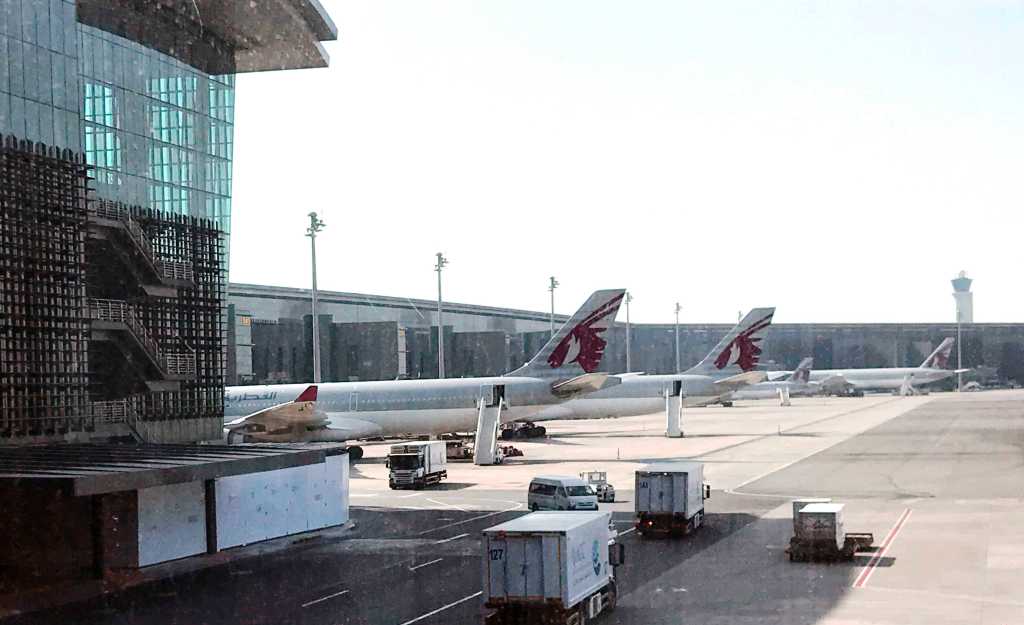
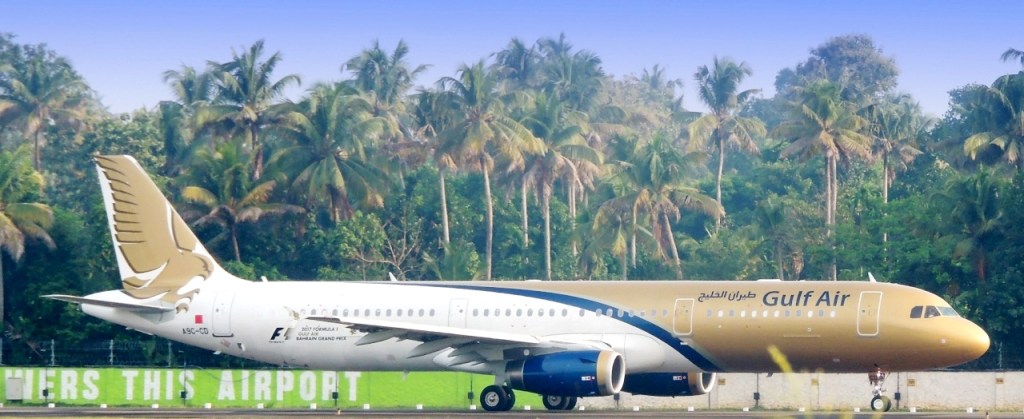

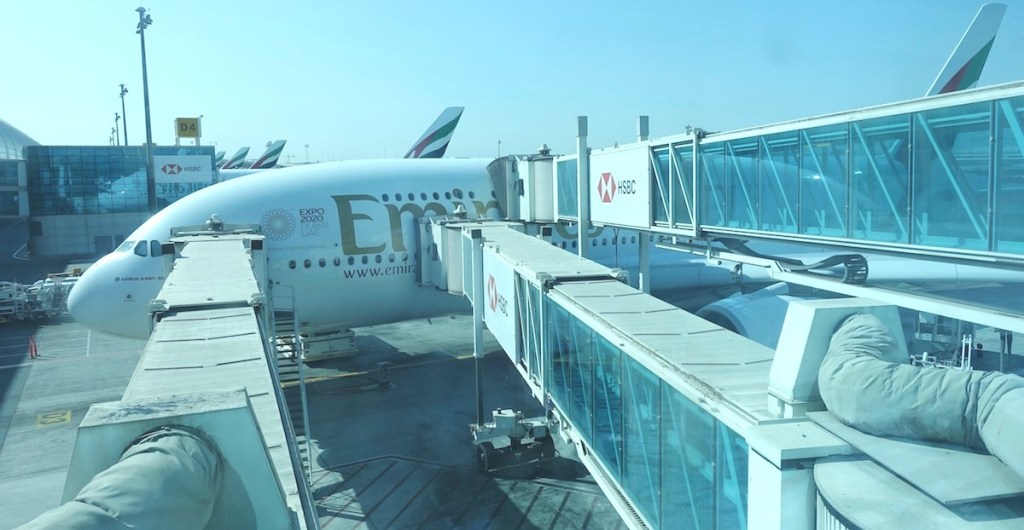

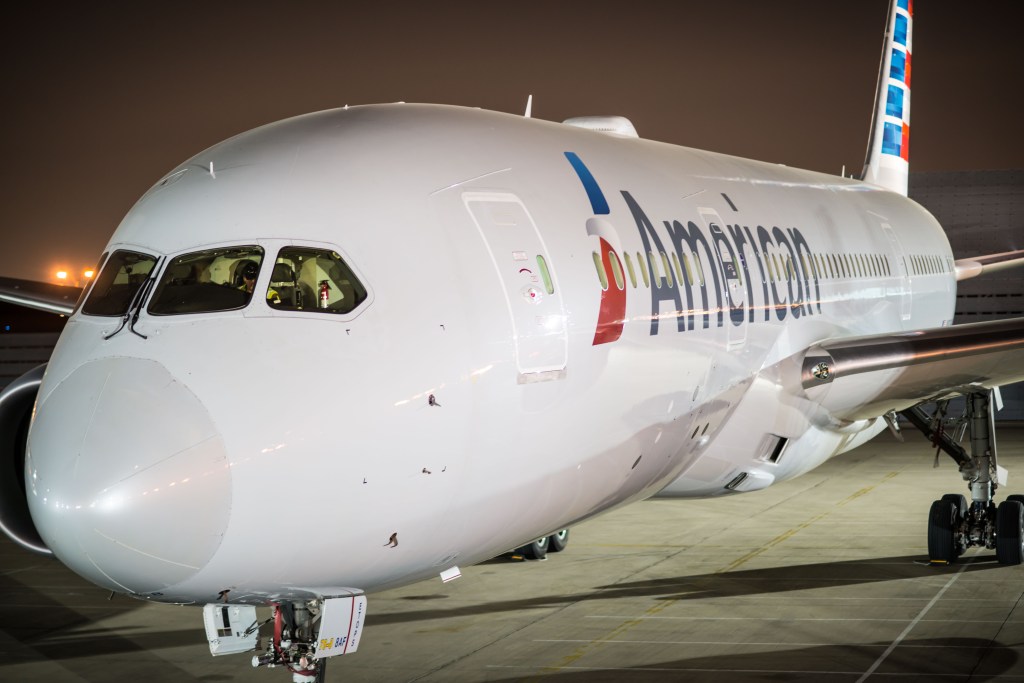



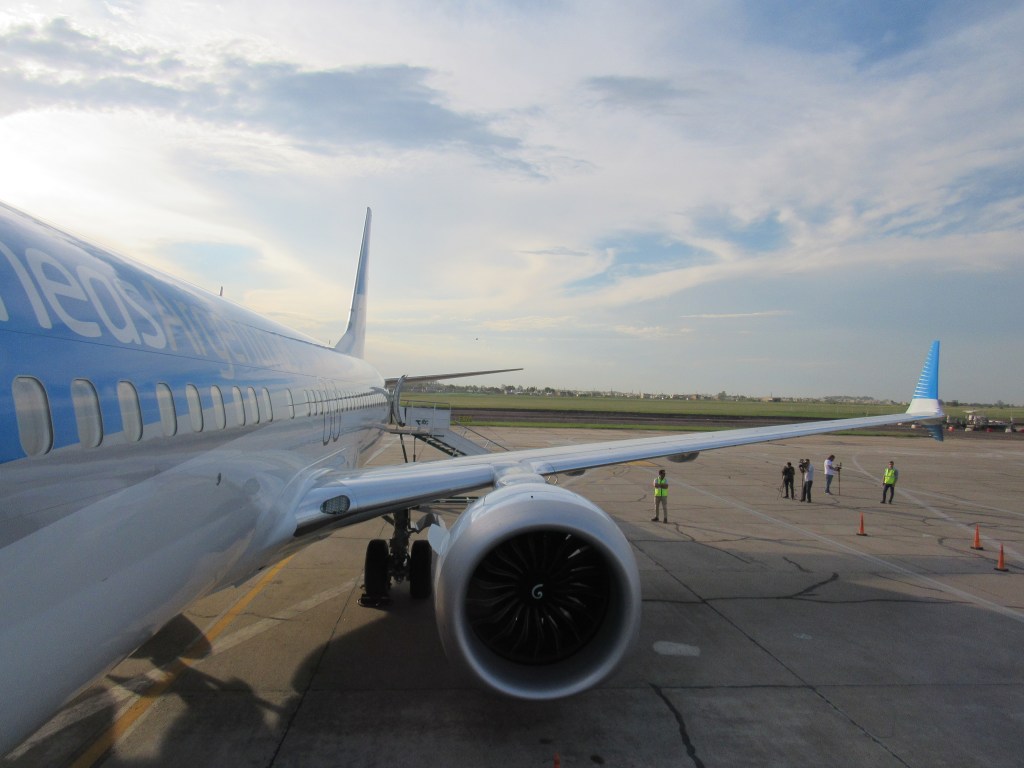
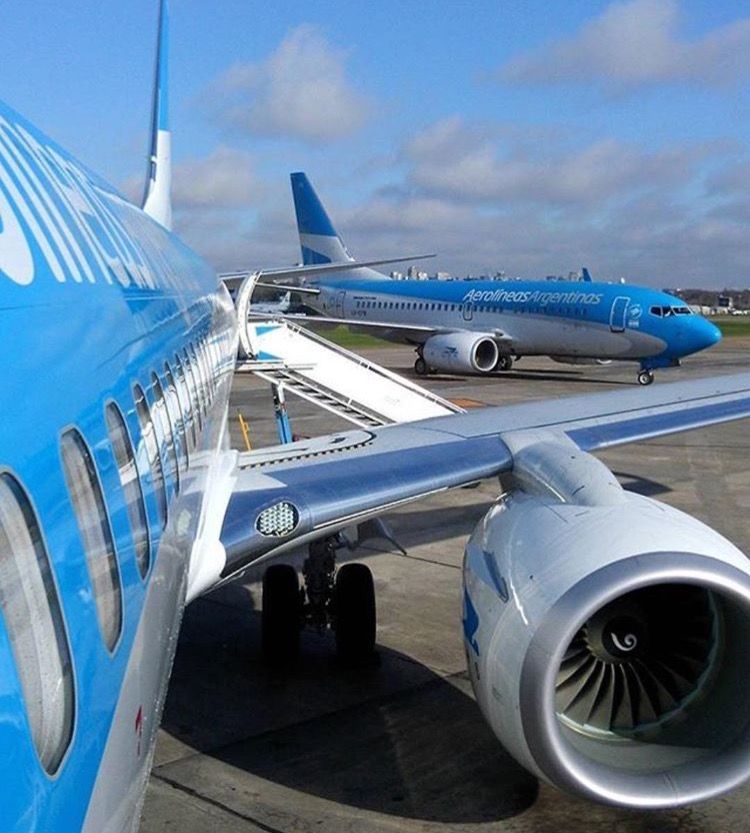

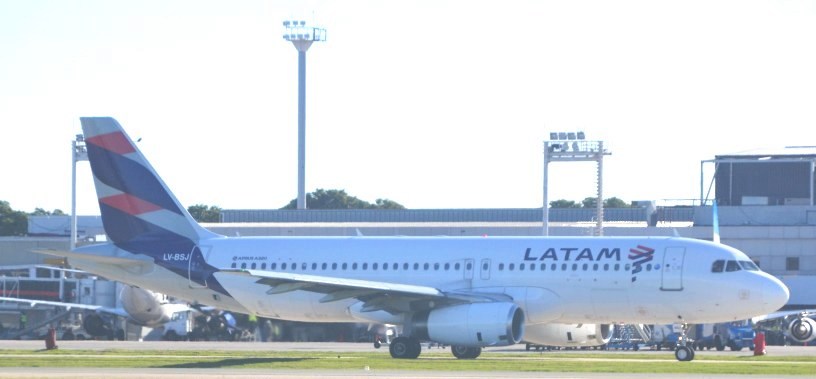


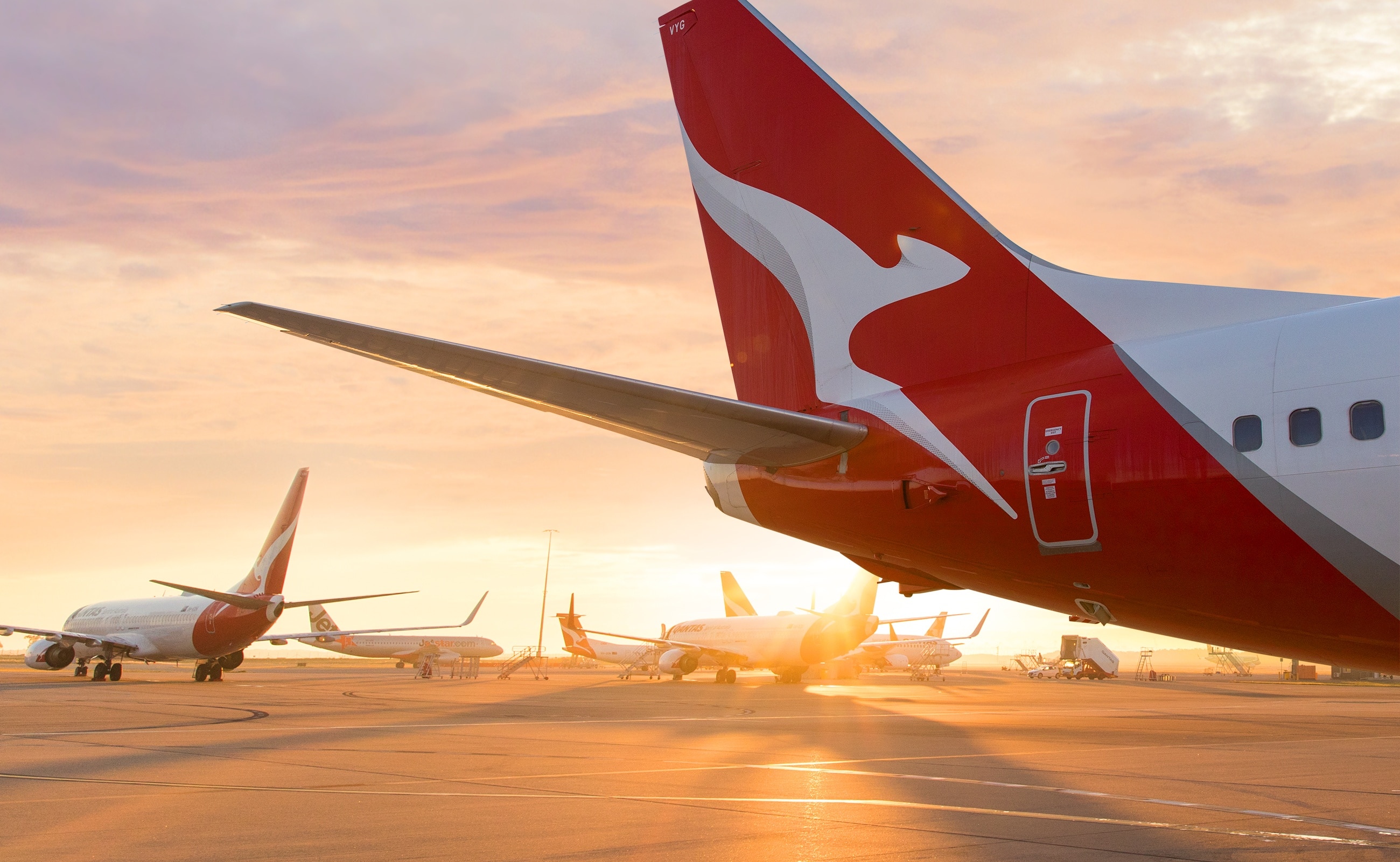

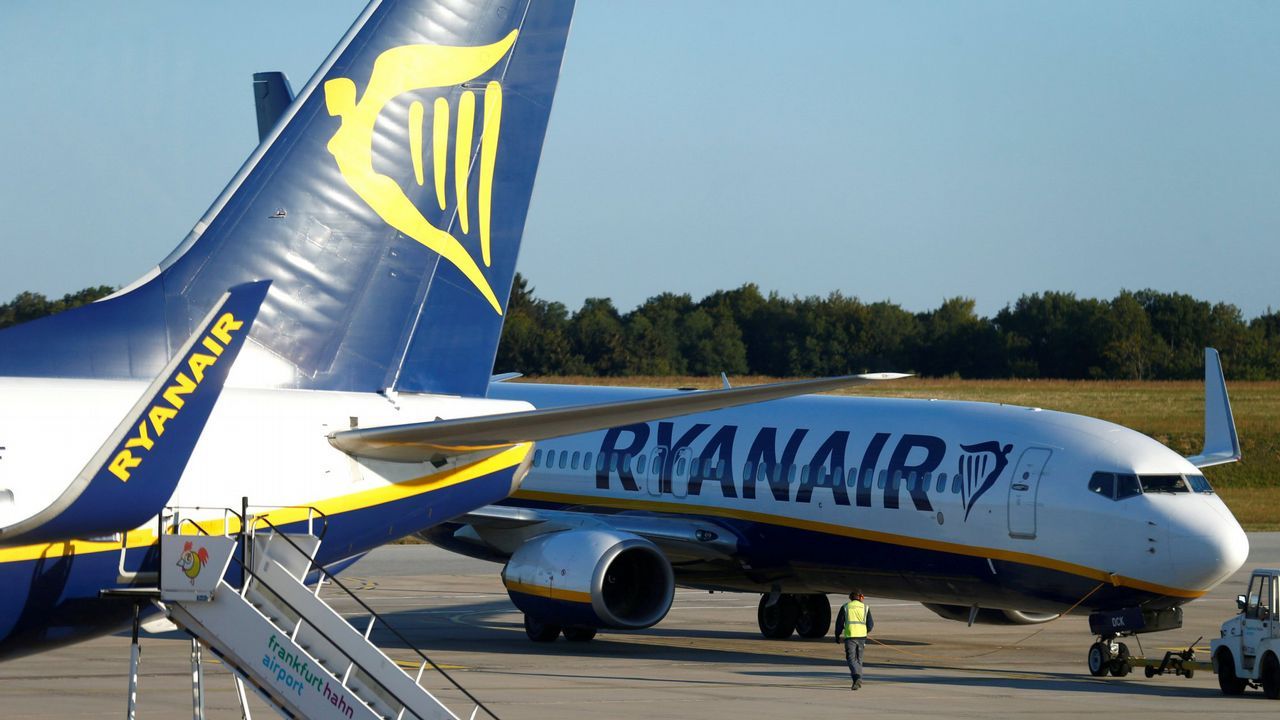


 airgways.com