Boeing abre línea ensamblaje del B777X en la fábrica de St. Louis

AW | 2016 10 18 20:25 | INDUSTRY

Boeing Commercial Airplanes abrió una planta de producción de avión la semana pasada en St. Louis, durante mucho tiempo un sitio para la fabricación de aviones militares

Tal como lo hemos anticipado en nuestro sitio en mayo/2016, Boeing comenzó los trabajos para fabricar los Boeing 777X, el nuevo derivado del Boeing 777.

El edificio de 424.000 pies cuadrados servirá como sitio para la fabricación de partes del 777X, la próxima generación del bimotor jet masiva, de fuselaje ancho Boeing entregó por primera vez hace 21 años.

Las partes producirá la planta de St. Louis están separados de los fuselaje delantero, las góndolas de motor y pilones que Spirit AeroSystems en Wichita fabrica para el Boeing 777 y el 777X cuando la producción comienza en el año 2017.

En concreto, St. Louis producirá borde del ala del 777X y partes de su plano de cola, o cola, todos hechos de materiales compuestos.

Las tripulaciones se mueven un autoclave, que se utiliza para endurecer piezas de aviones hechas de materiales compuestos, al nuevo centro compuesto de 424.000 pies cuadrados de Boeing en St. Louis, donde los trabajadores van a fabricar borde del ala mixta del 777X y parte de la cola.

El sitio de St. Louis de Boeing, que adquirió de su fusión con McDonnell Douglas 1997, ha sido en gran parte un centro de producción de aviones militares, incluyendo más de 12.000 aviones de combate.

«Con la apertura de este nuevo centro compuesto, nuestro bien entrenado, personal de alta calidad es capaz de demostrar su versatilidad y experiencia, el posicionamiento de nuestra región para el trabajo comercial y de defensa adicional en el futuro,» Bob Ciesla, vicepresidente y el programa 777X gerente, dijo en un comunicado.

Resultado de imagen para Boeing assembly line B777X opens factory in St. Louis

Boeing gastó $ 300 millones en la nueva instalación, que se dice tendrá cerca de 700 trabajadores de apoyo que en los próximos cuatro años. El montaje final del 777X se realizará en Everett de Boeing, Wash., planta.

A diferencia de la actual generación 777, el 777X tendrá un ala compuesta y nuevos motores, GE9X que Boeing dice será un 5 por ciento más eficiente que otros motores de su clase.

Se espera que la primera entrega en 2020. Boeing 777X hasta ahora tiene 320 pedidos y compromisos para el avión que vendrá en dos variantes: el 777-8, que tendrá capacidad para 350 pasajeros y un rango de 9.300 millas náuticas; y el 777-9, con capacidad para 400 pasajeros y un alcance de 8.200 millas náuticas. airgways-icon-aw

Boeing IDS HQ is located in St. Louis County, MO


Boeing assembly line B777X opens factory in St. Louis

Boeing Commercial Airplanes opened an airliner production facility last week in St. Louis, long a site for the manufacturing of military aircraft.

As we advance on our website in May / 2016, Boeing began work to manufacture the Boeing 777X, the new derivative of the Boeing 777.

The 424,000-square-foot building will serve as site to manufacture parts of the 777X, the next generation of the massive, twin-engine wide-body jet Boeing first delivered 21 years ago.

The 424,000-square-foot building will serve as site to manufacture parts of the 777X, the next generation of the massive, twin-engine wide-body jet Boeing first delivered 21 years ago.

The parts the St. Louis plant will produce are separate from the forward fuselage, engine nacelles and pylons that Spirit AeroSystems in Wichita manufactures for the Boeing 777 – and the 777X when production begins in 2017.

Specifically, St. Louis will produce the 777X’s wing edge and parts of its empennage, or tail, all made from composites.

Crews move an autoclave, used to harden aircraft parts made of composites, to Boeing’s new 424,000-square-foot composite center in St. Louis, where workers will manufacture the 777X’s composite wing edge and parts of its tail.

Boeing’s St. Louis site, which it acquired from its 1997 merger with McDonnell Douglas, has largely been a center of production of military aircraft, including more than 12,000 fighter jets.

“With the opening of this new composite center, our well-trained, high-quality workforce is able to demonstrate its versatility and expertise, positioning our region for additional commercial and defense work in the future,” Bob Ciesla, vice president and 777X program manager, said in a statement.

Boeing spent $300 million on the new facility, which it said will have about 700 workers supporting it in the next four years. Final assembly of the 777X will be done at Boeing’s Everett, Wash., plant.

Unlike the current generation 777, the 777X will have a composite wing and new, GE9X engines that Boeing says will be 5 percent more efficient than other engines in its class.

The first 777X delivery is expected in 2020. Boeing so far has 320 orders and commitments for the airplane that will come in two variants: the 777-8, which will have seating for 350 passengers and a 9,300 nautical-mile range; and the 777-9, with seating for 400 passengers and a range of 8,200 nautical miles. A\W

Ξ A I R G W A Y S Ξ
SOURCE: kansas.com
DBk: Photographic © Boeing.com
AW-POST: 201610182025AR
A\W A I R G W A Y S ®

Mitsubishi inicia pruebas vuelo en EE.UU

Resultado de imagen para Mitsubishi MRJ-90

AW | 2016 10 18 18:13 | INDUSTRY

Comienzan las pruebas de vuelo MRJ-90 en los EE.UU.

El primer avión de prueba MRJ-90 completó un vuelo de evaluación a los tres horas y 18 minutos en el estado de Washington el 17 de octubre Mitsubishi Aircraft Corp

El primer Mitsubishi MRJ-90, el avión de pruebas de vuelo FTA-1 comenzó las pruebas de vuelo en los EE.UU. El lunes, despegó del Aeropuerto Internacional del Condado de Grant en Moses Lake, Washington, a las 1:20 pm hora local. La aerolínea voló durante tres horas y 18 minutos, volviendo a Moses Lake a las 4:38 de la tarde, informó Mitsubishi. La compañía no reportó ninguna anomalía durante el vuelo.

El avión llegó por primera vez en Moses Lake de Japón el 29 de septiembre, tras una misión de transbordadores de tres días que incluyó paradas en Hokkaido, Lejano Oriente de Rusia y Alaska. El viaje marcó el tercer intento de Mitsubishi para volar a los EE.UU. después de dos intentos fallidos, el 27 de agosto y el 28, ambos abortado cuando se detectaron anomalías en las señales generadas por los sensores de monitoreo de sistemas de gestión de aire del avión. Desde entonces se ha reemplazado los sensores defectuosos y completado inspecciones para asegurar que el problema no se repita.

mrj-90-flight-test-us

Sin embargo, a principios de este mes Mitsubishi confirmó los informes fuera de Japón que se ha comunicado con MRJ cliente de lanzamiento All Nippon Airways sobre otra posible retraso en las primeras entregas debido a «razones técnicas». Si el fabricante no puede entregar el primer avión a mediados de 2018, marcaría el quinto retardo importante para el programa con problemas. Mitsubishi Aircraft insistió en que no ha dicho definitivamente a la aerolínea ANA de que se produzca un retraso.

Mitsubishi ha establecido una nueva instalación de ingeniería en Moses Lake de partida para las pruebas de vuelo de base de los cuatro primeros prototipos. TLC -3 tomó su primer vuelo en Japón el 25 de septiembre. La compañía planea utilizar un total de cincoprototipos para los vuelos de prueba, la cuarta parte de los que espera volar este año.

El Mitsubishi Regional Jet está destinada a la certificación en el año 2018. Mitsubishi espera que «las pruebas de vuelo, múltiples frecuentes» en los EE.UU. moverán el MRJ hacia la certificación tipo en el año 2018. Una vez certificado, el MRJ competirá con otros aviones regionales fabricados por Bombardier y Embraer. airgways-icon-aw

Mitsubishi begins flight testing in US

Begin flight tests MRJ-90 in the US

The first test aircraft MRJ-90 completed a flight evaluation after three hours and 18 minutes in the state of Washington on Oct. 17 Mitsubishi Aircraft Corp

The first Mitsubishi MRJ-90, the aircraft flight test FTA-1 began flight tests in the US On Monday, he took off from the Grant County International Airport in Moses Lake, Washington, at 1:20 pm local time. The airline flew for three hours and 18 minutes, returning to Moses Lake at 4:38 pm, said Mitsubishi. The company did not report any anomalies during flight.

The first plane arrived in Moses Lake Japan on September 29 after a ferry mission three days that included stops in Hokkaido, Russian Far East and Alaska. The trip marked the third attempt Mitsubishi flying to the US after two failed attempts, on August 27 and 28, both aborted when abnormal signals generated by sensors monitoring air management systems of the aircraft were detected. Since it has been replaced defective and completed inspections to ensure that the problem does not recur sensors.

However, earlier this month Mitsubishi confirmed reports out of Japan has communicated with MRJ launch customer All Nippon Airways on another possible delay in first deliveries due to «technical reasons». If the manufacturer can not deliver the first aircraft in mid-2018, would mark the fifth important for the program with delay problems. Mitsubishi Aircraft insisted that definitely has not told the ANA airline that a delay occurs.

Mitsubishi has established a new engineering facility in Moses Lake starting for flight testing base of the first four prototypes. TLC -3 took its first flight in Japan on September 25. The company plans to use a total of cincoprototipos for test flights, the fourth of waiting to fly this year.

primer avión de ensayo en vuelo (FTA-1) de la Mitsubishi Regional Jet

The Mitsubishi Regional Jet is intended for certification in 2018. Mitsubishi expects «flight tests, frequent multiple» in the US will move the MRJ to type certification in 2018. Once certified, the MRJ will compete with other regional aircraft manufactured by Bombardier and Embraer. A\W

Ξ A I R G W A Y S Ξ
SOURCE: skiesmag.com / ainonline.com
DBk: Photographic © Mitsubishi Aircraft / skiesmag.com
AW-POST: 201610181813AR
A\W A I R G W A Y S ®

Argentina cambios en el mercado aéreo

Resultado de imagen para flybondi

AW | 2016 10 18 11:30 | AIRLINES MARKET

El gobierno argentino está cambiando de manera rápida las reglas en la aviación comercial. Un caso típico es de fijar un mínimo tarifario al mercado local a alentar la instalación de las low cost en el país

El mercado aéreo argentino está experimentando cambios abruptos debido al ingreso de las aerolíneas low-cost, un mercado que de asalto que comenzó en América Latina iniciándose en México, Brasil, Chile y se expande por todas partes.

Las aerolíneas llamadas low cost han producido cambios fuertes en la manera de viajar de la gente en todo el mundo y la Argentina está a las puertas de experimentar dichos cambios, muchos de manera favorables y otros con aspectos negativos. El mercado decidirá qué cambios deseamos.

En Argentina, mientras que hace meses el ministro de Transporte Guillermo Dietrich frenaba la llegada de las low cost fijando un piso para las tarifas aéreas, ahora Isela Costanini dejó entrever la posibilidad de que finalmente se establezcan, coincidiendo con el misnitro de Turismo, Gustavo Santos.

Resultado de imagen para low cost airline argentina

SOUTHWEST AIRLINES ES LA PRECURSORA DE LAS LOW COST EN ESTADOS UNIDOS

En relación a la posibilidad de ampliar la competencia aérea y eliminar las tarifas mínimas para el ingreso de compañías low cost, Costantini reconoció “el pasajero está buscando tarifas (…) a nivel mundial hay muchos países que ya no tienen pisos en las tarifas, es una cuestión de tiempo”, dejando así entrever que en un futuro cercano cederán ante la creciente oferta y grupos interesados en comenzar a operar en Argentina bajo un modelo inédito en el país.

Además de las versiones sobre la creación de Flybondi y el interés de Norwegian en Argentina, habría otra propuesta de instalar una línea aérea llamada Alas del Sur, un bróker aéreo que ofrece vuelos chárter y que buscaría transformarse en una aerolínea regular con inversionistas chinos (Flybondi es la aerolínea low cost que quiere despegar en Argentina).

 Resultado de imagen para flybondi   Resultado de imagen para flybondi

Lo llamativo es que este cambio de rumbo obedezca ahora sí a dar respuesta al consumidor y no hace cinco meses cuando se impuso el piso a las tarifas mínimas (Dietrich rechaza liberar piso de tarifas aéreas frenando a Ryanair).

Importantes fuentes del sector arriesgan que el giro radical de limitar las tarifas mínimas a alentar la creación de nuevas aerolíneas o empezar o habilitar la negociación para que estas compañías low cost lleguen al país, responden a un intento de aminorar el poder sindical que actualmente tienen los pilotos de Aerolíneas Argentinas agrupados en APLA. A mayor cantidad de aerolíneas se diversificaría el gremio de los pilotos y ya no estarían necesariamente bajo el mismo paraguas.

Con nuevos esquemas más rentables, con reducción del personal no operativo, y con mejoras en la puntualidad e imagen para el pasajero final (no así para el canal de agencias), ahora el gran reto es desarticular el poderoso gremio aeronáutico contra el que la dirigencia de la aerolínea nacional no consigue llegar a ningún acuerdo que contente a ambas partes. airgways-icon-aw

Resultado de imagen para flybondi

Argentina changes in the aviation market

The Argentine government is rapidly changing the rules in commercial aviation. A typical case is to set a minimum tariff for the local market to encourage the installation of low cost in the country

The Argentine air market is experiencing abrupt changes due to the entry of low-cost airlines, a market that assault that began in Latin America beginning in Mexico, Brazil, Chile and expands everywhere.

Airlines low cost calls have been big changes in the way people travel around the world and Argentina is on the verge of experiencing these changes, many favorable way and other negative aspects. The market will decide what changes we desire.

In Argentina, while months Transport Minister Guillermo Dietrich slowed the arrival of low cost setting a floor for air fares, now Isela Costanini hinted at the possibility that finally established, coinciding with the misnitro Tourism, Gustavo Santos.

Regarding the possibility of extending the aerial competition and eliminate the minimum conditions for the entry of companies low cost rates, Costantini recognized «the passenger is looking for rates (…) worldwide there are many countries that no longer have floors in rates, it is a matter of time «, thus hinting that in the near future will yield to the growing supply and interested in starting operations in Argentina under an unprecedented model groups in the country.

In addition to versions on creating Flybondi and interest of Norwegian in Argentina, there would be another proposal to install an airline called Alas del Sur, an air broker offering charter flights and would seek to become a regular airline with Chinese investors (Flybondi it is the low cost that wants to take off in Argentina) airline.

Resultado de imagen para low cost airline argentina

RYANAIR IS THE MOTHER OF LOW COST IN EUROPE

What is striking is that this shift now obey itself to respond to consumer and not five months ago when the floor was imposed on the minimum rates (Dietrich refuses to release floor airfares braking Ryanair).

Important industry sources risk that the radical turn to limit the minimum to encourage the creation of new airlines or start or enable negotiation for these low cost carriers arrive in the country, rates respond to an attempt to reduce union power that currently have the Aerolíneas Argentinas pilots grouped into APLA. A greater number of airlines pilots’ guild would diversify and no longer necessarily be under the same umbrella.

With new and more profitable schemes, reducing non-operational staff, and improvements in the timeliness and image for the final passenger (not for the agency channel), now the big challenge is to dismantle the powerful aircraft guild against the leadership the national airline fails to reach any agreement that pleases both parties. A\W

Ξ A I R G W A Y S Ξ
SOURCE: A I R G W A Y S / reportur.com
DBk: Photographic © flybondi / Dailymail.co.uk / Points Miles & Martinis > Alamy
AW-POST: 201610181130AR
A\W A I R G W A Y S ®

¿Aerolíneas EUA listas para el despegue?

AW | 2016 10 18 10:57 | AIRLINES MARKET

Análisis del mercado aéreo de los EE.UU. y el desenvolvimiento financiero de las líneas aéreas

A pesar de las predicciones de crecimiento favorables, la industria aérea global que opera en un entorno complejo y cambiante, que tiene el potencial de ser afectados adversamente por una amplia variedad de cambios regulatorios inesperados y eventos externos, tales como los temores de seguridad, catástrofes naturales y enfermedades infecciosas. La capacidad de recuperación de los viajes aéreos para recuperarse de estos choques es un reflejo de las condiciones económicas globales y regionales veces.

Aunque la industria de la aviación continúa creciendo rápidamente, la rentabilidad consistente y saludable es a menudo difícil de lograr debido a los modelos operativos constantemente tener que adaptarse al cambio. Bajo costo líneas aéreas comerciales han tenido el mejor desempeño en los últimos años, y ahora controlan cerca del 25 por ciento del mercado mundial, con la continua expansión en los mercados emergentes. Los márgenes de beneficio, sin embargo, siguen limitadas a menos del 3 por ciento en general.

Dado este entorno empresarial impredecible y volátil, la forma en que las líneas aéreas comerciales reaccionan a estas tendencias de crecimiento va a determinar su rendimiento en los próximos años.

¿Puede la creciente demanda de cumplir?

Entre ahora y 2035, para satisfacer la creciente demanda en el tráfico aéreo, Boeing prevé que habrá una necesidad de 617.000 pilotos de líneas aéreas comerciales.

Fuente: Boeing

Para poner la escala de esto en perspectiva, existen actualmente sólo alrededor de 130.000 pilotos comerciales en el mundo. Hoy en día, el 76 por ciento de las líneas aéreas están diciendo que van a contratar más pilotos para el año 2017.

Si nos fijamos en una región específica, como los EE.UU., las compañías aéreas se enfrentan a lo que amenaza con ser la más grave escasez de pilotos desde la década de 1960, con una demanda anual se prevé que superará a la oferta en un futuro próximo.

De hecho, el tema ya está causando problemas entre aerolíneas regionales más pequeños. Por ejemplo, Republic Airways, que opera para Delta, United Express y American Eagle, recientemente se declaró en quiebra, lo que se atribuyó en parte a la falta de pilotos.Otras líneas aéreas nacionales de Estados Unidos también están recortando rutas debido a la escasez de pilotos. El problema parece que continuará y se extendió a los operadores más grandes que también pueden verse obligados a interrumpir las rutas y vuelos.

El problema no es sólo en los EE.UU., sin embargo; la gran demanda de los pilotos es una tendencia mundial. En particular, la región de Asia y el Pacífico tiene el mayor aumento previsto de la demanda piloto, con 248.000 nuevos pilotos que se cree que se requiere para el 2034 para sostener el crecimiento. Europa requerirá 104.000, el Oriente Medio y América Latina 58,000 51,000.

Corriente de suministro de Pilotos está disminuyendo

Con la globalización, la demanda de los vuelos comerciales está aumentando tan rápidamente que ahora está empezando a ser mayores que los recursos disponibles para hacer frente al crecimiento. En todo el mundo, varios planes se están poniendo en marcha para tratar de facilitar y hacer frente a esta necesidad.

Muchas de las principales aerolíneas están aumentando el número de vuelos programados y el tamaño de sus flotas de las aerolíneas. La principal preocupación para la industria de la aviación es si hay suficientes pilotos disponibles para alimentar a esta capacidad. Si bien la demanda de los pilotos está aumentando, el número de pilotos disponibles está disminuyendo por varias razones:

  • El envejecimiento de la población. Teniendo en cuenta que la edad media de los Estados Unidos pilotos de líneas aéreas comerciales es de 50, un número significativo pronto se retirará alrededor del mismo tiempo que la demanda va a aumentar.
  • Disminución de entrenamiento de vuelo militar, los altos costos de instrucción civiles y un aumento de las horas obligatorias. Los efectos combinados de la disminución de la formación de vuelo militar, los altos costos de instrucción civiles y un aumento de las horas obligatorias para los pilotos de líneas aéreas en ciertos países han hecho ser un piloto de línea aérea más restrictivo y menos atractivo.
  • Una mayor presión sobre los salarios, sobre todo para las aerolíneas regionales y de bajo costo. La consolidación entre las aerolíneas comerciales más grandes también les ha dado más poder de negociación sobre las aerolíneas regionales y de bajo costo, por lo que es más difícil para estas líneas aéreas más pequeñas para aumentar los salarios. Como resultado, las líneas aéreas comerciales son ahora mucho mayor en competencia con otras industrias en términos de oportunidades de empleo, la remuneración y beneficios.

Compitiendo por el talento: ¿Cómo satisfecho con los beneficios de los empleados pueden ayudar

Debido a la creciente demanda de pilotos y una creciente falta de candidatos adecuados, las aerolíneas necesitan desarrollar estrategias para asegurarse de que atraer y retener a la tripulación de la derecha.

La realización de exámenes de pago es quizás el método más obvio de atraer y retener a los pilotos. Teniendo en cuenta que el costo de entrenamiento de vuelo es considerado como un elemento disuasorio para los jóvenes talentos, los empleados potenciales son más propensos a ser atraídos por las compañías aéreas que ofrecen generosos paquetes que cubren estos costos.

Las aerolíneas también podrían tratar de mejorar las condiciones de trabajo, tomar medidas para asegurar que la cultura de la empresa promueve un mejor equilibrio entre la vida laboral de los empleados.Por ejemplo, los períodos de descanso más largos, horarios más regulares y revisiones del número de horas que se requieren pilotos para volar anualmente todos podrían tener efectos positivos.

Otra forma de líneas aéreas pueden diferenciarse de la competencia es el de proporcionar un paquete de beneficios a los empleados mejorada. Teniendo en cuenta los desafíos únicos que enfrentan los pilotos, la mayoría de las compañías aéreas reconocen que necesitan para proporcionar una cobertura especializada beneficios de los empleados de la aviación, a diferencia de algunos de los paquetes de beneficios para empleados más genéricas disponibles. Dicha cobertura nicho normalmente se divide en cuatro áreas clave: accidentes personales, vida de término, de gastos médicos de emergencia y la pérdida de la licencia.

Empresa de posicionamiento en un mercado Candidato-conducido

La industria de la aviación está bajo una creciente presión para que coincida con la creciente demanda de pilotos con suficiente suministro. Como esta carrera por el mejor talento se intensifica, las líneas aéreas se verán obligados a repensar sus estrategias de las personas.

Teniendo en cuenta que operan dentro de un entorno económico suelen ser duras y volátil, las aerolíneas tendrán que explorar una variedad de enfoques creativos más allá de simplemente aumentar los salarios para atraer y retener tripulación. Sin duda uno de los enfoques es poner en marcha un programa de beneficios para los empleados de la aviación que distingue a una compañía aérea de sus competidores.  airgways-icon-aw

Resultado de imagen para airplane take-off

Tomorrow’s Airlines: In crisis or ready for take-off?

Air Analysis US market and financial development of airlines

Notwithstanding favorable growth predictions, the global airline industry operates in a complex and ever-changing environment, one with the potential to be adversely affected by a wide variety of unexpected regulatory changes and external events, such as security fears, natural catastrophes and infectious disease. The resilience of air travel to bounce back from these shocks is a reflection of global and sometimes regional economic conditions.

Although the aviation industry continues to grow rapidly, consistent and healthy profitability is often difficult to achieve due to operating models constantly having to adapt to change. Low-cost commercial airlines have performed best in recent years, and now control some 25 percent of the global market, with continuous expansion into emerging markets. Profit margins, however, remain constrained to less than 3 percent overall.

Given this unpredictable and volatile business environment, the way that commercial airlines react to these growth trends will determine their performance over the coming years.

Can the Growing Demand Be Met?

Between now and 2035, to meet the growing demand in air traffic, Boeing predicts that there will be a need for 617,000 commercial airline pilots.

Source: Boeing

To put the scale of this into perspective, there are currently only around 130,000 commercial pilots in the world. Today, 76 percent of airlines are saying they will hire more pilots by 2017.

If we look at a specific region like the U.S., airlines are facing what threatens to be their most serious pilot shortage since the 1960s, with annual demand being predicted to outstrip supply in the near future.

In fact, the issue is already causing problems among smaller regional airlines. For example, Republic Airways, which operates for Delta, United Express and American Eagle, recently filed for bankruptcy, which it in part blamed on a lack of pilots. Other U.S. domestic airlines are also cutting routes due to pilot shortages. The problem looks set to continue and eventually spread to the bigger operators that may also be forced to terminate routes and flights.

The problem isn’t just in the U.S., however; the high demand for pilots is a global trend. In particular, the Asia Pacific region has the largest projected increase in pilot demand, with 248,000 new pilots thought to be required by 2034 to sustain growth. Europe will require 104,000, the Middle East 58,000 and Latin America 51,000.

Current Supply of Pilots is Decreasing

With globalization, demand for commercial flights is increasing so rapidly that it is now beginning to outweigh the resources available to deal with the growth. Across the globe, various plans are being put in place to try to facilitate and cope with this need.

Many major airlines are increasing the number of flights scheduled and the size of their airline fleets. The key concern for the aviation industry is whether there are enough pilots available to feed this capacity. While the demand for pilots is increasing, the number of available pilots is decreasing for several reasons:

  • An aging population. Considering that the average age of U.S. commercial airline pilots is 50, a significant number will soon be retiring around the same time as demand is set to increase.
  • Decreased military flight training, high civilian instruction costs and an increase in mandated hours. The combined effects of decreased military flight training, high civilian instruction costs and an increase in mandated hours for airline pilots in certain countries have made being an airline pilot more restrictive and less attractive.
  • Greater pressure on wages, particularly for regional and low-cost airlines. Consolidation among the larger commercial airlines has also given them more negotiating power over the regional and low-cost airlines, making it harder for these smaller airlines to raise wages. As a result, commercial airlines are now in much greater competition with other industries in terms of career opportunities, pay and benefits.

Competing for Talent: How the Right Employee Benefits Can Help

Due to the increasing demand for pilots and a growing lack of suitable candidates, airlines need to develop strategies to ensure they attract and retain the right crew.

Conducting pay reviews is perhaps the most obvious method of attracting and retaining pilots. Given that the cost of flight training is considered to be a deterrent for young talent, potential employees are more likely to be attracted to airlines that offer generous packages covering these costs.

Airlines could also seek to improve working conditions, taking steps to ensure that the corporate culture promotes a better work-life balance for employees. For example, longer rest periods, more regular schedules and revisions in the number of hours that pilots are required to fly annually could all have positive effects.

Another way airlines can set themselves apart from the competition is to provide an enhanced employee benefits package. Given the unique challenges faced by pilots, most airlines recognize that they need to provide specialized aviation employee benefits coverage, as opposed to some of the more generic employee benefits packages available. Such niche coverage typically falls into four key areas: personal accident, term life, emergency medical expense and loss of license.

Company Positioning in a Candidate-led Market

The aviation industry is coming under increasing pressure to match the growing demand for pilots with enough supply. As this race for the best talent intensifies, airlines will be forced to fundamentally rethink their people strategies.

Given that they operate within an often harsh and volatile economic environment, airlines will need to explore a variety of creative approaches beyond simply raising salaries to attract and retain crew. Certainly one approach is to put in place an aviation employee benefits program that distinguishes an airline from its competitors. A\W


Ξ A I R G W A Y S Ξ
SOURCE: brinknews.com
DBk: Photographic © brinknews.com / techforspace.com
AW-POST: 201610181057AR
A\W A I R G W A Y S ®

¿Cuál es la aerolínea más rápida en redes sociales?

AW | 2016 10 18 10:37 | AIRLINES

La ‘low cost’ Ryanair tiene el récord en tiempo de respuesta a una mención en Twitter: 31 segundos. KLM es la que más atiende a sus clientes y British Airways, la que más comentario recibe por hora.

La próxima vez que piense en recurrir a las redes sociales y, en concreto a Twitter, para compartir su experiencia -positiva o negativa- en un avión, ármese de paciencia. Si viaja con American Airlines y tiene un poco de suerte, recibirá una respuesta en cinco segundos. O en 31 segundos, si ha captado la atención de Ryanair. Pero lo más normal, sea cual sea la aerolínea, es que tenga que esperar más. Sobre todo, si son europeas. Las redes sociales y las ‘app’ para chatear aglutinan el 12% de la actividad online de a bordo

Según un estudio del proveedor de software Conversocial, las compañías aéreas estadounidenses tardan, de media, una hora y cinco minutos en contestar a un comentario en esta red social. El tiempo de respuesta es aún mayor si se trata de sus homólogas europeas: tres horas y cuarenta minutos.

EEUU también gana la partida en comentarios directos. Según Conversocial, el volumen que reciben las aerolíneas estadounidenses es un 39% superior. En un contexto en el que el viajero, gracias a su smartphone, cada vez tiene más voz, el sector aéreo empieza a verse obligado a dedicar recursos y tiempo a escuchar y responder al cliente.

El 12% de la actividad online a bordo se concentra en las redes sociales y las app para intercambiar mensajes. De ahí que, para el 89% de las aerolíneas, las redes sociales están ya en la parte alta de su lista de prioridades.

EUROPA VS NORTEAMÉRICA
El informe subraya que nueve de cada diez aerolíneas americanas tardan menos de una hora en responder a los comentarios, frente a las siete de cada diez que cumplen este indicador en Europa.

Las compañías de EEUU tardan de media una hora y cinco minutos en contestar; las de Europa, más de tres horas

Entre las estadounidenses, destacan American Airlines, además de por la respuesta más rápida porque es la que más comentarios contesta por hora. El caso de la low cost JetBlue es ambivalente: bate el récord con la respuesta más lenta -47 minutos y cuatro segundos-, pero siempre contesta en menos de una hora.

A este lado del Atlántico, aunque Ryanair es la responsable de la respuesta más rápida, la alemana Lufthansa es la más segura: en un 99,6% de las ocasiones contesta en menos de una hora. British Airways, por su parte, es la que más menciones recibe por hora (91,6) y, al mismo tiempo, la que más responde en ese intervalo (43,2). Mientras, Iberia y Vueling obtienen resultados discretos y tardan, de media, casi una hora en responder un comentario (Iberia) y 36 minutos (Vueling).

Cada compañía, sin embargo, es un mundo y su nivel de respuesta varía significativamente. KLM, por ejemplo es la que más responde y supera a Southwest, la más receptiva en EEUU. Turkish Airlines es la que menos contesta, pero el peor tiempo medio de respuesta es de easyJet, con 16 horas y 50 minutos. airgways-icon-aw

What is the fastest airline in social networks?

The ‘low cost’ Ryanair holds the record in response time to a mention on Twitter: 31 seconds. KLM is the one that serves its customers and British Airways, which receives more comment per hour

The next time you think about resorting to social networks and specifically Twitter, to share their positive or negative experience on an airplane, arm yourself with patience. If traveling with American Airlines and have a little luck, you will receive a response within five seconds. Or in 31 seconds, if it has caught the attention of Ryanair. But as normal, regardless of the airline, it is to have to wait longer. Especially if they are European. Social networks and the ‘app’ for chat agglutinate 12% of the online activity on board

According to a study Conversocial software provider, US airlines take, on average, one hour and five minutes to reply to a comment on this social network. The response time is even greater when it comes to their European counterparts: three hours and forty minutes.

USA also wins the game in direct feedback. According Conversocial, the volume receiving US airlines is 39% higher. In a context in which the traveler, thanks to its smartphone, is increasingly voice, the airline industry is beginning to be forced to devote resources and time to listen and respond to the client.

12% of online activity on board focuses on social networks and app to exchange messages. Hence, for 89% of airlines, social networks are already at the top of their priority list.

EUROPE VS NORTH AMERICA
The report stresses that nine out of ten American airlines take less than an hour to respond to comments, compared with seven in ten who meet this indicator in Europe.

US companies take half an hour and five minutes to answer; those in Europe, more than three hours

Among the Americans, they include American Airlines, plus the fastest response because it is the most comments replies per hour. The case of the low cost JetBlue is ambivalent: breaks the record with slower response -47 minutes and four seconds, but always answer in less than an hour.

On this side of the Atlantic, although Ryanair is responsible for the fastest response, the German Lufthansa is the safest: in 99.6% of cases answered in less than an hour. British Airways, meanwhile, is the most mentions receives per hour (91.6) and at the same time, the most responsive in that interval (43.2). Meanwhile, Iberia and Vueling obtained discreet results and take, on average, nearly an hour to reply to a comment (Iberia) and 36 minutes (Vueling).

Each company, however, is different and their level of response varies significantly. KLM, for example, is more responsive and Southwest outperforms the most receptive in the US. Turkish Airlines is the least answer, but the worst average response time is easyJet, with 16 hours and 50 minutes. A\W

Ξ A I R G W A Y S Ξ
SOURCE: expansion.com
DBk: Photographic © expansion.com
AW-POST: 201610181037AR
A\W A I R G W A Y S ®

Renuncia el CEO de Eastern Air Lines

Former Eastern Air Lines president and CEO Ed Wegel at the airline’s headquarters near Miami International Airport in January 2015.

AW | 2016 10 18 10:28 | AIRLINES

Ed Wegel, que ayudó a resucitar líneas de aire para sus vuelos inaugurales a Cuba el año pasado, ha dejado su puesto, de acuerdo con la línea aérea.

Como presidente y CEO de oriente, Wegel ayudó pastor en una nueva era después de que el vehículo dejó de funcionar hace 25 años. El verano pasado, la aerolínea comenzó a alquilar sus aviones para HavanaAir con sede en Miami vuelos desde el Aeropuerto Internacional de Miami a La Habana, Holguín, Camagüey, Santa Clara y Santiago de Cuba.

Según explicó Airways Magazine, Wegel fue obligado a salir de su posición, que ahora ha sido llenado por el CEO interino James Tolzien, director financiero de la compañía aérea.

«Estábamos tan sorprendido como todos los demás en la liberación de Ed,» dijo Mark Elias, presidente y director de operaciones de La Habana Aire, en un correo electrónico. «En realidad, era un papel decisivo en la negociación de nuestra puesta en marcha con este como nuestro proveedor de chárter contratado y nos ayudó con regularidad en nuestros vuelos soliciten.» Eastern Air Lines, dijo que llevará a cabo una búsqueda global de un CEO permanente.

«Tenemos plena confianza en el liderazgo de Jim y estamos seguros vamos a atraer a un veterano de la industria de clase mundial para tomar oriente al siguiente nivel», dijo el presidente Ray Odierno. «La junta se mantiene gracias al Sr. Ed Wegel por su visión en la resurrección de la marca icónica del Este. Aunque reconocemos sus contribuciones en navegar la fase de arranque de la línea aérea, estamos convencidos de cambio es necesario para el éxito a largo plazo continuado del Este. Deseamos Ed lo mejor en sus futuros proyectos «.

Antes de su papel en el Oriente, Wegel mantuvo posiciones de liderazgo en media docena de líneas aéreas. Provisional CEO Tolzien tiene 40 años de experiencia en los negocios, incluyendo como presidente de TraveLeaders, una empresa de gestión de viajes corporativos.Él ha estado con oriente desde su creación en 2011.

La participación de Wegel con este comenzó en 2007, cuando él y sus socios comenzaron a trabajar para restablecer la línea aérea, recaudar millones de dólares en el capital, el personal del tren y llegar a acuerdos para volar a Cuba.

En el vuelo inaugural de Cuba de la aerolínea en de mayo de 2015, Wegel dijo al Herald que se sentía «un sentido de orgullo en nuestro pueblo que ponen todo esto juntos.»

La línea también vuela a varios destinos en el Caribe y América Latina y opera cartas deportivas para los Florida Panthers y los Gigantes de San Francisco. A principios de este año, el Departamento de Transporte de Estados Unidos negó la oferta de este por los vuelos comerciales de Miami a Holguín y Camagüey. airgways-icon-aw

Resultado de imagen para Eastern Airlines

Resignation CEO of Eastern Airlines

Ed Wegel, who helped resurrect Eastern Air Lines for its inaugural flights to Cuba last year, has left his position, according to the airline.

As president and CEO of Eastern, Wegel helped shepherd in a new era after the carrier ceased operations 25 years ago. Last summer, the airline began leasing its planes to Miami-based HavanaAir for flights from Miami International Airport to Havana, Holguin, Camaguey, Santa Clara and Santiago de Cuba.

According to Airways Magazine, a number of sources said Wegel was forced out of his position, which has now been filled by interim CEO James Tolzien, the airline’s chief financial officer.

“We were just as surprised as everyone else on Ed’s release,” said Mark Elias, president and chief operating officer of Havana Air, in an email. “He was indeed instrumental in negotiating our start up with Eastern as our contracted charter provider and assisted us regularly in our requesting flights.” Eastern Air Lines said it will conduct a global search for a permanent CEO.

“We have complete confidence in Jim’s leadership and we are certain we will attract a world-class industry veteran to take Eastern to the next level,” said Chairman Ray Odierno. “The board remains grateful to Mr. Ed Wegel for his vision in resurrecting the iconic Eastern brand. While we recognize his contributions in navigating the startup phase of the airline, we are convinced change is required for Eastern’s continued long-term success. We wish Ed the best in his future endeavors.”

Prior to his role at Eastern, Wegel held leadership positions at half a dozen airlines. Interim CEO Tolzien has 40 years of business experience, including as president of TraveLeaders, a corporate travel management company. He has been with Eastern since its inception in 2011.

Wegel’s involvement with Eastern began in 2007, when he and his partners began to work to reestablish the airline, raise millions of dollars in capital, train staff and reach agreements to fly to Cuba.

At the airline’s inaugural Cuba flight in May 2015, Wegel told the Herald he felt “a sense of pride in our people that they put all this together.”

The line also flies to several destinations in the Caribbean and Latin America and operates sports charters for the Florida Panthers and San Francisco Giants. Earlier this year, the U.S. Department of Transportation denied Eastern’s bid for commercial flights from Miami to Holguin and Camaguey. A\W


Ξ A I R G W A Y S Ξ
SOURCE: miamiherald.com
DBk: Photographic © Airwaysmag.com / miamiherald.com
AW-POST: 201610181028AR
A\W A I R G W A Y S ®

El reinado del mercado regional aéreo

original-1

AW | 2016 10 17 17:03 | INDUSTRY

airbus-logo1Tanto Airbus como Boeing detentan la mayor porción del mercado deaviaways-isologotype aviones comerciales del mundo. Como anticipó AIRGWAYS ® en post anterior, el surgimiento de nuevas tecnologías y nuevos protagonistas en la aviación comercial, hicieron florecer la industria de aviones regionales, potenciando la variedad de ofertas.

Durante años, los aviones de pasillo único B737 y A320 demandan una nueva tecnología más eficiente en combustible para las aerolíneas. Boeing y Airbus había empujado la idea de construir desde cero una nueva aeronave. Sin embargo, la producción de programas que boeing-company-logocuestan miles de millones de dólares en nuevos aviones y el tiempo que demandaría y la entrada en servicio, harían declinar la balanza empujando en una dirección diferente por una remotorización en ambos constructores.

Los dos fabricantes de aviones comerciales más grandes del mundo Airbus y Boeing han dominado el mercado desde hace décadas. Boeing, tiene casi la mitad de la cuota de mercado, pero varían en función del año y ningún fabricante como Airbus ha llegado tan lejos para forzar el segmento de aviones de pasillo único.
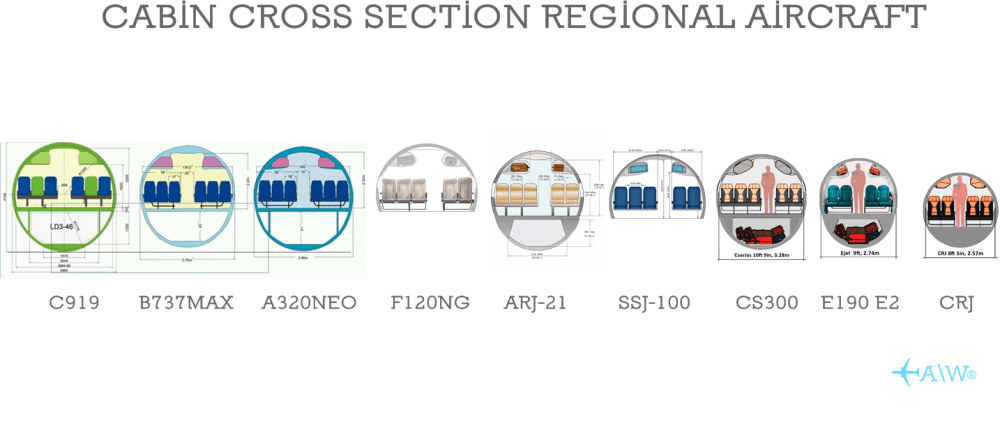

cabin-cross-section-airliner-regional

embraer-logo1La empresa brasileña Embraer fabrica apelando a los aviones de cuerpo más pequeño, el mercado de aviones regionales. Embraer con la gama de E-Jets es uno de los jugadores más importantes en el mercado de aviones regionales, ostenta el primer puesto en la industria de aeronaves regionales. Su cede en Sao Jose dos Campos, Brasil, ha permitido introducirse excelentemente en el mercado estadounidense con sus Emb-120 «Brasilia» posibilitándole expandirse mundialmente. Progresivamente introdujo los ERJ135/140/145 ampliando el segmento de jet regionales. La familia de aviones E170/E175/E190/E195 permitió acercarse a un mercado muy cerca donde actúan Airbus y Boeing, «coqueteándo» la competencia en algunas rutas aéreas. El último diseño los E170/E190 E2 (segunda etapa) ha permitido introducir nuevos motores y nuevas tecnologías para ampliar el mercado entrando a competir más directamente con el duopolio Airbus/Boeing.

Resultado de imagen para e190e2

bombardier_logo1El constructor canadiense Bombardier había estado trabajando en el segmento regional por mucho tiempo. Inicialmente asentada en la producción de material férreo, inició su expansión hacia el sector aeronáutico con la compra en 1986 de Canadair, empresa que ese momento estaba en manos del gobierno canadiense y luego de registrar una de las más catastróficas pérdidas económicas en la historia reciente de la economía canadiense. En 1989 adquirió la firma Short Brothers de Irlanda, la cual estaba asimismo en quiebra. En 1990 Bombardier compró Learjet Corporation y en 1992 De Havilland Canada (en ese momento, filial de Boeing), heredando la serie de aviones turbopropulsados Dash, o DHC.

Actualmente Bombardier está consolidado como el cuarto mayor fabricante aeronáutico del mundo, con lo cual la unidad de negocio Bombardier Aerospace representa más de la mitad de los ingresos del grupo.

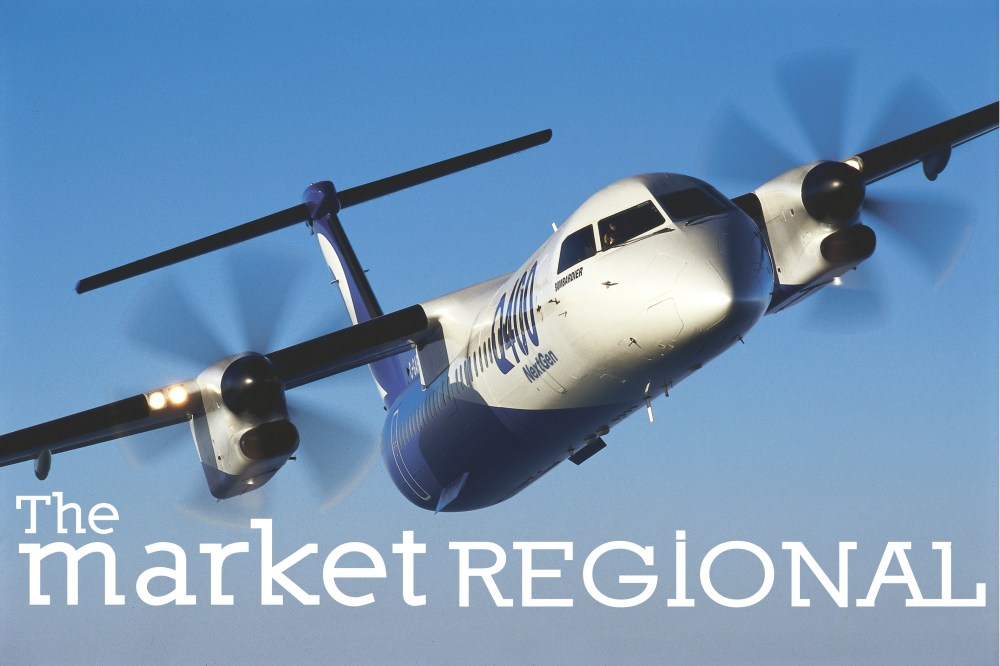
La línea de aviones turbohélices Dash 8, Bombardier Aerospace compró DHC en 1992 continuando su producción hasta la actualidad. Desde 1996 es conocido como Q Series, de «Quiet» (silencioso en inglés) debido a la instalación de un sistema activo de supresión de ruido y vibración (ANVS). Existen distintos modelos de la familia Dash 8, de los que en total fueron fabricados más de 1.000 ejemplares. En la actualidad la serie Q400 es la más grande, más actualizada y vendida, perdiendo mercado en el segmento de los 37-56 pax en las series Q200 y Q300.

Resultado de imagen para q400

El C Series es el desarrollo final de un avión de la Short Brothers, que estuvo en su fase de planeamiento por mucho tiempo pero que nunca prosperó. Al adquirir la empresa por parte de Bombardier, el BRJ-X toma forma hasta alcanzar su diseño vanguardista conocido como la familia de jet C Series CS100 y CS300.

Resultado de imagen para ATR logoEl constructor franco-italiano ofrece al mercado dos variantes del ATR turbohéllice, las últimas versiones, el ATR-42-600 y el ATR-72-600. Estas aeronaves son las best seller de los aviones a hélice más vendidos del mundo. Su ritmo de producción es elevado, como así las entregas a diferentes países e islas del mundo.

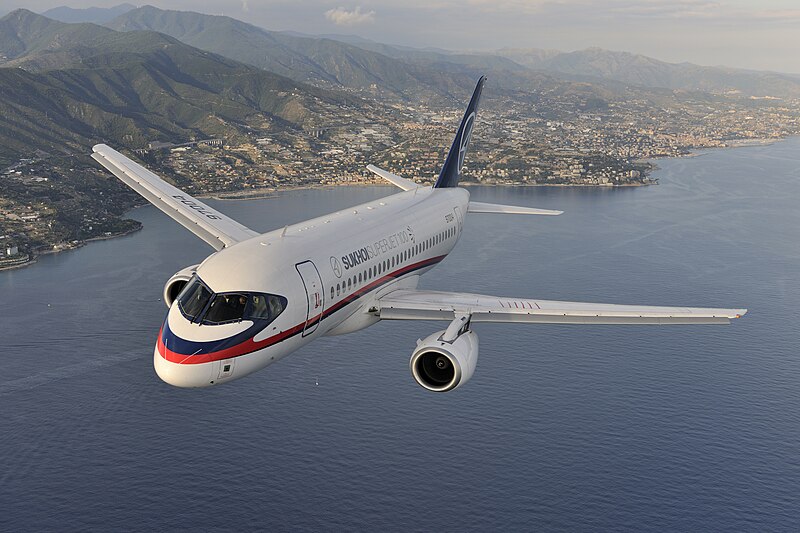
La empresa rusa Sukhoi Superjet 100, es un avión regional dedicado al transporte de Resultado de imagen para sukhoi logopasajeros, con capacidad entre 68 y 103 plazas. Su desarrollo dio comienzo en el año 2000, siendo diseñado por la empresa aeronáutica rusa Sukhoi, en colaboración con Alenia Aeronautica. Su primer vuelo tuvo lugar el 19 de mayo de 2008, recibiendo el certificado de tipo por parte del Comité Interestatal de Aviación en enero de 2011. El 21 de abril de 2011 entró en servicio comercial con la aerolínea armenia Armavia.
File:Air-to-air photo of a Sukhoi Superjet 100 (RA-97004) over Italy.jpg

El SSJ-100 ha permitido penetrar en el mercado de aviones regionales de manera asombrosa, a pesar en un principio de un accidente aéreo ocurrido en el sudoeste asiático. El mercado de occidente ha recogido parte de su interés con la compra por parte de Interjet de los aviones rusos para completar su flota de jet regionales.

irkut_logo-svgEl Irkut MC21 es otro fabricante ruso trabaja en un segmento de mercado donde compite directamente con Airbus/Boeing. La capacidad de pasajeros está ubicada para llevar entre 150-230 pax. El «Magistralny Samolyet 21», traducido como «Avión Magistral del Siglo XXI», es un proyecto de avión de pasajeros bimotor de corto y medio alcance, en desarrollo por las empresas rusas Irkut y Yakovlev, que forman parte del grupo empresarial United Aircraft Corporation (UAC). Está previsto que sea en tres variantes distintas, con una capacidad de entre 150 y 230 pasajeros. Está diseñado para reemplazar a los Tupolev Tu-154 y Tupolev Tu-204/214 más antiguos que actualmente están en servicio a partir del año 2016.

mitsubishi_motorsLa empresa japonesa Mitsubishi, presenta el Mitsubishi Regional de Jet MRJ-90, es un avión de pasajeros creado por Mitsubishi Aircraft Corporation, una asociación entre el dueño mayoritario Mitsubishi Heavy Industries y Toyota Motor Corporation. El programa fue iniciado a comienzos del 2008. La aeronave será el primer avión de pasajeros diseñado y producido en Japón desde la fabricación del NAMC YS-11 en la década de los 60. El MRJ contará con una motorización occidental, el Pratt & Whitney PW1000G. Se espera que el MRJ sea el primer avión comercial y de uso regional que adopte materiales compuestos en su fuselaje en una escala significativa. Se planea crear 6 versiones con dos largos diferentes de fuselaje. El MRJ70 tendrá una capacidad de 70 a 80 pasajeros mientras que el MRJ90 tendrá una capacidad de 86 a 96 pasajeros. Su mercado es prometedor para las aerolíneas asiáticas, despertando mucho interés en occidente.

comac_logoLa industria aérea China está en su máximo apogeo, con el diseño del ARJ21 y C919 por parte de la COMACCommercial Aircraft Corporation of China Ltd. Su accionariado está compuesto por el gobierno central chino, el gobierno municipal de la ciudad de Shanghai, AVIC I y AVIC II. Esta empresa gubernamental está creada para diseñar y fabricar aviones de pasajeros, con el fin de reducir la dependencia china de los fabricantes aeronáuticos Boeing y Airbus.

La primera aeronave desarrollada por la compañía es el ARJ21, desarrollado inicialmente por AVIC I. Es el producto de un largo proceso e influencia que tuvo el anterior constructor de aviones McDonnell Douglas de Estados Unidos en la planta de ensamblaje de la Shanghai Aviación Corporación Industrial de la República Popular de China. Después de la fusión de Boeing con la McDonnell Douglas la línea DC9/MD80/MD90 finaliza por falta de interés en el mercado. Boeing cede sus «conocimientos» y de allí nace el ARJ-21, un derivado natural del DC-9.

La compañía también tiene en desarrollo el C919, unproducto nuevo, el cual está previsto que entre en servicio a finales del 2016 o principios del 2017. Dentro de la estrategia a largo plazo de la compañía, también está previsto la creación de dos aviones más grandes, el C929 y el C939.

fokker-svgEn tanto el constructor holandés Fokker todavía no ha lanzado su nueva variante del afamado Fokker 100. Actualmente NG Aircraft, empresa creada por ex-empleados de Fokker, pretendía relanzar la producción del Fokker 70 NG (Next Generation) y el Fokker 100 NG con el apoyo de aerolíneas y fabricantes de piezas, bajo el nombre XF Series. Nuevamente sale al ruedo con una versión energizada llamada Fokker 120NG/Fokker 130NG. Rekkof Aircraft NV actualmente es propietaria de la marca Fokker Aircraft, bajo la cual sigue promocionando sus aviones.

Resultado de imagen para Fokker 130 ng
Pero en el mercado de aviones regionales, han demostrado ser las aeronaves de Bombardier CSeries (CS100, CS300) y Embraer ESeries los modelos que mayor penetración están teniendo en el mercado regional han creado una fuerte presión sobre Boeing y Airbus.

Tanto Airbus como Boeing han invertido miles de millones de dólares para demostrar su valía en el mercado en lugar de un nuevo modelo de programa de producción. Hasta el momento ha vendido miles de unidades B737 y A320. Especialmente en Europa y en Estados Unidos ha despertado el interés por los vuelos transatlánticos en un solo pasillo, con alcance extendido, un reinado que por varias décadas ha estado gobernada por el Boeing 757. Tras la finalización de su producción, ha dado lugar a la aparición de los modelos Boeing 737 MAX y A320NEO.

Los motores de los aviones de nuevo desarrollo tiene una mejores propiedades aerodinámicas, sonido y contribuye significativamente a la reducción de la contaminación ambiental. La nueva tecnología de los motores del Boeing 737MAX y del A320NEO miden a 85 decibeles (85Db) de nivel de sonido, se ha reducido a la mitad en comparación con otros modelos de aviones de similar naturaleza. El tipo de aeronave Airbus A320NEO también proporciona al menos 15 por ciento de ahorro de combustible en comparación con el modelo A320. Los B737 MAX tienen beneficios previstos de combustible por asiento, en los A320neo se elevan aún más, acercándose al 20 por ciento.

Crear un tercio de los gastos de combustible para las compañías aéreas eso es muy eficiente, los nuevos motores de los aviones han mostrado gran interés. Lo más importante, la gama de estos aviones se amplió a unos 800 kilómetros. Esto significa que desde el Este de los Estados Unidos el B737 MAX podría volar sin inconvenientes y conectar cualquier ciudad en el centro de Europa.

El fabricante europeo Airbus, comenzó a trabajar en 2010 con el fin de renovar la exitosa Familia A320, El nacimiento del A320NEO (New Engine Option) se anunció en diciembre de 2010 como parte de una nueva actualización de la familia A320. El proyecto llamó la atención sobre las altas órdenes recibidas en un corto período de tiempo. El constructor Airbus potencia esta aeronave con dos tipos, el Pratt & Whitney PurePower PW1100G como así el CFMI LEAP-X. Airbus está diseñando además al A319NEO como el A321NEO que puede volar un rango de 6.759 kilómetros, un avión muy prometedor para vuelos transatlánticos.

La cadena de producción de la familia A320 será de 50 unidades al mes a partir del próximo año, mientras que en el año 2019 tiene previsto producir 60 aviones al mes. Boeing anunció que produciría 52-60 unidades por mes del B737. El primer vuelo de la familia A320neo fue el 25 de de septiembre de 2014, la primera entrega de 25 de enero de 2016 con Lufthansa como cliente de lanzamiento. Los primeros usuarios de la aeronave son Lufthansa, Indigo, GoAir y Pegasus Airlines.

Cuando el Boeing 737 MAX hizo su primer vuelo el 29 de enero de 2016, cuatro prototipos fueron creados hasta la fecha. La primera entrega del avión estará equipado con nuevos colores para la Southwest Airlines. La familia Boeing 737 Max recibió pedidos por parte de las aerolíneas para principios de agosto de 3.278 unidades.

La historia de la aviación comercial se sigue escribiendo y más protagonistas entran en acción, pero ahora, tanto Airbus como Boeing están dispuestas a revitalizar sus productos para competir en un segmento muy competitivo donde todos los jugadores están puestos en la mesa de ajedrez. Veamos cómo responde el mercado. airgways-icon-aw

thepowerof2_01

The reign of global air regional market

Both Airbus and Boeing hold the largest market share of commercial aircraft in the world. AIRGWAYS ® as anticipated in previous post, the emergence of new technologies and new players in the commercial aviation industry did flourish regional aircraft, enhancing the variety of offerings.

For years, single-aisle aircraft B737 and A320 are demanding a new, more fuel efficient technology for airlines. Boeing and Airbus had pushed the idea of building from scratch a new aircraft. However, production of programs costing billions of dollars in new aircraft and the time it would require and entry into service, the balance would decline by pushing in a different direction by a repowering in both builders.

cabin-cross-section-airliner-regional

The two largest manufacturers of commercial aircraft in the world Airbus and Boeing have dominated the market for decades. Boeing has nearly half the market share, but vary depending on the year and no manufacturer such as Airbus has come so far to force the segment of single-aisle aircraft.

Resultado de imagen para e190e2

The Brazilian company Embraer manufactures appealing to smaller body aircraft, regional aircraft market. Embraer with the range of E-Jets is one of the most important players in the market for regional aircraft, holds the first place in the regional aircraft industry. Its headquarters in Sao Jose dos Campos, Brazil, has allowed excellently introduced in the US market with its Emb-120 «Brasilia» enabling him to expand globally. Progressively introduced ERJ135 / 140/145 expanding the regional jet segment. The family of aircraft E170 / E175 / E190 / E195 allowed to approach a market nearby where they operate Airbus and Boeing, «I flirting» competition on some routes. The latest design the E170 / E190 E2 (second stage) has allowed to introduce new engines and new technologies to expand the market going to compete more directly with the duopoly Airbus / Boeing.

The Canadian manufacturer Bombardier had been working on the regional segment for long. Initially based in the production of ferrous material, it began expanding into the aerospace industry with the purchase in 1986 of Canadair, company that then was in the hands of the Canadian government and after recording one of the most catastrophic economic losses in the recent history of the Canadian economy. In 1989 he acquired the firm Short Brothers of Ireland, which was also in bankruptcy. In 1990 Bombardier bought Learjet Corporation and in 1992 De Havilland Canada (at that time, a subsidiary of Boeing), inheriting series turboprop aircraft Dash, or DHC.

Bombardier is currently consolidated as the fourth largest aircraft manufacturer in the world with which the business unit Bombardier Aerospace represents more than half of group revenue.

Line Dash 8 turboprop aircraft, Bombardier Aerospace DHC bought continuing its production in 1992 to the present. Since 1996 it is known as the Q Series, the «Quiet» (quiet English) due to the installation of an active system noise and vibration suppression (ANVS). There are different models of the Dash 8 family, which in total were manufactured more than 1,000 copies. Today the Q400 series is the largest, most up to date and sold, losing market share in the segment of 37-56 pax Q200 and Q300 in the series.

Resultado de imagen para cseries 300

The C Series is the ultimate development of a Short Brothers aircraft, which was in the planning stage for a long time but never prospered. By acquiring the company by Bombardier, the BRJ-X takes shape until it reaches its avant-garde design known as the family of C Series jet CS100 and CS300.

Resultado de imagen para ATR42-600 ATR72-600

The Franco-Italian manufacturer offers the market two variants of the ATR turbohéllice, the latest versions, the ATR-42-600 and ATR-72-600. These aircraft are the best seller of the aircraft propeller world’s best selling. Its production rate is high, as well deliveries to different countries and islands in the world.

The Russian company Sukhoi Superjet 100 regional aircraft is dedicated to passenger transport, with capacity between 68 and 103 seats. Its development began in 2000, being designed by the Russian aerospace company Sukhoi in collaboration with Alenia Aeronautica. Its first flight took place on May 19, 2008, receiving the type certificate from the Interstate Aviation Committee in January 2011. On 21 April 2011 it entered commercial service with the Armenian airline Armavia.

The SSJ-100 has allowed to enter the regional jet market amazingly, despite initially a plane crash in southwest Asia. The Western market has collected part of his interest with the purchase by Interjet of Russian aircraft to complete its fleet of regional jet.

The Irkut MC21 is another Russian manufacturer works in a market segment where it competes directly with Airbus / Boeing. Passenger capacity is set to take between 150-230 pax. The «Magistralny Samolyet 21», translated as «Magistral Plane XXI Century», is a project jetliner twin-engine short and medium range, under development by Russian companies Irkut and Yakovlev, part of the business group United Aircraft Corporation (UAC). It is expected to be in three different variants, with a capacity of between 150 and 230 passengers. It is designed to replace the Tupolev Tu-154 and Tupolev Tu-204/214 older who are currently in service since 2016.

Resultado de imagen para MRJ90

The Japanese company  Mitsubishi Regional Jet MRJ-90, is a passenger plane created by Mitsubishi Aircraft Corporation, a majority-owned partnership between Mitsubishi Heavy Industries and Toyota Motor Corporation. The program was initiated in early 2008. The aircraft will be the first airliner designed and produced in Japan since making NAMC YS-11 in the decade of the 60. The MRJ will have a western engine, the Pratt & Whitney PW1000G. MRJ is expected to be the first commercial aircraft and regional use to adopt composite materials in its fuselage on a significant scale. It plans to create 6 versions with two different lengths of fuselage. The MRJ70 will have a capacity of 70 to 80 passengers while the MRJ90 have a capacity of 86-96 passengers. Its market is promising for Asian airlines, arousing much interest in the West.

Resultado de imagen para ARJ21

China’s airline industry is at its peak, with the design of the ARJ21 and C919 by the Commercial Aircraft Corporation of China Ltd. Its shareholders consists of the central government, the municipal government of the city of Shanghai, AVIC I and AVICII. This government company is created to design and manufacture passenger aircraft, in order to reduce China’s dependence aircraft manufacturers Boeing and Airbus.

The first aircraft developed by the company is the ARJ21, initially developed by AVIC I. It is the product of a long process and influence it had the previous aircraft manufacturer McDonnell Douglas of the US in the assembly plant of Shanghai Aviation Industrial Corporation of the People’s Republic of China. After the merger of Boeing with McDonnell Douglas DC9 the / MD80 / MD90 line ends for lack of interest in the market. Boeing gives his «knowledge» and from there comes the ARJ-21, a natural derivative of the DC-9.

The company also is developing the C919, again a product, which is scheduled to enter service in late 2016 or early 2017. Within the long-term strategy of the company, it is also expected to create two larger aircraft the C929 and C939.

Meanwhile the Dutch manufacturer Fokker has not yet released its new variant of the famous Fokker 100. Currently NG Aircraft, a company created by former employees of Fokker, intended to relaunch production of the Fokker 70 NG (Next Generation) and the Fokker 100 NG with the support airlines and parts manufacturers under the name XF Series. It leaves the ring again with an energized version called Fokker 120NG / Fokker 130NG. Rekkof Aircraft NV currently owns the brand Fokker Aircraft, under which continues to promote its planes.

But in the regional aircraft market, have proven Bombardier aircraft CSerie C (CS100, CS300) and Embraer E Series models are having greater penetration in the regional market have created strong pressure on Boeing and Airbus.

Both Airbus and Boeing have invested billions of dollars to prove their worth in the market rather than a new model of production program. So far it has sold thousands of units B737 and A320. Especially in Europe and the United States he has attracted interest for transatlantic flights in a single aisle, extended range, a reign that for decades has been governed by the Boeing 757. Upon completion of its production, has led to the appearance models A320NEO and Boeing 737 MAX.

Aircraft engines newly developed has a better aerodynamic properties, sound and contributes significantly to reducing environmental pollution. B737max new technology engines A320neo aircraft type and measured at 85 decibels sound level, it has halved compared with other models of airplanes of similar nature. Airbus A320neo aircraft type also provides at least 15 percent fuel savings compared with the A320 model. B737 Max and expected benefits of fuel per seat in the A320neo rise even higher, approaching 20 percent, because the greater the distance from knee offered passengers on the section of business class for the new space cabin aircraft model used more efficiently.

Create a third of the fuel costs for the airlines that is very efficient, new aircraft engines have shown great interest. Most importantly, the range of these aircraft was extended about 800 kilometers. This means that from the eastern United States the B737 MAX disadvantages and could fly without connecting any city in the center of Europe.

The European manufacturer Airbus, started working in 2010 in order to renew the successful A320 Family, the birth of the A320neo (New Engine Option) was announced in December 2010 as part of a new update of the A320 family. The project drew attention to the high orders received in a short period of time. The builder Airbus power this aircraft with two types, the Pratt & Whitney PurePower PW1100G PurePower as well the CFMI LEAP-X. Airbus is also designed to A319NEO as the A321neo that can fly a range of 6,759 kilometers, a very promising aircraft for transatlantic flights.

The production of the A320 family will be 50 units per month from next year, while in 2019 is expected to produce 60 aircraft a month. Boeing announced it would produce 52-60 units per month of B737. The first flight of the A320neo family was on 25 September 2014, the first installment of 25 January 2016 with Lufthansa as the launch customer. The first users of the aircraft are Lufthansa, Indigo, GoAir and Pegasus Airlines.

When the Boeing 737 MAX made its first flight on January 29, 2016, four prototypes were created to date. The first delivery of the aircraft will be equipped with new colors for Southwest Airlines. Boeing 737 Max family received orders from airlines to early August 3,278 units.

The history of commercial aviation continues to write and more players into action, but now, both Airbus and Boeing are willing to revitalize their products to compete in a very competitive segment where all players are on the chess table. Let’s see how the market responds. A\W

Ξ A I R G W A Y S Ξ
SOURCE: A I R G W A Y S
DBk: Photographic © Airbus.com / Boeing.com / Fokker NV / COMAC / Bombardier Inc. / Sukhoi / EMBRAER /  Wikipedia
AW-POST: 201610171703AR
A\W A I R G W A Y S ®

Airbus se propone superar a Boeing en entregas para 2020

Resultado de imagen para airbus deliveries

AW | 2016 10 17 12:35 | INDUSTRY

Frankfort, Alemania · Airbus tiene como objetivo superar a su competidor norteamericano Boeing en entrega de aviones en 2020, según declara este lunes al diario alemán Die Welt el CEO y a partir de enero también director de Operaciones del consorcio aeroespacial europeo, Fabrice Brégier.

Mientras que Airbus ha liderado el volumen de pedidos de aviones durante años, ha sido Boeing el que ha ido por delante desde 2012 en entregas.

El nuevo director de Operaciones de Airbus cree “importante desde un punto de vista estratégico echar raíces no sólo en Europa sino también en los dos principales mercados del mundo: EE UU y China. En EE UU tenemos 1.100 empleados, de una oficina de desarrollo de servicio al cliente y la formación de pilotos. La planta de Mobile nos hace aún más visibles ahora y nos da la oportunidad de desarrollar relaciones sólidas con los clientes y proveedores”.

“Cuando en mayo de 2012 se decidió fabricar en EE UU sabíamos que necesitábamos una capacidad adicional debido al gran éxito de la familia A320. En EE UU se necesitarán 4.700 aviones de corto y medio radio como el A320 en los próximos 20 años. También tenemos la producción futura en la zona del dólar, lo que ayuda a largo plazo para compensar las diferencias de cambio”, añade Brégier.

“En el momento de aquella decisión, nuestra cuota de mercado de entregas en EE UU no llegaba al 20%. Incluyendo los nuevos contratos en los dos últimos nuestra cuota de mercado ya ha subido al 40% y esperamos poder aumentar hasta el 50% del mercado norteamericano con  la nueva planta”.

“En EE UU es importante mostrar que el avión se fabricará en el país. Este es un punto a favor, y en algunos casos, será crucial. El avión de fabricación local con destino a América del Norte tiene un gran mercado. A largo plazo, tendremos oportunidad para las exportaciones, pero ese no es el objetivo”, agrega. airgways-icon-aw

Airbus intends to overtake Boeing in deliveries for 2020

Frankfort, Germany · Airbus aims to outperform its American competitor Boeing in aircraft deliveries in 2020, declared Monday the German newspaper Die Welt CEO from January and also Director of Operations European aerospace consortium, Fabrice Brégier.

While Airbus has led the volume of orders for aircraft for years, it has been Boeing that has gone ahead from 2012 deliveries.

The new COO of Airbus believes «important from a strategic point of view taking root not only in Europe but also in the two largest markets in the world: the US and China. In the US we have 1,100 employees, a development office customer service and pilot training. Mobile plant makes us even more visible now gives us the opportunity to develop strong relationships with customers and suppliers.»

«When it was decided in May 2012 to manufacture in the US we knew we needed additional capacity due to the great success of the A320 family. In US 4,700 airplanes short and medium haul as the A320 in the next 20 years will be needed. We also have future production in the dollar zone, which helps to offset long-term exchange differences,» adds Brégier.

«At the time of that decision, our market share of deliveries in the US was less than 20%. Including new contracts in the last two our market share has already risen to 40% and we hope to increase to 50% of the US market with the new plant.»

«In the US it is important to show that the aircraft will be manufactured in the country. This is a plus, and in some cases, will be crucial. The plane local manufacture for North America has a large market. In the long term, we will have opportunity to export, but that’s not the goal,» he adds. A\W

Resultado de imagen para airbus assembly line

Resultado de imagen para airbus deliveries

‘Airbus in 2020 groter dan Boeing’

Airbus zal vanaf 2020 meer vliegtuigen afleveren dan Boeing. Dit zei Fabrice Bregier, de CEO van de Europese fabrikant, in een interview met Die Welt.

“In 2020 zullen we meer toestellen afleveren dan Boeing”, aldus de topman.

Focus
Bregier zei dat Airbus zich in de komende tijd meer zal focussen op de A320 en de A350, de bestverkopende modellen uit het gamma.

Hij beloofde dit jaar nog vijftig A350’s te leveren. De teller stond eind september pas op 26, dus dat zal nog een flinke opgave worden voor de fabrikant.

2011
Airbus was in 2011 voor het laatst groter dan Boeing. Het bedrijf leverde toen 534 vliegtuigen af, terwijl de Amerikaanse concurrent niet verder kwam dan 477 stuks.

Daarna wist Boeing continu meer toestellen af te leveren. Airbus kreeg wel de meeste orders. A\W

Ξ A I R G W A Y S Ξ
SOURCE: actualidadaeroespacial.com / Reuters.com
DBk: Photographic © Airwaysmag.com / TODAYonline / Airbus.com
AW-POST: 201610171235AR
A\W A I R G W A Y S ®

Apertura de mercado aéreo en China

Resultado de imagen para airlines of china

AW | 2016 10 17 12:03 | AIRLINES MARKET

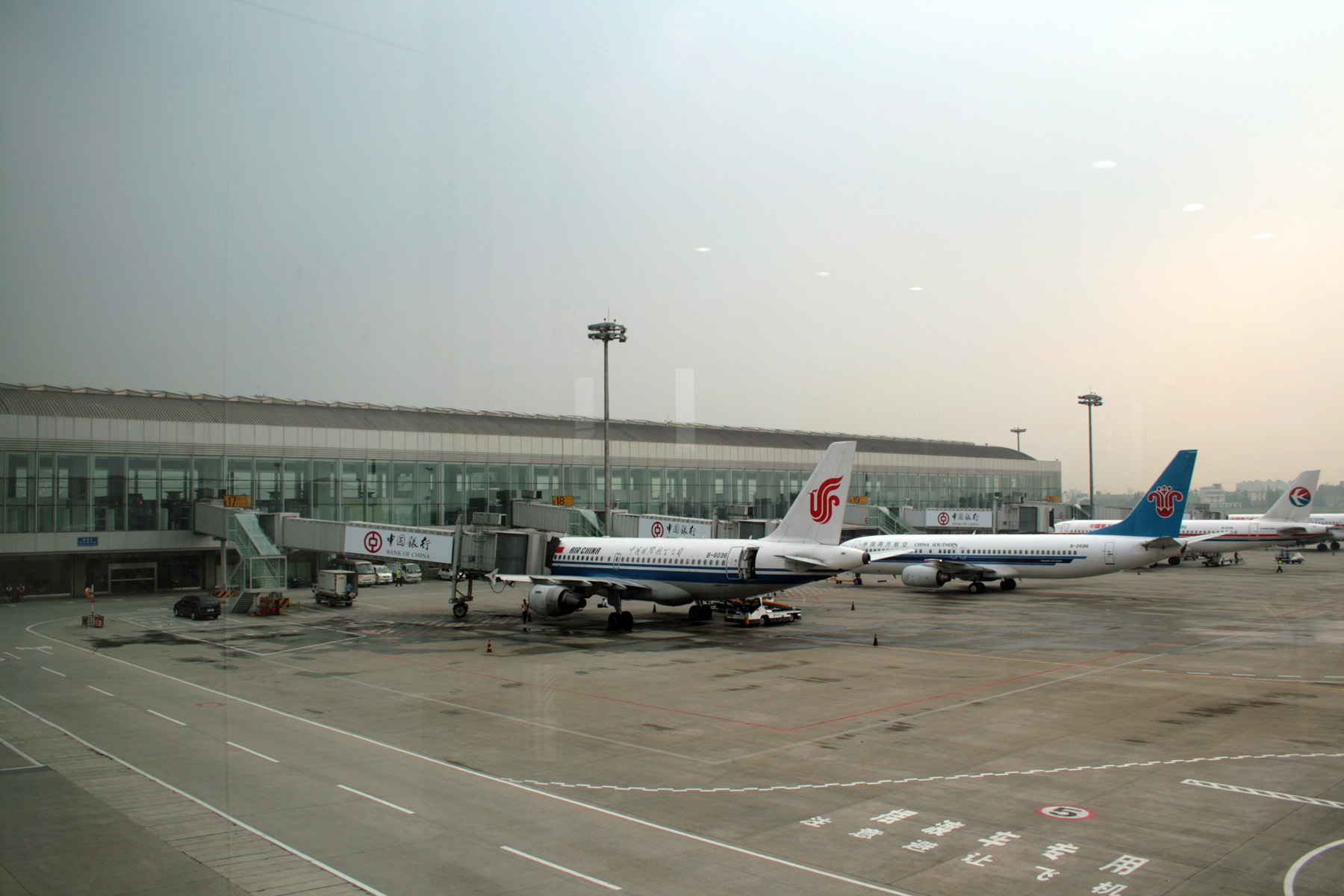
Resultado de imagenEl mercado de la aviación china cambia rápidamente. Más vuelos, una mayor demanda de pilotos experimentados, y un cambio reciente en el inglés como idioma principal, todos muestran la singularidad y el tamaño del mercado. Esta semana Wang Zhinqing, subadministrador de la CAAC*, lanzó varios planes nuevos.

Resultado de imagen para shanghai airport

Varios aspectos está manejando el gobierno chino con respecto al poderoso mercado aéreo en la República de China:

♦ Apertura mercado aéreo chino

♦ Simplificación procedimientos aprobación rutas aéreas para aerolíneas

♦ Agilización solicitud de visados

El objetivo de estos planes son abrir el mercado mediante la mejora de la facilitación del gobierno general. Su objetivo es crear un mercado regional de transporte aéreo a un nivel avanzado. En la página web de la CAAC se publicaron las siguientes sugerencias.

En primer lugar, mediante la apertura del mercado del transporte aéreo entre China y otros países de Asia Central la CAAC espera crear un modelo de liberalización que funciona en beneficio de ambas partes. Si bien esto puede requerir que se modifica la política de aviación entre China y otros países de Asia Central, que tienen como objetivo crear beneficios mutuos. Los dos aeropuertos centrales en Urumqi y Xi’an servirán como bases de prueba.

En segundo lugar, mediante la simplificación de los procedimientos de aprobación de las rutas de Asia Central que esperan animar a las empresas a invertir en el mercado regional. Por lo que es más fácil para iniciar nuevas rutas se beneficiarían en gran medida el mercado y reforzaría aún más el desarrollo de la aviación regional.

Resultado de imagen para shanghai airport

Por último, al hacer la solicitud de visa más conveniente, CAAC espera mejorar la facilitación del transporte aéreo. Los países que utilizan activamente estas instalaciones de visado deben tener la oportunidad de adaptar sus regulaciones para la fabricación de solicitud de visa más fácil y más eficiente.

El gobierno chino también está trabajando para reestructurar el reglamento de precios de los billetes. Su objetivo es mejorar la eficiencia y el nivel de servicio en los mercados nacionales. Precio de las entradas deben finalmente empezar a competir con los precios de los viajes en tren de alta velocidad de media distancia. En enero, China ha adoptado un Reglamento que permitía Air China y China Eastern Airlines determinación de precio de la entrada libre, por lo que es el primer paso en la flexibilidad de los precios. airgways-icon-aw


Resultado de imagen para shanghai airport

Open air market in China

The Chinese aviation market changes rapidly. More flights, a greater demand for experienced pilots, and a recent change to English as the main radio language all depict the uniqueness and size of the market. This week Wang Zhinqing, Deputy Administrator of CAAC, released several new plans.

Several aspects are driving the Chinese government regarding the powerful air market in the Republic of China:

♦ Chinese market opening air

♦ approval procedures Simplification air routes for airlines

♦  Streamlining visa application

The focus of these plans are to open the market by improving the overall government facilitation. His goal is to create a regional air transport market at an advanced level. On the CAAC’s website the following suggestions were published.

First, by opening the air transport market between China and other Central Asian countries the CAAC hopes to create a liberalization model that works to the advantage of both parties. While this might require amending aviation policies between China and other Central Asian countries, they aim to create mutual benefits. The two hub airports in Urumqi and Xi’an will serve as trial bases.

Second, by simplifying the route approval procedures for Central Asia they hope to encourage businesses to invest in the regional market. Making it easier to start new routes would greatly benefit the market and would further strengthen the development of regional aviation.

Resultado de imagen para shanghai airport

Lastly, by making visa application more convenient, CAAC hopes to improve the facilitation of air transport. Countries that actively use these visa facilities should be given the chance to adapt their regulations for making visa application easier and more efficient.

The Chinese government is also currently working to restructure the regulations for ticket prices. Their goal is to improve efficiency and service level in domestic markets. Ticket prices should eventually start competing with the prices for long range high-speed train travel. In January, China adopted a regulation that allowed Air China and China Eastern Airlines free ticket price determination, making it the first step in price flexibility. A\W

Ξ A I R G W A Y S Ξ
SOURCE: CAAC * Civil Aviation Administration of China / airlinegeeks.com
DBk: Photographic ©  Wikipedia.org / Keyword Suggestions / The Wall Street Journal / Airwaysmag.com
AW-POST: 201610171203AR
A\W A I R G W A Y S ®

Demoras en desempeño puntualidad de líneas aéreas estadounidenses

Resultado de imagen para On-time performance of U.S. airlines dropped in latest report

AW | 2016 10 17 11:37 | AIRLINES MARKET

El desempeño puntual de las líneas aéreas de Estados Unidos se redujo en el último informe

Washington, EE.UU · Casi uno de cada cuatro vuelos de Estados Unidos eran a finales de agosto, y algunos aviones se sentó en el suelo, siempre que las aerolíneas podrían recibir una multa.

El Departamento de Transporte de EE.UU. dijo el viernes que el 77,6% de los vuelos domésticos llegó a tiempo en agosto. Eso fue por debajo de 80,3% en el mismo mes de 2015.

Hawaiian Airlines, ayudados por el clima favorable, tuvo la mejor tasa en el tiempo, mientras que las aerolíneas de descuento Frontier y Spirit tuvieron las peores tasas. Entre los cuatro grandes aerolíneas, Delta superó por poco suroeste por los máximos honores, seguido por United y American.

En 20 casos, los aviones que llevan a cabo los pasajeros sentados en el suelo ya que las normas federales permiten, tres horas para vuelos nacionales, cuatro para los internacionales. El Departamento de Transporte dijo que estaba investigando los incidentes.

Al menos 11 de los retrasos en los vuelos fueron operados por American y cinco por United o United Express.

Esos excesivas demoras en tierra sobre-se han reducido drásticamente ya que las normas federales permiten el departamento de multar a las compañías aéreas.

Los pasajeros presentaron 1.602 quejas ante la autoridad en contra de las compañías aéreas de Estados Unidos en agosto, en comparación con 1.639 en agosto de 2015. airgways-icon-aw

Resultado de imagen para On-time performance of U.S. airlines dropped in latest report

On-time performance of U.S. airlines dropped in latest report

Washington, USA · Nearly one in four U.S. flights were late in August, and some planes sat on the ground so long that the airlines could get fined

The U.S. Department of Transportation said Friday that 77.6% of domestic flights arrived on time in August. That was down from 80.3% in the same month of 2015.

Airline passengers line up at the ticket counters to

Hawaiian Airlines, helped by favorable weather, had the best on-time rate, while discount carriers Frontier and Spirit had the worst rates. Among the four biggest airlines, Delta narrowly beat Southwest for top honors, followed by United and American.

In 20 cases, planes holding passengers sat on the ground longer than federal rules allow — three hours for domestic flights, four for international ones. The Transportation Department said it was investigating the incidents.

At least 11 of those delayed flights were operated by American and five by United or United Express.

Those excessive on-ground delays have dropped sharply since federal rules allowed the department to fine the airlines.

Passengers lodged 1,602 complaints with the department against U.S. airlines in August, compared with 1,639 in August 2015. A\W

Ξ A I R G W A Y S Ξ
SOURCE: usatoday.com
DBk: Photographic © WCCB Charlotte / Chicago Tribune
AW-POST: 201610171137AR
A\W A I R G W A Y S ®